

_1745823981883.webp)

Tel: +86-1353-0341575
Email:benson@guangdongmorui.com
Whatapp:8613530341575
Add: No.3 Xuwu Road, Baoan District, Shenzhen, China.
edi water plant supplier
Reliable EDI Water Plants for Global Industrial Ultrapure Applications
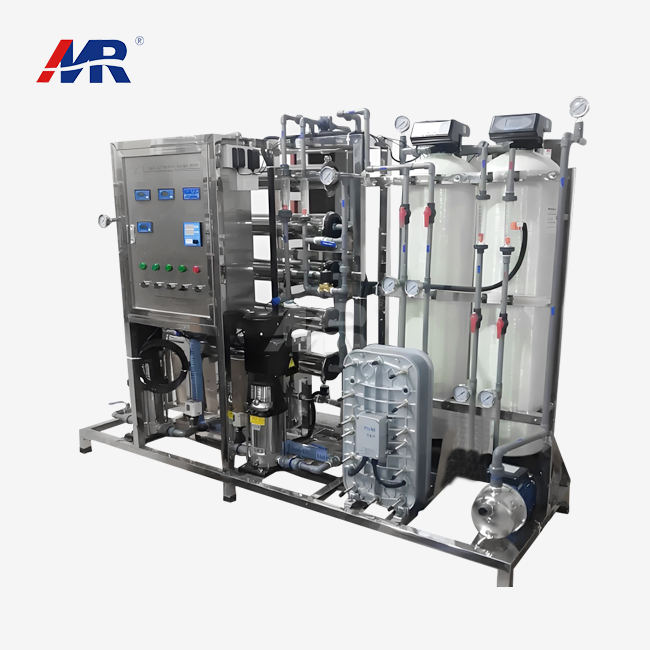
Procurement managers across South America, Southeast Asia, Europe, the Middle East, and Africa need water treatment equipment they can rely on. Choosing a dependable edi water plant from a reliable edi water plant supplier is a major decision, since it sets the course for stable long-term operations. An edi water plant combines ion exchange resins, ion-selective membranes, and a DC electrical field. It produces high-resistivity water without chemical regeneration. These systems handle continuous deionization, making them the backbone for industries that require ultrapure water. They also replace older mixed-bed technologies that are hazardous.
In Southeast Asia and Africa, plants often run into trouble. Feed water quality swings, and high dissolved CO2 levels can cause membranes to scale early. Over in Europe and South America, strict rules on chemical discharge and carbon footprints put heavy pressure on plant efficiency. Operators also face high energy bills from heavy industrial purification. On top of that, it's tough to find a verified edi water plant supplier that can deliver technical support and spare parts on time across long-distance supply chains.
Guangdong Morui Environmental Technology Co., Ltd. started in 2005. We tackle these global problems by building high-performance edi water plant solutions that last and run efficiently. Our systems carry ISO, CE, and ROHS certifications, so they meet international quality standards. They fit into complex water treatment projects without trouble. Take the Model MR-EDI-2TH. It's built for continuous ultrapure water production. Specialized stack designs keep internal resistance low and push ion migration as high as possible, even when temperatures and flow rates shift the way they do in the Middle East and South America.
- Superior Ion Rejection Performance: The MR-EDI-2TH delivers a 99.99% salt rejection rate. That gives the ultra-low conductivity that sensitive semiconductor and pharmaceutical applications need.
- Lower Energy Use: This EDI water plant runs on just 8.5kw/hour, so power costs stay far below what traditional deionization methods draw.
- Smarter Water Use: The system holds a 55% recovery rate. That keeps high-purity output steady while still saving water in dry regions.
- Certified Worldwide: Every EDI water plant is built to ISO, CE, and ROHS standards, so it clears the strict safety and environmental rules that Europe and other markets expect.
- Parts That Last: Advanced pretreatment is built in, which stretches the EDI stack lifespan to 5-8 years and cuts down on costly component replacements.
Choose a verified industrial partner, and the purification system's technical specs will fit the chemical load and conductivity requirements in the local environment. Switching to chemical-free electrochemical deionization removes the logistics of handling hazardous acids and caustics. It also keeps a steady flow of high-quality permeate. High-surface-area ion exchange resins and selective membranes work together. They continuously remove weakly ionized species, such as silica and boron, for high-end manufacturing.
Related Products
About Guangdong Morui Environmental Technology Co.,Ltd
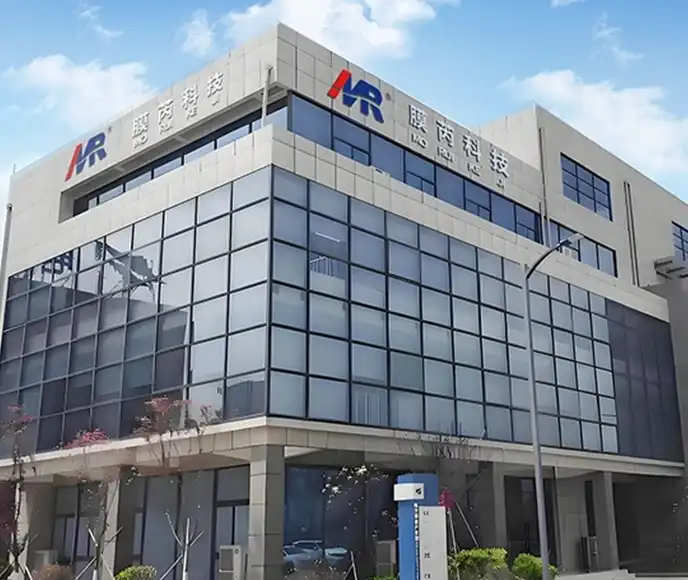
Guangdong Morui Environmental Technology Co.,Ltd, founded in 2005, is a premier manufacturer of high-performance water treatment solutions. After nearly two decades of engineering excellence, we have become a leading edi water plant supplier of industrial EDI water plants. Our ultrapure water systems serve demanding markets in South America, Southeast Asia, Europe, the Middle East, and Africa.
We design and integrate advanced electrodeionization technology. Our flagship EDI water plant models, like the MR-EDI-2TH, are engineered to hit a 99.99% salt rejection rate, and they manage that without hazardous chemical regeneration. As a seasoned edi water plant supplier, we pair precise RO pretreatment with high-efficiency EDI stacks, which helps international clients in the power, electronics, and pharmaceutical sectors reach water resistivity levels up to 18.2 MΩ·cm. Energy use stays around 8.5kw/hour.
Quality drives everything we do. Our ISO, CE, and ROHS certifications back that up. At our plant, we use strict testing protocols. They help us keep a 98% on-time delivery rate and reliable components over the long term. For partners worldwide, we offer full technical support. This includes remote commissioning and specialized maintenance training. Your system can keep peak performance across its 5–8 year stack lifespan.
Guangdong Morui is committed to being your long-term partner in sustainable water treatment, providing reliable, chemical-free solutions for the world’s most critical ultrapure water applications.
Innovative EDI Water Plants for Global Industrial Ultrapurity
Industrial Application Scenarios
High-tech industries require water with near-zero conductivity to protect product integrity. An EDI water plant, often obtained through an edi water plant supplier, is used mainly by the pharmaceutical sector to make USP-grade water, and by the electronics industry to rinse semiconductor wafers. Power plants in the Middle East and Southeast Asia are also turning more and more to these systems for high-pressure boiler feed water. That stops scale from building up and prevents corrosion in sensitive turbines.
Regional Hurdles and Regulatory Limits
Operators in South America, Europe, and Africa run into different problems with ultrapure water systems. In Europe, CE and ROHS compliance is a must. Equipment has to meet strict safety and environmental standards. In many developing regions, though, the biggest headache is the high cost and logistics of dealing with hazardous regeneration chemicals like hydrochloric acid and sodium hydroxide. A lot of plants still rely on traditional ion exchange. If they don't make the switch to chemical-free EDI technology from an edi water plant supplier, they often end up facing major environmental penalties, high labor costs for chemical handling, and frequent downtime. Older purification methods run in batches, and that's a big reason for the downtime.
The Morui Integrated EDI Strategy
Guangdong Morui Environmental Technology Co., Ltd has been in business since 2005. The company offers a complete system that turns complex water purification into a simple, automated process. We build advanced Electrodeionization stacks into a modular plant design. It is built to remove the need for chemical regeneration. Because the system runs continuously, 24/7, it supplies a steady flow of ultrapure water. It also cuts the facility's carbon footprint and operational risk by a large margin.
Modular System Architecture
- Reverse Osmosis (RO) Pretreatment: High-efficiency membrane stages remove most of the ionic load. This keeps feed water quality optimized, which protects the EDI membranes from scaling.
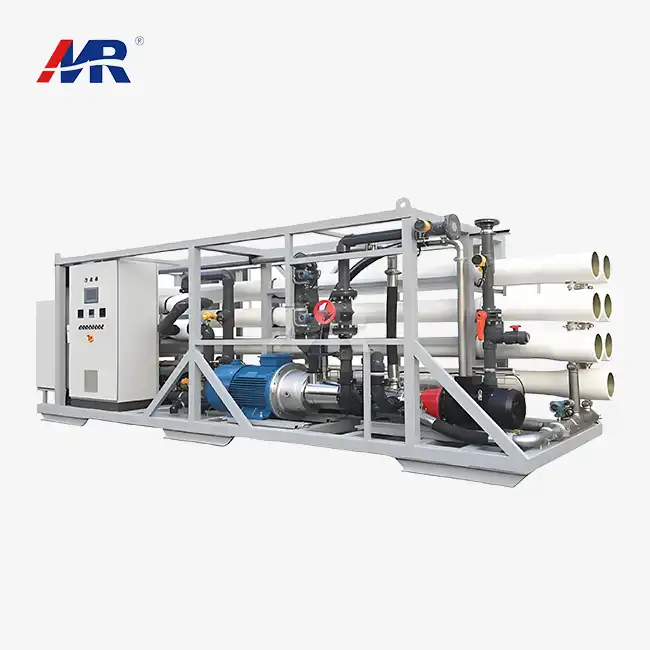
- MR-EDI-2TH Mainframe: This core unit uses electrochemical technology to reach a 99.99% salt rejection rate. It delivers consistent resistivity between 10 and 18.2 MΩ·cm.
- Automated Control Interface: PLC-based systems track flow rates and energy consumption. For high-volume output, consumption stays optimized at a low 8.5kw/hour.
- Cleaning-In-Place (CIP) Module: Built-in maintenance circuits support periodic non-oxidizing cleaning. That helps the EDI stacks last longer, even when feed water conditions fluctuate.
Performance Benefits and ROI You Can Measure
- Operational Efficiency: The system reaches a 55% recovery rate. That helps conserve as much water as possible in dry regions such as the Middle East.
- Low Energy Footprint: Smart power management keeps consumption at 8.5kw/hour. That lowers yearly utility costs.
- Superior Water Quality: The system holds a steady 99.99% salt rejection rate. That meets the toughest standards in pharmaceuticals and electronics.
- Space Optimization: Compared to conventional mixed-bed deionizers, a modular skid design cuts the installation footprint by up to 40%.
- Maintenance Reduction: Eliminating chemical regeneration cycles leads to a 60% decrease in routine maintenance labor.
Global Implementation and Lifecycle Support
Morui supports its global clientele in South America, Southeast Asia, and Europe through a structured implementation process, from initial water analysis and customized engineering to on-site commissioning. Leveraging nearly two decades of industry experience, the company offers remote diagnostics and rapid spare parts dispatch to ensure system reliability. Comprehensive training programs are provided to local operators to maintain peak performance and extend the lifespan of the EDI stacks.
Representative Project Execution
A large-scale power generation facility in Southeast Asia required a transition from hazardous chemical deionization to a sustainable ultrapure water source. Morui implemented the MR-EDI-2TH solution, which successfully stabilized the boiler feed water at 16 MΩ·cm. The project resulted in the total elimination of acid/alkali procurement, a measurable reduction in energy costs, and an ISO-compliant safety profile for the entire water treatment wing.
Technical Consultations and Support
Engineering drawings and detailed performance simulations are available to assist in the integration of high-purity water systems into existing industrial infrastructures. Custom configurations allow for specific adjustments in flow capacity and recovery rates to meet regional water quality variations.
Standardized EDI modules deliver high-purity water through a chemical-free electrochemical deionization process.
FAQs
1. What makes an edi water plant a superior choice for high-purity industrial water compared to traditional mixed-bed deionization?
An edi water plant (Electrodeionization) represents a significant advancement in water treatment technology, primarily because it eliminates the need for hazardous chemical regeneration. Unlike traditional systems that require acid and caustic handling, an EDI system uses a combination of ion-exchange resins, ion-selective membranes, and a DC electrical field to continuously deionize water. For facilities managed by Guangdong Morui Environmental Technology Co.,Ltd, this means transitioning from batch processing to a 24/7 continuous operation, significantly reducing the facility's carbon footprint and operational risks. Our systems, such as the MR-EDI-2TH, are engineered to reach ultrapure standards (10-18.2 MΩ·cm) by effectively removing residual salts and dissolved gases. We recommend this technology for industries seeking long-term stability and environmental compliance, as it typically offers a stack lifespan of 5 to 8 years with proper maintenance.2. Why is Reverse Osmosis (RO) pretreatment essential for an edi water plant, and what feed water parameters should be monitored?
An edi water plant is not designed to handle high concentrations of raw ions; therefore, it must be preceded by a high-quality Reverse Osmosis (RO) system to remove the bulk of contaminants. The RO pretreatment protects the EDI membranes and resins from scaling and organic fouling. Key parameters to monitor include the Feed Water Conductivity (typically <40 µS/cm), Total Hardness (<1.0 ppm as CaCO3), and particularly dissolved CO2 levels. High CO2 levels act as an additional ionic load that can lower the product water's resistivity. If your feed water exceeds 5-10 ppm of CO2, we suggest implementing membrane contactors for degasification. Guangdong Morui’s systems are designed with a 99.99% salt rejection rate, but ensuring the pretreatment stage is optimized is the most critical step to achieving consistent ultrapure water production and protecting your investment.3. For projects in Europe, Southeast Asia, or the Middle East, what certifications and standards should an edi water plant meet?
When selecting an edi water plant for international markets, compliance with global quality and safety standards is vital for both regulatory approval and operational reliability. In regions like Europe, CE and ROHS certifications are often mandatory to ensure electrical safety and environmental protection. For projects in the Middle East and Southeast Asia, ISO 9001 certification serves as a benchmark for quality management systems. Guangdong Morui Environmental Technology Co.,Ltd has been an industry leader since 2005, maintaining rigorous ISO, CE, and ROHS standards to meet these diverse requirements. While international standards provide a framework, we always advise checking local industrial water regulations, as specific discharge or hygiene standards may vary by country. Our engineering team can help review your local requirements to ensure the MR-EDI-2TH model or custom configurations align perfectly with your region's legal and technical landscape.4. How does the energy efficiency and recovery rate of a Guangdong Morui edi water plant impact long-term operational costs?
Operational expenditure (OPEX) is a primary concern for water treatment projects in South America and Africa, where energy and water costs can be volatile. The MR-EDI-2TH edi water plant is designed with efficiency in mind, featuring a power consumption of approximately 8.5kw/hour and a recovery rate of 55%. Because the process is electrochemical and continuous, it avoids the downtime and chemical costs associated with traditional deionization. Additionally, because the system is highly efficient—consuming less than 0.5 kWh per cubic meter of water produced—the total cost of ownership is significantly lower over a 5-year period. By maintaining a stable salt rejection rate of 99.99%, the system ensures that minimal water is wasted while maximizing the output of high-resistivity water. We suggest contacting our technical team for a customized ROI analysis based on your local utility costs.5. Can Guangdong Morui provide technical support and commissioning for an edi water plant located in remote regions like South America or Africa?
Yes, Guangdong Morui Environmental Technology Co.,Ltd has extensive experience supporting global clients since our establishment in 2005. For an edi water plant installation in South America, Africa, or other distant markets, we offer a multi-tiered support strategy. This includes detailed technical documentation and video guidance for local installation teams, as well as remote monitoring capabilities to assist with system tuning. Where required, we can dispatch senior engineers for on-site commissioning and staff training to ensure the MR-EDI-2TH system operates at peak performance. Our goal is to ensure that local operators are fully capable of performing routine maintenance and CIP (Cleaning-In-Place) procedures. If you have a specific project in a remote location, please provide your raw water analysis and site conditions so we can develop a logistics and technical support plan tailored to your facility's needs.
Best Selling Products
Related Blogs
Related Search
Tel: +86-1353-0341575
Email:benson@guangdongmorui.com
Whatapp:8613530341575
Add: No.3 Xuwu Road, Baoan District, Shenzhen, China.