

_1745823981883.webp)

Tel: +86-1353-0341575
Email:benson@guangdongmorui.com
Whatapp:8613530341575
Add: No.3 Xuwu Road, Baoan District, Shenzhen, China.
8m3/hour seawater desalination equipment supplier
Reliable 8m3/hour Seawater Desalination for Industrial Supply Around the World
For procurement managers in South America, Southeast Asia, Europe, the Middle East, and Africa, a steady water supply is always near the top of the list. For these buyers, an 8m3/hour seawater desalination unit from a reliable 8m3/hour seawater desalination equipment supplier is a serious investment. It sits between the small portable units and the large industrial plants. Coastal resorts, remote industrial sites, and offshore platforms get a water treatment option they can scale up. These systems use Reverse Osmosis (RO) technology to turn high-salinity seawater into high-purity fresh water. Operations keep running even when municipal water runs short or seasonal droughts hit.
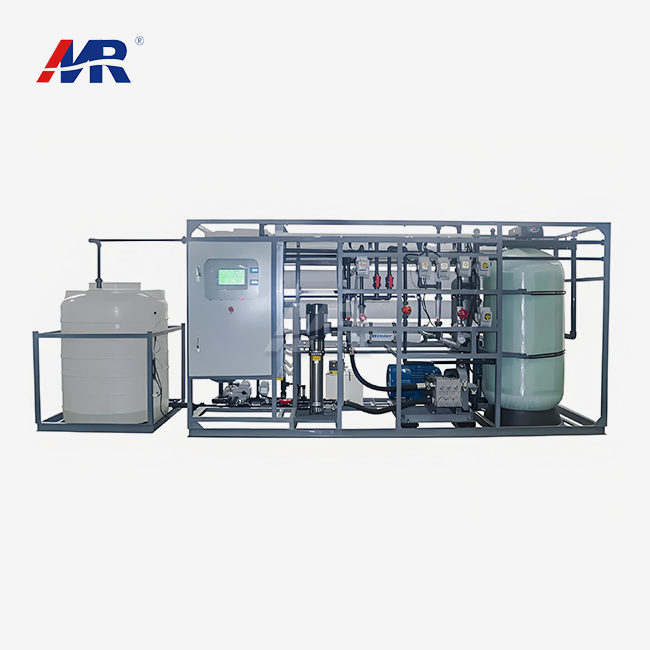
Still, keeping 8m3/hour seawater desalination equipment running in climates around the world is tough. In the Middle East and Africa, extreme salinity and high ambient temperatures can foul membranes quickly and push energy use up. In South America and Southeast Asia, humidity and coastal corrosion often wear down the structure of lower-quality systems. Downtime becomes a frequent problem. Procurement teams in Europe face strict regulatory hurdles as well. Their equipment must meet CE and ROHS certifications, no exceptions. Professionals who verify 8m3/hour seawater desalination equipment supplier authenticity and technical capability focus on one balance above all: high recovery rates, manageable power consumption (38.5kw/hour), and a long system life.
Guangdong Morui Environmental Technology Co.,Ltd started in 2005. Its MR-SWRO-8TH model takes on these challenges by region. Morui is a specialized manufacturer with nearly two decades of water treatment experience. The company designed a sturdy 8m3/hour seawater desalination system that puts operational stability first. It handles different feedwater qualities and still delivers a consistent 99% salt rejection rate, even in harsh conditions. High-pressure pumps and energy-efficient settings let the MR-SWRO-8TH raise the recovery rate to somewhere between 38% and 45%. That brings long-term operating costs down for facilities in regions where energy is expensive.
The technical advantages of this 8m3/hour seawater desalination equipment are detailed through the following key performance indicators:
- Precision Engineering for High Purity: The MR-SWRO-8TH model rejects 99% of salt. The permeate it produces meets strict standards for industrial and potable use.
- Energy Efficiency: Power draw comes to 38.5kw/hour. The design gets the most output out of that, so your carbon footprint and utility bills stay low.
- Global Compliance and Certification: ISO, CE, and ROHS standards apply to the finished product and to our production process. That clears the way for importing, and site approvals in Europe and elsewhere go through without a hitch.
- Corrosion-Resistant Build: High-grade stainless steel and specialty piping materials go into the system. That's what lets it stand up to the harsh, corrosive conditions you find along coastlines in the Middle East and Southeast Asia.
- Stable Resource Recovery: The system keeps a steady recovery rate of 38-45%. It makes water efficiently and stops waste brine discharge from rising too high.
Technical documentation is available to help with procurement validation. It includes detailed piping and instrumentation diagrams (P&ID) and energy consumption profiles. Detailed project assessments can be arranged to align MR-SWRO-8TH specifications with local environmental parameters and specific industrial requirements. Engineering support teams can also clarify how pre-treatment filtration and post-treatment mineralization integrate for the intended application.
The integrated control system maintains a salt rejection rate of 99% across diverse salinity levels found in global maritime regions.
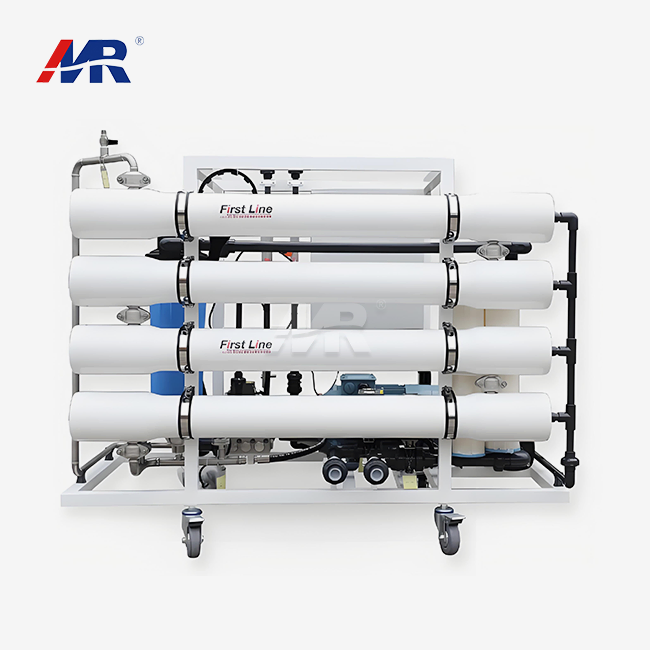
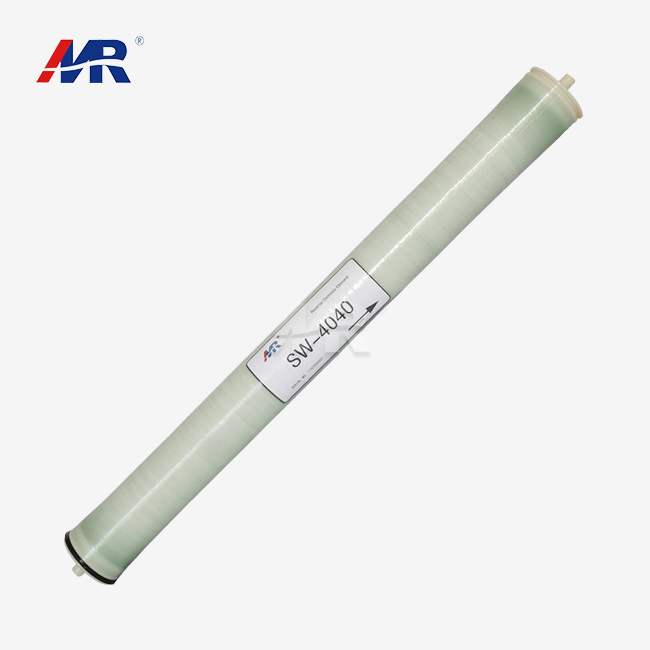
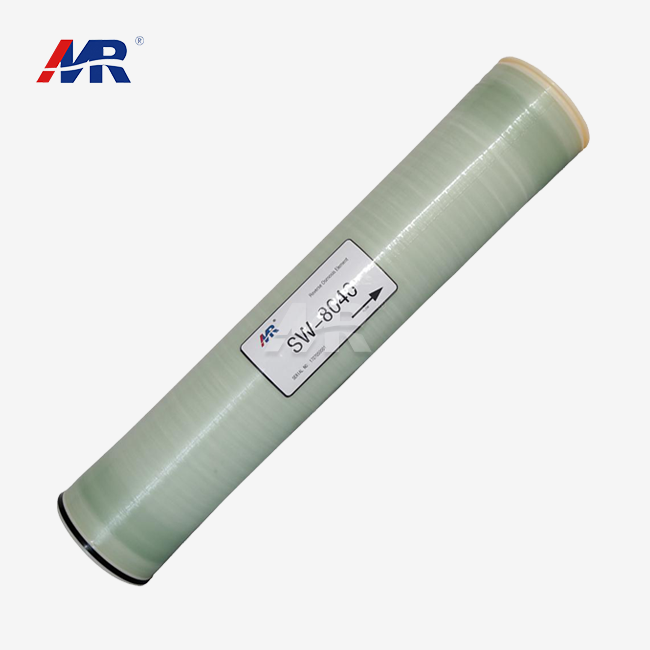
Guangdong Morui Environmental Technology Co.,Ltd: Proven Strength in Water Treatment
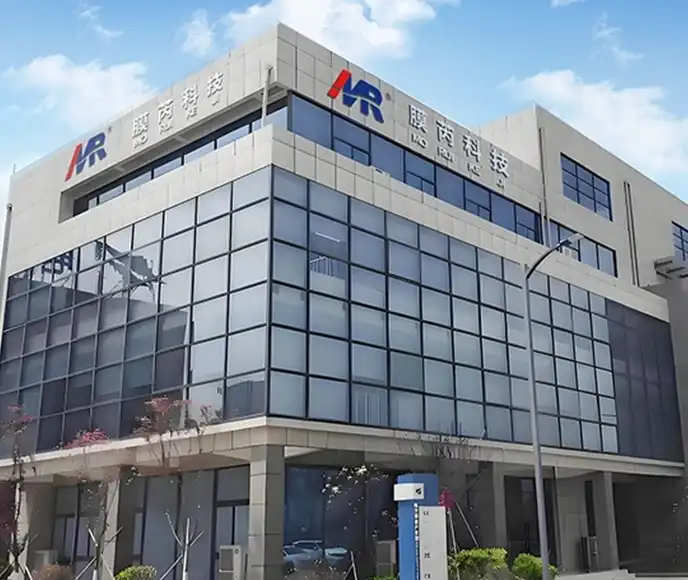
Guangdong Morui Environmental Technology Co.,Ltd has been building water treatment systems since 2005. Nearly twenty years in the field have taught us a lot, and today buyers all over the world rely on us as a steady supplier. Our role as an 8m3/hour seawater desalination equipment supplier means our systems reach customers in South America, Southeast Asia, Europe, the Middle East, and Africa, where they handle tough jobs in every one of those markets.
Most of our engineering team's effort goes into the MR-SWRO-8TH. It is a rugged system built for coastal industries and resorts in hard-to-reach places. Salt rejection holds steady at 99%, with a recovery rate of 38-45%, so the fresh water stays pure even in rough marine conditions. Power use comes in at 38.5kw/hour, which keeps running costs down while still meeting the strict process water standards our international customers work to, and that is where a 8m3/hour seawater desalination equipment supplier can make a real difference.
Quality and durability guide everything we build. Morui works under ISO, CE, and ROHS certifications, and we rely on corrosion-resistant materials plus high-efficiency RO membranes to reach a service life of 15–20 years. Every 8m3/hour seawater desalination equipment unit is tested hard before it leaves our facility, so it arrives ready to connect and run.
Our clients run projects all over the world, so we back them with full technical services. That covers remote commissioning, training built around their specific site, and maintenance support matched to what each region needs, whether that is the Middle East or Southeast Asia. Guangdong Morui is here for the long term. We build scalable, high-quality desalination technology, and with it comes dependable water security.
Reliable 8m3/Hour Seawater Desalination Systems for Global Industry
Application Scenarios
Mid-sized operations worldwide turn to a 8m3/hour seawater desalination equipment supplier for their vital infrastructure needs. That output is most critical at remote island resorts in Southeast Asia, offshore oil and gas platforms in the Middle East, and coastal industrial plants in Africa and South America. Every site requires a steady supply of potable water from high-salinity sources. It also has to cover human consumption and sensitive industrial processes.
Customer Problems and Obstacles
Desalination plants run into some tough regulatory and environmental hurdles, and those hurdles vary from one region to another. In Europe and the Middle East, they've got to meet ISO 23446 and WHO drinking water standards, which is why an 8m3/hour seawater desalination equipment supplier is key for very precise mineral removal.
Key challenges include:
- High Energy Costs: Traditional systems often pull more power than they need. In areas where electricity is costly or grid access is limited, that waste becomes a real financial burden.
- Corrosion and maintenance. Along the coasts of Southeast Asia and South America, salt in the air and water chews through equipment fast. Go with anything other than marine-grade materials and breakdowns, along with downtime, turn into a constant headache.
- Operational Complexity: Remote sites in Africa often have no skilled technicians on hand. That means the system has to run largely on its own, stay simple to service, and not depend on constant manual attention.
The Guangdong Morui Solution
Guangdong Morui Environmental Technology Co.,Ltd has been in business since 2005. Our answer is a modular, highly integrated setup built around the MR-SWRO-8TH model. With close to twenty years of experience behind us, we have moved past plain equipment sales into a full "Turnkey Engineering" approach. The system comes pre-engineered and skid-mounted, tested at the factory, and ready to deploy right away, so the shift from seawater to fresh water stays smooth and dependable.
System Architecture and Key Parts
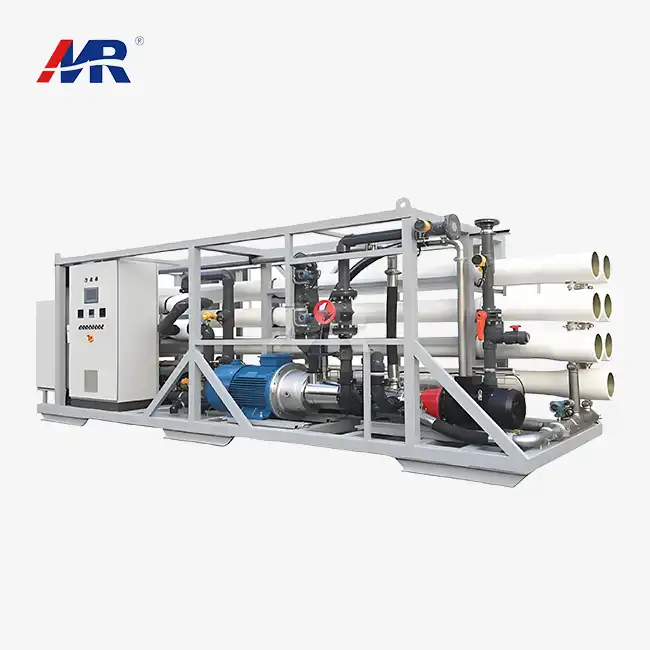
The MR-SWRO-8TH uses high-performance components built to last:
- Pre-treatment unit. Multi-media filtration and ultra-filtration modules take out suspended solids and microorganisms. That way, membrane biofouling never gets started.
- SWRO membrane module. High-rejection RO membranes hold the system at a 99% salt rejection rate. What you get is high-purity permeate.
- High-Pressure Pump. Built to move 8m3/hour, this high-efficiency pump runs at 38.5kw/hour.
- PLC Control System: The automated interface keeps recovery between 38% and 45%. It also tracks TDS levels in real time.
- CIP (Cleaning In Place) Module: A built-in chemical cleaning system lets you handle routine maintenance without taking apart the membrane pressure vessels.
Solution Advantages and Quantifiable Benefits
- Proven Reliability: We've been manufacturing for over 18 years. That track record ensures a design life of 15-20 years.
- International Certification: It fully meets ISO, CE, and ROHS standards. That clears the way into global markets.
- Energy Efficiency: The hydraulics are tuned to hold a steady power-to-water ratio.
- Corrosion Resistance: We build it from 316L stainless steel and corrosion-resistant alloys. That helps hold maintenance costs down.
- Space-Saving Design: Its compact footprint works well in containerized systems or anywhere space is tight.
Implementation and Service Capability
Guangdong Morui stays with clients from the first water analysis and site consultation all the way to final commissioning. Operators in the Middle East and Africa can also rely on our remote diagnostics. Our supply chain is solid, so critical spare parts reach customers with very short lead times. We train local staff as well, which helps them run operations on their own over the long term.
Typical Case Study
A remote coastal resort in Southeast Asia kept running into freshwater shortages. Bottled water was expensive to ship in, too. Morui installed the MR-SWRO-8TH system, which turned local seawater into potable water that meets WHO standards. The resort cut its water procurement costs by 60% and now gets a steady 192m3 per day. That has made the resort's operations much more sustainable.
Even in the toughest maritime conditions, the MR-SWRO-8TH keeps high-purity water moving at a steady rate. It runs on little energy and holds up for a long time.
FAQs
1. How do I determine if the 8m3/hour seawater desalination equipment is the right capacity for my specific application?
Selecting the correct capacity depends on your daily freshwater requirements and the operational hours of your facility. A system providing 8m3/hour generates approximately 192 cubic meters of fresh water per day if operated continuously. This scale is ideal for medium-sized resorts, offshore platforms, or small coastal industrial sites. When evaluating the 8m3/hour seawater desalination equipment, you should consider the recovery rate, which for our MR-SWRO-8TH model ranges between 38% and 45%. This means for every 100 liters of seawater processed, you receive roughly 38 to 45 liters of purified water. We recommend calculating your peak demand and accounting for storage tank capacity; Guangdong Morui Environmental Technology Co.,Ltd can provide a detailed water balance analysis based on your site-specific parameters to ensure this system meets your needs without over-investing in excess capacity.2. What quality certifications and manufacturing experience does Guangdong Morui offer for international buyers?
For buyers in South America, Europe, and the Middle East, verifying supplier authenticity is critical. Guangdong Morui Environmental Technology Co.,Ltd has been a specialized manufacturer in the water treatment industry since 2005, providing nearly two decades of engineering expertise. Our 8m3/hour seawater desalination equipment is manufactured under strict quality control protocols and holds ISO, CE, and ROHS certifications, ensuring compliance with international safety and environmental standards. These certifications verify that our systems meet rigorous European and global requirements for electrical safety and material quality. With a proven track record across Southeast Asia and Africa, we provide comprehensive documentation and factory acceptance testing (FAT) to ensure that the equipment you receive is high-performing, durable, and built to last 15 to 20 years with proper maintenance.3. How does the 8m3/hour seawater desalination equipment perform in high-salinity regions like the Middle East or Africa?
In regions like the Middle East or parts of Africa, seawater often has a high concentration of Total Dissolved Solids (TDS), sometimes exceeding 40,000 ppm. Our 8m3/hour seawater desalination equipment is engineered to handle these challenging conditions using high-efficiency Reverse Osmosis (RO) membranes that achieve a salt rejection rate of 99%. This process effectively removes dissolved salts and minerals, turning brine into high-purity water suitable for human consumption or industrial use. To manage the high energy demands typically found in these regions, the MR-SWRO-8TH model is designed with a power consumption of 38.5kw/hour, balancing high-pressure output with energy efficiency. We suggest providing a water chemistry report from your local source so we can calibrate the pre-treatment filters—which remove suspended solids and microorganisms—to prevent membrane fouling and ensure stable water quality in high-salinity environments.4. What measures are taken to prevent corrosion and ensure durability in humid coastal environments?
Coastal environments in Southeast Asia and South America are notoriously corrosive due to high humidity and salt spray. To combat this, the 8m3/hour seawater desalination equipment features a rack, piping, and fittings constructed from high-grade stainless steel and other corrosion-resistant materials. The high-pressure pump, a core component of the system, is selected for its operating efficiency and longevity under harsh marine conditions. The system can also be integrated into a containerized unit, which provides an extra layer of physical protection against the elements and simplifies the installation process. We prioritize rigorous process design to minimize maintenance costs and extend the service life of the equipment. For projects in these regions, Guangdong Morui Environmental Technology Co.,Ltd recommends regular rinsing cycles and the use of our integrated cleaning systems to maintain the integrity of the RO membranes and metallic components.5. Can Guangdong Morui provide technical support and installation services for projects outside of China?
Yes, Guangdong Morui Environmental Technology Co.,Ltd provides comprehensive technical support for all international projects across our target markets, including Europe and South America. While our 8m3/hour seawater desalination equipment is designed for easy installation—essentially requiring only a power supply (compatible with 220V-440V/50-60HZ) and seawater intake to begin producing fresh water—we offer remote technical guidance and, depending on the project scale, can arrange for on-site commissioning and training. Typically, international projects involve adherence to specific local electrical and environmental regulations; while our equipment meets ISO and CE standards, we advise clients to confirm any unique local permit requirements. Our team is available to provide the necessary technical drawings and performance data to assist in the regulatory approval process, ensuring your seawater desalination project is operational as quickly and smoothly as possible.
Best Selling Products
Related Blogs
Related Search
Tel: +86-1353-0341575
Email:benson@guangdongmorui.com
Whatapp:8613530341575
Add: No.3 Xuwu Road, Baoan District, Shenzhen, China.