

_1745823981883.webp)

Tel: +86-1353-0341575
Email:benson@guangdongmorui.com
Whatapp:8613530341575
Add: No.3 Xuwu Road, Baoan District, Shenzhen, China.
2m3/hour EDI system supplier
High-Performance 2m3/hour EDI System Solutions for Global Industrial Applications
Procurement managers in South America, Southeast Asia, Europe, the Middle East, and Africa need water treatment systems they can trust. For high-purity water production, the 2m3/hour EDI system is a key piece of equipment, and finding a 2m3/hour EDI system supplier who really knows the technology can make the decision much simpler. Electrodeionization (EDI) is a continuous water treatment process. It uses electricity, ion-exchange membranes, and resin to remove ions from water. It does not need hazardous chemicals for regeneration. When a facility adds EDI to its normal industrial process, it can produce steady ultrapure water (UPW) and cut its environmental impact by a large margin.
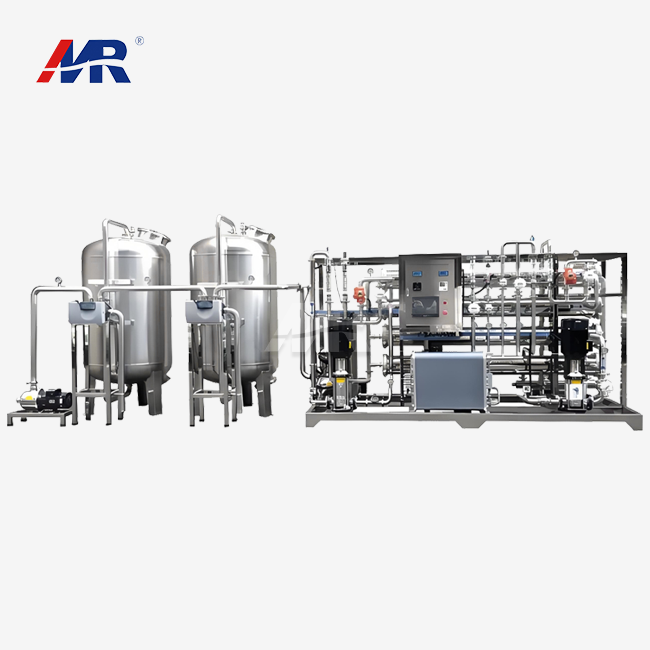
Industrial sites in Southeast Asia, the Middle East, and other areas struggle to keep water quality in check as environmental rules keep getting tighter. Traditional ion-exchange systems are expensive to run because of the chemicals involved, and they also create logistical headaches with hazardous waste discharge. A lot of facilities also see unstable performance when feed water conditions shift. Getting technical support or spare parts on time is another headache, especially in remote parts of South America or Africa. A dependable 2m3/hour EDI system supplier has to solve these problems with solid engineering and local compliance know-how. Otherwise, downtime gets expensive.
Founded in 2005, Guangdong Morui Environmental Technology Co.,Ltd builds 2m3/hour EDI systems made for the tough demands of ultrapure water production. Our MR-EDI-2TH model is designed to work worldwide. It carries ISO, CE, and ROHS certifications, so it meets European and international safety standards. Manufacturers that need a 99.99% salt rejection rate and a sustainable recovery rate of 55% will find it effective. The system also uses advanced membrane technology to take up much less space than conventional systems. That makes it a strong fit for facilities where space and efficiency matter most.
- Continuous Ultrapure Water Production: The MR-EDI-2TH model delivers a steady supply of high-resistivity water. It removes the downtime that batch chemical regeneration usually causes in industrial water treatment.
- Optimized Energy Efficiency: With a power consumption of only 8.5kw/hour, this 2m3/hour EDI system helps facilities in high-energy-cost regions like Europe reduce their total cost of ownership.
- Global Compliance and Reliability: Fully certified with ISO, CE, and ROHS, these systems meet the stringent environmental and safety regulations of South America and Southeast Asia.
- Superior Purification Performance: The system achieves a salt rejection rate of 99.99%, providing the precise water quality necessary for semiconductor, pharmaceutical, and power generation sectors.
- Durable Design for Challenging Environments: Engineered as a robust 2m3/hour EDI system solution, the hardware is built to withstand varied industrial climates from the Middle East to Africa.
To ensure the best fit for specific industrial requirements, procurement teams can review the comprehensive technical data sheets and performance benchmarks for the MR-EDI-2TH. Detailed project consultations allow for the customization of feed water pretreatment stages to optimize the performance of the 2m3/hour EDI system in local conditions. Access to localized technical support documentation and international certification records assists in streamlining the supplier verification process. The utilization of 99.99% salt rejection technology provides a consistent foundation for high-stakes ultrapure water applications across diverse industrial sectors.
Related Products
Reliable Water Treatment Solutions from Guangdong Morui
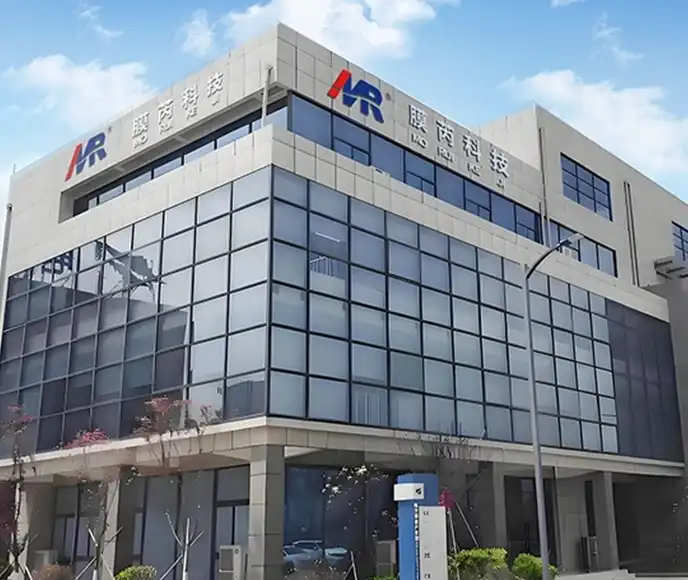
Guangdong Morui Environmental Technology Co., Ltd. started back in 2005. We specialize in advanced ultrapure water production systems. After nearly two decades in water treatment, we now serve customers across South America, Southeast Asia, Europe, the Middle East, and Africa, and as a 2m3/hour EDI system supplier, we offer industrial solutions that include a precision-built 2m3/hour EDI system.
Our flagship Model MR-EDI-2TH is built for industrial sites where water quality has to stay consistent. It uses chemical-free electrodeionization, so there is no need for hazardous chemical regeneration. The system hits a 99.99% salt rejection rate. As an ISO, CE, and ROHS certified supplier, Morui keeps tight quality control. For that, Morui, a 2m3/hour EDI system supplier, tests each system for electrical stability and membrane integrity. That is how we ensure a reliable 55% recovery rate and efficient power consumption of 8.5kw/hour.
We support clients around the world with technical services. These range from remote debugging to onsite operator training. Facilities from Southeast Asia to Europe can maintain peak resistivity levels and keep downtime to a minimum. Guangdong Morui is committed to long-term value through sustainable water treatment technology. We help you optimize your operational footprint and total cost of ownership.
Sustainable High-Purity 2m3/hour EDI System for Industrial Water Treatment
Application Scenarios in Ultrapure Water Production
Precision manufacturing and power generation both depend on high-purity water. At water treatment plants, a 2m3/hour EDI system from a 2m3/hour EDI system supplier serves as the final polishing step, and resistivity has to stay above 15-18 MΩ·cm. In Southeast Asia's semiconductor and microelectronics plants, that water is essential for wafer rinsing and helps keep microscopic contamination at bay. In European pharmaceutical facilities, it helps make sure feed water meets strict pharmacopeia standards. Power plants in the Middle East rely on the same technology in high-pressure boiler systems to prevent turbine scaling and corrosion, which supports long-term operation.
Industry Challenges Worldwide and Regional Limits
Industrial water purification runs into tough problems in South America, Africa, and the Middle East. Traditional Ion Exchange (IX) systems rely on chemical regeneration with acids and caustics, which creates serious safety risks and high running costs, especially in remote areas. Europe and Southeast Asia enforce stricter wastewater discharge rules, so removing chemical regenerants is now costly and legally difficult. Plants also face high energy bills and the chance of surprise downtime caused by complex manual upkeep. In emerging markets, local technical support is often thin. That makes automated, low-maintenance systems from a 2m3/hour EDI system supplier more important, since they must handle feedwater that changes from one source to another.
The Guangdong Morui Environmental Technology Co.,Ltd Solution
Founded in 2005, Guangdong Morui Environmental Technology Co.,Ltd offers a full 2m3/hour EDI system solution for customers worldwide. This is more than hardware. It puts the Model: MR-EDI-2TH into a modular, automated setup. Electrodeionization combined with smart monitoring means the system needs no chemical regeneration at all. The result is a steady, continuous flow of ultrapure water. It is built to meet ISO, CE, and ROHS standards for international compliance.
Technical Specifications and System Architecture
The solution uses a multi-stage design built for maximum reliability:
- EDI Stack Module (MR-EDI-2TH): This is the core of the system. It uses electrical current to continuously regenerate ion-exchange resins. It reaches a 99.99% salt rejection rate and a 55% water recovery rate.
- Power & Control Unit: The system is built for energy efficiency and uses only 8.5kw/hour. A PLC-based interface tracks resistivity, flow rates, and amperage in real time.
- Pre-treatment Integration: The system is designed to run downstream of a Reverse Osmosis (RO) stage. That keeps feed water hardness and TOC within target limits, so scaling does not occur.
- Maintenance & CIP Module: Built-in Cleaning-In-Place (CIP) lets you sanitize on a regular schedule without taking the stacks apart. That cuts labor costs.
Quantifiable Strategic Advantages
- Operational Savings: The process runs without chemicals, so O&M costs come in around 30-40% lower than those of traditional resin beds.
- High Purity Stability: Salt rejection holds steady at 99.99%, which keeps process water quality from fluctuating.
- Energy Efficiency: Running at 8.5 kW/hour, the system supports global carbon reduction goals and lowers utility costs.
- Footprint Optimization: The modular 2 m3/hour design needs 50% less space than conventional IX systems.
- Safety Compliance: Remove hazardous chemicals, and the workplace becomes safer. Environmental permitting also gets simpler.
Implementation and International Support
Guangdong Morui Environmental Technology Co.,Ltd covers the whole lifecycle, from first water analysis and system design to manufacturing and global logistics. For projects in South America, Africa, and other regions, remote diagnostics help keep downtime low. Before anything ships, the implementation process includes strict factory acceptance testing (FAT) to check CE and ISO compliance. After that, the company sends full technical documentation and operator training modules. Local teams can then manage the system effectively.
Typical Implementation Case Study
A drug maker in Southeast Asia needed a steady 2m3/hour flow of ultrapure water for injection-grade production. Its old system used manual resin regeneration. That led to uneven water quality and high chemical costs. After the plant switched to the MR-EDI-2TH solution, it held a stable resistivity of 17.5 MΩ·cm and removed all chemical handling. The change cut total cost of ownership by 25% and met all regional environmental discharge audits within the first six months of operation.
The electrodeionization technology enables continuous production of high-resistivity water while significantly reducing the environmental footprint of industrial facilities.
FAQs
1. What are the primary advantages of installing a 2m3/hour EDI system compared to traditional ion exchange methods?
The 2m3/hour EDI system, specifically our MR-EDI-2TH model, represents a significant shift toward sustainable ultrapure water production. Unlike traditional Ion Exchange (IX) beds that require periodic shutdowns for hazardous chemical regeneration using acid and caustic soda, Electrodeionization (EDI) is a continuous, electrically-driven process. By utilizing ion-exchange membranes and electricity, the system achieves a consistent 99.99% salt rejection rate without chemical handling. For facilities in Europe or Southeast Asia looking to reduce their environmental footprint, this technology eliminates the need for wastewater neutralization systems and reduces operational downtime. Furthermore, with a power consumption of approximately 8.5kw/hour, it offers a predictable and lower total cost of ownership. We recommend evaluating your current chemical costs to see how quickly the transition to a chemical-free EDI system can pay for itself.2. How can I ensure the MR-EDI-2TH system maintains its 99.99% salt rejection rate in diverse international environments?
Maintaining high performance in a 2m3/hour EDI system requires strict adherence to feed water specifications, particularly when operating in regions with challenging raw water like parts of the Middle East or Africa. The most critical factor is the quality of the Reverse Osmosis (RO) permeate entering the EDI stack. To protect the membranes from scaling, feed water hardness should typically be kept below 1 ppm (as CaCO3) and reactive silica below 0.5 ppm. Our MR-EDI-2TH is designed for stability, but we suggest implementing a robust pre-treatment stage and real-time monitoring of DC voltage and amperage. If your project involves variable feed water quality, Guangdong Morui Environmental Technology Co.,Ltd can help analyze your water report to determine if additional softening or double-pass RO is necessary to protect your 99.99% rejection efficiency and ensure long-term stability.3. Does the 2m3/hour EDI system meet international industrial standards for markets in Europe and South America?
Yes, Guangdong Morui Environmental Technology Co.,Ltd, established in 2005, ensures that our 2m3/hour EDI system aligns with stringent international requirements. Our equipment is manufactured under ISO-certified quality management systems and carries CE and ROHS certifications, which are essential for entry into the European and South American markets. These certifications verify that the MR-EDI-2TH meets high safety, health, and environmental protection standards. While our systems generally comply with global industrial norms for ultrapure water production, specific local regulations regarding electrical configurations or pressure vessel documentation may vary. We advise clients to share their local compliance checklists with us early in the project phase so we can ensure the system configuration meets every local requirement.4. What are the key maintenance requirements for an EDI system operating in Southeast Asia or Africa?
For industrial water treatment in Southeast Asia and Africa, the main maintenance focus for a 2m3/hour EDI system is preventing scaling and microbial fouling, which can be accelerated by higher ambient temperatures. Because the MR-EDI-2TH operates at a 55% recovery rate, managing the concentrate stream is vital to prevent internal mineral buildup. We recommend three specific steps: first, calibrate your online resistivity meters and TOC analyzers monthly against NIST-traceable standards; second, monitor the pressure drop across the EDI stack to detect early signs of fouling; and third, implement a validated sanitization cycle if biofilm formation is suspected. Since EDI is a "polishing" technology, ensuring the upstream RO system is functioning perfectly is the best way to maintain the EDI stack. Guangdong Morui provides comprehensive technical manuals and remote support to help local operators maintain peak performance.5. Can Guangdong Morui Environmental Technology Co.,Ltd provide technical support for the 2m3/hour EDI system in remote regions?
Guangdong Morui Environmental Technology Co.,Ltd has been a leader in the water treatment industry since 2005, and we have extensive experience supporting projects across the Middle East, Southeast Asia, and beyond. For our 2m3/hour EDI system, we provide comprehensive technical documentation, including detailed installation guides and P&ID drawings, to facilitate local setup. For complex installations, we offer remote commissioning support where our engineers guide your local team through the startup process via video conferencing and real-time data analysis. We also maintain a stock of critical components for the MR-EDI-2TH model to ensure fast shipping of replacements if needed. If your project requires onsite commissioning or specialized training for your staff in South America or Africa, please contact us to discuss service availability and scheduling tailored to your specific location.
Best Selling Products
Related Blogs
Related Search
Tel: +86-1353-0341575
Email:benson@guangdongmorui.com
Whatapp:8613530341575
Add: No.3 Xuwu Road, Baoan District, Shenzhen, China.