

_1745823981883.webp)

Tel: +86-1353-0341575
Email:benson@guangdongmorui.com
Whatapp:8613530341575
Add: No.3 Xuwu Road, Baoan District, Shenzhen, China.
45m3/hour seawater desalination system supplier
Dependable 45m3/hour Seawater Desalination Systems for Industrial Projects Around the World
Procurement managers across South America, Southeast Asia, Europe, the Middle East, and Africa need water treatment infrastructure they can rely on. If you're buying 45m3/hour seawater desalination systems, the 45m3/hour seawater desalination system supplier you pick decides whether operations stay stable over the long run. A 45m3/hour seawater desalination system is a large industrial unit. It turns salty ocean water into high-purity fresh water. Coastal factories, remote resorts, and municipal utility projects treat it as a core utility. These systems carry the weight of water security. They free local supplies from rainfall that follows no pattern and groundwater that keeps shrinking.
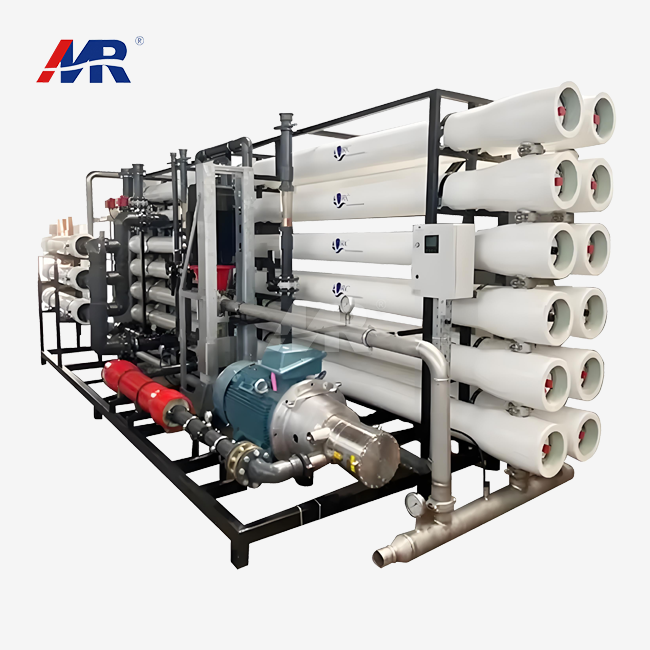
In the Middle East and Southeast Asia, if you're buying large-scale desalination equipment, you're up against complicated rules and a lot of pressure on operating costs. Buyers keep running into the same headaches. Energy prices swing, and that shifts the cost per cubic meter, so anyone hunting for a 45m3/hour seawater desalination system supplier has to keep a close eye on those numbers. Membranes foul early when feed water runs high in turbidity. Meeting ISO and CE certification requirements can be a real struggle. Then there's technical support. When it's missing at remote sites in Africa or South America, downtime drags on. Salt rejection rates that drift put downstream industrial processes at risk, especially where strict water chemistry profiles are needed.
Guangdong Morui Environmental Technology Co.,Ltd has been in business since 2005. We build engineered 45m3/hour seawater desalination systems for the tough demands of water treatment projects worldwide. Our MR-SWRO-45TH model carries two decades of manufacturing know-how. It handles the salinity levels and temperature swings found across Europe and the Middle East. This 45m3/hour seawater desalination system pairs energy efficiency with hardware that holds up. Industrial users get a steady flow of permeate water, even on harsh coastlines where salt concentrations run high.
- Industrial-grade specs: the MR-SWRO-45TH draws 95kw/hour. That helps keep energy use under control on medium-to-large water treatment jobs, especially where power costs are high.
- High efficiency and purity: this seawater desalination system runs at 45m3/hour. With a recovery rate of 38-45% and salt rejection at 99%, it meets the strict purity standards many industrial uses demand.
- Global compliance: every unit is built under ISO management systems and carries CE and ROHS certifications. That makes import and regulatory approval in South America and Europe straightforward.
- Longer system life: advanced membrane technology and high-pressure pumps help our 45m3/hour seawater desalination systems resist corrosion. They also reduce how often mandatory Cleaning-In-Place (CIP) cycles are needed.
- A Manufacturing Record You Can Check: Morui has been in business since 2005. We back that up with full documentation and factory audit support. That way, procurement managers buying from overseas can confirm the supplier is genuine.
Want a water supply that holds up for your local site? Start with the technical side. Look at what a 45m3/hour seawater desalination system can do, and check the supplier's credentials. If that sounds useful, ask for detailed technical drawings, a breakdown of energy consumption, and case studies from your region. They'll help you compare vendors. Bring in an engineering team and you can fine-tune the pretreatment modules to match the feed water at your location. The MR-SWRO-45TH is a high-performance setup designed to produce industrial freshwater around the clock.
A Leading Provider of Integrated Seawater Desalination Solutions
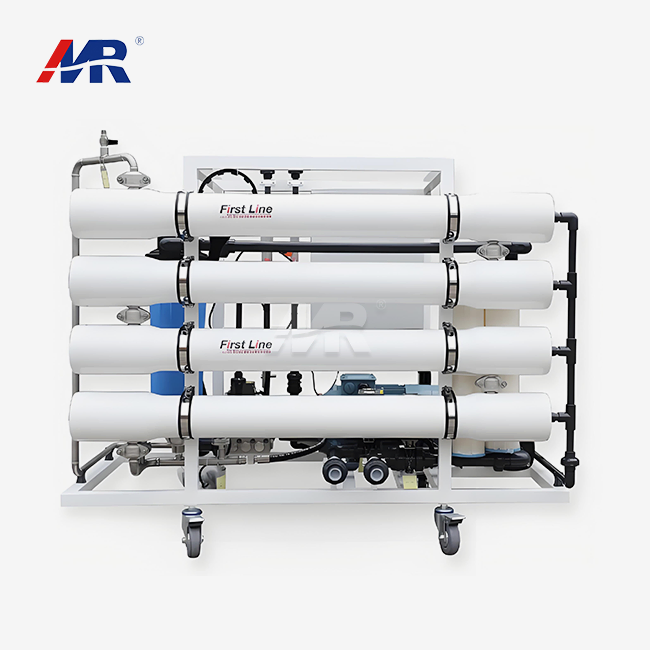
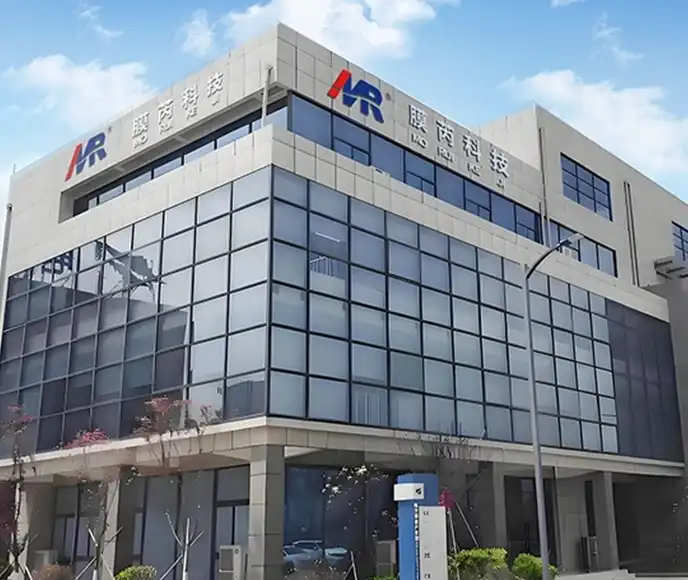
Since 2005, Guangdong Morui Environmental Technology Co., Ltd. has been a key player in the global water treatment industry. We design and build advanced desalination infrastructure. Our main focus as a 45m3/hour seawater desalination system supplier is high-performance 45m³/hour seawater desalination systems for water-stressed regions in South America, Southeast Asia, Europe, the Middle East, and Africa.
Our MR-SWRO-45TH model is built to prove that kind of technical strength. It's meant for high-stakes industrial and municipal jobs. The system gets a 99% salt rejection rate and holds a steady recovery rate of up to 45%. It provides a constant supply of high-purity water while using 95kw/hour. Morui, a 45m3/hour seawater desalination system supplier and ISO, CE, and ROHS-certified manufacturer, sticks to strict quality management protocols. Every unit is made to handle the tough design requirements of corrosive coastal environments.
To support customers abroad, Morui offers technical services from start to finish. These include remote commissioning, on-site training, and localized maintenance support. That keeps your 45m³/hour seawater desalination system running at peak efficiency throughout its lifecycle. With nearly two decades of project experience, Guangdong Morui is a verified partner for sustainable, large-scale water security.
Reliable Seawater Desalination at 45m3/h for Coastal Industrial Operations
Water Treatment Use Cases
Seawater desalination has become a strategic need for many sectors. Their usual freshwater sources have either dried up or never existed in the first place. The 45m3/hour seawater desalination system, often sourced from a 45m3/hour seawater desalination system supplier, handles mid-to-large scale applications. Mining operations in South America's arid coastal regions rely on it for critical process water. Luxury resorts and remote island communities in Southeast Asia and the Middle East depend on this capacity to keep potable water flowing for guests and infrastructure. Offshore oil and gas platforms in the North Sea or Africa use these systems to keep operations running in isolated marine environments.
Regional Challenges and What Clients Struggle With
Desalination plants across the Middle East and Southeast Asia run into their own set of problems. When high salinity and constantly shifting seawater temperatures aren't managed well, membranes from any 45m3/hour seawater desalination system supplier can foul up fast. In Europe and South America, strict environmental rules are also in place. Facilities there have to use less energy and deal with brine in a responsible way.
- Energy Consumption: Power ranks among the largest operating costs. A system has to deliver high output without wasting electricity to stay viable.
- System Reliability: In remote locations, a breakdown can lead to catastrophic downtime. That is why ISO and CE standards are non-negotiable when you check whether a supplier is credible.
- Maintenance Complexity: Complex systems are often hard to maintain when local technical expertise is not available. That pushes demand for high automation and solid remote monitoring.
How Guangdong Morui Approaches It
Guangdong Morui Environmental Technology Co.,Ltd has been building these systems since 2005, so nearly twenty years now. What it sells is a modular, turnkey package built around the Model MR-SWRO-45TH. That package pairs advanced filtration with desalination technology that keeps energy use low. It is made to hold up in the corrosive conditions found in the target markets. The real point is steady operation and a lower cost of ownership over time, not just what the hardware costs up front.
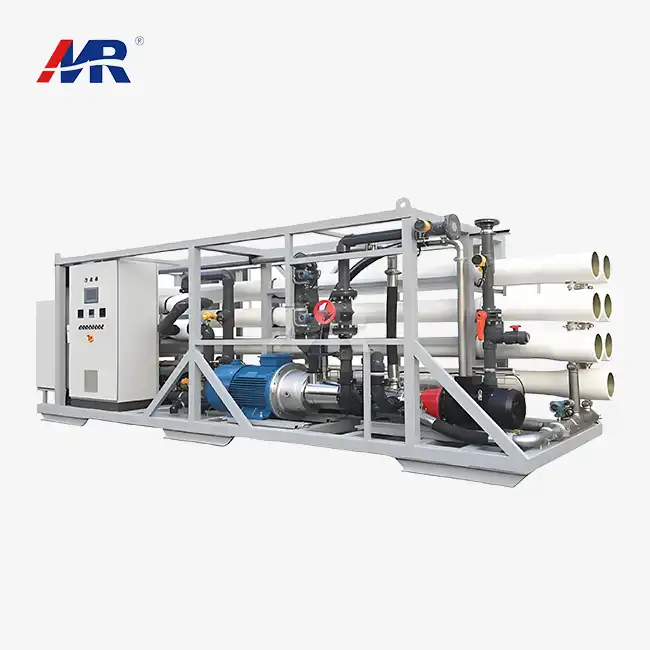
Layout and Key Components
The 45m3/h system is made up of four core working modules:
- Advanced Pre-treatment Unit: Multi-media filtration works together with micro-filtration at this stage. They pull out suspended solids and biological contaminants. That keeps the primary membranes from clogging too soon.
- MR-SWRO-45TH RO Host: High-pressure pumps drive the core module, paired with premium seawater membranes. Salt rejection reaches 99%, and recovery runs at 38-45%. Water coming out of the unit meets WHO drinking water standards.
- PLC Automation & Control: A built-in Siemens or Schneider PLC system runs the process, using frequency conversion to hold power consumption at 95kw/hour. You can watch flow, pressure, and TDS levels in real time.
- Cleaning-In-Place (CIP) Module: A dedicated chemical cleaning system takes care of routine maintenance, so there's no need to take the whole system apart. Membranes last 5-7 years this way.
System Advantages You Can Measure
- High-Purity Output: Permeate quality holds steady, with 99% salt rejection, even when feed water TDS rises or falls.
- Energy Efficiency: Optimized pump setups keep power use at 95kw/hour. Compared with older models, that cuts operating costs by 15-20%.
- Regulatory Compliance: The system carries full ISO, CE, and ROHS certifications, so it meets safety and environmental standards around the world.
- Space-Saving Design: The modular, skid-mounted layout has a small installation footprint. That makes it a practical option for retrofits in existing facilities.
Implementation and Service Support
Every project starts with a full water quality analysis and a site assessment. After that, Guangdong Morui manages manufacturing, factory acceptance testing (FAT), and international logistics. Clients in Africa and South America get remote diagnostic support and a structured spare parts supply chain. Local operators also receive technical training. With proper preventative maintenance, the system reaches its 20-year design life.
Case Study: A Typical Application
Ongoing water shortages hit a coastal industrial park in Southeast Asia. The cause was salty groundwater. To fix it, the park installed a 45m3/h MR-SWRO-45TH system. It came with custom pre-treatment to handle high turbidity in certain seasons. Once in place, the plant produced a steady 1,080m3 of fresh water per day. That met all its industrial and domestic needs. The system's automatic backwash and CIP cycles cut manual labor by 40%. Salt rejection stayed above 99% the whole time.
Technical documents and site-specific engineering configurations are available for organizations that want a stable water supply with advanced membrane separation technology.
The high-efficiency reverse osmosis process keeps a steady supply of drinking water, no matter the location or climate.
FAQs
1. What are the key technical advantages of the 45m3/hour seawater desalination system for industrial use?
The 45m3/hour seawater desalination system, specifically our MR-SWRO-45TH model, is engineered to convert high-salinity ocean water into high-purity fresh water for industrial, agricultural, and municipal applications. With a robust salt rejection rate of 99%, it ensures the output meets strict potable or process water standards. We recommend this capacity for mid-sized resorts or industrial plants where a steady supply of over 1,000 cubic meters per day is required. To optimize performance, users should monitor the Total Dissolved Solids (TDS) of the intake water, as the system is designed to maintain a stable recovery rate between 38% and 45% under standard conditions.2. How can I verify the reliability and manufacturing expertise of Guangdong Morui Environmental Technology Co., Ltd?
Reliability is critical when investing in a 45m3/hour seawater desalination system. Guangdong Morui Environmental Technology Co., Ltd has been a dedicated water treatment manufacturer since 2005, bringing nearly two decades of engineering expertise to the global market. Our production processes are strictly governed by ISO quality management systems, and our equipment carries CE and ROHS certifications, ensuring compliance with international safety and environmental standards. We encourage potential partners to review our project portfolio across South America and the Middle East. For peace of mind, we provide comprehensive technical documentation and factory acceptance testing (FAT) before shipment to verify that every unit meets the specified 95kw/hour power consumption benchmarks.3. For projects in the Middle East or Southeast Asia, what local regulations or conditions should be considered for a desalination plant?
When deploying a 45m3/hour seawater desalination system in regions like the Middle East or Southeast Asia, local environmental regulations regarding brine discharge and energy efficiency are paramount. In the Middle East, high feedwater salinity and temperature often require specialized pretreatment to protect the RO membranes, whereas Southeast Asian projects must account for high humidity affecting electrical components. Typically, projects involve environmental impact assessments (EIA) for brine disposal to protect local marine ecosystems; however, specific requirements vary by country. We suggest consulting with Guangdong Morui to ensure the system design aligns with local WHO water quality guidelines or specific regional industrial standards before finalizing the installation.4. What are the operational costs and energy requirements for the MR-SWRO-45TH desalination system?
The operational efficiency of the MR-SWRO-45TH model is highlighted by its power consumption of approximately 95kw/hour. To manage costs effectively, we recommend three specific strategies: first, implement regular Cleaning-In-Place (CIP) cycles to maintain membrane flux and prevent scaling; second, ensure the pretreatment system is backwashed according to the pressure differential; and third, monitor the specific energy consumption per cubic meter of water produced. While the recovery rate sits at 38-45%, the use of high-efficiency pumps helps stabilize the energy load. For a detailed operational expenditure (OPEX) analysis tailored to your local electricity rates in Europe, Africa, or other regions, our technical team can provide a customized simulation based on your specific feedwater chemistry.5. Does Guangdong Morui provide onsite installation and technical support for systems in South America or Africa?
Yes, Guangdong Morui Environmental Technology Co., Ltd offers comprehensive technical support for our 45m3/hour seawater desalination system across our core markets, including South America and Africa. Our service typically follows a three-step process: remote pre-installation guidance to ensure site readiness, onsite supervision of installation and commissioning by our expert engineers, and specialized training for your local operators. We provide multilingual technical manuals and remote diagnostic support to address operational queries. If your project is located in a remote coastal area, please contact us to discuss specific logistics and how we can facilitate local maintenance schedules to ensure the long-term stability and 99% salt rejection performance of your water supply.
Best Selling Products
Related Blogs
Related Search
Tel: +86-1353-0341575
Email:benson@guangdongmorui.com
Whatapp:8613530341575
Add: No.3 Xuwu Road, Baoan District, Shenzhen, China.