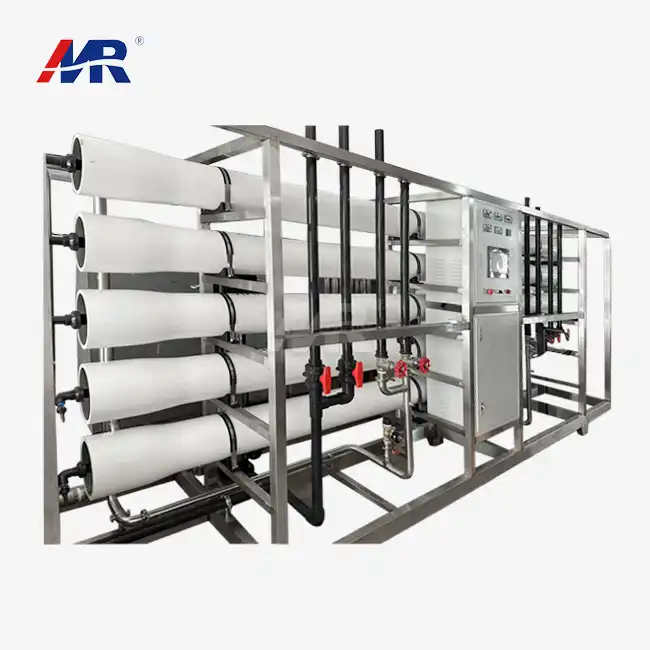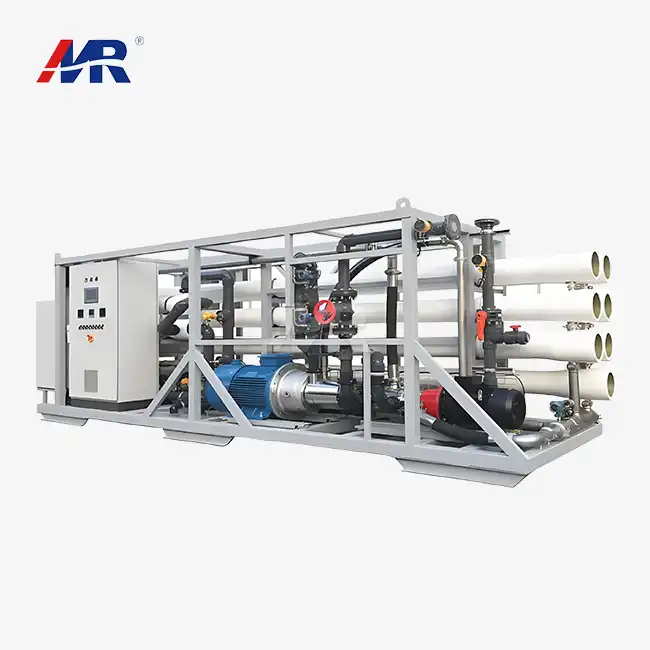



4040 seawater reverse osmosis membrane supplier
4040 Seawater Reverse Osmosis Membranes for Industrial Desalination
Procurement managers and water treatment specialists in South America, Southeast Asia, and the Middle East count on a high-performance 4040 seawater reverse osmosis membrane for long-term water security. In desalination systems, this part is the main filtration barrier, and a 4040 seawater reverse osmosis membrane supplier who understands that role can help ensure reliable operation. It uses advanced semi-permeable film technology to turn high-salinity intake into potable or industrial-grade water. On large water treatment projects, how well the membrane holds up shapes both the output quality and the plant's energy efficiency.
Water treatment operators in Africa and Southeast Asia often have to deal with tough feed water. High organic loads and salinity that keeps shifting, something a 4040 seawater reverse osmosis membrane supplier knows all too well, make membranes foul fast. Throw in regulatory rules from Europe or South America, and things get even more complicated. Components still need to meet ISO and CE standards for environmental and safety compliance. Many projects also run into high operating costs and weak technical support. Holding the high pressure needed for effective salt separation is a real challenge, especially when you're trying to protect thin profit margins and manage long delivery cycles.
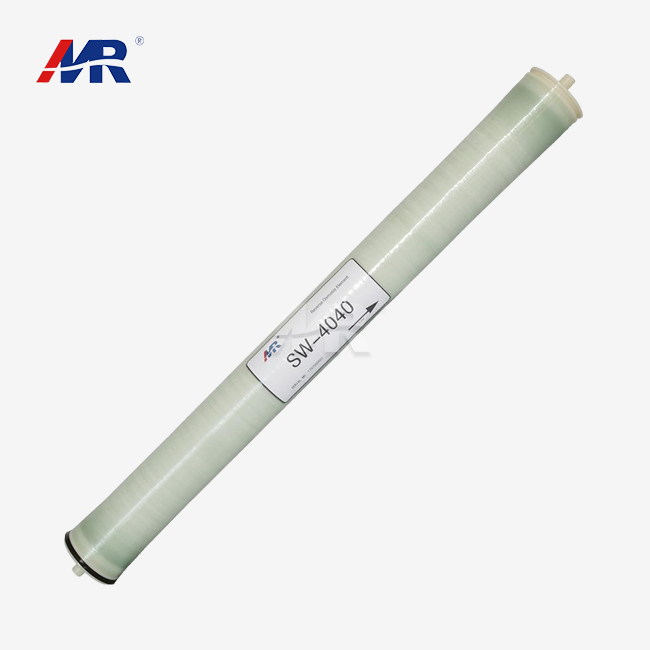
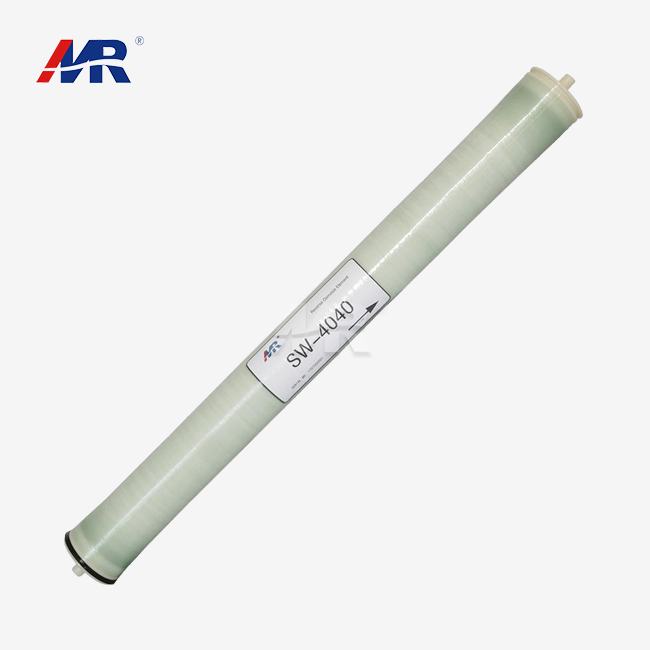
Guangdong Morui Environmental Technology Co., Ltd began in 2005. The company makes 4040 seawater reverse osmosis membrane solutions for harsh conditions worldwide. The MR-SW-4040 model is built for high-pressure desalination. It runs in a strong 5.5-7 MPa range, so permeate flow stays steady even when seawater temperatures change. Facilities that use these 4040 seawater reverse osmosis membrane products achieve an industry-leading 99.8% salt rejection rate. That removes dissolved solids and microorganisms and meets international standards. With nearly two decades of manufacturing experience, the company bridges the gap between strict technical needs and the logistics hurdles common in the Middle East and other emerging markets.
Key technical strengths and regional benefits:
- Outstanding separation performance: The MR-SW-4040 delivers 99.8% salt rejection and a flow rate of 1400GPD. In industrial water treatment, that gives the permeate stream very high purity.
- Compliance with international rules: Every 4040 seawater reverse osmosis membrane is made under ISO, CE, and ROHS certifications. That helps with customs clearance and regulatory approval in European and South American markets.
- Optimized membrane geometry: This 4040 seawater reverse osmosis membrane gives you 7.9m² of active surface area. That maximizes contact efficiency while still keeping a compact footprint for modular desalination units.
- Durability in High-Salinity Conditions. These membranes run at operating pressures of up to 7Mpa. Mineral scaling is not an issue, and neither is biofouling. That level of resistance adds up to a longer working lifespan, even through continuous duty cycles.
- Proven Manufacturing Heritage. The production protocols go back to 2005, and that long track record keeps batch quality consistent. Buyers in the Middle East and Africa who work through complicated procurement cycles also get support from the technical documentation.
A desalination project succeeds when technical specialists get to review detailed performance curves and chemical compatibility charts. That gives them room to set specific parameters, like flux rates and pressure requirements, against the local feed water analysis. Comparing the two is what helps them pick the most stable 4040 seawater reverse osmosis membrane configuration. Take the MR-SW-4040 model. It uses an advanced thin-film composite structure, so permeate production holds steady even in high-salinity conditions.
Related Products
FAQs
1. What is your typical manufacturing lead time and monthly capacity for large-scale orders?
Our standard production lead time is 20 to 30 days, supported by a monthly manufacturing capacity of over 40,000 units. As an ISO-certified facility, we utilize automated welding and high-tonnage stamping lines to ensure consistent output and structural integrity for high-volume B2B procurement. For major distributors in the United States, Canada, and Australia, we often maintain a safety buffer of common components to expedite urgent restock requests. This scale allows us to handle heavy-duty requirements efficiently while maintaining strict tolerances across every batch. Contact our sales team today for a custom production schedule based on your current inventory needs.2. Can you provide details on your export experience to the Spain, UK, and US markets?
We have over 12 years of specialized experience as a manufacturer exporting to Spain, the United Kingdom, the United States, and Australia. We are fully conversant with international logistics and regional compliance requirements, ensuring that every 2-5/16 in. Ball A-Frame Trailer Coupler meets the specific market standards of our international B2B partners. Our documentation includes detailed certificates of origin and material test reports (MTRs) to facilitate smooth customs clearance and local distribution. We currently serve several of the top trailer parts wholesalers in North America and Europe, providing reliable supply chain stability.3. How do you ensure the quality and safety of each 2-5/16 in. Ball A-Frame Trailer Coupler?
Our quality assurance protocol follows a multi-stage testing process including SAE J684 tensile load testing and ASTM B117 salt spray resistance. Each batch of the 2-5/16 in. Ball A-Frame Trailer Coupler undergoes a minimum of 500 hours of corrosion resistance testing to ensure durability in coastal regions. Additionally, our latching mechanisms are cycle-tested over 1,000 times to prevent fatigue and "false locking" scenarios that could lead to accidental decoupling. We provide full traceability for the Grade 50 cast steel used in our heavy-duty models. You can request a copy of our latest laboratory test results from our technical department.4. Do you support third-party factory audits or virtual on-site inspections?
Yes, we fully support third-party audits from organizations such as SGS, TÜV, or Intertek to verify our production capabilities and ISO 9001 compliance. We recognize that for international buyers in the UK and Canada, physical travel may be difficult, so we offer live video inspections of our welding, stamping, and finishing departments. This transparency allows you to verify our equipment, such as our 500-ton hydraulic presses and robotic welding stations, in real-time. This ensures you are dealing with a genuine manufacturer rather than a trading company. Please schedule a virtual tour with our export manager to see our facility in operation.5. What are the key factors for evaluating a reliable manufacturer of heavy-duty trailer couplers?
Evaluating a supplier requires looking beyond the unit price to focus on manufacturing certifications, material grades, and testing transparency. A reliable manufacturer must hold ISO certification and provide proof of compliance with SAE J684 standards for high-capacity towing, typically ranging from 10,000 to 21,000 lbs GTW. Key indicators of strength include the use of heavy-gauge stamped or cast steel and advanced surface treatments that offer 500+ hours of salt spray resistance. Furthermore, verifying a supplier's history of exporting to regulated markets like the USA and Australia ensures they understand the legal and safety liabilities associated with towing components.