

_1745823981883.webp)

Email:benson@guangdongmorui.com
Whatapp:8613530341575
Add: No.3 Xuwu Road, Baoan District, Shenzhen, China.
60m3/hour reverse osmosis plant supplier
Efficient 60m3/hour Reverse Osmosis Plant for the Global Food Industry
For procurement managers and plant engineers across South America, Southeast Asia, Europe, the Middle East, and Africa, finding a reliable 60m3/hour reverse osmosis plant supplier is a critical step. The plant delivers high-volume, high-purity water for industrial processes. Large systems like these rely on semi-permeable membranes under high pressure. They remove up to 99% of dissolved salts, minerals, and organic contaminants. In a professional water treatment setup, this equipment sits at the heart of the facility. It turns raw feed water into a steady resource that meets strict quality standards for production and manufacturing.
High-capacity water systems are hard to run in different parts of the world. Logistics and technical problems come up often. Facilities in Southeast Asia and Africa frequently face high turbidity and shifting salinity in feed water. Membranes can foul early, and maintenance costs can spike without warning. Desalination also uses a lot of energy, so a 60m3/hour reverse osmosis plant supplier has to deliver a system that hits strict power targets to stay profitable. In Europe and South America, CE and ROHS compliance is not optional. It is required for legal operation. Without a proven manufacturer, procurement teams often risk long lead times, weak technical documents, and systems that cannot handle harsh conditions or heavy load cycles.
Guangdong Morui Environmental Technology Co., Ltd began in 2005. The company designs and builds the Model MR-BWRO-60TH, a 60m3/hour reverse osmosis plant made for the food industry. It balances high output with energy efficiency and holds power use at a steady 45kw/hour. Reliability matters in remote or tightly regulated regions, so Morui uses high-rejection membranes and strong pre-filtration modules to keep the recovery rate at 55-75%. The system meets ISO, CE, and ROHS standards. That makes verification easier for international buyers. It also gives the assurance of build quality and material safety that global water treatment projects require.
- Food-Sector Performance: The Model MR-BWRO-60TH is designed for the food industry. With a 99% salt rejection rate, it helps the permeate meet high-purity standards.
- Worldwide Compliance: The complete 60m3/hour reverse osmosis plant assembly holds ISO, CE, and ROHS certification. This helps with customs clearance and regulatory approval in Europe and South America.
- Keeping Operating Costs Down: The system is built for efficiency and runs at 45kw/hour. That helps control the long-term overhead of large-scale water treatment.
- Strong Recovery: The design delivers a recovery rate of 55-75%. That cuts brine discharge significantly and gets more use out of available feed water sources.
- Durable Modular Construction: This plant is built to handle the environmental stress that comes with the Middle East and Africa. High-grade pressure vessels and corrosion-resistant parts keep it running, and they give the system a long service life.
Before you invest in a 60m3/hour reverse osmosis plant, take a close look at the technical drawings, energy profiles, and material certifications. Every one of them has to fit your facility's goals. Have your technical team study the performance data and the P&ID diagrams. That is how you confirm the system will work with the infrastructure already on site. Speak with a dedicated engineer and you'll learn more about the membrane configurations and the local maintenance schedules, which shift with the water chemistry of each region. With professional guidance, the configuration you choose will hold steady in a 24/7 industrial production environment.
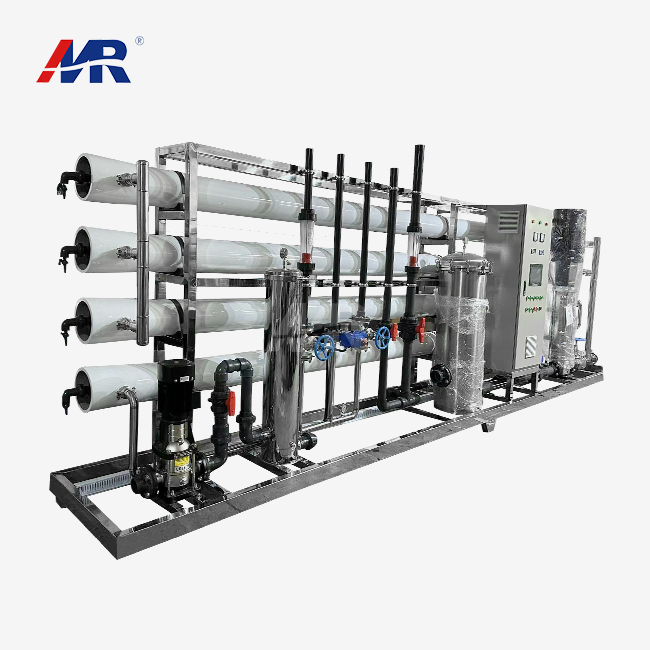
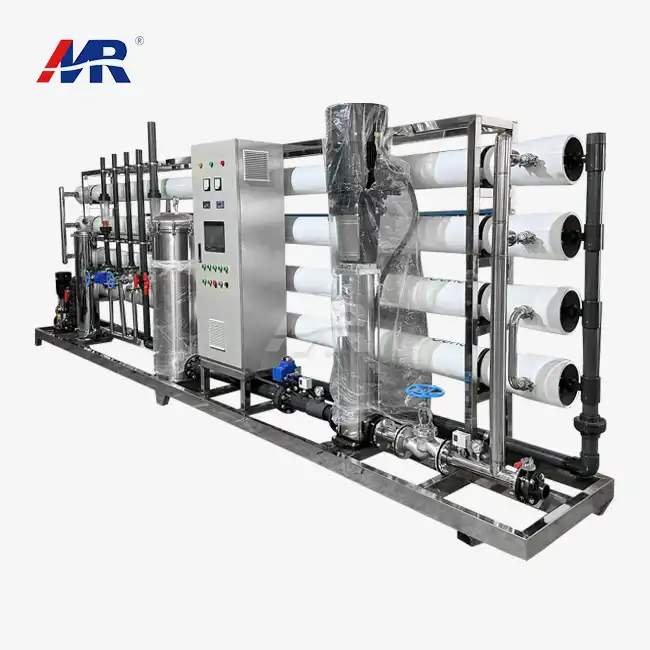
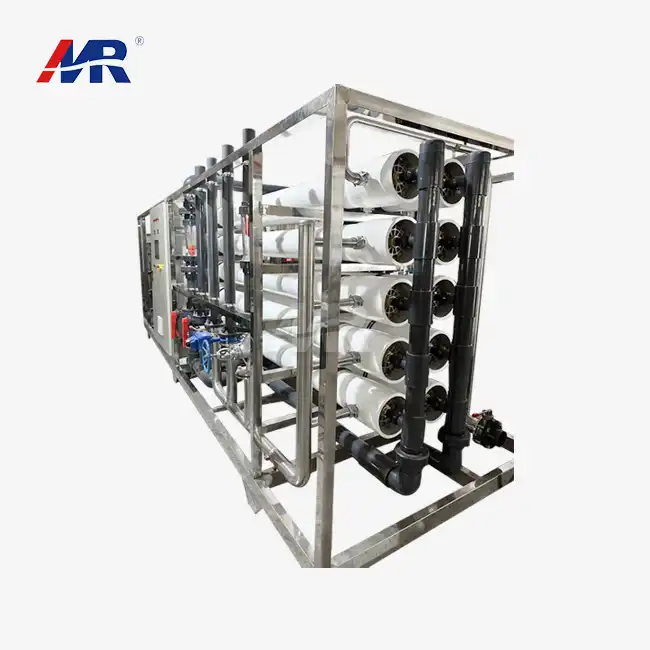
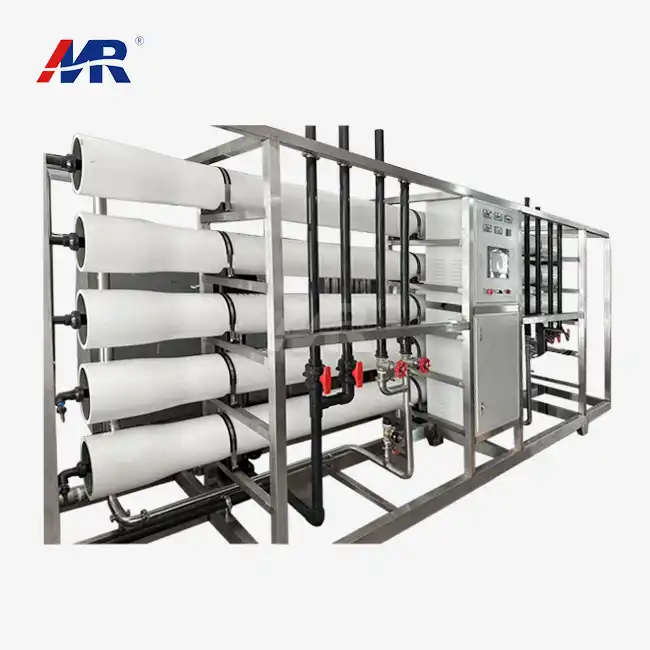
With this high-pressure membrane setup, the plant removes 99% of dissolved salts and treats sixty cubic meters of water every hour.
About Guangdong Morui Environmental Technology Co., Ltd.
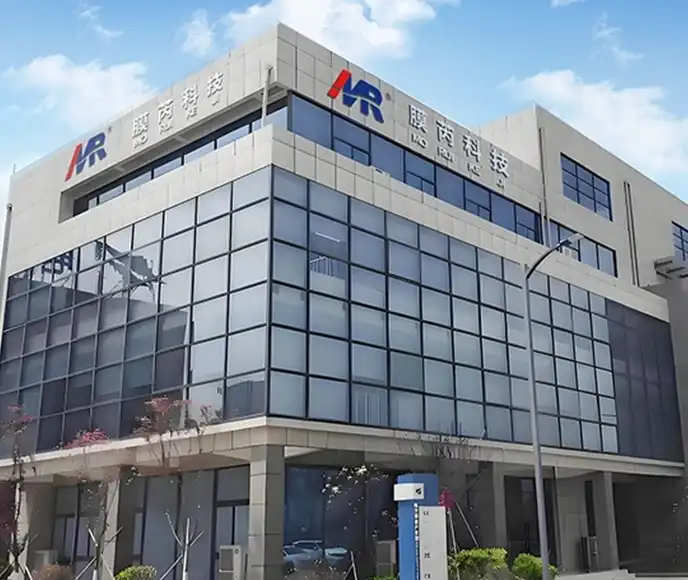
Guangdong Morui Environmental Technology Co., Ltd. got its start in 2005 building industrial water treatment systems. Close to twenty years of hands-on technical work has taught us what large-capacity projects really demand. That's why we now design and deliver the 60m3/hour reverse osmosis plant and, as a 60m3/hour reverse osmosis plant supplier, help customers who need a partner they can rely on. Our clients operate across South America, Southeast Asia, Europe, the Middle East, and Africa.
We built the MR-BWRO-60TH, a 60m3/hour reverse osmosis plant, with food production in mind. In that industry, water purity decides how safe the finished product turns out. This unit, a 60m3/hour reverse osmosis plant supplier go-to, rejects 99% of salt and reaches a recovery rate of 55-75%. It draws 45kw/hour, so food processing plants overseas and local beverage brands can hit high output volumes and still keep running costs under control.
Quality drives everything we make. Our systems carry ISO, CE, and ROHS certification, so every unit meets international standards for safety and performance. No two sites are alike, and conditions change over time. That's why we stand behind the equipment with full technical support: remote debugging, onsite training, and local maintenance in the regions we serve.
Guangdong Morui supplies dependable water treatment infrastructure that keeps pace with your production scale. Get in touch, and we will build a filtration system around what your plant needs.
High-Efficiency 60m³/h RO Systems for Food Production Around the World
Typical Applications
In food and beverage plants, water isn't just a utility. It's an ingredient. When taste, shelf life, and safety depend on water quality, you need a 60m3/hour reverse osmosis plant supplier who truly understands your process.
- Beverage and bottling. Making carbonated drinks, juices, and bottled water at large scale calls for a steady mineral profile, something a 60m3/hour reverse osmosis plant supplier can help you lock in, along with complete removal of microorganisms.
- Food ingredient preparation. In dairy and processed food plants, the system makes sure the base water has no contaminants or off-flavors.
- Boiler feed and cooling. Water also serves the equipment itself. Purified water stops scale from forming in high-capacity boilers and cooling towers, which protects costly infrastructure.
What Customers Struggle With
Large water systems in areas as varied as Southeast Asia, the Middle East, and South America bring their own operating problems. Regulatory compliance is one. Meeting CE and ROHS standards is often what keeps suppliers out of the European or international market.
Where ambient temperatures are high or feed water salinity varies widely, keeping a steady 99% salt rejection rate is hard without advanced engineering. This is common in the Middle East and Africa. High energy prices also make operating costs a top concern. Without energy optimization, a system can carry overhead that is hard to sustain. Remote industrial sites add another risk: unplanned downtime and a shortage of specialized maintenance staff can bring production to a catastrophic stop.
RO Solution from Guangdong Morui
Guangdong Morui Environmental Technology Co., Ltd has operated since 2005. Our complete turnkey package centers on the Model: MR-BWRO-60TH. We don't just sell hardware. We provide a "Modular Reliability" framework. It combines advanced membrane technology with smart control systems. For food manufacturers, this gives them a "plug-and-play" utility. It sidesteps traditional civil engineering work and shortens on-site installation timelines.
System Architecture and Key Components
Food production puts tough demands on equipment. Our 60m³/h system is built to handle them:
- Multi-Stage Pre-filtration: High-flow sediment filters and activated carbon units remove chlorine and particulates. That keeps the primary membranes from fouling.
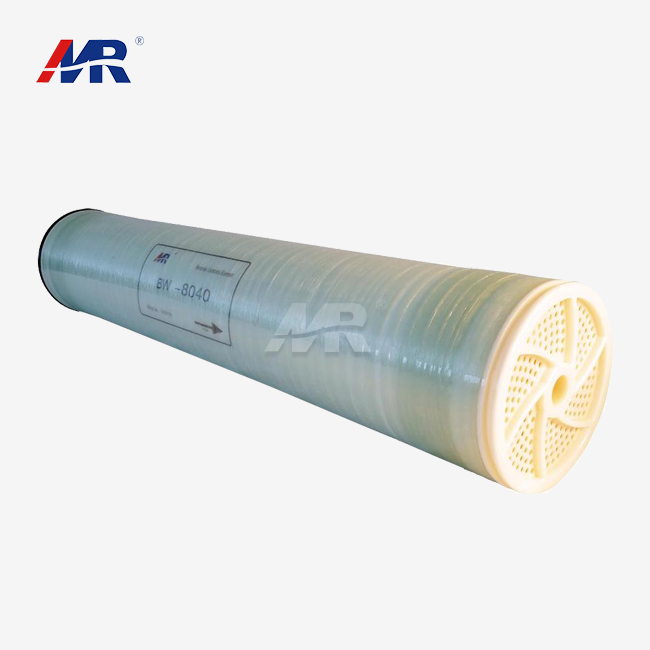
- The RO Mainframe (MR-BWRO-60TH): It uses high-rejection thin-film composite membranes built for a steady 60m³/h flux. The system reaches a 99% salt rejection rate. This helps ensure food-grade purity.
- Automated Control Center: Integrated PLC and SCADA systems monitor real-time parameters. They control the 45kw/hour power draw and tune energy use to match demand.
- Clean-in-Place (CIP) Module: A standalone chemical cleaning skid keeps the membranes on a fixed maintenance schedule. You never have to tear the system down, and the parts last much longer because of it.
Technical Advantages and Benefits You Can Measure
- Resource Efficiency: Recovery sits between 55% and 75%. That means the system sends far less wastewater to drain than standard industrial models do.
- Certified Quality: ISO, CE, and ROHS compliance come standard. The system meets safety and environmental rules in markets worldwide.
- Operational Savings: Power draw is optimized at 45kw/h. Set against older 60-ton systems, that trims energy costs by up to 15%.
- High Purity Stability: The rejection rate holds steady at 99%, even when feed water conditions change. So the final product stays consistent.
- Compact Footprint: The modular build cuts the floor space you need by 20%. That suits upgrades in plants already short on room.
Support for Implementation and Service
Guangdong Morui brings almost twenty years of experience to the table, and that helps make the move from design to operation trouble-free. Our process starts with water analysis, then moves into custom CAD engineering, and ends with strict factory acceptance testing (FAT). For customers in Southeast Asia, the Middle East, and other regions, we offer remote diagnostics and a spare parts supply chain built for rapid response. If a problem comes up, production is back online within 24-48 hours.
A Typical Implementation Example
A large beverage maker in Southeast Asia needed a steady 60m³/h supply to expand its production line. Depending on the season, the local feed water had high turbidity and salinity swings. Once the MR-BWRO-60TH was in place, the plant reached a steady 70% water recovery rate and kept a consistent mineral profile for its products. Automated PLC integration cut manual labor by 40%, and the system ran for more than 24 months with zero unscheduled downtime.
Advanced modular water treatment technology keeps operations stable for the long term and follows international food safety standards strictly.
FAQs
1. What are the key specifications and benefits of a 60m3/hour reverse osmosis plant for food industry applications?
A 60m3/hour reverse osmosis plant, such as the MR-BWRO-60TH model from Guangdong Morui Environmental Technology Co.,Ltd, is designed to meet the rigorous purity standards of the food and beverage sector. This system processes 60 tons of water per hour with a high salt rejection rate of 99%, ensuring the removal of dissolved solids, bacteria, and contaminants that could affect product taste or safety. With a power consumption of 45kw/hour and a recovery rate of 55-75%, it balances high output with operational efficiency. For food industry operators, we recommend focusing on three key metrics: the quality of the RO membranes (like thin-film composites), the inclusion of food-grade stainless steel piping, and integrated post-filtration for taste enhancement. If you have specific feed water parameters, our team can provide a tailored projection to optimize these recovery rates.2. How can I verify the authenticity and technical strength of a manufacturer when sourcing a 60m3/hour reverse osmosis plant?
To ensure you are partnering with a reliable supplier, look for long-term industry presence and international certifications. Guangdong Morui Environmental Technology Co.,Ltd has been a specialist in the water treatment industry since 2005, holding ISO, CE, and ROHS certifications which are essential for entering markets in Europe, South America, and Southeast Asia. When evaluating a supplier for a 60m3/hour reverse osmosis plant, you should request three things: their factory's historical project portfolio in your region, evidence of compliance with international electrical and safety standards, and detailed technical drawings for models like the MR-BWRO-60TH. A reputable manufacturer will also provide a clear energy consumption breakdown—ours is rated at 45kw/hour—to help you calculate long-term ROI before purchase.3. What are the primary energy efficiency considerations for operating a 60m3/hour reverse osmosis plant in regions with high utility costs?
Energy efficiency is a critical factor for industrial water treatment in regions like Europe and the Middle East. A 60m3/hour reverse osmosis plant typically requires significant power, with our MR-BWRO-60TH model optimized at 45kw/hour. To minimize costs, we suggest: 1) Utilizing high-permeability membranes to reduce the pressure required from the high-pressure pump; 2) Implementing Variable Frequency Drives (VFDs) to adjust motor speed based on real-time demand; and 3) Maintaining strict pre-filtration protocols to prevent membrane fouling, which otherwise forces the system to consume more power. By maintaining a recovery rate between 55-75%, the system maximizes water output while keeping energy intensity manageable. We recommend contacting Morui for a specific energy audit based on your local electricity rates and water quality.4. For projects in South America and Southeast Asia, what regulations and water quality standards should a 60m3/hour reverse osmosis plant meet?
When deploying a 60m3/hour reverse osmosis plant internationally, it must adhere to both global safety standards and local environmental regulations. Generally, equipment should carry CE and ISO certifications to guarantee manufacturing quality. In water-scarce regions of Southeast Asia or South America, discharge regulations may require a specific recovery rate (typically 55-75%) to minimize brine waste. Furthermore, the salt rejection rate should consistently hit 99% to ensure the treated water meets local potable or industrial-grade standards. We advise buyers to confirm that the plant’s components, such as pressure vessels and pumps, are resistant to local environmental factors like high humidity or salinity. Guangdong Morui provides comprehensive documentation to assist in local compliance filings; however, you should always verify specific regional discharge limits with local authorities.5. Can Guangdong Morui Environmental Technology Co.,Ltd provide technical support and installation for a 60m3/hour reverse osmosis plant in remote locations like Africa or the Middle East?
Yes, supporting international projects in Africa, the Middle East, and beyond is a core part of our service. Since 2005, Morui has developed a robust support framework for our 60m3/hour reverse osmosis plant installations. For remote sites, we offer: 1) Pre-assembled, skid-mounted, or containerized configurations that significantly reduce on-site construction time; 2) Comprehensive video-led commissioning and remote technical assistance; and 3) Detailed maintenance kits tailored for the MR-BWRO-60TH model to ensure long-term uptime. Our systems are designed for durability, but we recommend scheduling quarterly remote consultations with our engineers to review performance data. If your project is located in a region with limited infrastructure, please share your site conditions so we can customize the pre-treatment stage to handle high-turbidity source water effectively.
Best Selling Products
Related Blogs
Related Search
Email:benson@guangdongmorui.com
Whatapp:8613530341575
Add: No.3 Xuwu Road, Baoan District, Shenzhen, China.