

_1745823981883.webp)

Tel: +86-1353-0341575
Email:benson@guangdongmorui.com
Whatapp:8613530341575
Add: No.3 Xuwu Road, Baoan District, Shenzhen, China.
MBR membrane factory
High-Volume MBR Membrane Manufacturing for Global Water Infrastructure
In water-stressed parts of the Middle East and Southeast Asia, municipal and industrial plants are under real pressure to reuse wastewater for landscaping and industrial cooling. When filtration parts come from secondary distributors, traceability often breaks down and projects run late. That's why large developers choose a direct MBR membrane factory. It gives them long-term operational stability. Guangdong Morui Environmental Technology Co.,Ltd fills this need with factory-direct engineering and manufacturing for tough water treatment environments.
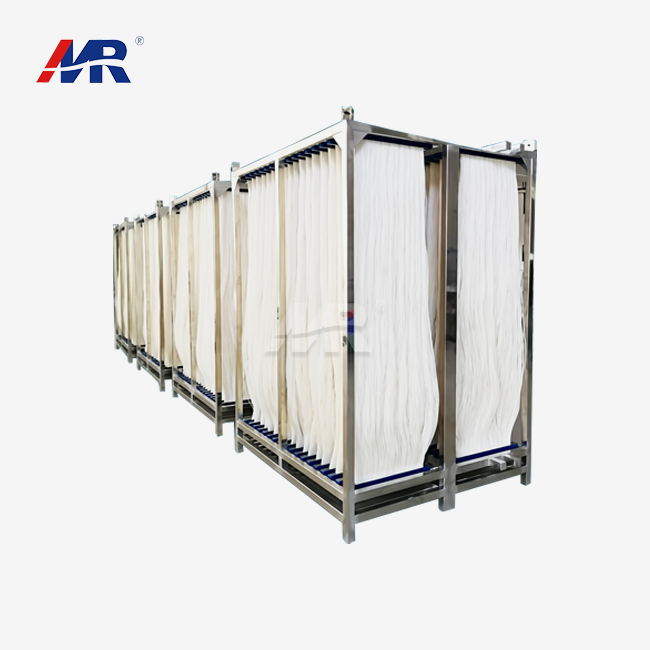
For textile dyeing facilities in Southeast Asia or landfill leachate projects in Europe, the stability of supply is critical for maintaining high-COD treatment standards. A dedicated MBR membrane factory provides the essential production capacity to scale from 10 m³/h pilot lines to 500 m³/h full-scale plants without the logistical bottlenecks typical of trading companies. Our facility ensures that every MR-MBR-227 module, featuring 25.9m² of effective filtration area, undergoes rigorous batch testing to maintain a consistent 0.2um pore size and high tensile strength to prevent fiber breakage during peak hydraulic loads.
In South America and Africa, operating costs depend a lot on how well membrane fibers resist chemicals and how long they last. With high-nitrogen municipal waste or chemical levels that swing up and down, off-the-shelf solutions often fail early. Work directly with the manufacturer, and you get reinforced PVDF modules built to handle aggressive CIP (Clean-in-Place) cycles across a wide pH range of 2-12. Factory oversight also keeps the 1500X1250X30mm dimensions exact, so the modules fit smoothly into existing skid-mounted systems and handle MLSS levels up to 15,000 mg/L.
Guangdong Morui Environmental Technology Co.,Ltd runs specialized production lines to deliver custom OEM solutions that save space and improve filtration efficiency. Later, we'll show how these solutions fit into modern wastewater reclamation layouts through MBR membrane engineering. The MR-MBR-227 model uses reinforced PVDF material. It forms a stable barrier against complex organic molecules in many different industrial settings.
Related Products
About Guangdong Morui Environmental Technology Co.,Ltd
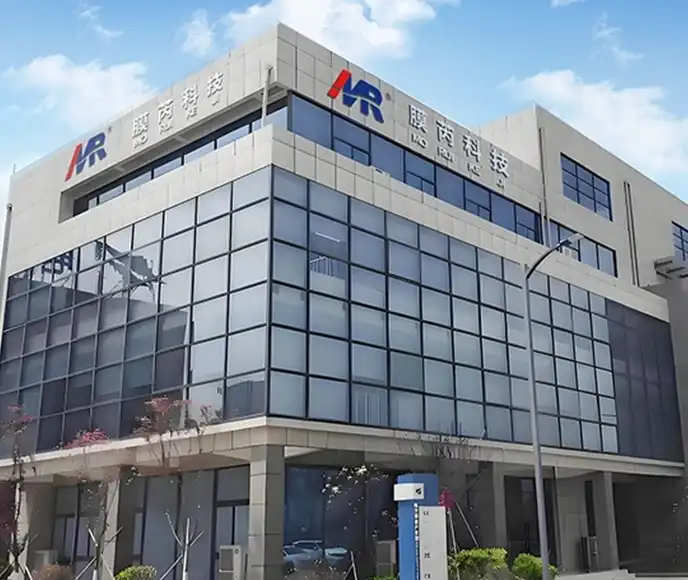
Guangdong Morui Environmental Technology Co.,Ltd was founded back in 2005. For nearly twenty years now, we've been a steady presence in the global water treatment industry. We focus on R&D and large-scale production of high-performance filtration solutions. Membrane bioreactor technology is one area we work hard to advance. We operate across five major global regions, and as an MBR membrane factory, we supply critical infrastructure components to markets in Europe, Southeast Asia, South America, the Middle East, and Africa.
As a dedicated MBR membrane factory, our manufacturing strength is anchored in precision engineering and material science. We utilize advanced PVDF (Polyvinylidene Fluoride) to produce modules like the MR-MBR-227, which features a 0.2μm pore size and a significant 25.9m² effective filtration area. Our production lines are designed for consistency and durability; by incorporating reinforced internal braiding, we ensure our membranes possess the high tensile strength necessary to prevent fiber breakage even under high MLSS concentrations. Every module leaving our facility complies with the stringent health and safety requirements of CE marking and the environmental standards of RoHS, ensuring our products are safe for complex industrial deployments.
Our technical expertise extends to the most demanding wastewater scenarios. Morui’s MBR solutions are engineered to handle aggressive chemical cleaning cycles with a wide pH tolerance (2-12), making them ideal for treating high-COD textile dyeing wastewater and complex landfill leachate. By maintaining a manufacturing system that aligns with ISO quality management standards, we provide our global partners with the assurance of structural integrity and long-term flux stability.
Morui has a reputation as a reliable manufacturer, and that reputation rests on a proven track record. We have served thousands of projects worldwide. From municipal wastewater reclamation in land-constrained urban centers to industrial cooling water systems in the Middle East, our membranes help produce high-grade reclaimed water. Today, we support environmental contractors and industrial plants in over 50 countries. We deliver factory-direct reliability that meets local regulatory demands and international performance benchmarks.
Advanced MBR Membrane Manufacturing Solutions for Global Water Treatment
Solution Overview for MBR Membrane Factory Excellence
High-performance filtration for large water treatment plants doesn't come down to a single part. It takes an engineering mindset from the factory that actually builds the product, one that can guarantee stable operation over the long haul. We're a dedicated MBR membrane factory, and we do more than just ship parts. We provide a solid production framework built around the MR-MBR-227 model. This factory-direct approach matches what industrial and municipal operators really need. They want proof of production scale, material quality, and technical consistency. Generic distributors can't offer the same level of control. With a factory-centric model, every 25.9m² module is made under tight control of PVDF morphology. That keeps the 0.2μm pore size uniform across millions of fibers. It helps prevent early fouling in demanding environments.
Technical Design and Regional Engineering Adaptation
Engineering for global markets means handling very different climates in Southeast Asia, the Middle East, and South America. It also takes a strong grasp of local water chemistry and rules. The MR-MBR-227 module uses reinforced PVDF material. We picked it for its strong chemical resistance and mechanical durability. In Southeast Asia, textile wastewater often has high COD and colored pollutants. There, the engineering focus is on tuning flux rates between 10-30 LMH so performance holds up through seasonal temperature swings. In the Middle East and Africa, water scarcity makes high-grade reclaimed water a priority. The design handles MLSS levels between 8,000 and 15,000 mg/L. That allows compact plant footprints and helps meet strict local discharge and reuse permits.
Manufacturing Precision and Implementation Scale
The manufacturing core is a vertically integrated production line. Internal braid reinforcement goes onto the PVDF fibers to stop breakage under high-suction pressure. Every batch goes through strict quality control checks, including bubble point testing for pore distribution and tensile strength verification. The factory can produce at large scale, so it keeps a stable supply chain for major infrastructure projects. Delivery schedules can scale up or down to match construction timelines. One recent project was a large municipal wastewater plant in South America. The production team assembled modular frames quickly. The 1500X1250X30mm dimensions fit existing concrete tanks with no site changes.
Quality Assurance, Compliance, and Technical Support for the Full Lifecycle
Compliance with international filtration standards and rigorous testing protocols is what proves manufacturing authenticity. The MBR membrane modules are designed to operate across a wide pH range: 2-12. That range allows for aggressive Chemical-In-Place (CIP) cleaning cycles. In industrial landfill leachate treatment, those cycles are essential for maintaining flux. Technical support doesn't stop at the production floor. It extends into commissioning, where the team provides detailed hydraulic calculations and aeration optimization strategies. This keeps the membranes within their intended operating parameters. The factory also handles local concerns, like salinity issues in Europe and high-ammonia challenges in industrial zones. It supplies full documentation and remote technical guidance. The goal is to protect the structural integrity of the membrane system over its entire operational lifespan.
Strategic Advantages of Factory-Direct MBR Solutions
- Material Reliability: Utilization of high-grade PVDF with a 0.2μm micron rating provides a stable barrier against complex organic molecules and bacteria.
- More Surface Area: Each module gives you 25.9m² of filtration area. You get more permeate out of it, and the treatment plant takes up less space.
- Built to Last: Internally braided fibers add a lot of tensile strength. Fibers are far less likely to break when scouring runs at high intensity.
- Meets Global Rules: Our engineering and production follow environmental regulations in Southeast Asia, Europe, and the Middle East.
- Ready to Scale: Large-scale manufacturing keeps supply steady and lead times competitive, which counts on major industrial water reclamation projects.
The high-strength PVDF fiber structure holds permeate quality steady, even when chemical loads fluctuate in complex industrial wastewater.
FAQs
1. What are the core technical advantages of the MR-MBR-227 membrane for industrial wastewater?
The MR-MBR-227 model features a significant 25.9m² surface area utilizing high-performance PVDF (Polyvinylidene Fluoride) material. As a professional MBR membrane factory, Guangdong Morui ensures these modules provide exceptional chemical resistance and high hydrophilicity, which are critical for reducing organic fouling. With a precise 0.2μm micron rating, the membrane acts as a robust physical barrier against bacteria and suspended solids, even in environments with high MLSS levels between 8,000 and 15,000 mg/L. The reinforced fiber structure provides superior tensile strength, preventing breakage during high-intensity air scouring. This technical reliability ensures a stable design flux of 10-30 LMH, making it an ideal choice for demanding industrial sectors in Europe and the Middle East where water quality consistency is non-negotiable for recycling and discharge compliance.2. In which specific water treatment scenarios is this MBR membrane most effective?
MBR membrane technology is engineered for diverse and demanding sectors globally. In municipal wastewater reclamation, especially in land-scarce urban centers in Southeast Asia, these modules produce high-grade reclaimed water for landscaping and industrial cooling. They are also highly effective in the textile and dyeing industries, where they manage high-COD and colored wastewater by blocking complex organic molecules. Furthermore, for landfill leachate treatment in Africa and South America, the MR-MBR-227 serves as a critical pre-treatment step for Reverse Osmosis, removing colloidal matter that would otherwise cause irreversible fouling. Our MBR membrane factory designs these modules to operate across a wide pH range (2-12), allowing them to withstand the aggressive chemical cleaning required in complex industrial chemical environments while maintaining long-term structural integrity.3. How does the factory ensure the longevity and maintenance efficiency of the MBR modules?
Longevity is a primary concern for B2B buyers managing large-scale water treatment plants. The MR-MBR-227 is designed for a typical service life of 3 to 5 years, provided that standard maintenance protocols are followed. Because our MBR membrane factory focuses on permanent hydrophilicity during the PVDF casting process, the membranes naturally resist the adsorption of proteins and oils. This reduces the frequency of Chemical-in-Place (CIP) cycles. When cleaning is required, the 1500x1250x30mm module dimensions allow for easy access and efficient backwashing. We provide comprehensive maintenance guides tailored to different regional water conditions, ensuring that operators in diverse climates—from the humid tropics of Southeast Asia to the arid regions of the Middle East—can maximize the membrane's flux recovery and minimize operational downtime.4. What are the production capacities and quality control standards of your MBR membrane factory?
For global distributors and contractors, verifying the manufacturer's capacity is essential. Guangdong Morui Environmental Technology Co.,Ltd operates a specialized MBR membrane factory equipped with automated production lines for the MR-MBR-227. We maintain a strict quality management system where every module undergoes bubble point testing and vacuum leak detection to ensure the 0.2μm pore size uniformity. Our typical production lead time is 2 to 4 weeks, depending on the order volume. We offer full OEM and ODM services, allowing for customization of module dimensions or frame materials to meet specific project requirements. We also welcome third-party factory audits from international inspection agencies, providing B2B clients in Europe and South America with the transparency and assurance needed for high-value procurement contracts.5. How does Morui support international logistics and regional compliance for MBR membrane exports?
Shipping sensitive filtration equipment to markets in Africa, South America, and Southeast Asia requires specialized expertise. As a leading MBR membrane factory, we utilize reinforced, moisture-proof packaging to ensure the MR-MBR-227 modules arrive without physical or chemical damage. We are well-versed in the regulatory requirements of different regions, providing necessary certifications such as CE for Europe or specific certificates of origin for ASEAN trade agreements. Our logistics team coordinates closely with global freight forwarders to manage customs clearance and minimize duties. Additionally, we provide remote technical installation support for projects in remote regions, ensuring that the membranes are correctly commissioned within the wider water treatment system. This end-to-end service model helps international partners mitigate the risks associated with cross-border sourcing and complex infrastructure development.
Best Selling Products
Related Blogs
Related Search
Tel: +86-1353-0341575
Email:benson@guangdongmorui.com
Whatapp:8613530341575
Add: No.3 Xuwu Road, Baoan District, Shenzhen, China.