

_1745823981883.webp)

Email:benson@guangdongmorui.com
Whatapp:8613530341575
Add: No.3 Xuwu Road, Baoan District, Shenzhen, China.
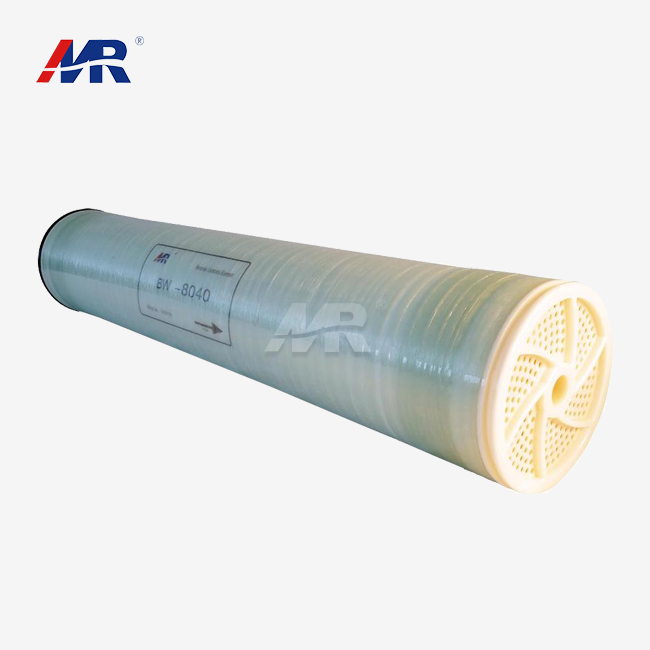
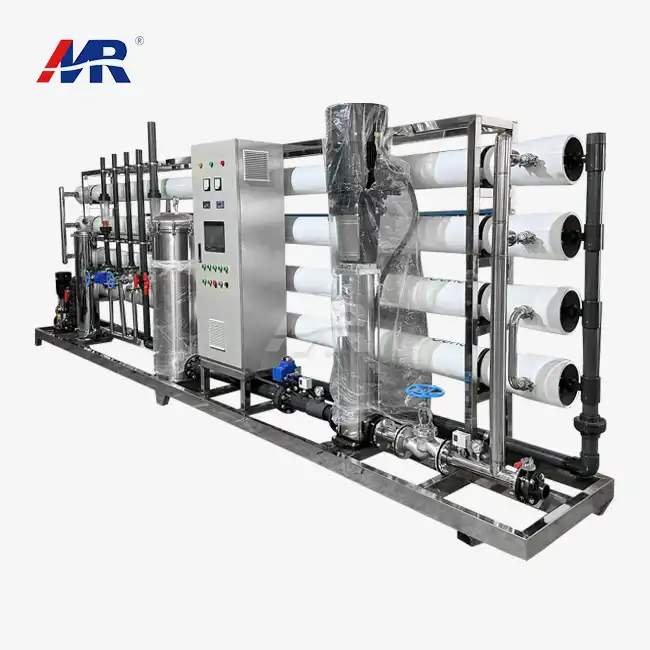
100m3/hour reverse osmosis system supplier
Large-Scale Desalination with Industrial Reverse Osmosis Systems at 100m3/Hour
Procurement managers and engineering leads across South America, Southeast Asia, Europe, the Middle East, and Africa need a reverse osmosis system they can count on, one that runs at 100m3/hour. Before a project can get off the ground, you need to look closely at how deep a manufacturer's technical know-how really goes. A system of this size, and finding a dependable 100m3/hour reverse osmosis system supplier, is critical infrastructure for industrial water treatment. High-pressure pumps and semi-permeable thin-film composite membranes remove total dissolved solids (TDS), heavy metals, and chemical pollutants from raw water.
Water treatment needs vary from region to region, and each one brings its own set of operating headaches. When underground water quality changes, high salinity can foul membranes fast. Weak pre-filtration can cause unplanned downtime. In Europe and the Middle East, strict energy-efficiency rules and environmental compliance standards, such as ROHS and CE, put serious pressure on operating budgets. Getting long-term technical support and spare parts from a 100m3/hour reverse osmosis system supplier is also tough at remote sites in Southeast Asia or Africa. The result is often higher maintenance costs and a shorter system lifespan.
Guangdong Morui Environmental Technology Co., Ltd. was founded in 2005. The company focuses on durable water treatment systems that balance technical complexity with simple operation. Its MR-BWRO-100TH model handles underground water desalination and targets industrial needs in South America and Southeast Asia. Morui uses ISO-certified manufacturing, so each 100m3/hour reverse osmosis system meets international safety and quality standards. These systems stand up to heat and chemical loads in tropical and arid climates. They also hold permeate quality stable when feedwater conditions are tough.
Two things make the Morui 100m3/hour reverse osmosis system stand out: technical performance and service.
- Desalination Built for the Job: The MR-BWRO-100TH is made for desalinating underground water. It strips out minerals that cause scale and equipment corrosion.
- Precise Filtration Numbers: Every unit reaches a 98% salt rejection rate. That yields high-purity process water that meets strict requirements in the pharmaceutical, electronics, and food industries.
- Energy Use That Stays in Check: The unit draws 105kw/hour. Its design keeps operating costs down and still delivers high-volume output.
- Resource Efficiency: At a 55-60% recovery rate, purified permeate output and concentrate management stay in sustainable balance. For regions short on water, that balance is key.
- International Compliance Documentation: customs clearance goes more smoothly with full ISO, CE, and ROHS certification. Regulatory approval in European and Middle Eastern markets gets easier too.
Professional buyers need two things: engineering drawings and performance data. These help them judge long-term stability across different geographic zones. Potential partners can review full technical datasheets and selection tables. Those documents reflect local water qualities, so buyers can confirm component durability. Compare specs for a factory-direct 100m3/hour reverse osmosis system, and you get an objective view of long-term lifecycle costs and site-specific integration needs. The MR-BWRO-100TH model supplies a steady flow of purified water. It also keeps energy-related overhead low in high-demand industrial settings.
Related Products
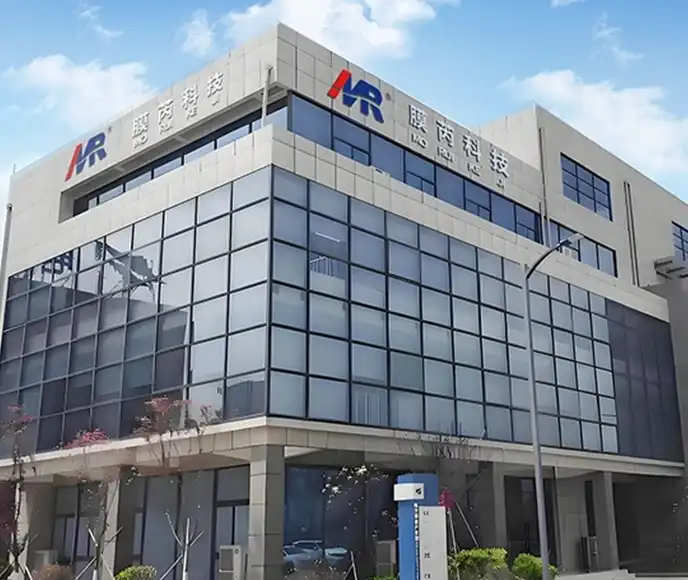
Guangdong Morui: A Trusted Partner in High-Capacity Water Treatment
Guangdong Morui Environmental Technology Co., Ltd. started back in 2005. We design and build large industrial water treatment systems. After nearly twenty years in the field, we're a leading 100m3/hour reverse osmosis system supplier for industrial water treatment. Our units run in critical infrastructure and industrial projects across South America, Southeast Asia, Europe, the Middle East, and Africa.
The MR-BWRO-100TH is the core of our engineering work. We built this heavy-duty unit for underground water desalination, and as a 100m3/hour reverse osmosis system supplier, we made it a 100m3/hour reverse osmosis system with a 98% salt rejection rate and a 55-60% recovery rate. It keeps high-purity process water moving while squeezing the most out of every resource. Power use is 105kw/h. Local brand factories and municipal water works have installed these systems to meet strict international standards.
Quality and compliance come first at Morui. We are ISO certified. Our products hold CE and ROHS marks, which means every system meets global safety and environmental rules. Our plant also maintains a high on-time delivery rate. Nothing leaves the factory until each TFC membrane and high-pressure pump assembly passes strict testing.
Technical support comes with our systems, and we tailor it to the markets we serve. Long-term uptime is what counts. That includes remote commissioning, training for your site, and local maintenance guidance in places such as the Middle East and Southeast Asia. We work to keep your investment productive. Guangdong Morui builds water treatment infrastructure that lasts and performs well. That is what powers your business growth.
High-Capacity Industrial Desalination Systems for Water Security Worldwide
I. Industrial Use Cases
Treating water at this scale takes solid infrastructure, since operations can't afford to stop. In industry, a 100m3/hour reverse osmosis system is a must whenever raw water quality swings or falls short of strict standards, which is why having a 100m3/hour reverse osmosis system supplier you trust matters.
- Municipal Brackish Water Treatment: Turning high-salinity underground water into drinking water for residential communities with the help of a 100m3/hour reverse osmosis system supplier that knows how to handle tough sources.
- Industrial Process Water: Supplying high-purity feed water to cooling towers, boiler feeds, and production lines at manufacturing hubs in South America and Southeast Asia.
- Large-Scale Agriculture: Desalting groundwater to stop soil salinization and keep crops healthy in arid regions such as the Middle East and Africa.
II. Key Pain Points and Environmental Challenges
Running high-capacity water systems in climates as different as Southeast Asia and the Middle East brings its own set of hurdles.
- Regulatory compliance: Selling into Europe means meeting CE and ROHS standards, and local environmental rules apply too. All of them call for filtration precision you can verify. Fall short and you risk stiff fines, or a shutdown of operations.
- Energy consumption and OPEX: The system draws 105kw/hour, so efficiency is a top concern. If it isn't set up properly, high power bills can eat into the profits of a large-scale water project.
- Water scarcity and waste: Where water is already stretched, a low recovery rate means more brine gets discharged. That harms the environment and wastes a resource that's in short supply.
III. The Guangdong Morui Environmental Technology Solution
Guangdong Morui has been working in this field since 2005, nearly two decades of experience. The company offers a turnkey answer built around the MR-BWRO-100TH model. Rather than plain filtration, the approach is a connected "Smart Water" ecosystem. The design is modular and made to handle high-salinity underground water, so every liter produced meets international quality benchmarks.
IV. System Architecture and Key Components
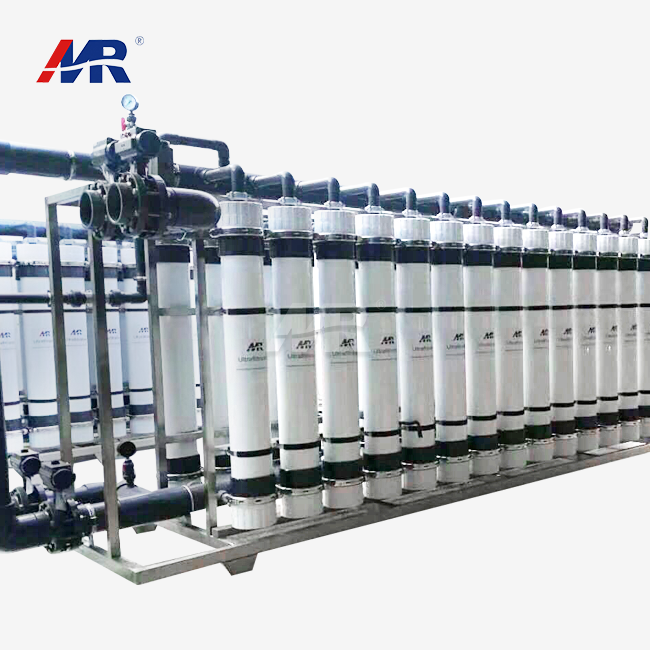
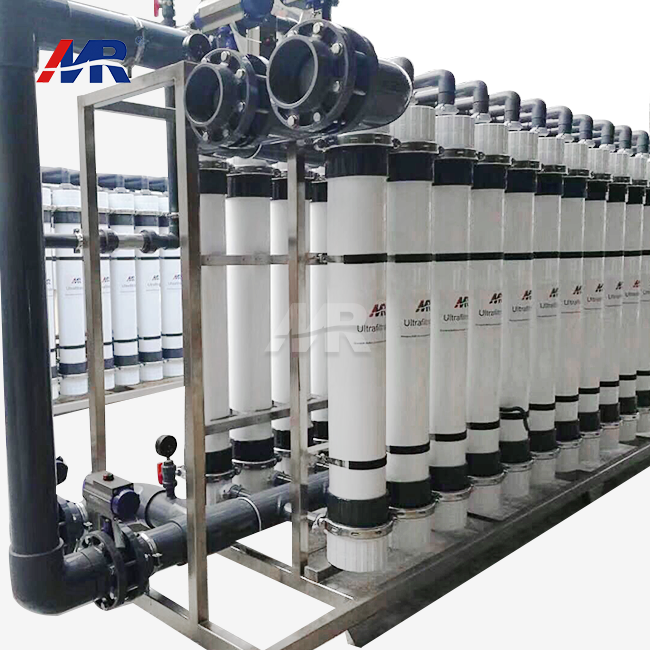
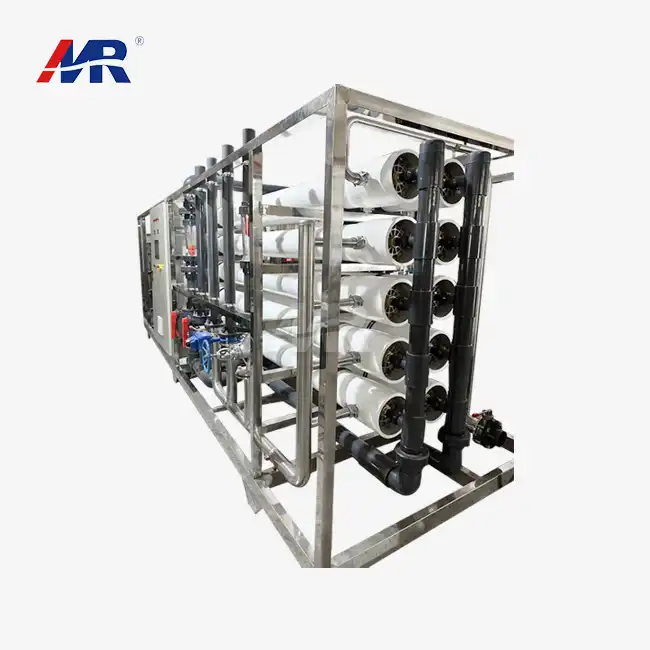
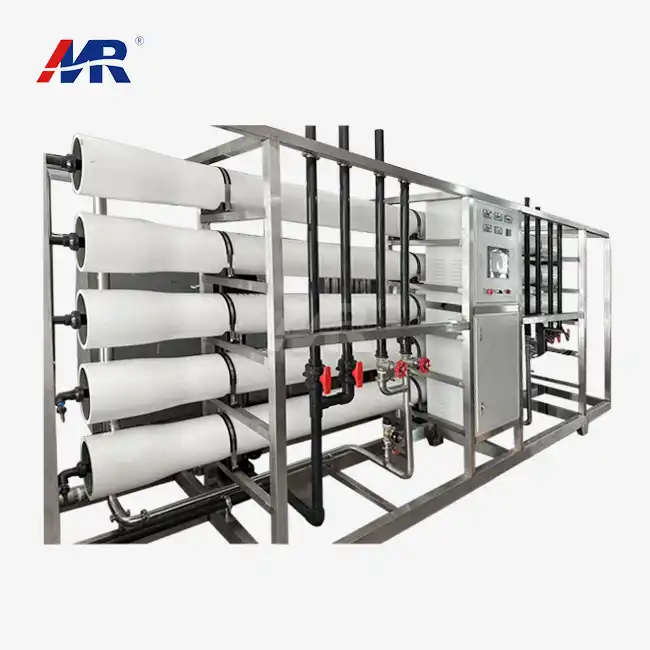
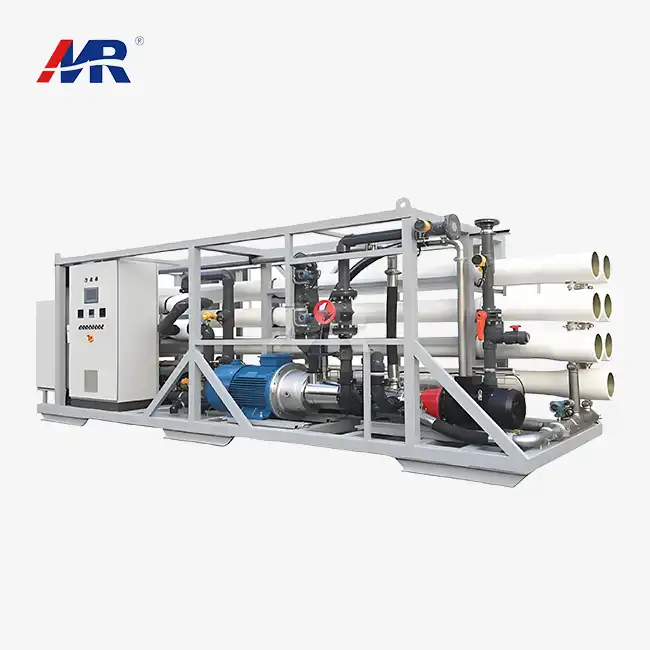
The 100m3/hour system sits on a heavy-duty, corrosion-resistant skid, and it uses high-performance parts:
- Multi-stage pre-treatment: High-flow sediment and carbon filters pull out VOCs and turbidity. That protects the sensitive RO membranes from fouling too soon.
- MR-BWRO-100TH Membrane Array. The core unit runs high-rejection TFC membranes. It hits 98% salt rejection, so it can handle a wide range of underground water profiles.
- Automated Control Center. PLC and SCADA systems work together to track flow and pressure in real time. That lets the unit match its 105kw/hour power draw to actual demand.
- Integrated CIP (Clean-in-Place) Module. It's a dedicated maintenance unit that automates membrane cleaning. This extends system lifespan to 2-5 years, depending on feed conditions.
V. Quantitative Performance and Strategic Benefits
- High Recovery Efficiency. Recovery runs at 55-60%, which cuts wastewater volume well below what standard industrial units produce.
- Superior Permeate Quality. A 98% rejection rate removes heavy metals, nitrates, and sodium, which protects downstream equipment.
- Certified Reliability. The system holds full ISO, CE, and ROHS certification, so it meets global safety and quality standards.
- Optimized Energy Footprint. The system architecture is tuned to keep flux high while holding power draw steady at 105kw/h.
VI. Global Implementation and Service Capacity
Guangdong Morui handles international projects in South America, Europe, and Africa. We use a structured service model that covers the full lifecycle. It starts with raw water analysis, then moves to custom engineering and manufacturing. We also provide remote diagnostics and fast spare parts dispatch. That keeps downtime low, even in remote locations.
VII. A Typical Application Case
A textile plant in Southeast Asia faced rising production costs. The problem came from high TDS in its local groundwater. After installing the MR-BWRO-100TH, the plant secured a stable 100m3/hour supply of process-grade water. Boiler chemical cleaning dropped by 30%. The plant also met local discharge rules 100% of the time.
The MR-BWRO-100TH system provides a steady supply of high-purity water. It relies on advanced membrane technology and energy-optimized industrial engineering.
FAQs
1. What are the core benefits of installing a 100m3/hour reverse osmosis system for industrial-scale water treatment?
A 100m3/hour reverse osmosis system, such as our Model MR-BWRO-100TH, is designed to handle high-volume purification by forcing feed water through semi-permeable thin-film composite (TFC) membranes. This process effectively removes up to 98% of total dissolved solids (TDS), heavy metals like lead and arsenic, and chemical pollutants. For large-scale operations, this ensures a consistent supply of high-purity process water, preventing equipment scaling and product contamination. Guangdong Morui Environmental Technology Co., Ltd. has refined this technology since 2005, focusing on a robust cross-flow mechanism that continuously cleans the membrane surface. When selecting a system, we recommend evaluating the specific raw water chemistry and required permeate quality. For a tailored assessment of how this 100m3/h capacity can meet your facility's specific demands, our technical team is available to provide a detailed site analysis.2. How do the recovery rate and power consumption of the 100m3/hour reverse osmosis system impact operational ROI?
Efficiency is a critical factor for large-scale desalination. Our 100m3/hour reverse osmosis system is engineered with a power consumption of approximately 105kw/hour and maintains a recovery rate of 55-60%. The recovery rate refers to the percentage of feed water that is successfully converted into purified permeate rather than being discharged as concentrate. A higher recovery rate reduces water waste and lowers the burden on your pre-treatment and disposal systems. Meanwhile, the 105kw/h energy profile reflects a balance between high-pressure requirements for 98% salt rejection and operational cost-effectiveness. We suggest implementing energy-efficient high-pressure pumps and regular membrane maintenance to optimize these parameters over time. If your project involves specific energy constraints or high water costs, please contact Guangdong Morui Environmental Technology Co., Ltd. for a customized configuration designed to maximize your return on investment.3. For underground water desalination in Southeast Asia or the Middle East, what specific features should a 100m3/hour reverse osmosis system include?
In regions like Southeast Asia and the Middle East, underground water often contains high levels of salinity and minerals that can lead to rapid membrane fouling. Our 100m3/hour reverse osmosis system (Model MR-BWRO-100TH) is specifically optimized for underground water desalination. It features a multi-stage pre-filtration process, including sediment and carbon filters, to protect the TFC membranes from silt and chlorine. With a 98% salt rejection rate, it effectively transforms brackish well water into high-quality industrial or potable water. We recommend that users in these tropical or arid climates pay close attention to the feed water temperature, as temperatures exceeding 45°C can damage standard membranes. For projects in these regions, Guangdong Morui Environmental Technology can provide specialized cooling or pre-treatment modules. We encourage you to share your local water quality reports with us so we can fine-tune the system parameters for your specific location.4. Does Guangdong Morui Environmental Technology meet the international certification standards required for projects in Europe and South America?
Yes, verifying supplier authenticity is essential for international procurement. Guangdong Morui Environmental Technology Co., Ltd. has been a professional manufacturer in the water treatment industry since 2005. Our 100m3/hour reverse osmosis system and related components comply with rigorous international standards, including ISO, CE, and ROHS certifications. These certifications ensure that our equipment meets the safety, health, and environmental protection requirements necessary for the European and South American markets. While our systems are designed to meet global benchmarks, we always advise clients to verify specific local regulations or grid-tie standards in their home country, as national requirements can vary. Our long-standing history and commitment to quality provide the transparency needed for high-stakes industrial projects. For documentation copies or references from our successful installations in Europe and South America, please feel free to reach out to our export department.5. What kind of technical support and maintenance is required for a 100m3/hour reverse osmosis system located in Africa or remote regions?
Operating a 100m3/hour reverse osmosis system in remote areas of Africa or other developing regions requires a focus on system reliability and simple maintenance. The MR-BWRO-100TH is built for durability, generally requiring filter replacements every six months and membrane cleaning or replacement every 2 to 5 years, depending on feed water quality. To ensure long-term success, we recommend keeping a stock of essential consumables and training local operators on basic troubleshooting. While our systems are designed for ease of use, Guangdong Morui Environmental Technology Co., Ltd. provides comprehensive technical documentation and remote support to assist with installation and commissioning. In many cases, we can also coordinate on-site technical guidance for large-scale 100m3/h projects. For clients in regions with limited infrastructure, we suggest discussing modular or containerized options that simplify site preparation. Contact us to discuss the logistics and service support available for your specific project site.
Best Selling Products
Related Blogs
Related Search
Email:benson@guangdongmorui.com
Whatapp:8613530341575
Add: No.3 Xuwu Road, Baoan District, Shenzhen, China.