

_1745823981883.webp)

Tel: +86-1353-0341575
Email:benson@guangdongmorui.com
Whatapp:8613530341575
Add: No.3 Xuwu Road, Baoan District, Shenzhen, China.
edi water treatment system supplier
EDI Water Treatment Solutions, Verified for Ultrapure Requirements Worldwide
Procurement managers in South America, Southeast Asia, Europe, the Middle East, and Africa know that a dependable EDI water treatment system really matters. It helps them meet tough high-purity production standards, and that's why finding a edi water treatment system supplier you can trust is so crucial. Electrodeionization (EDI) is an advanced electrochemical process that combines ion exchange membranes with DC electrical fields to deionize water continuously. In modern water treatment, this process is essential for reaching ultrapure water (UPW) levels without the logistics of chemical regeneration. It's a cornerstone for high-tech manufacturing.
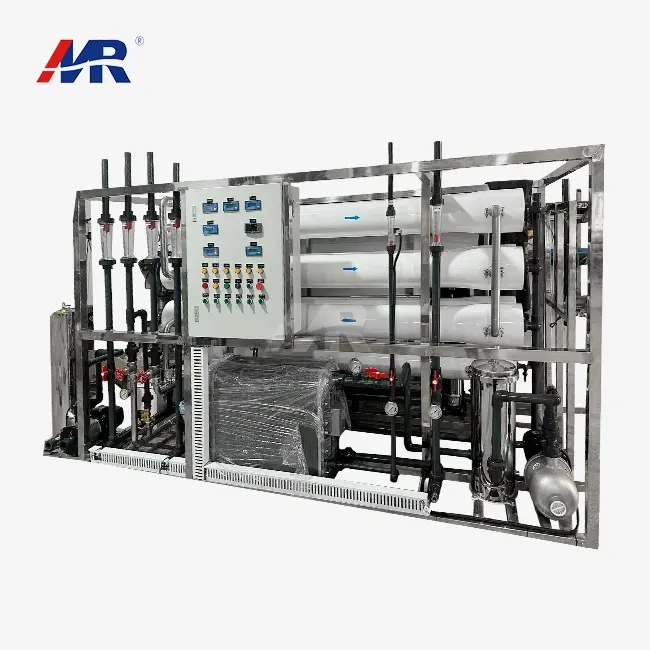
Industrial water treatment is complicated, and the way plants run varies a lot from one region to another. In Southeast Asia and Africa, sites often have a hard time keeping systems steady when feed water quality shifts. In Europe and South America, operators are under increasing pressure to meet tough environmental rules while cutting energy use. Common headaches include the hazardous handling of acid and caustic chemicals that traditional systems rely on. Energy-inefficient modules drive up operating costs, so many teams look to an edi water treatment system supplier for a more practical setup. And reliable technical support can be tough to find in remote industrial areas. Procurement teams also need to reduce the risk of inconsistent salt rejection rates, since that can disrupt sensitive downstream processes.
Guangdong Morui Environmental Technology Co.,Ltd was established in 2005. We build high-performance EDI water treatment systems for industrial use worldwide. As an experienced EDI water treatment system manufacturer, we know technical transparency and factory authenticity matter for international partnerships. Our Model MR-EDI-2TH is designed for ultrapure water production. It delivers a salt rejection rate of 99.99%. With nearly two decades of expertise, we provide systems that meet ISO, CE, and ROHS standards. That means our equipment meets the strict safety and quality benchmarks required in the Middle East and European markets.
- High-Precision Deionization Performance: The MR-EDI-2TH hits a 99.99% salt rejection rate. It produces the high-resistivity water that microelectronics and pharmaceutical water treatment require.
- Optimized Energy Consumption: This EDI water treatment system uses 8.5kw/hour. That cuts operational overhead while keeping the recovery rate steady at 55%.
- Global Compliance Standards: Every system is built under ISO quality management. All units also carry CE and ROHS certifications, so regulatory approval is straightforward across South America and Europe.
- Chemical-Free Operation, Around the Clock: Our technology does away with hazardous chemical regeneration. That gives facilities in Southeast Asia and Africa safer workplaces and a smaller carbon footprint.
- Proven Industrial Durability: Since 2005, Morui has deployed systems designed to withstand varied environmental conditions while providing detailed technical documentation for procurement verification.
Evaluating a new supplier requires a balance of technical verification and logistical assurance. Interested parties may review comprehensive technical data sheets or consult with our engineering team to analyze specific influent water parameters and site requirements. Our technical department provides detailed P&ID drawings and energy consumption projections to assist in the total cost of ownership (TCO) evaluation process. This edi water treatment system delivers consistent conductivity levels to ensure the long-term stability of industrial ultrapure water processes.
Related Products
Leading EDI Water Treatment System Provider: Guangdong Morui Environmental Technology
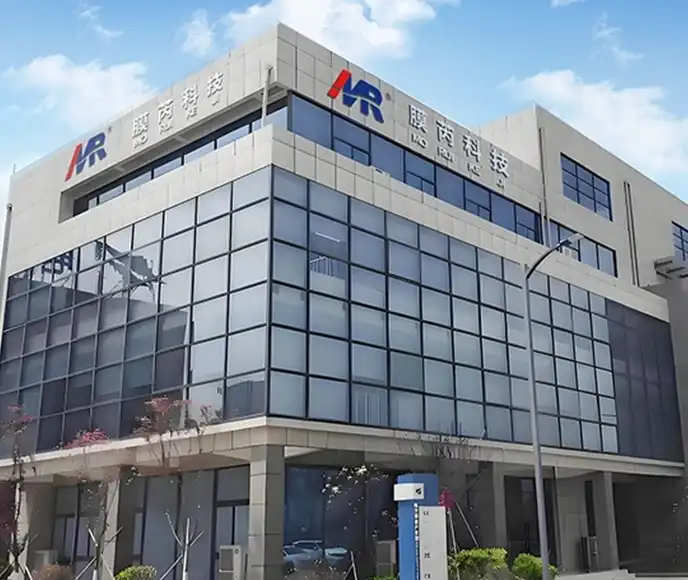
Guangdong Morui Environmental Technology Co., Ltd. got its start in 2005. We're a leading manufacturer and edi water treatment system supplier for high-performance industrial water treatment systems. Our EDI water treatment technology serves key markets in South America, Southeast Asia, Europe, the Middle East, and Africa, and along the way we've built a strong global presence.
Morui has built a reputation around electrodeionization. Our role as an edi water treatment system supplier means we deliver chemical-free, continuous ultrapure water for demanding industrial applications. Our MR-EDI-2TH model gives you a clear picture of that precision: a 99.99% salt rejection rate and reliable removal of weakly ionized substances like silica and boron. These systems are designed to replace traditional mixed-bed deionizers. That lets international clients shift toward sustainable, 24/7 operations with a smaller carbon footprint.
Quality assurance sits at the center of how we manufacture. Our facility runs under strict ISO standards, and our products hold CE and ROHS certifications, so they meet global safety and environmental rules. The MR-EDI-2TH system strikes a strong balance between performance and efficiency, with a 55% recovery rate and power consumption of 8.5kw/hour.
We support partners in different regions with full technical services, including remote commissioning, on-site training, and maintenance support. Guangdong Morui is committed to reliable, high-purity EDI water treatment systems. Every project gets long-term operational stability and better water quality.
Precision EDI Systems for Continuous High-Purity Water Production
Application Overview
Ultrapure water (UPW) standards really matter in industrial water treatment. High-precision manufacturing and sensitive chemical processes rely on them. In semiconductor fabrication, pharmaceutical production, and high-pressure boiler feed water, choosing the right edi water treatment system supplier does much of the work. Picture a drug plant that needs USP-grade water. Or an electronics site where even a trace of ions can ruin a wafer. These operations need a steady water supply with resistivity between 10-18.2 MΩ·cm. Traditional filtration just can't hit that range consistently.
Pain Points Customers Deal With
Plants in South America, Southeast Asia, and the Middle East often bear the logistical and environmental burden of traditional Mixed Bed (MB) deionizers. The hardest part is handling and disposing of the hazardous acid and caustic chemicals used to regenerate the resin, and a reliable edi water treatment system supplier can help. That task runs into more and more trouble with tighter local rules, like the EU's REACH or regional ISO 14001 standards.
Energy costs more in places like Europe, too. And batch regeneration cycles in Africa or Southeast Asia raise the risk of downtime. Both create real operational hurdles. When salt rejection drifts, the downstream damage can range from corroded equipment to failed product batches. The financial losses from that are huge. Maintenance-heavy sites are also pushing for more automation, mainly to reduce human error.
Guangdong Morui Environmental Technology Co.,Ltd Solutions
Established in 2005, Guangdong Morui Environmental Technology Co.,Ltd provides a comprehensive solution that transitions facilities from manual, chemical-intensive processes to automated, continuous electrochemical deionization. Our approach focuses on a modular "Plug-and-Play" design, integrating the edi water treatment system with advanced reverse osmosis pre-treatment to ensure the incoming water quality is optimized for the EDI membranes, thereby extending the system's lifecycle and ensuring 24/7 reliability.
System Architecture and Key Components
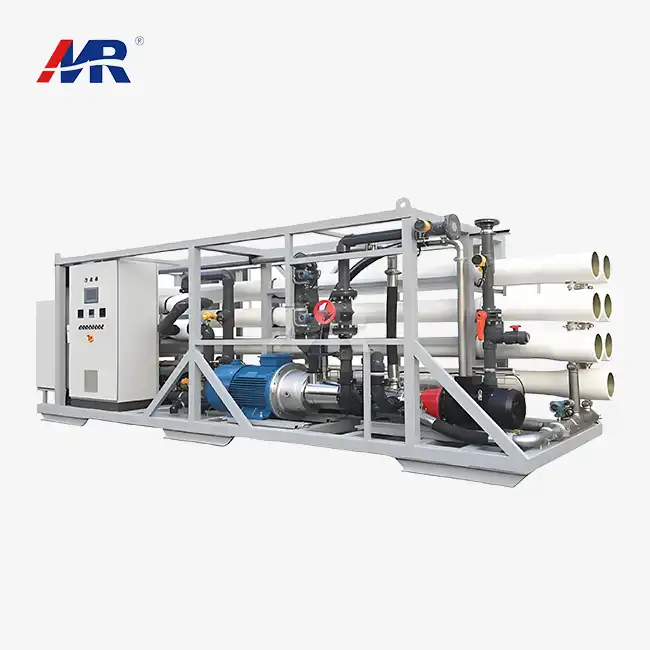
The solution is built around the MR-EDI-2TH model, featuring a multi-stage architecture designed for stability:
- Pre-treatment Unit: High-efficiency filtration keeps the EDI stack safe from scaling and organic fouling.
- EDI Host Module: The core electrochemical cell uses ion-selective membranes and resin to reach a 99.99% salt rejection rate. That means no chemical regenerants are needed.
- Intelligent Control System: A PLC-based interface tracks power use at 8.5kw/hour and flow rates in real time. It makes automatic adjustments to hold water purity steady.
- Maintenance & CIP Module: Built-in cleaning-in-place (CIP) keeps the system at its 55% recovery rate even when feed water conditions vary, which is common in diverse global markets.
Solution Advantages and Measurable Benefits
- Higher purity. Salt rejection hits 99.99%, so ultrapure water production stays steady.
- No chemicals means no buying, storing, or disposing of hazardous chemicals. That's money you don't spend.
- Continuous production. Batch processing gives way to a 24/7 duty cycle. That can cut potential downtime by 30%.
- Energy Efficiency: Power management is tuned so the MR-EDI-2TH runs at about 8.5kw per hour.
- Certified quality. Every system is built to ISO, CE, and ROHS standards, so it meets the international benchmarks for safety and quality.
- Smaller footprint. The modular design takes up as much as 40% less floor space than traditional mixed-bed resin tanks.
Implementation Process and Service Capability
The implementation begins with a detailed raw water analysis and site-specific engineering to ensure the EDI configuration matches the local water chemistry of markets in the Middle East or South America. Following precision manufacturing in our certified facility, the system undergoes rigorous factory acceptance testing (FAT). We provide global technical support, including remote diagnostic capabilities and localized spare parts supply chains, to ensure that maintenance requirements are met with minimal lead times regardless of the installation site.
Typical Application Case
A pharmaceutical manufacturer in Southeast Asia needed a steady supply of ultrapure water for injection-grade production. Its old system called for chemical regeneration again and again. That led to environmental compliance problems, and conductivity would not hold steady. Once the plant switched to the MR-EDI-2TH solution, water quality now stays constant at 18 MΩ·cm and no hazardous waste is produced. Savings on energy and chemicals also brought annual operating costs down by about 25%.
For a wide range of industries, advanced electrodeionization offers a sustainable and efficient way to produce ultrapure water.
FAQs
1. How does an EDI water treatment system compare to traditional mixed bed deionization in terms of operational efficiency?
Unlike traditional Mixed Bed deionizers that require periodic shutdowns for hazardous acid and caustic chemical regeneration, a modern EDI water treatment system utilizes a continuous electrochemical process. By employing ion exchange resins, ion-selective membranes, and a DC electrical field, systems like those developed by Guangdong Morui Environmental Technology Co.,Ltd provide a stable, 24/7 supply of ultrapure water (10-18.2 MΩ·cm). The primary advantage is the total elimination of chemical handling and waste neutralization, which significantly reduces the facility’s carbon footprint and operational complexity. For long-term projects, transitioning to Electrodeionization ensures a consistent flow without the batch-to-batch quality fluctuations common in resin-based systems.2. What technical parameters are most critical when evaluating an EDI water treatment system for industrial use?
When selecting a system for high-purity applications, you should focus on the recovery rate, salt rejection capability, and energy efficiency. For instance, a high-performance model like the MR-EDI-2TH offers a salt rejection rate of 99.99%, ensuring the effective removal of residual salts and weakly ionized substances like silica and boron. Power consumption is another vital factor; this specific model operates at approximately 8.5kw/hour, balancing high output with energy economy. Additionally, check the recovery rate—typically around 55% for standard industrial configurations—to ensure it aligns with your facility's water conservation goals. We recommend sharing your specific feed water analysis with our engineers to determine the most cost-effective configuration for your output requirements.3. For projects in Europe, the Middle East, or Southeast Asia, what certifications and standards should an EDI water treatment system meet?
International projects require strict adherence to safety and quality standards to ensure reliability and local compliance. A reputable supplier should hold ISO certification for quality management, along with CE and ROHS marks, which are particularly crucial for the European and Middle Eastern markets to verify electrical safety and environmental material standards. These certifications guarantee that the EDI water treatment system is built with high-quality components capable of enduring diverse industrial environments. While our systems meet these global benchmarks, specific projects may involve local pressure vessel codes or environmental regulations; therefore, it is always best to confirm the exact documentation needed for your jurisdiction during the planning phase.4. How does the local water quality in regions like Africa or South America impact the performance of an EDI water treatment system?
The performance of an EDI system is highly dependent on the quality of the feed water, which is typically pre-treated by a Reverse Osmosis (RO) system. In regions where raw water may have high hardness or varying mineral content, such as parts of Africa or South America, robust pretreatment is essential to prevent membrane scaling and resin fouling. An EDI water treatment system with a 99.99% salt rejection rate, like the MR-EDI-2TH, is designed to polish RO permeate into ultrapure water by removing dissolved gases (CO2) and remaining ions. To maximize the lifespan of the EDI module, we suggest implementing a comprehensive filtration stage. Guangdong Morui provides tailored technical advice to ensure your system maintains its 55% recovery rate even under challenging local source water conditions.5. Can Guangdong Morui provide technical support and installation guidance for EDI systems in remote international locations?
With a history dating back to 2005, Guangdong Morui Environmental Technology Co.,Ltd has extensive experience supporting clients across Southeast Asia, the Middle East, Africa, and beyond. We understand that installing an EDI water treatment system requires precise calibration of the DC electrical field and flow controls. We provide detailed technical documentation, remote video commissioning support, and, depending on the project scale, on-site supervision to ensure your MR-EDI-2TH unit is optimized for its specific application. Our team assists in troubleshooting recovery rates and power settings to ensure the system meets its designed salt rejection specifications. For complex ultrapure water projects, we encourage partners to engage with us early in the design phase to facilitate a seamless installation and long-term maintenance strategy.
Best Selling Products
Related Blogs
Related Search
Tel: +86-1353-0341575
Email:benson@guangdongmorui.com
Whatapp:8613530341575
Add: No.3 Xuwu Road, Baoan District, Shenzhen, China.