

_1745823981883.webp)

Tel: +86-1353-0341575
Email:benson@guangdongmorui.com
Whatapp:8613530341575
Add: No.3 Xuwu Road, Baoan District, Shenzhen, China.
1000LPH EDI system supplier
Advanced 1000LPH EDI System Solutions for Global Ultrapure Water
When you buy water treatment equipment in South America, Southeast Asia, Europe, the Middle East, or Africa, you need to be sure your 1000LPH EDI system supplier is legitimate and technically capable. Get it wrong, and long-term projects will suffer for it. A 1000LPH EDI system (Electrodeionization) is a meaningful advance in purification. It relies on electricity, ion-exchange membranes, and resin to continuously deionize water. And it does that without hazardous chemical regeneration. In tough industrial settings, that means stable, high-resistivity water you can count on.
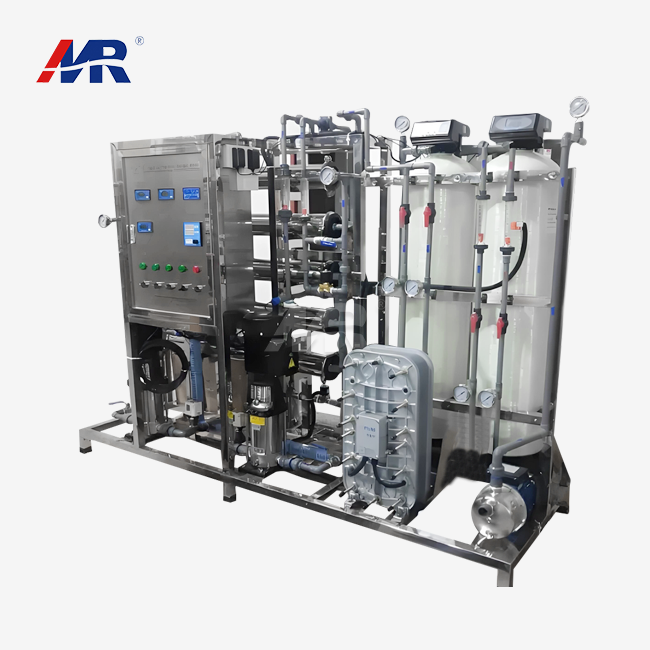
Water treatment is hardly ever straightforward, and what works in one region can fall apart in another. In Southeast Asia and Africa, plants often deal with feed water quality that keeps changing, so scaling and membrane fouling show up fast unless a 1000LPH EDI system supplier engineers the system with real precision. In Europe and South America, high energy costs and tighter CE and ROHS requirements have made traditional ion-exchange methods tough to justify on cost. Then there are long waits for technical support, and systems without automated stability end up carrying heavy maintenance loads. The outcome: expensive production downtime and water purity that keeps drifting.
Guangdong Morui Environmental Technology Co., Ltd. has been building engineered 1000LPH EDI systems since 2005. The company is a dedicated manufacturer, and nearly two decades of expertise went into the Model: MR-EDI-1TH, a system tuned for ultrapure water production in tough climates. Every unit is built to handle the rigors of global water treatment markets and meets ISO-certified quality benchmarks before it ships. Advanced membrane stacks paired with precise electrical control mean factories no longer have to store or handle acid and caustic chemicals. That makes the system a safer, more sustainable choice for modern plants.
- Certified Global Compliance: Each 1000LPH EDI system is manufactured under ISO, CE, and ROHS standards, ensuring full alignment with the regulatory and safety requirements of European and Middle Eastern markets.
- High salt rejection: The MR-EDI-1TH model achieves a 99.99% salt rejection rate. That means a consistent supply of ultrapure water for sensitive electronics, pharmaceuticals, and power generation.
- Low operational energy demand: Built for facilities that keep costs in check, the 1000LPH EDI system uses only 4kw/hour. That cuts utility expenses and the facility's carbon footprint significantly.
- Optimized Water Recovery: The recovery rate holds steady at 55%, a balance that conserves water while keeping the flow rates continuous industrial treatment demands.
- Rigorous quality assurance: every unit goes through strict monitoring of electrical current stability, plus pressure drop testing. This verifies the ion-exchange membranes stay intact under high-load conditions.
Checking technical specifications and supplier certifications is a necessary step if you want high-capacity purification equipment to be reliable. Technical documentation, including detailed selection tables and regional case studies, is available to help engineering teams judge whether these systems fit their existing infrastructure. For exact resistivity targets in local industrial applications, professional consultation on specific feed water parameters helps tailor the configuration.
Continuous electrodeionization delivers a steady supply of high-resistivity water for critical industrial processes. It does so without the environmental burden that chemical regeneration creates.
Related Products
About Guangdong Morui Environmental Technology Co.,Ltd
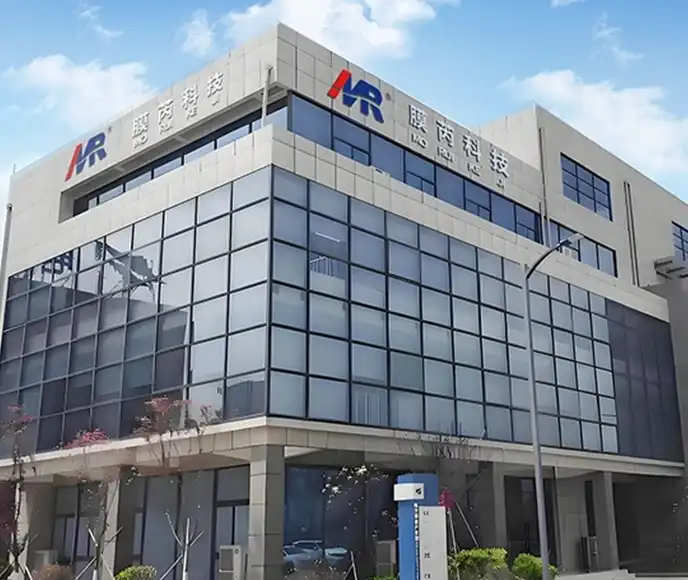
Guangdong Morui Environmental Technology Co.,Ltd has been a leading manufacturer in water treatment since 2005. We specialize in high-purity filtration and deionization solutions. High-performance systems from Morui, a 1000LPH EDI system supplier, serve industrial clients in South America, Southeast Asia, Europe, the Middle East, and Africa. That work has helped us earn a strong global reputation.
We focus mainly on advanced ultrapure water production. The 1000LPH EDI system (Model: MR-EDI-1TH) that we offer as a 1000LPH EDI system supplier shows our commitment to efficiency. It hits a 99.99% salt rejection rate and a 55% recovery rate. We use chemical-free electrodeionization, so there is no need for hazardous acid or caustic regeneration. For electronics and pharmaceutical manufacturing facilities, that brings the total cost of ownership down significantly.
Quality and reliability are central to how we work. Morui is ISO, CE, and ROHS certified. Before any 1000LPH EDI system ships, it goes through rigorous testing for electrical stability and pressure integrity. Our 4kw/h energy-efficient designs are built for sustainable performance and meet the strictest resistivity requirements.
We support our international partners with comprehensive technical services. These include remote debugging, site-specific configuration, and maintenance training tailored to regional standards. Guangdong Morui remains dedicated to long-term value through technical innovation and reliable water purification solutions.
Sustainable Ultrapure Water Solutions via 1000LPH EDI Technology
I. Application Overview
For precision industries in professional water treatment, high-resistivity water is the top priority. A 1000LPH EDI system, often sourced through a trusted 1000LPH EDI system supplier, is a core technology for sites that need a continuous, high-volume supply of ultrapure water (UPW). Typical uses include:
- Pharmaceutical manufacturing: The system supplies USP-grade water for injection and ingredient compounding. Microbial and ionic purity, especially when you rely on a 1000LPH EDI system supplier, is non-negotiable here.
- Electronics and semiconductors: This is used to rinse wafer surfaces and circuit boards. Here, even trace mineral deposits can cause product failure.
- Power generation: In thermal and nuclear plants, high-pressure boiler feed water is used to prevent scale buildup and turbine corrosion.
II. What Customers Struggle With
Ultrapure water systems in South America, Southeast Asia, Europe, the Middle East, and Africa all face their own set of problems. What's hard in one region isn't what's hard in another:
- Strict Environmental Rules: Traditional Ion Exchange (IX) regeneration leaves behind acidic and caustic wastewater. In Europe and North America, that waste is classed as hazardous. Getting rid of it means heavy regulation and high costs.
- High Energy Costs: Electricity rates are often steep in Africa and Southeast Asia. Water purification eats a lot of power, so plants there struggle to keep it running.
- Technical maintenance gaps. Few technicians in developing markets are trained to handle complex resin regeneration on site. That shortage means longer downtime and more operational risk.
- Water scarcity and quality. Feed water in the Middle East is highly saline. Systems installed there need excellent salt rejection to hit conductivity targets without wasting large volumes of water.
III. Guangdong Morui’s 1000LPH EDI Solution
Guangdong Morui Environmental Technology Co.,Ltd has been in business since 2005. We build modular, turnkey systems around the Model MR-EDI-1TH. Instead of chemical-heavy processes, our design uses continuous deionization driven by electricity. High-performance membranes work alongside precise electrical control, so no hazardous chemicals have to be handled. The result is a safer workplace and a much smaller physical footprint than conventional IX beds.
IV. System Architecture & Key Components
1. Pre-treatment Integration
The system is designed to follow a double-pass RO unit to ensure the feed water meets the required conductivity specifications, protecting the EDI stack from scaling and organic fouling.
2. MR-EDI-1TH Core Stack
The system is built around advanced ion-exchange membranes and resin. It rejects 99.99% of salt. Even so, it keeps putting out high-resistivity water and holds recovery at 55%.
3. Intelligent Power & Control System
A PLC interface runs the system. It also sets the DC voltage that drives ion migration. Power draw is only 4kw per hour, so the ion-exchange resin keeps regenerating on its own with no downtime.
4. Automated Cleaning & Maintenance
Built-in sensors watch pressure drops and resistivity in real time. If a reading drifts out of range, the system sends an alert or starts a maintenance cycle. That stops biofilm from forming and keeps the membranes from breaking down.
V. Solution Advantages & Quantifiable Benefits
- Elimination of Chemicals: Reduces chemical procurement and neutralized wastewater costs by 100%.
- Energy Efficiency: The 4kw/hour consumption represents a 20-30% energy saving compared to older electrodeionization models.
- Consistent Water Quality: Resistivity stays steady above 16 MΩ·cm. Batch changes that throw off manual systems don't affect it.
- Compliance Ready: The equipment carries ISO, CE, and ROHS certifications. They show it meets international safety and quality standards for export to European and Middle Eastern markets.
- Space Optimization: The vertical layout is compact. It uses 60% less floor space than traditional resin tanks.
VI. Implementation Process & Global Service
Every project begins with a full raw water analysis. From there, we design the engineering around your site. Guangdong Morui stays with you through manufacturing and Factory Acceptance Testing (FAT). For clients in South America and Southeast Asia, we run remote diagnostics and keep a strong supply chain ready. Critical spare parts get to the site in the shortest possible time. We also train local operators. That keeps the system stable over the long term.
VII. Typical Application Example
A pharmaceutical laboratory in Brazil required a transition from manual resin regeneration to an automated process to meet ISO standards. By implementing the MR-EDI-1TH solution, the facility achieved:
- Transition to 24/7 continuous ultrapure water production.
- Total elimination of onsite acid and alkali storage.
- A measurable reduction in labor costs related to water system monitoring by 40%.
- Consistent compliance with USP purified water specifications.
VIII. Technical Consultation
Detailed engineering specifications and performance data sheets are available for review to assist in system integration and site planning. Specialized technical support provides customized flow diagrams based on specific feed water chemistry and output requirements.
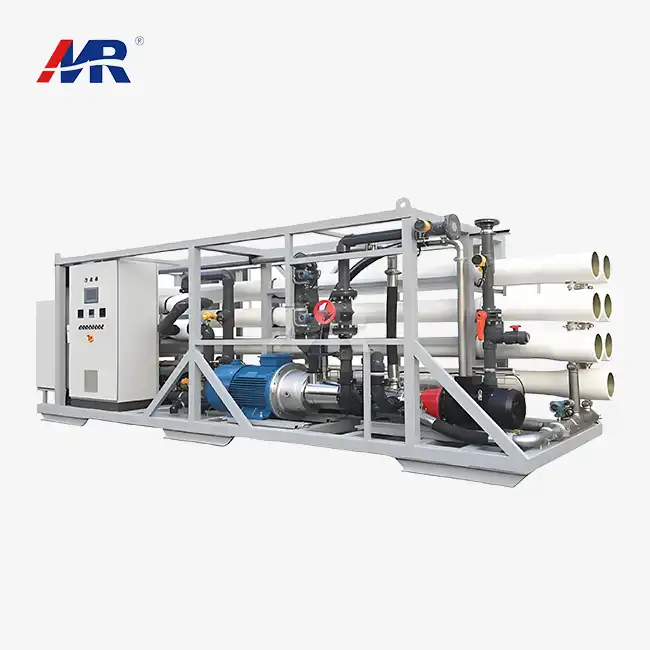
The MR-EDI-1TH system maintains consistent water resistivity through continuous electrical resin regeneration.
FAQs
1. What is a 1000LPH EDI system and why is it preferred over traditional ion exchange for ultrapure water production?
A 1000LPH EDI system, or Electrodeionization system, is an advanced water treatment technology that utilizes electricity, ion-exchange membranes, and resin to continuously deionize water. Unlike traditional ion exchange (IX) beds that require hazardous chemical regeneration using acids and caustics, the MR-EDI-1TH model provides a chemical-free, continuous process. This eliminates operational downtime and environmental compliance issues related to wastewater discharge. For industrial facilities, switching to an EDI system ensures a stable supply of ultrapure water (UPW) with a salt rejection rate of 99.99%, significantly reducing the total cost of ownership and the physical footprint of the treatment plant. Guangdong Morui Environmental Technology Co.,Ltd recommends this technology for high-stakes applications where consistency and environmental safety are top priorities.2. What are the key technical specifications and power requirements for the MR-EDI-1TH ultrapure water system?
The MR-EDI-1TH is designed for high-efficiency ultrapure water production with a capacity of 1000 liters per hour. Key performance parameters include a salt rejection rate of 99.99% and a recovery rate of 55%, ensuring high-quality output while managing water consumption. In terms of energy efficiency, the 1000LPH EDI system consumes approximately 4kw per hour, making it a cost-effective solution for continuous industrial operations. To maintain these specifications, the feed water must meet strict quality standards, typically requiring pre-treatment through a Reverse Osmosis (RO) system to keep hardness below 1 ppm and silica below 0.5 ppm. If you have specific feed water parameters, our team at Guangdong Morui Environmental Technology Co.,Ltd can provide a detailed simulation to verify the expected resistivity and performance for your project.3. How does the 1000LPH EDI system handle feedwater challenges in regions like Southeast Asia or the Middle East?
In regions like Southeast Asia and the Middle East, source water often contains high levels of hardness or specific mineral content that can lead to scaling and biofilm formation. To ensure the longevity of a 1000LPH EDI system in these environments, Guangdong Morui focuses on rigorous pre-treatment and membrane integrity. We recommend a "Double RO + EDI" configuration to ensure the feed water entering the EDI stack is within the required limits (Hardness <1 ppm as CaCO3). Proper microbial control and regular monitoring of DC voltage stability are also essential to prevent internal fouling. For projects in these regions, it is vital to calibrate online instrumentation against NIST-traceable standards. We suggest contacting Guangdong Morui Environmental Technology Co.,Ltd to discuss local water analysis reports so we can customize the pre-filtration stages for your specific site.4. Does the 1000LPH EDI system meet international standards for export to Europe and South America?
Yes, Guangdong Morui Environmental Technology Co.,Ltd has been a professional water treatment manufacturer since 2005, and our 1000LPH EDI system (Model: MR-EDI-1TH) is built to meet global industrial requirements. Our equipment carries ISO, CE, and ROHS certifications, which are typically required for entry into the European and South American markets. These certifications ensure that the system meets strict safety, health, and environmental protection standards. Furthermore, the chemical-free nature of EDI technology aligns with increasingly stringent environmental regulations regarding industrial wastewater in the EU and Mercosur regions. While our systems comply with these major international standards, we always advise clients to verify specific local electrical codes or industrial water quality regulations in their home country to ensure seamless integration.5. What technical support and installation services does Guangdong Morui offer for 1000LPH EDI systems in Africa and remote areas?
For projects located in Africa or other remote regions, Guangdong Morui Environmental Technology Co.,Ltd provides comprehensive technical support to ensure the successful deployment of the 1000LPH EDI system. Since our establishment in 2005, we have developed a robust support framework that includes detailed installation manuals, video guidance, and remote commissioning support via online diagnostic tools. Our quality control process includes rigorous pressure drop testing and electrical current stability verification before the system leaves our facility, minimizing the need for complex on-site troubleshooting. For large-scale industrial projects, we can coordinate technical consultations to train local operators on routine maintenance, such as sanitization cycles and sensor calibration. We encourage clients to share their site conditions early in the planning phase so we can provide a tailored logistics and support plan.
Best Selling Products
Related Blogs
Related Search
Tel: +86-1353-0341575
Email:benson@guangdongmorui.com
Whatapp:8613530341575
Add: No.3 Xuwu Road, Baoan District, Shenzhen, China.