

_1745823981883.webp)

Tel: +86-1353-0341575
Email:benson@guangdongmorui.com
Whatapp:8613530341575
Add: No.3 Xuwu Road, Baoan District, Shenzhen, China.
2000 liters/hour EDI system supplier
2000 Liters/Hour EDI Technology for Stable Ultrapure Water Production
If you are a procurement manager in South America, Southeast Asia, Europe, the Middle East, or Africa, buying a dependable 2000 liters/hour EDI system from a trusted 2000 liters/hour EDI system supplier is an important step toward securing high-purity water for industrial processes. EDI means electrodeionization. This water treatment method uses electricity, ion-exchange membranes, and resin to keep deionized water flowing nonstop. It does not require hazardous chemical regeneration. In modern water treatment, it is the go-to choice for industries that need consistent, ultrapure water, including pharmaceuticals, electronics, and power generation.
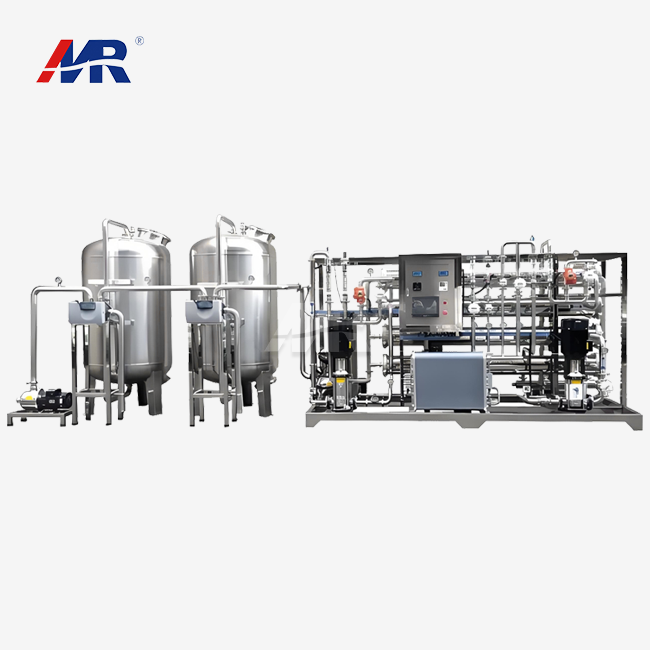
In places like Southeast Asia or Africa, water treatment plants often hit problems that make a 2000 liters/hour EDI system tough to install. Feed water quality can swing, for example, and for a plant working with a 2000 liters/hour EDI system supplier, that can cause membranes to scale fast. Energy matters too. When utility rates are high, every kilowatt counts. Traditional resin beds also come with the logistics of handling hazardous chemicals. In Europe or South America, strict wastewater discharge rules push systems to keep recovery rates high and produce less chemical waste. Operators also deal with long waits for technical support and spare parts. That downtime gets expensive when ultrapure water production stops.
Guangdong Morui Environmental Technology Co.,Ltd, established in 2005, addresses these regional challenges with specialized 2000 liters/hour EDI system solutions. The MR-EDI-2TH model is built for ultrapure water production. It pairs high output with efficient operation while meeting ISO, CE, and ROHS standards. Advanced stack designs let the system handle changing conditions in Middle Eastern and Southeast Asian industrial zones. Output stays stable, and resistivity stays high. Morui works to lower the total cost of ownership by removing chemical handling. It also simplifies procurement for international partners with full technical documentation and fast response times.
- Optimized Energy Efficiency: The MR-EDI-2TH draws only 8.5kw/hour. When you're producing ultrapure water at high capacity, that means much lower overhead, and it counts most in energy-sensitive markets.
- Superior Salt Rejection: The 2000 liters/hour EDI system knocks out 99.99% of salt. Water quality holds steady even when feed water parameters shift from one batch to the next.
- Global Regulatory Compliance: Full ISO, CE, and ROHS certification makes importing easier and helps you get local site approval in Europe and South America.
- Sustainable Water Recovery: At a 55% recovery rate, this 2000 liters/hour EDI system helps meet environmental sustainability goals by cutting the volume of concentrated wastewater.
- Built to Last: This system is made to run nonstop. That means fewer maintenance shutdowns, and the ion-exchange membranes inside the stack hold up far longer.
Technical managers who need to match this technology to their own facility can ask for a full project assessment or a detailed equipment selection guide. The complete technical specifications for the MR-EDI-2TH let you check whether the system suits your local water chemistry. Our specialists can also walk you through the trade-off between energy use and output purity, so the setup keeps working well for years. Continuous deionization delivers ultrapure water through a membrane process. No chemicals involved, and less strain on the environment.
Related Products
About Guangdong Morui Environmental Technology Co.,Ltd
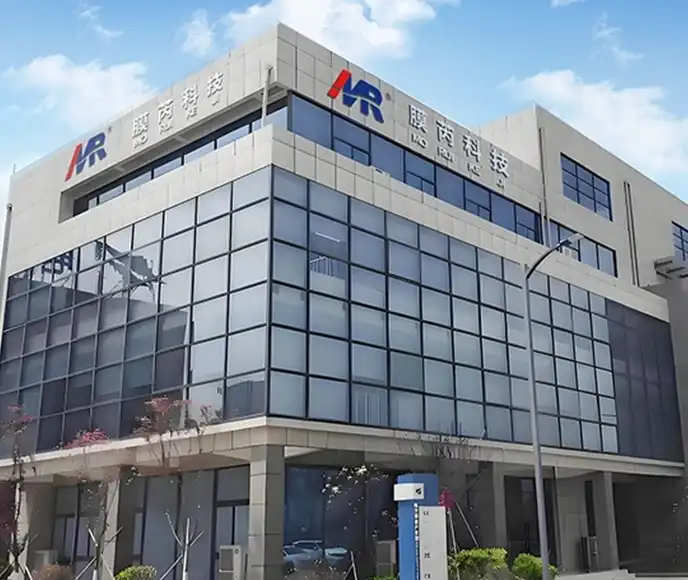
Guangdong Morui Environmental Technology Co.,Ltd got its start in 2005. We build high-precision water treatment systems, and we have earned a strong reputation in industrial-grade purification. Our work centers on engineering the 2000 liters/hour EDI system, and as a 2000 liters/hour EDI system supplier, we deploy it worldwide, including demanding markets in South America, Southeast Asia, Europe, and the Middle East.
The MR-EDI-2TH churns out ultrapure water 24/7. It uses electrodeionization, so you don't need hazardous chemicals to regenerate it. Salt rejection hits 99.99%, and the unit from a 2000 liters/hour EDI system supplier draws just 8.5 kW/hour. That keeps things within the tight resistivity limits demanded by electronics and pharma. Every unit comes with ISO, CE, and ROHS certification, plus it goes through pressure testing and electrical stability checks to keep the membrane intact for the long haul.
We support our international customers with technical services that cover remote commissioning and maintenance training. Those services are adapted to the infrastructure conditions found in places like Africa and Southeast Asia. With a steady 55% recovery rate, your 2000 liters/hour EDI system stays environmentally compliant and brings a significant drop in total cost of ownership.
Partner with Morui for professional, chemical-free technology that secures your facility’s water quality and operational success for the long term.
High-Efficiency 2000 L/H EDI Systems for Global Industrial Purity
Application Overview
For industrial water treatment, a 2000 liters/hour EDI system is essential for plants that need high-purity water. It gets rid of the interruptions that chemical regeneration causes, so many operations turn to a reliable 2000 liters/hour EDI system supplier to keep things running smoothly. Guangdong Morui Environmental Technology Co.,Ltd specializes in integrating these systems into a range of high-demand sectors:
- Pharmaceutical & Biotech: Purified Water (PW) and Water for Injection (WFI) made by a 2000 liters/hour EDI system supplier to USP/EP standards.
- Electronics & Semiconductors: Ultrapure water (UPW) for rinsing wafers and building circuit boards. Even trace ions cause defects.
- Power Generation: High-pressure boiler feed water. It prevents scaling and corrosion in turbine systems.
What Customers Struggle With
Running large water systems in places like Southeast Asia, the Middle East, and South America comes with its own environmental and regulatory hurdles:
- Tough environmental rules: In Europe and Southeast Asia, limits on the hazardous chemical waste that traditional ion exchange regeneration discharges keep getting tighter, and treating that waste keeps getting more expensive.
- Steep energy bills: Plants in the Middle East and Africa pay a lot for electricity, so how efficiently a water purification system runs is one of their biggest financial worries.
- Technical Skill Gaps: Many regions don't have enough specialized workers to run complex manual resin regeneration. That leaves them more exposed to system downtime or shifts in water quality.
- Water Scarcity: In dry regions, you need the highest recovery rate you can get. That keeps the total volume of raw water used in industrial processes to a minimum.
Guangdong Morui Environmental Technology Co.,Ltd Solution
Morui has nearly two decades of experience, going back to 2005. We offer a complete 2000 liters/hour EDI setup (Model: MR-EDI-2TH) built to run continuously without chemicals. Our method moves facilities away from batch deionization and into a simpler, modular RO-EDI design. By pairing membrane filtration with electrical ion migration, we remove the need to handle acid or caustic. That makes for a safer workplace and a much smaller physical footprint than conventional mixed-bed systems.
System Architecture and Main Components
Pretreatment and Reverse Osmosis (RO)
The system runs a single-pass or dual-pass RO stage. This stage takes out most of the dissolved solids, so the feed water hits the tight conductivity limits the EDI module needs. That keeps scaling and fouling from building up.
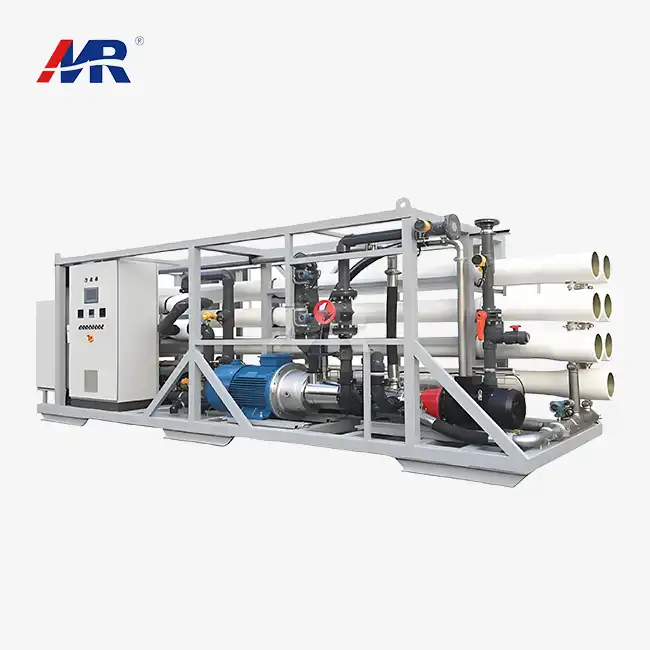
MR-EDI-2TH Host Module
At the heart of the system sits the EDI stack, built with high-quality ion-exchange membranes and resin. It rejects 99.99% of salt and delivers water with high resistivity, day in and day out, while drawing just 8.5kw/hour.
Advanced Control and Automation
PLC and SCADA run as one system here. Together they track DC voltage, amperage, and water resistivity as it happens. Because the automation is built in, the system adjusts on its own when feed water quality shifts. No operator has to step in.
Cleaning and Maintenance, Built In
Cleaning is handled by a dedicated Cleaning-in-Place (CIP) module. It protects membrane integrity and blocks biofilm growth. That keeps performance stable over the long run, even in tropical conditions or other high-fouling settings.
Advantages and Measurable Results
- Continuous production: Traditional ion exchange has to shut down. EDI does not. It runs all day, every day, and chemical regeneration never causes downtime.
- Exceptional Purity: It consistently makes ultrapure water with high resistivity. Salt rejection reaches 99.99%, which is key for sensitive industrial uses.
- Low energy footprint: A smarter electrical design keeps power use at 8.5 kW/hour. That can cut yearly utility costs by as much as 20% versus older models.
- Resource efficiency: A steady 55% recovery rate balances high-purity output with responsible water use. In water-stressed regions, that makes a difference.
- Certified reliability: The equipment fully complies with ISO, CE, and ROHS standards, which puts it in line with international quality and safety benchmarks.
- Smaller footprint: The compact modular design takes up as much as 50% less floor space than traditional chemical-based deionization skids.
Implementation Process & Service
Guangdong Morui Environmental Technology Co.,Ltd works to a strict project lifecycle. We begin with raw water analysis, then build a custom technical design around local conditions in South America, Southeast Asia, and other regions. Manufacturing comes next, along with strict Factory Acceptance Testing (FAT). From there, we back installation and commissioning all the way through. Overseas clients can count on remote diagnostics and a fast spare parts supply chain, so lead times stay short. Onsite training for local technical teams is part of the package too, and it helps operations succeed over the long term.
Typical Case Study
A semiconductor maker in Southeast Asia needed a steady ultrapure water supply. Its old mixed-bed resin system needed frequent chemical handling, so it had to be replaced. Morui installed the MR-EDI-2TH system with double-pass RO pretreatment. The project cut operational expenditures by 30% and removed hazardous wastewater discharge completely. Today the plant holds a constant water resistivity of 16-18 MΩ.cm, and product yield rates have improved significantly.
The implementation of advanced electrodeionization modules ensures the reliable delivery of high-resistivity water for sophisticated manufacturing environments.
FAQs
1. What are the primary advantages of installing a 2000 liters/hour EDI system compared to traditional ion exchange methods?
Unlike traditional ion exchange (IX) systems that require hazardous chemical regeneration using acid and caustic, a 2000 liters/hour EDI system provides a continuous, chemical-free process for ultrapure water production. This technology eliminates the operational downtime and environmental compliance issues associated with wastewater neutralization. Our Model MR-EDI-2TH is specifically designed to handle industrial-scale demands while maintaining a compact physical footprint. By utilizing electricity to continuously regenerate ion-exchange resins, the system ensures a stable, high-resistivity water supply with a 99.99% salt rejection rate. For facilities in Europe or the Middle East looking to meet modern sustainability standards, switching to an EDI water system significantly reduces long-term operational costs and safety risks.2. How does the MR-EDI-2TH system ensure compliance with international standards in markets like South America and Southeast Asia?
Guangdong Morui Environmental Technology Co.,Ltd has been a professional manufacturer since 2005, ensuring that every 2000 liters/hour EDI system we produce meets rigorous global benchmarks. Our equipment carries ISO, CE, and ROHS certifications, which are typically required for industrial projects in Southeast Asia and South America. These certifications verify that our systems adhere to strict safety, health, and environmental protection standards. However, specific project requirements may vary, so it is important to confirm local electrical codes and water discharge regulations with your regional authorities. We provide comprehensive technical documentation and quality control reports for each MR-EDI-2TH unit to facilitate your local permit applications and ensure the system integrates seamlessly into your existing infrastructure.3. What are the essential feed water requirements to maintain the performance of a 2000 liters/hour EDI system?
To protect the membrane integrity and maintain the 55% recovery rate of the MR-EDI-2TH, the feed water must be pre-treated, usually through a Reverse Osmosis (RO) system. The incoming water should typically meet specific parameters: total hardness should be less than 1 ppm (as CaCO3) and reactive silica should be below 0.5 ppm. High levels of hardness or CO2 can lead to scaling and reduced efficiency within the EDI stack. If you are operating in regions with challenging raw water conditions, such as parts of Africa or Southeast Asia, additional pre-treatment steps like degassing or softening may be necessary. Guangdong Morui Environmental Technology Co.,Ltd recommends a thorough water analysis before installation to ensure your 2000 liters/hour EDI system operates at peak performance for years to come.4. Is the 8.5kw/hour power consumption of the 2000 liters/hour EDI system considered energy-efficient for ultrapure water production?
Yes, the power consumption of 8.5kw/hour for our 2000 liters/hour EDI system is highly competitive for industrial-grade ultrapure water production. Because the EDI process is continuous and eliminates the need for batch regeneration cycles, the energy usage is remarkably stable. In regions like Europe where energy costs and carbon footprints are major concerns, the MR-EDI-2TH offers a sustainable alternative to chemical-intensive processes. The system's ability to maintain a 99.99% salt rejection rate at this power level ensures that you are achieving maximum purity with optimized electrical input. To get a better understanding of the ROI (Return on Investment) for your specific project, we suggest contacting us to calculate the total cost of ownership based on your local utility rates and production volume.5. Can Guangdong Morui Environmental Technology Co.,Ltd provide technical support and installation guidance for projects in the Middle East or Africa?
Guangdong Morui Environmental Technology Co.,Ltd has extensive experience serving the Middle East and African markets since our founding in 2005. For every 2000 liters/hour EDI system exported, we provide a complete technical support package, including detailed installation manuals, piping and instrumentation diagrams (P&ID), and remote commissioning assistance via video conferencing. While our MR-EDI-2TH units are designed for easy, skid-mounted installation, we understand that complex projects may require additional guidance. Typically, we offer remote technical troubleshooting and can coordinate with local engineering partners for onsite support. If your project involves unique environmental conditions or specific language requirements, please reach out to our team to discuss a customized service plan tailored to your project’s location and technical needs.
Best Selling Products
Related Blogs
Related Search
Tel: +86-1353-0341575
Email:benson@guangdongmorui.com
Whatapp:8613530341575
Add: No.3 Xuwu Road, Baoan District, Shenzhen, China.