



Top Seawater Desalination Equipment Types in 2026
The top Seawater Desalination Equipment types in 2026 are reverse osmosis systems, thermal distillation units, containerized plants, modular skid-mounted systems, portable emergency units, solar-powered hybrids, advanced pretreatment and high-recovery systems, and integrated municipal or industrial plants. Reverse osmosis leads most new projects because it uses less energy than thermal methods and fits compact layouts. I wrote this guide for U.S. buyers, engineers, and distributors who need to match seawater desalination equipment to a real site. Below, I compare each type, share selection criteria, and describe how Morui supports projects from consultation to commissioning.

Core Seawater Desalination Equipment Technologies
Reverse Osmosis Systems
In this process, seawater is pushed through membranes that only let certain things through. The salts stay put. There are about 35,000 parts per million of dissolved solids in ocean water. With a good system, that drops to less than 500 parts per million. There are controls, energy recovery, membrane vessels, post-treatment, high-pressure pumps, and intake in a normal train. Plants that use energy recovery tools use around 2.5 to 3.5 kWh/m³. A study published in 2011 in Science found that the theoretical minimum was around 1.06 kWh/m³ at 50% recovery. This means that the current RO rate is already very close to that rate.
Thermal Distillation Systems
Hot water heaters turn salt water into gas and back to water again. The main ones are flash and multiple-effect distillation, vapor compression, and multiple-stage flash. They keep the water stable and can handle tough feedwater, but they need a bigger plant with more heat. Power companies and industrial sites can get cheap steam or waste heat from them. People who don't need extra heat should check out RO because Morui works with it.
Solar-Powered and Hybrid Systems
For beach towns that are far away and don't have cheap or reliable grid power, solar-powered or hybrid RO is often a good option. When it's not sunny, photovoltaic panels power pumps and gauges. Cells, engines, or the grid take over when the sun comes out again. High-efficiency motors, variable-frequency drives, and other things can all make something more or less efficient. People who want to buy need a place to keep their panels and water. Please let us know if the sun powers your site. Our experts will look at how the RO is set up.
Deployment Formats for Seawater Desalination Equipment
Containerized Desalination Plants
The pumps, pretreatment, ro membranes, dosing, controls, and monitoring for containerized plants are all housed in a shipping container or a makeshift enclosure. Not having to build everything on-site saves time and money. Moving things around is easier, and the start process goes faster. This style works well for hotels, beaches, camps in the middle of nowhere, and shops that need seawater desalination equipment quickly. Before you place your order, check the foundation, drainage, power supply, intake and discharge connections, and chemical storage. People in the U.S. should also look at their country's rules about drinking water, electricity, and the environment to see what kinds of permissions they need. NSF/ANSI 61 is needed for things that come into contact with drinking water, for instance.
Modular Skid-Mounted Systems
You can set up the input, preparation, RO, post-treatment, dose, and control units in any way that works best for the project. Systems that are placed on skids are made on steel frames. They can be used in factories, hotels, mines, public works projects, and sites led by EPC. People who want to buy can start with the lines of treatment that are in high demand now and add more as demand grows. Putting something in the workshop that has been tried is safer. The company Morui has its own hardware and membrane plant businesses. It also sells ships, boxes, and skids that can be used as building blocks.
Small, Portable, and Emergency Units
Marines, small vacation spots, ships, offshore companies, and emergency situations are all places that need small units. They can meet demand that is short-term, local, or limited. They are small and come in trailers, frames, or tanks. As soon as you start, the cost is low and it is quick to install. In general, though, it costs more per cubic meter than at big plants. Make a list of the things you need every day and often before you go shopping. This list should also include the power supply, level of automation, operator skill, and how easy it is to get spare parts. Which is better: a small unit or a larger modular plant?
Advanced and Integrated Seawater Desalination Systems
High-Recovery and Advanced Pretreatment
It's safe for membranes to be pretreated. It costs more to clean RO surfaces because algae, oil, dissolved solids, and organic matter make them dirty. Some of the steps that are often taken are screening, ultrafiltration, cartridge filtration, coagulation, and cleaning. More fresh water can be taken out of each cubic meter of flow when recovery is higher. But there is a greater chance of scale and a greater need for chemicals. The result should be compared to the energy needed, the membrane's life, and the salt that needs to be used. You won't have to guess if you do a site survey or a pilot test on your real seawater.
Post-Treatment and Brine Management
It is often slightly acidic and doesn't have many minerals in it, so the pH is changed and minerals are added back in before it is sent out. The water is safe to drink, and the lines don't break when minerals are added back to it. Brine also needs the same care. Science of the Total Environment published a study in 2019 that looked at 15,906 plants around the world that take salt out of water. Every day, they had to use 142 million m³ of salt water and 95 million m³ of fresh water. The outfall design needs to be planned as soon as possible so that it can follow the rules in the area.
Integrated Municipal and Industrial Plants
As part of an integrated plant, water is pumped in, prepared, RO'd, energy is recovered, post-treatment is done, storage is done, pumping is done, automation is done, and salt is moved. On farms, in towns, at oil and gas sites, and in power plants, they bring energy. It can study the water, make it, send it, set it up, turn it on, and show people how to use it. A full scope can achieve all of these things. Set the full scope early on so that there are no gaps between the company that makes the equipment, the local installers, and the firm that does the EPC.
Morui Reverse Osmosis Seawater Desalination Equipment
Key Specifications
The seawater desalination equipment we use turns salty water into water that you can drink. Every day, they need between 1,000 and 100,000 m³ of water, but they only use 3 kWh/m³. About 45% of people get better. The small size saves room, and the boss doesn't have to work as hard because it's fully automatic and can be seen from afar. The water quality stays stable thanks to high-tech filters. Parts that don't rust last longer, and smart settings let you change how it works while it's going. It can be changed, so you can make more room.
Process Workflow and Manufacturing
Getting seawater in and treating it first, moving it with high-pressure pumps, filtering it with reverse osmosis membranes, treating it again with remineralization, and then distributing water that people can drink. We can match pressure vessels, systems, and membranes in a single plan because we make our own membranes. There are more than 14 branches of our group, and 500 people work there. We sell Shimge pumps, Runxin valves, and CNC tools too.
Services and Applications
We do a lot of different things, like feasibility studies, custom design, installation, commissioning, teaching operators, expert support, and maintenance with spare parts. The ways we make things are ISO-certified. We work with oil and gas companies, power plants, farms, resorts, and cities to get them the supplies they need. People in the U.S. often need proof of facts about how safe energy and water are. Tell us right away what records you need for your project.
How to Compare and Buy Seawater Desalination Equipment
Compare Types by Site Conditions
Numbers by themselves don't tell you much. The energy supply, the average and peak demand, the weather, the turbidity, the salinity of the feedwater, and the energy supply all change over the course of the year. RO works best for industrial projects that are made up of separate parts and for projects that are far away. A containerized RO is the best way to use the islands and get things up and running quickly. Thermal tools work best when there is already heat that isn't being used. Designs for platforms and ships at sea need to be small and able to handle shaking. When there is a scorecard with process fit, lifetime cost, delivery time, service, and paperwork on it, the choice is more sound.
Understand Cost and Quotation Factors
How much it costs depends on its size, technology, the quality of the feedwater, how it is prepared, how it is shipped, how the salt is handled, and how many tasks need to be done. Look at the total cost of ownership (TCO) to get the best deal. The lowest cost of capital could mean more upkeep, more energy use, or shorter part life. To get a correct quote, you need to know the daily and hourly demand, the quality goal, the location of the site, its power supply, its plan, its destination, and the services it needs.
Avoid Common Purchasing Mistakes
As an example, many people buy based on the nameplate capacity, don't notice how seasonal feedwater changes, don't do enough pretreatment, or are stuck on the original price. Water flow, temperature, or the state of the barrier can all change, which could lead to less water being drawn out. It is possible for fouling, scaling, using too many chemicals, and replacing the membrane too soon to happen if the pretreatment is not strong. Before you place your order, you can pick how the salt will be drained, extra parts, and service. Note that the system will do what it's supposed to do as long as the feedwater meets certain conditions. Also, be clear about who is in charge of setting up, installing, training, and getting insurance.
Conclusion
In 2026, there are different kinds of seawater desalination equipment on the market that can remove salt from seawater. Some of these are advanced or integrated plants, solar-hybrid power options, reverse osmosis and thermal technologies, as well as formats that are containerized, skid-mounted, or portable. Thermal distillation is not as useful as reverse osmosis, so most people choose to use it instead. Only 2.5 to 3.5 kWh/m³ of energy are used when energy recovery is used. For a system to work well over time, it needs to be well taken care of before, after, and during the salt control process. Feedwater statistics and a market profile are the first things people who want to buy should look at. After that, they should look at more than just price and capacity. Other things they should look at are the cost over its whole life, delivery, documentation, and service. If you want to keep your membranes and output safe, don't forget about changes in the seasons or not using strong preparation.
FAQ
1. What is the most common type of seawater desalination equipment?
Most of the time, reverse osmosis is the best option for new businesses, projects in cities, and projects that are far away. It can fit in small spaces, has electric fans and membranes, and grows in chunks.
2. How much energy does seawater desalination equipment use?
Morui systems can get up to 45% of the energy that plants use back, with just 3.5% of it being used. In other words, they can get back 2.5% to 3.5% of the energy that plants use.
3. What information do I need to request a quotation?
In order for us to help you, please let us know how much freshwater you can use, what the site looks like, how much power is available, how you'd like it set up, where the delivery will take place, and if you need any help with installation, commissioning, or training.
Contact Morui for Seawater Desalination Equipment Quotes
Morui makes seawater desalination equipment. It has its own 20 engineers, machinery for making tools, and a plant for making membranes. Our RO systems are made up of different parts that won't rust and can handle 1,000 to 100,000 m³/day. Tell us about your place, how much room you have, and the seawater test. Then we'll send you a quote and some ideas for how to set it up. You can talk about your idea by emailing benson@guangdongmorui.com.
References
1. Science (2011), "The Future of Seawater Desalination: Energy, Technology, and the Environment," Elimelech and Phillip.
2. Science of the Total Environment (2019), "The State of Desalination and Brine Production: A Global Outlook," Jones et al.
3. Desalination (2018), "Energy Use for Membrane Seawater Desalination: Current Status and Trends," Voutchkov.
4. Water Research (2009), "Reverse Osmosis Desalination: Water Sources, Technology, and Today's Challenges," Greenlee et al.
5. Desalination (2013), "Technical Review and Evaluation of the Economics of Water Desalination," Ghaffour, Missimer, and Amy.
6. World Health Organization (2022), "Guidelines for Drinking-water Quality: Fourth Edition Incorporating the First and Second Addenda."
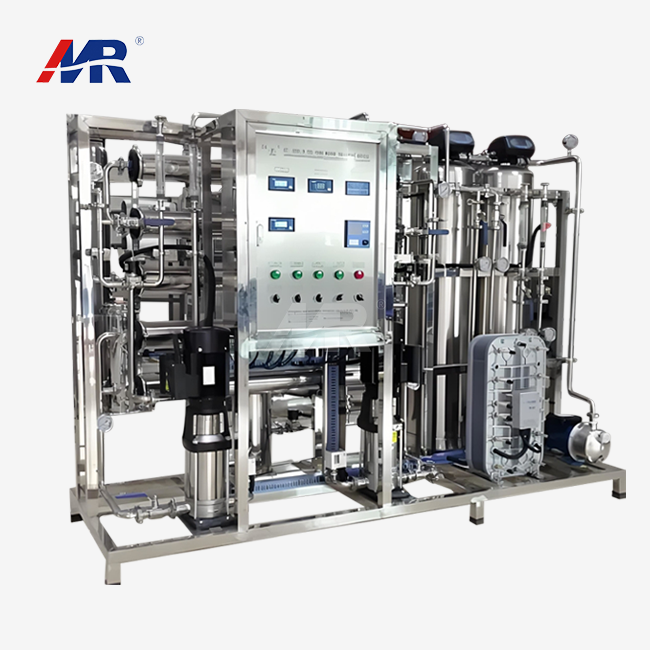 VIEW MORE1000LPH EDI system
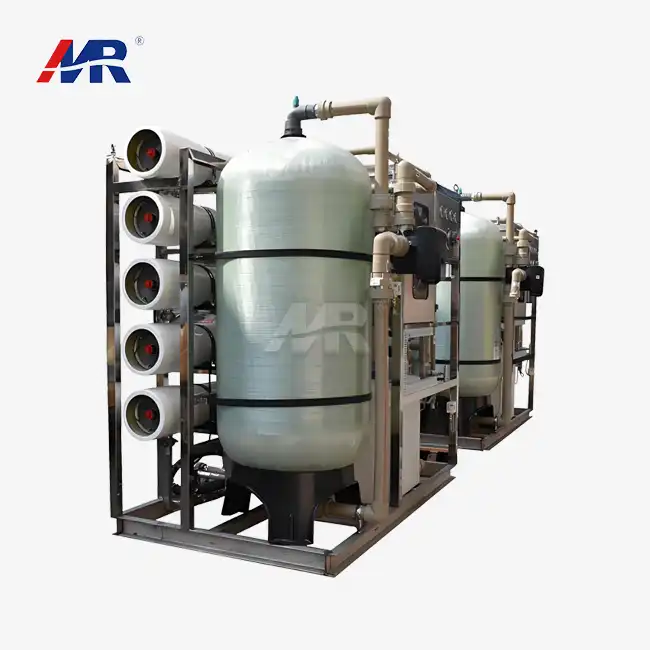 VIEW MORE8m3/hour seawater desalination equipment
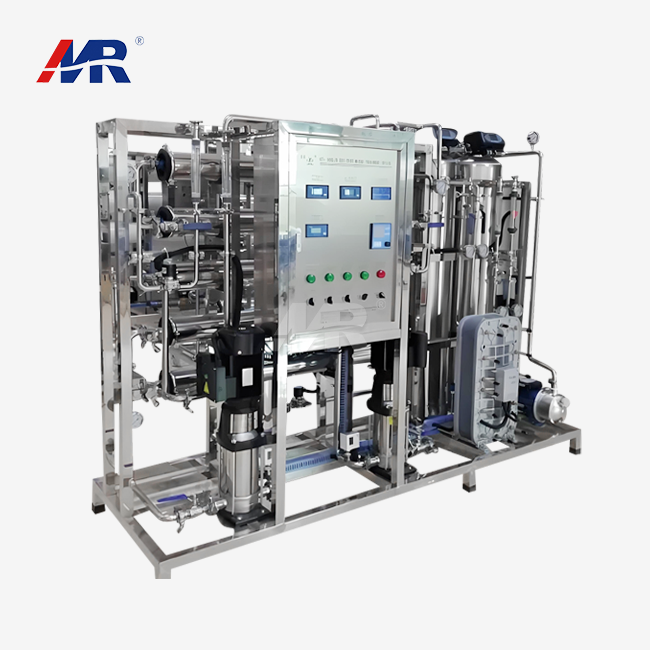 VIEW MORE1000LPH EDI equipment
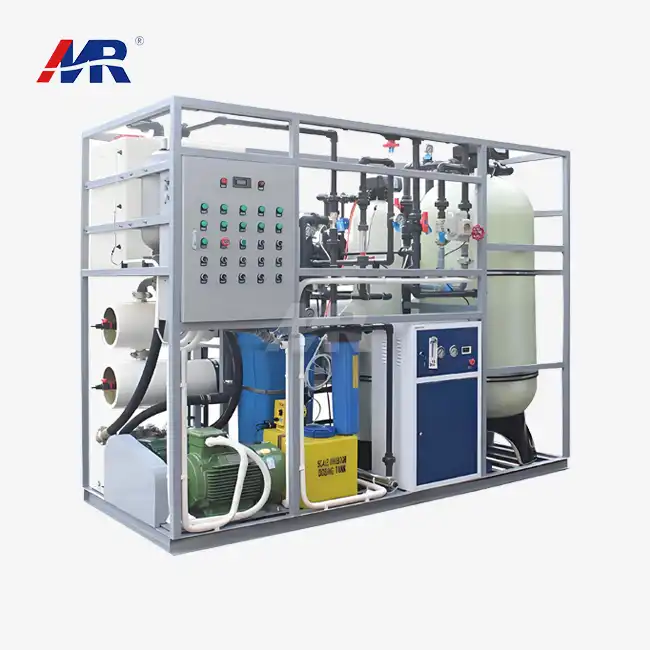 VIEW MORE2T/H seawater desalination plant
 VIEW MOREhome wastewater treatment plant
 VIEW MORE150m3/hour reverse osmosis plant
 VIEW MOREreverse osmosis water treatment equipment
 VIEW MOREwastewater treatment plant
