



How Does 20m3/hour Ultrafiltration Equipment Handle RO Pretreatment?
Water treatment engineers ask this question when a reverse osmosis system keeps fouling faster than expected. 20m3/hour Ultrafiltration Equipment solves that problem by stripping out suspended solids, colloids, bacteria, and large organic molecules before the water ever touches an RO membrane. This article breaks down how a 20 cubic meter per hour UF skid actually works, what feed water limits apply, how sizing math is done, and what to check before you sign a purchase order. I wrote this guide from direct project experience, not from guesswork.

A 20m3/hour ultrafiltration system handles RO pretreatment by pushing feed water through microporous hollow-fiber membranes that trap suspended solids, colloids, microorganisms, and larger organic molecules. The low-turbidity, low-SDI water that comes out reduces RO fouling and keeps RO performance steady, though UF cannot replace RO when dissolved-salt removal is the goal.
What Is a 20m³/hour Ultrafiltration System?
Defining the 20m³/hour Rating
Once you get a quote for 20m3/hour ultrafiltration equipment, that number generally tells you how much permeate can be handled at a certain temperature, pressure, flux, and recovery rate. It's not a given that it will always be true. If the feed temperature is 25°C, the system might only be able to send 16–17 m³/h when the water temperature in the winter drops to 10°C. This is because membrane flux goes down when viscosity goes up in colder water.
My clients should always ask for more than the highest number. They should also ask for the number that is based on the design. Projects are too small when stated capacity, plan capacity, peak flow, and net daily output are all mixed up.
Nominal vs. Design vs. Peak Capacity
- It is used for marketing and quickly comparing suppliers with the catalog number for nominal capacity. The idea behind it is that the feed water is clean and the temperature is right.
- The design capacity is based on the real report on the quality of the raw water, the lowest temperature that happens in the winter, and the recovery rate that the membrane provider confirms in writing.
- Peak flow is a short-term rise in demand, like when more water is used in the morning in a village water scheme or when a beverage plant's shift changes.
- The theoretical 24-hour run time is cut down by the time it takes to backwash, clean with chemicals, and stand by. This is called net daily production.
- The phrase installed standby capacity refers to a backup set of modules that are not being used in case something goes wrong during maintenance.
People often make the mistake of getting equipment that only gives them 15 m³/h when they find out how much it costs to run. By comparing these four numbers across prices, they can avoid this mistake.
What UF Removes — and What It Does Not
Since the pores are so small, uf membranes only stop the flow of matter, not the flow of chemicals. It means the table below is more important than anything else they say.
| UF can typically remove | UF generally does not remove |
|---|---|
| Suspended solids | Dissolved salts |
| Colloids | Most hardness ions |
| Bacteria and some microorganisms | Nitrate and chloride ions |
| High-molecular-weight organics | Most low-molecular-weight dissolved compounds |
| Turbidity-causing particles | Total dissolved solids (TDS) |
This table explains why UF comes before RO in a treatment plan rather than after it. The liquid load is taken care of by RO, and the organic and particulate loads are taken care of by UF.
Typical 20m³/hour UF System Configuration
Full 20m3/hour ultrafiltration equipment sets don't come with just one tank. There are several steps that fit together. In general, a skid has these parts:
- A pump that brings in raw water and big solids and trash that are screened out before they reach the membranes.
- Multimedia or cartridge filtration to make sure the water is safe when it has sand, silt, or iron floc in it.
- Racks of hollow-fiber UF membrane pieces that are the right size for the area of membrane that needs to be covered. There should be permeate, backwash, and drain pipes with isolation valves for each module bank.
- Backwash skids that fix the flux automatically and backwash skids that do it chemically rather than by hand.
- It has a CIP tank, dosing pumps, a PLC/HMI control panel, flow and pressure meters, and wires for alarms so the machine can work on its own.
Instead of seeing six separate screens, the operator only sees one. This is possible because these parts work together. I helped with a village water scheme in Indonesia last year that looked just like this. One operator checked the HMI twice a shift.
Why Use UF Before RO at 20m³/hour?
RO Pretreatment Problems UF Addresses
When bacteria, colloids, or particles are in the feed water, RO screens get dirty very quickly. 20m3/hour ultrafiltration equipment drops four things that put stress on the RO train, which are listed below:
- Turbidity and suspended solids: Things that usually sit on top of the RO membrane and form a cake-like layer are many.
- Silt Density Index (SDI): One common way to tell if RO feed water is fouling is to look at the SDI. Feed water with a lower SDI means that RO fouling rates are slower.
- Colloidal fouling: UF membranes pick up colloidal fouling, which is made up of very small particles (less than 1 micron) that cartridge filters often miss.
- Microbiological loading: There are bacteria that can stick to RO membranes and form biofilm, which lowers the pressure over time.
Surface water, shallow well water, and industrial process water all have different fouling risks. What the UF does should be based on the source and not just a general rule.
UF-to-RO Performance Benefits
The UF stage doesn't just leave clean water on the RO side when it works well. Watch out for these signs in the first three months of business:
- The turbidity of the RO feed should be less than 0.2 NTU, but the exact number is set by the company that makes the RO membrane.
- According to the membrane document, the RO feed SDI should be less than 3. This was proven by checking it again.
- Instead of going up from week to week, the drop in RO pressure across the train should stay the same.
- The normal flow of permeate went back to being normal after RO. This flow drops when fouling builds up. Getting ready for UF slows that decline.
- When the UF is the right size, the number of times that the membrane needs to be cleaned and replaced drops.
I don't use SDI or turbidity numbers that are always correct as guarantees. Each type of ro membrane has its own rules about how much water can go through it. The water study report sets the real goal.
When UF Is Not Sufficient Pretreatment
If something is mixed with UF, the particles can't be seen. For these kinds of projects, extra steps need to be taken before or after UF or between UF and RO:
- Many iron or manganese ions are dissolved in the water. These ions oxidize and block the holes of the membrane if they are not cleaned with air and filters first.
- Ions that harden and scale things go right through the UF and then scale the RO membrane's surface.
- Gases that are dissolved in the water, such as hydrogen sulfide, which stinks and rusts things, that UF can't fix.
- A lot of dissolved organic carbon that might need activated carbon or coagulation before UF.
- In the membrane, there shouldn't be any oil, solvents, or chemicals. These could damage the PVDF or PES strands and void the guarantee.
- Bad algae blooms or biological growth can make the UF backwash lines too busy and quickly raise the cost of cleaning chemicals.
That's why we always get a feed-water test report first.
How Does 20m³/hour UF Remove RO Feed Contaminants?
The Membrane Filtration Process Step by Step
A 20m3/hour ultrafiltration equipment skid cleans water in five easy steps that can be done over and over:
- The raw water goes into the UF feed header after being pre-screened.
- Hollow-fiber modules have pressures of 0.1 to 0.3 MPa that force water through the tube wall.
- Bodies and solids that are mixed stay on the feed side and collect in the reject stream.
- It starts on the RO skid and goes to the RO feed tank or straight to it.
- The membrane gets back to its original amount of permeability through backwash and chemical cleaning processes that happen at set times.
Based on how fast the raw water fouls, this loop runs again in 30 to 60 minutes. The usual cleaning process starts up again after the backwash is done.
Hollow-Fiber vs. Tubular UF Configurations
What kind of module do I need for my project? The real-life trade-offs are shown in the table below.
| Factor | Hollow-fiber UF | Tubular UF |
|---|---|---|
| Typical application | Lower-solids water and RO preparation | Wastewater with more solids or that is hard to treat |
| Footprint | Compact | Usually bigger |
| Energy demand | Often lower | Often higher |
| Fouling tolerance | Depends on module design | Generally more tolerant of larger solids |
| Cleaning approach | Backwash, air scour, CEB, CIP | Crossflow, flushing, chemical cleaning |
Most of the time, hollow-fiber modules are better for RO cleaning jobs because they use less energy and take up less room. Tube-shaped designs work well for reuse projects that use industrial wastewater that has a lot of solids.
Key Operating Parameters to Specify
With a detailed technical spec sheet, you won't have to make any claims in the future. This is what every supplier should be asked to write down:
- A membrane made of PVDF or PES, which are different in how well they fight chemicals and how strong they are when they move.
- To prepare RO water and drink it, the nominal or true pore size is usually between 0.01 and 0.1 microns.
- The range of operating pressure and transmembrane pressure (TMP) when filtration is working properly.
- Design flux tells you how big your membrane area needs to be in liters per square meter per hour (LMH).
- Recovery rate, or the amount of feed water that is turned into permeate that can be used.
- If the module design calls for it, how often and for how long to backwash, as well as how to clean with air.
- The limits for chemical cleaning, like the pH range, chlorine amount, and amount of time that can be spent touching the surface.
- Use turbidity and SDI performance data from a real test or reference plant.
- For this reason, the size of the membrane module and the cost to change each module are always the same.
We test each module before we ship it, and a well-maintained hollow-fiber system can get rid of up to 99.99% of germs and particles in the fluid at the recommended hole size.
What Feed Water Quality Does 20m³/hour UF Require?
Required Feed-Water Analysis
Before you can give me a price quote on 20m3/hour ultrafiltration equipment, I need a feed water report that has these things in it. In the field, I've seen UF systems that don't work well because they skipped this step.
- Flow rate and daily working hours, since fouling takes a different form when the machine isn't running all the time.
- Turbidity, TSS, and SDI, or a similar way to measure pollution.
- The pH, temperature, conductivity, and TDS.
- What kind of hardness, alkalinity, iron, manganese, and silicon it has.
- TOC, COD, oil content, and microbial markers in the water, such as the total coliform count.
- Seasonal variation data and peak contamination events, such as monsoon turbidity spikes.
Feed-Water Limits and Pretreatment Requirements
It's not a general rule that you need a proven limit table for every job. We build this system with each client before we set the design in stone.
| Parameter | Design value | Supplier limit | Mitigation if exceeded |
|---|---|---|---|
| Turbidity | Site-specific | Confirmed by membrane datasheet | Coagulation, clarification, or media filter |
| TSS | Site-specific | Confirmed by membrane datasheet | Screening or sedimentation |
| Oil and grease | Site-specific | Confirmed by membrane datasheet | Oil separation or activated carbon |
| Iron and manganese | Site-specific | Confirmed by membrane datasheet | Oxidation and filter |
| Temperature | Site-specific | Confirmed by membrane datasheet | Flux correction or heating |
| Microbial loading | Site-specific | Confirmed by membrane datasheet | Disinfection and cleaning controls |
Risks From Poor Feed-Water Characterization
Things that look good on paper don't work when they're put to use when water data is bad. These are the three mistakes I see most often and how to fix them.
- Risk: Designing only around average turbidity readings from one sunny day. Mitigation: Take samples at different times of the year and during at least one full wet and dry cycle.
- Risk: Ignoring the fact that cold weather makes flux loss happen. Mitigation: To figure out how big the membrane area needs to be, use the lowest expected feed temperature instead of the average temperature for the whole year.
- Risk: Putting water into UF modules that has been contaminated with oil or solvents. Mitigation: Separate the water upstream and make sure it works with the chemical resistance chart that the membrane maker gives you.
How Does UF Compare With Conventional RO Pretreatment?
UF Versus Media, Cartridge, and Chemical Pretreatment
Some people wonder why they should pay for UF when they could get a sand filter or a bank of cartridges instead. Not only the price up front, but also how stable it is, is the answer.
| Pretreatment option | Main strength | Main weakness | Best-fit application |
|---|---|---|---|
| UF | Consistent particulate and colloid removal | Needs backwash and periodic membrane cleaning | Variable surface water and high-quality RO feed |
| Multimedia filtration | Low-cost bulk solids removal | Less consistent barrier performance | Moderate turbidity and stable feed |
| Cartridge filtration | Final particle protection | Frequent replacement, limited dirt-holding capacity | RO security filtration |
| Coagulation and clarification | Handles high suspended solids | Chemical handling and sludge production | High-turbidity surface water |
| Conventional microfiltration | Particle removal | Depends on membrane and process performance | Some industry uses |
20m³/h UF System Versus RO System
Some people still ask me if a UF system alone can produce drinking water without RO. The short answer is yes, but not to remove salt from water or get rid of heavy dissolved solids. The UF stops particles, colloids, and bacteria from getting through. RO gets rid of salts that are broken down, and a lot of smaller ones that are broken down also pass through a UF membrane. It costs less per cubic meter to run UF than RO because it works at lower pressure. Clean RO feed from UF is not the same as desalinated water. Different things are done by the two stages in the same train.
UF Capacity, Recovery, and Operating Cost Comparison
People often forget to include the running cost when they compare prices between sellers, even though it usually costs more over five years than the purchase price. Compare these line items by putting them next to each other:
- Initial equipment price, including membranes, pumps, and the control panel.
- Membrane replacement cost and expected membrane life in years.
- Electrical consumption per cubic meter of permeate produced.
- The share of the total feed flow that needs to be used for backwash water.
- Chemical consumption for CEB and periodic CIP cycles.
- Wastewater disposal cost for the reject and backwash stream.
- Labor and maintenance hours required per month.
- Total cost per cubic meter of UF permeate, combining all of the above.
You can compare more than just price with these line items. This is more important than a lower price right now for a 10-year city contract.
How Is a 20m³/hour UF System Sized for RO?
Basic Ultrafiltration Capacity Calculation
Sizing math for 20m3/hour ultrafiltration equipment starts with one formula: membrane area equals required permeate flow divided by design flux. If the required permeate flow is 20 m³/h and the design flux is locked in at a certain LMH value for the water temperature in the area, the membrane area can be found right away. The raw number is then changed to take into account the coldest water that can be used, the rate of recovery, the time needed for backwashing and chemical cleaning, a safety gap, and any growth that is expected in the future.
UF Capacity, Recovery, and RO Feed Balance
How much raw water a plant needs changes based on how fast it recovers. There needs to be about 22.2 m³/h of feed water for every 20 m³/h of permeate, and that's before you take into account the time needed for backwash and cleaning. On the same drawing, the flow of UF rejects, the demand for RO feed, the volume of backwash, and the storage tank's capacity all need to balance hydraulically. I always ask the client right away if "20 m³/h" means UF permeate flow, RO feed flow, or total plant throughput, because these three numbers are not the same and mixing them causes under-sizing disputes after installation.
Three Application Scenarios for Sizing
Different people have different size needs. These are the three types of buyers that we design for most of the time.
- OEM integrator: needs dimensional drawings, communication protocols for the PLC, modular skid design, and specifications that repeat across multiple projects.
- Distributor: needs standard setups, export packing data, a list of spare parts, user guides, and predictable delivery times across batch orders.
- End-user or plant owner: needs a full water analysis, clear installation scope, operator training, a written warranty, and lifecycle-cost figures before signing off.
How Does 20m³/hour UF Control Membrane Fouling?
Main UF Fouling Mechanisms
Bad fouling is the main reason why UF systems stop working after a while. Seven things are mostly to blame for most of the fouling we see in the field:
- Particulate cake formation on the membrane surface during normal filtration.
- Organic fouling from dissolved natural organic matter binding to the membrane wall.
- Biofouling from bacteria forming a biofilm layer inside the cell.
- Scaling from hardness ions precipitating when local conditions concentrate them near the membrane.
- Oil contamination that coats the membrane surface and resists standard backwash.
- Irreversible pore blocking from fine particles lodged permanently inside the pore structure.
- Excessive transmembrane pressure, which is usually the first measurable warning sign of all the above.
Automatic Backwashing and Chemical Cleaning
A properly automated 20m3/hour ultrafiltration equipment system runs a fixed sequence without manual input: permeation, backwash, air scour where the module design allows it, drain or forward flush, chemically enhanced backwash, periodic CIP, then a return to normal filtration. Cleaning chemical type, concentration, temperature, contact time, and pH must all stay inside the membrane manufacturer's published limits. Going outside those limits voids the membrane warranty and shortens its working life, sometimes by years.
Fouling Monitoring and Mitigation Checklist
Operators who track the right numbers catch fouling early, before it becomes an expensive membrane replacement. Monitor these eight indicators daily or weekly depending on plant size:
- Watch for a steady rise in the TMP trend during each filter run.
- Permeate flow corrected for temperature, as raw flow numbers can mislead.
- Permeate turbidity, which should stay flat and low regardless of feed water changes.
- Feed and reject pressures at each module bank.
- Backwash frequency, which should stay steady unless raw water quality shifts.
- Chemical consumption per cleaning cycle, tracked against a baseline.
- CIP recovery percentage, meaning how much flux returns after a full clean.
- Membrane integrity test results, run on a fixed schedule to catch fiber breaks early.
Tracking these eight points together usually catches fouling trends a full month before TMP alarms would trigger on their own.
How Should a 20m³/hour UF System Be Operated Before RO?
Recommended Operating Sequence
When new operators start up, writing down the steps helps them avoid making the same mistakes that happen on every job. Do these things in this order:
- Inspect pumps, valves, instruments, and chemical dosing levels before startup.
- Confirm feed-water conditions fall inside the approved design limits.
- Start UF filtration at a controlled, ramped flow rate.
- Monitor TMP, turbidity, flow, and recovery continuously during the first hours.
- Run automatic backwash and air scour on the programmed schedule.
- Divert off-specification permeate during startup or after a cleaning cycle.
- Release permeate to the RO train only after quality criteria are confirmed met.
RO Feed Release Criteria
High-priced RO filters can't handle bad water because of a table that is linked to measured parameters.
| Parameter | Target or limit | Measurement method | Action if out of specification |
|---|---|---|---|
| Turbidity | Confirmed per RO datasheet | Calibrated turbidity meter | Divert and investigate |
| SDI | Confirmed per RO datasheet | ASTM or project method | Extend treatment or clean |
| Conductivity | Confirmed per project scope | Online conductivity meter | Check feed-water changes |
| Microbial indicator | Confirmed per project scope | Approved laboratory method | Sanitize or hold feed |
| Flow | Confirmed per design flow | Calibrated flowmeter | Adjust pump or valves |
Operator, Safety, and Documentation Requirements
A 20m3/hour ultrafiltration equipment system runs safely and reliably when these records exist and stay current:
- Lockout/tagout processes and chemical-handling steps for cleaning agents.
- Safety data sheets (SDS) for all cleaning chemicals stored on site.
- A PLC alarm list and emergency shutdown logic diagram posted near the control panel.
- A preventive-maintenance schedule covering pumps, valves, and instruments.
- Calibration records for every flow, pressure, and turbidity instrument.
- An operating log template filled in each shift.
- Training and commissioning records signed off by both supplier and client engineers.
Supplier Capability & Evaluation for 20m³/hour UF Equipment
How to Evaluate a 20m³/hour UF Manufacturer
Choosing a supplier for 20m3/hour ultrafiltration equipment means checking more than price. Run through this list before signing a contract:
- Demonstrated references for 20 m³/h UF installations, ideally with contact details you can call.
- Membrane manufacturer and module traceability, meaning you know whose fiber is actually inside the module.
- Hydraulic and membrane-area calculations provided in writing, not just a flow number.
- Factory acceptance testing (FAT) capability before the skid ships.
- Water-analysis-based design rather than a one-size-fits-all package.
- Automation and remote-support capability, including whether the PLC supports remote diagnostics.
- Spare-parts availability and typical lead time for membrane replacement.
- Export packaging and installation support for projects outside the home country.
- Warranty terms and realistic after-sales response time.
Field Case: Rural Water Scheme in the Mekong Delta
In 2024, a rural waterworks operator in the Mekong Delta region replaced an aging sand-filter pretreatment stage with a 20 m³/h UF skid ahead of an existing RO train. Raw river water carried seasonal turbidity spikes up to 60 NTU during the wet season. After commissioning, measured RO feed turbidity held below 0.1 NTU year-round, and SDI dropped from an average of 6.8 to 2.1. The utility reported RO cleaning frequency fell from once every three weeks to once every ten weeks, cutting chemical cleaning cost by roughly 55% over the first six months. One engineer on that project told me directly: "We stopped guessing when the RO needed cleaning because the UF permeate numbers barely moved all year." That kind of stability is the real test of whether UF pretreatment is sized correctly.
Company Capability Overview
Guangdong Morui Environmental Technology Co., Ltd. builds water treatment systems covering industrial wastewater, domestic sewage treatment, seawater desalination, and drinking water production. Our group runs more than 14 branches with over 500 employees and 20 in-house engineers. UF membrane production stays in-house at our own membrane factory, paired with several equipment processing plants for skid and container fabrication. This membrane-to-machine setup is why our 20m3/hour ultrafiltration equipment can be customized for pore size, module material, and control layout without relying on a third-party membrane supplier. We also act as an agent for established brands including Shimge water pumps, Runxin valves, and Createc instruments, which keeps spare-parts sourcing simple for clients across Asia, South America, and Africa.
Quality Verification Before Shipment
A factory should hand over documentation before the skid leaves the floor, not after a problem shows up on site. Request these items as standard practice:
- Approved general arrangement and P&ID drawings matching the as-built skid.
- Membrane module certificates and serial numbers for full traceability.
- Pump and instrument datasheets for every major component.
- Material certificates where food-grade or drinking-water contact applies.
- Factory acceptance test (FAT) report with measured flow, pressure, and recovery data.
- Pressure and leak-test records for piping and tanks.
- Electrical inspection and control-panel test results.
- Calibration certificates for flow, pressure, and turbidity instruments.
- Packing list, operation manuals, and a spare-parts schedule.
- Photographs or video evidence of final assembly before crating.
Procurement, Cost, and Delivery Checklist for 20m³/hour UF Systems
Price and Total Cost Comparison
Quotes that look similar on the surface often cover very different scopes. Compare using the categories below before ranking suppliers by price alone.
| Cost category | Questions to ask |
|---|---|
| Equipment price | Is the quote for UF only or UF plus RO pretreatment? |
| Membranes | Are modules included, and what is the replacement price? |
| Automation | Are PLC, HMI, sensors, alarms, and remote access included? |
| Installation | Is installation supervision or commissioning included? |
| Consumables | Are cartridges, chemicals, and initial spares included? |
| Freight | Is packaging and export preparation included? |
| Operating cost | What are the energy, chemical, backwash, and disposal assumptions? |
| Warranty | What components and performance conditions are covered? |
Commercial and Logistics Terms
Beyond price, these commercial fields decide whether a project runs on schedule. Confirm each one before placing a deposit:
- MOQ (minimum order quantity) or minimum project scope accepted by the supplier.
- Lead time and delivery time from design approval to shipment.
- Production approval milestones and who signs off at each stage.
- Payment terms, typically a deposit, progress payment, and balance on shipment.
- Incoterms, such as EXW, FOB, CIF, or DAP, which decide who covers freight risk.
- Export packaging and container loading plan for the specific skid dimensions.
- Insurance and customs documentation required at the destination port.
- Warranty duration and what it excludes, such as consumable membranes.
- Spare-parts availability and stock location nearest the project site.
- Installation and commissioning responsibilities split between supplier and buyer.
Compliance and Documentation for Regulated Markets
Certification needs depend on the destination market, not a blanket checklist. Confirm applicability case by case:
- CE marking: relevant for applicable machinery, electrical, pressure, and EMC requirements under EU rules.
- RoHS and REACH: relevant to applicable electrical components and substances supplied into the EU market (ECHA, 2024).
- UL or comparable electrical requirements: sometimes requested for US installations or specific project specifications.
- FDA or 21 CFR requirements: relevant only where wetted materials touch food, beverage, or pharmaceutical processes.
- ISO 9001: useful for judging a supplier's quality-management system, but it does not replace actual equipment performance testing (ISO, 2015).
- Drinking-water requirements: confirm applicable national and local requirements for wetted materials and treatment performance (European Commission, 2020).
Conclusion
A 20m³/hour UF system gives RO membranes a stable, low-turbidity feed by removing suspended solids, colloids, microorganisms, and larger organic contaminants before they reach the RO train. Picking the right system comes down to verified feed-water data, correct membrane-area math, a realistic recovery rate, a workable cleaning strategy, matched RO feed requirements, true lifecycle cost, and supplier paperwork that holds up under audit. 20m3/hour ultrafiltration equipment that is sized and documented this way protects the much larger RO investment sitting right behind it.
FAQ
1. What is 20m³/hour ultrafiltration equipment?
It is an industrial UF system designed to produce close to 20 cubic meters of permeate per hour under stated operating conditions. Actual output shifts with temperature, membrane flux, feed quality, recovery rate, and cleaning downtime.
2. How does a 20m³/h UF system protect RO membranes?
UF strips suspended solids, colloids, bacteria, and particles that drive up turbidity and SDI before water enters the RO system. This slows particulate and colloidal fouling, though UF cannot remove most dissolved salts on its own.
3. Is UF better than cartridge filtration before RO?
UF gives a stronger and more consistent physical barrier than cartridge filtration when sized and operated correctly. Cartridge filters still serve as final security filters, or work alone where solids loading stays low and stable year-round.
4. What is the operating cost of a 20m³/hour UF system?
Operating cost includes electricity, backwash water, cleaning chemicals, membrane replacement, labor, and reject-water disposal. A fair comparison uses cost per cubic meter, built from local energy, chemical, labor, and disposal prices at the project site.
5. What feed-water tests are needed before selecting a 20m³/h UF system?
At minimum, test flow, temperature, turbidity, TSS, SDI, pH, conductivity, TDS, hardness, alkalinity, iron, manganese, TOC, oil, and microbiological load. Seasonal and peak-condition samples make the final design far more reliable than a single spot test.
6. What is the difference between UF and RO?
UF removes larger particles, colloids, microorganisms, and some macromolecules through a porous membrane wall. RO uses a denser membrane that removes dissolved salts and many smaller dissolved contaminants that pass straight through UF.
7. How long does delivery take for a customized 20m³/hour UF system?
Delivery time depends on membrane availability, automation scope, fabrication schedule, FAT testing, documentation, and destination requirements. The quotation should list design approval dates, manufacturing lead time, FAT timing, shipping terms, and commissioning scope in writing.
Ready to Spec Your RO Pretreatment Line?
Pain points like inconsistent SDI readings, early RO fouling, or unclear membrane sizing cost real money every month a plant runs. Morui builds 20m3/hour ultrafiltration equipment with in-house hollow-fiber membrane production, PLC automation, and skid or container integration matched to your raw-water report. Whether you need a 20m3/hour ultrafiltration equipment manufacturer for a batch tender or a custom UF+RO train with private labeling, send your feed-water analysis to benson@guangdongmorui.com, and we will return a sized proposal with membrane-area calculations attached.
References
1. DuPont Water Solutions. Ultrafiltration (UF). DuPont. DuPont Ultrafiltration (UF)
2. DuPont Water Solutions. IntegraTec™ Ultrafiltration Process & Design Manual. DuPont. IntegraTec™ UF Process & Design Manual
3. U.S. Environmental Protection Agency. Simultaneous Compliance Workbook: Microfiltration and Ultrafiltration. EPA. EPA Microfiltration and Ultrafiltration Guidance
4. DuPont Water Solutions. FilmTec™ Reverse Osmosis/Nanofiltration Membranes Technical Manual. DuPont. FilmTec™ RO/NF Membranes Technical Manual
Author
Bin Liu is a Senior Overseas Water Treatment Technical Manager with practical experience in industrial and municipal water treatment projects. His work focuses on membrane-based treatment technologies, including ultrafiltration (UF), reverse osmosis (RO), seawater desalination, and wastewater reuse. He works with international customers on feed-water assessment, membrane selection, system sizing, pretreatment design, equipment configuration, commissioning, and technical documentation. His approach emphasizes matching membrane performance with actual water conditions rather than relying on standard catalog capacities. Through project-based Technical support, Bin helps distributors, engineering contractors, and plant owners evaluate UF and RO systems based on operating reliability, lifecycle cost, maintenance requirements, and application-specific water quality targets.
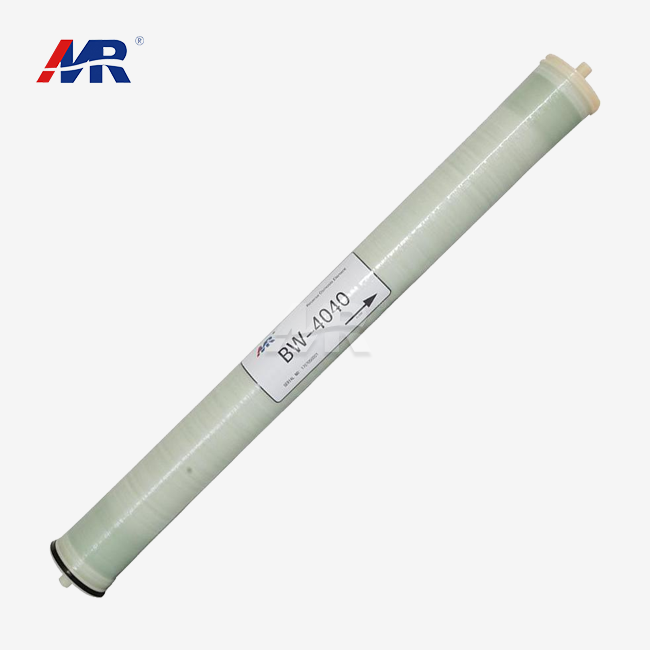 VIEW MORE4040 reverse osmosis membrane
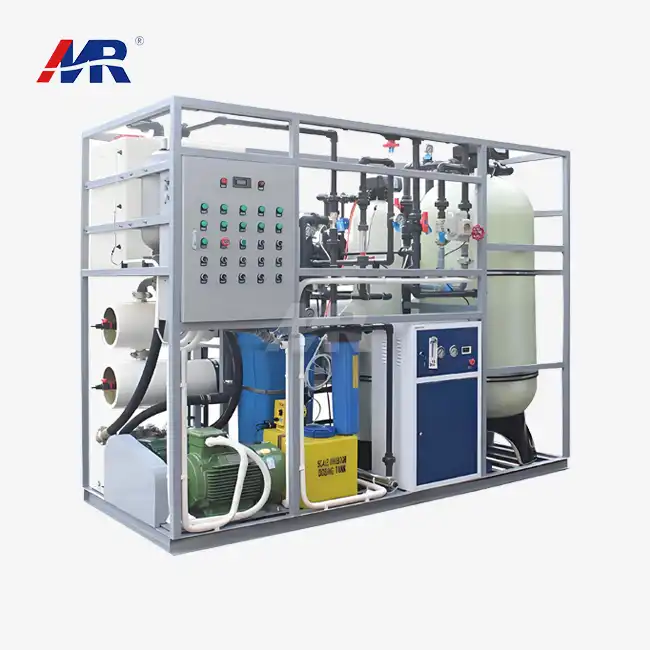 VIEW MORE2T/H seawater desalination plant
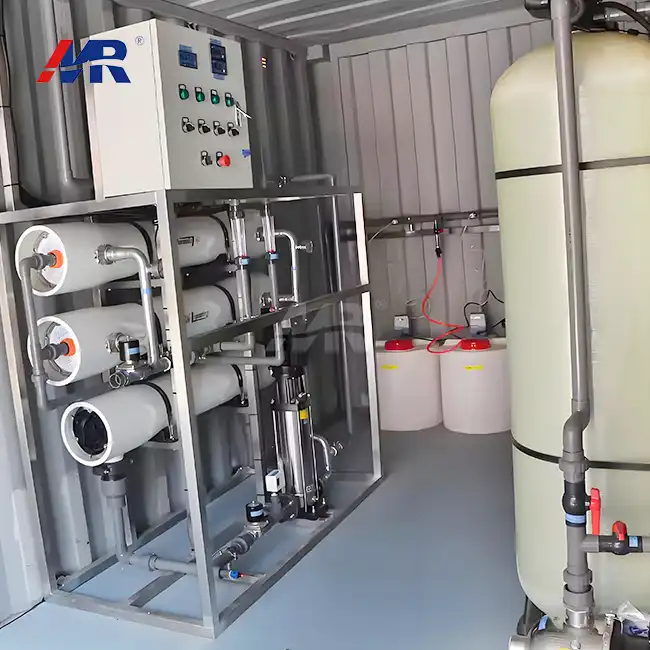 VIEW MOREcontainer 3m3/hour RO equipment
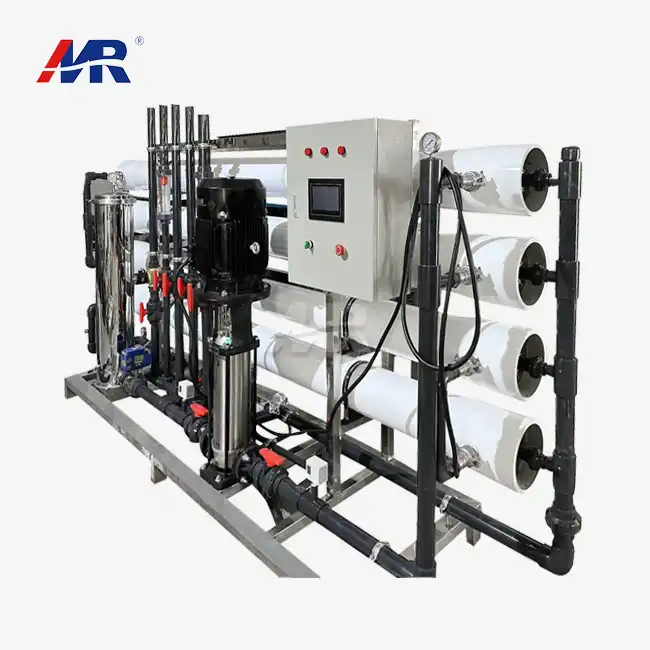 VIEW MORE12m3/hour reverse osmosis BWRO system
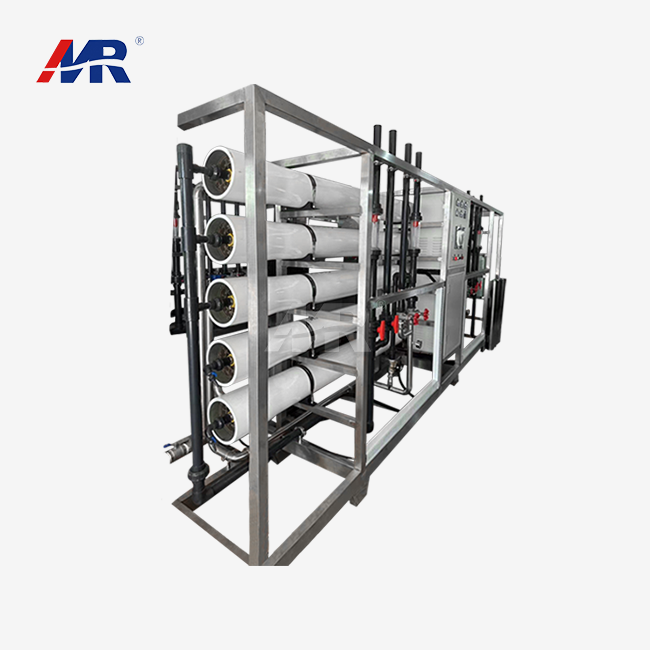 VIEW MOREhighest rated reverse osmosis system
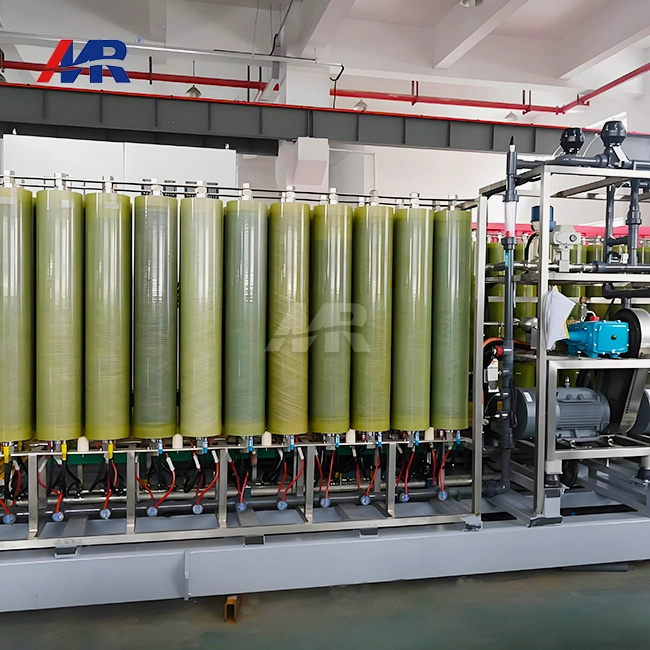 VIEW MOREDTRO Technology
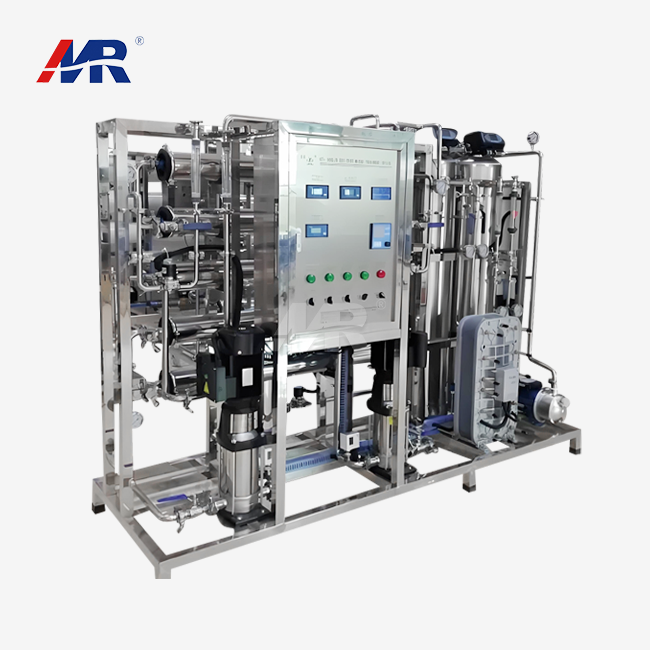 VIEW MORE1000LPH EDI equipment
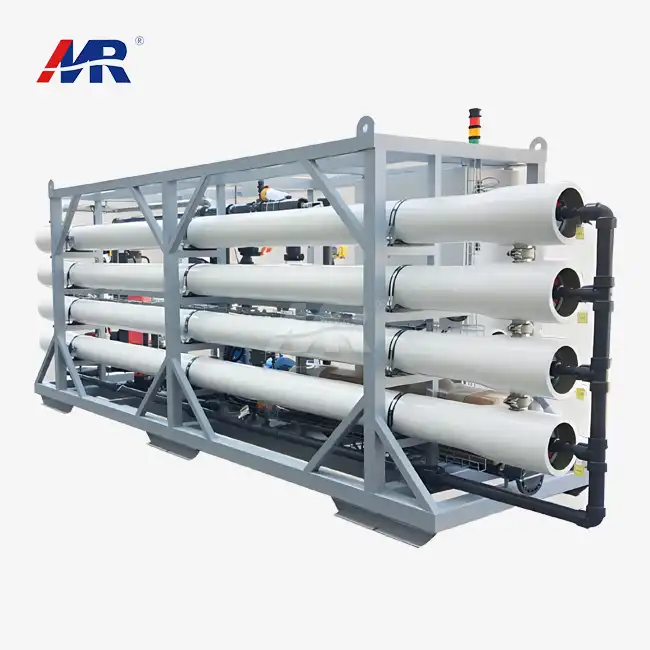 VIEW MORE12m3/hour seawater desalination equipment