


2 Stage Reverse Osmosis System: How Does It Improve Water Purity?
A 2 stage reverse osmosis system sends the concentrate from one membrane array into the feed of a second, so the same gallon of source water yields more permeate before it leaves the plant. That plumbing raises recovery and cuts brine volume. Purity improves for a different reason: pretreatment keeps the elements clean enough to hold their rejection rate, and a second array gives the remaining dissolved salts one more chance to be turned back. I wrote this guide for buyers who need steady output, compliant discharge, or process-grade water, and who want to compare designs using lab data rather than brochure language.

What Is a 2 Stage Reverse Osmosis System?
The Two Meanings of "Two-Stage"
Labels on things sold by sellers aren't always clear, and this phrase covers two types. Two kinds of people sell things. Some people say that "pretreatment pair" means silt and carbon, then one ro membrane. It's also called "two membrane arrays plumbed in series." Only the second design changes the amount of recovery and the amount of brine. This is an important difference. Make sure you know where the end of the concentrate line is on a process flow model. Membrane staging is the process of moving water from array one to array two after it was turned down by array one. You can prepare and make one pass if the wastewater goes down the drain. It only takes five minutes to read that picture. If those tools and expectations don't match up, it could cost a lot of money.
Parts That Make Up the Skid
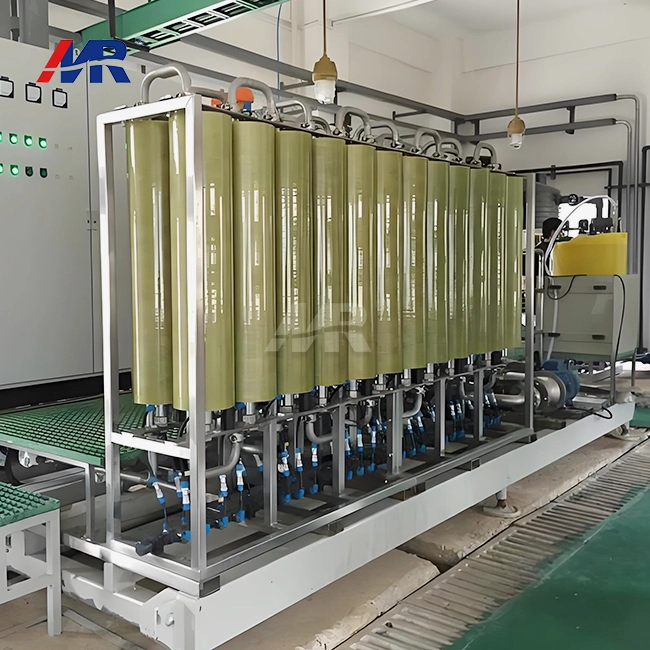
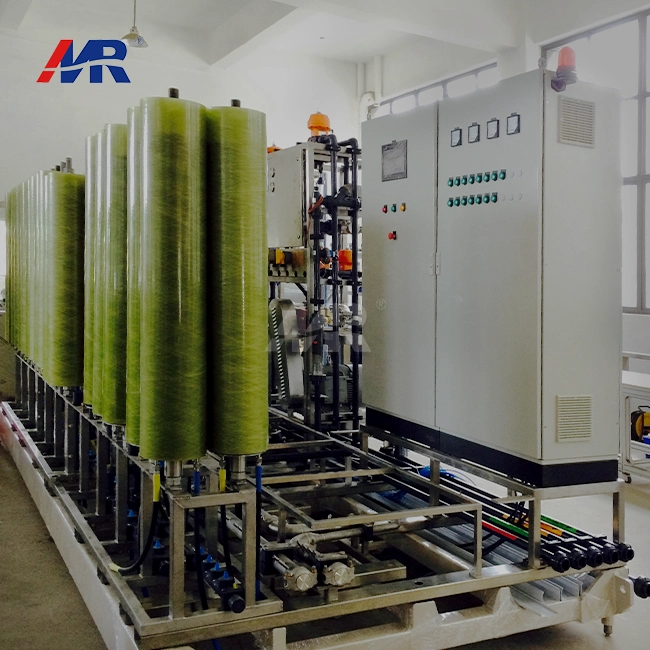
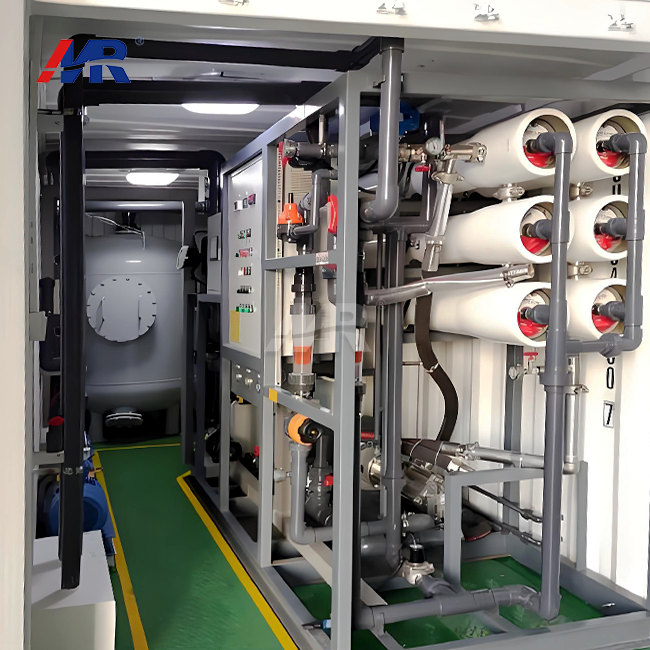
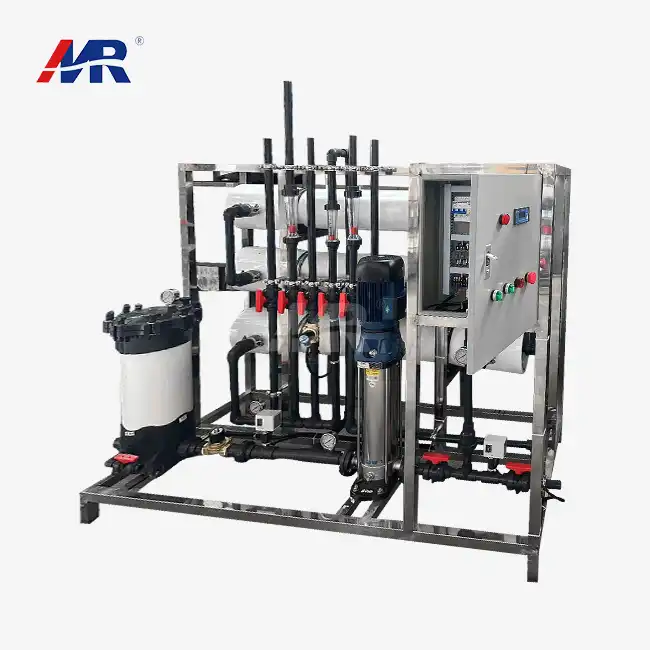
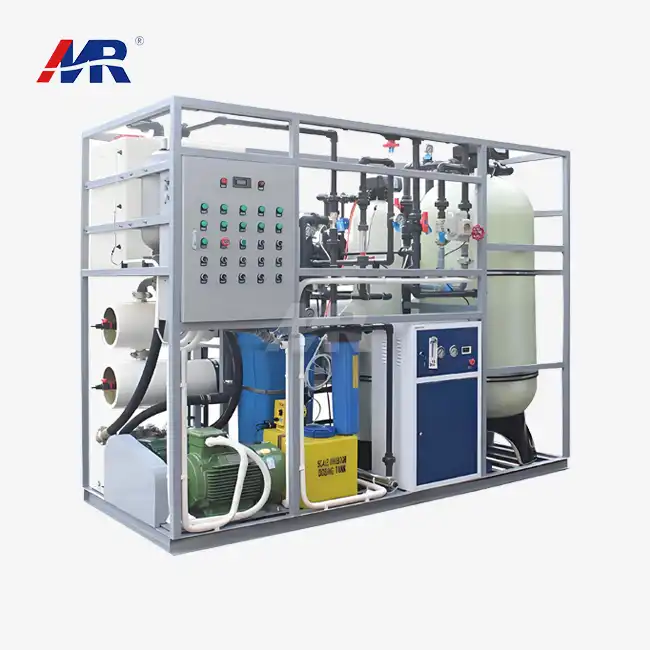
A staged system has more parts than a single-pass unit. The frame holds a feed pump, a high-pressure pump, membrane housings, interstage pipes, flow control valves, pressure gauges, conductivity meters, and a control screen. A boost pump moves the concentrate from one stage to the next most of the time. A pump that delivers an antiscalant may be used to feed the second stage and keep the scale in solution. I check the tool count before I do anything else. This is because drift can be found quickly on a skid with live conductivity and flow readouts. You can get bare-bones skids for less money, but they cost more in the long run when the membrane needs to be changed.
Staging Versus Two-Pass Design
While concentrate is sent through the first set of membranes, permeate is sent back through a second set of membranes. It's used in boilers and pharmaceuticals, among other places, where conductivity needs to drop below a certain level. Staging is meant to help people heal, and the two systems work to fix different problems. Some companies do both. For large output, they use staged arrays, and then they polish part of the flow. Both ways work sometimes, but not all the time. Buyers from cities and businesses should make sure that the design fits their goals for the quality of the water and the cost of getting rid of brine, since the difference in price is often less than the cost of disposal fees.
How Does a 2 Stage Reverse Osmosis System Improve Water Purity?
Pretreatment That Shields the Membranes
It breaks down in both ways, from the outside in and the inside out. When the concentration goes above a certain level, chlorine attacks the polyamides' surfaces, suspended solids clog the feed spacer, and calcium carbonate or silica scratches the surface. Those dangers are stopped before they reach the element. Multimedia filters lower turbidity, activated carbon gets rid of chlorine and organics, and softeners or antiscalant doses make the water less hard. This is the last line of defense that 5-micron cartridge filters can provide. If something goes wrong with the pretreatment, the differential pressure goes up, and the salt rejection goes down. This is not always the case, as cleanliness is more related to the way the membrane was treated before it was used.
Membrane Separation and 99% Salt Rejection
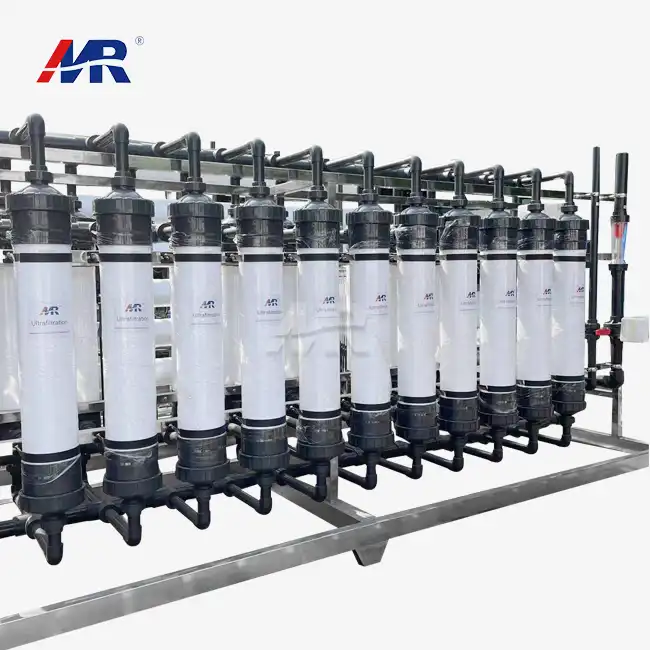
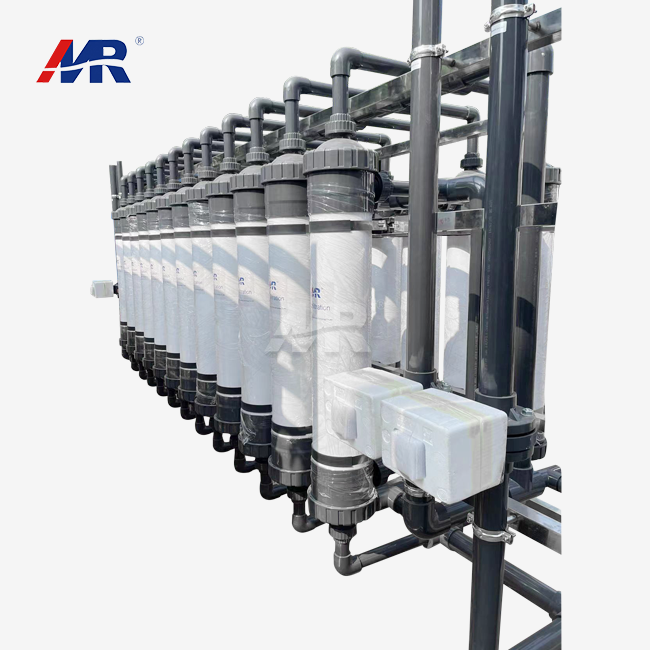
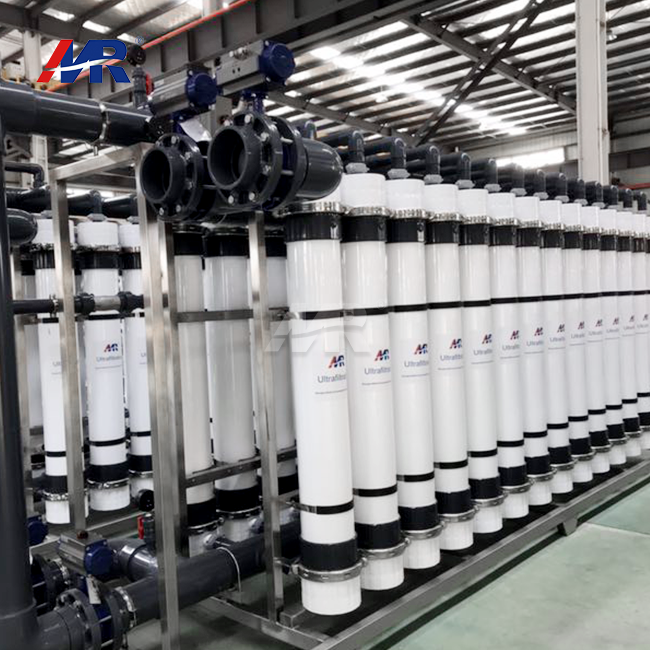
It needs more pressure than the osmotic pressure of the feed in order for 2 stage reverse osmosis system to work. This moves water across a layer that doesn't let everything through but does leave behind ions that have been dissolved. A well-run element gets rid of about 99% of the dissolved salts. This means that feed with 1,000 mg/L TDS leaves as permeate with 10 mg/L TDS. This is before any treatment after the feed. Large amounts of heavy metals, salt chloride, and nitrates all move in the same way. The thick active layer stops some bacteria and particles from getting through. When you stage, the number of rejections for each element stays the same. Instead, the feed is focused on the second array. In the real world, this means that interstage scale control is what limits how pure it is.
Numbers That Prove Purity Is Holding
Operators pay close attention to a small group of readings. Each one fails in a different way. When the feed quality stays the same, a rise in permeate conductivity means that the seal or membrane is broken. If the normalized salt rejection goes down over a few weeks, it means that the drain is fouling or scaling. If the pressure difference across the first array goes up, it means that the feed path is getting clogged. Things get squished or biologically fouled when the flow of permeate slows down, but the temperature and pressure stay the same. Guesswork can be turned into a care plan by writing these numbers down every day. The instrument results are backed up by reports on the quality of the water from a well-known lab. These reports meet the standards for permits for uses like drinking or dumping.
Capacity, Recovery, and Where These Systems Work
Sizing Flow to Daily and Peak Demand
People rate things in liters per hour, gallons per day, and cubic meters per day. These numbers are based on normal conditions, like a 25 °C feed at a certain TDS. The output drops by about 3% for every degree Celsius below that point in cold water, so it may not work as well as advertized in the winter. Not how much I use every day, but how much I need at peak times plus how much space I have. Take into account downtime, membrane age, and growth in the future. It is hard for a system that is rated for normal demand to work when there is a repair window or an output push.
Recovery Math and Scaling Control
Take the flow of product water, split it by the flow of feed water, and then multiply by 100. With a 60% recovery rate, 100 gallons of feed are split into 40 gallons of concentrate and 60 gallons of permeate. Increasing recovery lowers the cost of dumping salt and saves water, but it also raises the mineral content of the reject stream, which causes scale. Quartz, calcium sulfate, and barium sulfate all set very high limits. Chemistry that lowers the pH, controlling it, and resting all push these limits even further. Since a clogged membrane will waste the savings in just a few months, every small step toward recovery needs to be thought through in terms of risk.
The MR-BWRO-50TH at a Glance
Morui makes the MR-BWRO-50TH, which is a staged, membrane-based skid for making drinking water. Here are some of the best things about this set-up:
- The unit needs 55 kW of power, so the cost of energy stays the same for the whole shift, and plant planners don't have to guess how big the power line needs to be.
- Recovery stays between 55% and 65%. This means that a facility sends a lot less concentrate to the drain or evaporator than it would with a single-pass unit that had the same feed quality.
- It filters out up to 99% of the salt, which helps make drinking water and protects the equipment below from scale and corrosion while it polishes, disinfects, and stores.
Plants use staged designs because they have problems with unstable permeate quality, a lot of brine, and energy bills that go up every time recovery is raised without them realizing it. These benefits fix those problems.
Selection, Cost, and Procurement
Comparing Single-Stage, Two-Stage, and Three-Stage
You only need one stage of filtering to get rid of chlorine, sediment, taste, and smell. It doesn't meet TDS, hardness, or nitrate standards because it can't get rid of salts that mix with water. A 2 stage reverse osmosis system can be used for most business and government tasks because it separates water using membranes and reuses brine. Three-stage systems are useful when the water needs to be conditioned after it has been demineralized. They usually have carbon cleaning, remineralization, or UV light. There are times when more steps do not mean better water. For every extra step, there is more weight, more floor room, and more work to do. Fix the train to the specs and the water test, and then don't add any more gear.
What Drives Price and Total Cost of Ownership
The price is based on how many membranes there are, what kind of pump it is, what the housing is made of, the instruments, how much automation there is, and the paperwork. This whole list of things costs more: a full instrument package, a PLC, and stainless steel over FRP. All of them do their jobs better, though. I'm more interested in how much it costs to run than how much it costs to buy. Over a decade, the energy per cubic meter, filters that need to be changed, antiscalant, membrane repairs, and brine fees add up. A cheap skid that fouls twice a year costs more than a well-matched one that goes smoothly. Make sure you get more than just a quote. You should also ask for normalized performance data.
Questions to Ask Before You Order
The feed water needs to be checked first. The TDS, hardness, silica, iron, manganese, chlorine, organics, pH, temperature, and turbidity are all checked by a full panel. Then, make sure you know the product-water standard. This could be the limit for a certain type of contamination that controls your permit. Find out about the pretreatment's scope, the dosing of interstage antiscalants, the tools used, the control philosophy, and the ways that you can watch the process from afar. Ask for help setting up the machine, a written list of spare parts, and the terms of the warranty. You should decide early on how the box, stickers, packaging, and minimum order amounts will look for OEM and private-label projects. It's best to deal with suppliers who back up their claims with proof.
Conclusion
It cleans the water in two ways: cleaning the elements keeps them clean enough to maintain their rejection rate, and series plumbing gets more permeate from the same feed. The MR-BWRO-50TH follows this trend. It uses 55 kW of power, recovers 55–65% of that, and rejects 99% of salt. People who do more than just count stages are more likely to make good decisions when evaluating a 2 stage reverse osmosis system. These people compare flow rates at reference conditions, figure out recovery limits, and look at the total cost of ownership. Pure comes from the engineering field of testing, cleaning, keeping track of, and maintaining, not from a number on a brochure.
FAQ
1. How does a 2-stage reverse osmosis system work?
First, the feed water is cleaned, and then it is pushed into the first membrane array by a high-pressure pump. There is now a stream of concentrate and a stream of permeate. This concentrate is not sent to the drain. Instead, it is sent to a different arrangement, which pulls out more permeate from it. There is one feed source, two groups, and less wastewater.
2. Is it the same as a two-pass system?
No, a two-pass method treats permeate again to make it purer. A staged method fixes the focus again to help it get better faster. In factories, you can find both, and some run them at the same time.
3. Can it treat hard well water?
A lot of the time, but only when doses of softener or antiscalant are used. A water analysis should be done before any design choice is made because hardness scaling goes up sharply as recovery goes up.
4. What can OEM buyers change?
The shape of the membrane, the name of the pump, the controls, the material of the pipes, whether they are packaged in a box or a cage, and whether instruments are added. For each scope, the lead time and minimum order amount are different.
Get Your 2 Stage Reverse Osmosis System Quote from Morui
In Guangdong, we make Morui 2 stage reverse osmosis system parts. Four hundred people work for us, and twenty of them are engineers. We have our own membrane plant. Send your water analysis, target conductivity, and daily capacity to benson@guangdongmorui.com. As a direct supplier, we include pretreatment, staging, controls, and help with starting up in one price.
References
1. Kucera, J. Reverse Osmosis: Industrial Processes and Applications, 2nd edition — Scrivener Publishing, 2015.
2. Greenlee, L.F., Lawler, D.F., Freeman, B.D., Marrot, B., Moulin, P. "Reverse osmosis desalination: Water sources, technology, and today's challenges" — Water Research, 2009.
3. Elimelech, M., Phillip, W.A. "The future of seawater desalination: energy, technology, and the environment" — Science, 2011.
4. American Water Works Association. Manual of Water Supply Practices M46: Reverse Osmosis and Nanofiltration, 2nd edition — AWWA, 2007.
5. U.S. Environmental Protection Agency. Guidelines for Water Reuse — EPA, 2012.
6. World Health Organization. Guidelines for Drinking-water Quality, 4th edition — WHO, 2011.