_1745823981883.webp)

SWRO Membrane vs BWRO Membrane: What Is the Difference?
If you work in water treatment, you have probably faced this question: should you use a seawater RO membrane or a brackish water ro membrane? The answer depends on your feed water source, salinity level, and system design. A SWRO membrane, such as Morui's MR-SW-4040, is built to handle total dissolved solids (TDS) above 35,000 mg/L and operates at pressures between 5.5–7 MPa, achieving a 99.5% salt rejection rate. A BWRO membrane targets lower-salinity sources, typically 1,000–10,000 mg/L TDS. Choosing the wrong type costs money, shortens equipment life, and compromises water quality.
Understanding SWRO and BWRO Membranes
What Is an SWRO Membrane?
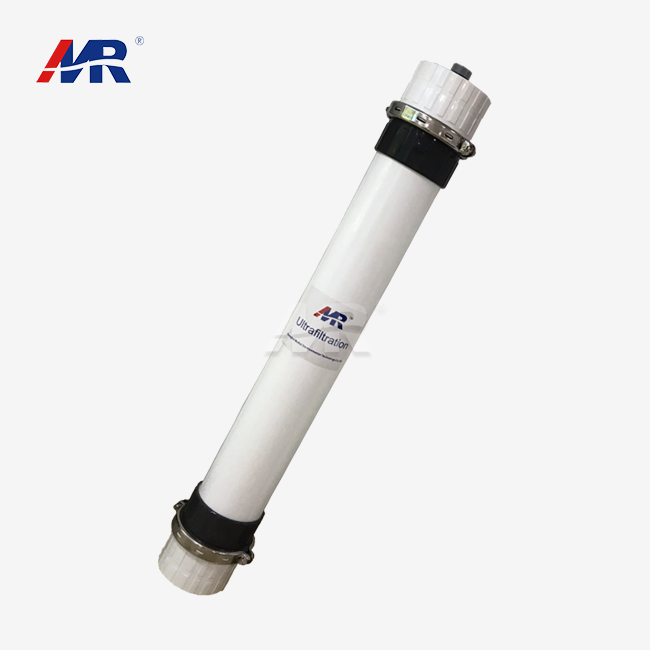
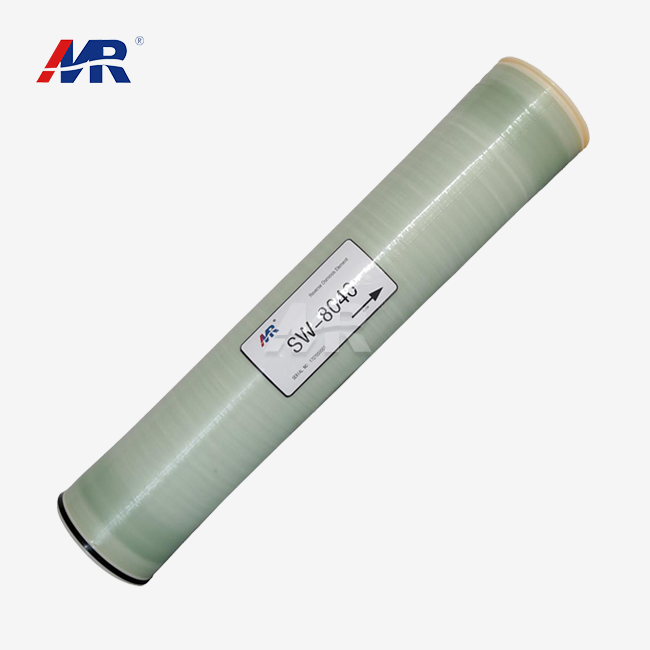
An SWRO membrane is a thin-film composite (TFC) part that is made to work with ocean water that is very salty. One layer of selective polyamide sits on top of a microporous polysulfone support, which is then placed on top of a polyester backing web. Because the design is made up of three layers, the pores are very small and quickly reject dissolved salts. The active membrane area of the Morui MR-SW-4040 is 7.9 m², and the permeate flow is 1,400 GPD. These numbers directly translate into stable freshwater output for plants along the coast and systems on ships.
What Is a BWRO Membrane?
A BWRO membrane is built the same way as a TFC membrane, but it is tuned for feed water that is moderately salty, like well water, river water, or cleaned wastewater from cities. The polyamide layer lets a little more water through, so it has a lower working pressure (usually between 1.0 and 2.1 MPa) and a higher rate of water recovery. The feed isn't as harsh, so the surface chemistry of the membrane is better at blocking organic and biological fouling than it is at blocking raw salt.
Why Feed Water Quality Decides Everything
The TDS of the feed water is the most important factor in choosing a membrane. The International Desalination Association says that the TDS of ocean water is about 35,000 mg/L and that of salty groundwater is between 1,000 and 10,000 mg/L. If you put a BWRO element in full-strength seawater, the working pressure would be much higher than the membrane's design limit, which would cause damage to the structure and instant loss of performance.
Core Differences Between SWRO and BWRO Membranes
Salt Rejection Rate and Operating Pressure
The most obvious gap in technology is salt rejection. The Morui MR-SW-4040 can get rid of 99.5% of salt at 5.5–7 MPa, which is very important when the TDS of the feed water is more than 30,000 mg/L, and the product water has to meet drinking water standards below 500 mg/L. At pressures of 1.0 to 2.1 MPa, BWRO membranes usually block 96–99% of the salts that are released. That lower rejection threshold is fine when the feed TDS is much lower, but it is not at all enough for desalination in the open ocean.
Material Durability Under Marine Conditions
Every day, SWRO elements are exposed to acidic, living seawater. To deal with this, elements like the MR-SW-4040's membrane housing and end-caps have fiberglass-reinforced shells and interlocking end-caps that don't break easily under physical stress. This is especially important for vessels that are always moving, which causes mechanical vibration. Most BWRO housings are made of standard ABS or fiberglass, which works well in the quieter, lower-pressure setting of an inland or city location.
Lifespan and Fouling Resistance
A good SWRO membrane element can work continuously in seawater for three to five years if it is properly treated before use. When used in brackish water, where the chemicals in the feed water are not as strong, BWRO membranes can last for 5 to 7 years. But biological fouling can be worse in warm, nutrient-rich brackish sources near the coast. Using low-adhesion polyamide films and other anti-fouling treatments on SWRO elements helps keep biofouling under control during the red tide and algal bloom seasons, which are hard for many coastal plants.
Performance and Efficiency Comparison
Energy Consumption
The main cost of running any reverse osmosis system is energy. Modern energy-recovery devices (ERDs) use about 3–4 kWh per cubic meter of product water for seawater desalination, but only 0.5–1.5 kWh/m³ for treating brackish water. This difference can be explained by the fact that seawater has a higher osmotic pressure—about 27 bar for 35,000 mg/L feed. Specific energy use always stays near the lower end of that range in plants that use the Morui MR-SW-4040 along with pressure exchanges.
Flow Rates and Recovery
The MR-SW-4040 gives off 1,400 GPD per element, which is the same as what is expected for high-rejection seawater elements in the 4040 format. Most SWRO systems work at 35–45% water recovery, which means that for every 100 liters of water that is put into the system, 35–45 liters are returned as product water. Because the feed has less osmotic pressure, BWRO systems usually get 70–85% recovery. Higher recovery in BWRO lowers the cost of getting rid of brine, which is important for sites in inland areas where the release of brine is controlled.
Pretreatment and Cleaning Frequency
Before the high-pressure pump, SWRO systems need more thorough preparation, such as dual-media filtration, cartridge filtration, and often ultrafiltration (UF). Adding this to the system costs more money, but it protects the membrane from the particles and living things that seawater carries. Most of the time, BWRO systems can work with less complicated antiscalant doses and multimedia filtration. In well-run plants, SWRO membranes are cleaned about every three to six months, while BWRO membranes may not need to be chemically cleaned for six to twelve months.
How to Choose Between SWRO and BWRO Membranes for Your Business Needs
Match the Membrane to Your Feed Water
First, check your feed water. You need an SWRO element if the TDS level is more than 15,000 mg/L. A BWRO membrane is usually the better value choice below that. Seawater desalination plants on the coasts of cities, freshwater stations on islands, and systems on ships all need SWRO performance. The BWRO profile is usually made up of inland industrial areas, farm irrigation projects, and city well-water systems. In the long run, mismatching costs more than taking the time to do a proper feed-water analysis up front.
Before you place a bulk order, you should think about the following:
- Feed water TDS and temperature: Gulf of Mexico water at 35°C needs to be able to handle more pressure than cool North Atlantic seawater.
- Required product water quality: Higher rejection rates are needed to meet drinking water standards (< 500 mg/L TDS according to WHO guidelines).
- System footprint: Units that are shipped in containers or on skids need 4040 elements that are small and have a high output per unit volume.
- Regulatory compliance: Before buying in bulk, US buyers should make sure the product is NSF/ANSI 58 certified and ask for test reports from a third party.
These things add up to the total cost of ownership, which is not just the price of each part.
Vendor Selection and Certification
In the US market, purchasing managers usually want goods that are approved, have test data that can be tracked, and have batch records that can be found. Before buying a maker of SWRO membranes, make sure that their water-contact materials meet NSF/ANSI 61 standards and that they can give you independent test results of their Products' performance. The MR-SW-4040 is made by Morui's own membrane factory on a specialized line. Each batch can be tracked, and OEM users can choose to use their own name.
Lead Time and Stocking Strategy
Standard 4040-format elements are the size that is most commonly found. For coastal areas, distributors should keep a backup stock of at least 30 to 60 days' worth of goods. For city plant membrane replacement jobs, make sure the delivery is set up at least 8 weeks before the replacement window so that the goods can be inspected and tested upon arrival.
Troubleshooting and Maintenance Tips for Optimal Membrane Performance
Identifying Fouling vs. Scaling
A rise in normalized differential pressure (NDP) usually means that there is fouling. On the other hand, a drop in salt rejection usually means that there is scaling or damage to the membrane. BWRO elements in hard bedrock are more likely to scale with calcium carbonate or sulfate, while SWRO elements in open ocean sources are more likely to get biofouling. When operators keep an eye on normalized permeate flow once a month, they can tell the difference between the two issues before they need to clean the whole system.
Cleaning Protocols by Membrane Type
When it comes to SWRO elements, low-pH citric acid cleans get rid of inorganic scale, and high-pH sodium hydroxide or enzyme-based solutions get rid of biofouling. When washing, you should always stay within the pH range of 2 to 11. If BWRO elements get silica scaling, they might need special agents to get rid of it. Record the pressure, flow, pH, and temperature of each cleaning session so you can spot a downward trend that means the end of life is near before it fails completely.
Preventative Monitoring and Early Fault Detection
At each membrane step, put in a pressure gauge and a flow meter, and record the data every week. A 10–15% drop in standardized permeate flow over 30 days is an early danger sign that needs to be looked at right away. On ships and offshore platforms, looking at how the pump bearings vibrate can help predict the mechanical events that lead to elements telescoping. Changing just one worn-out O-ring or end-cap before a pressure event costs a lot less than changing all the membranes in a vessel after one.
Conclusion
Choosing the right membrane is not an easy task; it affects the energy cost, water quality, and upkeep plan of your system for years to come. SWRO membranes are made to work with high-salinity seawater and have to be able to handle pressures, biofouling, and other marine conditions that would destroy a BWRO element. If the feed water allows it, BWRO membranes can save energy and recover more of it. The easy way to make the right choice is to know your feed water, your product water needs, and your total spending. If you're not sure what to do, talk to a maker who has worked with both systems before.
FAQ
1. How long does an SWRO membrane last compared to a BWRO membrane?
A well-kept SWRO element that is used in salt water all the time usually lasts between 3 and 5 years. In lower-salinity settings, BWRO membranes can last for 5 to 7 years. Both lifespans depend a lot on how well the SWRO membrane is cleaned and treated before use.
2. Can I use a BWRO membrane for seawater desalination?
No, the osmotic pressure of full-strength saltwater is too high for a BWRO barrier. Running one at 5.5–7 MPa will break the structure and make off-spec spread almost right away.
3. How do I verify I am buying an authentic membrane element?
Before taking delivery, make sure you get the manufacturer's batch test report, look for NSF/ANSI 58 or 61 certification paperwork, and make sure the element's measured salt rejection and flow rate match the published standard.
4. What is the standard size for bulk RO membrane procurement?
For large city systems, the 8040 (8-inch diameter, 40-inch length) is the most common size. The 4040 format, like Morui's MR-SW-4040, is standard for units that are skid-mounted, shipped, or put in containers.
Get a Certified SWRO Membrane Quote from Morui Today
Morui is a professional SWRO membrane supplier with its own membrane production plant, in-house desalination equipment manufacturing, and more than 20 engineers supporting project design, installation, and commissioning. The MR-SW-4040 is available for bulk orders and OEM private-label programs. Contact Our Team at benson@guangdongmorui.com to request a datasheet, sample, or project quotation.
References
1. Elimelech, M., & Phillip, W. A. (2011). The Future of Seawater Desalination: Energy, Technology, and the Environment. Science, 333(6043), 712–717.
2. Fritzmann, C., Löwenberg, J., Wintgens, T., & Melin, T. (2007). State-of-the-Art of Reverse Osmosis Desalination. Desalination, 216(1–3), 1–76.
3. Ghaffour, N., Missimer, T. M., & Amy, G. L. (2013). Technical Review and Evaluation of the Economics of Water Desalination: Current and Future Challenges for Better Water Supply Sustainability. Desalination, 309, 197–207.
4. Greenlee, L. F., Lawler, D. F., Freeman, B. D., Marrot, B., & Moulin, P. (2009). Reverse Osmosis Desalination: Water Sources, Technology, and Today's Challenges. Water Research, 43(9), 2317–2348.
5. International Desalination Association (IDA). (2022). IDA World Congress Proceedings: Advances in Membrane Technology for Seawater Desalination. IDA Publications.
6. Wilf, M., & Bartels, C. (2005). Optimization of Seawater RO Systems Design. Desalination, 173(1), 1–12.