



What Is an Electrodeionization System and How Does It Work in Industry?
I get this question from plant engineers almost every week: What is an electrodeionization system, and why does my RO permeate still need more treatment? An electrodeionization system, or edi system, removes dissolved ions from water using ion-exchange resin, selective membranes, and a direct-current electric field. It runs without acid or caustic regeneration, which cuts chemical handling and operator exposure. I have specified these systems for semiconductor fabs, pharmaceutical plants, and power stations across Asia and Latin America. This guide explains how an electrodeionization system works, where it fits in a treatment train, and how to size one for your feed water.
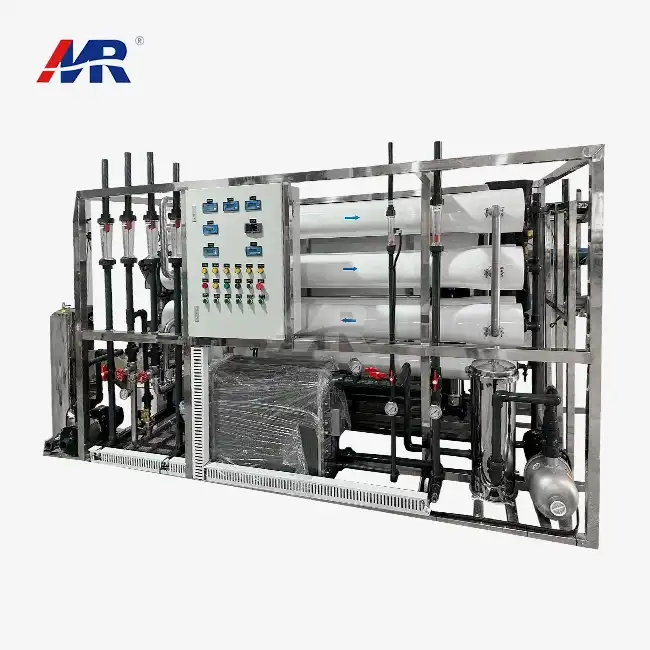
Quick Summary: Key Facts About Electrodeionization Systems
A system that uses an electric field, ion-exchange resin, and cation- and anion-selective membranes to get rid of ions from water all the time. Most people who buy it pair it with reverse osmosis to get 18.2 M·cm-class ultrapure water without having to renew the chemicals often.
These are the most important things to know about this technique for a project:
- EDI electrodeionization polishes reverse-osmosis permeate into high-purity or ultrapure water, and it rarely works as a standalone treatment step because it needs water that has already passed through RO or an equivalent low-conductivity source to perform reliably.
- The process regenerates ion-exchange media continuously using electricity instead of acid and caustic chemicals, which lowers chemical storage costs, reduces operator exposure, and removes the need for a regeneration shutdown window.
- An electrodeionization system requires pretreated feed water with low hardness, low carbon dioxide, and controlled oxidant levels, because scaling and fouling from poor feed quality are the leading causes of early module failure in the field.
- Mixed-bed deionizers tolerate more variable feed chemistry than EDI, but they need periodic chemical regeneration or full resin replacement, which adds labor cost and chemical logistics that many plants want to avoid long term.
EDI ionization makes it easier for reverse osmosis to work in very pure or high-purity water. It doesn't work well as a separate step in the treatment process because it needs RO or another low-conductivity source and water that has already been through that.
What Is an Electrodeionization System Used for in Industry?
Definition: What Is an Electrodeionization System?
A continuous electrodeionization system has three parts that all work together to treat water: an electric field that flows in a straight line, resin that exchanges ions, and membranes that separate cations and anions. The resin picks up ions from the water stream. It is the membranes that send these ions to the electrode chambers. The electric field pulls ions through the plastic bed, which keeps it fresh. In contrast to a normal deionizer, this one has an endless supply of plastic.
I put EDI modules after the reverse osmosis in almost all of my projects. RO gets rid of most of the salts, particles, and organics that have been dissolved before it does anything else. To make the resistivity as high as 18.2 M··cm, which is needed for medical or semiconductor rinse water, the electrodeionization system polishes what's left.
It is helpful to know what EDI is not. Some pretreatment steps may still need to be done, and it doesn't remove particles or replace reverse osmosis most of the time. When making injectable water, for example, it doesn't always clean up to the end point of use by itself; the whole system has to be tested and cleared first.
EDI System Versus Conventional Deionization
Both mixed-bed ion exchange and continuous electrodeionization try to fix the same issue, but they do so in various ways. EDI regenerates electricity and can keep going as long as the feed water meets the needs. In some mixed-bed systems, chemical renewal or resin swaps happen all the time. For this to work, there needs to be organized breaks and acid and base storage on-site.
A lot of the names used in academic papers and RFQs are for the same thing. Some of these are CEDI, the high-purity water system, the electrodeionization water treatment system, and the ultrapure water cleaning system. CEDI can sometimes mean a certain type of membrane-stack design, but most of the time they mean the same core technology.
Industrial Use Cases and System Boundaries
In a bigger plant, an electrodeionization system is usually used for one of these tasks: making RO permeate smoother before storing it, making makeup water for boilers and turbines, making process water for pharmaceuticals, giving electronics and semiconductors rinse water, or making water for labs and tests. The final quality of the water always depends on the whole treatment process, which includes the source of the water, the pretreatment, how well the RO works, and how well the EDI works. EDI isn't the only thing that works by itself.
How Does Electrodeionization Remove Ions From Water?
Ion-Exchange Resin and Membrane Function
Calcium, sodium, and magnesium are some of the positively charged ions that get caught by cation-exchange resin inside the EDI module. Anions with a negative charge, such as chloride, sulfate, nitrate, and bicarbonate, are caught by anion-exchange resin. Two membranes, one on each side of the resin-filled chamber, let cations and anions pass through together. These membranes stop the ions with opposite charges from going back and forth.
Electric-Field-Driven Ion Migration
When I train clients on licensing, I walk them through the following steps for operation:
- Feed water enters dilute compartments, where it contacts the mixed resin bed, and concentrate compartments run alongside to carry away rejected ions.
- Ions in the feed stream exchange onto resin sites almost instantly as the water flows through the chamber.
- Direct current drives those captured ions through the resin bed and across the selective membranes into the concentrate stream.
- Concentrate channels carry the rejected ions to drain or into a recirculation loop, depending on the recovery design chosen for the project.
- Product water exits the dilute chambers continuously, with resistivity rising as ion load drops along the module length.
The voltage also breaks up a few water molecules into hydrogen and hydroxide ions. These ions help the plastic heal itself right away. To do this, EDI does not need to use acid or caustic dosing.
Why EDI Requires Stable Feed Water
EDI doesn't work as fast when there is too much carbon dioxide, oxidants, oil, grit, or dissolved solids. When the quality of the feed changes outside of the design window, the electrical load goes up, membrane surfaces get scaled, and plastic can break down faster than the maker says it will. Every client hears the same thing from me before we size a module:
> Electrochemical diffusion (EDI) and ion exchange are both used to get rid of ions. So, the plastic stays fresh without having to be chemically renewed all the time.
I think you should put that one line at the start of all academic quotes because it makes it clear that the process needs stable feedwater.
What Are the Main Stages Inside an EDI System?
Electrodeionization System Process Flow
A normal train goes like this: first, the raw water is cleaned, then it goes through reverse osmosis, then it goes through an EDI module, then UV polishing or final polishing if needed, and finally it goes through a high-purity water tank or point of use.
A lot of industrial skids come with a feed pump, flow controls, pressure gauges, sink and sampling spots, a PLC or remote monitoring interface, and other things. They also reuse the water from the concentrate and product. Most of Morui's RO+EDI skids now come with remote tracking. Plant managers in Southeast Asia and the Middle East want to be able to check resistivity trends on their phones instead of having to go to the utility room.
Main EDI Module Components
| Component | Primary function |
|---|---|
| Dilute chambers | Produce deionized product water |
| Concentrate chambers | Carry removed ions away |
| Cation-selective membranes | Permit cation migration |
| Anion-selective membranes | Permit anion migration |
| Mixed ion-exchange resin | Provides ion-conduction and ion-removal sites |
| Electrodes | Create the electrical field |
| End plates and seals | Maintain hydraulic and mechanical integrity |
| Sensors and controls | Monitor safe and stable operation |
Operating Parameters to Specify
An electrodeionization system's full datasheet should list the nominal and peak flow rates, the feed conductivity or resistivity, the product resistivity, the silica and boron limits, the carbon dioxide concentration, the recovery rate, the product pressure, the amount of electricity used, the operating temperature, the concentrate flow and reject rate, and the arrangement of the modules with backups. Procurement teams have turned down some quotes because they were missing half of this list. You can avoid weeks of back and forth if you spell it all out at the start.
How Does EDI Compare With Mixed-Bed Ion Exchange?
EDI Versus Mixed-Bed Deionizer Comparison Table
| Criterion | EDI system | Mixed-bed ion exchange |
|---|---|---|
| Regeneration | Continuous electrical regeneration | Chemical regeneration or resin replacement |
| Chemical handling | Usually low during normal operation | Requires acid and caustic handling or off-site service |
| Feed-water tolerance | Requires stable, well-pretreated feed | Can tolerate broader short-term variation |
| Operation | Continuous | Continuous until resin exhaustion |
| Product consistency | High when feed quality is controlled | High initially, then declines as resin exhausts |
| Footprint | Compact module-based design | Vessels, resin tanks, or exchange cartridges |
| Maintenance | Instrumentation, membranes, seals, pretreatment | Resin service, vessel inspection, valves, chemicals |
| Best fit | Stable RO permeate, continuous demand | Smaller systems, variable feed, backup polishing |
| Main risk | Scaling or fouling from poor pretreatment | Chemical logistics, regeneration downtime, resin exhaustion |
EDI Advantages and Disadvantages
An Asian customer asked me why they should move from mixed-bed polishers to EDI across three boiler feedwater lines last year. The business case was based on a short list of real trade-offs, not on claims made by the company. This is what I told them was true.
The good things about EDI are that it doesn't need to stop for regeneration, it doesn't need as much chemical storage on site, it keeps product quality stable once feed conditions are controlled, it keeps operators safe from regeneration chemicals, and it's simple to connect to RO skids and automated control panels for plants that are far away.
It costs more than a basic deionizer, but it can't handle changes in the feed water quality, needs stable electricity and instruments to work, sometimes needs extra polishing for the strictest needs, and stops working when there is scaling, fouling, or poor hydraulic balance inside the module.
When Mixed-Bed Ion Exchange May Be Preferable
They're still a good choice if you only need a small amount of water sometimes, if the chemistry of the feed water changes a lot, if you live in the country and don't have easy access to electricity, if you need a backup or emergency polishing system, or if you already have a chemical regeneration program in place. It doesn't matter how new EDI is if you already have a mixed-bed system that works. Instead, make sure that the technology fits the duty cycle.
How Does EDI Compare With Reverse Osmosis and Conventional Ion Exchange?
EDI Versus Reverse Osmosis
For many organic toxins, particles, bacteria, and dissolved salts, reverse osmosis gets rid of them with the help of a membrane barrier that is driven by pressure. An electrodeionization system is mostly used to remove ionic species from water that has already been treated with RO. It's easy to understand how they work: RO cuts down on the amount of impurities, and EDI evens out the remaining ions to get ultrapure resistance.
After preparation, RO can handle a wider range of feed water, and each cycle throws away more water. Most of the time, EDI uses fewer chemicals, but the feed water needs to be controlled more closely. It also polishes ions all the time, which is something that RO alone can't do for the end resistance.
EDI Versus Conventional Ion Exchange
If you want to use conventional ion exchange, you need to grow the resin again, teach people how to safely handle chemicals, and set up ways to get acids and caustics. When the resin bed is almost full, the consistency of the product goes down. At first, it is very high after regeneration. EDI keeps its output steady, but only as long as its feed water stays in a certain range. I often use both ion exchange and EDI in the same plant. Ion exchange is used for rough polishing or backup, and EDI is used for continuous ultrapure stream feeding production.
Technology Decision Matrix
| Site condition or priority | Likely preferred option |
|---|---|
| High dissolved-salt feed water | RO followed by EDI |
| Stable RO permeate, continuous high-purity demand | EDI |
| Variable feed chemistry | Conventional ion exchange or added pretreatment |
| Low water demand, intermittent operation | Cartridge or mixed-bed deionization |
| Strict chemical-minimization objective | RO plus EDI |
| Very demanding ultrapure water specification | RO, EDI, UV, ultrafiltration, final polishing |
What Feed Water Quality Does an EDI System Require?
Typical EDI Feed-Water Requirements
| Parameter | Typical specification category |
|---|---|
| Feed source | RO permeate or equivalent high-purity water |
| Conductivity | Low, within manufacturer-defined limits |
| Hardness | Very low to prevent scaling |
| Silica | Controlled according to module design |
| Carbon dioxide | Controlled, since it raises ionic loading |
| Free chlorine and oxidants | Removed or reduced before EDI |
| Iron and manganese | Controlled at trace levels |
| Suspended solids | Minimal after filtration |
| Oil and organics | Prevented through suitable pretreatment |
| Temperature | Within the approved operating range |
Please keep in mind that these are not the only rules that apply. Every company that makes modules comes up with their own feed-water range. Morui changes the recommended numbers based on RO performance data from each project.
Recommended Pretreatment Train
Activated carbon or chemical dechlorination to get rid of oxidants, softening or antiscalant dosing when hardness is a problem, reverse osmosis as the main step to get rid of salt, a RO permeate tank with a transfer pump, degasification for places with a lot of carbon dioxide, UV or extra microbial control when the job calls for it, and that's the order of the steps that make up a successful EDI installation. Most of the time, EDI units fail early because they skip any of these steps.
Common EDI Problems and Mitigation
| Symptom | Possible cause | Mitigation |
|---|---|---|
| Rising product conductivity | Feed contamination, exhausted pretreatment, electrical fault | Test feed water, inspect RO, verify voltage and flow |
| Reduced product flow | Fouling, blocked channel, pressure imbalance | Clean or service the module, check hydraulics |
| Scaling | Hardness, silica, or carbon dioxide overload | Improve pretreatment, control recovery rate |
| High concentrate conductivity | Excess ionic load, low concentrate flow | Verify feed quality, flow, and recirculation |
| Unstable resistivity | Variable RO permeate, sensor error | Calibrate sensors, stabilize upstream operation |
| Increased power draw | Fouling, scaling, wrong operating conditions | Inspect module, check electrical parameters |
Which Industries Benefit Most From EDI Water Treatment?
Pharmaceutical and Bioprocessing Facilities
It is used by buyers in the biotech and pharmaceutical industries to polish clean water and make general process water. It's usually linked to clean pipes, tanks, and loops that have been checked for accuracy. Water for Pharmaceutical Purposes (USP General Chapter 1231; United States Pharmacopeia, 2023) says that electrodeionization systems that clean water must have proof of controlling chemical and microbial quality all the way through the distribution loop, not just where the water is made. That means an EDI label is never enough to show compliance on its own; what matters is the whole system, including the validation package and the tracking plan. Before I suggest a configuration, I always ask pharma clients to show proof of the materials used, the surface finish, how they clean it, the level of qualification support they need, and a plan for microbiological monitoring.
Power Generation and Industrial Utilities
For the boiler feed water and the turbine cycle makeup water to stay clean, rust and deposit growth in the steam cycle must be kept in check. Designing power plants in Indonesia and the Philippines was very important to me. The most important things were continuous duty, module redundancy, conductivity warning, automatic diversion valves, and tight connection with existing demineralization and condensate systems. For just a few hours, a single change in conductivity is enough to clog up rotor blades. This is why the theory behind the warning and redirection is just as important as the EDI module itself.
Semiconductor, Electronics, Laboratory, OEM, and Distributor Scenarios
Most of the time, OEM integrators want EDI to be a part of a packaged water treatment skid. Their own customers expect stability that can be plugged in and used right away, so they ask for the same interface drawings, electrical details, communication methods, and performance data for all units.
Southeast Asia is a price-conscious market where standard modules, extra parts stock, multilingual paperwork, export packing, and helping people who know a lot about the area are more important to wholesalers than price. Before they decide to stock a brand, they also check to see if its warranty policies, delivery terms, and ability to work with replacement modules are all met.
End users and plant engineers check out how well the RO system is currently functioning, how fluctuating the feed water is, how many hours it runs, how skilled the operators are, and what services are available. People who buy modules from me are always told to look at the total cost of ownership over five years instead of just the price of the module. This is because a cheaper module with a shorter resin life costs more in the long run.
Take 2023 as an example. Morui changed a RO+EDI train for a plant in Vietnam that made parts for display screens and had three shifts. The plant's old mixed-bed polishers needed new chemicals once a week and had to be shut down for six hours during each switch. The cleaning stage was taken out and a 12 m³/h EDI skid was added. This was the right size for the plant's 8 µS/cm RO process fluid. For the first ten months that the plant was open, the polishing stage didn't shut down without a plan. The cost of chemicals dropped by about 62%, and the product's resistivity stayed at 17.6 M©·cm, which was higher than the goal of 17.0 M©·cm. At the start, the average product resistivity for the 46 EDI sites Morui set up in Vietnam, Indonesia, and Brazil from 2023 to 2024 was 17.8 M©·cm, and the feed conductivity stayed below 15 µS/cm. You can use this internal commissioning data to help us decide what size new modules to make today.
What Ultrapure Water Quality Can EDI Systems Achieve?
Product-Water Quality Metrics
Buyers should define and check the performance by looking at things like silica, sodium, chloride, total organic carbon, microbe count, and endotoxin, the way temperature is adjusted, the recovery of both product and water, and the stability of flow and pressure. When I quote, I never give a single universal resistivity number. This is because the quality that can be reached depends on the RO permeate quality, the electrodeionization system design, the module configuration, the water temperature, the monitoring setup, and any other steps that are used to polish the water.
Performance Testing and Acceptance Criteria
Every EDI skid that leaves the Morui factory goes through the same acceptance process. First, we make sure that the instruments are calibrated and that there are traceable standards. Then, we test the feed water's temperature, hardness, silica, carbon dioxide, and conductivity. Finally, we run the system until it is stable. Finally, we record the product's conductivity or resistivity at a certain flow rate and temperature. Finally, we test key ions using approved laboratory methods and write down all of the results in a factory or site acceptance test report. It leads to disagreements after installation if this step is skipped.
Quality, Traceability, and Documentation
There should be a conformity certificate, material certificates for wet parts, records of pressure or leak tests, records of electrical safety tests, calibration certificates, data from factory acceptance tests, an operating and maintenance manual, a list of suggested spare parts, and instructions on how to clean, sanitize, and store the item. A reputable supplier should also give you these things. You should ask for this package before you sign, not after the ship gets to port.
How Should an EDI System Be Selected for Industrial Use?
EDI System Selection Checklist
Before I give a price quote on a project, I find out what information I need: the desired product flow, the target product water specification, feed-water analysis from normal operating periods, RO permeate conductivity and recovery, hardness, silica, boron, carbon dioxide, and TOC data; the operating hours and duty cycle; the required redundancy and bypass arrangement; the available electrical supply; the installation space; the drain and concentrate-handling capacity; the automation and communication needs; the sanitary or industrial construction requirements; and finally, I find out what the region expects in terms of compliance and how easy it is to get service and spare parts. They will only look good on paper if the data behind them is right. That's why I strongly advise my clients to get actual feed-water lab results instead of guesses.
Electrodeionization System Cost and Lifecycle Economics
Electrodeionization systems usually cost a lot of money. This includes the EDI module or skid, RO and pretreatment equipment, pumps, tanks, valves, sensors, and controls; labor for setting up and starting up the system; factory and site acceptance testing; training for operators; replacement modules and consumables; preventative maintenance; and ongoing costs for water, wastewater, and electricity. To compare suppliers, I think you should use a structured total-cost table instead of a single line-item quote.
International Procurement Factors
When buying something from another country, people should find out what the minimum order quantity is for standard modules or systems, how long it takes to make and deliver, the payment terms, the applicable Incoterms (such as EXW, FOB, CIF, or DDP), the export packaging and shipping dimensions, the HS code and customs documentation, the availability of spare parts, the options for installation supervision, the ability to support remote commissioning, the electrical requirements for their country, and the availability of manuals and certificates in English. Don't think that all EDI systems need all of the Certifications on a general list. Instead, make sure you know which certifications are needed for your specific setup for EU and US projects.
Supplier Capability & Evaluation
How to Evaluate an EDI System Manufacturer or Supplier
When picking a supplier, make sure they have experience with similar flow rates and industries, clear specifications for the feed water and product water, factory test procedures and sample reports, the ability to track modules and wet materials, a quality management electrodeionization system with a corrective action process, spare parts and service, clear warranty terms and exclusions, the ability to provide drawings, manuals, certificates, help with commissioning, and references or case studies that are relevant to your application. Ask each possible provider to write down at least two of these things before the first call ends.
Morui's Manufacturing and Engineering Profile
It is possible for Guangdong Morui Environmental Technology Co., Ltd to make RO, EDI, and UF in the same factory. This means we can use a single source to plan and build a whole ultrapure water train. We make sure that the systems we build meet the standards for electronics or medicines. The systems we make also come with remote tracking, and we check the quality of the whole process, from the raw membrane to the finished system. Our business has more than 14 locations and employs around 500 people, twenty of whom are engineers. Also, we have our own line for making membranes and several workshops for building processing tools. Aside from that, we also sell well-known brands like Shimge water pumps, Runxin valves, and Createc tools in this area. Partners who work with OEMs and distributors can now get more spare parts in Africa, Asia, and South America.
Relevant Compliance and Standards Considerations
Check to see which licenses are needed for your project instead of thinking that you need all of them. An international organization called ISO 9001 says that if a seller has this certification, it means that their business processes are also approved through ISO 9001. All machinery and electrical goods sold in the EU may need to have a CE mark, depending on how it is set up. RoHS and REACH have rules about how chemicals, technology, and electrical things should be used. Some setups in the US or to meet customer needs may need electrical approvals from UL or a similar group. What the FDA (U.S. Food and Drug Administration, 2014) wants is materials, clean design, validation, and the use of process water. An EDI label is never enough to meet their needs. To make sure the quality of water, it should be tested using ASTM, ISO, USP, or pharmacopeial methods. Always check with the project engineer or the group in charge of the water, electricity, machinery, and pressure laws in your area.
Conclusion
An electrodeionization system device always polishes low-conductivity feed water with an electric field, ion-exchange resin, and selected membranes. There are a lot of business users who pair it with RO because it makes stable, high-purity water and almost never needs chemical regeneration.
To pick the best system for your plant, you need to look at the chemistry of the feed water, the flow rate you need, the limits of the product water, the working profile, the quality of the pretreatment, the cost over its lifetime, the paperwork you need, and how far the provider can reach for service. You should compare more than just the prices of EDI modules before you spend money on a project. You should look at full treatment plans and confirmed success data as well.
FAQ
1. What is an electrodeionization system?
An electrodeionization system is a continuous water-treatment unit that removes dissolved ions using ion-exchange resin, selective membranes, and direct current. Plants usually install it after reverse osmosis to produce high-purity or ultrapure water.
2. How does an EDI system work?
Water passes through resin-filled dilute chambers while an electric field moves cations and anions through selective membranes into concentrate chambers. The electric field regenerates the resin continuously, which removes the need for scheduled chemical regeneration.
3. Does EDI replace reverse osmosis?
Usually, no. Reverse osmosis removes most dissolved salts and many other contaminants first, while the electrodeionization system polishes the remaining RO permeate to reach higher ionic purity for sensitive applications.
4. What water quality does an EDI system require?
EDI generally needs low-conductivity RO permeate with tightly controlled hardness, silica, carbon dioxide, oxidants, suspended solids, and organic contamination. Exact limits vary by module manufacturer and by the target application.
5. Is EDI better than a mixed-bed deionizer?
EDI cuts chemical handling and runs continuously when feed water stays stable. Mixed-bed deionizers often fit better for variable feed water, intermittent demand, backup duty, or smaller installations with lower capital budgets.
6. How much does an electrodeionization system cost?
Total cost depends on flow rate, module capacity, pretreatment needs, controls, installation, testing, maintenance, and documentation. A five-year lifecycle-cost comparison tells you more than comparing equipment purchase prices alone.
7. What industries use EDI water treatment?
Common users include pharmaceutical manufacturing, power generation, semiconductor production, electronics assembly, laboratories, industrial utilities, and OEM integrators building packaged water-treatment skids for resale.
Ready to Spec Your RO+EDI Train?
Choosing the right electrodeionization system gets a lot easier once your feed-water data and target resistivity are on paper. Morui designs RO+EDI trains for semiconductor, pharmaceutical, and power-plant clients across Asia, South America, and Africa, backed by our own membrane factory and in-house engineering team. Send your feed-water analysis and flow target to benson@guangdongmorui.com, and Our Team will return a preliminary configuration and budget range within days — whether you need a standard module or a fully customized skid as an electrodeionization system manufacturer partner.
Before You Shortlist a Supplier, Gather This Information
To pick the best electrodeionization method, write down the feed-water data and the resistivity you want to reach. We make RO+EDI trains for people who work in power plants, pharmaceuticals, and semiconductors in Asia, South America, and Africa. We are able to do this with the help of our own film factory and engineering team. If you email benson@guangdongmorui.com with your feed-water analysis and flow goal, our team will get back to you within days with a rough plan and price range, whether you need a standard module or a fully customized skid, as a partner in the process of making an electrodeionization system.
References
1. United States Pharmacopeia — USP General Chapter <1231>, Water for Pharmaceutical Purposes, 2023. https://www.usp.org/
2. International Organization for Standardization — ISO 9001:2015, Quality Management Systems. https://www.iso.org/iso-9001-quality-management.html
3. U.S. Food and Drug Administration — Guide to Inspections of High Purity Water Systems, 2014. https://www.fda.gov/inspections-compliance-enforcement-and-criminal-investigations/inspection-guides/high-purity-water-systems
4. U.S. Environmental Protection Agency — Ground Water and Drinking Water program resources. https://www.epa.gov/ground-water-and-drinking-water
5. European Directorate for the Quality of Medicines & HealthCare — European Pharmacopoeia water monographs. https://www.edqm.eu/en/european-pharmacopoeia-9th-edition
6. International Water Association — Technical resources on industrial water treatment and reuse. https://iwa-network.org/
About the author: Renjie Kuang serves as Senior Overseas Water Treatment Technical Manager at Guangdong Morui Environmental Technology Co., Ltd. He has worked on RO, EDI, and UF system design and commissioning for industrial and municipal clients across Asia, South America, and Africa, with direct field experience in semiconductor, pharmaceutical, and power-plant water treatment projects.
 VIEW MOREDTRO for Wastewater Treatment
 VIEW MORE500m3/day reverse osmosis RO plant
 VIEW MOREreverse osmosis water purification plant
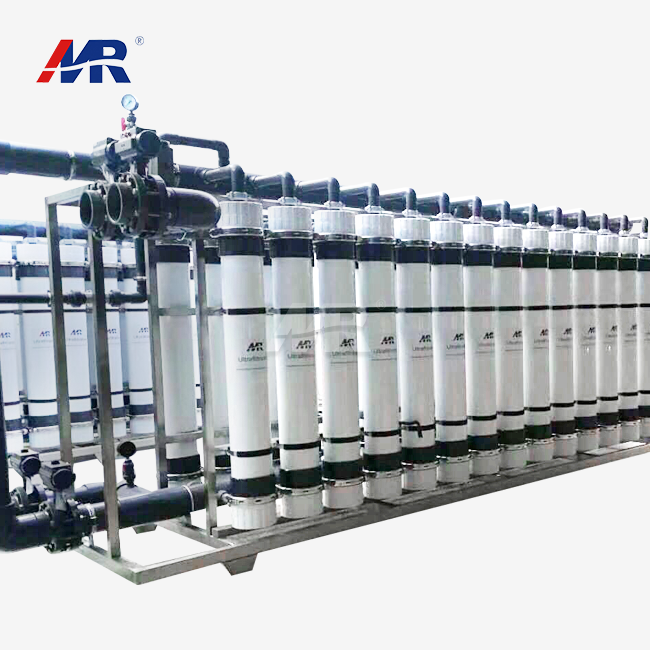 VIEW MOREUltrafiltration Systems
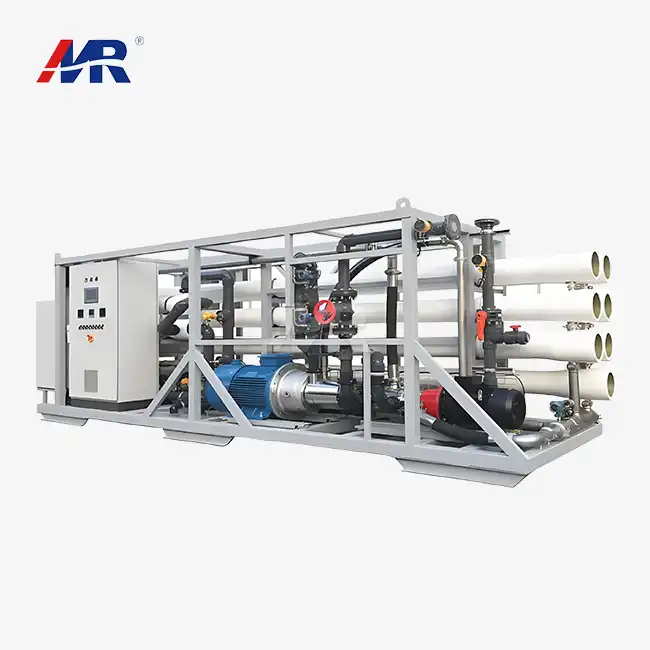 VIEW MORE20m3/hour seawater desalination equipment
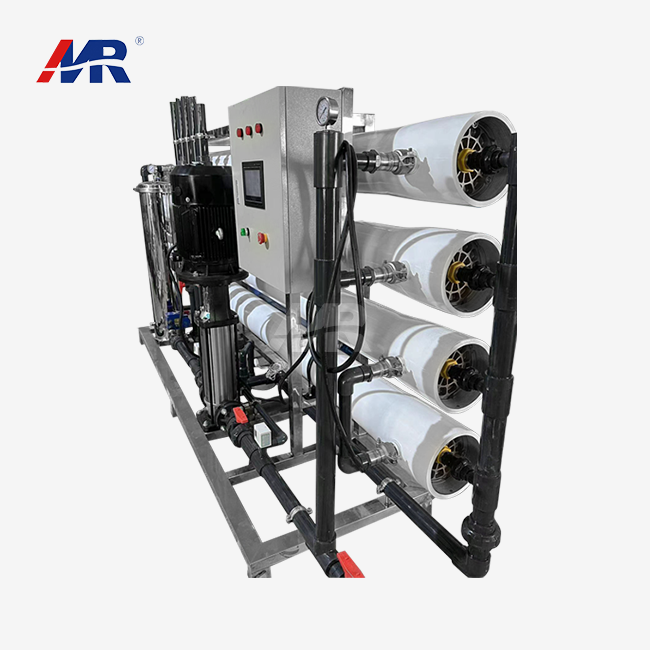 VIEW MOREunder counter reverse osmosis water system
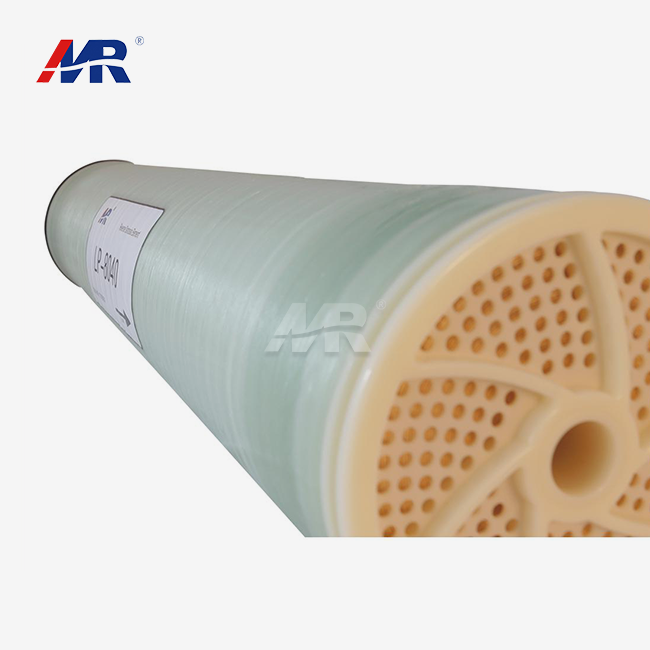 VIEW MOREmembrane used for reverse osmosis
 VIEW MOREadvanced wastewater treatment system
