_1745823981883.webp)

Understanding the Costs of Ultrafiltration Systems
The ultrafiltration cost for industrial water treatment depends on a complicated calculation that includes initial capital input, ongoing expenses, and long-term value development. To evaluate these expenses, you must consider both the equipment's price and the system's lifetime cost. As someone who has dealt with manufacturers and public buildings, ultrafiltration systems cost between $150,000 and over $2 million to acquire and operate, depending on feed water quality and membrane technology.
What Comprises Ultrafiltration System Costs?
Initial Capital Investment Components
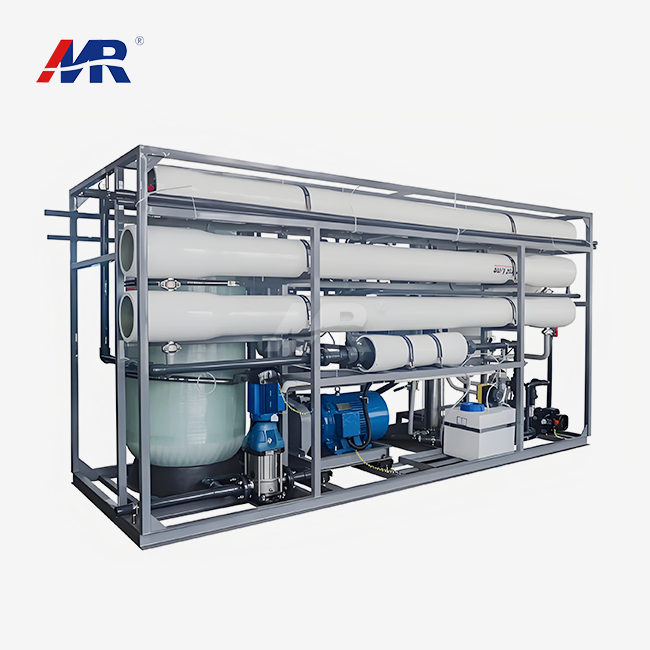
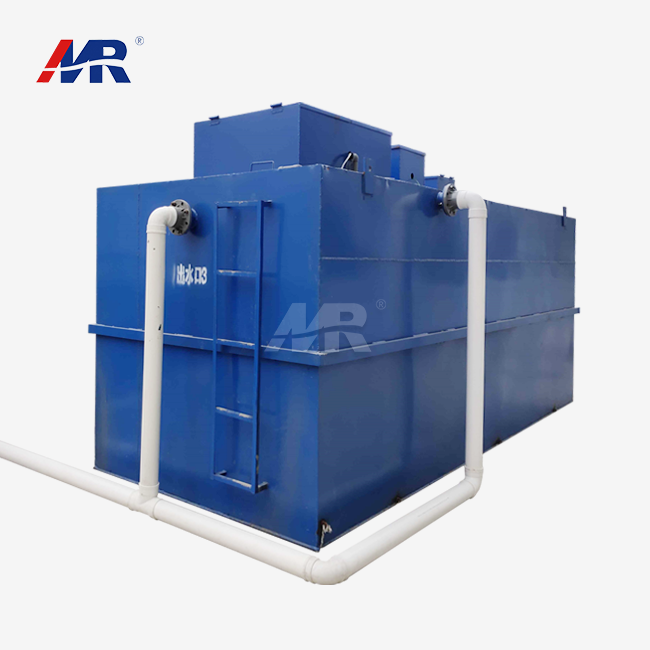
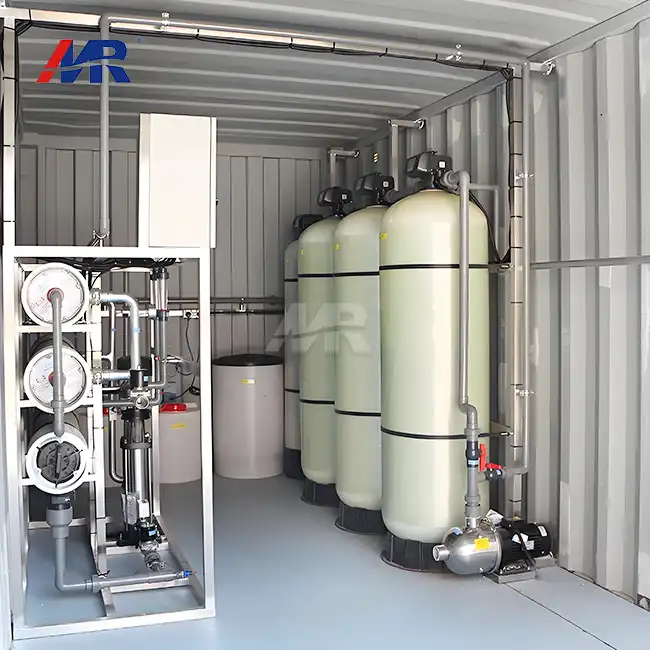
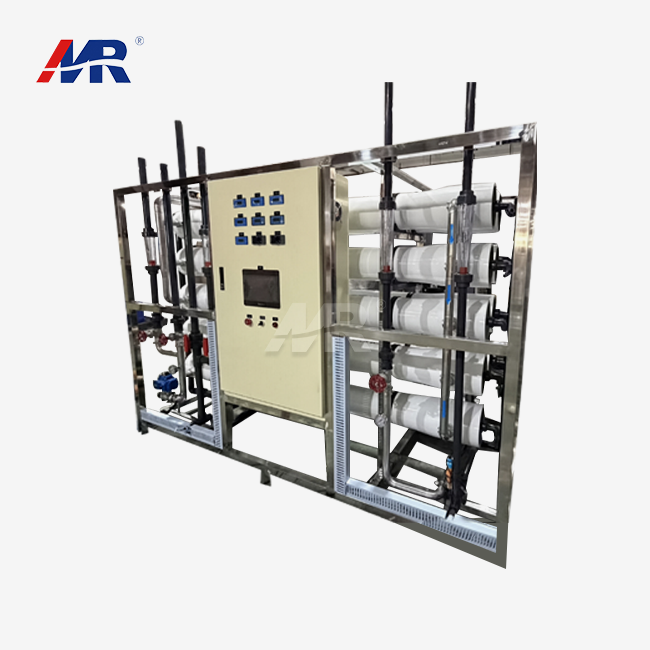
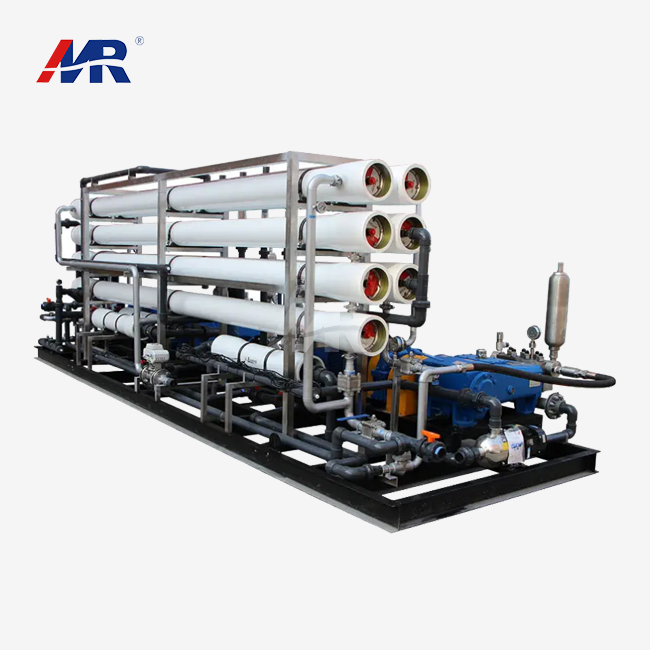
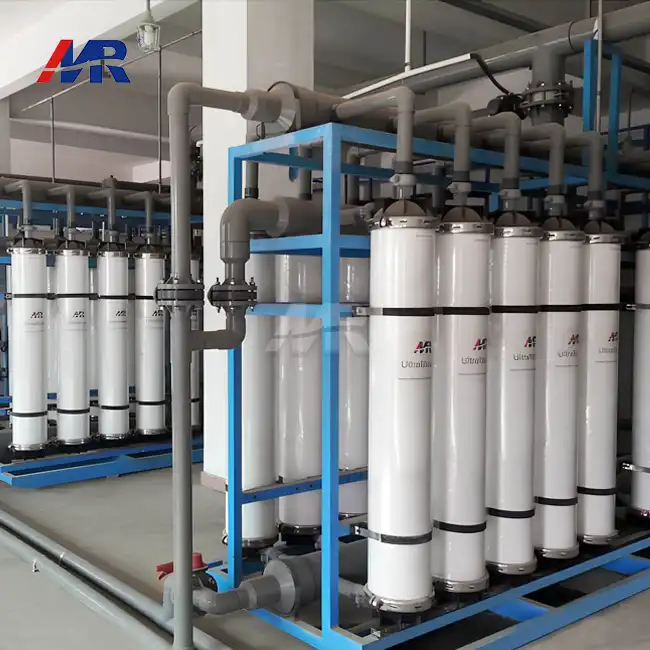
The initial expenditure in ultrafiltration systems goes beyond membrane units. Our experience at water treatment facilities and pharmaceutical manufacturing has taught us many cost aspects that purchasing teams should know. Membrane modules account for 30–45% of equipment costs. PVDF membranes cost more since they resist chemicals and last longer. Feed pumps, automated valving, PLC/HMI control screens, and Clean-In-Place (CIP) subsystems are mounted on uniform stainless steel 304/316L or epoxy-coated carbon steel frames in pre-engineered ultrafiltration skids. Prices vary greatly per frame type.
First-time purchasers are typically startled by site preparation expenditures. Pouring concrete pads, updating electrical, and connecting pipes may add 15–25% to a task. Customs taxes, shipping procedures, and import compliance paperwork complicate overseas purchases and vary by country and destination.
Operating and Maintenance Cost Drivers
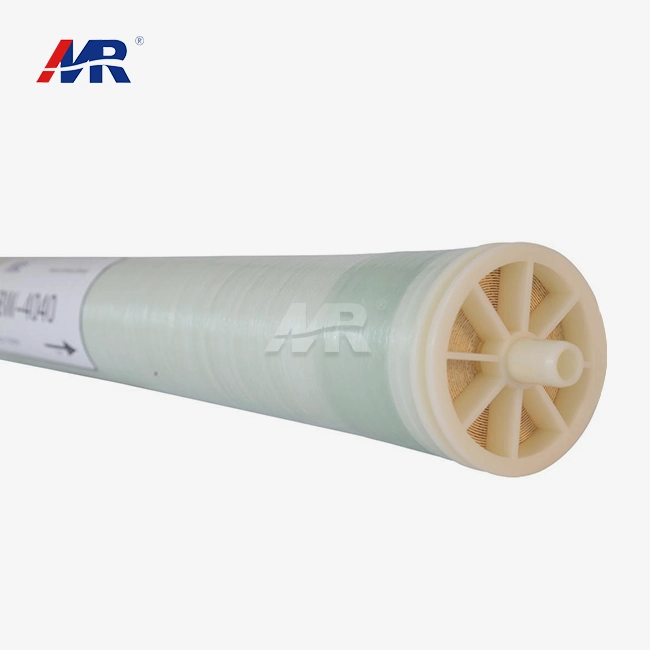
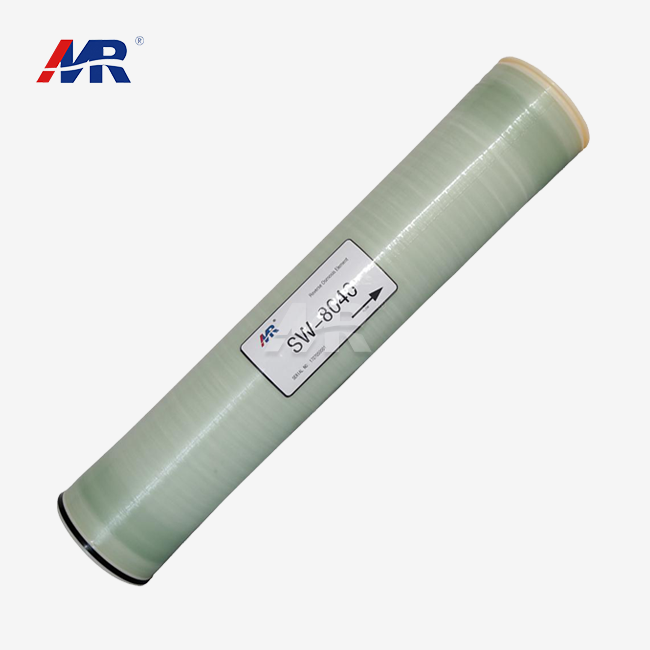
Energy is ultrafiltration's most costly recurring cost. Even while 2–5 bar pressure systems use less energy than reverse osmosis, medium-capacity systems still spend $25,000–$150,000 on electricity. Replacement rounds for membranes affect operating costs. Polyethersulfone membranes endure 3–5 years, whereas PVDF lasts 5–7 years. Material selection affects cost.
How much chemical is required for backwashing and CIP depends on the feed water parameters. Facilities with brackish or foul-prone industrial effluent may require two to three times more cleaning chemicals than those with cleaner source waters. Service contracts and Technical support agreements stabilise operations but cost $10,000 to $50,000 a year, depending on response time and preventive maintenance visits.
Factors Influencing Cost Variability
Scaling up the system's capacity greatly reduces gallon treatment costs. Due to economies of scale, a 100,000 GPD system may cost $0.45 to $0.65 per gallon of daily capacity, while a 1,000,000 GPD system could cost $0.20 to $0.33. The membrane fouls quickly and requires pretreatment depending on the feed water quality. Water sources with high turbidity and organic matter require more frequent cleaning and replacement.
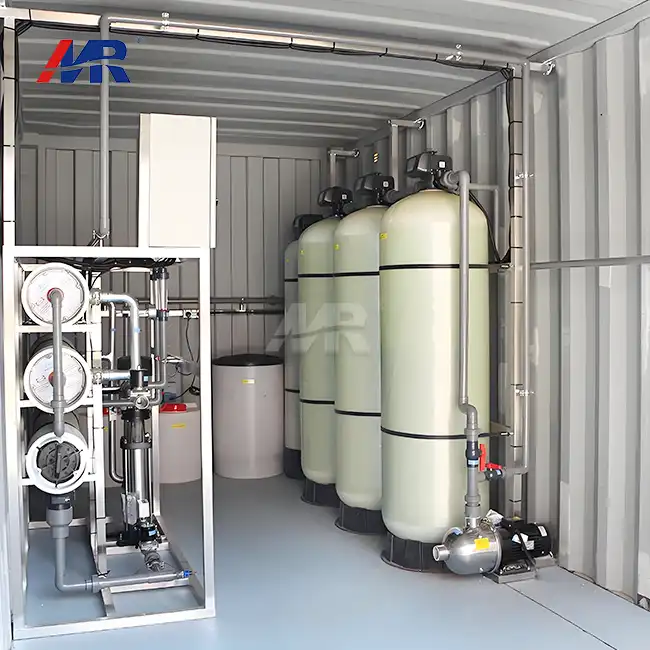
Costs vary depending on customisation and integration difficulty. Standard containerised systems are cheaper than customised configurations that need unique materials or process changes. Advanced automation, remote monitoring, and data integration with SCADA systems cost more but improve operational efficiency.
Comparing Ultrafiltration Costs with Alternative Filtration Technologies
Ultrafiltration Versus Reverse Osmosis Economics
Ultrafiltration and reverse osmosis are two different but related steps in the process of treating water. Because they don't need as much pressure and don't need as much extra equipment, UF systems usually have lower capital costs than RO systems of the same size. Similar trends can be seen in operating costs. For example, UF uses only 0.05-0.15 kWh of energy per cubic meter, while saltwater RO uses 1.5–3.5 kWh and brackish water RO uses 0.4–1.2 kWh.
These differences in ultrafiltration cost are based on performance factors. Ultrafiltration is very good at getting rid of colloids, bacteria (up to 4 logs), viruses, and suspended solids while still letting dissolved salts pass through. This makes UF perfect for preparation tasks because it keeps ro membranes from getting clogged, which often cuts the number of times RO needs to be cleaned by 50–75%. Many companies that make medicines and gadgets use blended UF+RO+edi systems, even though they cost more overall, to meet the requirements for ultrapure water.
Lifecycle Cost Comparison with Other Technologies
Both in terms of what it can do and how much it costs, nanofiltration is in the middle of UF and RO. NF systems usually cost 20–35% more to install than ultrafiltration systems, and they cost more to run because they need more pressure. Microfiltration has lower start-up and running costs than ultrafiltration, but it removes particles less thoroughly. This means it can be used in situations where 0.1–10 micron filtration is enough, instead of the 0.01-0.1 micron range that UF offers.
It might seem like a good deal to use traditional multimedia filtration along with chemical coagulation because it costs less up front, maybe 50–70% less than membrane systems. Buying chemicals, moving sludge, and dealing with uneven sewage quality that needs extra polishing steps all add up to hidden costs. As rules get stricter across North America, the costs of environmental standards for storing chemicals and getting rid of waste keep going up.
A food processing client that we helped found that their current clearing system used a lot of chemicals, cost $85,000 a year, and needed a lot of human attention. When they switched to ultrafiltration, they got rid of their chemical costs, cut their labor needs by 60%, and increased their production uptime by making sure they always had clean water. Even though more money was spent on the system, it paid for itself in 4.2 years.
How to Calculate Ultrafiltration Costs for Your Business Needs
Key Cost Metrics and Calculation Models
Ultrafiltration cost financial planning is based on three basic measures. When you divide the total annual costs by the yearly treated amount, you get the cost per gallon treated, which lets you compare systems on a level playing field. CAPEX includes all up-front costs, like buying equipment, setting it up, starting it up, and stocking up on extra parts. OPEX includes costs that keep coming up, like energy, replacing membranes, chemicals, labor, and repairs.
Setting up a useful framework for calculations starts with figuring out what treatments are needed. Take the case of a drug company that needs 250,000 GPD of purified water. It is possible that the capital costs will reach $675,000. This includes $550,000 for tools and $125,000 for installation. The annual running costs are $126,000, which includes $45,000 for energy, $28,000 for membrane replacement stocks, $18,000 for chemicals, and $35,000 for maintenance contracts. This means that the cost per gallon in the first year is $0.74 ($675,000 ÷ 250,000 + $126,000 ÷ 250,000).
Total Cost of Ownership Considerations
TCO research looks at more than just straight costs; it also takes into account how things actually work. Different businesses have very different downtime costs. For example, a semiconductor plant that loses $500,000 an hour during production interruptions places a much higher value on system dependability than a farming operation. Automated UF systems often make it worth it to choose more expensive tools because they make work more efficient. After automating ultrafiltration, 40% of the staff at a local water plant were able to focus on other important jobs, which saved the company $120,020 a year in labor costs.
Patterns of consumption have a big effect on TCO estimates. When production is low, set costs are spread out over fewer amounts, which means that facilities with variable water needs have higher per-gallon costs. To keep their budgets from being surprised, seasonal businesses should carefully plan their yearly costs.
ROI Through Operational Improvements
Energy savings are a measured part of return on investment. One beverage processor saved $52,000 a year on electricity costs by switching from traditional clearing to ultrafiltration, which cut the treatment energy use by 35%. The benefits of reducing chemicals go beyond just saving money on purchases. They also include easier handling, fewer safety equipment needs, and less environmental responsibility.
Reducing waste has benefits for both the environment and the economy. Chemical coagulation methods make sludge that makes up 15–30% of the feed volume, but ultrafiltration concentrate streams only have 3–8% of the feed volume. A food processing client who used local sewage systems to get rid of their waste saved $38,000 a year because they didn't have to throw away as much.
Procurement Strategies: How to Source Ultrafiltration Systems Cost-Effectively
Understanding Market Pricing Dynamics
The ultrafiltration cost depends on technology sophistication, build quality, and the reputation of the supplier. Established manufacturers with extensive reference sites for their membrane technologies typically charge 15 to 30 percent more than new suppliers. This higher price reduces risk by providing proven performance, reliability, and comprehensive expert support.
The geographical location of production also affects the ultrafiltration cost. North American manufacturing sites incur higher wages but offer advantages such as faster delivery times, stronger warranty service, and better compliance with regulations. When evaluating suppliers, it’s important to balance the initial purchase price against the total value delivered over the system’s lifecycle.
Comprehensive Quote Evaluation
People who work in procurement should ask for thorough cost reports that show any hidden costs. Specifications for secondary equipment, the powers of the automation system, the limits of the installation scope, the commissioning services, the terms of the operator training, the guarantee coverage, and the prices of spare parts are all included in full bids. At Guangdong Morui Environmental Technology, we give clear, listed plans that let you compare different options in a smart way.
The quality of after-sales support has a big effect on long-term customer happiness and costs. Warranty systems should ensure the performance of membranes for at least three to five years, with clear instructions on how to change them. Access to technical help, such as reaction time promises, the ability to monitor from afar, and the availability of on-site services, should be carefully considered. Value-added support, like ongoing operator training, process improvement help, and ways to upgrade systems, sets providers who are focused on partnership relationships apart from those who are focused on transactional relationships.
Leasing Versus Purchase Considerations
Leasing agreements keep money for investments in the heart of the business and make the monthly costs known. Some operating leases include repair services, replacement membranes, and provisions for updating technology. This turns capital spending into operational costs. This method works well for small and medium-sized businesses that are limited on cash flow or would rather treat certain transactions differently for financial reporting reasons.
Companies that have the money and solid long-term water treatment needs can save money in the long run by buying everything outright. When you own something, you don't have to pay rent every month, and you can make changes to the system or add more space if you need to. Depreciation benefits and possible selling value are two more financial factors that make a direct buy a better choice for businesses that have been around for a while and have plans to stay in business for 7 to 10 years.
Best Practices for Managing Ultrafiltration System Costs Long-Term
Proactive Maintenance and Asset Management
Scheduling preventive maintenance keeps you from having to make expensive fixes in an emergency and increases the life of the membrane. Transmembrane pressure trends, permeate flow rates, and turbidity readings should all be checked as part of regular inspection routines to find early signs of fouling. Automated CIP optimization methods and membrane integrity testing processes are examples of predictive maintenance tools that find problems before they get too big and stop production.
Maintenance records that are written down allow data-driven decisions about when to replace the membrane to be made. By replacing membranes before they fail, between 80 and 85% of their estimated lifespan, you can avoid major failures that require emergency purchases at high prices and longer downtime costs. By planning their replacements better, one power company client who used predictive maintenance cut their yearly membrane costs by $67,000.
Operational Parameter Optimization
Optimizing energy use starts with making sure the system is the right size and continues with fine-tuning how it works. When ultrafiltration systems are run at their original flux rates instead of their full potential, the membranes last longer and get less clogged up. Without any help from a human, automated control systems keep the energy efficiency at its best by changing the working settings all the time based on changes in the quality of the feed water.
Comprehensive operator training programs make sure that employees know how operating decisions affect costs. Training costs between $5,000 and $15,000, but they pay off in the form of less chemical waste, better CIP performance, and finding problems early on. If operators can spot patterns of fouling, they can take corrective action before performance drops so low that harsh chemical cleaning or premature membrane replacement is needed.
Leveraging Supplier Partnerships
By working together with ultrafiltration providers, you can get access to their knowledge, which speeds up fixing and improves performance. Suppliers who keep an eye on system performance through online connections find ways to make things more efficient and suggest changes to the way things are done. Technology update paths make sure that systems that are already in place stay up to date with new membrane materials and automation ideas.
Planning for system flexibility lets a business grow without having to update the whole system. Modular ultrafiltration designs let you add more membrane racks to increase capacity while keeping the infrastructure investments you've already made. Planning for growth during the early stages of planning cuts down on future change costs and makes the permit process easier.
These operational excellence practices set up ultrafiltration cost structures that can be predicted, make sure that equipment works well, and get the best return on investments in water treatment across a wide range of industries.
Conclusion
To fully understand ultrafiltration costs, you need to look at more than just the original equipment price. You also need to look at ongoing costs, upkeep needs, and creating long-term value. Capital costs change a lot depending on the size of the system, the membrane technology chosen, and the needs for customization in a particular application. Because operational costs are affected by energy use, membrane replacement cycles, and chemical use, it is important to make accurate predictions based on the features of the feed water and the output needs. Strategic buying that looks at the total cost of ownership instead of just the original price helps companies choose options that give them the best long-term value. Active asset management, operating optimization, and relationships with suppliers keep costs low while boosting system performance and dependability over longer service lifecycles.
Frequently Asked Questions
1. What is the typical payback period for ultrafiltration system investments?
Payback times are usually between 3 and 7 years, but they depend on the application and the other treatments that were replaced. Facilities that replace standard systems that use a lot of chemicals often see faster payback because they don't have to pay for chemicals anymore, they need fewer workers, and they save money on waste disposal. When ultrafiltration opens up new ways to make things or stops expensive equipment further down the line from getting clogged, investments may be justified by protecting income rather than direct cost savings.
2. How does feed water quality impact ultrafiltration cost structures?
Both capital and running costs are directly affected by the properties of the feed water. High-turbidity sources need more cleaning equipment, which raises the initial cost by 15 to 35 percent. Higher organic content speeds up membrane fouling, which cuts down on replacement cycles and raises the need for cleaning chemicals. On the other hand, better feed waters allow membranes to last longer and work less hard, which lowers the ultrafiltration cost by a large amount per gallon.
3. What hidden costs should procurement teams anticipate?
A lot of first-time buyers are surprised by a few costs. Updating the infrastructure for water and electricity lines can add between $25,000 and $100,000 to the cost of a job. Training operators, setting up the machine, and checking its performance all add costs on top of the price of buying the equipment. Keeping spare parts on hand for important parts like valves, seals, and instruments usually costs between $15,000 and $50,000 up front. This keeps the machine from being shut down for long periods of time when a part fails.
Partner with a Trusted Ultrafiltration Cost Supplier
To make good choices about ultrafiltration cost, you need to know a lot about choosing the right technology, designing the system, and getting the most out of its lifetime value. Guangdong Morui Environmental Technology has been treating water in the industrial, medicinal, food and beverage, municipal, and energy sectors for more than 14 years. Our integrated skills, which include manufacturing membranes and tools in-house and providing full installation services, make cooperation easier and keep costs low. We provide responsive technical knowledge across North America with 500 dedicated team members, 20 experienced engineers, and 14 branch sites that provide full regional support. Our clear price models, in-depth TCO analyses, and track record of success help procurement professionals make choices that are in line with their budgets and business goals. Get in touch with our expert team at benson@guangdongmorui.com to talk about your unique ultrafiltration needs and get a cost estimate that is tailored to your situation.
References
1. American Water Works Association. (2021). Membrane Filtration Guidance Manual. Denver: AWWA Publishing.
2. Environmental Protection Agency. (2019). Membrane Filtration Technologies for Drinking Water Treatment: Cost and Performance Analysis. Washington DC: EPA Office of Water.
3. Water Research Foundation. (2020). Total Cost of Ownership for Membrane Systems in Municipal Applications. Denver: WRF Publications.
4. International Desalination Association. (2022). Membrane Technology Economics and Performance Benchmarking. Topsfield: IDA Technical Report Series.
5. National Water Research Institute. (2018). Ultrafiltration Membrane System Design and Cost Optimization Strategies. Fountain Valley: NWRI Research Report.
6. Journal of Membrane Science. (2023). Lifecycle Economic Assessment of Advanced Membrane Technologies in Industrial Water Treatment. Volume 642, Pages 119-134.