


How to Select an RO Water Tank for Industrial Water Applications
When selecting an RO water tank for an industrial water treatment system, the right choice depends on several technical factors: required storage capacity, working pressure, material compatibility, connection configuration, and system integration requirements. A pressurized RO storage tank acts as a buffer between the membrane's slow permeate output and the facility's high-flow demand — preventing pump short-cycling, reducing membrane stress, and maintaining consistent water availability. Getting this decision right from the start saves high costs and downtime over the system's service life.
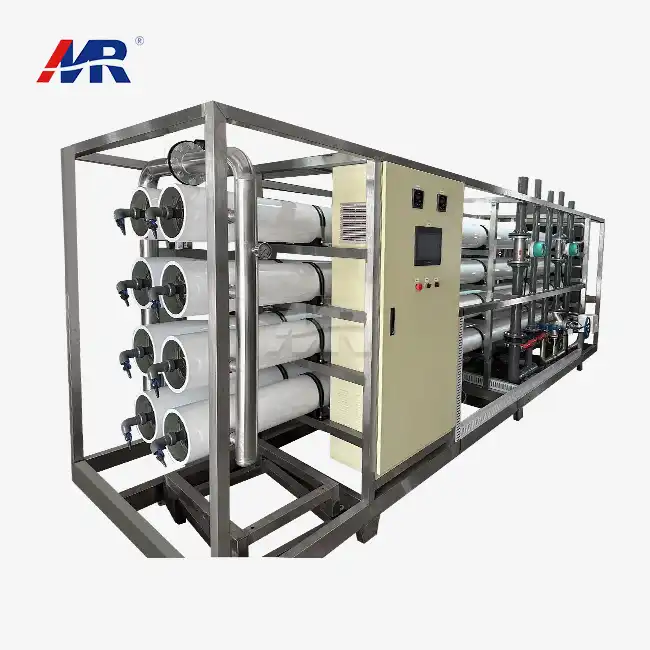
Understanding RO Water Tanks and Their Role in Industrial Water Systems
What an RO Storage Tank Actually Does
An RO water holding tank is a pressure tank that sends clean permeate water from the ro membrane to where it works. Most RO tanks used in business are hydropneumatic and don't let air in. Between the water and the already-charged air chamber is a bladder or diaphragm made of food-grade material. Clean air can't get into this closed-loop system, but when a process further down the line needs water, high-flow delivery can happen right away.
The Production-Demand Gap Problem
RO filters can only make a few gallons of water an hour at most. If a building didn't have a storage buffer, it would have to run the system all the time or deal with supply gaps. The right-sized holding tank fits in this hole, so machines that make things, feed boilers, or process food never have to stop to get clean water.
Protecting Membrane and Pump Life
There won't be enough room for your RO and booster pumps to last as long if they have to start and stop more often. Storage tanks that are set up and sized correctly are said to need less maintenance on industrial sites. The tank keeps the pressure in the system steady and lowers the number of cycles. This protects the investment in the RO system upstream.
Core Selection Criteria for Industrial RO Water Tanks
Capacity Planning Based on Actual Demand
Find out how much the system normally makes in an hour, how much it uses at its peak every day, and how much time you have to spare before you choose a tank. A factory that doesn't know how many batches it will need at any given time needs more space to store them than a factory whose draw rates are always the same.
Material and Construction Standards
You waste money and space if you go too big. You won't have enough goods when you need them the most if you go too small.
Pressure Rating and System Compatibility
Most industrial RO tanks are made of fiber-reinforced polymer or steel (304 or 316L). This metal lasts a long time, is easy to clean, and doesn't mix with poisons. Some of these places are hospitals with water systems, making food and drinks, and making drugs. Tanks made of more than one material can save money and weight for general business and light industry use. For any use of drinkable or process water, you need containers that are made for food or have Certifications like NSF/ANSI 61 that are lined on the inside.
There are many levels that business RO systems can work with. There should be a safe amount of space between the system's running pressure and the RO water tank's highest working pressure. Factory tanks often break down before they should because the pressure gauge numbers don't match up. The pipe that is already there must be used for the link size, port design, and placement of the entrance and exit. If they are not, you will have to pay a lot of money for repairs.
Comparing RO Water Tank Options: Making an Informed Choice
Stainless Steel vs. Composite: A Direct Comparison
In the long run, stainless steel tanks are better because they don't rust and are easy to clean. They cost more at first. This is very important in science, medicine, and food processing. Composite tanks are cheaper, lighter, and easier to move because they are made with fiberglass. That is why they are a good choice for general industry or business RO storage that doesn't need to be as clean. The price is not the only thing that makes the choice. People also think about the total cost of ownership, the application environment, and how long the service needs to last.
Evaluating Supplier Reputation and After-Sales Support
When you buy something from another business, the seller and the item you buy are both very important. As proof of compliance, reports on pressure tests, and approvals of materials are some of the good papers that buyers should ask for. People can buy things more easily, and projects go faster when they can get them in custom configurations, such as non-standard capacities, specific connection arrangements, or OEM-branded specifications. For long-term operating risk, two things that matter when you buy something are the warranty terms and how easy it is to get new parts.
Price vs. Total Cost of Ownership
You might not want to pay less if the tank breaks down often, needs to be fixed a lot, or doesn't have the right certifications for the job. Not just unit price should be used by teams that buy things for factories. They should also use cost-per-year-of-service. Think about how much downtime costs, how much work needs to be done to fix problems, and how long it will take to set up and take care of the tank. This will help you choose a better tank from a well-known brand.
Installation, Maintenance, and Troubleshooting Guidance
Site Preparation and System Integration
You need to make sure the ground is stable and level before you can put in a pressurized storage tank. Make sure the air chambers in the tanks are fully charged before you turn it on, and that the lines coming in and going out fit with the pipes in the current system. The cut-in pressure for the system should be about 2 PSI higher than this pressure. One mistake that a lot of people make is putting in the wrong pre-charge. This makes the water supply bad from the start.
Routine Maintenance to Prevent Water Quality Issues
Often, at least once a year, and more often when there is a lot of work to do, clean and check a large RO water tank. An awful smell from water that won't move and sand building up near the entrance port are two problems that happen a lot. If you flush the tank with a light cleaner and make sure the bladder is still full during regular maintenance, these issues will not get worse.
Diagnosing Common Operational Faults
There are three main types of mistakes that can be found in field service reports: When the water delivery pressure drops, it usually means that the bladder has broken or that the pre-charge air pressure has been lost. Fix the broken air vent and fill it up to the right level. Leaks can be seen at the ports where things connect. This usually happens because not enough thread sealant was used or the fittings were too tight, which cracked the port housing.
Most of the time, the booster pump does this when the tank is full, or the bladder has burst and the tank is not big enough to hold the current demand.
- Reduced water delivery pressure — usually indicates bladder failure or loss of pre-charge air pressure. Check air valve integrity and recharge to specification.
- Visible leaks at connection ports — typically traced to improper thread sealant application or overtightened fittings that have cracked the port housing.
- Rapid cycling of the booster pump — often signals that tank capacity is insufficient for the current demand profile, or the bladder has ruptured and the tank is waterlogged.
If these problems are fixed quickly, they won't hurt the filters and pumps upstream. If a field report isn't clear, the best and least expensive thing to do is to hire a trained water treatment master.
Purchasing and Procurement Strategies for Industrial RO Water Tanks
Vetting Manufacturers and Distributors
In a new service provider, the three most important things to look for are quality certifications that have been checked, proof that they can do what you need, and past work on projects like yours. What did the tests show about the product? How long does it take to get it just right for you? Builders can change the tanks' size, shape, and material to fit the needs of a project because they have their own engineering team. Builders and people who work in EPC can now easily find what they need.
Customization and Logistics Planning
A lot of business projects need tanks that don't fit in a catalog. RO tank makers who have been in business for a long time can work with a range of sizes, port arrangements, and material needs made just for each job. When making plans to buy something, you should think about how long it will take to make it, what the rules are for export packaging, and how the freight will work. Water cleaning systems may take longer than planned if there are problems with shipping or wait times at the last minute.
Warranty, Service Contracts, and Long-Term Value
Make sure you know what the guarantee covers when you talk about it. Most claims are made about the materials, the work, and the security of the bladder. When you have an industrial RO storage tank service contract, you can get replacement parts and have the tank checked regularly. This makes the tank last longer. These contracts also help the teams that buy things plan their budgets for repairs.
Conclusion
When choosing a pressurized storage tank for your industrial RO system, you should think about its size, material, pressure rating, ability to work with your system, and how dependable the supplier is for an RO water tank. Things that are chosen early on in the design process affect how well the installation works and how much it costs in the long run. Professionals in purchasing, water treatment, and EPC can lower the risk of a project and find storage choices that will work well for as long as the application does by following the steps in this guide.
Frequently Asked Questions
1. Do industrial RO tanks require an internal filter?
It's not true. When you store RO, there is no filter media inside. The RO membrane lets clean water in and seals it up in a bag or diaphragm tube. The tank itself doesn't have any post-tank filtration. It is put in the line that comes after the tank, like a UV or carbon polish.
2. How often should an industrial RO storage tank be sanitized?
For most business uses, cleaning should be done at least once a year. Things that do a lot of work or are used in places with food, drinks, or drugs may need to be checked out and cleaned every three months. Follow the maker's instructions for how to care for your things.
3. What causes odor in an RO tank?
Smells will appear if you don't move the water in the tank often. Microbes can grow in the bladder if things don't change. You can avoid this problem by regularly sanitizing and cleaning the system. Also, make sure it's the right size to handle enough daily change.
4. Can RO tanks be customized for specific project requirements?
Yes. You can choose the materials, ports, and levels of capacity that you want from manufacturers you can trust. During the qualification process, buyers in fields with specific needs should check with suppliers to make sure they can make Products that meet those needs and give them accurate lead times.
Partner with Morui for Your Industrial RO Water Tank Requirements
Guangdong Morui Environmental Technology Co., Ltd. sells industrial-grade pressurized storage tanks and offers in-house engineering help, quality documentation that has been certified by the factory, and direct access to our production team. People all over the world know Morui as a company that makes RO water tanks for industry and business. They have unique specs, low MOQ prices, and reliable delivery. You can get professional help or a price quote for your job by emailing benson@guangdongmorui.com.
References
1. AWWA (American Water Works Association). Water Quality and Treatment: A Handbook on Drinking Water. 6th ed., McGraw-Hill, 2011.
2. WaterReuse Association. Reverse Osmosis and Nanofiltration Manual of Water Supply Practices. AWWA, 2007.
3. NSF International. NSF/ANSI Standard 61: Drinking Water System Components — Health Effects. NSF International, 2023.
4. Metcalf & Eddy. Water Reuse: Issues, Technologies, and Applications. McGraw-Hill, 2007.
5. American Society of Mechanical Engineers. ASME Boiler and Pressure Vessel Code, Section VIII: Rules for Construction of Pressure Vessels. ASME, 2023.
6. Water Environment Federation. Industrial Water Management: A Systems Approach. 2nd ed., WEF Press, 2008.