_1745823981883.webp)

RO Equipment Membrane Lifespan: How to Maximize It
Maximizing RO equipment membrane lifespan requires understanding that these semi-permeable barriers typically last 2-5 years under optimal conditions, but can extend beyond 7 years with proper maintenance protocols. The key factors determining longevity include feed water quality, operational pressure parameters, and consistent pre-treatment effectiveness. By implementing strategic cleaning schedules, controlling chemical exposure, and maintaining stable operating pressures, facility managers can significantly reduce replacement frequency and total cost of ownership while maintaining consistent permeate quality throughout the membrane's service life.
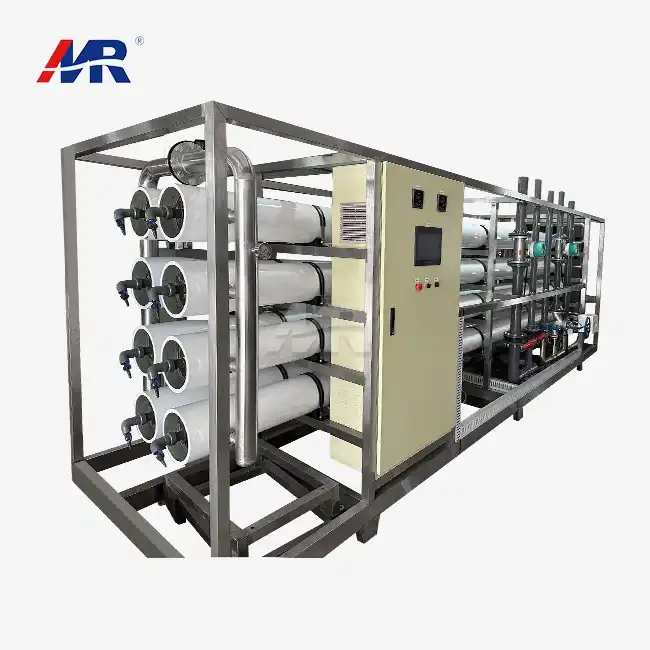
Understanding RO Equipment Membranes and Their Lifespan
How RO Membranes Function in Industrial Systems
Working reverse osmosis membranes require hydraulic pressure to overcome osmotic pressure. They reject 95–99% of dissolved salts, organics, and particles while pushing water molecules through a semi-permeable barrier. A polysulfone substrate and 0.2-micron active polyamide layer make up the membrane's thin-film composite structure. Selective permeability lets water pass through but keeps contaminants in the concentrate stream.
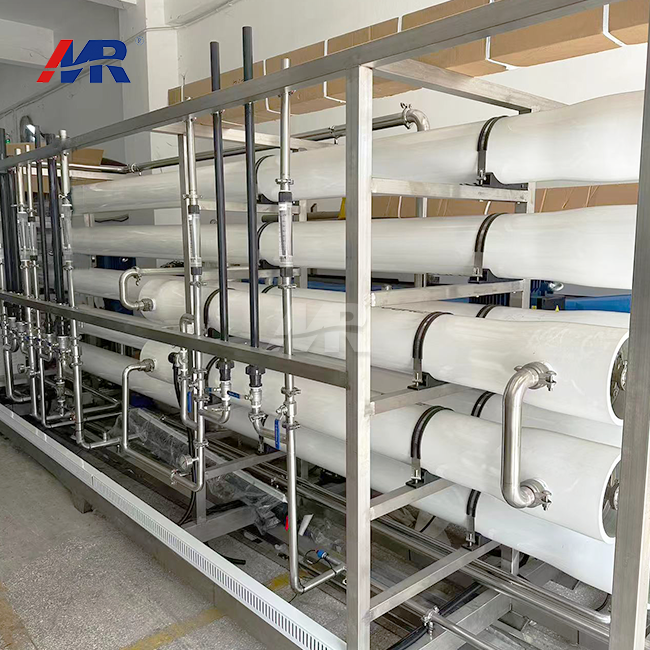
In industry, membrane elements are placed in pressure vessels with 4–8 elements. The input feed water fouls the lead elements most. Tail elements receive cleaner water but a bigger osmotic pressure difference. Knowledge of this gradient helps RO equipment operators focus maintenance on locations with the quickest deterioration.
Expected Membrane Service Life Across Applications
In well-maintained industrial systems, polyamide thin-film composite membranes last three to five years, although their performance depends on how they are utilized. Pharma-grade systems that pre-treat and monitor feed water quality last 5–7 years. Even with regular maintenance, wastewater treatment systems or applications that handle high-fouling feed streams may need to be replaced within two to three years.
Membrane lifetimes have economic impacts beyond repair. Short-lived membranes disrupt production planning, require immediate purchase, and often require shutdown. Production facilities that process 3 tonnes per hour can lose thousands of dollars due to unplanned maintenance. Effective lifetime management is a financial, not just technological, issue.
Factors Influencing Membrane Longevity
Membrane longevity depends most on water chemistry. When TDS exceeds 2,000 ppm, osmotic pressure rises more quickly. This strains membranes and accelerates polymer breakdown. Temperature affects performance too. Permeate flow rises 3% per°C over 25°C, although temperatures above 35°C accelerate polyamide layer chemical breakdown.
Also crucial is operating pressure. Membrane layers condense faster in 150–250 psi systems running near their maximum pressure. Permeate flow slows with time. Recovery rate parameters affect lifespan. Pushing recovery over 75% in single-stage systems concentrates pollutants in the feed channel, making membrane surfaces more susceptible to scale and fouling.
Common Causes of RO Membrane Degradation
Fouling: The Primary Threat to Membrane Performance
Different types of membrane fouling require different treatments. When floating solids build up on membranes, permeate flow is blocked by particulate fouling. This problem usually occurs in the first few membrane elements, where feed water enters before most particles are removed from RO equipment.
Bacteria adhere to membrane surfaces and form biofilm matrices that are difficult to remove. Extracellular polymeric substances that stick to membrane surfaces are released by these microbes when they eat organic matter in feed water. No matter how clean it seems, biological waste may reduce system capacity by 30 to 50% in months if not addressed.
Organic fouling occurs when water-soluble humic acids, proteins, and industrial chemicals stick to membranes. These chemicals' negative electrical charges interact with the membrane surface's chemistry to generate tightly bonded, water-resistant layers. Better pre-treatment is needed for feed water with greater than 3 ppm total organic carbon to prevent membrane fouling.
Scaling: Mineral Deposition and Crystallization
Scaling occurs when fluid-dissolved minerals exceed normal solubility limits. Crystal deposits occur on membrane surfaces. Calcium carbonate is the most prevalent scale chemical, formed when the reject stream has bicarbonate alkalinity and calcium hardness. Calcium, barium, and silica scaling worsens some water conditions.
Near membrane surfaces, concentration polarisation boosts salt levels 1.2 to 1.5 times higher than in bulk solution, speeding scaling. Scaling is more likely with feed water chemical recovery rates above recommended limits. A system with 80% recovery and a low scaling chance will scale faster than one with 70% recovery.
Anti-scalant chemicals prevent mineral precipitation if supplied in the proper proportion and compatible with feed water chemistry. Even a 10-15% lower dose can scale quickly at high concentration. However, overdosing wastes chemicals and may dirty membranes if anti-scalant binds to them.
Chemical Damage and Oxidation
Chlorine and other oxidizers permanently damage polyamide ro membranes within hours of exposure. Even 0.1 ppm chlorine can damage the membrane's active layer, letting salt through and rendering it less water-repellent. Pre-treatment with activated carbon filters or sodium metabisulfite injection removes all chlorine from water.
Extreme pH values outside 3–10 tear down polyamide structure, speeding membrane degradation. Unmixed or overused cleaning solutions can cause the same harm. Only use alkaline cleansers over pH 12 or acidic cleaners below pH 2 during the manufacturer's advised contact durations to protect the membrane.
Cleaning and operation errors cause temperature spikes that increase chemical stress. Membranes break down faster when exposed to temperatures above 45°C and harsh cleaning chemicals are used. All operational temperatures are strictly controlled to protect the membrane's polymer structure.
Best Practices to Maximize RO Membrane Lifespan
Optimizing Pre-Treatment Systems
The most effective way to increase the life of a membrane is to treat it properly before use. Multi-media filtering gets rid of particles bigger than 10 to 20 microns, which keeps membranes from getting worn down or clogged with particles. Before high-pressure pumps, cartridge filters with a 5-micron rating remove any remaining particles. They catch any fine media or pipeline debris that could damage membrane surfaces.
Activated carbon filtering gets rid of chlorine and chloramines, which would damage membrane polymer structures otherwise. The carbon bed depth and contact time must be just right to get the chlorine level down to less than 0.05 parts per million (ppm). Testing carbon effluent on a regular basis proves breakthrough protection, since worn-out carbon beds can't protect membranes further downstream from oxidative damage.
Here are the core advantages of implementing comprehensive pre-treatment protocols:
- Particle removal systems lower the Silt Density Index below 3.0, which stops fouling that can't be fixed with manual cleaning
- Chlorine elimination through carbon filtration or chemical reduction protects polyamide membranes from oxidative degradation
- Anti-scalant injection maintains mineral solubility across the membrane array, which stops crystallisation at concentration points
- pH adjustment makes the membrane work better and the anti-scalant work better within the target operating ranges
These pre-treatment investments deliver measurable returns through reduced cleaning frequency, extended membrane service intervals, and consistent permeate quality. When facilities see pre-treatment as an operating cost instead of a protective investment, they typically have higher membrane replacement costs in their RO equipment.
Implementing Proactive Maintenance Protocols
Normalised performance tracking lets you find membrane degradation early, before it leads to major problems. Every week, operators should keep an eye on normalised permeate flow, salt passage, and pressure drop, making sure to account for changes in temperature and pressure. A drop of 10 to 15 percent in the normalised permeate flow means that fouling is happening and needs to be looked into and fixed.
Instead of random time intervals, membrane cleaning schedules should be based on success measures. When normalised pressure drop goes up by 10 to 15 percent, normalised permeate flow goes down by 10 to 15 percent, or normalised salt passage goes up by 5 to 10 percent, cleaning is needed. If you wait longer than these limits, foulants can get packed down and stick to membrane surfaces more strongly, which makes cleaning less effective and shortens the membrane's general life.
The choice of cleaning chemicals must be based on the specific foulants that are slowing down the system. Acidic cleaners break down mineral scales, while alkaline cleaners get rid of organic matter and bacterial fouling. In many Cases, cleaning with an alkaline solution first and then an acidic one is needed to get rid of multiple types of dirt. The temperature of the cleaning solution, which is usually between 25°C and 35°C, makes chemicals react more quickly without damaging membrane structures.
Maintaining Optimal Operating Conditions
The operating pressure should stay stable within the parameters set by the designer. Frequent changes that put mechanical stress on membrane structures should be avoided. When systems have regular operation pressure changes of more than 10 psi, membranes go through repeated rounds of expanding and contracting, which speeds up physical breakdown. Consistent working conditions are kept by regulating air and controlling the system properly.
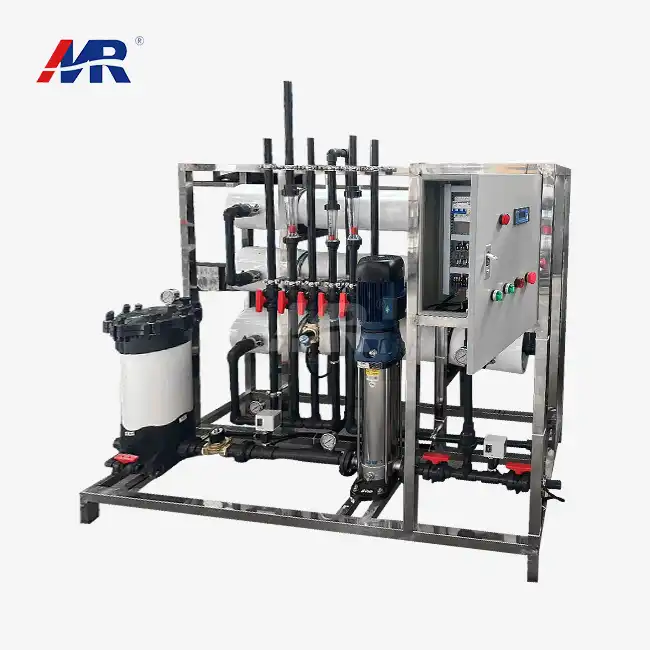
Recovery rate options find a mix between how much can be made and how long the membrane will last. Higher recovery makes better use of water, but it also raises concentration factors that speed up scaling and fouling. Our 3T/H reverse osmosis systems can recover up to 75% of the water while keeping the membranes safe. This balance makes operations more efficient without shortening the life of the membrane.
Controlling the temperature has an effect on both short-term performance and long-term durability. Stabilising the temperature of the feed water stops thermal stress cycles that break down polymer structures over time. Facilities where temperatures change a lot with the seasons should think about using heat exchangers to keep the operating temperatures stable. This will protect the membranes and keep the permeate production rates stable.
Comparing RO Membrane Performance: Selecting the Right Membrane for Your Needs
High-Flux Low-Fouling Membrane Technologies
More recent high-flux membrane designs produce 30 to 50 percent more permeate per element than regular membranes, which means that fewer elements are needed to reach the target capacity. This higher output is due to improved polymer chemistry and changes to the membrane surface that let more water through while still rejecting salt above 99.5%. The lower number of elements lowers the initial cost of capital and the area of the membrane that needs to be maintained.
Low-fouling membrane surfaces have hydrophilic changes that stop organic matter from sticking to them and living things from attaching to them. The electrical charge interactions that bring organic molecules and bacterial cells to membrane surfaces are lessened by these treatments. Field tests show that cleaning low-fouling membranes is 20–30% less often needed than cleaning standard formulations when the same working conditions are used in the RO equipment.
Capacity Considerations for Industrial Applications
The membrane that is chosen must match the real needs of production while still allowing for operating freedom. Systems that are intended to work at 85 to 90 percent of their highest allowed capacity have lower flux rates per element, which lowers the rate of fouling and increases the service life. This conservative sizing leaves room for changes in the quality of the feedwater and a slowing down of the flow over the membrane's service life.
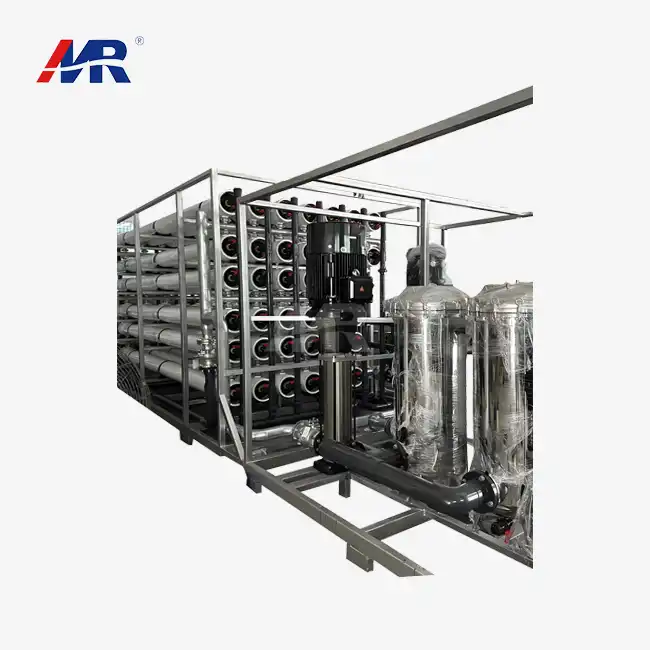
Our industrial systems can handle up to 3 tonnes of water per hour, which is enough for medium-sized factories, pharmaceutical production lines, and business buildings that need clean water all the time. This range of throughputs strikes the best balance between a small footprint and a useful production volume. The modular design lets the facility's needs grow beyond what was originally planned by installing more systems in parallel.
Energy efficiency directly correlates with membrane selection and system design. When compared to normal membranes, high-flux membranes use 10–20% less energy because they work at lower feed pressures to achieve the desired permeate flow. Over years of use, this increase in efficiency adds up, saving a lot of money on power costs and lowering the facility's carbon footprint, which is becoming an increasingly important factor for businesses that want to get sustainability approvals.
Total Cost of Ownership Analysis
The price of the membrane itself only makes up 15–25% of the overall costs of owning and running a system. Larger parts of the total cost come from things like energy use, chemical costs, maintenance labour, and lost production during downtime. When buying a membrane, deciding based only on the lowest initial cost often leads to higher overall costs because of higher operational costs and shorter replacement intervals.
When buying a membrane, it's important to carefully consider the manufacturer's support options and warranties. Good manufacturers back their Products with 3-year warranties against defects and offer Technical support for fixing problems and making the product work better. This support keeps capital investments safe and gives facilities access to engineering resources that help them get the most out of the membranes during the service period.
System automation features substantially impact operational costs and membrane longevity. Fully automated control systems monitor important factors all the time, changing working conditions and taking corrective actions before performance starts to drop. Our smart control systems track normalised performance, let workers know when problems start to appear, and maintain the best working conditions without needing constant manual oversight.
Conclusion
To make reverse osmosis membranes last as long as possible, you need to pay careful attention to how well the pre-treatment works, how well the system works, and how often it needs to be maintained. When compared to reactive maintenance methods, these strategies—optimized chemical treatment, normalised performance monitoring, and responsive cleaning schedules—always increase the service life of membranes by 40–80%.
Total cost of ownership frameworks should be used by procurement managers and plant engineers to evaluate membrane investments. These frameworks should take into account energy efficiency, maintenance needs, and expected service intervals. The membrane technologies and system designs that have the lowest lifetime operating costs aren't always the ones that have the lowest original buy prices. When facilities use full membrane management systems for their RO equipment, they need to change membranes less often, and their operations are more reliable.
FAQ
Q1: How often should RO membranes be replaced in industrial applications?
Instead of being set in stone, how often membranes need to be replaced depends on the quality of the feed water, the working conditions, and how well they are maintained. Systems that treat public water should last between 4 and 6 years if they are well taken care of, but systems that treat garbage may need to be replaced every 2 to 3 years. Performance monitoring is a more accurate way to know when to replace membranes in the RO equipment than random time frames. Replace membranes when normalised salt passage increases beyond acceptable limits or when cleaning frequency goes above every two to three months.
Q2: What are the early warning signs of membrane degradation?
Normalised permeate flow going down is the first sign of membrane fouling or scaling. A 10% drop in performance from the starting point should be looked into and probably cleaned up. When the difference in pressure between membrane vessels goes up, it means that fouling is building up and blocking flow channels. Rising salt flow means that the membrane is damaged or the seal has failed. This needs to be fixed right away to avoid water quality problems. Monitoring these normalised parameters on a regular basis lets you find problems early, before they become very bad.
Q3: Can damaged membranes be repaired or must they be replaced?
Damage to the membrane from chemicals, oxidation, and physical tears needs to be replaced in its entirety because they weaken the membrane's basic structure. But fouling and scaling can be fixed with the right cleaning methods if they are taken care of quickly. Manufacturers offer membrane autopsy services that can figure out how failures happen and help decide whether to try to clean the membrane or replace it. Performance testing is done after cleaning to see if the membranes have gained enough capacity to be used again or if they need to be replaced.
Partner With Morui for Extended Membrane Performance
Guangdong Morui Environmental Technology Co., Ltd. is an expert at providing industrial-grade RO equipment that is designed to last as long as possible and work reliably. We have 3T/H reverse osmosis systems that use high-flux, low-fouling membranes and smart control systems that keep improving the operating parameters to make the systems last longer. We offer complete solutions from the initial system design to installation, commissioning, and ongoing maintenance support. We have 14 branches, dedicated engineering support, and the ability to make membranes in-house. Our building with stainless steel prevents corrosion, and automatic operation cuts down on labour needs and keeps membranes safe from mistakes. Get in touch with our expert team at benson@guangdongmorui.com to talk about custom water treatment options that fit your needs and operating goals. As a well-known provider of RO equipment, we offer clear total cost of ownership analyses and performance warranties that protect your investments and keep the quality of the water steady.
References
1. Membrane Filtration Guidance Manual, United States Environmental Protection Agency, Office of Water, 2005.
2. Wilf, M., and Bartels, C., "Optimization of Seawater RO Systems Design," Desalination Journal, Vol. 173, 2005, pp. 1-12.
3. American Water Works Association, "Reverse Osmosis and Nanofiltration Manual of Water Supply Practices," Second Edition, 2007.
4. Zhu, A., et al., "Colloidal Fouling of Reverse Osmosis Membranes: Measurements and Fouling Mechanisms," Environmental Science & Technology, Vol. 31, 1997, pp. 3654-3662.
5. Madaeni, S.S., and Samieirad, S., "Chemical Cleaning of Reverse Osmosis Membranes," Desalination, Vol. 257, 2010, pp. 80-86.
6. Nguyen, T., et al., "Biofouling of Water Treatment Membranes: A Review of the Underlying Causes, Monitoring Techniques and Control Measures," Membranes Journal, Vol. 2, 2012, pp. 804-840.