_1745823981883.webp)

Affordable and Efficient Reverse Osmosis Pumps You Can Buy Online
When looking for cheap and effective reverse osmosis pumps to buy online, companies in all kinds of fields have to find the best balance between price and performance. A reverse osmosis pump is the most important part of any RO system. It creates the pressure needed to push water through semi-permeable membranes, which removes up to 99% of contaminants. These important parts make sure that there is a steady flow of high-pressure water, which is ideal for filtration, whether you run a pharmacy facility, a food processing plant, or a public water treatment center. Choosing the right pumps can have a big effect on your system's total performance, energy use, and operating costs.
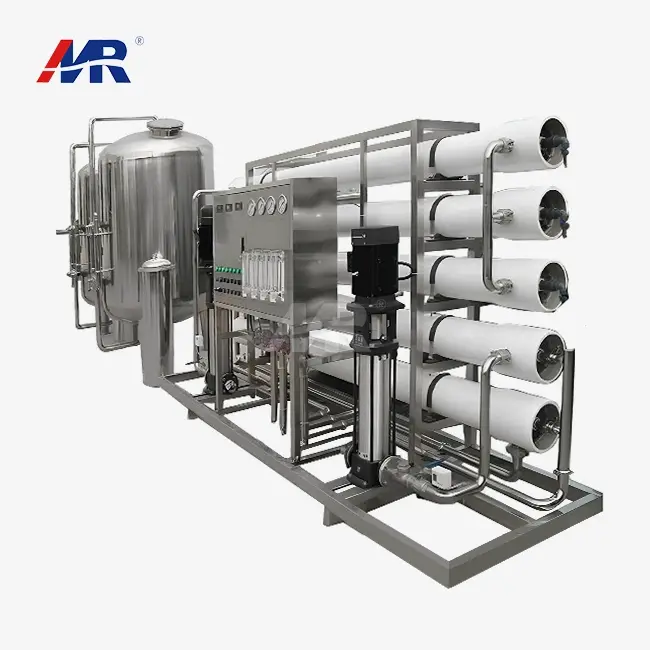
Understanding Reverse Osmosis Pumps and Their Benefits
How Reverse Osmosis Pumps Work
Reverse osmosis pumps make the pressure difference that is needed to push water molecules through barriers that let some things through but not others. Depending on the purpose and type of membrane, these pumps usually make pressures between 150 and 1000 PSI. The pump takes water from the feed source, presses it through the ro membrane system, and keeps the flow rates steady even if demand changes.
To get past the natural osmotic pressure, which needs steady muscular force, is the basic idea. Very small holes in the barrier let water molecules pass through, but dissolved solids, bacteria, viruses, and other contaminants stay on the concentrate side. During the filter cycle, this process depends on the pump's ability to keep the right pressure.
Key Performance Benefits for Industrial Applications
Modern RO pumps are much more efficient than older ones, which directly leads to cost savings. Energy-efficient models use 30–50% less power than regular ones, which means that large-scale businesses can save a lot on their monthly energy costs. Variable frequency drives let workers change the speed of the pump based on demand. This keeps energy from being wasted when the pump isn't being used.
Noise reduction methods have come a long way, and now even when they're fully loaded, high-end pumps run at less than 45 decibels. In places with tight sound rules, like pharmaceutical cleanrooms, labs, and other places, this change is especially helpful. Less vibration also makes tools last longer and requires less upkeep.
Newer pump designs have made it possible for a lot more water to flow through them. Higher production rates are possible with high-efficiency impellers and improved flow lines that don't require as much energy. Some types have recovery rates higher than 85%, which means they waste less water and cost less to run per gallon of clean water they make.
Maintenance Guidelines for Extended Pump Life
Schedules for preventative maintenance have a direct effect on how long reverse osmosis pumps last and how reliable the system is. Monitoring the pressure once a week can help find membrane fouling or pump wear before they become big problems. Checking seals, gaskets, and electrical connections once a month keeps them in good shape and avoids costly breaks.
Cleaning the membrane on a regular basis makes both the pump and the membrane last a lot longer. When membranes get clogged, pumps have to work harder to keep the pressure steady, which uses more energy and puts more stress on the parts. Scale, biofilm, and biological layers that slow down water flow and make the system less efficient can be removed by using chemicals on a regular basis.
When you properly treat the water before pumping it, you keep grit, chlorine, and other harmful contaminants from wearing down the pumps too quickly. Putting in the right pre-filters, carbon adsorption units, and water softeners lowers the amount of work that needs to be done on pumps and increases the time between big service events.
How to Choose an Affordable and Efficient Reverse Osmosis Pump?
Segmenting Your Procurement Needs
Based on the quality of the water they use and the amount of product they make, each industry has its own unique pump needs. The pharmaceutical and electronics industries need pumps that can make ultrapure water with a resistance level higher than 18 megohms. Facilities that make food and drinks need machines that keep things clean and provide uniform quality for making Products.
Small businesses usually benefit from small, self-contained reverse osmosis pumps units that are easy to handle and don't need much installation. Most of the time, these systems have safety shutoffs, automatic start/stop functions, and air tanks that are built in. Most of the time, medium-sized sites need flexible pump systems that can grow as demand rises while still using minimal energy.
High-capacity pump arrays with redundant parts and advanced tracking systems are useful for large industrial setups. These setups offer backup safety, load distribution, and remote tracking features that are necessary for settings with constant operation.
Critical Evaluation Criteria
When choosing RO pumps, the most important thing to look at is how much pressure they can handle. For municipal water uses, 150 to 300 PSI is normal, while 600 to 1000 PSI is needed for desalinating seawater. For treating brackish water, the pressure needs to be between 300 and 600 PSI, based on how much suspended solids there are.
The flow rate requirements must match the daily production needs while taking into account the membrane recovery rates and the need for future growth. Undersized pumps always work at full capacity, which lowers their efficiency and shortens the life of their parts. When they are not in use, pumps that are too big lose energy and can cause changes in pressure that hurt membranes.
When you calculate how much energy you use, you should include both the direct cost of power and the needs of any other tools that you use. Variable frequency drives cost more at first, but they usually pay for themselves in 12 to 18 months by saving energy. High-efficiency motors cost more up front, but they save a lot of money over time, especially in places where they are used all the time.
Brand Analysis and Performance Comparison
Leading makers have made specific lines of reverse osmosis pumps for different types of customers, with different cost-to-performance rates. Grundfos has models that use less energy and can be monitored in more ways than one. This makes them perfect for buildings that want to save money in the long run over the cost of the original investment. Most of the time, their pumps have high-quality parts and a long guarantee.
Pentair focuses on making products that are strong and work well in harsh industrial settings. Their pump designs are made to last and be easy to keep. Replacement parts are easy to find, and they offer full expert support. Because of these features, Pentair pumps are perfect for sites that are far away or that don't have a lot of repair staff.
Watts offers affordable options for buyers on a budget that don't skimp on important performance features. Their pumps work reliably and are priced competitively, which makes them a good choice for smaller sites or situations where the need for extra features isn't clear.
Installing and Maintaining Reverse Osmosis Pumps for Maximum Efficiency
Step-by-Step Installation Guide
The best performance and life of the pump depend on the base being properly prepared. Pads made of concrete should provide level resting areas that absorb vibrations well. Mounting nuts need to be tightened to the right torque levels to keep the connection stable and prevent stress buildup. Electrical lines must follow the rules in your area and the manufacturer's instructions.
When installing pipes, you need to pay close attention to the flow direction, the pressure rates, and the temperature expansion. For practical tracking, isolation valves, pressure gauges, and flow meters should be built into the inlet pipes. For checking the water quality, discharge pipes need pressure relief valves, check valves, and sample holes.
As part of the system setup, steps are taken to ensure that pumps and filters are safe from sudden changes in pressure. The first few hours of operation should start with lower pressure settings, which should be slowly raised until they meet the design requirements. By doing it this way, seals and gaskets can properly fit, and any leaks or installation problems can be found before full operation starts.
Troubleshooting Common Operational Issues
Changes in pressure usually mean that there is membrane fouling, pump wear, or system leaks in reverse osmosis pumps that need to be fixed right away. Sudden pressure drops usually mean that the membrane is damaged or the bypass valve isn't working properly. A slow drop in pressure means that the membrane is fouling up or the pump is breaking down. Monitoring pressure gauges lets you know about problems early on, before they cause the system to fail.
Problems with noise can be caused by cavitation, worn bearings, or bad-fitting alignment. Cavitation happens when the pressure at the outlet goes below what the pump needs. This makes vapor bubbles that hurt the impellers and make the pump less efficient. Maintaining the right input pressure and making sure the suction line is the right size can help stop problems caused by cavitation.
Usually, membrane fouling, pump wear, or system blockages that stop water from moving cause flow rates to drop. Monitoring the flow regularly helps find patterns that point to maintenance needs that need to be done before output capacity is badly compromised.
Preventive Maintenance Strategies
Scheduled repair plans make machines last a lot longer and save money on unexpected downtime costs. Visual checks once a week find clear problems like leaks, strange noises, or changes in vibrations that need to be fixed right away. Monitoring performance once a month looks for changes in pressure, flow, and energy use that could mean problems are starting to happen.
Schedules for replacing parts once a year keep things running smoothly and keep upkeep costs low. Depending on how often they are used and the water state, seals, gaskets, and wear rings need to be replaced from time to time. Follow the manufacturer's instructions for lubricating bearings and maintaining motors to keep them from breaking down too soon.
Documenting maintenance helps find the best service times and problems that keep happening, which could mean there are problems with the design or with how the system is working. When you keep detailed records, you can use predictive maintenance strategies that are more reliable and cost less than reactive maintenance strategies.
Trusted Suppliers and Purchasing Options for Reverse Osmosis Pumps Online
Leading Global Suppliers and Their Specializations
Well-known brands have large distribution networks that make it easy for people all over the world to get replacement parts and expert help. Most of the time, these companies sell a wide range of products that can be used in both home and business settings. Some of their models are specially made for industries like medicines, food processing, and power generation.
Regional wholesalers often offer more personalized service and faster delivery. They also keep ties with multiple makers so they can offer choices that are comparable. A lot of wholesalers also offer extra services that help make sure projects are successful, such as system design help, installation support, and training in upkeep.
Online markets have greatly increased the number of things that can be bought. They allow customers to directly compare product details, prices, and shipping times from many sellers at the same time. However, Technical support and guarantee service may not be as good as they are through traditional methods of distribution. This makes the image and service capabilities of the seller very important when evaluating them.
Bulk Purchasing Advantages and Financing Options
When you buy reverse osmosis pumps in bulk, you can usually save a lot of money through number deals, lower shipping costs, and easy payment terms. Many sellers have tiered pricing systems where prices get better as the amount of an order goes up. Annual buy deals can get you more savings and make sure you can get what you need during times of high demand.
Financing choices help you keep track of your cash flow while you buy the tools your business needs to grow or improve its facilities. Leasing equipment gives you a stable monthly payment and keeps your working cash available for other business needs. Some sellers let customers spread out their payments over time or make payments at certain times of the year to fit their cash flow.
Warranty extensions and service plans offer extra value on top of what the maker covers. Extended guarantees protect you from fix costs that you didn't expect, and service contracts make sure that your car is maintained by professionals and that you get help right away when problems arise.
Securing Optimal Deals and Service Support
Competitive bidding helps make sure that prices are fair and find sellers with the right technical skills and customer service support. For accurate comparisons between rival offers, the request for proposal papers should make performance standards, delivery dates, and support goals very clear.
Long-term relationships with suppliers of reverse osmosis pumps often offer benefits beyond the original purchase price. For example, they may give you priority during shortages, let you know about new products before they come out, or give you better deals on future purchases. When there are problems in the supply chain or in the industry, these ties become even more important.
Total ownership costs and operating reliability are greatly affected by the level of after-sales assistance available. Suppliers with good expert help, spare parts that are easy to find, and fast service networks often offer more value than cheaper options with less support, which is why they charge more.
Conclusion
When looking for cheap and effective reverse osmosis pumps, you need to weigh the initial costs against the long-term performance and dependability. The important thing is to know exactly what your application needs, to compare providers based on their professional skills and customer service, and to pick equipment that gives you the best total cost of ownership instead of just the lowest price. Proper installation and upkeep have a big effect on the life of the pump and how well the system works, so the ability of the provider to help you is an important decision factor. As the needs for water treatment change, working with seasoned providers who offer complete solutions and ongoing help is the best way to keep operations going while keeping total ownership costs as low as possible.
FAQ
Q1: What is the expected lifespan of reverse osmosis pumps under continuous operation?
As long as they are properly maintained, high-quality RO pumps can run continuously for 50,000 to 100,000 hours. Industrial-grade pumps that are meant to work 24 hours a day, seven days a week, can last 8 to 12 years if they are used according to their manufacturer's instructions. How long something lasts depends a lot on the quality of the water, how it is maintained, and how it is used.
Q2: How do RO pumps differ from standard water booster pumps?
RO pumps have seals, materials, and controls that are specifically made for membrane filtration uses and can produce much higher pressures (150–1000 PSI) than booster pumps (30–80 PSI). They have built-in pressure controls, automatic shut-offs, and parts that won't rust, which are all important for water treatment uses.
Q3: Are energy-efficient models available for large-scale industrial applications?
Modern commercial RO pumps use 30–50% less energy than older types because they have variable frequency drives, high-efficiency motors, and better hydraulic designs. In high-pressure situations like desalinating seawater, energy recovery systems can cut the amount of power needed by another 15 to 25 percent.
Contact Morui for Your Reverse Osmosis Pump Requirements
Are you ready to improve your water treatment with tried-and-true reverse osmosis pump options? For projects of any size, Morui Environmental Technology can help you choose the right pump, offer low prices, and provide full expert support. Our experienced tech team helps you figure out the best way to set up your equipment, and our global network makes sure that you can always get delivery and service. Get in touch with us at benson@guangdongmorui.com to talk to our reverse osmosis pump experts about your unique needs. We are a top maker and seller, and we offer custom solutions that work very well and are very cheap for use in pharmaceutical, food processing, industrial, and city settings all over the world.
References
1. Industrial Water Treatment Equipment Design and Selection Guidelines, American Water Works Association Technical Manual, 2023.
2. Energy Efficiency Standards for Reverse Osmosis Pump Systems in Commercial Applications, International Association of Membrane Technology, 2022.
3. Comparative Analysis of High-Pressure Pump Technologies for Water Treatment Applications, Journal of Industrial Water Processing, Vol. 45, 2023.
4. Maintenance Best Practices for Commercial Reverse Osmosis Systems, Water Quality Association Professional Guidelines, 2023.
5. Cost-Benefit Analysis of Energy Recovery Systems in Industrial RO Applications, Desalination Technology Review, Issue 3, 2022.
6. Global Market Analysis: Commercial and Industrial Water Treatment Equipment Procurement Trends, Water Industry Research Institute Annual Report, 2023.