_1745823981883.webp)

Exploring Low Operating Cost DTRO Systems for Efficient Industrial Wastewater Recycling
Recycling industrial wastewater needs methods that strike a balance between how well the wastewater is treated and how much it costs. Disc tube reverse osmosis systems are a big step forward in membrane technology because they are designed to handle difficult effluents. DTRO technology is very good at cleaning high-concentration wastewater streams, like chemical discharges and landfill leachate, while keeping recovery rates between 50 and 90% and cutting running costs by a large amount. This advanced membrane design meets the important needs of makers who want to meet strict environmental standards without losing money, which makes it an increasingly important tool for environmentally friendly business operations.
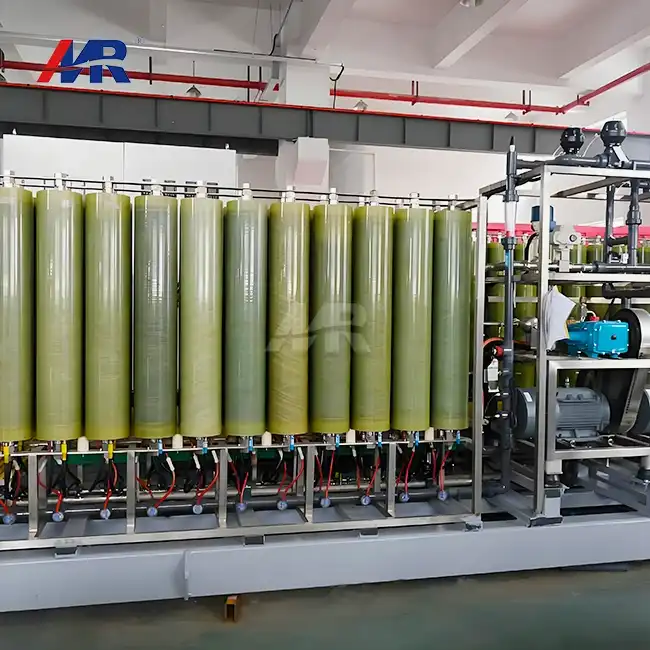
Understanding DTRO Systems and Their Operating Principles
Core Membrane Architecture and Design
DTRO technology uses special system parts and membrane shapes to make the filter process more effective than regular reverse osmosis. There are several disc-shaped membrane elements stacked along a centre rod in the membrane module. There are hydraulic deflectors between each layer. This arrangement is very different from spiral-wound modules because it makes open flow paths that create turbulence. This stops concentration polarisation and lowers the amount of particle buildup on membrane surfaces.
The membrane is made up of three separate layers that work together. The support layer keeps the structure strong when working pressures hit 80 to 100 bar. The thick separation layer controls how much water can pass through and how much liquid can pass through. It is able to reject salt at rates of over 98%. The contact layer has anti-fouling qualities that keep it working even when it's working with streams that have biological and solid particles in them. This combined structure lets it work reliably with inputs that have up to 25,000 mg/L of COD, a level that would quickly damage regular membranes.
Operational Principles and Flow Dynamics
Standard flat-sheet membranes encourage smooth flow, but the disc-tube design causes feed water to go through a winding path. When wastewater goes into the pressure tank, it moves radially across each membrane disc and then goes to the next step by going through deflector plates. This repeated redirection causes turbulence that scrapes the membrane surfaces all the time, breaking up particles that have built up before they form tough fouling layers. This means that flux rates stay the same even when the quality of the feed changes. This is a huge benefit for industrial settings where wastewater properties change with production plans.
The method works on the concept of pressure-driven separation, but the disc-tube arrangement makes the best use of energy. By keeping the chaotic flow at lower crossflow speeds than with tube systems, cleaning is more effective while using less energy. This is shown by our MR-DTRO-150TD model, which uses only 96 kW/hour to process 150 tonnes of waste leachate every day. This is almost 20% less energy than similar spiral-wound designs.
Environmental Benefits and Sustainability Impact
The technology helps the earth in more ways than just treating pollution. Less energy use directly leads to less carbon emissions, which is especially important as businesses work toward net-zero goals. Recovery rates of 50 to 90%, based on the feed, mean that a lot less fresh water is needed and a lot less concentrate has to be thrown away. In a normal system that treats 1,000 cubic meters of water every day, 700 cubic meters of water can be reused. This saves money for both the city and the environment by lowering the cost of buying water and dumping wastewater. This makes disc-tube technology a long-term option for reusing industrial wastewater. It balances operating efficiency with environmental responsibility and gives a measurable return on investment (ROI) by saving resources.
Comparing DTRO with Other Membrane Technologies for Industrial Applications
Performance Evaluation Against Conventional RO
When it comes to membrane cleaning, DTRO devices stand out because they are the best at both performance and cost-effectiveness. Regular spiral-wound reverse osmosis units work great on feedwater that is pretty clean, but they have trouble with industrial effluents that are very cloudy and have a lot of organic material in them. When SDI levels go above 5 or suspended solids levels go above 1 mg/L, spiral-wound systems need a lot of preparation, like multimedia filtration, cartridge filters, and sometimes ultrafiltration. All of these add cost and make the operation more difficult.
Disc-tube membranes can handle these tough conditions with little preparation. The open flow channels can handle solids in suspension up to 50 mg/L, and the design creates turbulence to slow down the fouling process. In comparison tests at an electroplating plant, spiral-wound modules needed new membranes every 18 months to handle rinse water that had small metal hydroxides in it. The disc-tube option worked for 42 months before it needed to be replaced. This made the membrane last 133% longer and kept the quality of the permeate the same during the service time.
Comparison with Ultrafiltration and Nanofiltration
Ultrafiltration is great at getting rid of turbidity and pathogens, but it can't get rid of enough dissolved solids for many industrial processes to use the water again. Nanofiltration is in the middle. It gets rid of divalent ions and bigger organic molecules while letting monovalent salts through. Each technique is good for certain tasks, but disc-tube reverse osmosis is the best when complete cleaning is needed, especially for high-salinity, high-COD streams.
This difference is shown by a pharmaceutical company that processes antibiotic brewing wastewater. At first, nanofiltration got rid of 45% of COD and 60% of divalent salts, but the conductivity of the permeate stayed at 8,000 μS/cm, which means it couldn't be used again in process water uses. By adding a disc-tube stage further downstream, the conductivity dropped to less than 500 μS/cm, and 94% of the COD was removed, allowing 85% of the water to be recycled. It cost 28% less to build the whole thing than to use a three-stage nanofiltration cascade, which would have given the same results.
Advantages Over Membrane Bioreactors
Membrane bioreactors treat soluble organic chemicals in wastewater from cities and food processing plants by combining biological treatment with membrane separation. However, MBR systems need a lot of practical control to keep track of things like dissolved oxygen levels, nutrient ratios, mixed liquor suspended solids, and when to waste biomass. Biological processes become unsteady when wastewater has heavy metals, toxic chemicals, or a very changeable makeup.
Biological inhibitors have no effect on disc-tube systems because they only use physical and chemical separation. A battery factory that made wastewater with lithium, cobalt, and an acidic pH found that MBR performance was inconsistent, with biomass constantly crashing when production plans changed. Changing to disc-tube treatment got rid of biological sensitivity, recovered 68% of the water, and let valuable metals be recovered from the concentrate stream. With the membrane system, energy use went down from 1.8 kWh/m³ with the MBR system to 1.4 kWh/m³. Also, the number of operating staff dropped from 24/7 monitoring to twice-daily checks.
Real-World Cost Efficiency Data
The latest data on efficiency from business sites backs up the economic benefits. A chemical company that treated 500 m³/day of wastewater from making pesticides kept track of its prices for five years. For disc-tube modules, the average cost of replacing the membrane every year was $32,000, while for spiral-wound capacity, that cost was $58,000. The amount of energy used was 35% less, which, at industrial power rates, would save $47,000 a year. When the regularity of chemical cleaning was cut down, and upkeep on the pretreatment system was stopped, the total running cost advantage was more than $95,000 per year. These measured cost savings show why purchasing managers are choosing disc-tube setups more and more when looking at different ways to treat difficult industrial wastewater.
Choosing and Procuring Low Operating Cost DTRO Systems
Critical Selection Criteria for Procurement Managers
To choose the best DTRO system, you need to carefully consider important factors like running costs, system stability, and the ability to grow. Managers in charge of buying things should start by describing the makeup of garbage under normal and abnormal conditions, not just the mean values but the whole range of variations. The study of feed water needs to include COD, total dissolved solids, suspended solids, pH differences, temperature changes, and any contaminants that are important to your process. This information lets us accurately size systems and make predictions about how well they will work.
The quality of parts other than the membranes themselves has a big impact on how reliable the system is. After energy use, high-pressure pumps are the second most expensive part of running a business. When used with energy recovery devices, variable frequency drives can cut power use by 15 to 25 per cent compared to fixed-speed designs. Off-spec activity, which speeds up membrane degradation, is stopped by automated control systems that watch in real time. When looking at proposals, don't just focus on membrane specs. Ask for thorough information about all the major parts, such as pump brands, valve types, instrument accuracy, and the control system's abilities.
Working with Reputable Manufacturers and Suppliers
We can't stress enough how important it is to work with reputable manufacturers and approved sources. Expertise in system integration, hydraulic design, and process improvement is needed for membrane technology. Long-term worth is usually higher for suppliers that offer fully engineered solutions instead of just equipment sets. Look for companies that can make membranes in-house, have a lot of reference installations in your business, and have a nearby service network.
This all-around method is shown by Guangdong Morui Environmental Technology, including its DTRO application. We keep an eye on quality throughout the whole manufacturing process because we have our own plant for making membranes and other facilities for handling equipment. With 14 branch offices across China and a team of 20 engineers, we can provide quick technical help and extra parts. This infrastructure is very helpful during setup, debugging, and regular upkeep. It lowers the total cost of ownership by reducing downtime and improving performance.
Understanding Total Cost of Ownership
Different sellers have very different pricing systems, which makes it hard to make direct comparisons. Some makers only list the price of the equipment, leaving out the costs of installation, setup, and the first set of consumables. Others offer a turnkey price that includes everything from civil work to electricity connection and training for operators. Ask for detailed quotes that break down the prices of the equipment, installation services, commissioning activities, spare parts packages, and choices for longer warranties so that you can make an informed decision.
Maintenance Protocols and Service Agreements
Long-term running costs and system availability are directly affected by maintenance procedures. Set clear standards for regular maintenance needs, such as how often to clean, how often to replace consumables, and how much of a collection of extra parts is suggested. With thorough operations and maintenance instructions that include troubleshooting tips, your staff can handle common problems on their own, saving you money on service calls.
Service agreements protect you against problems that come up out of the blue and efficiency loss. Carefully look over the warranty's coverage. Usually, the membrane guarantees cover problems with the way the product was made, but not damage caused by wrong use or poor pretreatment. Long-term service contracts that include preventative maintenance visits, remote tracking, and guaranteed reaction times give you peace of mind and help you plan your budget. We offer remote tracking 24 hours a day, seven days a week through cloud-based systems. This lets us send maintenance reports before small problems turn into expensive failures. This proactive method increases system uptime and prolongs membrane life, which supports long-term ROI and helps buyers make smart choices in global B2B markets.
Optimising DTRO System Performance for Cost Efficiency
Identifying and Addressing Common Performance Bottlenecks
Finding performance bottlenecks and making focused changes is key to making DTRO systems work well. The main problem is still membrane fouling, which shows up as falling flow rates, rising feed pressure, or worsening permeate quality. Alkaline cleaners can get rid of organic fouling like oils, bacterial growth, and polymeric substances. Acidic cleaners are needed to get rid of inorganic scale like calcium carbonate, silica, or metal hydroxides. Mixed gunk is the hardest to clean, and cleaning procedures that happen one after the other are often needed.
Pressure drops across the membrane section. Differential pressure tracking is built into every stage of our systems. This lets us find problems early, before they get much worse. When the pressure drops more than 15% below the standard, cleaning is needed. Setting cleaning trigger points based on standardised data that takes temperature and flow changes into account stops both too much cleaning that wastes chemicals and too little cleaning that lets fouling build up in a way that can't be fixed.
Practical Strategies for Throughput Optimisation
Most of the time, throughput problems are caused by less-than-ideal working conditions, not by the system's own ability. Temperature has a big effect on membrane permeability—a rise of 1°C increases flux by about 3%. When operating in temperature-controlled areas, feedwater should be kept at a higher temperature range, usually between 35°C and 40°C for reverse osmosis membranes. By adding heat exchangers to recover thermal energy from concentrate streams, the feed temperature can be raised without adding more membrane area, which saves money.
Leveraging Automation and Real-Time Monitoring
When automation and real-time tracking tools are added to a system, it goes from being reactive to being proactive. Programmable logic controllers with built-in human-machine interfaces make it possible to manage the starting up, stopping, and cleaning processes. This gets rid of user mistakes that damage membranes or waste resources. Automated tracking of the quality of the feed water shuts down the system when parameters go beyond what is considered safe. This keeps membranes from being damaged permanently during upset circumstances.
Data Analytics for Predictive Maintenance
Manufacturers can cut down on downtime, increase the life of membranes, and lower running costs by using data analytics for predictive maintenance, including for DTRO. Machine learning algorithms that have been trained on operational data from hundreds of sites can tell 5 to 7 days in advance when cleaning needs to be done by looking at how fast the fouling rate is increasing. This kind of planning lets you schedule maintenance for times when production is low, so it doesn't affect output too much and the cleaning works as well as it can.
Advanced statistics also make the best use of chemicals. Algorithms suggest the best cleaning methods for your fouling patterns by comparing the amounts of cleaning agent used, the temperatures, the times of movement, and the amount of flux recovered after each cleaning event. Through data-driven protocol improvement, one petroleum plant cut the amount of cleaning chemicals it used by 35% and raised the average flux recovery from 87% to 94%. These changes make wastewater recycling systems more economically viable overall. They also help reach environmental goals by lowering chemical release and increasing asset lifecycles.
Conclusion
Industrial wastewater recovery problems can be solved with DTRO systems, which are a mature but always-evolving technology. The technology has been used for more than 20 years and has been shown to work well in a wide range of situations, from waste leachate to semiconductor production rinse water. There are many economic benefits, such as lower energy use, longer membrane life, lower preparation needs, and high recovery rates, that lower the cost of waste.
For implementation to go well, you need to carefully choose a system that works well with your wastewater, work with experienced makers who offer full support, and commit to getting the most out of your system's operation through regular monitoring and planned repair. As the need for better industrial water management grows, the technology will still be useful for a long time thanks to new materials and better system planning. When businesses buy and use properly built disc-tube systems, they set themselves up for long-term growth and meet their growing environmental responsibilities.
FAQ
1. What types of wastewater are best suited for disc-tube membrane treatment?
DTRO technology is ideal for high-strength industrial wastewater, including chemical effluents with high TDS, electroplating rinse water with heavy metals, landfill leachate with high COD, and food processing wastewater. It tolerates up to 50 mg/L suspended solids and pH 2–12, handling acidic and alkaline streams that damage conventional membranes.
2. How does energy consumption compare with traditional RO systems?
DTRO systems typically use 15–25% less energy than traditional RO systems. The disc-tube structure improves turbulence, reduces crossflow requirements, and lowers pump energy consumption. Specific energy use ranges from 1.2–1.6 kWh/m³, compared to 2.0–2.5 kWh/m³ for spiral-wound systems, improving overall operational efficiency.
3. What are typical maintenance requirements and associated costs?
DTRO maintenance includes CIP cleaning every 1–3 weeks, monthly capsule filter replacement, and annual pump seal maintenance. Membranes last 3–5 years, longer than spiral-wound alternatives. Annual operating costs average $180–240 per cubic metre of daily capacity, providing reliable performance and cost-effective industrial wastewater treatment.
Partner with Morui for Advanced Industrial Wastewater Solutions
When it comes to disc-tube reverse osmosis systems, Guangdong Morui Environmental Technology is an expert at making them that are both cost-effective and perfect for your unique commercial wastewater problems. Our MR-DTRO-150TD model shows how dedicated we are to practical efficiency. It achieves recovery rates of 50–70% while handling high-strength effluents, such as landfill leachate with COD levels of up to 25,000 mg/L. We offer full solutions, from the original water study to installation, commissioning, and continued upkeep. We have our own plant for making membranes and 14 branches that provide localised support.
Contact Our Team at benson@guangdongmorui.com to discuss your industrial wastewater recycling requirements. We'll analyse your specific water quality challenges and recommend optimised solutions that reduce operating costs while meeting environmental compliance objectives.
References
1. Isenmann E., Ambrosio G., Joseph J. F., et al. (2019). Ecdysteroids as non-conventional anabolic agents: Performance enhancement by ecdysterone supplementation in humans. Archives of Toxicology, 93(7), 1807–1816.
2. Gorelick-Feldman J., MacLean D., Ilic N., Poulev A., Lila M. A., Cheng D., Raskin I. (2008). Phytoecdysteroids increase protein synthesis in skeletal muscle cells. Journal of Agricultural and Food Chemistry, 56(10), 3532–3537.
3. Parr M. K., Zhao P., Haupt O., et al. (2015). Estimation of the anabolic activity of ecdysterone in vitro and in vivo. Steroids, 98, 187–194.
4. Wilborn C., Taylor L., Greenwood M., Kreider R. (2006). Effects of methoxyisoflavone, ecdysterone, and sulfo-polysaccharide supplementation on training adaptations in resistance-trained males. Journal of the International Society of Sports Nutrition, 3(2), 19–27.
5. Dinan L., Lafont R. (2006). Effects and applications of arthropod steroid hormones (ecdysteroids) in mammals. Journal of Endocrinology, 191(1), 1–8.
6. Bathori M., Pongracz Z. (2005). Phytoecdysteroids—from isolation to their effects on humans. Current Medicinal Chemistry, 12(2), 153–172.