_1745823981883.webp)

What Is a containerized ro system and How Does It Work?
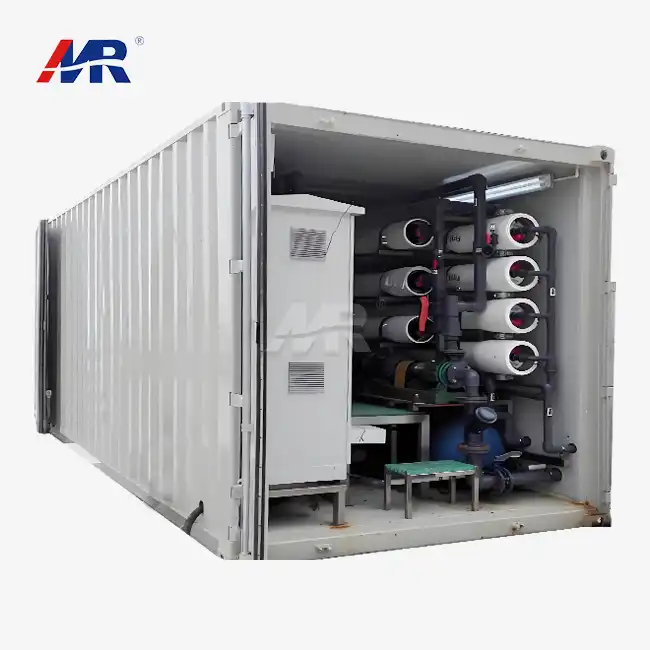
A containerized RO system is a fully integrated, mobile reverse osmosis water purification unit pre-assembled inside a standard ISO shipping container. Every critical component — membranes, high-pressure pumps, pressure vessels, media filters, control panels, and chemical dosing units — is factory-installed and tested before delivery. Unlike conventional RO installations that require civil construction and lengthy commissioning, this format arrives ready to operate with minimal site preparation. Industries ranging from food and beverage processing to seawater desalination and pharmaceutical manufacturing rely on these systems for reliable, scalable, and cost-efficient water treatment wherever it is needed.
What Exactly Is a Containerized RO System, and What's Inside It?
The Core Components That Make It Self-Contained
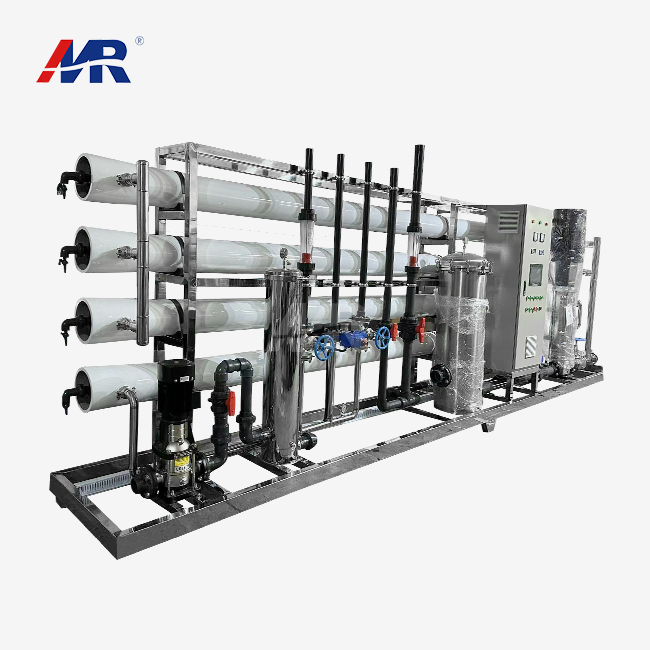
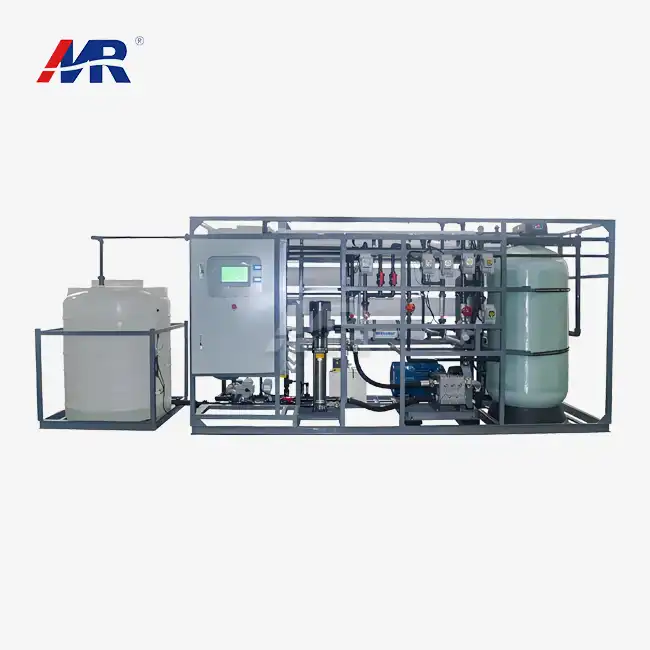
A typical containerized RO system integrates several interdependent subsystems inside a climate-controlled, weatherproof enclosure. The internal layout typically includes a multimedia pre-filtration stage, antiscalant dosing equipment, high-pressure pump assemblies, ro membrane pressure vessels, a CIP (clean-in-place) flushing circuit, and an automated PLC control panel with real-time monitoring. Everything is already wired and piped, so the unit ships as a fully functional system that can be tested.
Take Morui's MR-CTRO-25TH as a practical example. It uses a media filter and a brackish water reverse osmosis (BWRO) cleaning method, needs 32 kW per hour, recovers 55–65% of the water, and gets rid of 98% of the salt. Those numbers are for a real industrial unit that is ready to be put into service, not a test.
How Does a Containerized RO System Actually Work?
The cleaning process inside the container is organized in a way that makes sense and saves the membrane's life while improving the quality of the output. Plant engineers and procurement managers can figure out if a containerized RO system will work with their feed water profile by understanding each stage.
From the input to the output, the process goes like this:
- Stage 1 — Raw Water Intake: Source water enters through a feed line. A booster pump helps keep the intake pressure steady even if the supply changes.
- Stage 2 — Media Filtration (Pretreatment): Water flows through a multimedia filter bed that gets rid of larger particles, turbidity, and suspended solids. This step is very important because membrane fouling speeds up a lot if the total suspended solids aren't controlled earlier. Antiscalant chemicals are added at the same time to stop membrane areas from getting scaled.
- Stage 3 — High-Pressure Pumping: A special pump raises the pressure of the feed water to the right level for osmotic separation to work. This pressure is lower than for desalinating seawater, but it needs to stay stable for applications with brackish water, like the MR-CTRO-25TH to keep the 98% salt rejection rate.
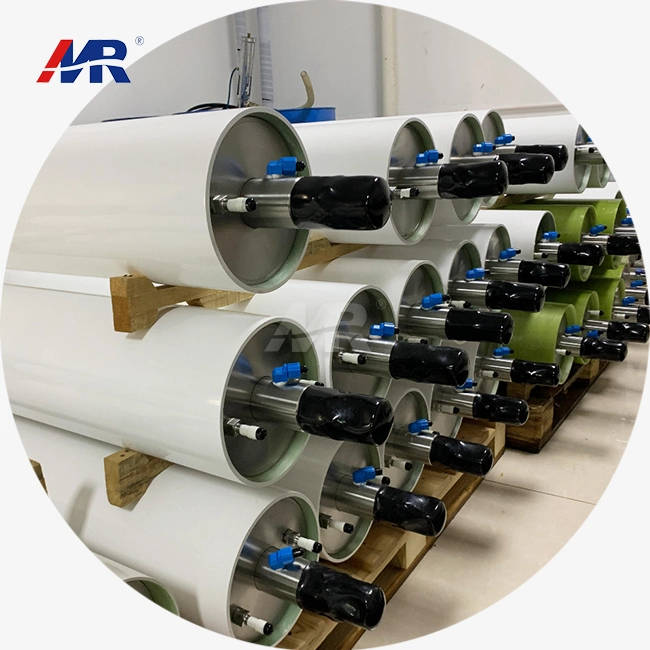
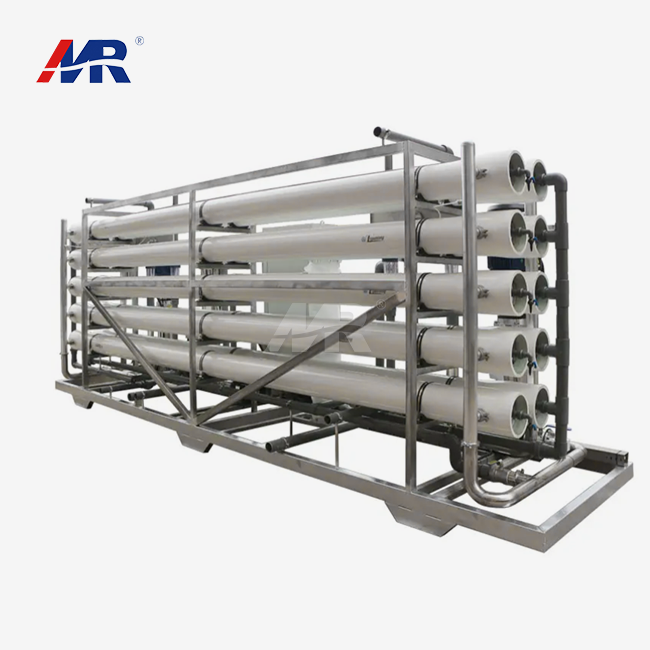
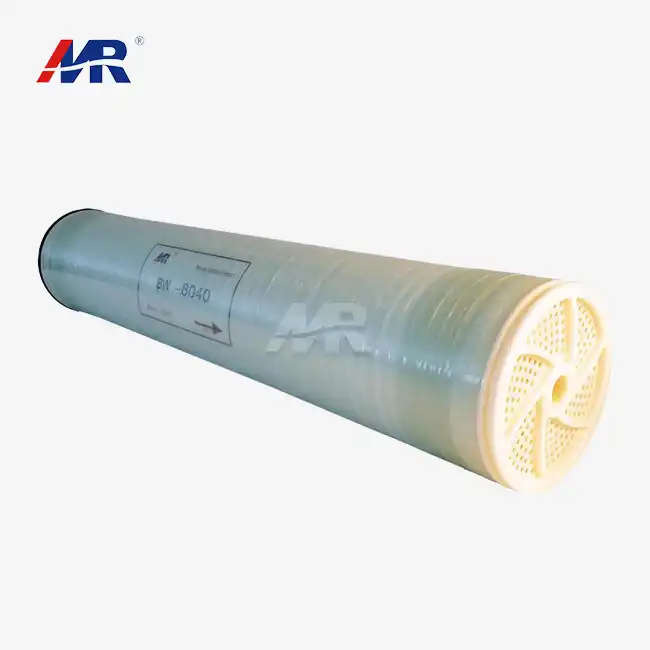
- Stage 4 — Reverse Osmosis Membrane Separation: Water under pressure enters the RO membrane tubes. The semi-permeable barriers let water molecules pass through but stop salts, heavy metals, bacteria, and organic pollutants that have been dissolved. On the low-pressure side, the purified output, called permeate, builds up.
- Stage 5 — Concentrate Discharge: The water that doesn't make it through the barrier comes out as concentrate, also known as salt. The 55–65% recovery rate means that out of every 100 liters that are treated, 55 to 65 liters can be used as permeate. The choices for managing a concentrate rely on the rules for discharge in your area.
- Stage 6 — Post-Treatment and Distribution: After the water has been cleaned, it may go through post-treatment, which can include changing the pH, UV cleaning, or remineralization, depending on what it will be used for.
- Stage 7 — Automated Control and Monitoring: The built-in PLC screen keeps an eye on flow rates, pressure differences, conductivity, and system alarms all the time. Operators are notified when there are changes, and when performance parameters drift, the CIP flushing circuit starts cleaning cycles for the membranes on its own.
These steps work together as a closed, automatic loop. Once set up, the system doesn't need much in the way of human input, which is especially helpful for sites that are in remote areas or don't have a lot of technical staff on hand.
Why Do Industries Choose a Containerized Water Treatment Unit Over Traditional Alternatives?
Portability and Speed of Deployment
Normal RO sites need civil engineering, concrete supports, equipment staging, and commissioning times of several weeks. Most of that is taken care of by a containerized RO system. According to research done by Grand View Research in 2023, the global market for containerized water treatment was worth more than USD 4.2 billion and is growing at a rate of more than 7% per year, mostly because businesses and cities want quick-deployment solutions.
Here are the main reasons why containerized designs are better than stable and skid-mounted ones:
- Rapid mobilization: Because the unit is pre-tested in the factory, it can be used within days of arrival instead of weeks, which lowers the risk of downtime during plant growth or emergencies.
- Relocatability: If production moves to a new site, which happens a lot in building, mining, and occasional farming, the whole unit moves with it. There is no abandonment of capital infrastructure.
- Scalable capacity: To meet growing demand, multiple container units can work at the same time without having to change the core architecture of the system.
- Environmental protection: The container shell keeps sensitive instruments safe from dust, UV light, and high temperatures, which significantly increases the useful life of the equipment.
Compared to permanent plant builds, the total cost of ownership is lower with temporary plants because they require less installation labor, have faster project lead times, and have lower civil construction costs. This is especially true for projects with a clear operating lifespan or unknown long-term volume needs.
How Do Containerized RO Systems Compare to Skid-Mounted Units?
Buyers frequently evaluate containerized RO systems against skid-mounted RO units. Both forms pre-assemble tools away from the job site, but they are used for different types of deployments.
| Criteria | Containerized RO System | Skid-Mounted RO System |
|---|---|---|
| Portability | High — Full ISO container shipping | Moderate — Needs flat-bed transport |
| Environmental Protection | Built-in shell enclosure | Out in the open unless kept separately |
| Installation Time | 1–3 days on site | 3–7 days on site |
| Site Preparation Required | Minimal | Moderate |
| Scalability | Modular stacking of containers | Limited by the size of the skid |
| Best Application | Remote, mobile, or harsh environments | Indoor, fixed industrial plants |
When the project setting changes, the site is far away, or quick commissioning creates measurable operating value, the containerized format shines.
What Should You Evaluate When Selecting a Containerized RO System Supplier?
Matching Capacity to Actual Process Requirements
During the first test, the two most important numbers are the recovery rate and the salt rejection. The MR-CTRO-25TH is a machine that can handle most brackish water industrial uses because it recovers 55–65% of the water and rejects 98% of the salt. However, feed water analysis should always come before the final specification. GMP standards say that performance logs for pharmaceutical water systems must be checked and confirmed. Electronics factories that process ultrapure water combine a containerized RO system with EDI further down the line. Each use has different water quality standards that need to be met by the membrane choice and system setup.
Technical standards and supplier references are both important. Find out if the company makes its own membranes, has its own research staff, and can work with other companies to make Products if your purchasing plan calls for branded or special units. Service agreements after the sale, easy access to spare parts, and remote diagnostic support all lower operational risk over the lifecycle of an item.
Where Are Containerized RO Systems Being Deployed Today?
A lot of different areas adopt the containerized RO system. Power companies need boiler feedwater that is very clean, and these units give that water with steady conductivity levels. In the US, food and drink makers use them to meet process water guidelines set by the FDA. Coastal cities and island communities use them to desalinate saltwater, and offshore platforms like how small they are and how they can make fresh water from seawater without taking up valuable deck room. In dry Western states, farmers use brackish groundwater for irrigation, and disaster aid groups use it as an emergency source of drinkable water within hours of a disaster.
In the future, these systems will be combined with solar and wind electricity more and more, especially for off-grid rural water supply and remote mining activities. Smart automation improvements, like cloud-based SCADA monitoring and AI-assisted membrane performance prediction, are going from being prototypes to being standard across all major manufacturers.
Conclusion
A containerized RO system turns a full water treatment plant into a portable, already-set-up unit that is trusted by the manufacturing, energy, agriculture, and municipal services industries for reliable water. This treatment process has several steps, starting with media filtration, then high-pressure membrane separation, and finally automatic post-treatment. The MR-CTRO-25TH's 98% salt rejection and 55–65% recovery rate show that the process works. When procurement managers look at rollout speed, operational freedom, and lifecycle cost, the containerized format always does better than other options in changing or remote work settings.
FAQ
1. What feed water sources can a containerized RO system handle?
The TDS level of the water that goes into most brackish water containerized RO systems can be between 500 mg/L and 10,000 mg/L. Seawater versions can handle feeds with more salt. The setup of the pre-treatment steps—media filtration, antiscalant dosing, and cartridge filtration—is changed based on the chemistry study of the feed water that is done before the system is designed.
2. How much energy does a containerized RO system consume?
How much energy is used depends on the volume and salinity of the feed water. Standard brackish water RO energy benchmarks say that the MR-CTRO-25TH should work at 32 kW per hour. In situations with higher salinity, energy recovery devices can cut use even more.
3. How long does commissioning take on site?
Once the pre-testing is done at the plant, most containerized units can be put into service on-site in one to three days, as long as the power, water, and drainage are all ready when they get there.
4. Can a containerized unit meet GMP or FDA water quality standards?
Yes, as long as the system design includes the right membrane choice, approved monitoring equipment, and any post-treatment steps needed by the regulations in place. Most of the time, the maker provides documentation and performance qualification tests.
5. What maintenance does a containerized RO system require?
Replacement of cartridge filters, restocking of antiscalant, cleaning of membranes with CIP processes, and regular checks of pressure and conductivity are all part of routine upkeep. Most monitoring is done by integrated automation, so there is less need for constant manual oversight.
Get a Tailored Containerized RO System Quote from Morui
Morui is a trusted containerized RO system manufacturer with over 500 employees, 20 in-house engineers, and dedicated membrane and equipment production facilities. Whether you need a brackish water unit like the MR-CTRO-25TH or a customized high-capacity build, Morui delivers engineered solutions with full installation, commissioning, and after-sales support. Contact Our Team directly at benson@guangdongmorui.com to discuss your water treatment requirements today.
References
1. Grand View Research. (2023). Containerized Water Treatment Systems Market Size, Share & Trends Analysis Report. Grand View Research.
2. American Water Works Association. (2022). Reverse Osmosis and Nanofiltration: Manual of Water Supply Practices (M46). AWWA.
3. Water Environment Federation. (2021). Membrane Technology in Water and Wastewater Treatment. WEF Press.
4. National Water Research Institute. (2020). Energy Efficiency in Brackish Water Reverse Osmosis Desalination. NWRI Report Series.
5. Hydranautics (A Nitto Group Company). (2022). Technical Application Bulletin: System Design for Brackish Water RO Systems. Hydranautics Technical Publications.
6. World Health Organization. (2017). Reverse Osmosis Membrane Systems for Drinking-Water Treatment: Technology Review. WHO Water Sanitation and Hygiene Technical Series.