

_1745823981883.webp)

Wastewater Treatment Plant Units: A Complete Guide
Wastewater treatment plant units are the operational backbone of any modern water management system. Whether containerized or civil-built, these units—including bioreactors, clarifiers, membrane modules, and disinfection skids—work in sequence to strip physical, chemical, and biological contaminants from raw sewage. From a small domestic facility processing 100 m³/day to a municipal plant handling millions of gallons, understanding how these units function, how to choose them, and how to maintain them is essential for any engineer, procurement manager, or facility owner navigating today's tightening environmental regulations.
What Are Wastewater Treatment Plant Units?
Defining the Core Components
Wastewater treatment plant units are what they sound like. It's not just one machine; a treatment plant is a series of unit operations that work together as a whole. First, solids are removed by screening. Next, suspended matter is settled by primary clarification. Biological reactors break down dissolved organics. Finally, effluent is polished, usually by membrane filtration, until it is clean enough to be released or used again. Each stage deals with a different type of contaminant, and skipping one leaves gaps in compliance.
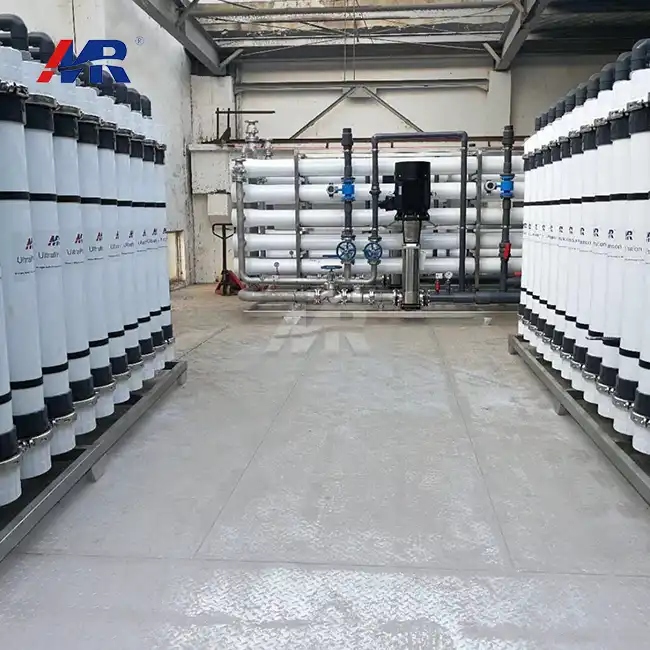
All of these steps are now part of modern packaged systems, which fit into a small container. For example, Membrane Bioreactor (MBR) technology combines ultrafiltration membranes with secondary biological treatment in a single vessel. This produces effluent that removes more than 95% of BOD and less than 5 mg/L of TSS, which are numbers that are hard for regular activated sludge systems to consistently meet.
Biological vs. Chemical Treatment: Which Approach Fits Your Needs?
| Criterion | Biological Treatment (MBR/MBBR) | Chemical Treatment (DAF/AOP) |
|---|---|---|
| Target Contaminants | BOD, COD, nitrogen, phosphorus | FOG, refractory organics, heavy metals |
| Footprint | Small footprint (MBR up to 50% smaller) | Moderate |
| Operating Cost | Less long-term OPEX | More chemicals used |
| Best Application | Wastewater from homes, food and drinks | Petrochemicals and drugs |
| Effluent Quality | TSS <5 mg/L, turbidity <1 NTU | Variable, dependent on chemistry |
This table shows why most household and light-industrial uses default to biological wastewater treatment plant units, while chemical-intensive industries layer in advanced oxidation or DAF pretreatment upstream.
How Do You Choose the Right Treatment Unit?
Matching Capacity and Process to Your Site
Selecting a sewage treatment system starts with three non-negotiable criteria: daily flow amount, influent traits, and site size. A food processing plant discharging high-COD wastewater needs a very different configuration than a remote resort treating domestic sewage. Getting this alignment wrong wastes capital and causes legal risk.
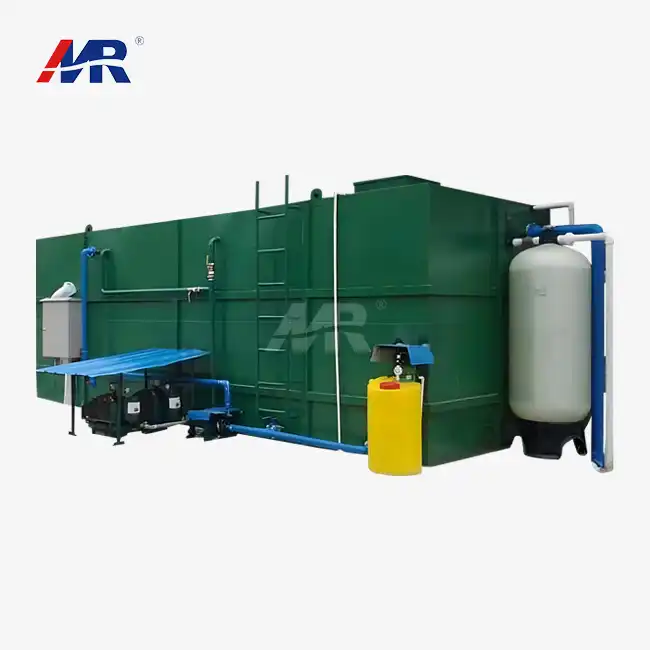
The Morui MR-MBR-5TH illustrates how these factors translate into hardware. Designed especially for domestic wastewater, it uses an AAO (Anaerobic-Anoxic-Oxic) + MBR flow process—a combo proven to remove nitrogen and phosphorus alongside carbonaceous BOD. The unit processes 100 m³/day within a footprint of just 9 × 2 × 2.4 meters, making it deployable in space-constrained sites such as residential compounds, hotels, or small industrial parks where civil construction is impractical.
Modular vs. Conventional: A Practical Comparison
| Feature | Modular/Containerized | Conventional Civil Works |
|---|---|---|
| Structural Lifespan | 15–25 years | 40–50 years |
| Deployment Speed | 60–80% faster on-site | Several months of building |
| Scalability | If you need to, add parallel units. | Needs a lot of social growth |
| Upfront Cost | Lower CAPEX | Higher CAPEX |
| Best For | Small businesses, faraway areas, and quick rollout | A lot of city plants |
When it comes to speed and freedom, modular units win. Large-scale city infrastructure that uses conventional methods will last for a long time. A containerized MBR unit is the fastest and most compliant way for most B2B buyers in the manufacturing, food and beverage, or hospitality sectors to get their business up and running.
What About ROI?
50–70% of plant energy is used by aeration fans. With Variable Frequency Drive (VFD) blowers and fine bubble diffusers, units can get specific energy consumption below 0.4 kWh/m³. This is a measured OPEX decrease that adds up to a lot over the life of an asset, which is 10 years. When this is combined with PLC/SCADA automation, less manual labor is needed. This helps solve the problem of a lack of skilled operators that many mid-sized facilities are having.
How Do You Maintain and Troubleshoot These Systems?
Routine Maintenance That Prevents Costly Failures
Regular maintenance is what separates a treatment system that works well from one that is a legal risk. Here are the times that every provider should plan for maintenance:
- Weekly Chemically Enhanced Backwash (CEB): MBR membranes need to be cleaned once a week to keep Trans-Membrane Pressure (TMP) from building up. If you don't do this, fouling will happen faster, and the membrane will last less long.
- Quarterly CIP (Clean-In-Place): A deep cleaning with sodium hypochlorite and citric acid liquids every three to six months restores membrane permeability. The frequency is affected by the amount of influent and the TMP trends.
- Monthly blower and pump inspection: Every month, check the impeller clearance, bearing temperature, and seal condition on the blower and pump to avoid unexpected downtime.
- Annual coating inspection: Check the dry film thickness (DFT) on the inside of tanks once a year during an inspection. Epoxy coatings can fail in pinholes, letting corrosion happen that weakens the structure faster than most operators expect.
There is no way around these steps; they are the operational base that saves your cash investment. Skipping them is the main reason why wastewater treatment plant units in packaged plants break down too soon.
Once this standard practice is set, operators can add smart monitoring on top of it. IoT-enabled monitors that track changes in dissolved oxygen, pH, and TMP can help with problem prediction before they cause an outage. This is becoming more common even in mid-range packaged units.
When Should You Call a Professional?
If TMP keeps going up even after CIP is applied, or if TSS in the effluent goes up without a corresponding shock in the influent, the problem is probably caused by membrane integrity failure or biological imbalance, both of which need to be diagnosed by a specialist. If you sign a service contract with your equipment provider, you'll be able to talk to experts who know how to fix problems with that particular unit.
Procurement Guide: What to Verify Before Buying
Technical Standards and Quality Control
Every reputable company that makes wastewater treatment plant units puts their Products through recorded quality gates. Before making a deal, buyers should ask for proof of the following:
- Factory Acceptance Test (FAT): Before shipping, pumps, blowers, PLC logic, and alarm sequences are turned on and checked to make sure they work. In this way, most hiring shocks are taken care of.
- Hydrostatic leak testing: Tanks are filled with water for 24 to 48 hours according to ASTM or API 650 standards to make sure there are no leaks before the unit leaves the factory.
- NDT weld inspection: Dye Penetrant or Radiographic Testing on structural welds proves they are strong under hydraulic force (NDT weld testing).
- Corrosion protection compliance: ISO 12944 C5-M (marine/industrial) coating certification is the standard for units that will be used in wet or coastal areas.
- Electrical safety: Control screens that meet IEC 60204 standards make sure that operators can safely work with automated systems.
Verifying these checkpoints guards against problems in the field and shows that the seller is trustworthy. A seller that can't show FAT paperwork is a risk in the buying process.
What's Next? Future Trends in Sewage Treatment Technology
The wastewater treatment industry is about to enter a time when technologies are quickly coming together. IoT-enabled SCADA platforms now let operators monitor plants at multiple sites from a single dashboard, which is very useful for people who are in charge of municipal or industrial parks that are spread out. The flow rates and chemical resistance of newer mbr membrane materials, such as PVDF hollow-fiber configurations, are better than those of older polyethylene membranes.
Sustainability concerns are changing the objectives of buying. Across the U.S., EU, and Asia-Pacific, regulatory bodies are tightening limits on nitrogen and phosphorus in wastewater. This is pushing buyers toward more advanced ways to remove nutrients, such as AAO, which is what the Morui MR-MBR-5TH does. If plants buy these features now, they won't have to pay a lot of money to make changes later when the rules get tighter.
The next big thing is biogas energy recovery, low-footprint built marsh polishing, and AI-driven dosing optimization. If B2B buyers think about these trends when making purchases today, they will have an advantage as compliance costs rise across the industry.
Conclusion
Choosing, running, and keeping the right wastewater treatment plant units is a complex task that has direct effects on the facility's legal status, operational costs, and long-term asset value. For home and light industrial uses, biological systems like MBR, especially when combined with AAO nutrient removal, give the best performance-to-footprint ratio. Containerized, modular designs cut down on rollout times and capital costs while keeping scalable capacity. Thorough quality checks before buying and regular care after setting up are what turn a good equipment specification into effective daily performance.
FAQ
1. What is the typical lifespan of a containerized MBR unit?
Depending on how well they are protected against corrosion, steel containerized units usually last between 15 and 25 years. Units that are coated according to ISO 12944 C5-M standards and have spark-tested epoxy linings inside always reach the upper range of that window.
2. How do I know if an MBR unit can handle my peak flow conditions?
Units with an Equalization (EQ) tank buffer are designed to handle hydraulic shock loads without stopping the process. Before you buy, look over the hydraulic loading rate (HLR) standard and make sure it fits your peak-to-average flow ratio.
3. What effluent quality does an AAO+MBR system produce?
AAO+MBR systems that work well get rid of more than 95% of the BOD, keep the TSS below 5 mg/L, and keep the turbidity below 1 NTU. The AAO stage removes nitrogen and phosphorus, which puts nutrient levels below most of the EPA's secondary and tertiary discharge standards.
4. How is odor managed in compact units near residential areas?
To get rid of off-gases, well-packed units have fully sealed tanks that are paired with biological odor control modules or activated carbon scrubbers. With the right specifications, enclosed systems can produce no fugitive emissions.
5. Can I expand capacity without replacing the entire unit?
Yes. When flow levels rise, modular designs let parallel units be added without having to rebuild the whole structure. This ability to grow is a big benefit for places that plan to gradually add more space.
Partner with Morui for Proven Wastewater Treatment Plant Units
For every job, Morui brings more than 20 engineers, 14 branch offices, and its own tools for making membranes. The MR-MBR-5TH is one of a line of wastewater treatment plant units that were made to meet the needs of real-life compliance. Morui is a trusted wastewater treatment plant units manufacturer. They offer a single-source service that includes equipment delivery, installation, and commissioning. Reach out today at benson@guangdongmorui.com to discuss your project specifications.
References
1. Metcalf & Eddy / AECOM. Wastewater Engineering: Treatment and Resource Recovery. McGraw-Hill Education, 2014.
2. U.S. Environmental Protection Agency. Membrane Bioreactors: Nutrient Removal, Cost, and Performance. EPA/600/R-10/021, 2010.
3. Water Environment Federation. Design of Municipal Wastewater Treatment Plants: WEF Manual of Practice No. 8. WEF Press, 2010.
4. Judd, S. The MBR Book: Principles and Applications of Membrane Bioreactors for Water and Wastewater Treatment. Elsevier, 2011.
5. IWA Publishing. Biological Wastewater Treatment: Principles, Modelling and Design. IWA Publishing, 2008.
6. Grand View Research. Membrane Bioreactor Market Size, Share & Trends Analysis Report. Grand View Research, 2023.
 VIEW MOREedi module water treatment
 VIEW MORE4040 reverse osmosis membrane
 VIEW MORE20m3/hour ultrafiltration equipment
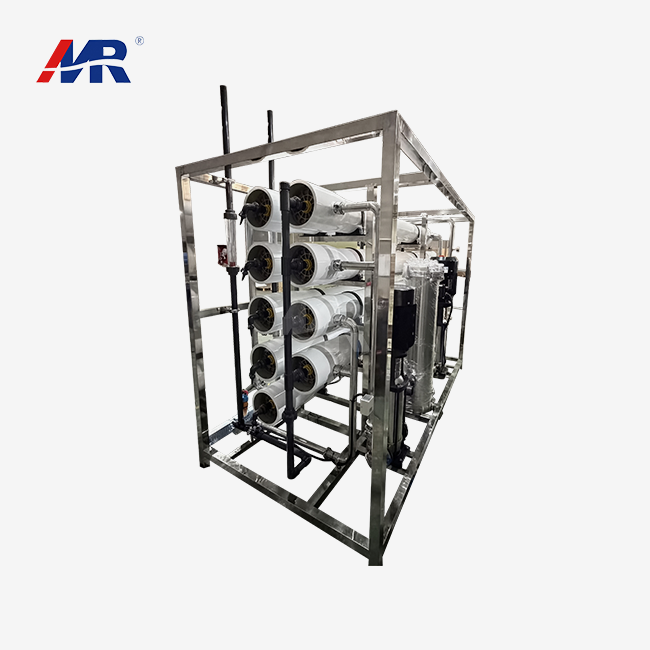 VIEW MOREro reverse osmosis water filter
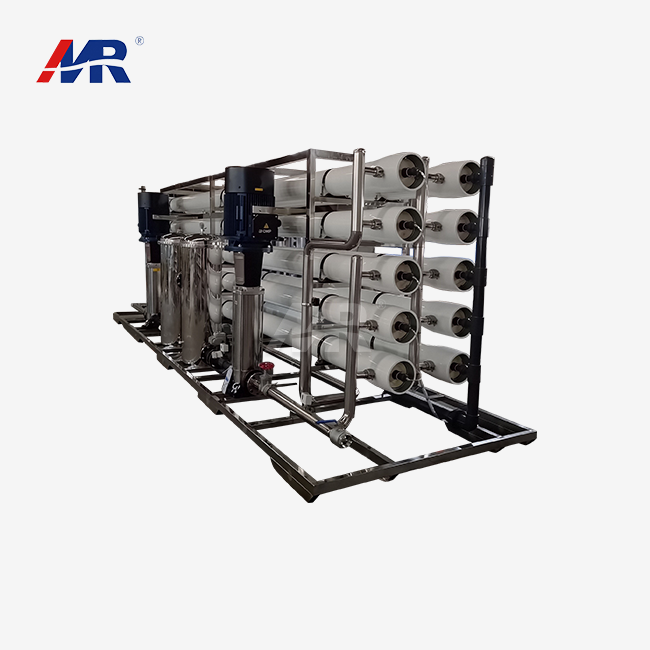 VIEW MORE2 stage reverse osmosis system
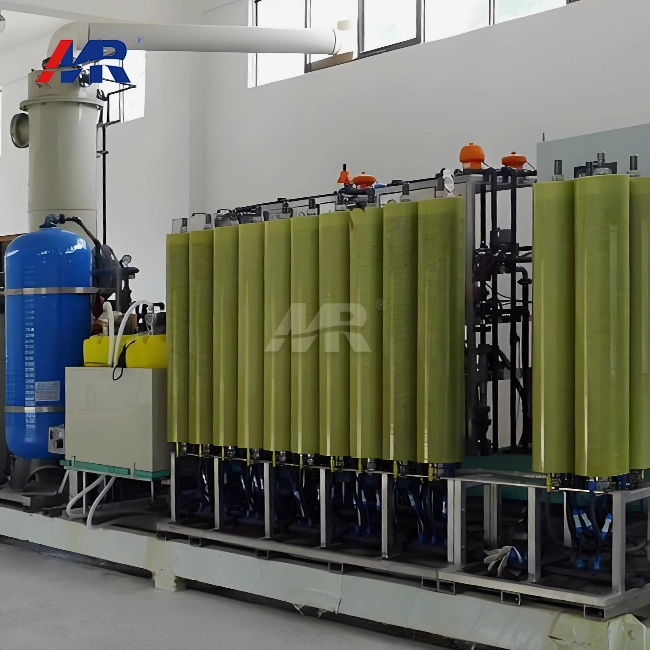 VIEW MOREDTRO membrane
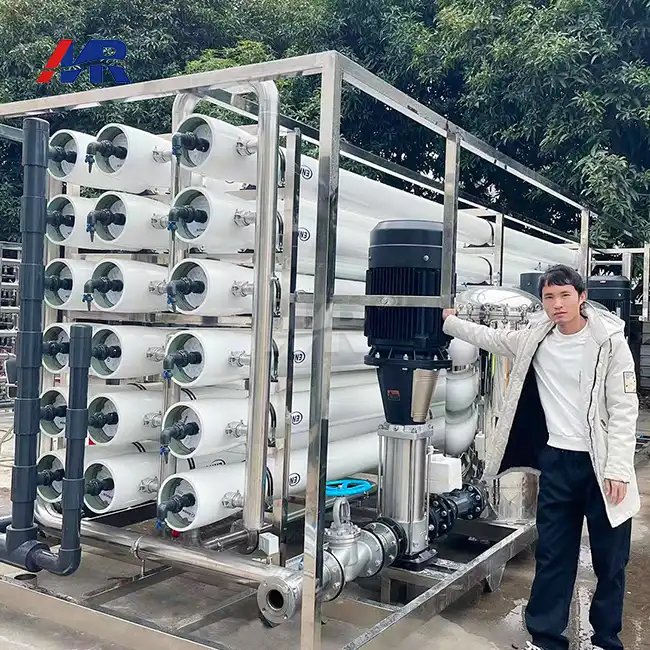 VIEW MORE100m3/hour reverse osmosis system
 VIEW MORE2000m3/day ultrafiltration equipment
