_1745823981883.webp)

RO EDI System Maintenance: Key Practices for Reliability
Maintaining a reliable RO edi system — that is, a Reverse Osmosis Electrodeionization system — is one of the most underappreciated responsibilities in industrial water treatment. Whether you operate a semiconductor fab, a pharmaceutical plant, or a power generation facility, the quality of your ultrapure water directly determines product yield, equipment lifespan, and regulatory compliance. This guide walks through what effective ro edi system maintenance looks like, why it matters across industries, and how the right practices protect your operation from costly disruptions.
What Happens When an RO EDI System Is Poorly Maintained?
Take a look at an average-sized electronics company in Ohio. Their line for cleaning chips needs ultrapure water with a resistance of more than 18 MΩ·cm. A quarter of the time, they don't do the planned membrane checks. Within weeks, the amount of trace ionic pollution rises above what is considered safe. Rates of wafer rejection go up. The main reason? Scaling on the ro membranes and a broken EDI stack are both things that can be avoided.
This happens in all kinds of fields. When making medicines, FDA warning letters can be sent if purified water systems aren't properly maintained. In power plants, dirty boiler feed water speeds up the rusting of turbines. Real things are at stake, and the risks get bigger as operations get more complicated.
Why Does Maintenance Failure Hurt More Than Downtime Alone?
Putting off upkeep doesn't just stop the tools from working. It builds up. The EDI module has to work harder because the RO membranes are broken. This makes it last less than 3 years instead of the normal 5–7 years. Energy use goes up—a system that isn't taken care of can use noticeably more electricity without making the water quality better. According to figures from the Water Quality Association's industrial maintenance benchmarking data, the cost of cleanup is often three to five times the cost of prevention.
Understanding How an RO EDI System Actually Works
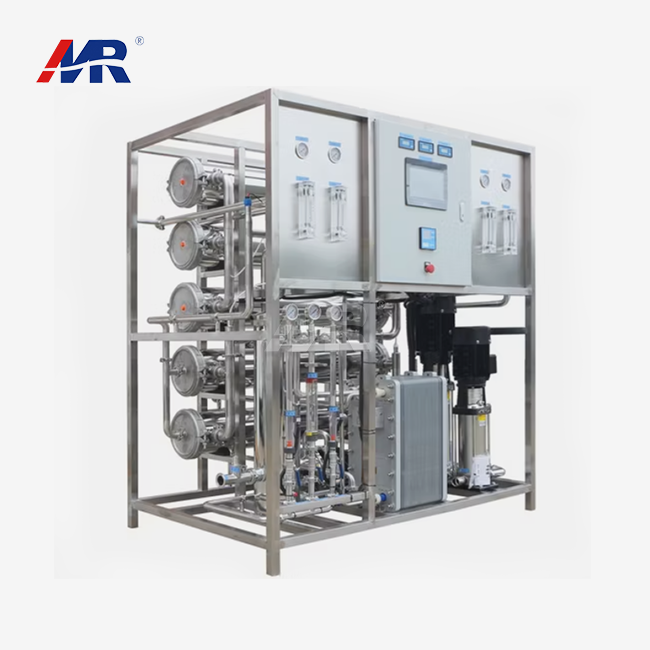
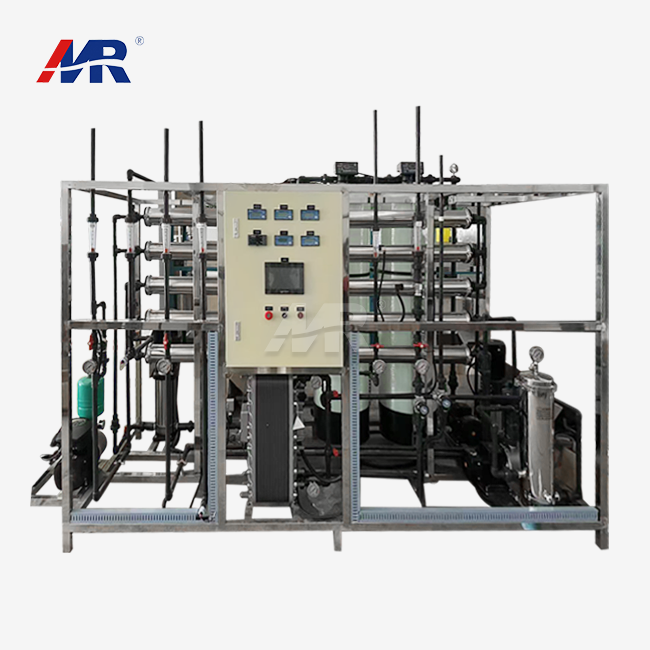
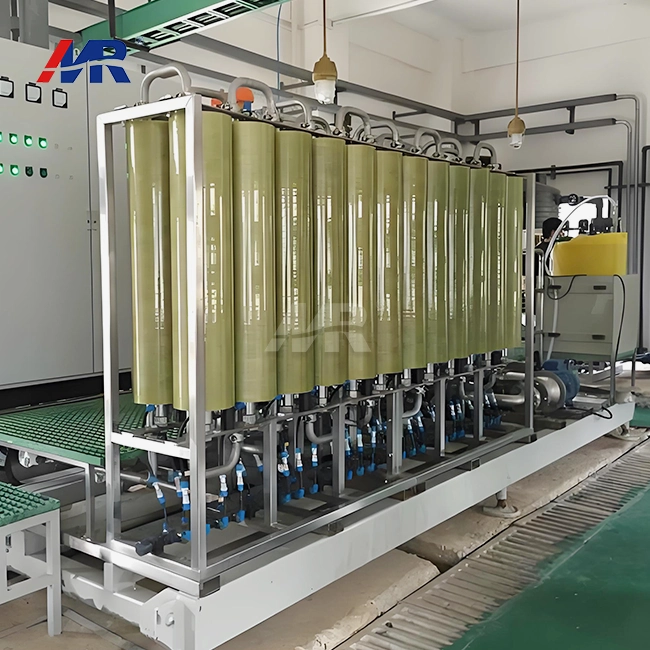
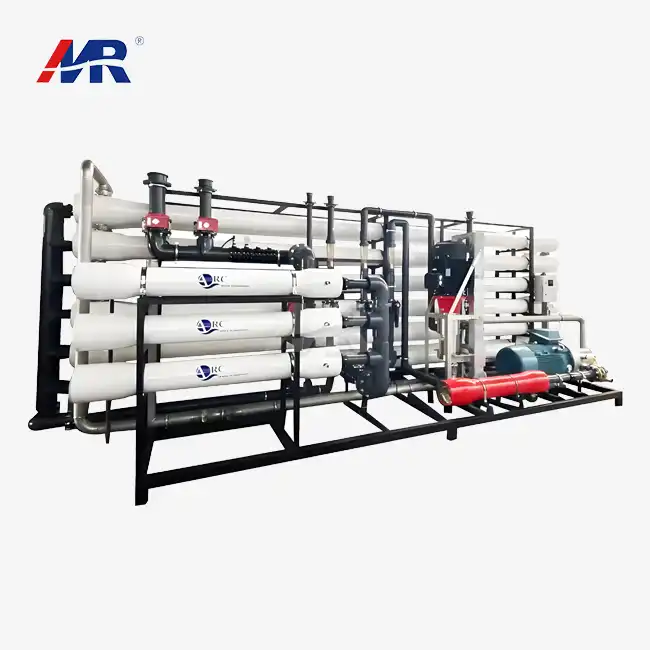
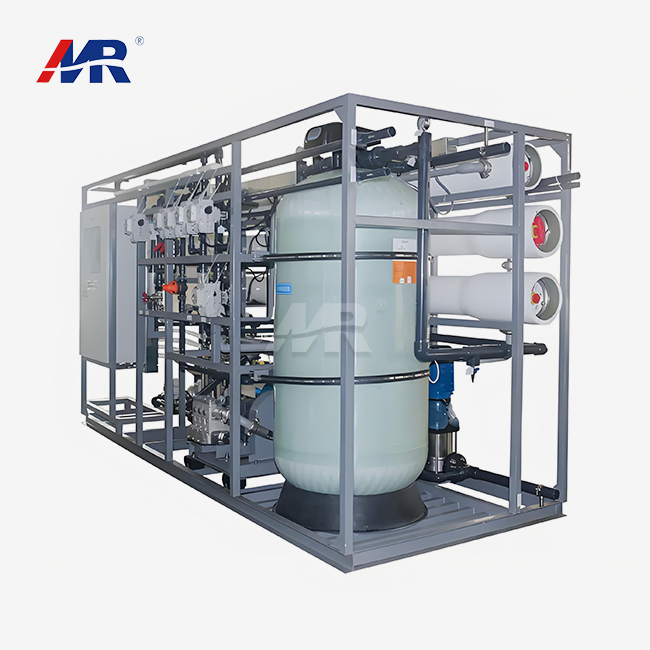
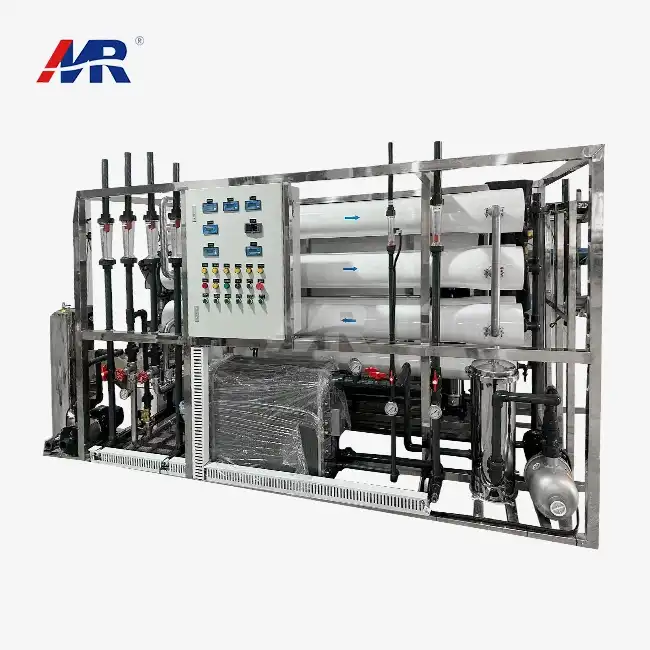
There are two built-in stages in a reverse osmosis electrodeionization system. The RO membrane gets rid of most of the dissolved solids, and in well-designed units like the Morui MR-EDI-10TH, it can reject 99.99% of the salt. The EDI stack then smooths the permeate by putting a DC voltage across ion-exchange resin media. This keeps pushing any leftover ions out of the product stream without having to do any chemical regeneration.
Because it works continuously and doesn't need any chemicals, RO+EDI is better than traditional ion exchange resin beds in GMP-controlled areas and semiconductor ultrapure water (UPW) loops. There is no downtime for acid-base regeneration processes, and there is no hazardous chemical waste to get rid of. This is a big plus for environmental officials when it comes to compliance.
What Does the Morui MR-EDI-10TH Deliver in Practice?
This machine, the Morui MR-EDI-10TH, is designed to make ultrapure water. Here are some of the most important technical details about this device:
- Application: Production of ultrapure water for the semiconductor, pharmaceutical, and power generation industries
- Power consumption: 25 kW/hour of power use is about average for a machine with this level of output.
- Recovery rate: 55% recovery rate, balancing how well water is used with how long the membrane lasts.
- Salt rejection rate: 99.99% of salt is rejected, which meets the high purity standards needed for chip creation and WFI production.
These numbers show a ro edi system made for industrial settings with constant use. The 55% recovery rate isn't very high, but it was chosen on purpose because it lowers the concentration polarization that speeds up membrane fouling. This means that the system will last longer and be more reliable in the long run.
Key Maintenance Practices That Keep an RO EDI System Reliable
Reliable running doesn't just happen. It needs a planned, structured approach that takes care of each subsystem before problems happen. Here are the maintenance tasks that water treatment engineers with a lot of experience always put first:
- Pre-treatment monitoring: The SDI (Silt Density Index) and hardness levels in the feed water need to be checked often. Hardness above 1 ppm going into the EDI stack leads to carbonate scaling, which drastically lowers the resistivity of the output. To get rid of dissolved CO₂, which ionizes inside the stack and competes with target ions, you should put a membrane degasser before the EDI module.
- RO membrane CIP (Clean-In-Place): Every 3–6 months, depending on the quality of the feed water, RO membranes should be chemically cleaned. Biofouling and biological deposits are cleaned off with alkaline solutions, while mineral scale is cleaned off with acid solutions. Skipping CIP cycles doesn't slow down fouling; it speeds it up.
- EDI module performance tracking: Always check the resistivity of the product. A drop below the goal level (usually 15–18 MΩ·cm for semiconductor uses) means that ions are leaking, the electrode is breaking down, or the resin is running out. Early detection stops quality problems from getting worse and worse.
- Pressure differential tracking: An early sign of fouling is a rising difference in pressure across RO parts. Most makers say that CIP should be done when the standardized pressure difference rises by 15% above baseline.
When put together, these practices make up the core of any long-term ultrapure water program. When compared to reactive maintenance methods, they constantly lead to longer membrane life, stable product quality, and lower total cost of ownership for facilities that use them.
If you ignore even one of these areas, you leave yourself open to attacks. If a facility only checks the resistance and not the hardness of the feed water, the ro edi system will still fail early, but from a different direction.
Comparing RO EDI Against Traditional DI Resin: Which Maintenance Burden Is Lower?
A lot of places still use old-fashioned methods for cleaning water that use mixed-bed ion exchange resin. The comparison of maintenance is helpful:
| Criteria | RO EDI System | Traditional DI Resin |
|---|---|---|
| Chemical regeneration | Not needed | Every cycle needs acid or caustic |
| Downtime for service | Very little (only RO CIP) | Resin beds need to be shut down regularly |
| Hazardous waste generation | Very close to zero | A lot of chemical waste |
| EDI/resin lifespan | 5–7 years (EDI module) | 1–3 years based on load |
| Regulatory compliance | GMP, USP, and UPW-compatible | Needs careful documentation |
| Long-term TCO | Lower over 3+ years | Higher because of the cost of chemicals and labor |
The statistics always show that RO EDI is better for sites that care about uptime, environmental compliance, and controlling costs over the long term. The higher original capital investment is usually paid back in two to three years by the savings in labor and chemical costs.
How Morui Supports Long-Term RO EDI System Reliability
Guangdong Morui Environmental Technology Co., Ltd. has spent years putting in place water cleaning systems for the pharmaceutical, electronics, power, and city governments. We have our own membrane production plant, more than 500 workers, and 20 specialized engineers. This gives us industrial depth and field knowledge that generalist providers can't match.
From pre-treatment design to commissioning, performance validation, and ongoing maintenance consulting, Our Team takes care of everything. We are also authorized agents for Shimge Water Pumps, Runxin Valves, and Createc Instruments. This means that the other parts of your system come from trusted, compatible brands instead of being put together from suppliers that don't work together.
Conclusion
Taking care of a reverse osmosis electrodeionization ro edi system is not an extra task; it is an important part of running the business. Facilities that spend money on structured pre-treatment management, regular cleaning of RO membranes, ongoing EDI performance monitoring, and proactive vendor partnerships always do better than those that only do what they have to do when they need to. With a 99.99% salt rejection rate and a continuous output of ultrapure water, the Morui MR-EDI-10TH is built to work well as long as it is properly maintained. The repair plan is just as important as the tools themselves.
FAQ
1. How often should RO membranes in an EDI system be cleaned?
RO filter CIP intervals are mostly determined by the quality of the feed water. In most business settings, a 3–6 month schedule is normal. This time may be shorter if the feed water has more turbidity or biological load. Instead of just using schedule dates to make plans, normalized performance data, like pressure difference and permeate flow, should be used.
2. Can an RO EDI system remove dissolved CO₂ effectively?
Ionized CO₂ can be removed by the EDI method. However, RO membranes are not very good at capturing dissolved CO₂ gas. The safest way to deal with this is to put a membrane degasser between the RO stage and the EDI module. This will stop CO₂ from lowering the product resistance inside the EDI stack.
3. What is the expected lifespan of an EDI module?
As long as the RO pre-treatment keeps the hardness level below 1 ppm at the EDI inlet, an EDI module should last between 5 and 7 years before it needs to be replaced. The main reason why EDI modules fail too soon is bad pre-treatment.
4. Does an RO EDI system require shutdown for maintenance?
One of the best things about RO EDI technology is that it can work all the time. For regeneration, the EDI stage does not need to be turned off. Periodic CIP of the RO membranes may cause short interruptions, but the total system uptime is much better than with other ion exchange methods.
Partner With Morui for Dependable Ultrapure Water Solutions
Morui is an ro edi system maker that can help with everything from designing the system to providing long-term maintenance assistance. You can email our engineering team at benson@guangdongmorui.com to learn more about the MR-EDI-10TH and all of our other ultrapure water Products. Let us help you set up a maintenance plan that will keep your investment safe and your production water always working as it should.
References
1. Water Quality Association. Industrial Water Treatment Systems Maintenance Benchmarking Report. WQA, 2022.
2. American Water Works Association. Membrane Technology and Practice for Water Treatment. AWWA, 2021.
3. International Society for Pharmaceutical Engineering. Water for Pharmaceutical Use: Engineering and Compliance Guide. ISPE, 2020.
4. Semiconductor Equipment and Materials International. Ultrapure Water Specifications for Semiconductor Manufacturing. SEMI, 2023.
5. Baker, R.W. Membrane Technology and Applications, 3rd ed. Wiley, 2012.
6. U.S. Environmental Protection Agency. Membrane Filtration Guidance Manual for Drinking Water Treatment. EPA, 2005.