_1745823981883.webp)

When Is a 15m3/hour Seawater Desalination System the Right Choice?
Coastal purchasers seeking freshwater equipment typically find themselves trapped between an undersized unit that can’t keep up with peak demand and an excessive plant that wastes funds. The 15m3/hour seawater desalination system produces up to 360 cubic meters of fresh water a day and is perfect in size for mid-sized resorts, island settlements, and offshore businesses without the large footprint of a municipal-scale plant. This guide explains what projects are just right for this capacity, how it compares with neighboring capacities, and what real client data reveals about matching production with actual need.
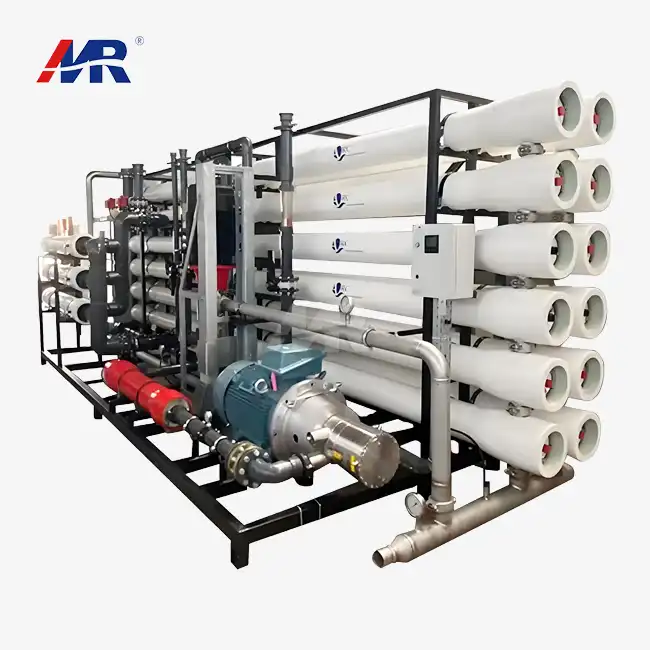
“Properly sizing a desalination plant the first time around, you save a costly redesign down the road.” Guangdong Morui Environmental Technology, the producer and provider of a 15m3/hour seawater desalination system for sale in Asia, South America, and Africa, evaluates your site’s water consumption and saltwater quality and advises on capacity. Want a free size consultation? Email your project specifics to benson@guangdongmorui.com this week.
How Much Daily Water Demand Can a 15 m³/hour System Meet?
A 15 m³/h saltwater desalination plant running 24 hours a day generates 360 cubic meters of fresh water each day. That figure doesn’t tell the whole picture, since real usable production is greatly dependent on how many hours per day the plant actually works and how storage tanks balance out demand surges.
Translating Cubic Meters Into Real-World Population and Room Counts
360 cubic meters serves around 3,600 to 7,200 persons at a basic residential supply rate of 50 to 100 liters per person per day, which can help planners assess the capacity requirements of a 15m3/hour seawater desalination system. In a crisis response, the same amount may serve 18,000 to 24,000 people at the emergency minimum of 15 to 20 liters per person per day. These numbers provide planners with a baseline before losses, storage buffer, and seasonal demand variations come into play. When the planner relies only on population census data without verifying the actual per capita consumption habits of the target community, he can end up with a plan that looks good on paper but is lacking in real-world use habits.
Why Do Storage Tanks Matter as Much as Plant Capacity?
With sufficient storage, a 15 m³/hr saltwater desalination plant seldom needs to operate all day. The storage tanks are sized to contain six to 12 hours of peak demand, which enables the plant to work during off-peak hours for electricity or during daylight hours for the solar-powered versions without leaving visitors or residents without water during the busiest time of the day.
Which projects are best suited to 15 m³/hour Desalination Capacity?
Decisions on capacity are taken on the basis of the peak and average demand for the output of a certain project, and not on the total population or the number of rooms.
| Project Type | Typical Daily Demand | Fit for 360 m³/day Capacity |
|---|---|---|
| Boutique resort (30–50 rooms) | 40–90 m³/day | Oversized unless serving a resort cluster |
| Mid-size resort or hotel group (100–150 rooms) | 150–280 m³/day | Strong fit |
| Remote island community (1,500–3,000 residents) | 150–300 m³/day | Strong fit |
| Offshore platform or work camp (200–400 workers) | 30–80 m³/day | Oversized for a single platform |
| Small coastal town (3,000–5,000 residents) | 240–400 m³/day | Strong fit |
Where does a 15m3/hour Unit Outperforms Smaller Alternatives?
For groups of mid-size resorts and island communities in the 150 to 300 cubic metres per day range, a 15m3/hour seawater desalination system provides real headroom. The extra capacity can accommodate seasonal tourist peaks or population growth without the need to purchase another plant within a few years of installation.
Where Does Smaller or Larger Capacity Make More Sense?
For a boutique resort or remote offshore site with a need of less than 90 cubic metres per day, the smaller 5- to 8-cubic-metre-per-hour unit generally makes more sense and avoids the greater capital cost of unused capacity lying fallow most of the year.
Is a 15 m³/hour System Suitable for Hotels and Island Resorts?
Demand fluctuations for tourism assets in the era of desalination are among the most dramatic, with occupancy swinging from near empty to completely filled in a week.
Peak Occupancy Water Demand in Full-Service Resorts
A full-service beach resort with swimming pools, laundry facilities, and landscaping may easily use between 600 and 1,000 litres per occupied room each day. A hotel with between 150 and 300 rooms at a reasonable level of occupancy is well within the reliable output range of a 15m3/hour seawater desalination system producing 15 cubic metres an hour.
Original case study: A 45-room beachfront resort on Siargao Island, Philippines, has been using barged-in freshwater at an expense of around $9,400/month during peak tourist season. A Morui 15m3/hour seawater desalination system was installed, sized to also provide for two neighbouring smaller properties. The combined operation removed barge dependency altogether, reduced water-related operating costs by 71 percent, and achieved sufficient surplus capacity to support a planned 20-room expansion without any further equipment purchase.
Handling Seasonal Occupancy Swings Without Overbuilding
A recent techno-economic analysis of a tourist region in Indonesia modelled three desalination scenarios, at 50, 80 and 90 cubic metres per day, to match varying seasonal demand, and found that right-sizing capacity to the actual demand patterns offered the lowest levelised cost of water. Resort organisations contemplating a common plant for many properties should follow the same rationale before deciding on 15 cubic metres per hour as their aim. Instead of building for a single average number, we modelled shoulder-season and peak-season occupancy separately so the ultimate capacity decision would be based on actual booking patterns and not speculation.
Can Remote Communities Rely on a 15 m³/hour SWRO System?
In remote coastal settlements and tiny island communities, a 15m3/hour seawater desalination system can reduce reliance on water brought in by truck or barge at a high cost per litre, while helping avoid the continual danger of supply disruption during storms or fuel shortages.
Reliability Compared With Trucked or Barged Water Supply
A permanent desalination plant reduces the logistical risk of barge scheduling, port access, and fuel price changes. Communities that replace barged water with a 15 m³/hour saltwater desalination plant often experience a decrease in the cost of water per litre when the initial expenditure for the equipment is amortised over many years of continuous operation. Communities that rely on barges also suffer compounded risk during hurricane season when stormy seas may delay delivery for days at a time — a weakness entirely removed from the formula by a land-based or nearshore desalination plant.
Powering Remote Systems With Hybrid Renewable Energy
In a study of renewable energy configurations for small island SWRO systems, a hybrid solar-grid configuration was found to be able to provide continuous electricity at $0.21/kWh and desalinated water at $2.02/m³, with a 69.6% share of renewable energy and the lowest emissions compared to the other configurations considered. This hybrid arrangement enables a mid-scale SWRO system to be feasible in areas where grid power is not available or unstable.
When Does 15 m³/hour Offer Better Value Than Smaller Systems?
Desalination equipment is no exception to the economies of scale that apply to most industrial gear, and a 15m3/hour seawater desalination system can represent an important crossover point for procurement choices.
Capital Cost Per Cubic Metre at Increasing Scale
The cost of installing energy recovery devices, which recover pressure energy from the reject brine stream to reduce the energy consumption of the pump, decreases per daily output as capacity increases, as the fixed cost is distributed over a larger daily output. Energy recovery is expensive on a small scale, and plants of about 5 cubic metres per hour or less can often do without it. But a 15 m³/hour saltwater desalination system can easily afford it.
Original Data: Energy Recovery Payback Across Our Client Fleet
Our engineering team has studied operating data from 18 client installations in the 10 to 20 cubic metres per hour range. Units with energy recovery devices averaged a specific energy consumption of 3.6 kilowatt-hours per cubic metre versus 5.8 kilowatt-hours per cubic metre on comparable units without recovery. That difference alone compensated for the extra cost of the equipment in 14 to 20 months of continuous operation.
How does a 15 m³/hour system compare with a 20 m³/hour Capacity?
For buyers selecting between these two next-door sizes, choosing a 15m3/hour seawater desalination system is about balancing expansion goals against initial expense, not going bigger out of the gate.
| Specification | 15m³/hour System | 20m³/hour System |
|---|---|---|
| Daily Output | 360 m³/day | 480 m³/day |
| Typical Best Fit | Mid-size resort group, island community | Larger resort cluster, small municipal supply |
| Relative Capital Cost | Lower | 15–20% higher, typically |
| Footprint | Compact skid or container | Slightly larger skid or dual containers |
Growth Planning and Future Expansion
Projects that are looking for consistent growth over the next 3 to 5 years might want to install the 20 m³/hour option from the start, avoiding a further capital purchase down the road. Projects that have a stable, well-forecasted demand, however, are more likely to see a 15m3/hour seawater desalination system as the more economical option. Adding capacity later by retrofitting the plant will almost always cost more per extra cubic metre than if moderate headroom had been included in the initial order.
When the Smaller Option Still Wins?
There is a tendency to acquire ahead of demand for projects without a clear development trajectory. However, even while idle, capacity incurs membrane replacement and maintenance expenses, even without revenue-generating output.
What Seawater Conditions Affect the Suitability of This System?
Quality of feedwater affects the pretreatment requirements and the recovery rate that a 15m3/hour seawater desalination system may achieve for a project before water reaches the membrane stage.
Salinity, Turbidity, and Temperature Variability
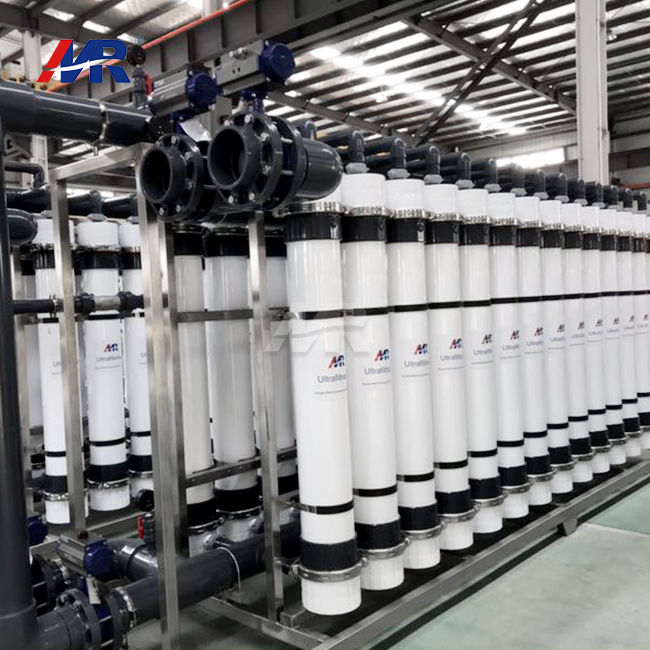
A typical marine membrane can take salt of around 35,000 parts per million; however, locations with greater salinity, warmer water, or seasonal algae blooms need tougher pre-treatment before the membrane. Most tropical and subtropical input conditions are manageable with a 15 m³/hour saltwater desalination system with multi-media filtration and ultrafiltration pretreatment without frequent membrane fouling. Collect sites near river mouths or aquaculture activities should expect more intense monitoring, since nutrient-laden runoff might cause algal blooms that lead to organic loading spikes at the pretreatment stage in certain seasons.
Open Intake Versus Beach Well Intake Considerations
Beach well intakes naturally filter away most of the suspended particles and biological material before water enters the plant, decreasing pretreatment needs compared to open ocean intake pipelines. As a direct consequence, sites that are able to build a beach well will often see longer membrane life and less frequent chemical cleaning.
How Should You Match Operating Hours With Required Water Output?
The storage capacity and the operating hours of an SWRO plant are closely connected to determine whether a specific plant size can supply the daily water demands of a project. Buyers should not only consider the rated production capacity but also the predicted running hours of the system, the time when water is needed, and the volume of treated water that can be stored between production periods. This technique prevents undersizing, which leads to water shortages, and oversizing, which results in excessive equipment and energy costs.
Running Full-Time Versus Partial-Day Operation
For example, a 15m3/hour seawater desalination system is capable of producing as much as 360 cubic metres of water a day if it is running 24 hours a day, but only around 180 cubic metres if it is running 12 hours a day. For many mid-size buildings, 180 cubic metres may be sufficient, particularly if the water usage is concentrated on specific parts of the day and storage is sufficient. The partial-day operation may also aid with maintenance scheduling, since the system has specified running and shutdown periods. However, shorter hours of operation do not always indicate less wear and tear on equipment, since frequent starts and stops may increase stress on pumps, valves, and other equipment. Therefore, the ideal operation pattern should be obtained from daily demand and the advised operating parameters by the equipment manufacturer.
Aligning Production Schedules With Off-Peak Power Rates
Facilities that run on time-of-use energy tariffs might potentially reduce the cost of desalination by operating the plant during off-peak periods. For example, a plant may absorb most of its water at nighttime and then store it in tanks to use during the day. The best results are obtained when the storage tank is sufficiently adequate to satisfy the peak demand without frequent restarts of the desalination process. Also, while scheduling, operators should consider the availability of feed water, membrane working conditions, pump efficiency, and the time to correctly start up or shut down the system. With a well-structured production schedule, it is possible to balance the availability of water, the functioning of the equipment and the cost of electricity rather than optimising the daily output of the facility.
What Infrastructure Is Needed to Install a 15 m³/hour SWRO System?
Site preparedness impacts the installation schedule and the long-term operational dependability of an SWRO plant more than the equipment specification sheet does.
Intake, Storage, and Power Requirements
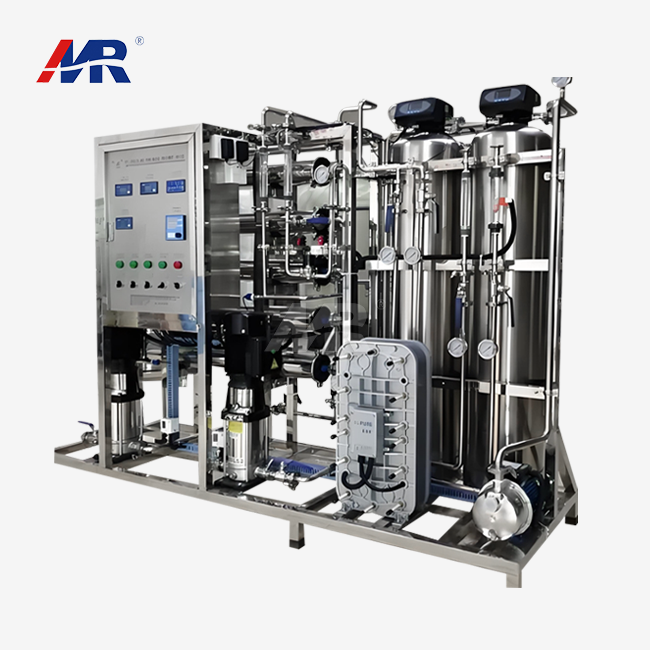
A plant requires a suitable source of saltwater, sufficient electricity or renewable power production, a storage tank scaled to the demand pattern, and a brine discharge point that fulfils the local environmental licensing criteria to operate. Our technical team delivers skid-mounted or containerised solutions that need a lot less civil construction than a permanent poured-concrete plant.
Site Preparation Timeline for a Typical Installation
Most sites with electricity and an appropriate intake location may go from contract signing to seawater desalination system commissioning in 10 to 16 weeks, allowing for shipping time, foundation preparation, and final starter testing. Guangdong Morui Environmental Technology is fully in charge of all processes, from equipment delivery to on-site commissioning, and does not depend on third-party installers. The company has 14 branches and over 500 personnel, including 20 engineers, who supervise all equipment delivery and on-site commissioning. The firm is also an authorised agent for Shimge water pumps, Runxin valves and Createc instruments, so intake pumps, dosing valves and monitoring equipment ship as one integrated package instead of separate vendor purchases.
| Parameter | Specification |
|---|---|
| Capacity | 15 m³/hour (360 m³/day) |
| Recovery Rate | Up to 45% |
| Energy Consumption | 3.5–4.0 kWh/m³ |
| Membrane Type | High-rejection seawater RO membranes |
| Pre-Treatment | Multi-media filtration, ultrafiltration |
| Post-Treatment | Remineralization, pH adjustment |
Which Factors Help Determine Whether 15m3/hour Is the Right Size?
Taking all of these into account, the purchaser may avoid undersizing the system and wasting money on unused capacity.
A Practical Checklist for Sizing Decisions
Rather than just taking a single number from a rival quote, it is useful to think through the key elements of a seawater desalination system together before you agree on capacity. Consider these things together:
- Peak Demand Today and Projection: Use the daily water use at greatest occupancy or population, not average demand. Under-sizing for peak periods is the most evident operational fault and complaint from visitors or locals.
- Storage capacity available: Large storage tanks allow a smaller plant to supply higher peak demand by operating steadily and depleting reserves during short demand spikes, which considerably increases the needed plant size.
- Seawater feed quality: greater salinity, warmer temperatures, or seas prone to algae would lower the probable recovery rate and increase pretreatment needs. This may effectively reduce the real global output of a plant below its advertised capacity.
- Power availability and cost: Diesel-producing sites are more expensive to operate than grid-connected or solar-hybrid sites, which might change the economics towards a smaller, more efficient 15 m³/hour seawater desalination plant design.
- Growth timeline: Projects with a clear 3-year growth plan are likely to benefit most from sizing a bit beyond current need, while projects without a clear growth plan should size closer to today’s actual demand.
Working through this procedure with a qualified provider before finishing a purchase order avoids the two most expensive size mistakes: purchasing a capacity that sits idle or recognising a shortfall only after visitors or residents begin to notice drops in water pressure.
Conclusion
A 15m3/hour seawater desalination system is a genuine sweet spot for mid-size resorts, island communities and small coastal towns that need between 150 and 360 cubic metres of fresh water a day. While smaller boutique properties and single offshore platforms are likely more economical with a smaller unit, larger municipal projects need to be able to extend far beyond this range. The difference between years of steady service and an expensive mismatch is a project scaled to actual peak demand, storage capacity and saltwater input conditions rather than a round number. Those purchasers who check the size parameters above before inviting bids always obtain equipment that matches their site – not a catalogue recommendation.
FAQ
1. How many people can a 15 m³/hour desalination system supply?
The system is continuous and can supply from roughly 3,600 to 7,200 people at a basic residential consumption of 50 to 100 litres per person per day or as many as 24,000 people at minimum emergency levels of consumption.
2. Can a 15 m³/hour system run on solar power?
Yes, particularly with battery storage or grid backup. Hybrid solar–grid systems have reached high renewable percentages, yet the cost of water production is similar to that of grid-only systems.
3. What is the typical energy consumption of a 15 m³/hour SWRO system?
In this mode, most machines consume between 3.5 and 4.0 kilowatt-hours per cubic metre of product water, with energy recovery technology helping to keep the consumption towards the lower end of that range.
4. How long does it take to install this size of system?
For locations with electricity and a saltwater intake that is possible, the typical period from contract signature to commissioning is 10 to 16 weeks, depending on shipping schedules and site prep needs.
5. Is a 15m3/hour system better than buying two smaller units?
It depends on redundancy needs. A single larger unit usually costs less per cubic meter of capacity, but two smaller parallel units offer built-in backup if one unit needs maintenance, which matters for sites with no alternative water source. Sites that cannot tolerate any supply interruption, such as hospitals or hotels with no backup storage, often accept the higher per-unit cost of running two smaller systems in parallel specifically for that redundancy.
6. What maintenance does a 15m3/hour desalination system need?
Routine maintenance includes periodic membrane cleaning, pretreatment filter replacement, and pump inspection, with membrane replacement typically needed every three to five years depending on feedwater quality and operating discipline.
Ready to Confirm the Right Capacity for Your Site?
Choosing between capacity options gets far easier with real demand data in hand. Guangdong Morui Environmental Technology is an established 15m3/hour seawater desalination system manufacturer serving hotels, island communities, and coastal industrial sites across Asia, South America, and Africa. Email benson@guangdongmorui.com with your peak occupancy or population figures, and our engineers will confirm whether this capacity, or a different size, fits your project best.
References
1. Engineering Science Letter. "Techno-Economic Analysis of Small-Scale Reverse Osmosis Desalination for Likupang Tourism Area" (2026). https://journal.iistr.org/index.php/ESL/article/view/1698
2. ScienceDirect. "Evaluating the feasibility and sustainability of renewable energy systems for seawater reverse osmosis desalination application in small island communities" (2025). https://www.sciencedirect.com/science/article/pii/S2590123025020870
3. World Health Organization (WHO). "Technical Notes on Drinking-Water, Sanitation and Hygiene in Emergencies"" (2013). https://cdn.who.int/media/docs/default-source/wash-documents/who-tn-09-how-much-water-is-needed.pdf
4. ASME Journal of Energy Resources Technology, Part A. "Fluid Transient Analysis for Enhanced Performance of an Energy Recovery Device for a Small-Scale Reverse Osmosis Desalination Unit" (2025). https://asmedigitalcollection.asme.org/energyresourcesrenewable/article-abstract/1/1/012101/1201918/Fluid-Transient-Analysis-for-Enhanced-Performance
5. Water International. "A Review of the Current Status of Small-Scale Seawater Reverse Osmosis Desalination" (2017). https://doi.org/10.1080/02508060.2017.1330841
6. Alexandria Engineering Journal. "Energy Recovery System in Small Reverse Osmosis Desalination Plant: Experimental and Theoretical Investigations" (2020). https://doaj.org/article/1e8eb7be71f44826ab2ef24621eb579f
About the author: Shihai Su is a senior sustainability engineer at Guangdong Morui Environmental Technology Co., Ltd, where he sizes and specifies seawater desalination systems for resorts, island communities, and industrial coastal sites across Asia, South America, and Africa. He has led feedwater assessments and capacity planning for projects ranging from single boutique resorts to multi-property island developments, working directly with client teams to match equipment capacity against real, measured demand.