_1745823981883.webp)

Everything You Need to Know About RO Membranes
When businesses have issues with the quality of their water, membrane/brackish-membrane">ro membrane technology is the best way to clean water exactly in all fields. An RO membrane works by osmosis in reverse. At the molecular level, it gets rid of contaminants with walls that are only partially porous. There are a lot of Cases where these high-tech filter systems work really well, from making drugs to getting salt out of seawater. They give modern companies the reliability they need to make sure that standards for water quality are always met.
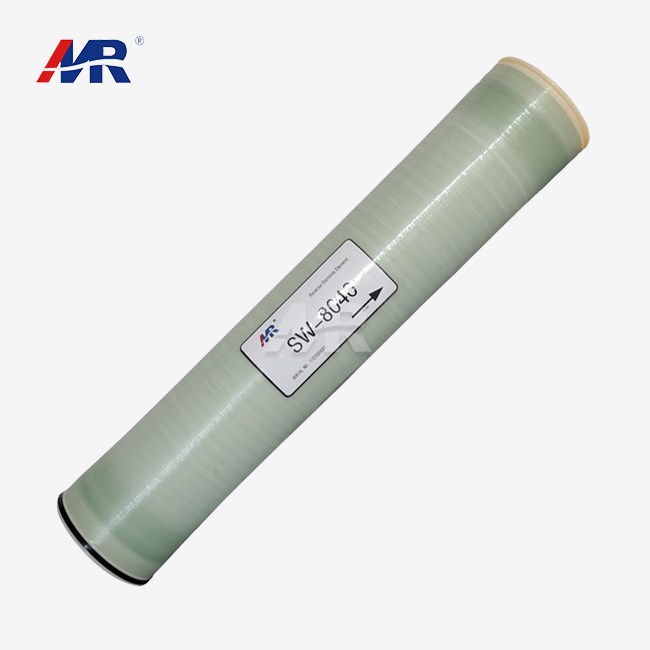
Understanding RO Membranes: Principles and Performance
How Reverse Osmosis Technology Works
Reverse osmosis membranes work by forcing water through materials that let some things through but not others. They do this under high pressure, which for commercial use is usually between 150 and 1,200 psi. The device works by applying more pressure than the osmotic pressure of the solution. So, only water molecules can get through. Dissolved salts, organic matter, and toxins are pushed out.
The membrane structure is made up of several layers. The main thing that stops filtering is the active polyamide layer. It can get rid of particles as small as 0.0001 microns thanks to its thin-film hybrid design. This method can get rid of up to 99.8% of salt in seawater and more than 99.5% of salt in brackish water, so it can handle tough business needs.
Key Performance Metrics That Matter
There are a few important things you need to look at to figure out how well a barrier works. There are two numbers that show how much clean water is made over time per unit area. The salt refusal rate tells you how much of the dissolved salts in the feed water are taken out. How well things run and how much they cost are both affected by these steps.
Pressure tolerance is another important standard, especially for industrial uses that need to work with high pressure. These days, RO membrane sections can handle working pressures of up to 1,200 psi without losing their structural integrity. Most membranes can handle temperatures between 35°F and 113°F, but in some industrial processes, they need to be able to handle very high temperatures.
Comparing Filtration Technologies
One thing that makes reverse osmosis different from other filter methods is that it can sort molecules at the molecular level. Ultrafiltration can get rid of particles as small as 0.01 microns, but RO membrane technology can separate things at 0.0001 microns, which means it can get rid of dissolved contaminants better. If you put nanofiltration between these two technologies, it can pick out some ions to remove and let others through.
It works with reverse osmosis instead of against it because UV screening kills germs without directly getting rid of them. A lot of industrial systems treat water with more than one of these technologies. They use the best parts of each to get the best water quality for each use.
Selecting the Best RO Membrane for Your Business Needs
Evaluating Water Characteristics and Requirements
First, you need to do a full study of the water. This means recording the temperature, total dissolved solids (TDS), pH levels, and any contaminants that are in the feed water. The membrane needs to be made in a different way for uses with brackish water than for uses with desalinating seawater or treating wastewater.
For business purposes, you need to think about recovery rates, the amount of concentrate that needs to be released, and how to connect it to the treatment system you already have in place. The feed water quality index (FWQI) tells you what kind of pretreatment you need and how well the membrane should work in different situations.
Leading Membrane Manufacturers and Technologies
There are a lot of well-known companies that make RO membranes, and each one has different choices that can be used for different things. It's easy for the FILMTEC line from Dow Chemical to get stopped up, and it works well in tough water conditions. SUEZ membranes are sold by DuPont Water Solutions. These membranes are known for having high flow rates and low energy use in large systems.
Toray Industries works on designs that use less energy and have lower running costs. Hydranautics, on the other hand, makes membranes that are specifically made for high pressure and desalinating seawater. Koch Membrane Systems has the best choices for cleaning factory wastewater and reusing water. They all have their own pros and cons that depend on the business and the budget.
These top brands have strict rules for quality control and offer full professional help with planning and improving systems. A lot of tests are done on their Products to make sure they work well and last a long time in tough industrial areas.
Cost-Benefit Analysis and ROI Considerations
When picking a membrane, you should think about how much it costs up front and how much it will save you in the long run. Better membranes generally cost more, but they work better, last longer, and need less maintenance. Running costs can be cut a lot if you make things that use less energy. This is especially true for large places where pumping energy costs a lot.
How often the membrane needs to be changed, how much the cleaning agents cost, how much energy is used, and how much work needs to be done to keep it in good shape should all be added to the total cost of ownership. Systems that use energy recovery devices can save 30 to 50 percent of the energy that regular designs use. This is great for the budget in the long run.
Maintenance, Lifespan, and Troubleshooting for RO Membranes
Expected Service Life and Performance Indicators
Industrial RO membrane elements usually keep working at their best for 3–7 years if they are used in the right way. A lot of what affects the service life is the quality of the feed water, how well the pretreatment works, and how well the recommended working conditions are followed. The membrane will last a lot longer if you keep the silt density index (SDI) below 3 and clean it properly with chemicals.
Part of keeping an eye on performance is keeping track of the uniform permeate flow, salt passing rates, and the difference in pressure across the membrane system. If the performance indicators go down, it means the membrane needs to be cleaned or even changed. This keeps the system from breaking down totally, which would mean that work in the industry would stop.
Preventive Maintenance Best Practices
Before they reach the screens, dissolved solids, chlorine, and biological toxins are removed by strong pretreatment devices. The first step to good maintenance is to do this. The quality of the feed water can be checked often to find fouling agents or chemical problems that could hurt membrane surfaces early on.
When the normal flow of permeate drops by 10 to 15 percent, the passing of salt rises by 5 to 10 percent, or the difference pressure rises by 15 percent above baseline values, cleaning-in-place (CIP) steps should be taken. Alkaline solutions are used to get rid of germs and organic buildup, while acidic cleaners are used to get rid of scale and mineral layers.
Troubleshooting Common Issues
The most common problem with operation is fouling of the RO membrane, which shows up as less entering flow or bigger pressure differences. A product that is alkaline can be used to clean off biological fouling, which shows up slowly. On the other hand, scaling happens quickly and needs to be treated with a weak acid. Once you know what kinds of gunk there are, you can clean things in a way that gets them running better again.
Changes in pH or chlorine damage to the RO membrane can't be fixed. This is why it's so important to pre-treat and keep an eye on things. Sharp shocks or rough handling can damage the RO membrane. It needs to be changed right away to keep the system clean.
Procurement and Installation Guide for RO Membranes
Sourcing Reliable Suppliers and Quality Assurance
In order to buy membranes successfully, you need to work with reputable sellers who can promise consistent quality and on-time delivery. You can get a warranty and technical help from the maker, but in your area, an authorized dealer may be able to ship and provide support more quickly.
Make sure the seal is still good by testing it for vacuum decay. Also, make sure the performance requirements are met by testing it normally when it's wet in certain ways. The paperwork should be approved by NSF/ANSI 61 to be used with potable water and meet the quality standards of ISO 9001 production.
Installation and Commissioning Considerations
Professionals who know how to work with membranes and startup systems are needed for a good fit. You need to be careful not to damage the active surface when you handle membrane parts. By using the right security methods, the membrane's structure is kept while it is being stored and installed.
When the system first starts up, the flow rate and pressure are slowly raised to get the best performance while protecting the membrane elements from being shocked. Performance testing is the first step in making sure the system works. It also sets the bar for tracking and maintenance jobs that will come after.
Service and Support Infrastructure
Full support after the sale includes getting new parts, getting expert help with improvement, and getting tips on how to fix things. If there are problems with the way the product was made, the warranty should cover them. It should also be clear when normal use ends the guarantee. When you keep working with the same providers, you can get new tools and find ways to do things better.
Workers in plants are taught how to make sure that systems are run and kept correctly. This keeps RO membranes in good shape and makes systems work better. Having regular meetings with providers can help you find better ways to use the system and keep it from breaking down. These meetings can also help you save money and make the system more effective.
Conclusion
To choose and keep the right RO membrane technology, you need to know about its performance features, operating needs, and long-term cost effects. For an application to work, the system must be properly designed, high-quality parts must be used, and maintenance methods must be followed to keep the membrane's purity and performance. It's a good idea for businesses that need clean water for their processes to buy tried-and-true membrane technologies that come with full provider help and expert advice.
FAQ
1. What determines industrial RO membrane lifespan?
It can last anywhere from 3 to 7 years, depending on the feed water quality, how well the membrane is cleaned before use, and how well it is taken care of. Keeping SDI below 3 and cleaning properly will greatly extend the life of the equipment while still meeting performance standards.
2. When should membranes undergo chemical cleaning?
Normalized permeate flow should drop by 10 to 15 percent, salt passage should rise by 5 to 10 percent, or the difference in pressure should rise by 15 percent above the average values. This is what the business says you should do. To keep the system going at its best and stop damage that can't be fixed, move quickly.
3. Can RO membranes handle chlorinated water?
Free chlorine oxidizes polyamide membranes in a way that can't be fixed, so they need to be dechlorinated before they can be handled. You can get rid of chlorine and protect the membrane's structure at the same time with an activated carbon filter or sodium bisulfite injection.
4. How should spare membranes be stored?
It is best to keep the original package in a cool, dry place that doesn't get direct sunlight. Microbes can't grow in preservation solutions with 1% sodium bisulfite because the membranes don't dry out. This stops flux loss for good.
Partner with Morui for Advanced RO Membrane Solutions
Guangdong Morui Environmental Technology can help you with your industrial water treatment needs with a wide range of RO membrane options that are custom-made to your needs. We can make sure that projects of any size have good supply lines and Technical support because we have 20 engineers on staff and a lot of ways to make things, including our own membrane production plant. As a dependable RO membrane source, we offer full system design, installation, and testing services. Our 14 offices and 500 dedicated professionals are here to help you. You can talk to one of our experts about your water treatment goals at benson@guangdongmorui.com. You can also learn how our tried-and-true solutions can help you run your business more smoothly as well.
References
1. Membrane Technology and Applications, Third Edition by Richard W. Baker, John Wiley & Sons, 2012.
2. Reverse Osmosis: Design, Processes, and Applications for Engineers by Jane Kucera, Scrivener Publishing, 2015.
3. Water Treatment Membrane Processes by American Water Works Association, McGraw-Hill Education, 2016.
4. Industrial Water Treatment: Process Technology and Environmental Compliance by Drew Chemical Corporation, Chemical Publishing Company, 2018.
5. Membrane Separation Technology: Principles and Applications by R.D. Noble and S.A. Stern, Elsevier Science, 2017.
6. Advanced Membrane Technology for Water and Wastewater Treatment by UNESCO-IHE Institute for Water Education, IWA Publishing, 2019.