_1745823981883.webp)

Electrodeionization System vs. Ion Exchange: Key Differences
Making educated investment decisions when assessing water purification technologies requires a grasp of the basic differences between electrodeionization systems and conventional ion exchange techniques. Conventional ion exchange uses resin beads that need to be chemically renewed on a regular basis, but an electrodeionization system uses electrical current and ion exchange membranes to constantly create high-purity water without chemical regeneration. Each technology is appropriate for different industrial applications and operating scales due to the fundamental distinctions in operational sustainability, maintenance intensity, and long-term cost efficiency.
Understanding Both Technologies: How They Work?
Since the 1940s, companies have relied on ion exchange, which uses resin beads to extract dissolved ions from water. These negatively and positively charged beads draw impurities until they reach saturation, necessitating a break for chemical regeneration with bases and acids. Both operational disruptions and chemical waste are produced by this batch procedure.
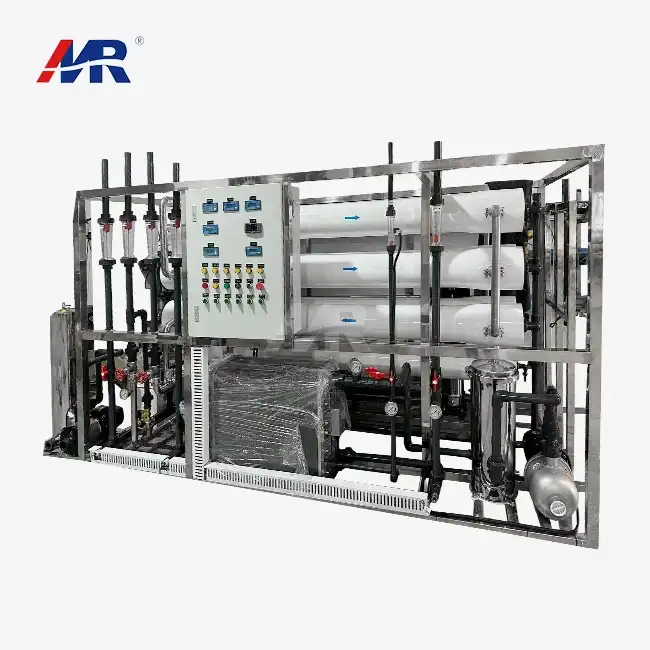
A more recent method of producing deionised water is electrodeionization. By combining direct current and ion-selective membranes, the method allows for continuous ion removal without the need for chemicals. Selective membranes divide the alternating ion exchange resin compartments through which water passes. Ions are driven toward oppositely charged electrodes by applied voltage, where they concentrate and leave as a waste stream.
Production interruptions are eliminated by an electrodeionization system's continual renewal. Rather than undergoing recurring cycles of chemical saturation and regeneration, resin beads sustain their efficacy by continuous electrical renewal.
Electrodeionization works better than conventional ion exchange if you require continuous generation of high-purity water with little human intervention.
Three Core Operational Differences
Chemical Usage and Environmental Impact
For regeneration, conventional ion exchange requires large amounts of sodium hydroxide and hydrochloric acid. About 300–500 gallons of regeneration chemicals are needed each month for an industrial mixed-bed resin system that uses 100 gallons per minute. This makes it difficult to dispose of hazardous trash and burdensome to comply with regulations.
Electrodeionization is a chemical-free technique. Compared to traditional methods, electrical regeneration reduces environmental impact by up to 95% by eliminating acid and caustic consumption. This membrane technology is useful for facilities aiming for zero liquid discharge.
Water Production Continuity
Ion exchange systems run in cycles: offline regeneration lasting two to four hours, followed by service mode until resin exhaustion. To ensure a steady supply, this need for several parallel units or storage tanks. Careful conductivity monitoring is necessary for mixed-bed resin setups in order to avoid quality degradation.
Electrodeionization ensures uninterrupted, steady output. Morui's systems meet strict pharmaceutical and semiconductor requirements by producing high-purity water continuously at resistivity values of more than 18 MΩ·cm. Over the course of operations, production stays constant, and quality doesn't change.
Space and Infrastructure Requirements
For numerous vessels, chemical storage tanks, neutralisation systems, and regeneration equipment, traditional ion exchange installations need a large amount of floor area. Including ancillary equipment, a 10 m³/h mixed bed system usually takes roughly 150–200 square meters.
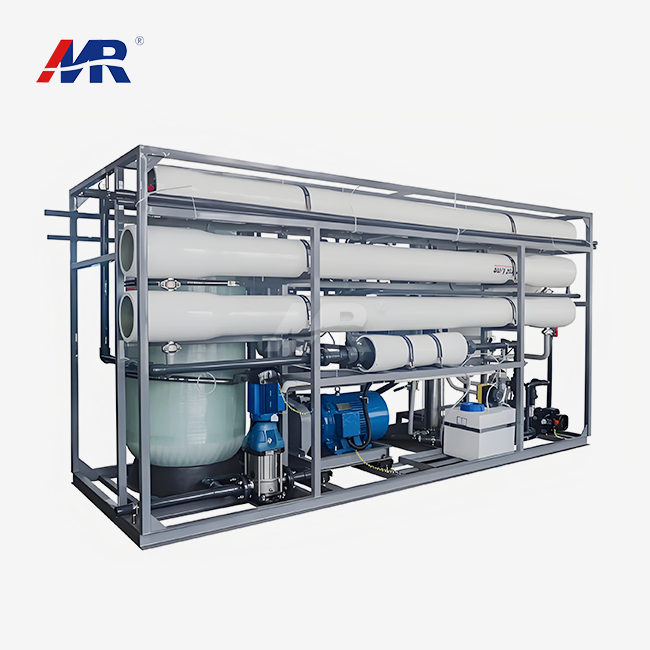
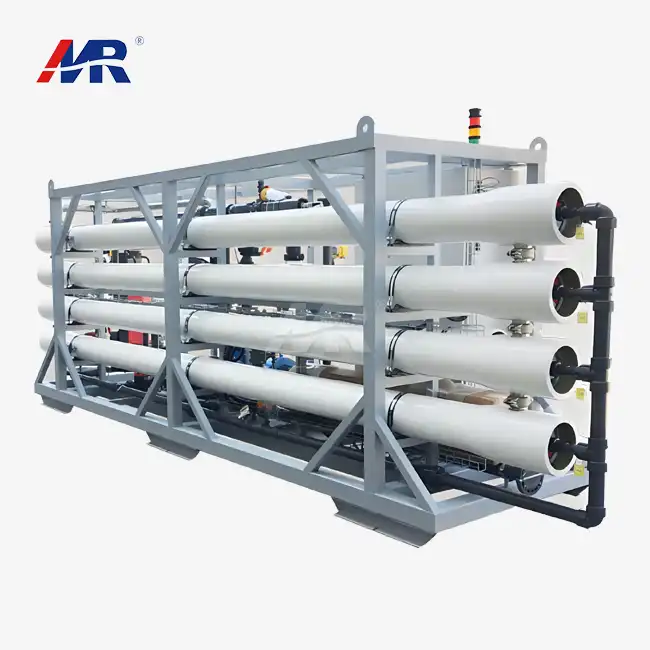
The compact design of contemporary electrodeionization systems results in a 40–60% reduction in footprint. Separate regeneration infrastructure is eliminated by the electrode stack arrangement and integrated membrane technology. Morui's modular units maintain full production capability while fitting into limited industrial locations.
Electrodeionization provides better spatial efficiency if you work in buildings with constrained floor areas or expansion issues.
Performance Comparison: Technical Specifications
| Parameter | Ion Exchange | Electrodeionization System |
|---|---|---|
| Product Water Resistivity | 10-18 MΩ·cm | >18 MΩ·cm (consistent) |
| Recovery Rate | 65-75% | >90% |
| Power Consumption | 0.05 kWh/m³ (excluding pumps) | <0.1 kWh/m³ (total) |
| Chemical Consumption | 150-250 kg/month (per m³/h) | Zero |
| Downtime | 15-20% (regeneration) | <2% (maintenance only) |
| Operator Attention | High (manual regeneration) | Minimal (automated) |
| Water Quality Stability | Variable (degrades before regeneration) | Constant |
Testing data from pharmaceutical facilities demonstrates electrodeionization maintains conductivity below 0.055 µS/cm consistently, while ion exchange exhibits quality degradation from 0.06 to 0.20 µS/cm between regeneration cycles.
Cost Analysis: Initial Investment vs. Long-Term Economics
Traditional ion exchange presents lower initial capital expenditure. A 5 m³/h mixed bed system costs approximately $45,000-$65,000 installed. This accessible entry point appeals to budget-conscious operations and smaller enterprises.
Electrodeionization requires a higher upfront investment, typically $80,000-$120,000 for comparable capacity. The additional cost covers membrane modules, electrode assemblies, and advanced control systems. However, total cost of ownership calculations reveal different economics.
Operating Cost Breakdown (Annual, 5 m³/h system, 8000 hours operation):
Ion Exchange:
- Chemical consumption: $12,000-$18,000
- Waste disposal: $6,000-$9,000
- Labor (regeneration monitoring): $8,000-$12,000
- Resin replacement (3-year cycle): $4,000/year
- Total annual operating cost: $30,000-$43,000
Electrodeionization:
- Electricity: $3,200-$4,000
- Membrane replacement (5-year cycle): $3,000/year
- Minimal labor (automated operation): $1,500-$2,000
- Total annual operating cost: $7,700-$9,000
The electrodeionization system achieves payback within 2.5-3.5 years through operational savings. Over a 10-year lifecycle, savings exceed $250,000 for mid-scale installations.
If you prioritize long-term operational efficiency and total ownership costs over initial capital outlay, then electrodeionization delivers superior value.
Industry-Specific Applications: Which Technology Fits Your Needs
Pharmaceutical and Biotechnology
Complete traceability and uniform quality are requirements for GMP-compliant water filtration. Through conductivity sensors and automated documentation, electrodeionization offers continuous monitoring. Regeneration chemical contamination issues are eliminated by the chemical-free technique. The use of EDI for purified water and water for injection pretreatment is becoming more and more common among pharmaceutical firms.
Semiconductor Manufacturing
Ultrapure water with resistivity levels more than 18 MΩ·cm and total organic carbon levels less than 5 ppb is needed for chip manufacturing. This is constantly provided by combined RO+edi systems. Such strict requirements are difficult for conventional ion exchange to sustain between regeneration cycles. The last polishing step for semiconductor-grade water is provided by Morui's electrodeionization systems, which smoothly connect with the current reverse osmosis infrastructure.
Power Generation
To avoid scaling and corrosion, boiler feed water for thermal and nuclear power plants must have exact conductivity control. Because of well-established infrastructure and operator knowledge, large-scale ion exchange is still widespread. Newer facilities, however, use electrodeionization to provide better water quality uniformity and lower the dangers associated with chemical handling.
Food and Beverage Production
Depending on scale, both technologies are advantageous for bottled water and beverage production. Ion exchange is economical and sufficient for quality standards in small to medium operations (2–10 m³/h). Electrodeionization improves efficiency in larger manufacturing facilities (>20 m³/h), especially when obtaining sustainability Certifications.
Chemical Processing and Electroplating
Ion exchange has historically been used in industrial water treatment for chemical dilution and electroplating baths since the quality of the supply water varies. However, electrodeionization reduces hazardous chemical handling and increases operational ranges when combined with appropriate pretreatment. This is useful when decision-making is influenced by worker safety and environmental compliance.
Electrodeionization offers improved compliance assurance if you work in regulated businesses where documented water quality consistency is required.
Maintenance Requirements and Operational Reliability
Regular operator intervention is required for ion exchange devices. Waste neutralisation techniques, safety gear, and appropriate chemical handling training are necessary for regeneration processes. Periodic cleaning or replacement is required due to resin fouling caused by iron, chlorine, or organic waste. Complexity is increased by the need to separate and regenerate cation and anion resins separately in mixed-bed setups.
With completely automated controls, electrodeionization requires little upkeep. Membrane fouling resistance is dependent on appropriate pretreatment, which usually calls for feed water with hardness close to zero and TDS below 20 ppm. EDI modules operate dependably for three to five years when supplied with suitable quality water before membrane replacement is required.
Intelligent monitoring included in Morui's systems allows for the early detection of performance degradation. Automated alerts prevent unplanned production disruptions by alerting operators when cleaning becomes necessary. This predictive strategy increases component lifespan and maximises uptime.
Water Quality and Pretreatment Considerations
Effective pretreatment is necessary for both procedures, but the tolerances are different. Wider feed water variability is tolerated by ion exchange resins, which can withstand moderate hardness levels and TDS up to 300 ppm. Applications with erratic water sources benefit from this resilience.
Stricter feed requirements are required for electrodeionization. EDI modules are usually preceded by reverse osmosis pretreatment, which lowers TDS below 20 ppm and eliminates hardness, organics, and particles. Although it necessitates extensive pretreatment infrastructure, this two-stage method yields improved end water quality.
The possibility of reusing water varies greatly. Reuse is made more difficult by the high amounts of acids, bases, and recovered pollutants found in ion exchange regeneration waste. Concentrate streams from electrodeionization stay comparatively clean, making recovery for less important uses or simpler disposal possible.
The RO-EDI combo produces the best results if you oversee facilities with difficult source water that needs to be purified as much as possible.
Energy Efficiency and Sustainability Profile
One important operational element is power usage. Only a small amount of direct power is used in traditional ion exchange, mostly for pumps and controllers. However, the energy required for transportation and chemical manufacture adds unstated expenses to the environmental impact.
For ion migration, electrodeionization uses direct electrical energy, usually between 0.05 and 0.1 kWh per cubic metre of product water. By maximising current efficiency and minimising resistance, Morui's optimised electrode stack design keeps consumption at the lower end of this range. Direct consumption is countered by the removal of energy used in chemical synthesis.
Carbon footprint analysis reveals electrodeionization reduces greenhouse gas emissions by 60-75% compared to chemically regenerated systems when accounting for complete lifecycle impacts. This environmental benefit is advantageous to facilities aiming for carbon neutrality or LEED certification.
Sustainability is greatly impacted by the water recovery rate. Because of the water requirements for regeneration, ion exchange usually yields 65–75% recovery. Electrodeionization systems save valuable water resources by recovering more than 90% of the water. This is especially helpful for facilities with limited discharge or water-stressed areas.
Scalability and Future Expansion
The choice of technology is influenced by growth plans. By adding parallel vessels, ion exchange is easily scaled. Modular expansion is appropriate for organisations that anticipate incremental capacity increases since it requires little engineering.
Planning for electrical infrastructure is necessary for electrodeionization, which also scales modularly. Proportional power supply and control system integration are necessary for increasing capacity. Nonetheless, the small size makes it easier to expand inside already-existing building envelopes that couldn't hold more ion exchange trains.
Electrodeionization is favoured by technological progress. Continuous advancements in membrane technology consistently lower prices and increase performance. Businesses that invest in EDI put themselves in a position to profit from these advancements through comparatively easy module upgrades.
Electrodeionization offers greater expansion flexibility if you plan for technical advancement or expect large production growth.
Highlights: Morui's Electrodeionization System Advantages
- Proven Operational Excellence: Morui systems demonstrate 99.5% uptime across installations in pharmaceutical, semiconductor, and power generation facilities, validated through customer performance data spanning installations across 14 regional branches.
- Superior Water Quality Consistency: Continuous production maintains resistivity above 18 MΩ·cm without the quality fluctuations inherent in regeneration-based systems, ensuring pharmaceutical-grade consistency meeting USP and EP standards.
- Comprehensive Chemical Elimination: Zero requirement for hydrochloric acid, sodium hydroxide, or other regeneration chemicals reduces hazardous material handling, storage costs, and regulatory compliance burden by eliminating dangerous substance management.
- Exceptional Recovery Efficiency: Achieving >90% water recovery compared to 65-75% for traditional methods significantly reduces source water consumption and wastewater discharge, critical for facilities in water-stressed regions.
- Minimal Energy Consumption: Optimized electrode configuration and current distribution limit power consumption to <0.1 kWh/m³, among the lowest in the industry, while maintaining superior product water quality.
- Automated Operation: Fully integrated PLC controls with remote monitoring capability minimize operator intervention requirements, reducing labor costs and eliminating manual regeneration procedures and associated human error risks.
- Compact Space-Saving Design: 40-60% smaller footprint compared to equivalent ion exchange systems, including chemical storage and regeneration equipment, enabling installation in space-constrained facilities or maximizing production floor utilization.
- Extended Service Intervals: Membrane modules operate 3-5 years before replacement when fed properly pretreated water, compared to annual resin replacement or more frequent regeneration in ion exchange systems.
- Integrated Quality Monitoring: Real-time conductivity measurement with automated documentation provides continuous quality assurance and regulatory compliance support, essential for validated pharmaceutical and medical applications.
- Predictive Maintenance Capabilities: Intelligent monitoring algorithms detect performance trends and provide early warning of required maintenance, preventing unexpected production interruptions and optimizing component replacement timing.
- Environmental Sustainability: Eliminating chemical consumption reduces carbon footprint by 60-75% across lifecycle analysis, supporting corporate sustainability goals and environmental certification requirements like ISO 14001 and LEED.
- Complete Technical Support: Morui's team of 20 specialized engineers provides comprehensive installation, commissioning, and ongoing support, backed by our manufacturing capabilities, including proprietary membrane production and equipment fabrication facilities.
- Scalable Modular Configuration: Flow rates from 0.5-50 m³/h accommodate applications from laboratory research to industrial production, with straightforward capacity expansion through parallel module addition.
- Proven Multi-Industry Success: Successful installations across pharmaceutical manufacturing, semiconductor fabrication, power generation, food processing, and chemical industries demonstrate versatility and reliability across demanding applications.
- Full Integration Capability: Seamless compatibility with existing RO systems and ability to integrate with facility automation and monitoring systems through standard industrial protocols.
Conclusion
The choice between electrodeionization systems and traditional ion exchange depends on operational priorities, quality requirements, and long-term strategic goals. Ion exchange offers lower initial investment and operational familiarity, while electrodeionization delivers superior sustainability, consistency, and lifecycle economics. Industries requiring continuous high-purity water production, chemical elimination, and minimal maintenance increasingly favor EDI technology. Proper pretreatment remains essential for both approaches, with electrodeionization demanding stricter feed specifications but delivering exceptional product quality. Evaluate your specific application requirements, available infrastructure, and growth projections to determine which technology aligns with your operational objectives.
Partner with a Trusted Electrodeionization System Manufacturer
Guangdong Morui Environmental Technology brings comprehensive water purification expertise to your operation. As an established electrodeionization system supplier with over 500 employees and manufacturing capabilities, including dedicated membrane production facilities, we deliver integrated solutions from equipment supply through installation and commissioning. Our engineering team provides customized system design matching your specific water quality requirements and production demands. Contact benson@guangdongmorui.com to discuss how our advanced EDI technology can optimize your water treatment operation while reducing costs and environmental impact.
References
1. American Water Works Association (AWWA). "Water Treatment Membrane Processes: Ion Exchange and Electrodeionization Applications." Manual of Water Supply Practices M46, 2018.
2. Pharmaceutical Engineering Society. "Baseline Guide Volume 4: Water and Steam Systems for Pharmaceutical Manufacturing." International Society for Pharmaceutical Engineering, 2019.
3. Electric Power Research Institute (EPRI). "Ultrapure Water Guidelines for Advanced Power Plant Cycles." Technical Report 3002015800, 2020.
4. Semiconductor Equipment and Materials International (SEMI). "SEMI F63: Guide for Ultrapure Water Used in Semiconductor Processing." Standards Documentation, 2019.
5. Water Environment Federation. "Industrial Water Treatment: Membrane Technologies and Applications." Technical Practice Manual FD-18, 2021.
6. International Desalination Association. "Electrodeionization Technology Assessment: Performance, Economics, and Environmental Impact." IDA Technical Report Series, 2020.