_1745823981883.webp)

Reverse Osmosis Remineralization Guide
When your business buys reverse osmosis technology, the water it produces is very clean, but it often loses minerals that are good for you. This problem can be fixed by a RO system that remineralises the water by adding minerals like calcium and magnesium back in after the RO membrane gets rid of the contaminants. This guide explains the science behind remineralisation, its benefits, the RO system that remineralises, and how to use it in real life. It is meant to help expert decision-makers and facility managers improve the quality of water for their specific uses while staying in compliance and making the end product better.
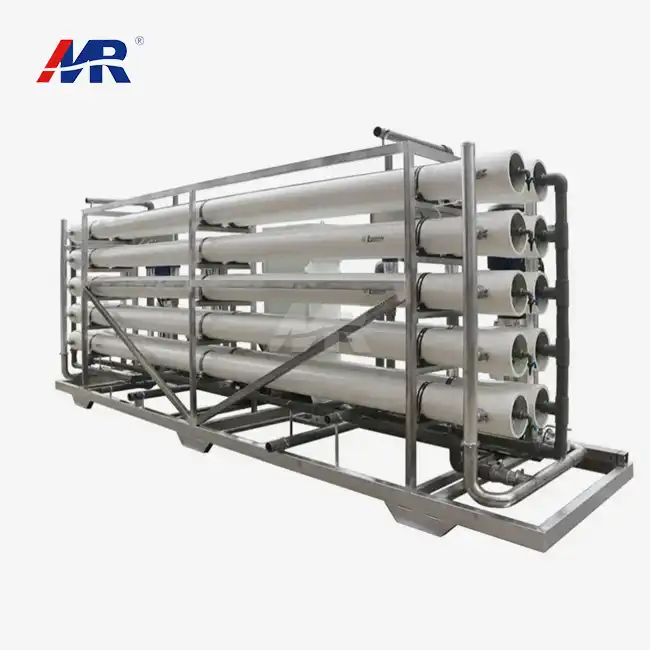
Why Reverse Osmosis Water Needs Remineralization
Up to 99% of dissolved solids, germs, and chemical pollutants are removed by reverse osmosis, which is the best way to clean water. The water that comes out of this aggressive filtration is almost too clean for some uses, though. The ro membrane doesn't pick and choose which contaminants to get rid of; it gets rid of both dangerous ones and good ones, like minerals that help with taste, pH stability, and corrosion prevention.
For companies that make food and drinks, this demineralised water makes the taste less good. People who buy bottled water often say that the Products they get taste flat and acidic. People who make drinks have found that coffee, tea, and soft drinks don't have as many flavours as drinks with appropriate mineral content. It is very important to balance the pH of the water because highly purified water usually has a pH between 5.5 and 6.5, which makes it slightly acidic and could damage transport infrastructure.
Different problems arise in pharmaceutical plants. When making purified water for uses that aren't sterile, it's important to keep the ionic conductivity constant for process proof. Municipal water plants that serve communities know that water that doesn't have enough minerals can leak metals from old pipe networks into drinking water, putting lead and copper into it. This is an expensive problem that can be avoided by adding minerals to drinking water.
The calcium magnesium addition through post-treatment stages addresses these concerns while preserving the contamination-free baseline that reverse osmosis provides. This dual approach—aggressive purification followed by controlled mineral enhancement—represents the industry standard for facilities seeking both safety and functionality.
Understanding Water Mineral Enhancement Technology
Water remineralization system configurations vary based on production scale and target water chemistry. The most straightforward approach uses a mineral cartridge for RO systems, where permeate water flows through a bed of calcite, corosex, or proprietary mineral blends. These media gradually dissolve, releasing calcium RO system that remineralises carbonate and magnesium, and raises pH and restores hardness to 30-80 ppm, depending on contact time and bed depth.
Passive mineral cartridges suit smaller operations—hospitals, research laboratories, and compact bottling facilities—where water production remains under 500 gallons per hour. The technology requires minimal maintenance beyond annual media replacement, and the capital investment stays modest. The limitation comes from inconsistent mineral dosing as the bed depletes and from restricted flow capacity, which makes scaling difficult.
Larger manufacturing operations benefit from active dosing systems that inject concentrated mineral solutions at precisely controlled rates. These water mineral enhancement platforms integrate with SCADA systems, allowing operators to adjust calcium and magnesium concentrations in real-time based on downstream quality monitoring. An alkaline water filter stage may follow, incorporating ceramic balls or ionized mineral stones that further elevate pH to 8.5-9.5 for specific beverage applications where alkalinity improves extraction chemistry.
Advanced configurations incorporate a water ionizer that applies electrical current to separate alkaline and acidic fractions, though this approach serves specialized applications rather than general industrial use. The post-filtration remineralizer stage typically includes activated carbon polishing to remove any residual tastes while the minerals stabilize, ensuring the final product meets both chemical specifications and sensory expectations.
Industry-Specific Applications of RO Systems With Mineral Restoration
Food and beverage processors represent the largest user base for reverse osmosis plus remineralization technology. Craft breweries discovered years ago that water chemistry dramatically impacts beer flavor profiles. Munich-style lagers require elevated sulfate and chloride ratios, while IPAs benefit from higher calcium concentrations that enhance hop bitterness perception. A properly configured water quality restoration system allows brewers to start with RO permeate and rebuild custom water profiles for each beer style, achieving consistency impossible with variable municipal supplies.
Bottled water manufacturers face regulatory and marketing pressures to deliver products that combine safety with pleasant taste. Spring water brands use remineralization to standardize composition across seasonal variations in their source aquifers. Purified water brands add just enough minerals to eliminate the flat taste consumers associate with distilled water while maintaining the "pure and clean" positioning that their marketing emphasizes. The water taste improvement translates directly to repeat purchase rates and premium pricing power.
Dairy processors use remineralized water in cleaning-in-place systems where water hardness adjustment prevents scale buildup in heat exchangers while avoiding the excessive softness that impedes detergent performance. The balanced mineral content optimizes both equipment longevity and sanitation efficacy—a cost consideration that technical managers calculate when evaluating water treatment capital projects.
Healthcare facilities installing dialysis equipment face unique requirements. While dialysis preparation demands ultrapure water free of endotoxins and microorganisms, the water feeding patient hydration stations and cafeteria operations benefits from mineral supplementation. Split-stream configurations provide a healthy water filtration pathway RO system that remineralizes for non-critical uses while maintaining validated purity for medical applications, maximizing the return on RO infrastructure investment.
Agricultural operations treating brackish groundwater for irrigation increasingly recognize that zero-mineral water damages soil chemistry over time. Certain crops require trace amounts of calcium and magnesium for proper cellular development. Remineralization systems allow farms to utilize otherwise unusable water sources while maintaining the soil nutrient balance that organic certification often requires.
Designing Your Mineral-Rich Water Production System
Successful implementation starts with comprehensive source water analysis. Beyond the standard panel measuring total dissolved solids, hardness, and pH, decision-makers should request testing for silica, iron, manganese, and organic carbon—contaminants that affect both RO membrane performance and remineralization strategy. A water with 800 ppm TDS but low hardness requires different treatment than 800 ppm water dominated by calcium bicarbonate.
The RO system design phase determines your remineralization options. Facilities producing water for single applications can optimize the RO membrane with mineralizer integration, sizing the mineral bed based on consistent flow patterns. Multi-product facilities—a beverage plant producing both mineral water and soft drinks, perhaps—benefit from centralized RO production with multiple remineralization trains customized for each product line.
To find the right water hardness adjustment, you have to balance a number of things. When water doesn't have enough calcium, it becomes acidic and caustic. When water is too hard, it causes scaling in equipment further downstream. Calcium carbonate at 40 to 60 parts per million is usually used in food because it keeps things stable without changing how well ingredients dissolve. Different drinks have very different uses. For example, some energy drinks need less than 20 ppm to keep the ingredients from precipitating, while some teas work best at 80–100 ppm.
The parts of the RO system that change the pH level need to be carefully described. For stability, some uses need the pH to be raised to 7.5 to 8.0, but not to 9.0+, which is what alkaline water goods need. Simple calcite beds are a cheap way to change the pH level a little bit, but caustic injection systems with constant monitoring work better for uses that need precise control or quick pH changes. The cost of the instruments goes up as the effects of changing the pH go up. For example, strict label requirements for beverages mean that control needs to be tighter than for industrial process water.
Configuration choices are often limited by the amount of room available. When adding remineralisation to an existing RO system, small cartridge systems may be needed even if active doses would work better, because there isn't enough room on the floor for large mineral tanks and injection pumps. With new building, it's easier to make integrated systems where the reverse osmosis water filter, storage, remineralisation, and final polishing are all on the same process skid, which takes up less space and is easier to use.
Operational Considerations for Purified Water With Minerals
Once commissioned, remineralization systems demand attention to consumable management. Passive mineral beds deplete predictably based on production volume, but water chemistry shifts as the bed approaches exhaustion. Establishing a replacement schedule based on throughput rather than time prevents unexpected quality drift. Smart operations maintain spare cartridges on-site, eliminating production interruptions during changeover.
Active dosing systems require periodic inspection of injection pumps, check valves, and mineral concentrate tanks. The mineral solutions tend toward scaling if allowed to concentrate through evaporation, so tanks need agitation or regular dilution. Flow meters monitoring injection rates should undergo quarterly calibration verification—a drifting meter slowly shifts your product composition without triggering alarms until customer complaints surface.
Water quality monitoring frequency depends on regulatory requirements and product specifications. Pharmaceutical operations follow validation protocols mandating continuous conductivity measurement with documented excursion investigations. Food facilities might test hourly during production runs, confirming pH and hardness stay within recipe tolerance. Municipal systems blend treated and source water, requiring frequent analysis to maintain distribution system stability across varying demand patterns.
Membrane fouling represents the primary RO maintenance concern, and proper pretreatment dramatically extends membrane life. When source water contains significant hardness or organics, upstream softening or multimedia filtration protects the RO membrane, ensuring consistent permeate production on which the remineralization stage depends. Monitoring normalized permeate flow and salt rejection helps operators detect fouling before production capacity suffers.
Sanitization protocols maintain microbiological control throughout the water treatment train. While RO effectively removes bacteria, the remineralization stage can harbor biofilm if neglected. Quarterly sanitization with hydrogen peroxide or peracetic acid solutions prevents microbial establishment. Systems producing water for consumption or pharmaceutical use should incorporate UV sterilization downstream of remineralization as a validated pathogen control step.
Troubleshooting Common Water Quality Restoration Challenges
Inconsistent mineral levels frustrate operations, manifesting as a product RO system that results in remineral taste variations or failed quality checks. When passive mineral cartridges deliver erratic performance, the root cause usually involves channeling—water finding preferential flow paths through the mineral bed rather than even distribution. Proper inlet design with distribution plates and appropriate bed depth relative to flow rate prevents channeling. Replacing depleted media before exhaustion maintains consistent contact dynamics.
Excessive mineral addition causes scale formation in downstream equipment, clogging heat exchangers, spray nozzles, and packaging machinery. This typically results from inadequate flow monitoring or using mineral media with dissolution rates too high for the water chemistry. Switching to less-reactive minerals or reducing contact time restores appropriate dosing. Some facilities install hardness monitors with automatic bypass valving, diverting water around the mineral bed when concentrations exceed setpoints.
When pH changes, it makes it hard for products to stay consistent. At the packing line, water that came out of the remineralizer with a pH of 7.8 might have a pH of 7.2 because it took in carbon dioxide from the air while it was being stored. This pH drop can be avoided by removing gases from the RO permeate before remineralisation or by covering storage bins with nitrogen. Applications that need to be sure of the alkalinity should test and make changes based on alkalinity instead of pH alone, since alkalinity shows the buffering capacity, and pH shows the current state.
Low-flow times bring their own problems. When production stops at night or on the weekend, water that sits in the mineral bed can become too mineralised and needs to be pumped out before bottling can start again. This problem can't happen with automated flush processes, but they waste water. On the other hand, running the pump continuously through the remineralisation loop keeps the quality high without having to drain it.
Problems with corrosion after remineralisation show that not enough minerals were added. Operators may think that the cleanliness of RO permeate takes care of corrosion issues, but over time, aggressive water can damage stainless steel, copper, and even plastic parts. The Langelier Saturation Index measures how scaling or corrosive water is. Water that has been properly remineralised should show a slightly positive reading on this index, which means it has a weak scaling tendency that doesn't damage infrastructure.
Conclusion
When remineralisation is added, reverse osmosis goes from making pure water to making water that is perfectly optimised for your purpose. When you combine aggressive purification with controlled mineral restoration, you get results that you can't get with other treatment methods. These results can be better taste in consumer goods, protection against corrosion in infrastructure, or process consistency in pharmaceutical manufacturing. Technical leaders who take the time to understand the chemistry needs of their water and set up systems in a way that meets those needs gain a competitive edge through better product quality, longer machine life, and compliance with regulations. The technology is no longer just an idea; it has been used in a wide range of fields and has been shown to be reliable and worth the money.
Partner With Morui for a Complete RO System With Remineralization Solutions
Guangdong Morui Environmental Technology brings integrated expertise spanning membrane production, equipment fabrication, and process optimization—capabilities that transform an RO system with remineralization from an RO system that remineral concept to validated operation. Our engineering team designs solutions matching your exact water chemistry requirements, whether you're a pharmaceutical manufacturer needing GMP-compliant purified water or a beverage startup building custom mineral profiles for premium products. With over 500 professionals and 20 specialized engineers across 14 regional branches, we deliver localized support backed by manufacturer-direct resources. Contact our technical specialists at benson@guangdongmorui.com to discuss your water quality objectives and receive a customized RO system with a remineralization proposal from a trusted supplier committed to your long-term success.
References
1. World Health Organization (2009). Calcium and Magnesium in Drinking Water: Public Health Significance. Geneva: WHO Press.
2. Cotruvo, J. & Bartram, J. (2009). Calcium and magnesium in drinking-water: public health significance. World Health Organization Technical Report Series.
3. Kozisek, F. (2005). Health Risks from Drinking Demineralised Water. Rolling Revision of the WHO Guidelines for Drinking Water Quality. National Institute of Public Health, Czech Republic.
4. American Water Works Association (2017). Water Quality and Treatment: A Handbook on Drinking Water, Sixth Edition. Denver: AWWA.
5. Duranceau, S.J., Wilder, R.J., Douglas, S. & Roberson, A. (2011). Post-Treatment Stabilization of Desalinated Water. Water Research Foundation Report.
6. Palaty, Z. & Zakova, A. (2013). The Importance of Remineralization of Demineralized Drinking Water for Human Health. Journal of Water Resource and Protection, Volume 5, Special Issue on Water Quality.