Reverse Osmosis for Beginners: What It Is, Who Needs It, and Where to Start
Reverse osmosis (RO) is a membrane process that uses pressure to push water through a semipermeable membrane while holding back most dissolved salts, metals, and other contaminants. A new RO system packages that process into one skid with pretreatment, a high-pressure pump, membranes, and controls. Industrial plants, water utilities, food and beverage producers, power stations, and pharmaceutical facilities need it when raw water carries too many dissolved solids for their process. To start, test your feed water, define your daily demand, and choose a supplier who builds the process around your numbers.
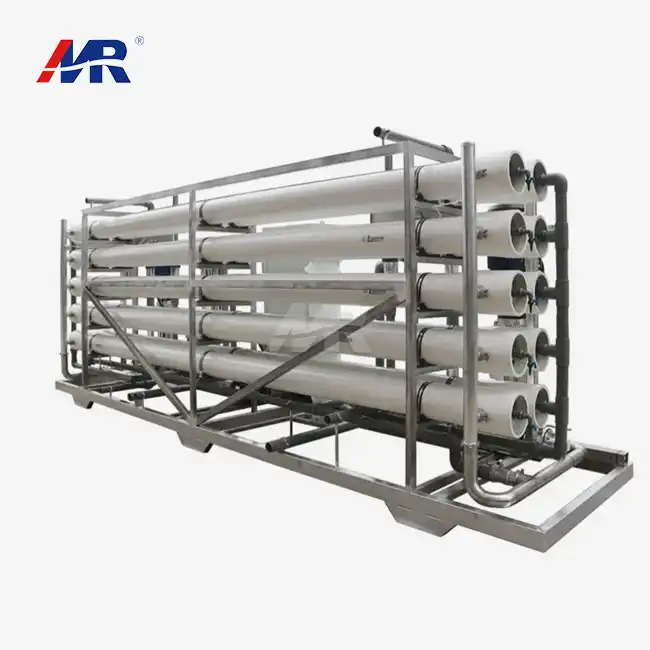
What Reverse Osmosis Is and How a New RO System Works
The Basic Science Behind RO
Two kinds of membranes move water from one side that has less salt to the other side that has more salt. Osmosis is the name for this process. Reverse Osmosis changes that flow. Over the natural osmotic pressure of the water, the pressure is raised by a pump. Because of this, salts stay behind, and clean water goes through. The salty stream that is left over is called concentrate. When tested in the right way, high-rejection membranes stop 99% or more of the salts that are dissolved. The results, on the other hand, depend on the feed quality, the temperature, and the pressure. Elimelech and Phillip wrote in Science in 2011 that RO had become a major way to remove salt from water. Because of this, the same idea is now used in factories and city utilities.
Core Parts of a Complete Skid
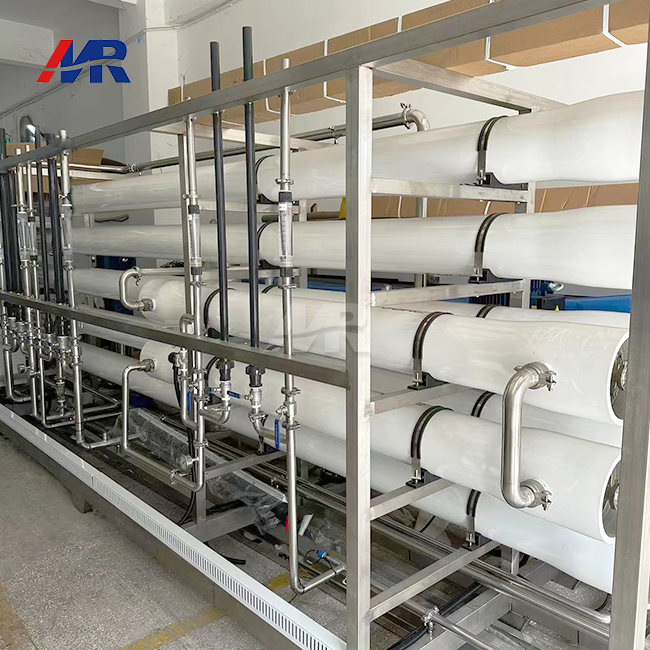
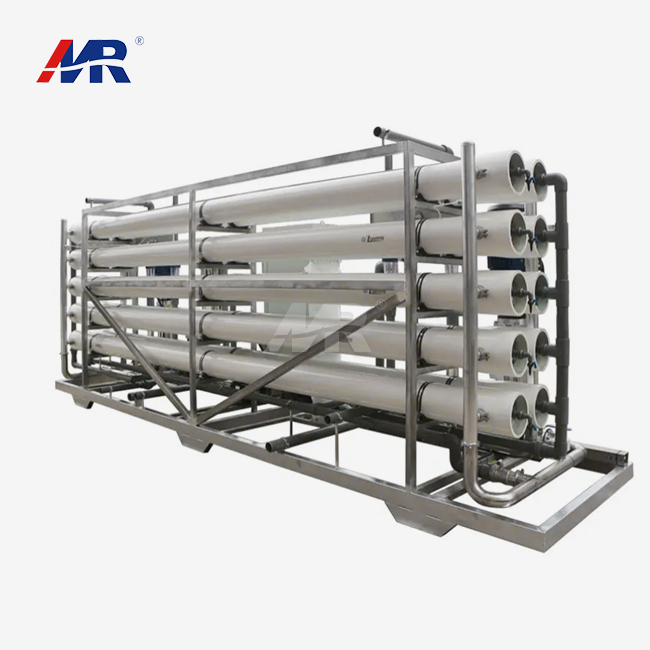
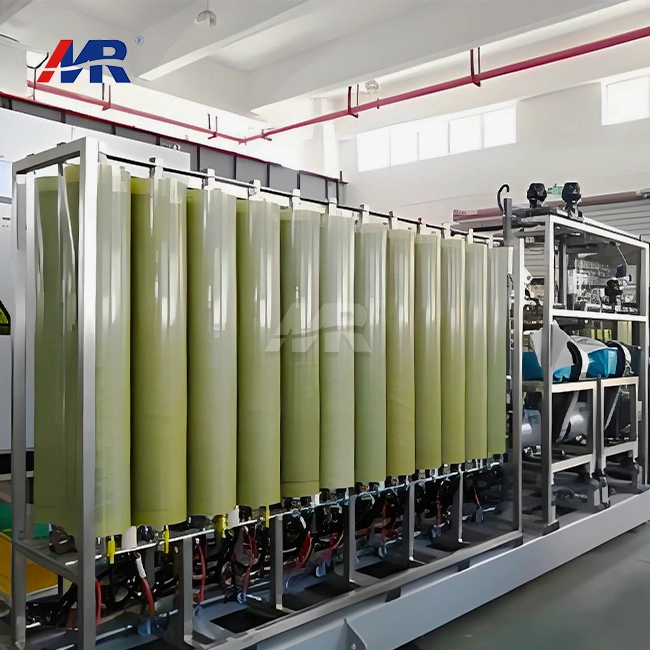
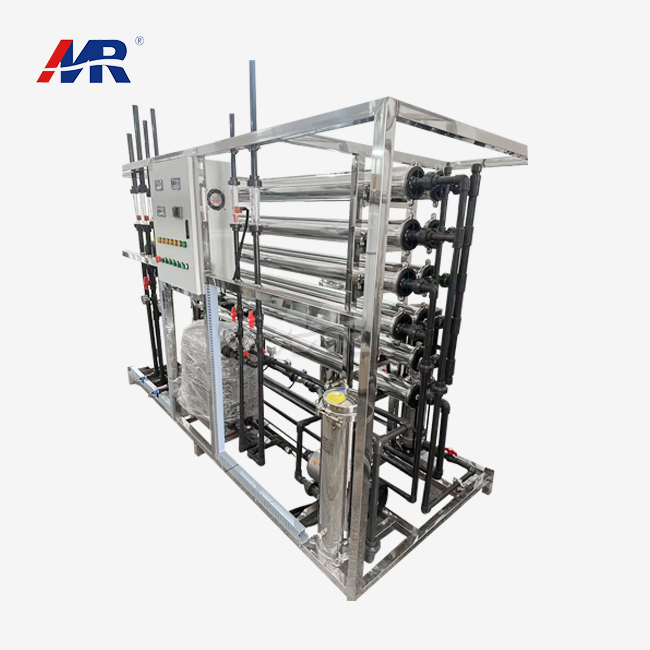
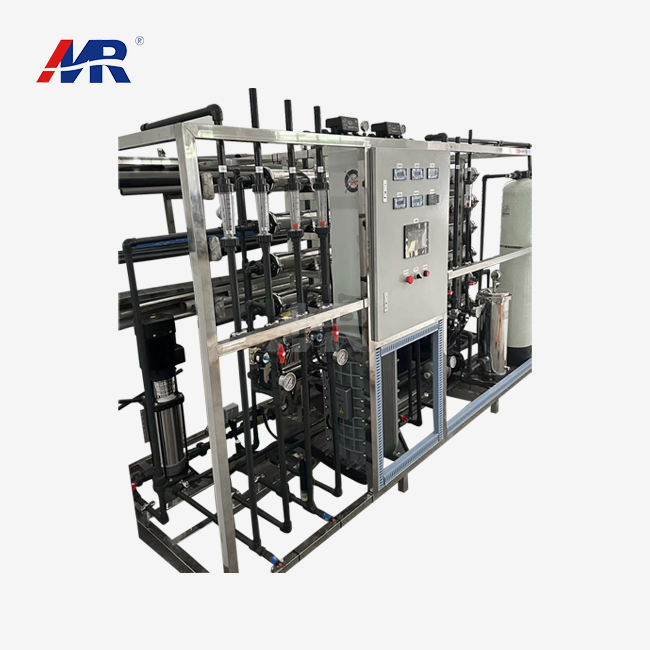
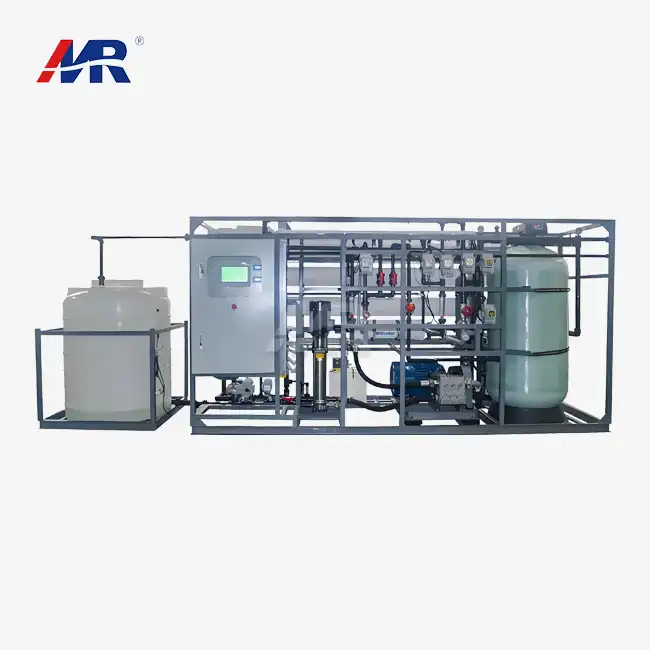
A turnkey skid is made up of four main parts. Before the membranes are used, they are treated with multimedia filtering, cartridge filters, and antiscalant doses to keep them free of particles and scale. A high-pressure pump provides the push. Cell membranes hold the things that keep things apart. Tools and a PLC that keep an eye on pressure, flow, and conductivity set off alarms. To make Morui fit your project, we can add or remove pumps, instruments, pipe materials, and remote monitoring. It's easy to find new parts because we also sell Shimge pumps, Runxin valves, and Createc instruments.
Recovery and Rejection in Plain Terms
Two numbers can sum up most RO performance. Salt rejection tells you how much dissolved salt the membrane can't hold. It tells you how much of the feed is turned into water. 60% of the water that is fed in is turned into product water, and 40% is sent out as concentrate. More recovery saves water, but scaling is more likely to happen because salts build up inside the vessels. You shouldn't just go for the highest number. Instead, you should weigh recovery against feed chemistry. Make sure you ask each quote to explain what recovery, rejection, and test conditions mean before you compare them.
Who Needs a New RO System?
Industries That Rely on RO
There is a lot of demand in four places. Water that doesn't conduct electricity needs to be reused in electronics, PCB, and electroplating plants. In steel mills and power plants, RO is used to heat and cool the make-up. People who make food, drinks, and bottled water clean the fresh water before they mix it with other things or put it in bottles. When pharmaceutical plants need water, the first thing they do is RO. This method is also used by public utilities to clean groundwater that is too salty to drink. EPC companies buy skids for these end projects, so they need clear drawings, papers, and stable lead times.
Reading Your Feed Water
Your water report guides almost every design decision. It is considered fresh water if it has less than 1,000 mg/L of dissolved solids. Water with 1,000 to 3,000 mg/L is slightly salty, and water with 3,000 to 10,000 mg/L is moderately salty. The World Health Organization has been told by taste panels that water with a TDS level below 600 mg/L is good, and water with a TDS level above 1,200 mg/L is bad. On top of the TDS, you should check the hardness, iron, manganese, silica, chlorine, pH, turbidity, temperature, bacteria, and iron. It's important to test more than once if you can because things change with the seasons. Show the seller that report before you ask for a price.
Why Pretreatment Matters
There is a lot of sensitivity in membranes. The feed paths can get clogged up by solids in the water, and minerals like calcium and magnesium that make water hard can form scale as the water gets cleaner. Iron and manganese build up on top of the surface. Carbon filtration or dechlorination is usually the first step because chlorine can damage polyamide membranes. The growth of living things is another way that fouling can happen. In a pretreatment train based on your water report, cartridge filters and water softeners, antiscalants, or filters are used. That way, the membranes stay safe, and the pressure stays high. If you skip this step, a new ro system will often lose output too soon.
Where the MR-BWRO-50TH Fits Pharmaceutical Water Production
Key Specifications
This is Morui's MR-BWRO-50TH brackish water RO system. It is fully assembled and ready to use. In this case, it was set up to produce water that could be used in medicine. It takes 55,000 kW of power, and 99% of the salt is thrown away. 55,000 to 65% recovery is expected. A final process plan will be made based on your raw water report. This plan will include a pretreatment stage and a membrane stage. It's up to our engineers to look over that report and suggest parts before we start building. This method is great for people who don't want a standard unit but still need process-grade water and a steady flow.
RO's Role in a Pharmaceutical Water System
RO is usually near the front of a train of pharmaceutical water. It gets rid of most of the ions, organics, and microbes that are dissolved in the feed before the next steps. What are water grades? They are discussed in the United States Pharmacopeia General Chapter <1231>. This guide from the ISPE Baseline Guide talks about how to plan and get approval for water and steam systems. Based on the grade you want to reach, the line could have electrodeionization, UV, or a clean storage and distribution loop. First, talk to your quality team about the grade and proof papers that you need. Then we line up the RO skid with the plan.
What 55–65% Recovery Means for Your Plant
The process recovers 55 to 65 gallons of water for every 100 gallons that are fed in. It leaves as a mixture with the other 35 to 45 gallons. These are the rejected salts in the concentrate. Plan how you will get rid of or use them again, and find out what the rules are in your area for getting a permit. A rejection rate of 99% means that around 20 mg/L of product water would be made from a feed of about 2,000 mg/L. But the real results will depend on how things go. How much does it cost to run? Add in the 55 kW of power it needs, the chemicals, and the membrane repair.
Where to Start: Installation, Upkeep, and Choosing a Partner
Site Preparation and Commissioning
Before you deliver the machine, make sure there is enough room on the floor, a feedwater supply, a concentrate discharge, enough electricity, airflow, and a way to get to the top of the machine. Make room for pipes and wires so the skid can connect without any extra work. As the new ro system is being set up, technicians set alarms, flush the preparation and membranes, and write down the baseline pressure, flow, and conductivity. Also, they look for leaks in every connection. The first books you read will help you solve problems in the future. Professional commissioning is the best way to go for an industrial or controlled system. Our Team can help you set up and get going.
Maintenance and Troubleshooting
The water stays clean, and the membranes last longer with regular care. People who work there should write down the pressure, flow, and conductivity every shift, and they should change the cartridge filters when they need to be. When the pressure drops and then rises, it usually means that there is fouling or scaling. If product flow goes down, it means the membrane is clogged. If product conductivity goes up, it means the membrane is worn out, or there is a seal leak. It's fixed by cleaning with the right chemicals for the job. Hold on to extra filters, seals, and tools to cut down on downtime. When auditors look over a pharmaceutical process, it's also helpful to have written maintenance plans.
Choosing a Manufacturer or OEM/ODM Partner
Don't just look at the price per unit. Find out how much they can make, how they test, how they handle extra parts, how long the wait time is, and how much experience they have shipping. A privately owned company called Morui has been making things for 25 years. It has 500 employees, 20 engineers, 14 branch companies, its own factory for making membranes, and several factories for making equipment for processing. If you have your own design, our OEM/ODM service can help you make it happen. They can also help you pick the right parts and processes based on the water quality. Buyers who need to keep something secret can bring up an NDA right away. For US jobs, let us know right away what forms and credentials your company needs.
Conclusion
Through Reverse Osmosis, water is pushed through a barrier that stops most of the salts that are dissolved in it. To make the process reliable on an industrial scale, a new RO system includes pretreatment, pumps, and controls. Our needs depend on the water we use, so we start by getting test results for TDS, hardness, iron, and other things. We then make sure the filters are safe. The numbers for recovery and rejection are only useful when it is clear what the test conditions are. If the recovery is between 55 and 65%, some of the feed is lost as concentrate. This means that a plan needs to be made. With 55 kW of power, the MR-BWRO-50TH can turn down 99% of salt. To make pharmaceutical water, this is the first step. The next steps depend on the grade that is needed. The performance stays the same thanks to careful setup, regular checks, and a supplier with a lot of experience.
FAQ
1. What does 99% salt rejection mean?
When the test is done, the barrier stops about 99% of the salts that have been dissolved. You should know how a rating was made before you believe it because real results depend on the feed, the temperature, and the working pressure.
2. Does RO alone produce pharmaceutical-grade water?
Not all the time. RO is often a part of the water process. The grade you need to get determines the steps you add, such as electrodeionization or UV. Ask your quality team to look over the standards in the pharmacopeia.
3. How much water goes to drain?
35 to 45% of the feed is left over as concentrate when recovery is between 55 and 65%. There are different rules about release in different places, so check the local permit rules before you make your plans official.
4. What do I need to request a quote?
List the raw water, the daily demand, the site's information, the papers you need, and the pumps, controls, tools, or tracking from away that you want to use.
Talk to Morui About Your New RO System Project
Morui is ready to look at your water report and give you ideas on how to use the MR-BWRO-50TH. As a new company that makes new ro systems and has its own factory for making membranes, 20 engineers, and full OEM/ODM service, we can make pumps, controls, instruments, and monitoring fit your project perfectly. To find out more, email benson@guangdongmorui.com with your feed-water data and daily needs. The tech plan will be sent to you by our team.
References
1. International Society for Pharmaceutical Engineering (ISPE), Baseline Guide Volume 4: Water and Steam Systems, 2019
2. United States Pharmacopeia–National Formulary, General Chapter <1231> Water for Pharmaceutical Purposes, 2023
3. World Health Organization, Guidelines for Drinking-water Quality: Fourth Edition Incorporating the First and Second Addenda, 2022
4. Crittenden, J. et al., MWH's Water Treatment: Principles and Design, Third Edition, 2012
5. Elimelech, M. and Phillip, W., The Future of Seawater Desalination: Energy, Technology, and the Environment, Science, 2011
6. U.S. Geological Survey, Saline Water and Salinity, USGS Water Science School, 2019