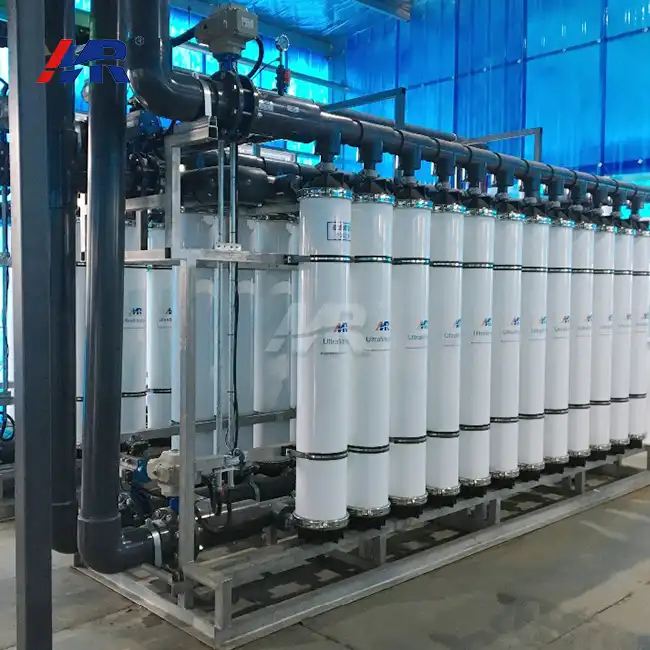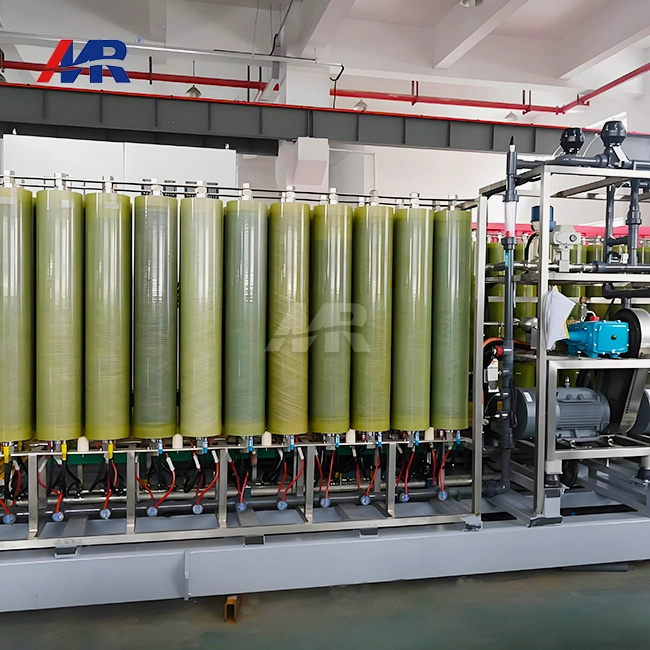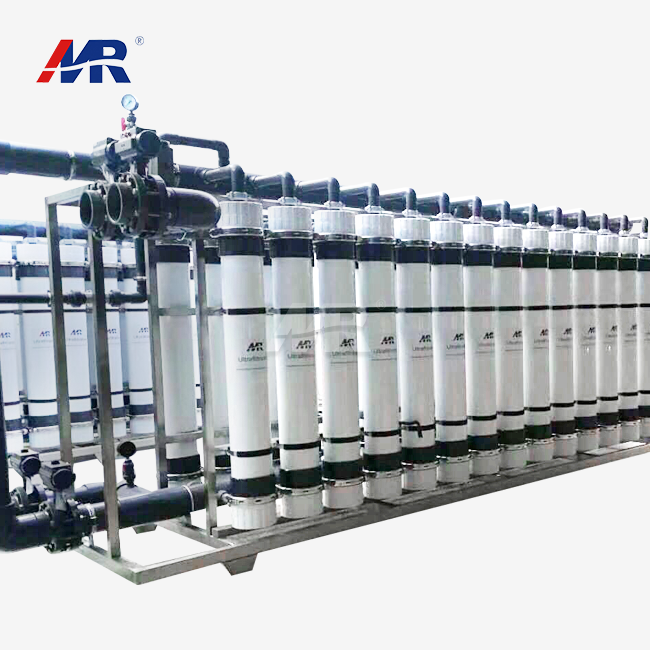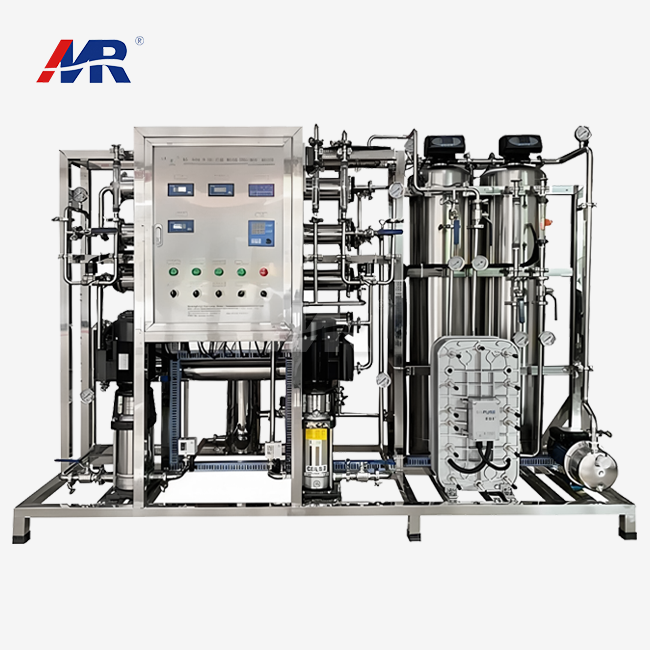



How Does a 70m3/hour Ultrafiltration Plant Handle Turbidity Changes?
A 70m³/hour ultrafiltration plant manages turbidity swings through online monitoring, adjustable pretreatment, controlled membrane flux, and automatic backwashing. I have spent years reviewing field data from hollow-fiber UF systems across Asia, Africa, and South America, and the question I hear most from plant owners is simple: what happens when the raw water suddenly gets dirty? This article answers that question with real operating data, a case study from a Mekong Delta installation, and a procurement checklist you can hand to any supplier.
Key Takeaways for Buyers and Operators
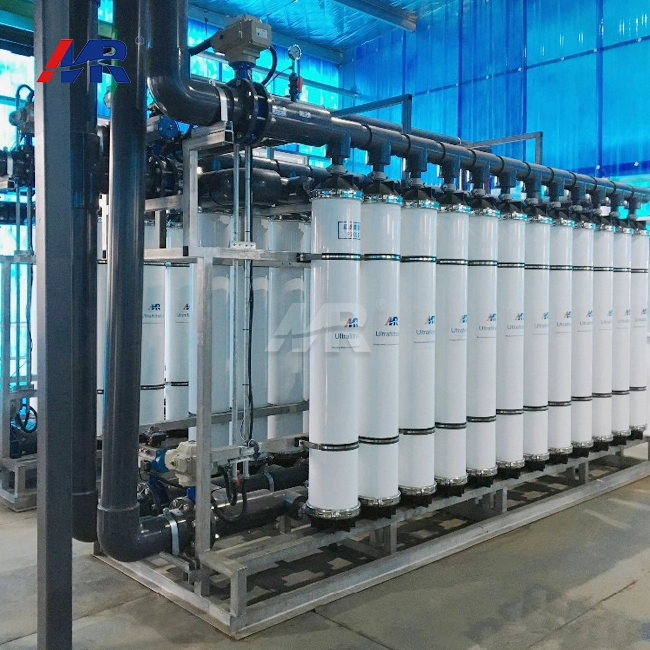
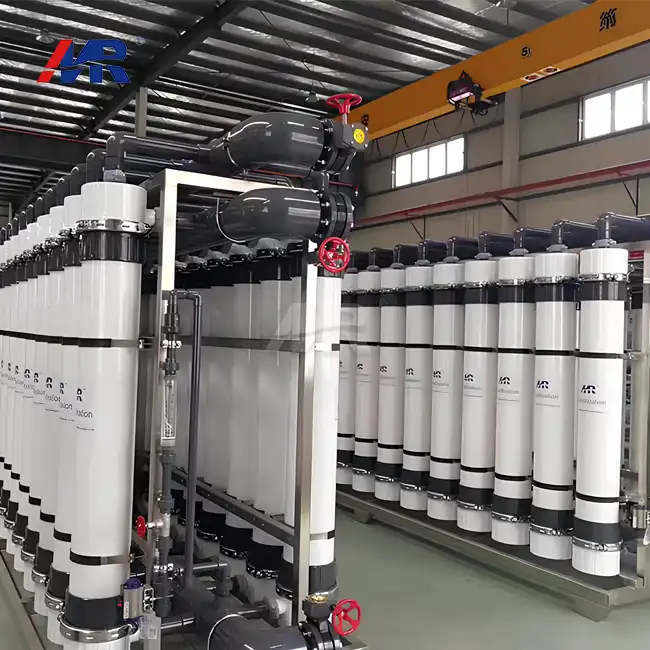
Most of the pores in a hollow-fiber membrane barrier are between 0.01 and 0.1 microns in size. A 70m³/hour ultrafiltration plant gets rid of colloids, bacteria, large organic molecules, and suspended solids. Turbidity isn't just based on flow rate; it also depends on the membrane's material, how it was treated before use, how much flux it has, and how often it is cleaned. If the readings go up quickly, the flow will automatically slow down, the chemical dose will change, or the permeate will be diverted until the readings return to normal. It's best to use UF as a step before either reverse osmosis (RO) or nanofiltration (NF). UF can't get rid of dissolved solids on its own, though. Transmembrane pressure (TMP) needs to be controlled, backwashing needs to happen regularly, and chemicals need to be used to clean the membrane better when gunk builds up for long-term stability.
What Causes Turbidity Changes in a 70m³/hour UF Feed Water?
Raw water changes every week. When people who work at a 70m³/hour ultrafiltration plant know why turbidity changes, they can set more accurate alarm points instead of looking at round numbers.
Seasonal and weather-related turbidity sources
Surface water sources' turbidity changes most when it rains, floods, or when tanks are emptied and then filled back up. From what we learned in the Mekong Delta in 2024, a river that is 10 NTU during the dry season can quickly rise to over 300 NTU after a storm. If a well casing breaks or construction in the area disturbs the aquifer, groundwater sources are much more stable. The level of groundwater usually stays below 5 NTU all year. If you live in a mountainous or tropical area, engineers need to think about snowmelt and algae blooms as well as the size of the pretreatment.
Industrial and municipal causes
Being outside is the only place haze can come from. Suspended solids can be pushed into a feed stream without warning when a pipeline is being serviced, when food plants are being cleaned, or when chemicals are being added to stormwater intakes. Most of the time, cleaning processes or batch changes are what cause dairy and beverage plants to have high levels of organic matter. This makes the turbidity and total organic carbon (TOC) levels go up. In public water systems, short turbidity jumps are normal right after a water main fix. This is because the treatment plant gets sediment that had settled in the pipe.
Required feedwater characterization before sizing
I need to see a basic water quality table that shows the turbidity, total suspended solids (TSS), particle-size distribution, and silt density index (SDI) before I can tell you what flux or membrane area you should use for a 70m³/hour ultrafiltration plant. pH, temperature, TOC, and iron or manganese levels round out the picture. These levels tell us whether oxidation or coagulation needs to happen sooner. The main reason UF systems don't work well once they get to the spot is that they were designed without taking into account what the water does all year.
What Turbidity Range Can a 70m³/hour UF Plant Handle?
While this flow rate works for some systems, it doesn't work for all of them. This question comes up all the time, and the truthful answer takes a while to explain.
Why there is no universal turbidity limit
It's not the same thing as haze tolerance, which is one thing. The ultrafiltration plant can handle 70m³/hour and has hollow-fiber PVDF membranes. It comes after a coagulation stage that can handle feed turbidity above 100 NTU for short periods of time. If there is no preparation, the same flow rate might not be able to go above 30 NTU. The actual things that impact the process are the shape of the membrane, the clarity of the water coming in, the setting of the flux, the desired recovery rate, and the nature of the raw water. There are three levels that I always separate in my designs: the normal operating turbidity, the short-term peak turbidity, and the shutdown threshold. The system turns off at this point to protect itself.
Typical design envelope worth confirming with any supplier
| Design item | What to confirm |
|---|---|
| Nominal flow | Whether 70 m³/h refers to feed or permeate |
| Feed turbidity | Normal range and maximum design value |
| Peak-event response | Diversion, flow reduction, or automatic shutdown |
| Membrane flux | Rated flux at both minimum and maximum temperature |
| TMP limit | Alarm setpoint and emergency shutdown value |
| Recovery rate | Net figure after backwash and cleaning losses |
| Permeate quality | Target turbidity, SDI, and microbial log removal |
Data to gather before final sizing
It is more important to look at samples of feedwater taken at different times of the year than to do one lab test on a sunny day. I think you should do a short test run in rough water. It's not enough to just use math to figure out what two weeks of data from a small test skid tell us. You should also make sure that the membrane works with the pH, chlorine residue, and cleaning agents that are present in the area. This is because a membrane that is made for one kind of water can quickly get dirty with another kind.
How Does UF Respond to Sudden Turbidity Spikes?
In a 70m³/h ultrafiltration plant, this is where the technology pays for itself. When the controls are set up correctly, they work in seconds, which is much faster than a person could do it by hand.
Automatic control sequence during a spike
When the online turbidity meter sees an unusual rise, it compares the reading to setpoints that are stored in memory to signal a warning and shut down the system. There is a drop in the feed flow or membrane flux when coagulant dosing is added. This is because the dose pump rate changes to match the new solids load. The system then does a backwash or a backwash with added chemicals before it normally would. Any extract that doesn't meet quality standards is sent to the drain or returned to the feed tank during this time. We can't store dirty water because of this.
Protection mechanisms built into the membrane modules
Before they get to the membrane housing, the biggest pieces of dirt are caught by a feed strainer or a screen that cleans itself. On a set cycle, which is usually every 30 to 60 minutes but can change depending on the quality of the raw water, automatic backwash and forward flush remove loose solids from the fiber surface. When the system is ready for it, air scour (compressed air bubbles) is used instead of water flow to lift particles away from the fiber bundles. You can turn off one skid of a standby membrane train to clean it while the rest of the plant keeps making water. Things that run 24 hours a day in the city can't afford to be closed down, so this is very important.
Case study: a 70 m³/h plant during monsoon season
We put in a 70m³/hour ultrafiltration plant for a village water scheme in the Mekong Delta in the early part of 2024. About 12 NTU of silt was always present in the raw river. During the first rainy season, it rose to 185 NTU in just six hours. From 45 minutes to 28, the PLC changed the flow of permeate for 11 minutes until the numbers became steady. It also cut the flow by 35%. The permeate turbidity never went above 0.15 NTU during the whole event, and the operator log showed that no work had to be done by a person. Just because of that one fact, I tell my clients that the control logic is just as important as the membrane.
How Does UF Compare With Conventional Turbidity Removal?
They want to know if sand filters or multimedia filters can do the job for less money. How you use the similarity makes a big difference.
UF versus conventional media filtration
| Criterion | 70m³/hour UF plant | Conventional media filtration |
|---|---|---|
| Particle barrier | Fine membrane separation, absolute pore rating | Depth filtration, no fixed pore size |
| Microbial removal | Strong physical barrier when membrane integrity holds | Depends heavily on coagulation and contact time |
| Footprint | Compact, often skid-mounted | Larger vessels, more floor space needed |
| Pretreatment tolerance | Sensitive to high solids without upstream treatment | More tolerant of variable raw water |
| Operating complexity | Automated backwash and chemical cleaning | Manual or semi-automatic backwash |
| Permeate consistency | Stable output when flux is controlled correctly | Varies more with media condition and age |
UF versus reverse osmosis
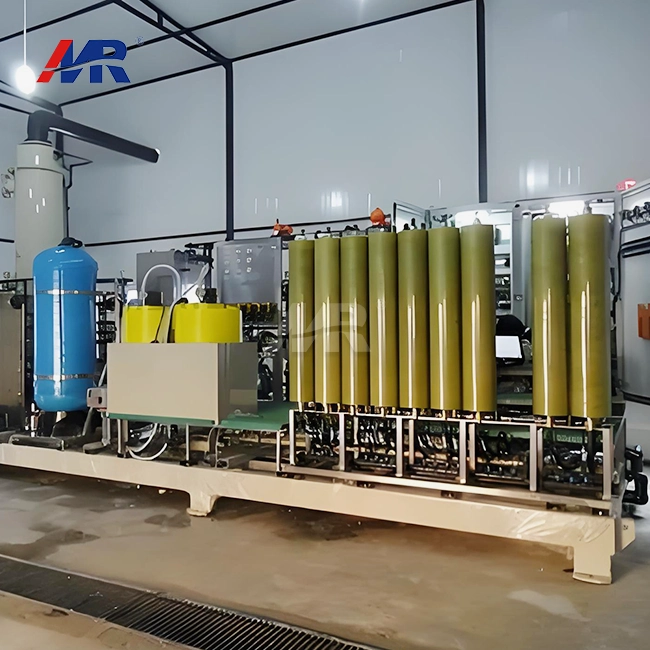
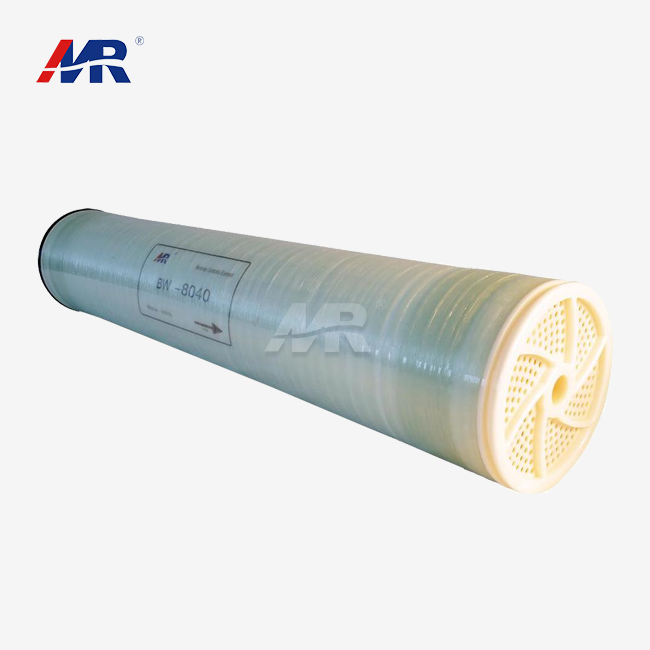
A 70m³/hour ultrafiltration plant gets rid of colloids, bacteria, larger organic molecules, and solids that float on the water, but it doesn't get rid of salts that are dissolved in the water. That part of the job is done by RO, which has a thick membrane that stops ions and other small particles from getting through. Putting UF in front of RO keeps the ro membranes clean and makes them last longer. In the Middle East and North Africa, most desalination preparation trains have a UF stage before the RO skid because of this.
Choosing between UF, RO, and a combined train
When particles, turbidity, and microbial safety are the only things that matter, UF alone is the best choice. For example, in a village drinking water plan where the water comes from a river, UF alone is the best choice. Because it is salty and close to the coast, RO is the best choice when certain ions or dissolved solids need to be removed. A UF-RO train that works together is good for reuse projects in industry, process water for food and drinks, and any job that needs to get rid of particles and salt from seawater before it is desalinated.
What Pretreatment Helps Stabilize UF Turbidity Control?
You can tell if a uf membrane will last five years or just barely eighteen months by this part of the system. I see it as an important part of the design, not something that comes last.
Screening, clarification, and coagulation
Fine screens and strainers that clean themselves get rid of things that are bigger than a few hundred microns. This stops rough particles from wearing down the pumps and membrane housing. Coagulation and flocculation are chemical reactions that mix small particles that are spread out into bigger flocs that are easier to filter or settle. This is pretty important for surface water that has a lot of clay or dead plants in it. Laminar flow clarifiers, dissolved air flotation, or simple sedimentation basins can be used in places where the raw water always has a lot of solids in it. This means that the UF stage doesn't have to work as hard before the water even gets to the membrane housing.
Cartridge and media filtration as a second layer
Before water gets to the cartridge stage, media filters cut down on the amount of bulk solids. This helps the cartridge last longer, so you don't have to change it as often. The 5 to 20 micron cartridge filters catch the little bits that are still there and keep the feed pumps from wearing out. You should think about the differential pressure limits, how often the cartridges need to be replaced, and how you will get rid of them locally, since some places don't let you put filter media in landfills.
Pretreatment selection by feedwater type
| Feedwater condition | Suggested pretreatment |
|---|---|
| Low-turbidity groundwater | Screen, cartridge filter, direct to UF |
| Variable surface water | Coagulation, clarification, then UF |
| High algae content | Screening, coagulation, flotation, then UF |
| Iron and manganese present | Oxidation plus clarification or filtration |
| Industrial wastewater reuse | Equalization tank, oil removal, biological treatment |
| RO pretreatment duty | UF followed by cartridge filtration and SDI monitoring |
How Does Turbidity Affect UF Membrane Fouling?
There is a difference between turbidity and membrane fouling, even though they are linked. Fouling happens when bits stick to the surface of the fiber.
Main fouling mechanisms to watch for
Solids in suspension build up on the outside of the hollow fiber faster than backwash can clear them. This is called cake-layer fouling. Over time, this makes TMP go up. Organic matter or colloids that are small enough to get into the membrane holes get stuck and block the way. When natural organic matter from dead 70m3/hour ultrafiltration plants sticks to the surface of the fiber, this is called organic fouling. In the summer, when living things are more active, this problem tends to get worse. When minerals like calcium or iron are dissolved in water and then settle to the membrane surface at the wrong pH or concentration, this is called scaling. Biofouling is a layer of microbes that stick to the membrane and keep growing unless it is cleaned.
Performance indicators worth tracking daily
When you look at TMP, temperature, and flow, you can see how hard the membrane has to work to make the same amount of water. The first sign of pollution is a rising TMP trend at steady flux. This can often be seen days before the quality of the permeate starts to drop. It means that there was a break in the cleaning process instead of a problem with the membrane if the backwash frequency and chemically increased backwash frequency keep going up over a few weeks. Most PLCs keep track of the feed-to-permeate turbidity difference on their own. This makes sure that the membrane barrier is still in place.
Cleaning and replacement planning
Physical backwash, air scour, chemically improved backwash, and full clean-in-place (CIP) can all get rid of different kinds of fouling. It is not always necessary to use the strongest chemical. It is more important to match the cleaning method to the cause of the mess. There needs to be cleaning stuff made for each type of membrane. Some PES (polyethersulfone) formulations can't handle a wider range of pH and oxidants than PVDF. This means that you can clean more harshly with PVDF. Membrane replacement shouldn't be based on a set date on the calendar that doesn't take into account how things are at the site. Instead, it should be based on performance cues, such as when permeability drops below 80% of average after cleaning.
How Should UF Flux Change With Turbidity Levels?
When you change the membrane area by a certain amount, you get flux. The number on the plate shouldn't stay the same; it should change based on the raw water.
Flux-control principles for stable operation
The flow is slow when there are a lot of clouds, the water is cold, or there is a good chance that something will get stuck. This makes the membrane less stressed and lets you clean it less often. You don't have any extra room in case the weather is bad this week if you only plan a system around the max nameplate flow. One train can be shut down for cleaning while the other two or three trains work side by side. This way, production doesn't stop. This is very important for city 70m3/hour ultrafiltration plants that have to be open all the time.
Relationship between flux, pressure, and cost
The membrane area needed for a certain flow can be shrunk by making the flux bigger. This lowers the cost of capital at the start. Most of the time, that gain comes back as more fouling, more cleaning, and the feed pump having to work harder to stop TMP from rising. Over time, lowering the flux makes things more stable, but it needs a bigger volume and a bigger membrane area. When clients ask me to help them compare prices, I always tell them to look at the total cost of ownership over five years instead of just the price of the equipment. This is because the less expensive skid on the first day isn't always the more expensive one by the third year.
How Can a 70m³/hour UF Plant Maintain Stable Output?
There should be a clear way to figure out the healing rate, and the numbers on paper should match what happens on site in order to get stable output.
Control and instrumentation worth specifying
When the water quality changes, online feed and permeate turbidity meters are the first to notice. They send a direct signal to the PLC's alarm logic. Operators don't have to guess what the real recovery rate is because the feed, permeate, and backwash lines all have flow meters on them. During the nite shift, a user can use the raw sensor data without having to call a tech. This is possible because pressure sensors make the TMP work, and records of trend logging and warnings are also kept.
Recovery-rate calculation explained plainly
If you divide the amount of useful permeate by the overall volume of feedwater, you get the percentage of net recovery. It should be clear from that calculation whether it removes backwash water, forward flush water, chemically enhanced backwash volume, or any off-spec permeate that was diverted during start-up. If a service provider says they will get 95% of your money but doesn't say how, you can't be sure of that number. As soon as the plant starts up, this difference is very clear.
Acceptance and verification testing before final payment
The design should work as expected at the given feed conditions, meet the turbidity and microbial goals, and have a clear pass or fail test method for membrane integrity. This can be done through factory acceptance testing (FAT) and site acceptance testing (SAT). When the machine runs continuously for at least 24 to 72 hours, it checks the CIP sequence and does a full backwash. This finds problems that a short demo run would miss.
How Should Buyers Specify a 70m³/hour UF Plant?
The right standard will depend on whether you are an OEM partner, an area distributor, or the person who runs the business every day.
OEM or system integrator requirements
OEM partners need to know the modular skid measurements, the P&ID (piping and instrumentation diagram) files, and the PLC transmission protocol details before they can add a 70m³/hour ultrafiltration plant to a larger system. When a business sells something under its own brand, it needs private-label packaging, help with tech changes, and a quick response time for paperwork. Performance guarantees and who is in charge of final testing should be put into the contract before it is made, not after it has been shipped.
Distributor and regional supplier priorities
When it comes to Southeast Asia and Africa, regional wholesalers usually put stock of spare parts, repeatable setups, and training support ahead of special building. Lead time and how quickly you follow up after the sale are more important than price most of the time. This is because a distributor's image with the end client will suffer if a plant sits idle for three weeks while they wait for a membrane module.
End user and plant owner considerations
End users need to know about the quality of the source water, the quality of the goal permeate, the daily working hours, and the site utilities before they get a quote. How much technology is used should depend on how skilled the people who work there are. In this case, a village water system with only one part-time operator needs a control panel that is easier to use than a city plant with trained staff that works three shifts.
Procurement checklist to send any supplier
| Category | Question to ask |
|---|---|
| Capacity | Is 70 m³/h feed flow or permeate flow? |
| Water quality | What are normal, average, and peak turbidity values? |
| Membranes | Hollow-fiber or flat-sheet? PVDF or PES? Pore size? |
| Automation | Fully automatic, semi-automatic, or manual? |
| Materials | 304/316 stainless steel, UPVC, or FRP housing? |
| Utilities | Power supply, compressed air, chemical dosing, drainage? |
| Commercial terms | MOQ, lead time, payment terms, Incoterms, warranty? |
| Documentation | P&ID, manuals, FAT records, test reports available? |
Compliance notes for Western and export markets
Machinery, pressure equipment, or electrical assemblies that are controlled by the EU must have the CE marking on them in order to be sold. For buyers, a general claim is not enough. They should ask for details. Quality goals are set by EU Directive 2020/2184 for water that people are supposed to drink, and they are then carried out by national laws. It is important to check the local transposition for European municipal projects (European Commission, 2020). In 2023, NSF/ANSI/CAN 61 will cover parts of projects in North America that touch drinking water. You should ask for this standard by certificate number instead of name (NSF International). It is said that RoHS and REACH cover some materials and electrical parts. When it comes to the FDA, their food-contact rules only apply to areas that come into contact with food and drink in certain Cases. They don't cover all UF plants by default.
Supplier Capability and Evaluation
You shouldn't just go by what a maker says when choosing one for a 70m³/hour ultrafiltration plant. You should look at proof that can be checked. What I would ask myself if I were the buyer led to this part.
How to evaluate a UF plant manufacturer
Find jobs that have been done at or near 70 m³/h and get the phone numbers of people you can call. Do not ask for a paper number. Instead, ask for the name of the membrane, a description of the module, and performance specs that can be kept track of. Before the goods are sent out, make sure that the plant does quality checks like electricity and pressure tests. Check to see if you can test the water first before you place an order for the whole thing.
Supplier comparison framework
| Evaluation factor | Supplier A | Supplier B | Supplier C |
|---|---|---|---|
| 70 m³/h reference project | Verify | Verify | Verify |
| Pilot or feedwater validation | Yes/No | Yes/No | Yes/No |
| Automatic turbidity response | Verify | Verify | Verify |
| FAT and SAT scope | Verify | Verify | Verify |
| Membrane traceability | Verify | Verify | Verify |
| Lead time and Incoterms | Record | Record | Record |
| Warranty and spare parts | Record | Record | Record |
Why in-house membrane production changes the equation
The Guangdong Morui Environmental Technology Co., Ltd. makes its own tools and has its own line for making membranes. There is no need to force the water to fit a normal catalog part. Instead, the pore size, PVDF or PES material choice, and module setup can all be changed to fit the raw water from a client. Our business is in more than 14 places and has about 500 employees. There are twenty engineers among them. They work on custom skid layouts, containerized builds, and remote monitoring systems for clients in Asia, Africa, and South America. Also, Shimge water pumps, Runxin valves, and Createc instruments can be bought from our business. This means that the tools used to control and dose the membrane is made by well-known brands that people trust.
Request Project-Specific Data Before You Commit
While you compare quotes right now, send us the range of turbidity for your raw water, how much of the product you need, and what you plan to use it for. I will not give you a quote on a standard stock unit. Instead, I will have our engineering team make a project-specific specification sheet for your 70m³/hour ultrafiltration plant. The results of trial tests can be shown to you before you place an order by Morui, a 70m3/hour ultrafiltration plant maker with in-house membrane manufacturing. We want to talk to you about your water quality. Please send your numbers and site information to benson@guangdongmorui.com.
Conclusion
In a 70m³/hour ultrafiltration plant, the recovery rate stays the same even when the turbidity level changes because the design takes into account changes in the feedwater, pretreatment, membrane flux, automatic controls, and the clear recovery calculation. Price doesn't tell you much about how well a system will work during the wettest week of the rainy season or the hottest month of the summer. There was no change in the quality of the permeate, but the raw turbidity went up fifteen times at our Mekong Delta site. This is what good control logic looks like when it's under a lot of stress. Take a look at the pilot data, cleaning history, and paperwork before you sign anything. You should be able to still use the plant the way it was meant to work in five years.
FAQ
1. What is a 70m³/hour ultrafiltration plant?
A 70m³/hour ultrafiltration plant is a hollow-fiber membrane system designed to process roughly 70 cubic meters of water per hour. Buyers should confirm whether this figure refers to feed flow, permeate flow, or nominal production capacity before comparing quotes.
2. What turbidity can a 70m³/hour UF plant handle?
There is no fixed turbidity limit that applies to every system. The real range depends on membrane material, pretreatment design, flux setting, and the manufacturer's validated test data, so always ask for a project-specific design envelope.
3. How does UF handle sudden turbidity spikes?
The system detects spikes through online turbidity monitoring, then responds by cutting flux, adjusting coagulant dosing, running an early backwash, and diverting off-specification permeate until readings return to the normal range.
4. Is UF better than conventional filtration for turbidity removal?
UF generally delivers a finer and more consistent particle barrier than sand or multimedia filtration. Conventional filtration still has value as a pretreatment stage, since it lowers the solids load reaching the UF membrane.
5. Can a 70m³/hour UF plant replace reverse osmosis?
No. UF cannot remove dissolved salts or most low-molecular-weight contaminants the way RO does. Most projects pair UF ahead of RO specifically to protect the RO membrane from fouling and extend its service life.
6. What is the typical water recovery rate of a 70m³/hour UF plant?
Recovery typically falls between 90 and 97 percent depending on backwash frequency, forward flush volume, and cleaning losses. Ask any supplier to show the calculation line by line rather than quoting one flat number.
7. How often do UF membranes need replacement?
Replacement should follow a performance trigger, such as permeability dropping below 80 percent of baseline after cleaning, rather than a fixed calendar schedule that ignores actual raw water conditions and operating history.
Get a Quote for Your Water Treatment Project
Anywhere, any time of year, and any amount of space will determine whether the water is clear or cloudy. If you require a 70m3/hour ultrafiltration plant for sale with ready-to-submit paperwork, Our Team at Guangdong Morui Environmental Technology Co., Ltd can put together a full technical package in just a few days. As a single service, we bring the gear, set it up, and turn it on. We have our own membrane plant and a network of extra parts that were built just for customers who want to sell. Email us about your project at benson@guangdongmorui.com, and we'll send you a standard sheet based on the water quality information you give us.
References
1. World Health Organization. Guidelines for Drinking-water Quality, 2022. https://www.who.int/publications/i/item/9789240045064
2. U.S. Environmental Protection Agency. Drinking Water Treatment Technologies, 2023. https://www.epa.gov/sdwa/drinking-water-treatment-technologies
3. European Commission. Directive (EU) 2020/2184 on the quality of water intended for human consumption, 2020. https://eur-lex.europa.eu/legal-content/EN/TXT/?uri=CELEX:32020L2184
4. NSF International. NSF/ANSI/CAN 61: Drinking Water System Components, 2023. https://www.nsf.org/knowledge-library/nsf-ansi-61-drinking-water-system-components
5. International Organization for Standardization. ISO 9001: Quality Management Systems, 2015. https://www.iso.org/iso-9001-quality-management.html
6. American Water Works Association. Membrane Processes Resources, 2023. https://www.awwa.org/resources-tools/water-and-wastewater-utility-management/standards/membrane-processes
About the author: Renjie Kuang is the Senior Overseas Water Treatment Technical Manager at Guangdong Morui Environmental Technology Co., Ltd. He has worked directly with municipal, industrial, and desalination clients across Asia, Africa, and South America on ultrafiltration, RO, and wastewater reuse projects, specializing in system sizing, pretreatment design, and site commissioning for membrane-based water treatment plants.