_1745823981883.webp)

Reverse Osmosis RO 132 Buying Guide for Industrial Applications
When looking for high-performance water treatment options, the reverse osmosis RO 132 system stands out as an important part for businesses that need clean water delivered regularly. This under-pressure storage tank, which can hold up to 3.2 gallons, fills the gap between the membrane filtering rates and the current needs for usage. As a buyer from industry, knowing how this hydraulic buffer fits into your overall water treatment system can have a direct effect on how well your business runs, the quality of your Products, and your ability to follow the rules for manufacturing, medicinal, food processing, and city uses.
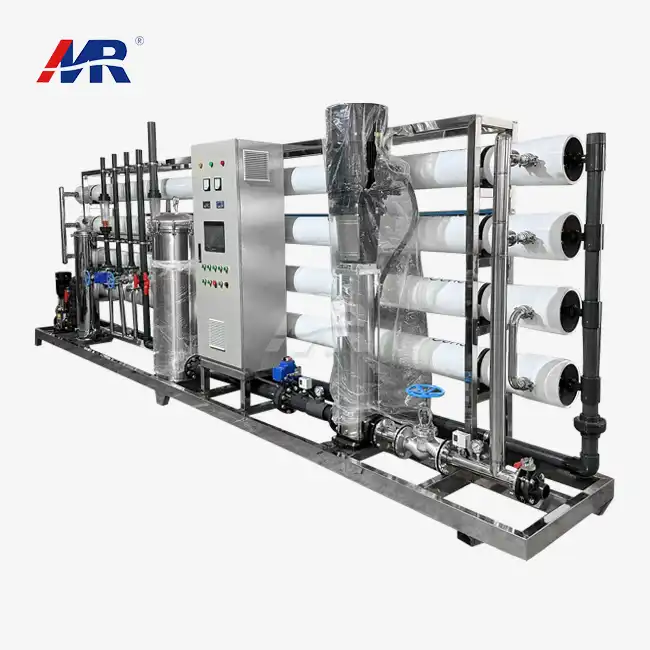
Understanding Reverse Osmosis RO 132 Technology
Matching slow membrane production rates with instant high-flow needs is a problem that has plagued industrial water purification for a long time, and the reverse osmosis ro 132 is an engineered answer to this problem. At its core, this pressure storage tank has a diaphragm-based hydraulic system that keeps clean water in a sterile, pressurized space. This makes sure that delivery happens instantly, without the need for electronic booster pumps.
Core Filtration Mechanics and Industrial Design
Industrial reverse osmosis systems make permeate at rates that aren't always in line with what's needed on the factory floor. This problem is solved by the reverse osmosis ro 132 tank, which has two chambers with a butyl rubber diaphragm dividing an air-filled room from the water-storing area. The ro membrane fills the water cylinder with clean water, which presses down on the air side and stores potential energy. When you open a valve for filling or connect to process equipment, this saved pressure lets water flow at rates that are many times faster than the membrane can make in a single instant.
The polypropylene liner keeps the clean water from coming into contact with the steel shell. This stops the release of metallic ions that could mess up pharmaceutical batches or cleaning processes for semiconductors. These tanks are built to handle constant changes in pressure, and they go through strict hydrostatic testing at 1.5 times their rated volume. This makes sure that the welds stay strong in industrial settings.
Energy Efficiency and Operational Benefits
In contrast to systems that need a backup pump to be running all the time, the reverse osmosis RO 132 uses passive pressure storage to cut down on electricity use by up to 40% during times of high demand. Facilities with more than one work shift will save money because of this. The system keeps the exit pressure between 40 and 60 PSI all the time, which is very important for tools like espresso machines, lab rinse stations, and precision mixing operations that need stable inlet conditions.
It's easier to follow environmental rules if your water tank is certified to NSF/ANSI Standard 58. When you use FDA-approved materials in good reverse osmosis RO 132 tanks, you don't have to worry about leachates or endocrine disruptors getting into your process water, which is a must in the food, beverage, and pharmaceutical industries.
Comparing Reverse Osmosis RO 132 with Alternative Water Filtration Systems
Objective comparisons of results are needed to make procurement choices. The reverse osmosis RO 132 tank is an important part of a full reverse osmosis system. Knowing what it does and how it compares to other ways of storing and delivering water makes its worth clearer.
Performance Against RO 134 and Other Storage Configurations
The RO 134 version usually has a 4-gallon capacity, which is good for higher-volume home uses. Industrial buyers often choose reverse osmosis RO 132 units because they are small and can be expanded in modules. Ten reverse osmosis RO 132 tanks set up in parallel provide backup capacity and upkeep flexibility; if one needs to be serviced, activities can continue without interruption. This modular method works out to be less expensive than a single big tank in places where people can get water from different places.
Carbon filtering and UV cleaning are not at all the same thing. Carbon can get rid of chlorine and organic chemicals, but it can't get rid of heavy metals or salts that are dissolved in water. Microorganisms are killed by UV treatment, but chemical contaminants are not. When stored properly, reverse osmosis is the only way to get rid of all the contaminants that are needed for ultrapure uses. In addition to membrane filtration, the reverse osmosis RO 132 keeps the quality of the water while it is being stored because it has a protected, pressurized environment that stops germs from growing.
Energy and Maintenance Cost Analysis
When you compare the total cost of ownership, you can see big differences. An atmospheric storage tank with a specialized delivery pump uses power all the time, and needs pump maintenance every 18 to 24 months. Because a reverse osmosis RO 132 tank has a passive pressure system, the pumps don't wear out, so upkeep is limited to checking the air pressure every six months. Facilities say that upkeep costs are 30–35% cheaper with pressurized tank systems than with atmospheric storage configurations over a five-year period of operation.
The length of the membrane also increases when the holding tank is the right size. When tanks are too small, membranes go through a lot of start-stop cycles, which speeds up breakdown. When the reverse osmosis RO 132 capacity is just right, membranes can run longer recovery cycles, which can increase their service life from 24 months to 36 months or more in most industrial settings.
How to Select the Right Reverse Osmosis RO 132 System for Your Industry
To choose the right pressurized storage, you need to look at your working character in a number of different ways. When mistakes are made here, they cause jams that annoy production teams and hurt the investment you made in water treatment.
Capacity Planning and Flow Rate Matching
Figure out your top demand case, not your average usage case. A line for packaging drugs might normally go 15 gallons per hour, but during CIP rounds, it could go up to 45 gallons. The way your reverse osmosis RO 132 is set up must be able to handle these peaks. How many tanks you need to connect in line is based on the effective drop volume, which is about 2.8 gallons at 60 PSI.
To use this method, divide the peak hourly demand in gallons by 2.8 and multiply by 1.25 to get the number of tanks needed. The 25% gap takes into account changes in system pressure and the membrane getting older. Facilities often find that having three reverse osmosis RO 132 tanks gives them more operating freedom than having one bigger tank, especially when cleaning plans require putting units offline one at a time.
Industry-Specific Customization Requirements
Different areas have different rules about the cleanliness of the water. To keep taste profiles the same from one production batch to the next, beverage makers need to keep TDS levels low. If you have the right-sized reverse osmosis RO 132, the water you draw from storage will always be as pure as the permeate you just made. This stops the taste drift that happens when storage is open to air.
Even stricter rules apply to companies that make electronics. To make chips, the resistance must be higher than 18 megohm-cm. The reverse osmosis RO 132 doesn't make ultrapure water by itself, but by keeping the supply pressure fixed, it helps EDI (electrodeionization) systems work at their best. Changes in pressure make EDI units work outside of their intended limits, which lowers the quality of the output.
When medical facilities buy water systems for dialysis, they need to make sure that the storage tanks meet certain biocompatibility standards. Compounds that cause hemolysis can't get into stored water because of the polypropylene liner in approved reverse osmosis RO 132 units. This is an important safety feature for kidney treatment centers.
Financial Evaluation and Long-Term Value
The initial cost of the tools only makes up 35–40% of their total lifetime costs. The majority of the costs are operational energy costs, membrane replacements, and upkeep work. When looking at quotes from suppliers, you should ask for a five-year TCO (total cost of ownership) estimate that includes the following:
- Costs to change the filter every year, based on the quality of your water
- Estimated electricity use based on how you use it
- Maintenance work hours that are planned
- What the warranty covers and what it doesn't cover
Financial freedom is provided by suppliers who offer modular reverse osmosis RO 132 systems with the option to buy them in stages. You could start by putting in three tanks and then add two more as output grows. This way, you can avoid over-capitalization while still keeping upgrade paths open.
Installation and Maintenance Guide for Reverse Osmosis RO 132
Your reverse osmosis RO 132 system will either work as designed or become a source of practical stress, depending on how it is set up. Sixty percent of early tank breakdowns in industrial settings are caused by mistakes during installation.
Professional Site Preparation and Integration
Place tanks in climate-controlled areas as much as possible. Changes in temperature cause changes in air pressure inside the tank, which affects how consistently the gas is delivered. Putting tanks on bases that absorb vibrations keeps connection parts from wearing out, which is especially important in places with heavy machinery.
The stability of the water line is very important. For the 1/4-inch NPT stainless steel joint to work, it needs thread sealant that is approved for use with potable water. If you tighten it too much, the polyethylene lining will crack. If you tighten it too little, there will be slow leaks that let bacteria grow. Professional installation teams use torque wrenches that are measured and set to the manufacturer's specs. For these fittings, the range is usually 12 to 15 ft-lbs.
Careful pressure matching is needed for integration with current systems. If the process equipment needs 50 PSI but your RO membrane system works at 80 PSI, you will need to add a pressure control after the reverse osmosis RO 132 tank. This keeps the pressure from getting too high, which can damage diaphragms or push water past seals.
Proactive Maintenance Protocols
Under lab settings, diaphragm longevity testing shows that these parts can handle 50,000 pressure cycles. Conditions in real-life workplace settings are often worse. By checking the air pressure every three months, slow leaks can be found before they affect the flow of water. The original pre-charge of 5 to 7 PSI should be within 1 PSI of what is required; any differences should be seen as signs of diaphragm wear or valve leaks.
Membrane care has an indirect effect on how long a tank lasts. When membranes become clogged, system pressure changes wildly, putting tanks through too many rounds of compression. This secondary damage can be avoided by following the cleaning plans given by the membrane maker. In the same way, replacing pre-treatment filters at the suggested times keeps sediment from building up in membranes and storage tanks, which lowers their performance.
After any service action, airtightness proof is very important. When you put pressure tanks in water, you can see tiny leaks at the Schrader valve or diaphragm seal. These are problems that you can't see when the tanks are working normally, but they are terrible for long-term cleanliness. When this simple test is done, contamination problems that could shut down production lines during quality checks are avoided.
Procurement and Brand Selection: Finding Trusted Reverse Osmosis RO 132 Suppliers
It takes research to find the right industrial water treatment provider. Problems that start with low-quality parts get worse over time, turning the initial cost savings into operating losses.
Supplier Certification and Quality Verification
Ask for written proof of testing by a third party. Not just marketing claims, but reliable reverse osmosis RO 132 providers also provide NSF certification papers. The results of the discharge and odor tests (TOC/VOC analysis) should be ready to look over. Total organic carbon levels below 0.5 ppm show that the right liner material was chosen.
Transparency in manufacturing tells the difference between quality providers and cheap vendors. Ask about the steps for inspecting the seam, getting the material for the diaphragm, and checking the pressure. When suppliers use ISO 9001 quality management systems, they can keep track of batches, which is important for exploring problems in the field or answering regulatory questions.
Referrals from customers in the same business as you are more trustworthy than general reviews. A source that does well with home projects might not have the engineering help that is needed for a pharmaceutical validation project. Ask for the contact information of three clients who run similar production scales in similar fields.
After-Sales Support Infrastructure
The availability of technical help has a direct effect on the stability of your operations. Having suppliers with 24-hour hotlines staffed by experts who speak multiple languages can be reassuring during unplanned shutdowns. Being close to a local service center is important—a two-hour reaction time is better than a two-day wait when production deadlines are coming up.
The terms of the warranty show how confident the supplier is in their goods. The standard warranty lasts for one year, but some high-end makers offer 24-36 month warranties on pressure vessels and five-year guarantees on diaphragm parts. Carefully read the list of things that the warranty does not cover; many warranties do not cover repairs done by people who are not allowed to do so.
Bulk Order Logistics
The details of bulk orders need to be carefully coordinated. Lead times for large orders of reverse osmosis RO 132 tanks are usually between 4 and 6 weeks. Suppliers with stock in the United States can meet pressing needs more quickly, but they charge more. Setting up a strategic relationship with a manufacturer that keeps popular setups in stock is a good way to balance lowering costs with giving customers more delivery options.
Conclusion
The right reverse osmosis RO 132 storage system must strike a balance between technical requirements, industry-specific needs, and the dependability of the provider. When they are the right size and are properly installed, these pressurized tanks offer measurable benefits, such as lower energy costs, stable water quality, and more operating freedom. Industrial buyers who are good at this job look at patterns of high demand, check the Certifications of suppliers, and plan detailed repair schedules. Quality reverse osmosis RO 132 systems are essential parts of water treatment equipment used in pharmaceutical, food processing, electronics, and city settings because they can be expanded in modules and have been shown to work well in the past. Putting in the time to learn about these systems will pay off in practical efficiency and legal compliance.
FAQ
1. What maintenance schedule should I follow for RO 132 tanks?
Every three months, use a normal tire gauge to check the air pressure at the Schrader valve. It should say 5 to 7 PSI when the tank is empty. As part of yearly checks, fittings should be looked at visually for rust or weeping, the security of the mounting should be checked, and the water quality at the exit should be tested. The diaphragm loses its flexibility over time, so tanks should be replaced every 7–10 years, no matter how good they look.
2. Can I use multiple RO 132 tanks with one membrane system?
Of course. Parallel tank designs let you change the volume and the way the tanks are maintained. For each tank, use a pipe with its own shut-off button. This setup lets you repair just one reverse osmosis ro 132 tank at a time without having to shut down the whole system. Make sure that all of the tanks have the same amount of air pressure. Differences in pressure can cause water to flow unevenly and cause some diaphragms to fail early.
3. How do I troubleshoot low water pressure from my RO 132 system?
Check the air pressure in the tank. Most problems with low pressure are caused by air-side leaks that drain saved energy. Ensure the RO membrane is making enough permeate; clogged membranes slow down the rate at which the tank can be refilled. Check to see if the automatic shut-off valve shuts off too soon. Check the supply line for any limits or parts that are clogged. If the pressure stays low after these checks, the diaphragm may have broken, which would mean the reverse osmosis ro 132 tank needs to be replaced.
Ready to Optimize Your Industrial Water Treatment System?
Guangdong Morui Environmental Technology can help you clean your water because they have been doing this for over 14 years. We combine pressurized storage solutions into full treatment systems that are made to fit your production needs as a total reverse osmosis RO 132 provider. Twenty engineers on Our Team create systems that meet GMP standards for pharmaceuticals, food-grade beverage processing, and ultrapure water requirements for semiconductors.
We have our own production sites where we make membranes, and we also have official relationships with Shimge Water Pumps, Runxin Valves, and Createc Instruments to make sure that your system has the best parts available. We offer on-site assessments, turnkey installations, and ongoing technical help through our 500 committed experts and branches in multiple areas. Get in touch with benson@guangdongmorui.com right away to get a personalized reverse osmosis RO 132 configuration estimate and learn how our all-in-one solutions make buying easier while increasing your water treatment ROI.
References
1. Membrane Technology and Applications, Third Edition, Richard W. Baker, John Wiley & Sons, 2012
2. Water Treatment Plant Design, Fifth Edition, American Water Works Association and American Society of Civil Engineers, McGraw-Hill Education, 2012
3. Industrial Water Quality Standards and Monitoring, Journal of Environmental Engineering, Volume 145 Issue 8, American Society of Civil Engineers, 2019
4. NSF/ANSI Standard 58: Reverse Osmosis Drinking Water Treatment Systems, NSF International, 2020
5. Pressure Vessel Design and Analysis for Water Treatment Applications, ASME Boiler and Pressure Vessel Code Section VIII, American Society of Mechanical Engineers, 2021
6. Cost-Benefit Analysis of Industrial Water Purification Technologies, Water Research, Volume 198, Elsevier, 2021