


From Sustainable to Self-Sustained: The Future of Seawater Desalination Merges Sustainability with Profitability
A swro desalination plant becomes self-sustained when it controls its own operating costs and, where possible, its own power supply while delivering steady fresh water. Sustainability means using less energy and protecting the sea. Profitability means low downtime, fewer replacement parts, and a predictable cost per cubic meter. The two goals meet through good pretreatment, energy recovery, sensible recovery rates, renewable power, and remote monitoring. I wrote this guide for U.S. utilities, resorts, ports, mines, and engineering firms that want clear numbers before buying a seawater desalination system.
How a SWRO Desalination Plant Works and What Goes Into It
From Intake to Product Water
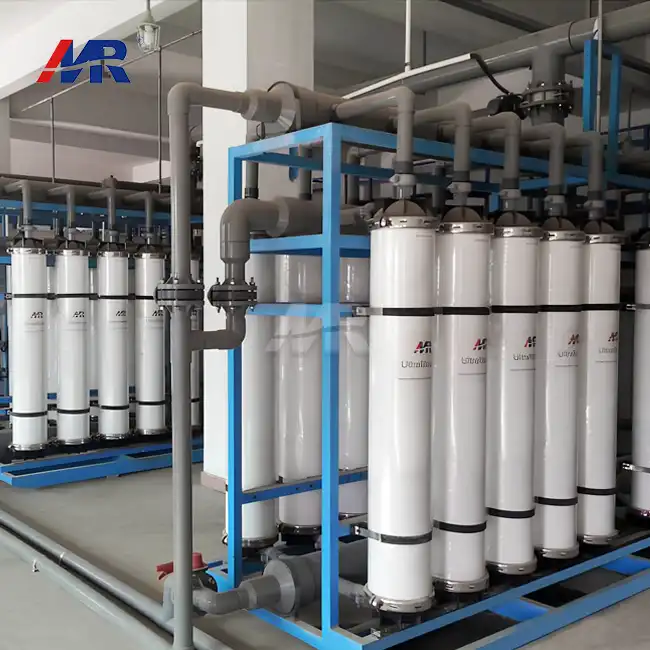
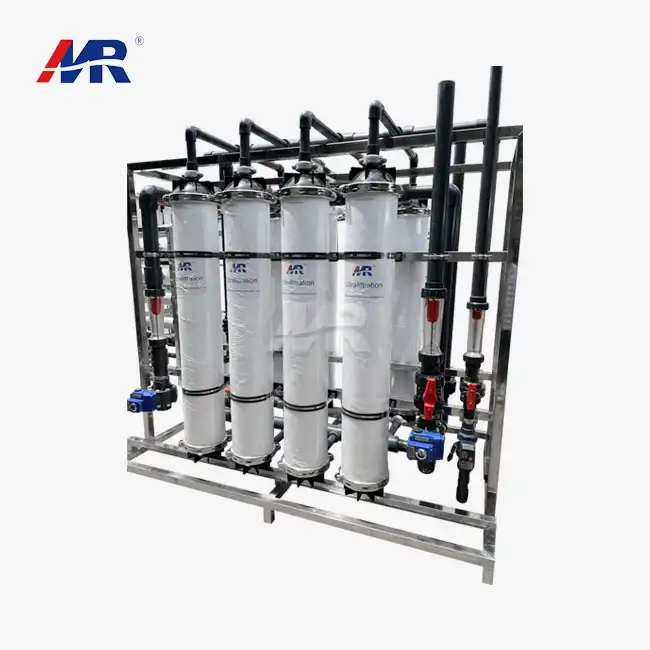
It's easy to understand how seawater reverse osmosis works. Before the water goes through the system, it is pretreated with ultrafiltration (UF) or multi-media filtration (MF), which get rid of dissolved solids and algae. A high-pressure pump then pushes the water against barriers that let some water through but not all of it. A stream of salts that have been broken down is called brine. Water molecules, on the other hand, move through the membrane. It goes through post-treatment, which includes things like cleaning and remineralization, before it is kept. It takes a lot of work for the pump to move water because open ocean water has about 35,000 mg/L of total dissolved solids. Each stage helps protect the one that comes after it, so skipping a step usually hurts the membrane or makes the next stage less effective.
Core Equipment Groups
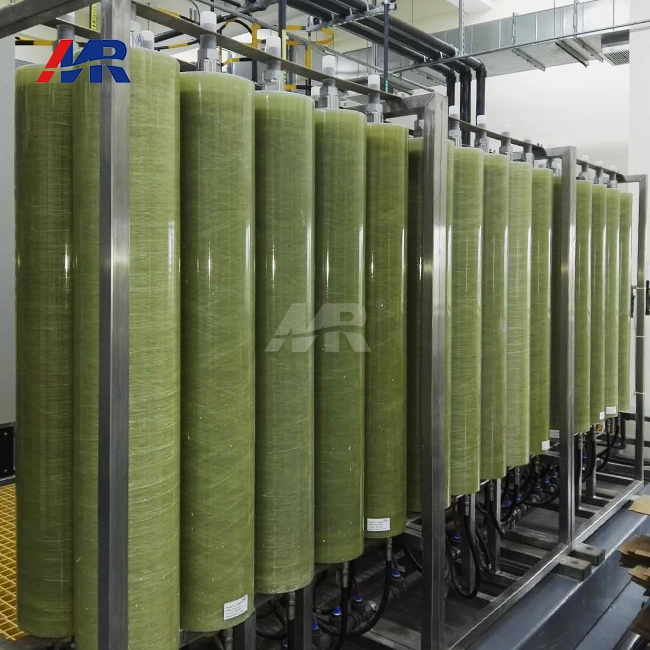
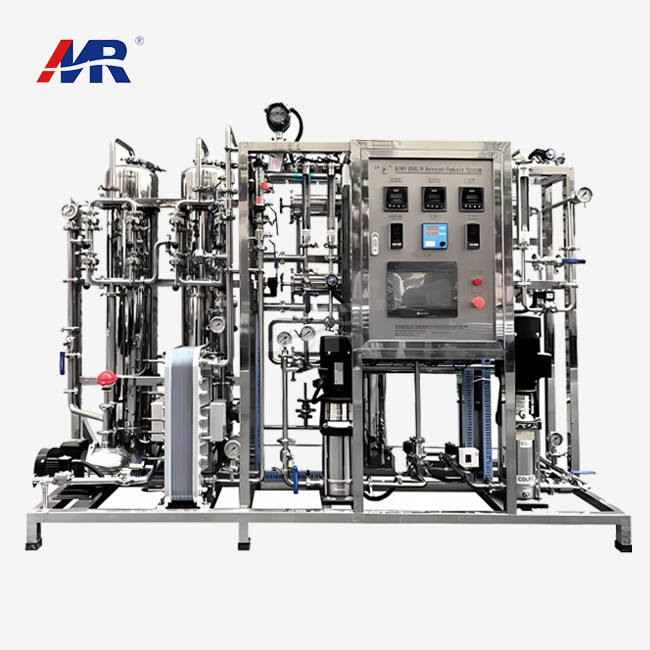
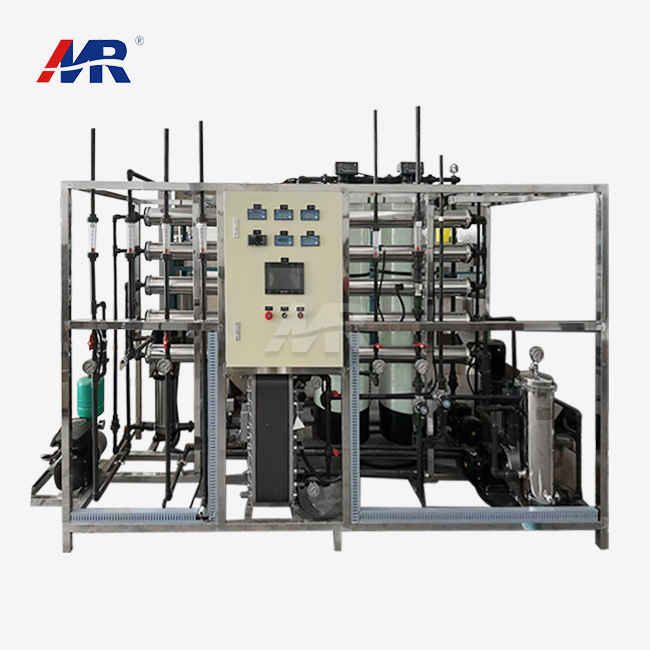
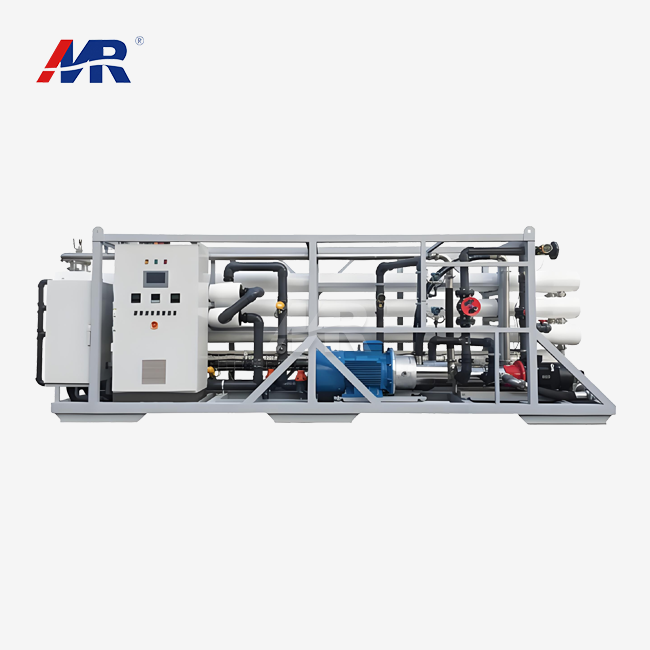
Things that work together don't need to be broken up into lots of different parts. There are five parts to the equipment: the front end (intake and screening), the back end (pretreatment), the high-pressure pumps with energy recovery, the membrane racks inside the pressure vessels, and the controls with instruments. Because of how it's built, the entrance stops sand, trash, and marine life from reaching everything further downstream. Fouling and scaling can be stopped by treating the skin first. Tools keep track of flow, conductivity, and pressure so that workers can see shifts early. Morui has its own factory that makes membranes and several other factories that make items for processing. Shimge water pumps, Runxin valves, and Createc tools are some of the other things we sell. That way, we won't have to work with different companies to match membranes, tanks, pumps, and controls for the same project.
Why Seawater Needs More Than a BWRO System
Some people want to know if a brackish water (BWRO) unit can handle saltwater. It's not safe for it to do that. Because brackish water doesn't have as much salt in it, BWRO machines are made of lighter materials and pump less water. Pipes and fittings that don't rust, stronger pretreatment, and higher operating pressure are all things that seawater needs. It's possible for BWRO equipment to leak, not get rid of salt well, or have membranes that don't last long when it's near saltwater. I check the feedwater for temperature, salt, and clarity before I look over a job. The pressure rate, membrane choice, and design of the preparation are all based on these three numbers. Also, they keep changes that cost a lot from having to be made after delivery.
Where Efficiency Is Lost and How Self-Sustained Operation Fixes It
The Hidden Costs of Fouling and Weak Pretreatment
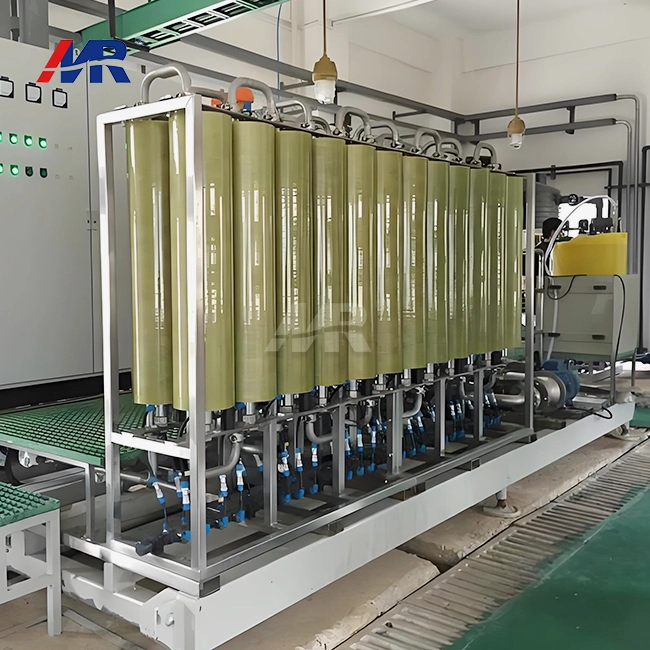
Membranes don't work as well when they have algae, dust, oil, or mineral scale on top of them. It takes more power and work for the pump to move the fouling when there is a drop in pressure. It also brings more work, cleaning supplies, and free time. Storms and algae growth can make feedwater cloudy and change its quality in just a few days. Because of this, pretreatment should be based on the worst season instead of the average. That means the first quote that seems the cheapest might cost you more in the long run. People who want to buy tools should not only look at how much it costs. It is important to compare the total cost of ownership, which includes things like energy, chemicals, maintenance, lost output, and changing membranes. You can get rid of the problem at its source with Morui's anti-fouling swro desalination plant membranes and custom UF or multi-media pretreatment.
Energy Recovery, Recovery Rate, and Brine
Long-term costs depend on how much power is used. In 2011, Elimelech and Phillip wrote that modern SWRO plants use around 3 to 4 kWh per cubic meter, which includes the energy they use to load and prepare the water. In normal seawater, the lowest amount that could be possible is about 1.06 kWh at 50% recovery. There are things that take pressure out of the brine stream and put it back into the process. This fills in some of the blanks. The rate of recovery is also important. At 40% recovery, the brine has 58,000 mg/L of salt, which is 1.7 times more than the feed, which has 35,000 mg/L of salt. Increasing recovery raises the risk of scaling and the pump's pressure, so the people who are in charge make sure that the output is balanced with the rules for protecting the membrane and letting the brine out.
Solar, Hybrid Power, and Remote Monitoring
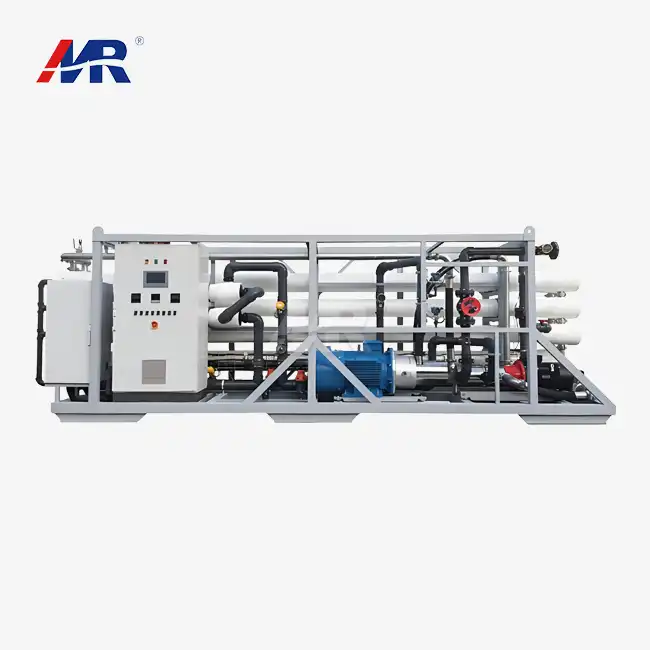
If a plant can survive on its own, it can change to fit its surroundings. In case of an emergency, the power grid can be used to power a seawater desalination system as well as solar photovoltaic panels and wind power. It's expensive to bring fuel to islands and remote camps, but this kind of system works well there. With drives that can change the cadence, pumps can change based on the power that is available and the daily demand. The flow of permeate, the conductivity, the pressure, and the amount of energy used are all monitored from afar. When rust or pump wear starts, normalized trends show it before it breaks. You can choose to have Morui watch your system from afar, and they also offer weatherproof container or skid forms for installation. Before you choose the power mix, you should look at how much water you need, how much sun you get, and how much electricity costs in your area.
The MR-SWRO-2TH and How to Choose a Supplier
MR-SWRO-2TH Specifications
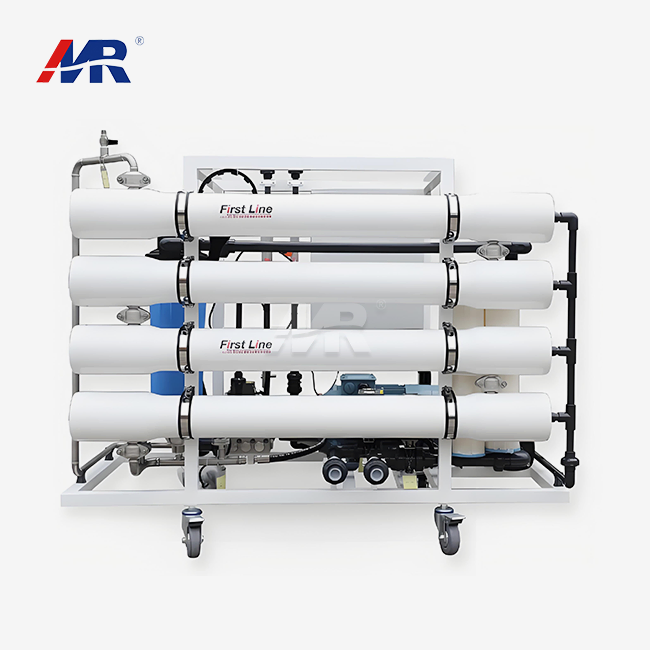
The Morui MR-SWRO-2TH is a ready-to-use device for desalinating salt water. According to its specs, it uses 12 kW of power, gets back 38–45% of the salt, and has a salt rejection rate of 99.9%. It changes brackish water or seawater with a lot of salt into water that can be used for drinking or industry. The amount of energy it needs per ton of water is cut down by energy recovery and anti-fouling swro desalination plant screens. One way to change the pretreatment and remineralization stages is to change the temperature, turbidity, and salinity of the seawater in the area. A 12 kW rating and a figure of 99 percent refusal only mean something if they are linked to a stated feedwater and test situation. This is what I always tell buyers. Make sure that those terms are written down.
Matching Technology to Application
Heat can still be used to remove salt from water in places where waste heat is cheap. While SWRO works better in some places, it's because it needs electricity, can be expanded with modules, and is good with clean energy. These units are great for getting work done quickly or in hard-to-reach places, like on islands, in ports, on ships, in mine camps, on offshore platforms, or for emergency supplies. A lot of the time, public health compliance, repetition, and long service life are at the heart of city projects. A lot of the time, factory workers have to keep going or polish things more. Marine and offshore users need small plans, materials that don't rust, and not much help from operators. People who want to buy in the US also want water-quality test reports, energy data, and paperwork. Get these things early and find out what permits your project needs.
Cost, Procurement, and Supplier Checks
Prices for plants vary based on their size, the quality of the water that goes into them, the amount of work that goes into and out of them, the pretreatment, the design of the membranes, automation, containerization, installation, service, and repairs. To be useful, cost per cubic meter must be used with a clear end in mind. Make sure that the number includes intake, brine draining, and post-treatment. Gather your daily demand, product-water goal, power source, and site limits, along with your seawater analysis, before you send an RFQ. Then, read each quote line by line and make a note of what it covers, what it doesn't cover, how long the protection lasts, and what the user training and parts coverage are. Make sure you get guarantees on output, healing, energy use, and water quality, along with a clear way to check these things. A real manufacturer shouldn't just resell things; they should also be able to do engineering work and put membranes and vessels together. More than 500 people work for the Morui Group, and there are 20 engineers across more than 14 offices. An English-language service network helps with projects in other countries.
Conclusion
A system that can remove salt from seawater on its own is not based on a single efficiency number, but on how it is built as a whole. It was talked about in this article how preparation, pressure, membranes, and energy return all work together. Also, it talked about how fouling, scaling, and heavy pump loads make energy and maintenance costs go up. The recovery rate changes both how salty the brine is and how dangerous the membrane is. Tracking from afar can help a swro desalination plant fit its site and use solar or mixed power. People who want to buy can use the MR-SWRO-2TH settings of 12 kW, 38–45 percent recovery, and 99 percent salt rejection to try things. When making decisions, it's not enough to just look at the price. You should also think about the warranties, the total cost of ownership, and how technical the suppliers are. For desalination to make money, it needs to have a steady output, low energy use, and regular upkeep.
FAQ
1. What are the MR-SWRO-2TH specifications?
It takes 12 kW of power to run the MR-SWRO-2TH, which has a recovery rate of 38% to 45% and a salt rejection rate of 99.9%. After the salt is removed from the ocean, it can be used to make drinking water or water for business.
2. Why does recovery rate matter?
It is possible to get more water from the same feed with higher recovery, but the brine is saltier and less likely to scale. In the right place, runoff stays within the limits set by the local permit. This protects the membranes and lowers the number of times they need to be cleaned.
3. Can the system be customized?
Yes. As long as you use preparation, remineralization, energy recovery, a container or skid form, and remote tracking, you can match the temperature, turbidity, and salinity of your seawater. Tell us about your site, and we'll look at what you can do.
4. What should I send for a quote?
Send your daily water needs, an analysis of the seawater, the target water quality, where the site is, what power is available, and when the water needs to be delivered. Our engineers can use that knowledge to come up with a process idea and a plan for how the tools will be set up.
Request a Customized SWRO Desalination Plant Assessment from Morui
The Morui team can look at your saltwater data and recommend the best SWRO desalination plant setup for your location. As a company that builds SWRO desalination plants and has its own membrane factory, we offer containerized and skid systems, as well as remote tracking, installation, and commissioning. To find out more about your project, email benson@guangdongmorui.com. They will get back to you with a process idea, a list of tools, and the service terms.
References
1. Elimelech, M., & Phillip, W. A. The Future of Seawater Desalination: Energy, Technology, and the Environment. Science, 2011.
2. Jones, E., Qadir, M., van Vliet, M. T. H., Smakhtin, V., & Kang, S. The State of Desalination and Brine Production: A Global Outlook. Science of the Total Environment, 2019.
3. Voutchkov, N. Desalination Engineering: Planning and Design. McGraw-Hill, 2012.
4. Greenlee, L. F., Lawler, D. F., Freeman, B. D., Marrot, B., & Moulin, P. Reverse Osmosis Desalination: Water Sources, Technology, and Today's Challenges. Water Research, 2009.
5. Cooley, H., Gleick, P. H., & Wolff, G. Desalination, With a Grain of Salt: A California Perspective. Pacific Institute, 2006.
6. Panagopoulos, A., & Haralambous, K.-J. Environmental Impacts of Desalination and Brine Treatment: Challenges and Mitigation Measures. Marine Pollution Bulletin, 2020.