_1745823981883.webp)

The proper membrane">leachate DTRO treatment equipment is the difference between a landfill that fulfils discharge rules and one that risks penalties, odour complaints, and groundwater danger. This guidance includes leachate characteristics, membrane design, capacity sizing, and supplier vetting, so a landfill operator or EPC contractor may select a system that can withstand years of high-salinity, high-COD input water. The data for each part below is based on published performance statistics from full-scale disc tube reverse osmosis systems and one original case study from an operating site.

Rarely do landfill operators get a second opportunity to choose the right equipment. Choose badly, and you have membrane fouling in months, unscheduled downtime, and concentration with no place to go. Guangdong Morui Environmental Technology Co., Ltd. has been working on membrane systems for precisely this sort of waste stream for 19 years, and this article discusses what genuinely makes a Leachate DTRO Treatment Equipment manufacturer dependable, rather than a provider offering repackaged spiral-wound RO. If you think a site-specific leachate study might assist in limiting the selection, contact us at benson@guangdongmorui.com.
What Is Leachate DTRO Treatment Equipment?
Leachate DTRO Treatment Equipment employs disc tube reverse osmosis modules with open, unspiraled feed channels, rather than the tightly coiled spacers used in traditional RO elements. Such an open shape enables the thick, particle-laden landfill leachate to flow through at a high cross-flow velocity without fouling the membrane surface. Disc tube systems were first designed for shipboard saltwater desalination in the late 1990s, retrofitted to leachate treatment in Germany in 1988, and then substantially expanded across Chinese urban dumps.
Disc Tube Membrane Design Explained
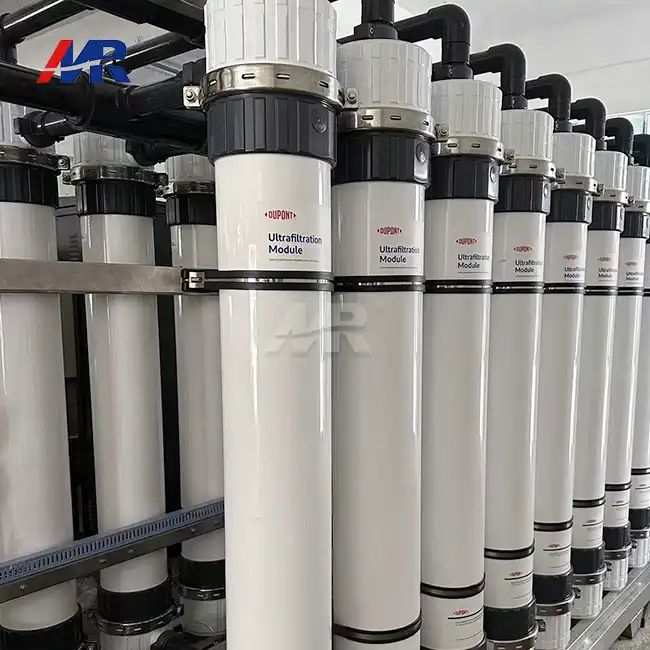
The DTRO module is composed of spherical membrane cushions in between support plates and separated by a flow spacer that routes the leachate over the surface at 4-5 times the velocity of a spiral-wound cartridge. This turbulence continually washes organic film and fine particles off the membrane. This is the main reason leachate DTRO treatment equipment can accept raw or weakly pre-treated leachate that would blind a typical RO element in days.
Why Do Landfills Choose DTRO Over Conventional RO?
Landfills produce leachate with suspended particles, oils, and silt density index that spiral-wound RO cannot process without considerable pretreatment. Disc tube membranes can handle a rougher input; therefore, pretreatment may be smaller and commissioning faster. This tradeoff is especially significant for ageing landfills with mature high-strength leachate and limited area for a multi-stage biological pretreatment train.
How Does DTRO Treat Landfill Leachate?
So treatment is in phases. The raw leachate is screened and pH-adjusted and then fed to the first DTRO stage operating at moderate pressure, normally 40-60 bar. The permeate from that stage is frequently sent through a secondary polishing pass to fulfil tight discharge limitations, and the concentrate is recycled for further volume reduction.
The Multi-Stage Filtration Process
Most full-scale landfill sites are designed in a two-stage setup, often using leachate DTRO treatment equipment. The initial stage removes bulk organic load and salts, while the secondary stage reduces leftover COD, ammonia, and conductivity to near zero. In the landfill of Changshengqiao, Chongqing, China, the operating data of this two-stage disc tube design has been released to show more than 99 percent COD and ammonia removal and a total water recovery rate of around 80 percent.
Role of Cross-Flow Velocity in Fouling Control
High cross-flow velocity will maintain the particles suspended in the bulk stream and not deposited on the membrane. Operators still do timed chemical cleaning cycles, usually every 100 hours for an acid clean and every 500 hours for a deeper alkaline cycle, depending on raw water quality and scaling propensity.
What Leachate Characteristics Affect Equipment Selection?
As a landfill matures, the make-up of Leachate changes considerably, and equipment designed for a young site will underperform on a mature one. The selection procedure begins with a lab examination of COD, BOD, ammonia nitrogen, chlorides, conductivity, and heavy metals before any module count or pressure rating is determined.
Leachate Age and Organic Load
Leachate from young landfills, often less than 5 years old, has a high biodegradable COD and low pH due to active acid-phase breakdown. Mature landfills are characterised by high ammonium nitrogen, high salinity, and refractory organic chemicals such as humic and fulvic acids, which are resistant to biological decomposition. Leachate DTRO treatment equipment is precisely what mature leachate needs, since biological treatment alone cannot remove these components.
Salinity, Hardness, and Scaling Potential
High concentrations of chloride and sulphate increase osmotic pressure and require greater operating pressure. Hardness from calcium, barium, and magnesium causes scaling risk on the membrane surface. A full-scale evaluation of the functioning of DT-RO showed that calcium, barium, and magnesium ions were rejected at rates exceeding 99.9 percent. This demonstrates the extent to which these systems must be calibrated against a site's real hardness profile.
| Parameter | Young Landfill | Mature Landfill |
|---|---|---|
| COD | 10,000-40,000 | 1,000-8,000 |
| BOD/COD ratio | 0.5-0.8 | Below 0.1 |
| Ammonia Nitrogen | 500-1,500 | 1,500-4,000 |
| Total Dissolved Solids | 5,000-15,000 | 15,000-40,000 |
| pH | 5.5-6.5 | 7.5-8.5 |
DTRO vs RO: Which Is Better for Landfill Leachate?
Spiral-wound RO is cheaper per membrane element, but that advantage evaporates when you include fouling-driven downtime and cleaning chemical expense. Disc tube systems trade off a lower active membrane area for a feed route that can handle rough water and not lose performance within weeks.
Feed Channel Width and Fouling Resistance
Spiral-wound RO channels are small and closely packed to maximise surface area, but offer little room for suspended particles to pass without becoming caught in the spacer mesh. By contrast, leachate DTRO treatment equipment uses broader, more open disc tube channels, sacrificing packing density to be able to treat leachate with a higher silt density index directly from equalisation.
Footprint, Energy Use, and Total Cost
In the investigated full-scale facilities, the reported operating costs of two-stage disc tube systems for the treatment of landfill leachate were in the range of around 17.50 to 60.61 CNY per m 3. The main cost drivers were chemical cleaning and power. A well-designed Leachate DTRO Treatment Equipment package inhibits this spread by combining anti-scaling membranes with energy recovery on the high-pressure pump.
| Factor | DTRO | Spiral-Wound RO |
|---|---|---|
| Pretreatment needed | Basic screening + pH adjustment | Multi-stage clarification, UF, cartridge filters |
| Tolerance to suspended solids | High | Low |
| Membrane cleaning frequency | Every 100-500 hours | Daily to weekly under heavy fouling |
| Active membrane area per module | Lower | Higher |
| Best fit | Mature or high-strength leachate | Pre-clarified, low-solids permeate polishing |
What Contaminants Can Leachate DTRO Remove?
A suitably sized disc tube system does double duty against organic contaminants and inorganic salts simultaneously, which is rare for a single stage of treatment. The ability to remove them relies on the quality of the membrane, the operating pressure, and the consistency of the pretreatment stage in keeping oils and grit out of the feed.
Organic Pollutants and COD Reduction
The full-scale disc tube plants using leachate DTRO treatment equipment to treat landfill leachate reported COD removal ranging from 99.00 to 99.95 percent and ammonia nitrogen removal ranging from 98.00 to 99.98 percent for the installations studied. Another emergency treatment investigation on extremely salty, mature leachate showed water recovery of >83% while reducing effluent conductivity to 0.15–0.22 mS/cm, low enough for safe release or reuse.
Heavy Metals and Emerging Contaminants like PFAS
Heavy metals are rejected at rates equivalent to salts because of their ionic charge and bulk. Per- and polyfluoroalkyl substances, or PFAS, are proving to be a difficult nut to crack, and it’s this same class of compounds that the U.S. EPA pointed to when it announced intentions to amend landfill effluent criteria to address PFAS release from leachate. Landfills may meet more stringent global PFAS requirements using a tight-membrane DTRO stage and granular activated carbon polishing.
What DTRO Capacity Does a Landfill Need?
The daily leachate production is the starting point for capacity planning and is a function of rainfall, landfill surface area, and cover type. Undersizing is allowing untreated leachate to bypass during rainy season peaks, while oversizing is wasting funds on membranes and pumps that are idle most of the year.
Matching Capacity to Landfill Size and Rainfall
For a heavy rainfall tropical climate landfill, the leachate produced per acre is many times more than that of a comparable site in a dry environment. Typically, site engineers design a treatment train around leachate DTRO treatment equipment on the basis of the 95th percentile daily flow, rather than the average yearly flow, and then include a buffer tank to handle small surges.
Staged Expansion for Growing Sites
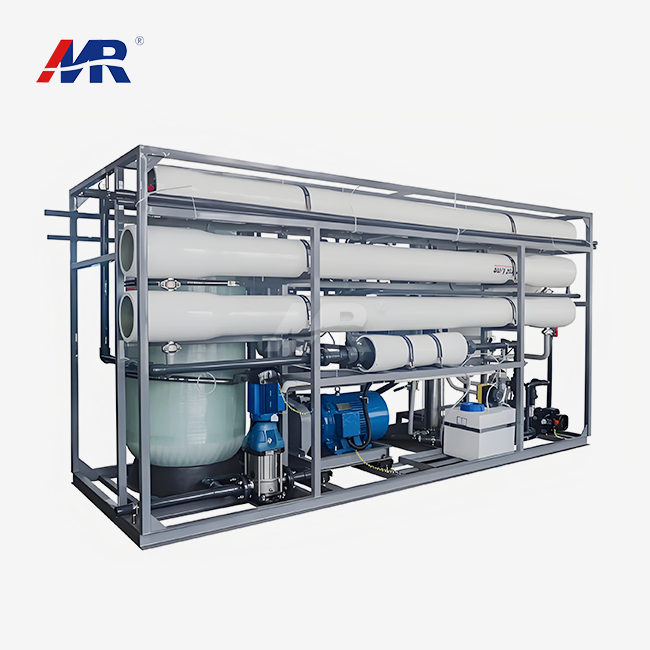
Active landfills increase in size over time, and each new cell adds to the amount of leachate. Leachate DTRO Treatment Equipment is modularised on standardised skids so that when capacity increases, an operator may add a unit, not replace the whole plant.
| Landfill Type | Typical Leachate Flow | Suggested DTRO Capacity |
|---|---|---|
| Small municipal site | 10-50 m³/day | Single skid, 50-100 m³/day |
| Mid-size regional landfill | 100-300 m³/day | Two-skid setup, 300-500 m³/day |
| Large metropolitan landfill | 500-1,500 m³/day | Multi-skid array, up to 2,000 m³/day |
How Does DTRO Handle High-Salinity Concentrate?
Each DTRO system generates a concentrate stream that includes the salts, refractory organics, and metals rejected by the membrane. The difference between a complying enterprise and one with accusations of groundwater pollution down the road is managing that stream properly.
Concentrate Volume and Disposal Challenges
Typically, the concentrate volume will be 20 to 40 percent of the initial leachate input, and the pollutant concentration increases dramatically with each pass. Leachate DTRO treatment equipment is often used to manage this concentrated stream, which may be recycled back to the landfill cell. However, with repeated recharging, osmotic pressure and pollutant load increase with time, which can lower membrane life if not controlled.
Zero Liquid Discharge Pathways
Leachate DTRO Treatment Equipment, combined with mechanical vapour recompression or evaporation-crystallization, allows a site to achieve zero liquid discharge, meaning no liquid waste exits the plant. Simulation studies comparing configurations indicated that a double-stage mechanical vapour recompression arrangement decreased unit COD removal cost by around 3 percent when high recovery was needed compared with a single-stage configuration. Sites that cannot manage a complete evaporation train are also gaining popularity by sending concentrate to a registered hazardous waste handler.
Which DTRO Features Improve Long-Term Reliability?
Reliability is the difference between a ten-year investment in a landfill and a system that has to be rebuilt in eighteen months. When a facility is running on actual leachate, not lab-grade test water, day after day, a few design decisions matter most.
Membrane Materials and Cleaning Protocols
Reliable leachate DTRO treatment equipment requires membrane chemistry and support materials that can withstand pH variations from 2 to 11 and continuous exposure to chlorides. Anti-scaling membrane coatings, together with a specific cleaning-in-place routine utilising alternating acid and alkaline cleansers, significantly improve service life compared to a generic cleaning plan derived from municipal water treatment.
Automation and Remote Monitoring
PLC-driven systems with IoT-enabled monitoring capture pressure drift, pH excursions and flow abnormalities before they become fouling events. Remote monitoring also allows a supplier’s technical staff to signal a growing issue days before it is seen on a gauge by an on-site operator.
Here are the reliability features to be verified before signing the purchase order: a 316L stainless steel corrosion-resistant frame for high-chloride service, anti-fouling disc tube membranes with a minimum service life of 3-5 years vs. the industry-standard 2 years, PLC automation with remote alerts for pressure, pH, and flow deviation, and a documented cleaning-in-place protocol that is specific to the leachate chemistry at the site and not a generic template. These characteristics function together, and if you leave out any one of them, you tend to reduce the time between expensive unexpected shutdowns.
How Do You Calculate DTRO Treatment Capacity?
Calculation of capacity for leachate DTRO treatment equipment is a function of daily leachate production, goal recovery rate, and a safety buffer to account for seasonal volatility. The only thing more typical than a landfill requiring an extra treatment train in a few years is purchasing based on a poor estimate and skipping this stage.
Key Inputs for a Sizing Calculation
Four inputs drive precise size computation. The baseline is the average daily leachate flow calculated from at least twelve months of collecting sump data. Design capacity is determined by the peak wet-season flow, often 1.5 to 3 times the average. The target recovery rate, which often ranges from 50 to 80 percent for high-strength leachate, defines the amount of permeate the system generates per unit of input. The membrane flow rate as a function of the leachate temperature and fouling propensity determines the membrane area needed.
Worked Example for a Mid-Size Landfill
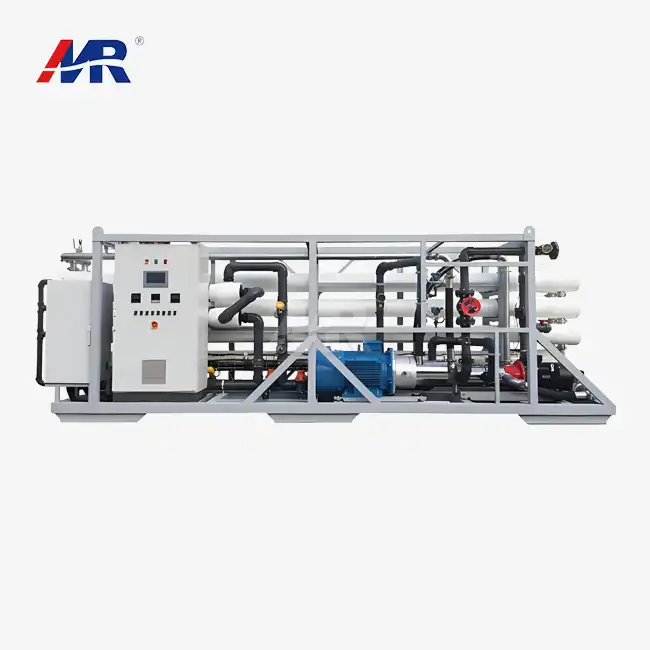
Given a regional landfill with an average of 150 m³/day of waste, with wet-season peaks at 280 m³/day, a system rated over 280 m³/day would be specified to prevent bypass. Scaled across multiple skids, the Morui MR-DTRO-80TD platform treating landfill leachate with a power draw of 65 kW/hour and a 50-70 percent recovery rate, comes close to this profile at a 60 percent recovery target and inlet COD tolerance of less than 25,000 mg/L.
Case Study: Municipal Landfill Retrofit Near Lagos, Nigeria
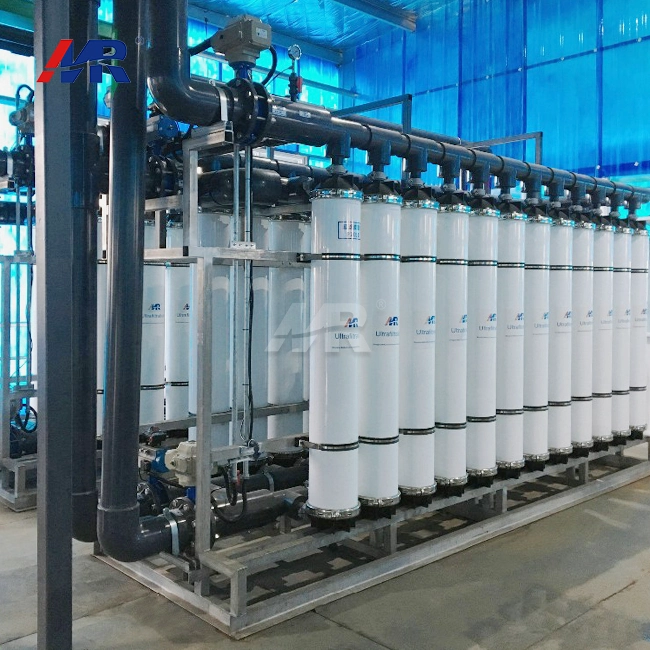
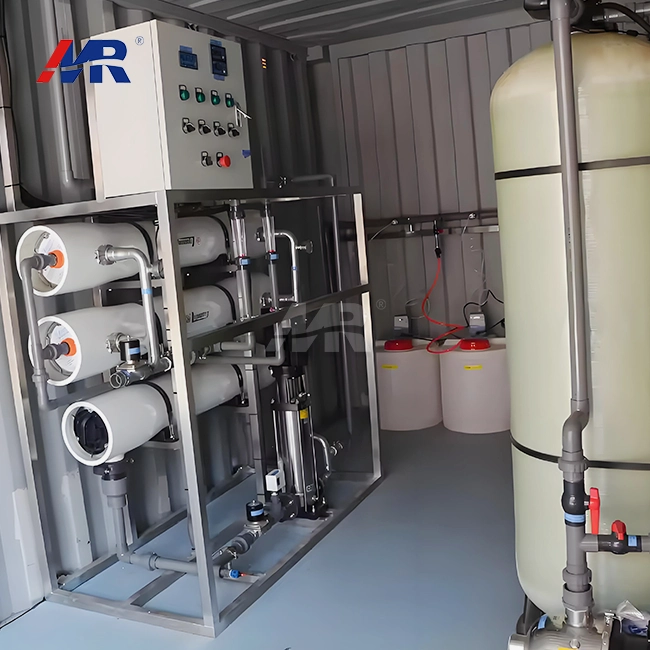
In 2026, a municipal waste body with a 12-hectare landfill outside Lagos contacted Guangdong Morui Environmental Technology Co., Ltd after an existing biological treatment lagoon failed to satisfy new discharge limitations during the rainy season. Leachate tests indicated COD of about 18,000 mg/L, ammonia nitrogen exceeding 2,200 mg/L, and conductivity soaring far beyond 25 mS/cm at peak flow. The location had no space for a huge evaporation pond and required a containerised leachate DTRO treatment equipment solution that could be installed during a limited construction window.
Morui’s engineering team performed a free-of-charge onsite leachate sample analysis and subsequently recommended a two-stage Leachate DTRO Treatment Equipment package based on twin MR-DTRO skids with 316L stainless steel structure and Toray membranes for the polishing step. The units were pre-assembled, transported within 28 days, and were in steady operation within two weeks after commissioning. Post-startup monitoring showed 99.3 percent COD removal, more than 98 percent ammonia nitrogen removal, and a sustained recovery rate of 65 percent, reducing the volume needing secondary disposal by more than half compared with the preceding lagoon-only arrangement. The authority reported no unscheduled shutdowns during the first eight months of operation, a fact that the site’s technical manager directly ascribed to the broader disc tube feed channels handling the seasonal sediment loading without the fouling episodes seen by the previous system.
How Do You Choose a Leachate DTRO Supplier?
Equipment specifications matter, but the supplier behind the leachate DTRO treatment equipment determines whether a plant still runs well in year five. Landfill leachate is unforgiving water, and a manufacturer without deep in-house production control tends to struggle when a site's chemistry drifts outside the original design assumptions.
Manufacturing Depth and Customization
A supplier that controls membrane production, pump sourcing, and skid fabrication in-house can adjust flow rates, materials, and automation levels without waiting on third-party lead times. Guangdong Morui Environmental Technology Co., Ltd runs its own membrane production facility alongside 15-plus workshops and sources core components from established brands including Grundfos, Toray, Danfoss, and Vontron, which keeps replacement parts predictable years after commissioning.
Support, Warranty, and Spare Parts Access
Ask any prospective supplier of leachate DTRO treatment equipment three questions before signing a contract: What is the standard warranty period, how fast can an emergency technician reach the site, and where is the nearest spare parts stock? A 72-hour emergency response window and a global spare parts network matter far more once a membrane fails at 2 a.m. during a compliance audit window than any brochure specification.
Consider these factors when narrowing a shortlist of suppliers: verifiable ISO 9001, CE, and RoHS Certifications rather than self-reported claims; a track record with comparable industrial clients, since a manufacturer serving Fortune 500 accounts like BYD and CATL has already been through rigorous vendor audits; in-house engineering staff who can run a free leachate sample test before quoting equipment; and a warranty structure that covers at least two years with clearly defined response times. Sites that skip this vetting step tend to discover gaps in support exactly when a system needs it most.
Conclusion
Selecting leachate DTRO treatment equipment comes down to matching membrane design, capacity, and concentrate management to a landfill's actual leachate chemistry rather than a generic spec sheet. Mature, high-salinity leachate calls for wide feed channels, anti-scaling membranes, and a supplier who tests the water before quoting a number. Young, biodegradable leachate leaves more room for a hybrid biological-plus-DTRO approach. Either path benefits from a manufacturer who controls production end to end and backs the equipment with a documented service network, not just a warranty card.
FAQ
1. What is the typical lifespan of a DTRO membrane treating landfill leachate?
A well-maintained anti-scaling DTro membrane treating landfill leachate typically lasts 3 to 5 years, compared with roughly 2 years for standard membranes exposed to the same high-fouling conditions, provided the cleaning-in-place schedule matches the site's actual chemistry.
2. Can DTRO systems handle leachate with very high ammonia nitrogen levels?
Yes. Full-scale disc tube plants routinely remove 98 to 99.98 percent of ammonia nitrogen from mature leachate, though very high inlet ammonia may call for an added biological or air-stripping pretreatment step to reduce membrane load.
3. How much does Leachate DTRO Treatment Equipment cost to operate?
Operating costs vary with leachate strength and site energy prices, but published full-scale data places two-stage DTRO operating costs between roughly 17.50 and 60.61 CNY per cubic meter, driven mainly by chemical cleaning and electricity consumption.
4. Does DTRO eliminate the need for a pretreatment system?
No. DTRO tolerates rougher water than conventional RO, but basic screening, pH adjustment, and sometimes coagulation still protect the membranes from oils, grit, and extreme pH swings that would otherwise shorten service life.
5. What happens to the concentrate produced by a DTRO system?
Concentrate, usually 20 to 40 percent of the feed volume, gets recirculated into the landfill cell, sent to a licensed hazardous waste handler, or processed through evaporation and crystallization toward a zero liquid discharge outcome, depending on site regulations and budget.
6. How long does it take to deploy a containerized DTRO system?
Pre-assembled, skid-mounted Leachate DTRO Treatment Equipment generally ships within 20 to 35 days of order confirmation, with onsite commissioning typically completed within one to two weeks after delivery.
Ready to Solve Your Landfill's Leachate Compliance Gap?
Guangdong Morui Environmental Technology Co., Ltd designs, manufactures, and commissions Leachate DTRO Treatment Equipment for municipal and private landfills across Asia, South America, and Africa. As a direct leachate DTRO treatment equipment manufacturer running our own membrane production line and 15-plus workshops, we offer free leachate sample testing, ROI analysis, and a 72-hour emergency response network. Email benson@guangdongmorui.com with a recent leachate lab report to receive a sizing recommendation within days.
Guangdong Morui Environmental Technology Co., Ltd operates more than 14 branches with 500 employees and 20 engineers, and serves as an authorized agent for Shimge Water Pumps, Runxin Valves, and Createc Instruments. That combination of in-house manufacturing and established component partnerships is what lets Our Team customize a Leachate DTRO Treatment Equipment package rather than sell a fixed catalog unit that may not match a specific leachate profile.
References
1. Zhu, W. et al. "Application of disk tube reverse osmosis in wastewater treatment: A review." Science of the Total Environment, 2021. https://www.sciencedirect.com/science/article/abs/pii/S0048969721033623
2. "Performance of landfill leachate treatment system with disc-tube reverse osmosis units." Frontiers of Environmental Science & Engineering, Springer, 2008. https://link.springer.com/article/10.1007/s11783-008-0024-x
3. "Characteristics of organic matter removed from highly saline mature landfill leachate by an emergency disk tube-reverse osmosis treatment system." Chemosphere, ScienceDirect, 2020. https://www.sciencedirect.com/science/article/abs/pii/S004565352032542X
4. U.S. Environmental Protection Agency. "Landfills Effluent Guidelines." 2026. https://www.epa.gov/eg/landfills-effluent-guidelines
5. SaltWorks Technologies. "Ultra High Pressure Reverse Osmosis for Landfill Leachate." 2023. https://www.saltworkstech.com/articles/ultra-high-pressure-reverse-osmosis-for-landfill-leachate/
6. World Bank Group. "What a Waste 3.0: A Global Snapshot of Solid Waste Management." 2024. https://www.worldbank.org/en/publication/what-a-waste
About the Author
Shihai Su is a Senior Water Treatment Engineer at Guangdong Morui Environmental Technology Co., Ltd., where he specializes in membrane system design for industrial wastewater, landfill leachate, and desalination projects. He has led equipment specification and commissioning for clients across Asia, South America, and Africa, working directly with ISO 9001- and CE-certified DTRO and RO platforms. His work focuses on matching membrane technology to site-specific water chemistry rather than one-size-fits-all designs.