


How to Choose an Ultrafiltration Skid for Industrial Water?
To choose an ultrafiltration skid for industrial water, start with your feedwater data and your treatment goal. Match the membrane material, flux, and pretreatment to that water. Then confirm the skid has automatic backwash, clean-in-place functions, and clear performance data. Compare total cost of ownership, not only the purchase price, and check the supplier's documentation, membrane source, and service support. Remember that ultrafiltration removes suspended solids, colloids, and bacteria but not dissolved salts, so many plants pair it with reverse osmosis. Below, I walk through each step and use our MR-UF-30TH as a practical example.
Why the Right Ultrafiltration Skid Matters
How Selection Affects Water Quality and Cost
With the right choice, you can change the quality of the water that is cleaned, the membrane's life, the time it is in use, and the cost of running the system. If you don't match up the units correctly, they get dirty quickly. This means you have to use more cleaning chemicals, have more downtime, and replace the membrane more often. Each site has a different feedwater because the risk of fouling changes with oil, turbidity, organic load, and flow swings. That's the reason why the same unit doesn't always work. When people buy an ultrafiltration skid based only on its flow rate, they often have to pay more to fix it later. I believe that you should first think of selection as an engineering task and then think of pricing as a task. As well, careful review makes sure that equipment further down the line, like RO filters, only does what it was designed to do.
What an Ultrafiltration Skid Includes
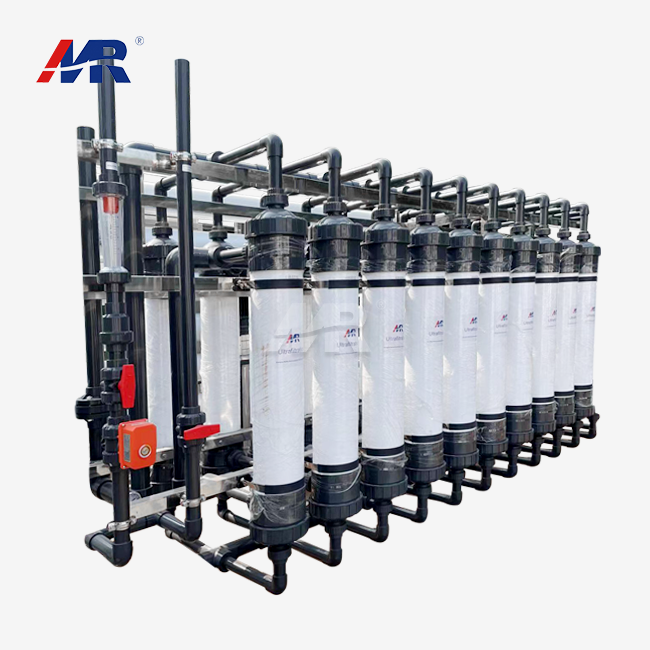
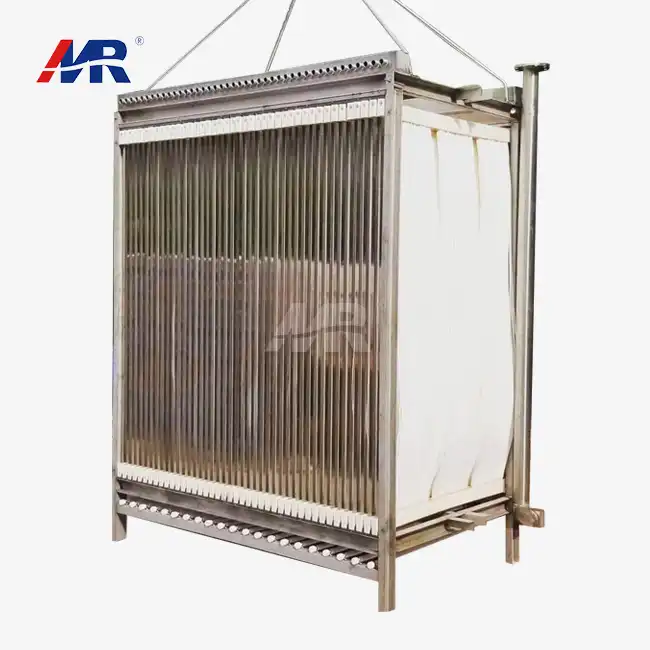
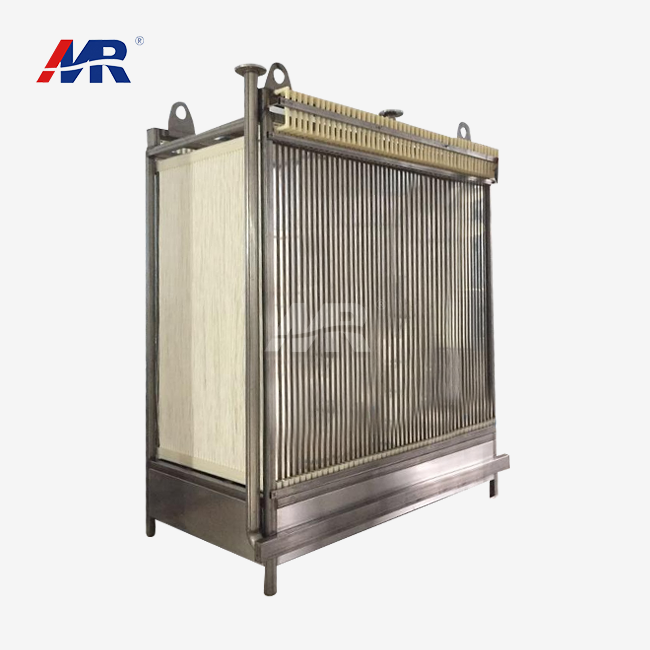
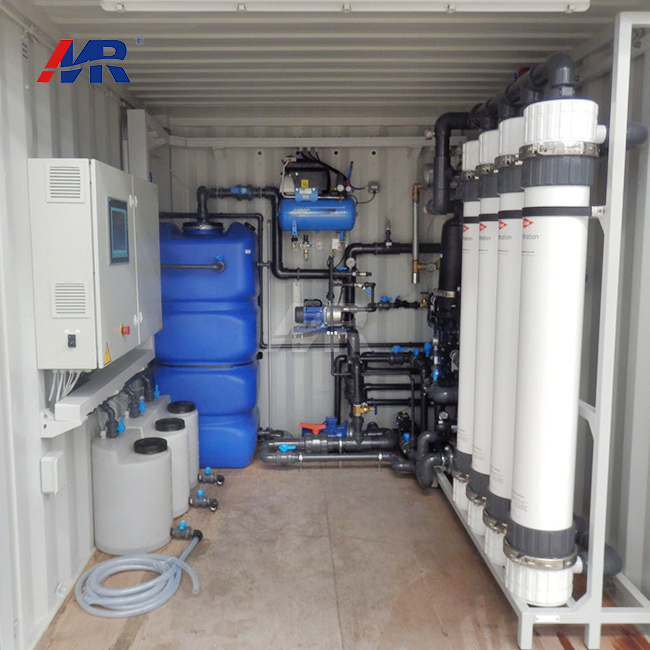
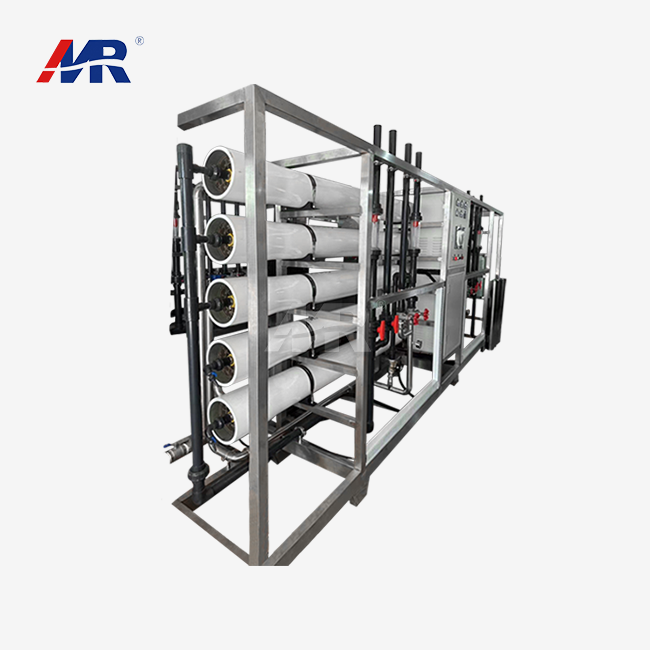
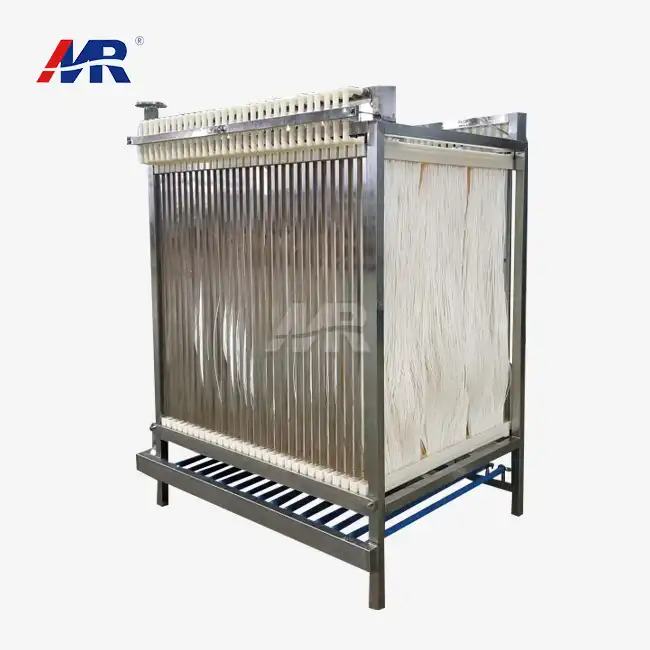
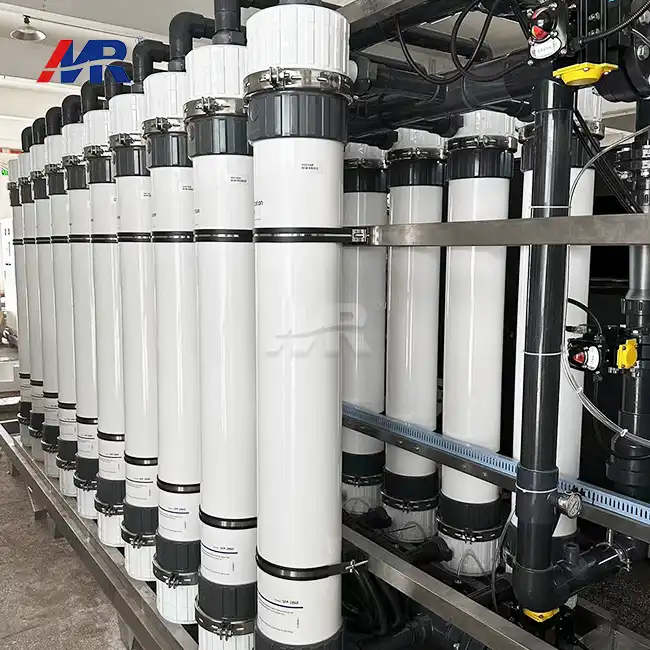
An ultrafiltration skid is a set of parts that are put together in a workshop. One frame has a PLC control panel, instruments, feed pumps, valves, piping, a hollow-fiber UF module, and functions for backwash and clean-in-place (CIP). The pressure of the water makes the microporous barriers move. Parts, colloids, and germs can't get through because of very small holes that are only 0.01 to 0.1 microns wide. When you read a proposal, the four words "flux" (how much water is made per square meter of membrane per hour), "recovery," and "filtration-cycle length" are the most important ones. Being factory-built means that the wiring and pipes are already there, so the work on-site is shorter and easier to plan.
What Ultrafiltration Can and Cannot Do
Ultrafiltration gets rid of big molecules, haze, colloids, bacteria, and solids that have been dissolved in water. The U.S. EPA's Membrane Filtration Guidance Manual from 2005 says that UF can get rid of Giardia and Cryptosporidium as long as the membrane passes challenge testing and the system runs integrity monitoring. You can't use UF instead of reverse osmosis when you need lower conductivity because it doesn't get rid of dissolved salts. Its most well-known use in business is to keep RO out. Most RO manufacturers say that the SDI number for the feed should be less than 5, and a good UF stage should give you a number less than 3. You can keep your hopes in check by setting these limits early on.
Define Your Water and Technical Requirements
Collect Representative Water Data
To make good plans, you must first have good facts. It sounds like you should have tests done in a lab to see the turbidity, COD, BOD, oil and grease, pH, temperature, hardness, alkalinity, metals, bacterial counts, and suspended solids. The water can change quickly if it rains a lot or if something goes wrong with the process. Next, make a list of the daily working hours, the amount of floor space needed, the average and peak flow rates, and any plans for growth. Finally, let them know what kind of permeate quality you need and whether it will be used to feed a RO unit, fill in for water in a cooling tower, as process water, or in a reuse line. Now that we have exact numbers, we can stop making ultrafiltration skids that are too small and make changes that cost a lot of money.
Core Technical Criteria
Compare the skids on a short list of technical points now that you have the data. The first part is the membrane material. Chemicals don't hurt PVDF very much, and PES is another popular choice. Choose one based on the chemicals you use, the water's chemistry, and the temperature. That being said, don't just believe the nominal flow. Instead, look at the design flux, module count, and job or backup capacity. The seller may want screening, cartridge filters, coagulation, or a change in pH. Make sure you know what kind of pretreatment they want. Then look at how to use them. Automatic backwash, PLC automation, CIP sequences, alarms, and data logging all make it easier for workers to do their jobs. Monitoring from afar also helps continuous plants.
Compare UF With RO, Microfiltration, and Media Filtration
Take some time to think about the good and bad points of ultrafiltration and the other options. It works with less pressure than reverse osmosis and can handle solids, colloids, and germs. However, it can't handle salts that have already been broken down. This method may be better for getting rid of bigger solids because the holes are bigger. For water that is steady and doesn't pose a risk, conventional media filtration can be cheap. However, the quality of the filtrate isn't always as good for RO feed. Sometimes, screening, UF, and then RO are all used together in industrial projects to make process water that is of good quality. The UF and RO should be planned from the start as a single train so that they can both be cleaned. The pressures, flows, and recovery will all be the same this way.
Match the Skid to Your Application and Operating Needs
Fit the Skid to the Application
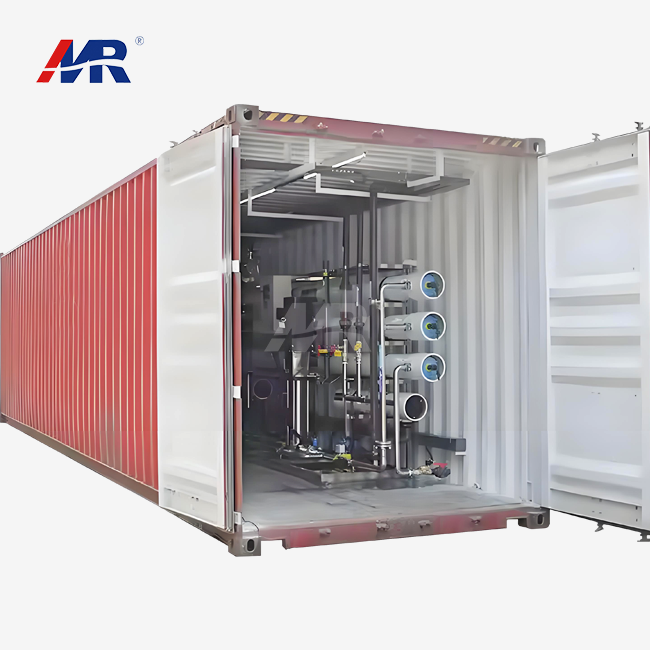
The danger of fouling varies according to its usage. To reuse wastewater, membranes need to be smoothed out, oil has to be removed, and chemicals need to be added. You need a strategy for the concentrate also. In general, food and drink plants have to be composed of clean stainless steel and have means to clean that deal with proteins, lipids, and organic materials. If you wish to purchase drinking water, make sure the vendors can provide you with confirmation that it has been cleaned with water, such as NSF/ANSI 61 clearance for wetted parts. Some distant locations may need materials that don’t rust, installation in containers, or pre-treatment with saltwater. It’s not like a bad full-scale decision when the water isn’t steady or the money is limited.
MR-UF-30TH for RO Pretreatment
So, here is how our MR-UF-30TH works with RO pretreatment. The hollow-fiber ultrafiltration skid is sent ready for use. It operates at 0.2 to 0.3 MPa of pressure and recovers 80% to 90% of the time. Power consumption: 5.5 kW. The need for pumps is small because of the low operating pressure. Also, the return range is rather wide; thus, most of the feed water is permeate. More details may vary the system structure, sort of membranes (PVDF or PES) utilized, how the containers are attached to the membranes and what the size of the pores are dependent on your water and location. “Why do I always run it by the buyer first? Because the final specifications rely on the feedwater data.
Performance, Backwash, and Maintenance
A good proposal has to include details on permeate flow, design flux, recovery, TMP, energy consumption, cleaning frequency, and membrane life for water that satisfies certain parameters. Maintenance: regular CIP, chemically improved backwash, and automated hydraulic backwash. Generally, fouling is caused by too many particles, too much oil, bacterial growth, poor preparation, or too much flux. Equalization, careful planning, constant monitoring of flow and pressure, training of workers, and storing a stock of replacement parts help minimize these dangers. Backwash management is highly crucial to those who purchase in bulk or as an agency, since they need to know how long a membrane will endure across multiple locations. What does the CPU do when TMP goes up?
Compare Cost, Suppliers, and Procurement Steps
Calculate Total Cost of Ownership
Ultrafiltration skid price depends on size, type, capacity, construction materials, preparation, pumps, valves, automation, documentation, testing, shipment, and start-up. It costs more than the price of the object. There are things to consider. Energy, cleaning chemicals, backwash water, disposal of wastewater, labor, spare parts, membrane replacement, downtime. Give all suppliers the same technical data and ask them to provide quotations in the same format. This will make the comparison a fair one. In general, a career assessment will demonstrate that the most costly unit is the most expensive to operate in the long haul compared to a unit with superior controls, materials, and membrane protection.
Evaluate the Manufacturer
Don’t simply read handouts and headlines. Ask for material Certifications, electrical drawings, PLC descriptions, records of the plant acceptance test and the pressure test, instructions, lists of spare parts, and P&IDs. Terms of the warranty. If you want to purchase anything in the U.S., you should also ask for water treatment project compliance documents and test results that satisfy the requirements. Morui is a water treatment company. It has 20 engineers and 500 workers and operates from more than 14 locations. We partner with a bunch of other firms that produce a lot of tools of various types. We also sell water pumps, Runxin valves, Createc instruments, etc. And so forth. All of these operations are done by the same crew. They also install and test the system.
Avoid Common Mistakes and Follow a Simple Workflow
Here are some errors people make: picking the cheapest choice, not considering chemical compatibility, sizing based solely on flow rate, not taking into consideration growth, and selecting a product just based on performance guarantees. I believe it’s preferable to have a simple procedure. First, let’s clarify the purpose. Second, research the average and worst-case quantities of water. Third, determine the parameters: flow, recovery, and kind of membrane that will be utilized in the task. 4. Make a brief list of persons who have worked on projects like yours previously. Then acquire estimates from each of them and compare them. Here are the stipulations of the contract, and what is covered by the contract and what is not. And what are the guarantees? Fifth, if the sea is choppy, undertake a pilot test. Last but not least, the contract should clearly define the parties accountable for training, acceptability testing, guarantee, and commissioning. Be sure to leave some connections for later use if you require them.
Conclusion
Ultrafiltration skid, industrial water, etc. It is crucial to pick the ultrafiltration skid that is compatible with the water and fits your demands. UF, however, cannot remove dissolved salts. It can remove floating bacteria, colloids & solids. It works well before RO most of the time because of this. There are so many factors that go into how well a unit always works: water data, membrane material, design flow, pretreatment, and automation. You can see what each one performs by putting UF next to RO, microfiltration, and media filtration. It also depends on the objective, for example, when it is being reused. Or, for clean processing, the design would differ. It's not fair to compare items only on price; you also need to see how well they perform, how frequently you have to clean them, and the overall cost of ownership. The risk is reduced when contract language is explicit, there is documentation from the supplier, and pilot testing is done. The MR-UF-30TH refers to these by pressure, recovery, and power rates.
FAQ
1. Can an ultrafiltration skid replace reverse osmosis?
No, UF doesn't get rid of salts that have been dissolved. This cleaner gets rid of solids, colloids, and germs. Use RO when you want to get rid of salt in water or make it less conductive.
2. What is the MR-UF-30TH designed for?
It's made to be used before RO treatment. At 0.2 to 0.3 MPa and 5.5 kW of power, an 80% to 90% recovery rate is reached.
3. Do I need pretreatment before UF?
A lot of tools need to be checked out. The data from the lab shows what needs to be done with each type of water to remove oil, make it clot, or change its pH.
4. Should I run a pilot test?
Yes, when the project is big, the wastewater changes a lot, or the quality standards are very strict. After you decide to go ahead with it, a pilot checks the flow, cleaning needs, and membrane choice.
Request an Ultrafiltration Skid Quote From Morui
Morui can match an ultrafiltration skid to your water, your location, and your budget. Our techs will help you set up the system if you email benson@guangdongmorui.com with your lab results, flow rates, and the quality of permeate you want. As a business that makes its own ultrafiltration skids and membranes, we can help with customization, installation, and setup.
References
1. Membrane Filtration Guidance Manual, U.S. Environmental Protection Agency, 2005
2. Water Quality and Treatment: A Handbook on Drinking Water, American Water Works Association, 2011
3. Wastewater Engineering: Treatment and Resource Recovery, Metcalf & Eddy, 2014
4. Membrane Technology and Applications, Richard W. Baker, 2012
5. Membrane and Desalination Technologies (Handbook of Environmental Engineering), Humana Press, 2011
6. NSF/ANSI/CAN 61: Drinking Water System Components – Health Effects, NSF International, 2023