


How to Choose a New RO System for Industrial Water Treatment?
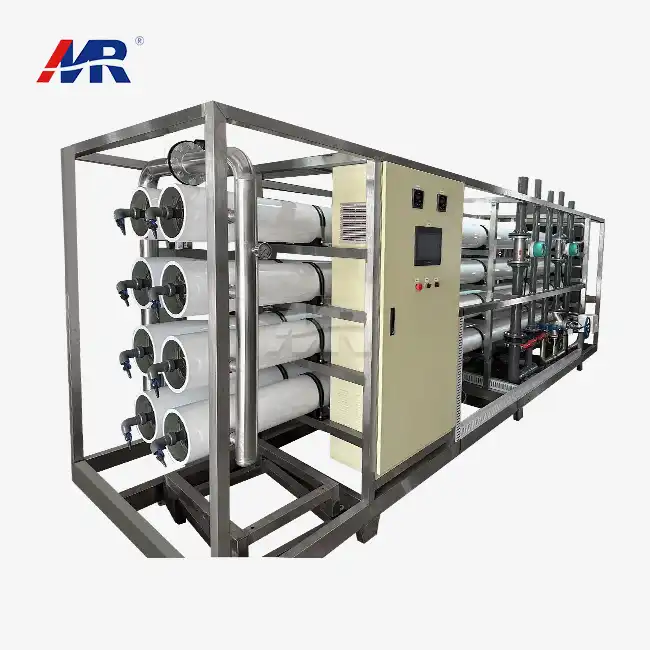
To choose a new ro system for industrial water treatment, start with a recent lab analysis of your feedwater, then define the permeate quality and flow you need. Next, match the pretreatment, membrane staging, and controls to that data. Compare recovery and energy use, and calculate total cost of ownership over five to ten years. Finally, check the supplier's engineering depth, test procedures, and documents. In this guide, I walk through each step and show where the Morui MR-BWRO-50TH, built for pharmaceutical water production, fits.
Step 1—Define Your Industrial Water Treatment Requirements
Start With a Current Water Analysis
The info that goes with a New RO System is what makes it work. When I buy something, I always ask for a current test report that lists the TDS, conductivity, hardness, silica, chlorine, turbidity, iron, manganese, pH, temperature, bacteria, and chlorine. When it comes to well water, seasonal changes are important. The USGS says that water with 1,000 to 10,000 mg/L of dissolved solids is slightly to moderately salty. This is the range of saltiness that most brackish water RO plants treat.
Set Flow, Quality, and Operating Schedule
Next, write down the quality of permeate you need, as well as your daily and peak flow rates and the hours you will be running. To find the required RO capacity, multiply the peak demand by the number of planned operating hours and add the design margin. To give you an idea, if the peak day is 240 m³ and it lasts 20 hours, multiply that number by 1.1 to get 13.2 m³/h. Add the amount of storage you need and any expected growth at this point, since it costs more to change the design after the fact.
Review the Site Before You Buy
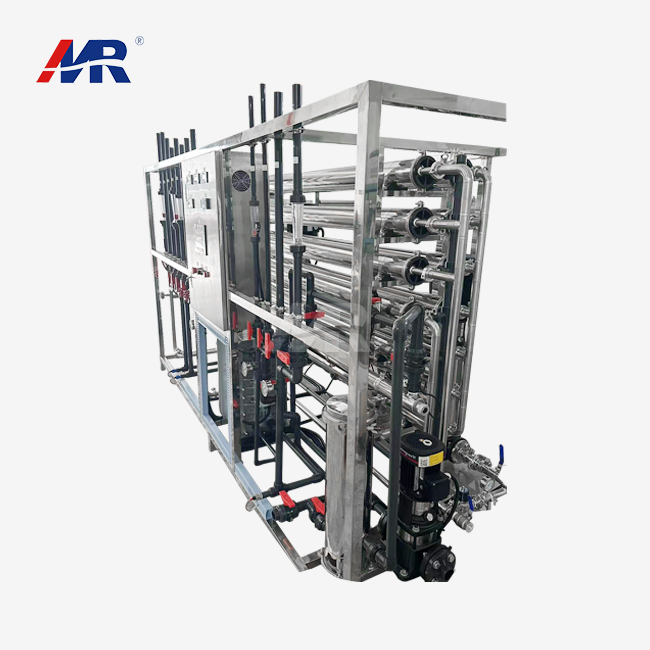
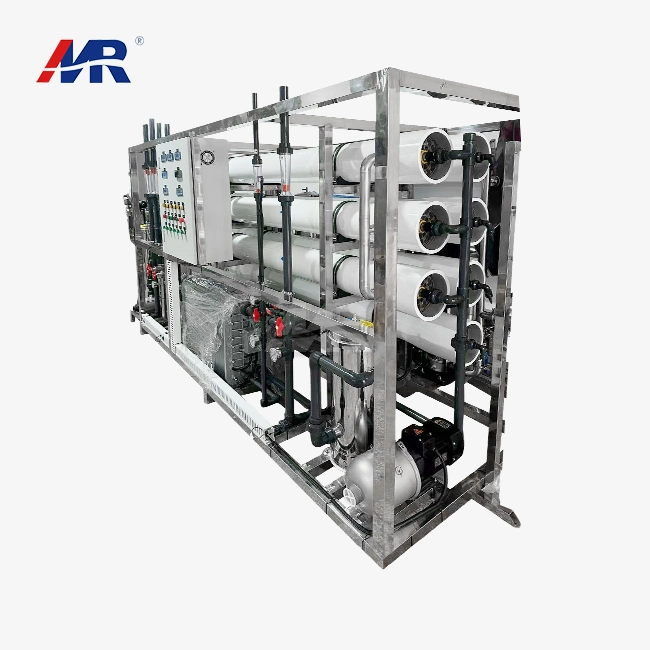
The project can be decided by site limits as well as water chemistry. Check the amount of floor area, how easy it is to deliver, how the waste is drained and disposed of, the temperature, and the power source. The MR-BWRO-50TH needs 55 kW, so your electrician should check the power and wiring right away. A skid that doesn't fit the room or the power panel but does fit the water takes longer to set up and costs more.
Step 2—Evaluate Core Specifications and Configurations of a New RO System
Membranes, Pressure, and Recovery
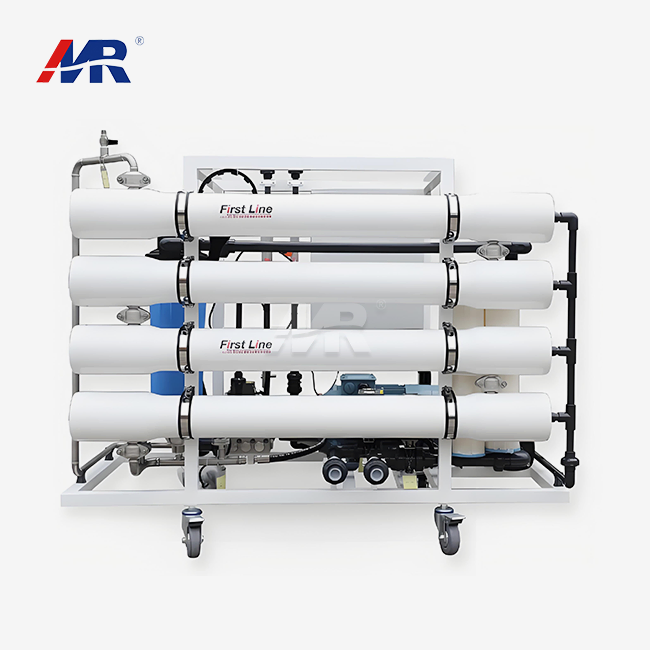
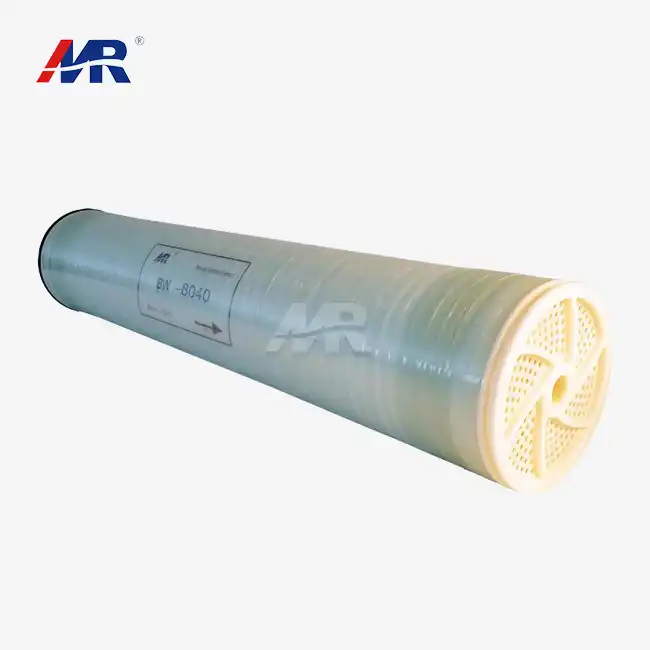
Recovery is the amount of feedwater that gets turned into permeate. Up to 65% of the salt is recovered by the MR-BWRO-50TH, and 99% of the salt is rejected. As an example, 2,000 mg/L of feedwater that is rejected 99% of the time means that the permeate has about 20 mg/L of drug in it. What happens in real life depends on temperature, fouling, and the chemistry of the feed. Scaling risk goes up with higher recovery, so the antiscalant amount and preparation must be right for the feedwater.
Pretreatment and Controls
The membranes are kept safe by pretreatment. Activated carbon for chlorine, a cartridge filter, and antiscalant dosing may be what that means depending on your analysis. On the control side, look for PLC automation, flow meters, pressure sensors, automatic flushing, alarms, and monitoring from afar. Morui can add or take away pumps, controls, tools, pipe materials, and tracking from afar based on your needs. We also sell Shimge pumps, Runxin valves, and Createc tools.
Single-Pass, Double-Pass, and Polishing
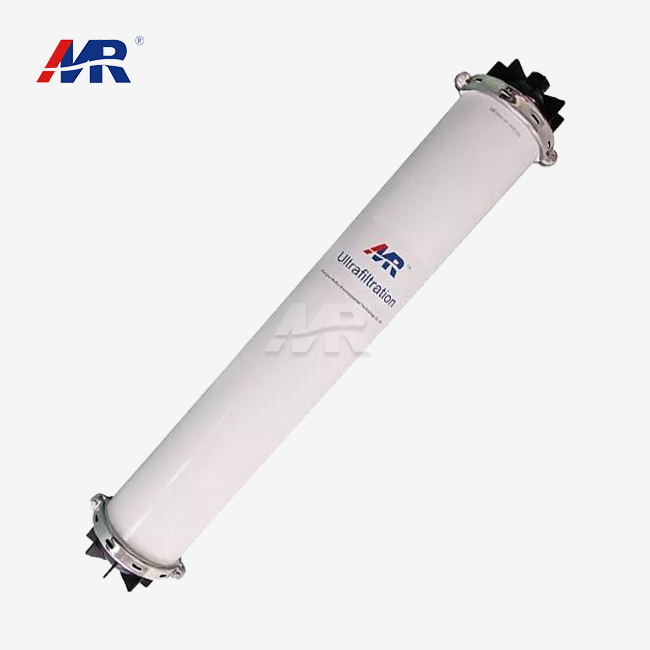
Single-pass RO is good for a lot of different process needs. Double-pass RO makes the conductivity lower and is often used for water in boilers, laboratories, electronics, and pharmaceuticals. After the EDI stage, UV or ozone stages can be used if you need to control microbes or purity even more. The amount of work needed to install a skid-mounted, containerized, or modular layout is also different. Remember that new ro system for industry is not the same as filtration or softening for the whole house.
Step 3—Match the New RO System to Your Application
Pharmaceutical Water Production
The MR-BWRO-50TH is approved for making water for medicinal use. RO is often the first step in this kind of cleaning, and the whole line has to meet your written requirements. Both the FDA's guide to high purity water systems and USP chapter 1231 stress the need for careful planning, cleaning, and keeping an eye on things. The final water grade depends on the feedwater and stages further downstream, so you should talk to an engineer about your goal before you finalize the process.
Boiler, Cooling, and Manufacturing
Heat exchangers and boilers are damaged by bad water quality because they build up scale and rust. This is where buyers should pay attention to the limits for hardness, silica, conductivity, and blowdown. Other things that manufacturing companies care about are steady permeate quality, continuous output, backup capacity, and clean connections to tanks and pipes that are already in place. A RO System skid design is based on how these things are used, not on a catalog flow rate.
Food, Beverage, and Well-Water Projects
Food and drink lines need materials that are clean, easy to clean, and keep records in case they are audited. It is important for well-water projects to keep an eye on iron, manganese, hardness, bacteria, and changes in the seasons. When salty groundwater is turned into drinking water, you should plan for further cleaning, like disinfecting or remineralizing it. Each of these situations changes the stage before the polishing more than it changes the membrane itself.
Step 4—Calculate Total Cost of Ownership
Capital Costs Beyond the Skid
The RO skid quote is only the first line. You need to add preparation, tanks, transfer pumps, pipes, controls, freight, installation, testing, training for operators, and paperwork to make sure everything is legal. Ask each supplier for a scope table so you can see what is included in each price. Two quotes can be thousands of dollars apart just because one doesn't include pretreatment or instruments in the other.
Operating Costs You Pay Every Month
Running costs stay the same for as long as the plant is in use. Some of these are electricity, getting rid of concentrates, cartridge filters, carbon or resin media, antiscalant, cleaning chemicals, and replacing membranes. Count the cost of repairs, testing, extra parts, and time lost due to downtime. Which new ro system will hold its value over five or ten years? One that looks cheap on the first day will be the one that stays valuable over time.
Energy and Recovery in Practice
Not just the size of the motor, but also how many kWh are used per cubic meter at your design flow. It says that the MR-BWRO-50TH can handle 55 kW. Recovery also changes how much water you use and how much goes down the drain. To get 55% of the feed back, you need about 1,818 gallons to make 1,000 gallons of permeate. You need about 1,538 gallons at 65%. That gap adds up to more than a year of work.
Step 5—Assess the Supplier and Use a Decision Scorecard
Check Manufacturer Capability
The factory of a provider tells you what they do after the sale. There are 14 branch companies, 25 years of history, 500 employees, 20 engineers, and its own membrane production plant in Morui, Guangdong. There are also several equipment processing plants. We offer OEM/ODM service, which means that we can make a finished skid from your own design or help you choose a process based on the quality of your water.
Verify Testing, Warranty, and Documents
Find out what the factory acceptance test looks at. There are checks for leaks, pressure, flow, conductivity, electricity, and recovery in a solid test. Once you're sure, write down the warranty terms, lead time, spare parts, and membrane models. Also, people in the US should check which Certifications are right for their needs, like NSF/ANSI for water-contact parts or UL for control panels, and ask for proof for each part.
Build a Simple Scorecard
A weighted evaluation makes sure that the choice is fair. Quality, capacity, feedwater fit, recovery, energy use, automation, maintenance, service, and total cost of ownership are some of the things that are on the list. Based on the needs of the project, you may put monitoring at the top of the list, while validation may be at the top of the list at a pharmaceutical plant. Then, make sure that all of the bids come from the same suppliers and are based on the same feedwater data, flow, recovery, working hours, pretreatment scope, and installation limits.
Conclusion
To choose a New RO System, you need to make sure that it has the right flow, pretreatment, and controls for your needs based on a detailed water analysis. Whether you use a single-pass or double-pass design depends on the quality of the permeate you need. Validation and sanitization requirements are also added for pharmaceutical work. These numbers, like the MR-BWRO-50TH's 55–65% recovery, 99% salt rejection, and 55 kW power draw, directly affect how much it costs to run. Price alone doesn't tell you everything you need to know. The total cost of ownership over five to ten years does. Comparable quotes are then set apart by a supplier's technical depth, factory testing, guarantee, and verified papers. A weighted scorecard uses these factors to make a fair choice.
FAQ
1. What is the MR-BWRO-50TH's return rate?
The MR-BWRO-50TH has a recovery rate of 55–65% and a salt rejection rate of 99%. How well it works depends on the temperature, feedwater, and pretreatment.
2. Is the MR-BWRO-50TH good for making water for pharmaceutical use?
Yes, one of its stated uses is to make water for medicinal use. We look over your requirements before finalizing the process because the final water grade depends on your feedwater and any stages that come after it.
3. Can Morui change how the system works?
Yes. You can add or remove pumps, controls, instruments, piping materials, and remote monitoring as needed. We can also make a product from your own design.
4. How do I get a proposal? What should I send?
Send us your raw water quality report, your goal flow, your permeate quality requirements, your working hours, and information about the site, like how much space it has and how much power it has.
Ready to Choose a New RO System? Talk to Morui
Morui makes things and has its own membrane plant, 20 engineers, and can do both OEM and ODM work. Email your water report and flow goal to benson@guangdongmorui.com if you are looking for a New RO System provider for medicinal water. We will look at the MR-BWRO-50TH in light of your needs and suggest a way to do things.
References
1. Water Quality & Treatment: A Handbook on Drinking Water, American Water Works Association, 2011
2. The Guidebook to Membrane Desalination Technology, Mark Wilf, Balaban Desalination Publications, 2007
3. Membrane Technology and Applications, Richard W. Baker, Wiley, 2012
4. Guide to Inspections of High Purity Water Systems, U.S. Food and Drug Administration, 1993
5. USP–NF General Chapter <1231> Water for Pharmaceutical Purposes, United States Pharmacopeial Convention, 2023
6. ISPE Baseline Guide Volume 4: Water and Steam Systems, International Society for Pharmaceutical Engineering, 2019