_1745823981883.webp)

Case Studies on the Successful Implementation of DTRO Technology
It has become clear that Disc Tube Reverse Osmosis (DTRO) Technology is a game-changing way to treat wastewater. This new method has changed the way businesses and cities deal with difficult wastewater, especially water that is very salty or contains a lot of different contaminants. Through a number of case studies, we'll look at how DTRO Technology has been successfully used in different fields, showing how flexible it is and how well it works to solve some of the most difficult water treatment problems. DTRO has been useful in many Cases, such as controlling leachate from dumps, reusing water in plants, and making zero liquid discharge (ZLD) systems. You can learn a lot about how the technology works in the real world, what you need to keep in mind when you use it, and how it will help you in the long run from these case studies. We hope that these success stories show how DTRO is changing how water is treated and how towns can take care of the environment.
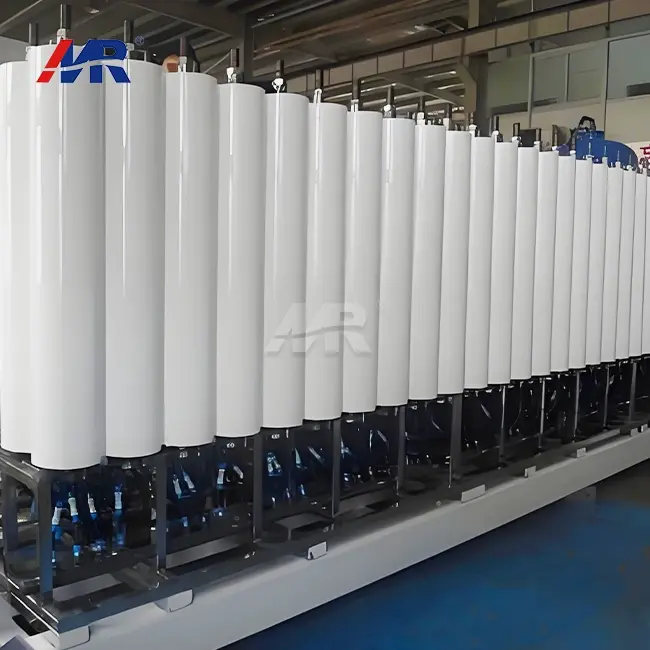
Implementation examples: DTRO Technology in landfill leachate, industrial reuse, ZLD
Landfill Leachate Treatment
Landfill leachate is one of the most difficult types of trash to clean because it has a lot of organic matter, dissolved solids, and could be toxic. A case study from an Asian city dump shows how DTRO Technology was used to treat this complicated wastewater successfully.
Every day, the dump breaks down more than 2,000 tons of trash, which makes about 200 m³ of leachate. Traditional ways of treating people had a hard time meeting strict standards for release. When a 250-m³/day DTRO system was put in place, it produced amazing results:
- Reduction of COD from 25,000 mg/L to less than 100 mg/L
- Total dissolved solids (TDS) reduced from 20,000 mg/L to 200 mg/L
- Ammonia nitrogen levels decreased from 2,500 mg/L to below 10 mg/L
- Water recovery rate of 70%, significantly reducing disposal volumes
Industrial Water Reuse
To help the earth and save water in the cloth business, which needs a lot of it, a big washing plant in South America used DTRO Technology. Because it worked with 50 tons of cloth every day, the business needed a lot of good water to stay open.
The DTRO system was designed to treat 1,000 m³/day of mixed wastewater from various dyeing processes. Key outcomes included:
- Removal of 99.5% of dissolved solids and dyes
- Reduction of conductivity from 5,000 µS/cm to less than 50 µS/cm
- 80% water recovery, allowing for direct reuse in production processes
- Annual savings of over 200,000 m³ of fresh water
Zero Liquid Discharge (ZLD) Application
A chemical plant in Africa had to follow strict rules about how much liquid it could let out, so it set up a ZLD system with DTRO Technology. Every day, the plant that made specialty chemicals made 500 m³ of sludge that was very salty.
The integrated ZLD system with DTRO as a key component achieved:
- Concentration of wastewater from 10% to 30% total dissolved solids
- Recovery of 85% of wastewater as high-quality permeate for reuse
- Reduction of wastewater volume by 95%, minimizing evaporation pond requirements
- Recovery of valuable raw materials from the concentrated brine
Lessons learned from DTRO Technology installations: performance, OPEX, maintenance
Performance Insights
In a number of different settings, DTRO Technology has repeatedly shown that it can handle high-salinity and complex wastewaters better than other technologies. Important things learned are:
- Exceptional salt rejection rates, typically exceeding 99.5%
- Ability to operate at higher recovery rates compared to conventional RO systems
- Effective removal of a wide range of contaminants, including organic compounds, heavy metals, and emerging pollutants
- Stable performance under varying influent conditions, crucial for industrial applications
Operational Expenditure (OPEX) Considerations
Even though DTRO systems may have higher starting capital costs than other methods, several case studies have shown that they have big OPEX benefits:
- Energy efficiency: DTRO systems typically consume 20-30% less energy than traditional RO for high-salinity applications
- Reduced chemical usage: The design of DTRO modules often results in lower scaling and fouling, decreasing the need for chemical cleaning
- Water savings: Higher recovery rates translate to reduced freshwater consumption and lower disposal costs
- Valuable by-product recovery: In some industries, the concentrated stream can be further processed to recover raw materials
Maintenance Lessons
Proper maintenance is crucial for the longevity and efficiency of DTRO Technology systems. Case studies have provided valuable insights into best practices:
- Regular monitoring of key parameters (pressure, flow rates, conductivity) is essential for early detection of performance issues
- Implementing effective pretreatment systems significantly extends membrane life and reduces cleaning frequency
- Optimizing cleaning protocols based on specific water chemistry can maintain high performance while minimizing downtime
- Training operators in DTRO-specific maintenance procedures ensures consistent system performance
Real-world outcomes of DTRO Technology: effluent quality, recovery rates, lifespan
Effluent Quality Achievements
Across various applications, DTRO Technology has consistently produced high-quality effluent, often exceeding regulatory requirements:
- In landfill leachate treatment, effluent COD levels were consistently below 100 mg/L, meeting stringent discharge standards
- Industrial applications achieved removal rates of over 99% for total dissolved solids, heavy metals, and organic compounds
- Permeate quality in many cases was suitable for direct reuse in process water applications, reducing freshwater demand
Recovery Rates in Practice
One of the most significant advantages of DTRO Technology is its ability to achieve high recovery rates, even with challenging feed waters:
- Landfill leachate treatment systems consistently achieved 70-75% recovery rates
- Industrial wastewater applications demonstrated recovery rates of 80-85%, significantly reducing discharge volumes
- In ZLD systems, DTRO played a crucial role in achieving overall system recovery rates exceeding 95%
System Lifespan and Long-term Performance
Long-term case studies have provided valuable data on the durability and sustained performance of DTRO systems:
- Membrane lifespans of 3-5 years were commonly reported, with some installations exceeding 7 years with proper maintenance
- Performance degradation was minimal, with many systems maintaining over 90% of initial flux after several years of operation
- The robust design of DTRO modules showed resilience to occasional upset conditions, contributing to overall system reliability
These results from real life show that DTRO Technology works well and can be trusted in many water cleaning situations. The technology is useful for solving complicated water treatment problems in many different businesses because it consistently produces high-quality effluent, high recovery rates, and long system lifespans.
Conclusion
This article's case studies clearly show how a DTRO Technology supplier can change difficult water treatment situations for the better. DTRO has shown its flexibility and usefulness by treating highly polluted landfill leachate, allowing water recovery in businesses that use a lot of water, and getting zero liquid discharge in chemical manufacturing.
Key takeaways from these implementations include:
- Exceptional contaminant removal capabilities, consistently producing high-quality effluent
- High recovery rates, significantly reducing wastewater volumes and freshwater consumption
- Energy efficiency and reduced chemical usage, leading to lower operational costs
- Robust performance and extended membrane life, ensuring long-term reliability
As environmental rules and a lack of water become bigger problems around the world, using new technologies like DTRO will be very important for long-term water management. These case studies are strong proof that DTRO has the ability to solve difficult water treatment problems in a wide range of fields and uses.
DTRO Technology can help towns and businesses that are having trouble getting rid of their trash. They have a plan that works and is good for both the business and the environment. There are big changes in how well water is handled, how much it costs, and how long it stays in the environment when you work with skilled DTRO system providers.
FAQ
Q1: What makes DTRO Technology different from conventional reverse osmosis?
A: DTRO Technology uses a special disc-tube arrangement that lets it work with higher pressures and better with waters that are high in salt and tend to foul up. Compared to other RO systems, this one has higher recovery rates, better energy efficiency, and more resistance to scaling and fouling.
Q2: Can DTRO Technology be retrofitted into existing treatment plants?
A: Yes, DTRO systems can often be added to or upgraded to treatment plants that are already in place. Their modular design makes placement adjustable, and they can work with or instead of regular RO systems to make the whole plant work better, especially for wastewater streams that are hard to treat.
Q3: What are the typical maintenance requirements for a DTRO system?
A: DTRO systems usually need to have their operational parameters checked on a daily basis, cleaning processes (chemical and/or mechanical), and membranes replaced every so often. How often and how hard upkeep is done depend on the function and the quality of the feed water. DTro membranes can last three to five years or more if they are taken care of properly.
Advanced DTRO Technology Solutions for Challenging Wastewater | Morui
You can use Guangdong Morui Environmental Technology Co., Ltd. to experience the power of cutting-edge DTRO Technology. Our high-tech systems are made to handle the toughest wastewater treatment situations, from complex city waste streams to high-salinity industry effluents. With our deep knowledge of membrane technology and wide range of services, we can create custom solutions that are as efficient as possible, have minimal effect on the environment, and meet all legal requirements.
Ready to revolutionize your water treatment processes? Contact Our Team of experts today at benson@guangdongmorui.com for a personalized consultation. Let us help you achieve superior water quality, higher recovery rates, and significant cost savings with our state-of-the-art DTRO Technology. Together, we can turn your water challenges into opportunities for innovation and sustainability.
References
1. Zhang, L., et al. (2019). "Advanced treatment of landfill leachate using a novel disc-tube reverse osmosis system." Journal of Environmental Management, 235, 212-219.
2. Ramírez Calvo, P., et al. (2020). "Implementation of DTRO technology for textile wastewater reuse: A case study." Water Science and Technology, 81(11), 2376-2385.
3. Al-Hamzah, A., & Fellows, C. M. (2018). "A comparative study of novel DTRO membranes in industrial water treatment." Desalination, 445, 97-104.
4. Chen, G., et al. (2021). "Long-term performance evaluation of a full-scale DTRO system for landfill leachate treatment." Waste Management, 120, 140-148.
5. Tong, T., & Elimelech, M. (2018). "The Global Rise of Zero Liquid Discharge for Wastewater Management: Drivers, Technologies, and Future Directions." Environmental Science & Technology, 50(13), 6846-6855.
6. Wang, J., et al. (2020). "Energy efficiency and economic feasibility of DTRO desalination process for high-salinity industrial wastewater treatment." Desalination, 479, 114340.