_1745823981883.webp)

Ultra Filter Membrane Pore Size Explained
An membrane/ultrafiltration-membrane-system">ultra filter membrane operates as a precision barrier that physically separates contaminants from water based on particle size. Its pore size typically ranges from 0.01 to 0.1 microns (10–100 nm), rated by Molecular Weight Cut-Off (MWCO) values between 1,000 and 500,000 Daltons. This specification governs what the membrane retains—bacteria, viruses, colloids, macromolecules—and what passes through, namely water and dissolved salts. Choosing the correct pore size is not a minor detail; it determines your system's filtration precision, energy consumption, and long-term operational cost.

What Is Ultra Filter Membrane Pore Size?
Defining the Measurement and Its Industrial Significance
The pores in ultrafilter membranes are measured in nanometers or microns. They can be found using methods like bubble point testing (per ASTM F316), mercury intrusion porosimetry, and MWCO challenge testing with dextran or PEG molecules. These techniques show not only the average pore width but also how evenly the pores are spread out. This is an important factor that affects how well a membrane module filters things.
In comparison, microfiltration membranes have pores that are 0.1 to 10 microns wide, while nanofiltration works with pores that are less than 0.001 microns wide. Ultrafiltration is the only method that can get rid of pathogens and macromolecules without taking away essential minerals. Microfiltration and reverse osmosis, on the other hand, require a lot more energy to do the same job.
How Does Pore Size Affect Filtration Performance and Real-World Applications?
The Mechanism Behind Size Exclusion
Ultra filter membrane works by keeping particles bigger than the pores of the membrane on the feed side while letting the permeate pass through. A smaller hole (nearer to 0.01 microns) gets rid of 4–6 logs of bacteria and viruses, while a bigger hole (nearer to 0.1 microns) lets more fluid flow through while only getting rid of a few pathogens. Every process engineer has to make the most important technical choice of their career: how to balance the rejection rate and the permeate flow rate.
Calibrations for hole size must be different for each industry. This is how pore size fits into regular business needs:
- Pharmaceutical and biotech facilities running GMP-compliant pure water systems need tight pore barriers (0.01–0.02 microns) to control endotoxins and bioburden consistently, which has a direct effect on batch release compliance.
- Food and beverage processors—particularly dairy plants that concentrate whey protein — depend on membranes that are 0.02 to 0.05 microns thick to keep proteins in and let lactose and water pass through, preserving nutritional value without thermal damage.
- Municipal water treatment plants upgrading to membrane-based pre-treatment use 0.02 micron membranes before RO systems to regularly lower the Silt Density Index (SDI) to below 2.5 and stop RO systems from fouling, which costs a lot of money.
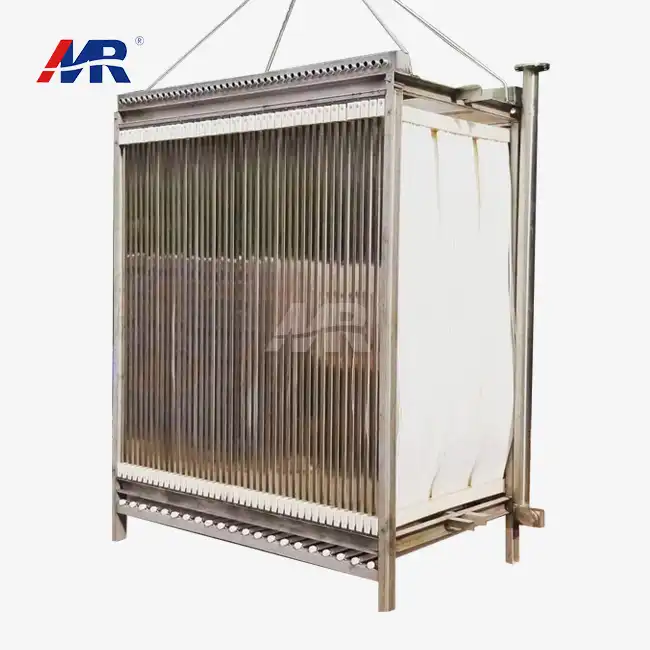
- Wastewater treatment facilities operate MBR systems submerged in bioreactor tanks to separate treated effluent from activated sludge when the MLSS level is high.
These applications demonstrate that pore size is not a single number, but a process-specific variable that needs to be matched to the type of contaminants and the needs of the system further down the line.
Ultrafiltration Membrane vs. Other Membrane Technologies: How Does Pore Size Compare?
Procurement professionals frequently ask how ultrafiltration compares to nanofiltration and reverse osmosis when selecting a filtration stage. The table below provides a structured comparison to support that decision:
| Parameter | Microfiltration | Ultrafiltration | Nanofiltration | Reverse Osmosis |
|---|---|---|---|---|
| Pore Size | 0.1–10 μm | 0.01–0.1 μm | 0.001–0.01 μm | < 0.001 μm |
| MWCO (Daltons) | > 500,000 | 1,000–500,000 | 100–1,000 | < 100 |
| Removes | Suspended solids, protozoa | Bacteria, viruses, colloids | Divalent ions, organics | Salts, dissolved ions |
| Operating Pressure | 0.1–2 bar | 0.5–3 bar | 3–20 bar | 10–70 bar |
| Energy Cost | Lowest | Low | Moderate | Highest |
| TDS Reduction | None | None | Partial | Near-complete |
The pore size range of an ultrafilter membrane puts it in an operationally efficient zone: low operating pressure means lower operating expenditure (OPEX), and its rejection ability is enough for pre-treatment and disease control without the chemical complexity of nanofiltration or RO.
Fouling is also controlled by the size of the pores. Tougher membranes build up a thicker cake layer and need chemical cleaning (CIP) more often. This is usually triggered when Transmembrane Pressure (TMP) rises 10–15% above baseline. It takes longer for membranes with more pores to get dirty, but fine organics or colloidal silica may get through and damage equipment further downstream. Maintenance procedures need to be changed to reflect this.
How to Choose an Ultra Filter Membrane Based on Pore Size: A Procurement Guide
Matching Pore Size to Your Contaminant Profile
A full feed water analysis should be the first step in any ultra filter membrane buying choice. The right MWCO and pore size range can be found by knowing the turbidity, SDI, biological oxygen demand (BOD), and molecular weight range of the toxins that need to be removed. If you try to run a 0.1-micron membrane on surface water that has a lot of colloids in it, fouling will happen faster, and the cost of cleaning will go up.
Why Membrane Material Influences Pore Stability
The choice of material is just as important. Polymeric materials, like PVDF and PAN (Polyacrylonitrile), are used most often in industry. PAN membranes, like Morui's MR-UF-8060, are very good at attracting water and keeping out organic matter. These are the qualities that keep the pores' shape even after many cleaning processes. Because it is more resistant to chemicals, PVDF is better in places where oxidant-based cleaning (NaOCl) is common. Ceramic membranes have very stable pores, but they cost more up front. This is why they work better in harsh chemical or high-temperature settings.
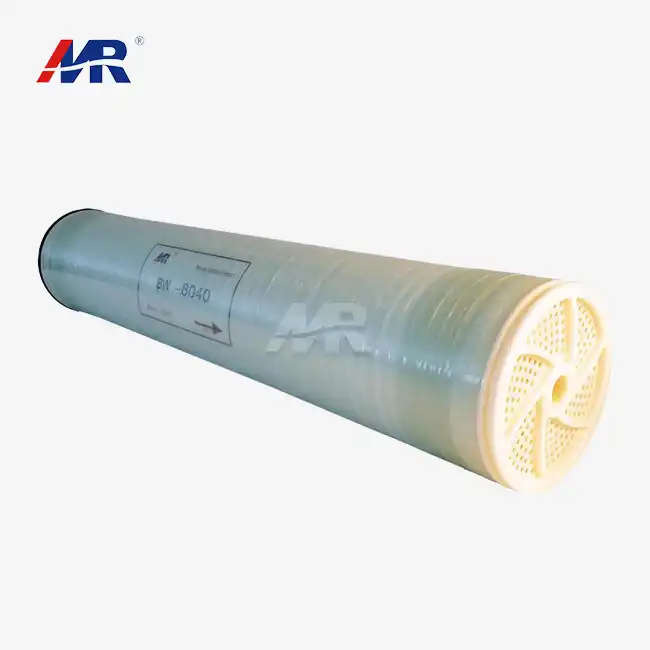
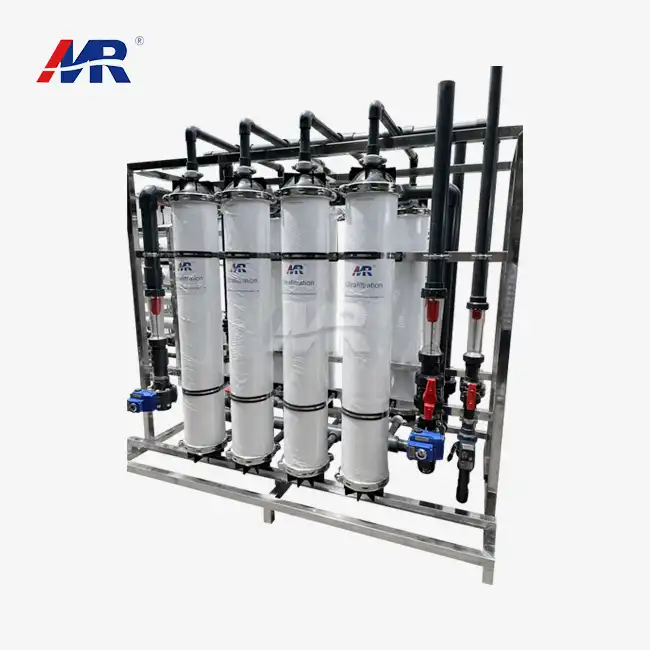
The Morui MR-UF-8060 module is made of PAN material with precisely controlled pores that are 0.02 microns wide. It has an effective membrane area of 50 m² and a flux range of 40–120 LMH. This mix works especially well for pre-treatment in cities, water systems for pharmaceuticals, and food-grade processing lines that need to consistently get rid of microbes at a moderate operating pressure.
Procurement teams should also look at lead times, warranty terms, and the state of NSF/ANSI 61 certification when sourcing membranes. For drinking water and food-contact uses, compliance certification is a must.
Maintaining Ultra Filter Membranes: Cleaning and Longevity Tips by Pore Size
Adapting Cleaning Protocols to Pore Size Behavior
Maintenance of ultra filter membranes is where operational costs are either kept in check or made worse. If you wait too long between CIP intervals, organic fouling can happen more easily in a 0.02-micron membrane because its pores are smaller and less open. Regular hydraulic backwashing—usually every 20 to 30 minutes of operation—lifts loose cake layers off the bottom before they pack down. Biological buildup is taken care of by chemical-enhanced backwashing (CEB) with low-concentration NaOCl, and mineral scaling is taken care of by citric acid.
Here are the key maintenance actions that protect long-term membrane integrity:
- Monitor TMP continuously. A steady rise of 10–15% above the clean standard is a good sign that CIP needs to be done. Delaying action at this point makes fouling permanent and shortens the life of the module.
- Schedule CIP quarterly under normal industrial feedwater conditions. Feeds that are high in organic matter or haze may need to be cycled every month. A more accurate CIP trigger is found by following the normalized flux decline over time instead of just using time-based scheduling.
- Test membrane integrity periodically. Pressure hold tests and bubble point tests can find broken hollow fibers before they affect the quality of the permeate. A reliable early warning sign is a rapid rise in turbidity in the permeate stream.
These practices, applied consistently, support a membrane service life of 3–7 years under well-managed circumstances. When evaluating membranes from different sources, procurement planners should add the costs of CIP chemicals and labor to the total cost of ownership.
Conclusion
When choosing an ultra filter membrane for a business or city project, the size of the pores is the most important factor. It controls the rejection rate, the flow rate, how fouling happens, how often the filter needs to be cleaned, and the total cost over its entire life. A pore size that is well-matched to your feedwater chemistry, the needs of the downstream process, and your maintenance capacity will give you long-lasting performance with few operational surprises. The MR-UF-8060 at 0.02 microns, made with PAN material and a 50 m² membrane area, is a dependable and flexible choice for teams that need consistent pre-treatment performance in settings that handle pharmaceuticals, food, and water.
FAQ
1. Can an ultra filter membrane remove dissolved salts or hardness?
No, ultrafilter membrane pores are much bigger than dissolved ions, which are 0.01 to 0.1 microns. It does a good job of getting rid of germs, viruses, colloids, and dissolved solids, but it doesn't lower Total Dissolved Solids (TDS) or water hardness. To separate ions, you need to use nanofiltration or reverse osmosis.
2. What triggers a CIP cycle for an ultrafiltration system?
TMP should start a CIP cycle when it rises 10–15% above the clean average or when standardized flux falls by the same amount. Depending on the quality of the feedwater, this usually means cleaning once a month or three times a year in an industrial setting that runs all the time.
3. How long does an ultrafiltration membrane last?
A well-kept hollow fiber membrane module can last between 3 and 7 years with the right pretreatment, regular hydraulic backwashing, and scheduled CIP. Aggressive chemical exposure and putting off upkeep are the main reasons why things break down too quickly.
4. How do I detect a compromised membrane fiber?
If the permeate turbidity suddenly rises or a pressure hold test fails, it means that integrity has been lost. Sonic testing and bubble point testing can help find the broken fiber or module so that it can be pinned or replaced.
Partner With Morui for Reliable Ultra Filter Membrane Solutions
Join forces with Morui for dependable ultra filter membrane solutions. With Morui, every ultra filter membrane project has a deep technical background and production accountability. Our MR-UF-8060 is a 0.02-micron PAN membrane module with an effective area of 50 m² and a flux range of 40 to 120 LMH. It is made in our own membrane production facility and is supported by 20 engineers in 14 branches across the country. If you need an ultrafilter membrane provider for a pharmaceutical-grade water system or an upgrade to the pre-treatment process for municipal water, please email us at benson@guangdongmorui.com to get prices and specs.
References
1. Baker, R. W. Membrane Technology and Applications. Wiley, 2012.
2. Mulder, M. Basic Principles of Membrane Technology. Kluwer Academic Publishers, 1996.
3. AWWA (American Water Works Association). Microfiltration and Ultrafiltration Membranes for Drinking Water. AWWA Manual M53, 2005.
4. Judd, S. & Judd, C. The MBR Book: Principles and Applications of Membrane Bioreactors. Elsevier, 2011.
5. Cheryan, M. Ultrafiltration and Microfiltration Handbook. CRC Press, 1998.
6. NSF International. NSF/ANSI Standard 61: Drinking Water System Components — Health Effects. NSF International, 2023.