_1745823981883.webp)

Containerized RO Systems for Islands: Reliable Water Purification for Remote Environments
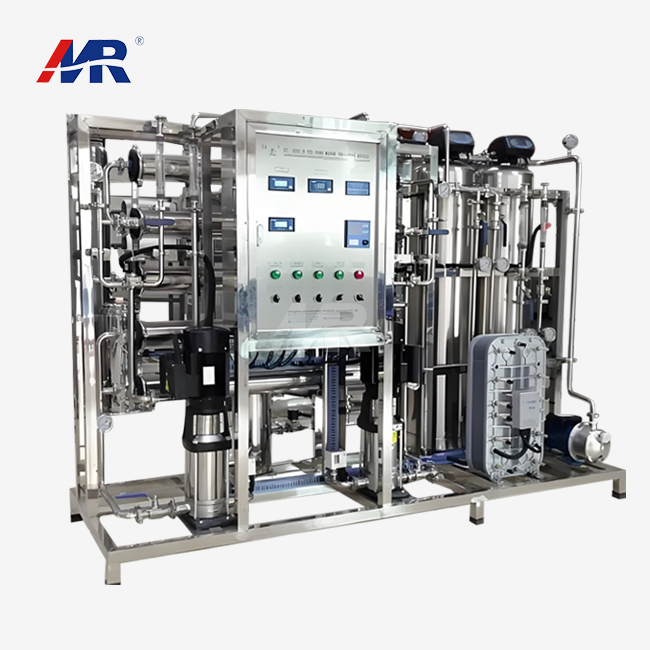
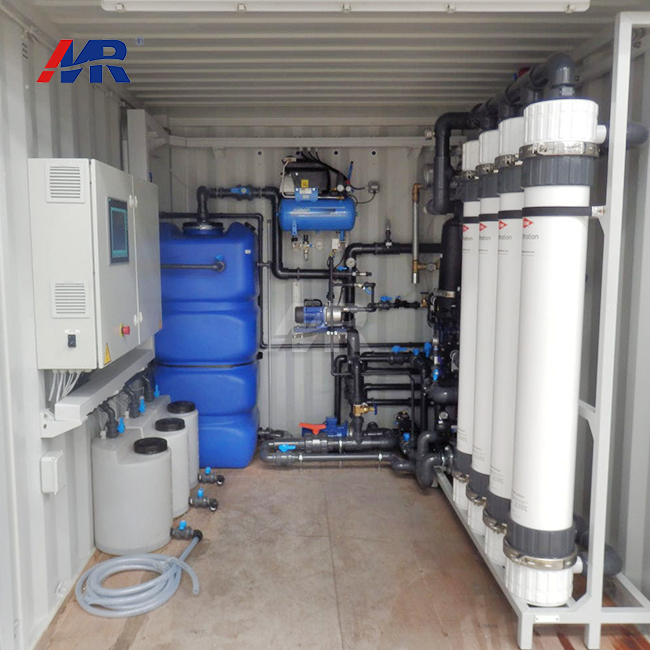
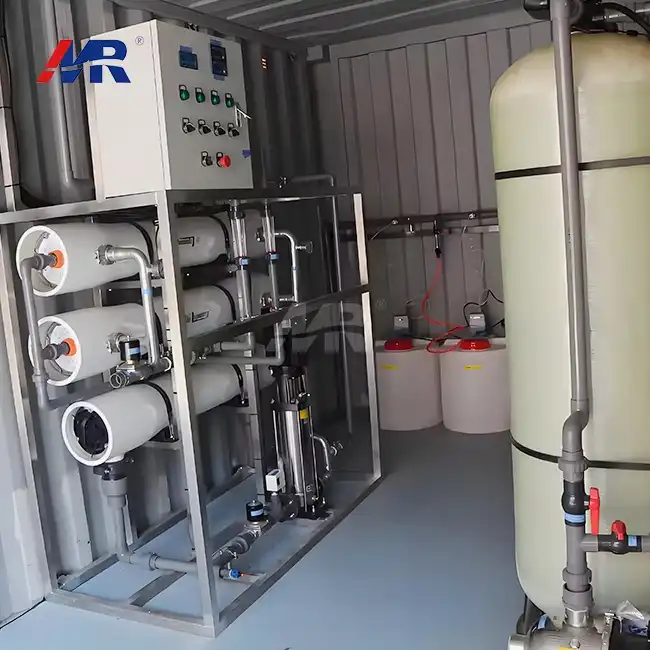
Water quality, speed, reliability, and logistics are all issues when delivering clean water to an island town, resort, or remote industrial location. These issues can be solved with a containerized RO plant. A shipping crate-sized water filtration device, it is portable. Its compact design includes reverse osmosis membranes, pumps, pre-treatment, and control systems. Industrial-grade water treatment may be supplied to regions where normal infrastructure isn't practical or can't be developed fast with this modular technology.
Understanding Containerized RO Plants and Their Advantages for Island Environments
Islands are tougher to secure water. Due to limited space, isolation from mainland supply lines, saltwater exposure, and delicate ecosystems, water treatment options must be powerful and versatile. Containerized RO plants may desalinate and purify water without civil engineering or permanent construction. Learn about containerized ro plants and their benefits for islands.
Compact, Integrated Design for Quick Deployment
Containerized RO plants arrive wired, connected, and ready to use. Standard fixed-plant configurations require months to develop and prepare the site, whereas these systems may be used in days. The water treatment process—from intake to membrane separation to completion—is contained in a forty-foot ISO container. This self-contained layout eliminates the need for separate structures, speeding up the project and protecting the fragile island landscape.
Scalability and Flexibility to Match Island Needs
Islands vary in population and water use. A luxury vacation or industrial may need hundreds of thousands of gallons per day, while a tiny fishing town may need a few thousand. Scalable modular containerized RO plants can meet these demands. Start with one container and increase more as demand develops. Thus, you may ensure that your investment meets your present demands and allows for future development.
Comparing Containerized RO Systems with Traditional and Alternative Solutions
Choosing the correct water treatment equipment requires understanding real-world procedures. Traditional fixed-plant reverse osmosis systems operate, but they are expensive, time-consuming, and require a lot of preparation. While other modular systems may be more adaptable, they don't have all the elements and aren't as portable as containerized ro plant versions.
Speed and Simplicity of Installation
Containerized ro plants simplify installation using reverse osmosis membranes. Traditional plant construction involves establishing foundations, building the structure, and assembling all the sections with reverse osmosis membranes. This might take 6-12 months. Your containerized units from the factory are examined and ready to connect to electricity and water, complete with reverse osmosis membranes. Island projects may move from appraising the site to generating water in less than four weeks, which is faster than typical for systems using reverse osmosis membranes.
Transportability and Relocation Advantages
Islands' purposes alter during temporary building camps, busy tourist seasons, and emergency reaction scenarios. Containerized ro plants are ideal for short-term initiatives or infrastructure changes since they can be sent using standard procedures. This mobility is especially useful in emergencies like hurricanes and droughts, where clean water may save lives.
Procurement and Installation: What B2B Buyers Should Know
Finding the best water cleaning option requires more than comparing specs. Technical and financial executives must be clear about where equipment comes from, how much it costs, how it will be supplied, and how it will be supported when installing it in remote locations where mistakes are hard to correct.
Evaluating Suppliers and Manufacturer Reputation
Not all containerized ro plant providers offer the same quality or support. Look for makers with remote and island experience. Morui has around fourteen offices and 500 professionals. Twenty specialists work on water treatment initiatives. We create our membranes and process various pieces of equipment in-house, so we control quality and wait times. This helps meet short project deadlines.
Cost Transparency and Financing Considerations
The size, customization, and technology of containerized ro plants determine their price. A solar-powered, smart-tracking saltwater purification system is more expensive than a brackish water treatment unit. Clear costs should include shipping, tools, fitting support, commissioning, and the first set of spare parts. Some merchants provide inventive methods to finance or lease their items, which may help with budgeting and predicting cash flow. Knowing the complete cost of ownership, including energy usage, membrane repair cycles, and maintenance contracts, can help you develop realistic long-term financial planning.
Maintaining and Optimizing Containerized RO Plant Performance
Containerized ro plants must be maintained and enhanced to last. These devices are straightforward to use, but the islands' environment (varying feed water quality and marine atmosphere) requires precautions.
Routine Maintenance and Membrane Care
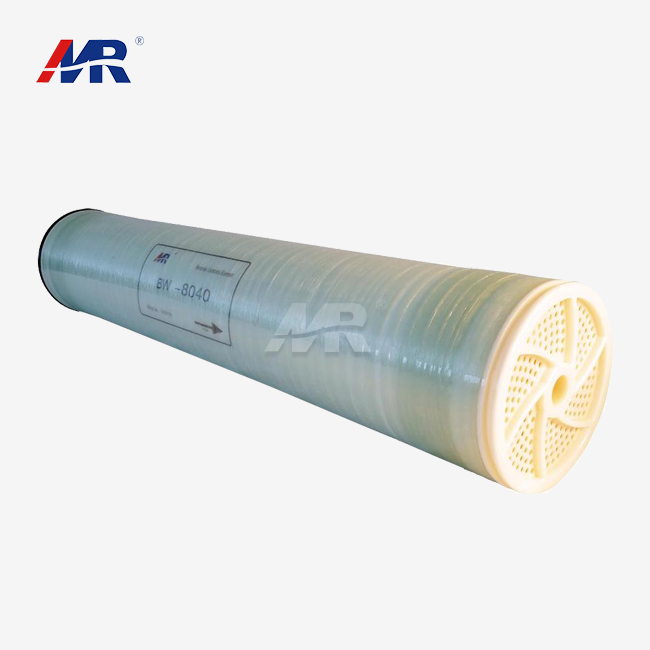
ro membranes, as reverse osmosis membranes, are the core of your water purification system and need frequent maintenance. Organic matter fouling, mineral deposits scaling, and biological development can damage these reverse osmosis membranes. Cleaning regimens vary by feed water, but are commonly monthly to quarterly for reverse osmosis membranes. Pressure difference readings should be used to examine and repair cartridge filters before reverse osmosis membranes. For high-pressure pumps to last, grease and seals must be checked routinely when using reverse osmosis membranes. Automated tracking systems monitor pressure, flow rates, and conductivity to alert personnel before the system with reverse osmosis membranes shuts down.
Remote Monitoring for Isolated Sites
Modern containerized ro plants can provide performance data to cloud platforms via IoT devices. Expert teams may monitor several locations from a remote location, recognize trends that indicate issues, and schedule repairs before they occur. Remote tracking helps water treatment managers on tiny islands with few experts respond to issues without having to be there all the time.
Best Use Cases and Future Trends in Containerized RO Solutions for Remote Islands
Several islands employ containerized ro plants. Knowing what these solutions do well helps business-to-business clients match technology to their needs and predict how future water treatment technologies will develop.
Emergency Disaster Relief and Resilience
Island water systems are routinely destroyed by hurricanes, tsunamis, and earthquakes. Containerized RO plants deliver clean drinking water within days of installation. Government organizations and charity groups increasingly stockpile or pre-position these units in disaster-prone locations. Moving or flying containers, connecting them to temporary power sources, and creating potable water fast saves lives and speeds up reconstruction.
Tourism and Hospitality Water Supply
Island resorts require consistent, high-quality water for guest services, meals, laundry, and recreation. Containerized RO plants are smaller and quieter than traditional treatment plants. They fulfill rigorous hospitality requirements with consistent output. Installation near buildings is possible because it's silent and compact. Green energy supports environmental promises that travelers and brands value.
Supporting Island Communities and Municipal Water Security
Small island nations and rural settlements always need water. Containerized RO plants are cheaper than importing water from the beach or pumping water from the earth, which is unsustainable. Municipal governments can slowly install units as population expands to avoid capacity costs. These approaches let municipalities regulate their water, improving public health and the economy.
Industrial and Specialized Applications
Island industries like seafood processing, power production, and medication production need clean water from reverse osmosis membranes. Industry-specific containerized ro plants with larger capacity and customized post-treatment configurations address these demands while offering deployment adaptability for island operations using reverse osmosis membranes. Businesses can gain financial independence by moving tools when projects conclude or priorities change, unlike with permanent infrastructure for reverse osmosis membranes.
Conclusion
Islands and other remote areas can have safe water sources without years of work or money. Quick deployment, portability, growth, and harsh-condition resistance are proven solutions for remote area issues. Containerized RO plants provide integrated systems that guarantee constant water quality with a level of complexity and investment you can handle, whether you're in charge of water security for a metropolis, a remote resort, disaster relief, or an industrial firm. As green energy and smart automation improve, containerized RO plants will lead to sustainable water treatment for distant places worldwide.
FAQ
1. How long does it take to install a containerized RO plant on an island?
The system can be operational in two to four weeks after the container arrives, depending on how ready and accessible the location is. While shipping the equipment, site preparation might involve ensuring a firm footing, a power hookup, and a water input. Factory testing before shipping reduces on-site assembly time. Most projects are completed faster than typical plants, which take months.
2. Can containerized reverse osmosis systems process seawater effectively?
Containerized RO plants equipped with seawater RO membrane systems may eliminate salt from ocean water, making it drinkable. Large-pressure pumps and membrane configurations allow these units to manage large total dissolved solids. To prevent membrane scaling, suspended particles are removed, and the chemistry is modified during pre-treatment. Saltwater system recovery rates are normally 35–50%, which balances production and equipment life.
3. What are the main cost drivers when purchasing a containerized ro plant?
The system's capacity (in gallons or cubic meters per day), water type (brackish or seawater), added technologies like solar power or advanced automation, ability to be customized to meet specific water quality needs, shipping and logistics to remote areas, and after-sales support packages with warranties and spare parts affect the price. Knowing these criteria helps procurement teams budget accurately and prioritize features aligned with operational needs.
Partner with Morui for Your Island Water Treatment Solutions
Knowledge, reliability, and timely aid beyond tools are needed for island water issues. As a leading containerized RO plant manufacturer with over fourteen offices and over 500 employees, Morui can help you with distant water projects using reverse osmosis membranes. Our in-house membrane production factory for reverse osmosis membranes ensures quality and part supply, and our network of equipment processing companies allows us to customize. We represent trusted brands including Shimge Water Pumps, Runxin Valves, and Createc Instruments, integrating best-in-class components into systems engineered for demanding island environments with reverse osmosis membranes. From initial assessment to commissioning and ongoing maintenance, our expertise can help you with emergency water supplies, civic infrastructure, or industrial site treatment using reverse osmosis membranes. Contact us at benson@guangdongmorui.com to discuss how containerized reverse osmosis technology can secure your water future with confidence and efficiency.
References
1. Smith, J. and Chen, L. (2022). "Mobile Water Purification Technologies for Remote Communities: A Comparative Analysis." Journal of Environmental Engineering and Technology, 45(3), 234-251.
2. International Desalination Association (2023). "Containerized Desalination Systems: Design Standards and Best Practices." IDA Technical Guidelines, Volume 12.
3. Martinez, R. (2021). "Economic Evaluation of Modular Water Treatment Infrastructure in Island Environments." Water Resources Management Quarterly, 38(2), 145-167.
4. World Health Organization (2023). "Guidelines for Drinking Water Quality in Remote and Island Settings." WHO Press, Geneva, Fourth Edition.
5. Thompson, K. and Patel, S. (2022). "Renewable Energy Integration in Containerized Reverse Osmosis Systems." Desalination and Water Treatment Journal, 256, 89-104.
6. Pacific Islands Water Authority (2021). "Case Studies in Rapid Deployment Water Treatment Solutions for Disaster Response." Regional Technical Report, Auckland.