

_1745823981883.webp)

How to Improve Sewage Water Recycling Efficiency in Your Facility
To make sewage water recycling work better, you must first understand how your system works now and then make specific improvements. The removal of contaminants can be increased to 99% by modern sewage wastewater treatment technologies, especially membrane bioreactor systems and automatic monitoring platforms, while using up to 30% less energy. To achieve strategic optimization, you need to look at where the bottlenecks are, combine advanced biological and chemical treatment methods, and use smart technology that can adapt to changing operating needs. This will lead to cleaner water, lower costs, and compliance with regulations.
Assessing Current Sewage Water Recycling Performance
Figuring out where your building stands is the first step toward making real improvements. If you don't have a clear standard, your efforts to optimize will be more like guessing than smart investments.
Establishing Key Performance Indicators
Finding the measures that are most important to your business is the first step in measuring performance. The throughput amount tells you how much wastewater your system handles every day, while the contaminant removal rates for COD, BOD, and TSS show how well the treatment is working. Energy usage benchmarks show how much things cost and how they affect the world. Keeping an eye on these KPIs over time helps tell the difference between normal changes and systemic issues that need to be fixed.
Identifying System Bottlenecks Through Data Analysis
Today's data analytics tools take raw practical data and turn it into information that can be used. Monitoring systems that work in real time record things like flow rates, dissolved oxygen levels, and membrane pressure differences. This lets facility managers spot problems early on, before they get worse. Patterns that show signs of machine breakdown, process imbalances, or hiring problems can be found by looking at historical trends. A Pennsylvania pharmaceutical company looked at its data and found that irregular chemical doses during night shifts were lowering the effectiveness of treatment by 18%. This was an easy problem to fix once it was known.
Recognizing Common Performance Limiters
Most sites run into the same problems. Outdated equipment doesn't work as efficiently as it should, so it uses more energy and needs to be fixed more often. When processes aren't integrated well, water that has only been partly cleaned can skip important sewage wastewater treatment steps. Variations in output quality are caused by inconsistent operating practices, which are often caused by staff not being properly trained or unclear guidelines. Over time, these problems get worse, lowering the system's speed until it's no longer possible to ignore them.
Identifying and Overcoming Key Bottlenecks
There are many problems with sewage recovery devices that make them less productive and cost more. Taking a planned approach to these problems unlocks big efficiency gains.
Mechanical Limitations and Equipment Aging
As pumps age, their internal parts wear out, which makes them less efficient and higher in energy use. Scaling and gunk build up on filters, which makes them less effective. Older membrane units don't let as much water through, so they need higher operating pressures and cleaning processes more often. Replacing or fixing up these motor parts gives you instant benefits. When a food processing plant in Texas replaced its main pumps, energy costs went down by 22% while flow rates stayed the same.
Biological and Chemical Treatment Challenges
Biological treatment stages depend on keeping the right conditions for groups of microbes that break down organic pollutants. Changes in temperature, toxic shock loads, or nutrient changes can upset these delicate environments, which makes treatment less effective. Chemical dosing systems need to be carefully managed; too much dosing loses resources and causes more pollution, while too little dosing leaves contaminants in the wastewater. Advanced tracking and controlled dosing systems keep conditions steady so that biological activity and chemical use are at their best.
Energy Consumption and Operational Cost Pressures
When businesses use a lot of energy, it hurts their bottom line and the environment. 40 to 60 percent of all the energy used in a biological treatment center can be used by aeration devices. These costs are made worse by pumping systems that don't work well, chemical use that is too high, and heat loss in heating processes. Motors that use less energy, variable frequency drives, and heat return systems all cut down on use without lowering the level of treatment. Some buildings can cut their energy use by 30 to 40 percent by making improvements over time.
Principles and Strategies for Optimization
For optimization to work, it needs to blend practical discipline with new technology. This two-pronged method looks at both the technical and human factors that affect success.
Applying Lean Management to Water Treatment
Lean concepts cut down on all kinds of waste, like materials, energy, time, and effort that aren't used. Simplifying a process gets rid of steps that aren't needed and adds complexity for no reason. Standardized working procedures make sure that work is done the same way every time, even when staff changes or shifts happen. Putting performance screens where workers can see them is one way to use visual management tools to make things clear and accountable. A wastewater treatment plant in Oregon used lean methods to cut down on chemical use by 15% while also making the accuracy of output.
Integrating Advanced Biological Treatment Technologies
Better microbial groups, created by careful growth or bioaugmentation, break down pollutants better than regular activated sludge. Moving bed biofilm reactors, or MBBRs, have a small size but a lot of surface area for bacteria to grow on. Anaerobic digesters break down organic garbage and make biogas, which can be used to make energy. These biological technologies deal with difficult waste streams while lowering the amount of chemicals needed and making operations simpler.
Leveraging Automation and Smart Control Systems
When you automate management, you turn reactive management into proactive improvement. Smart control systems constantly check a number of factors and make changes to the way things work in real time. Dissolved oxygen monitors change the level of air based on the needs of microbes, which keeps energy from going to waste. Neutralizing agents are added automatically by pH controls to keep levels in the right ranges. Predictive maintenance algorithms look at trends in how equipment works and let workers know about possible failures before they happen. Expert supervision can be provided from anywhere with remote tracking, which is especially useful for sites that are in rural areas.
Implementing Specific Techniques and Technologies
Finding and using the right technologies that fit the needs of the building is necessary to turn efficiency principles into real results.
Transitioning to Membrane Bioreactor Systems
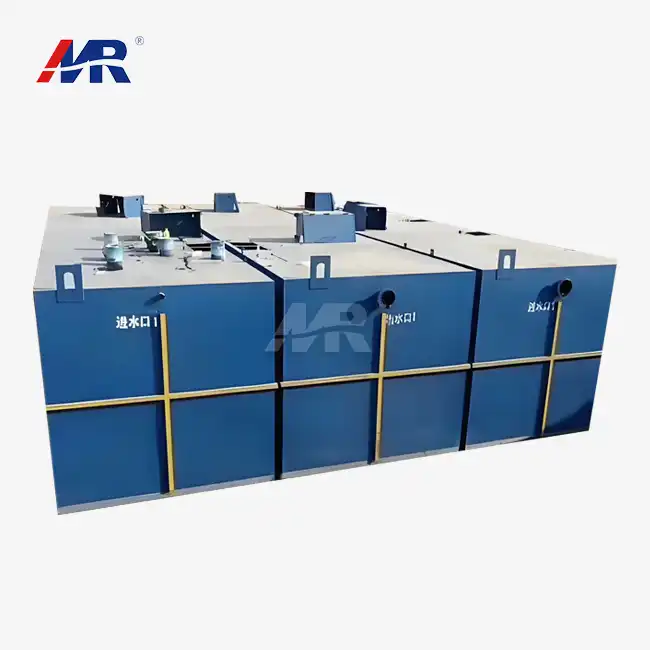
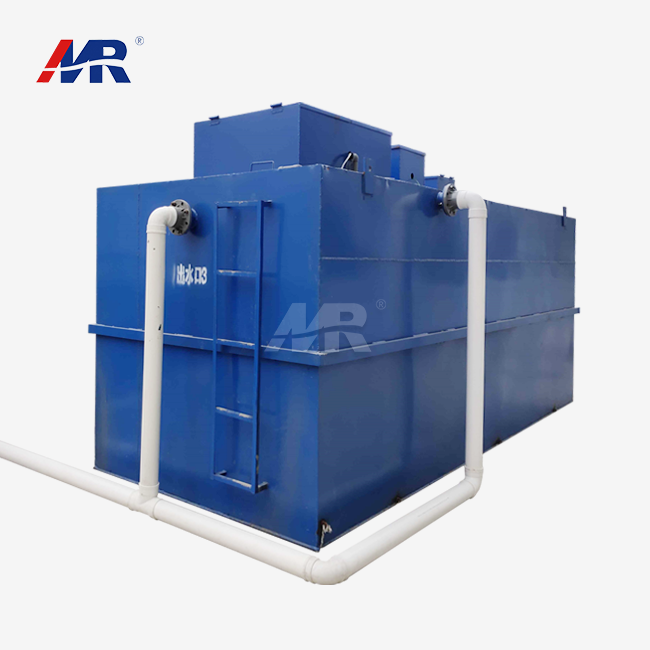
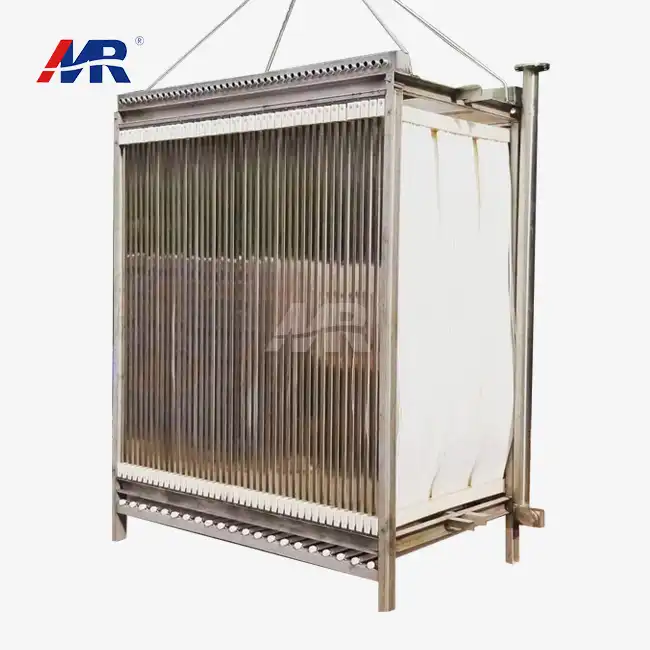
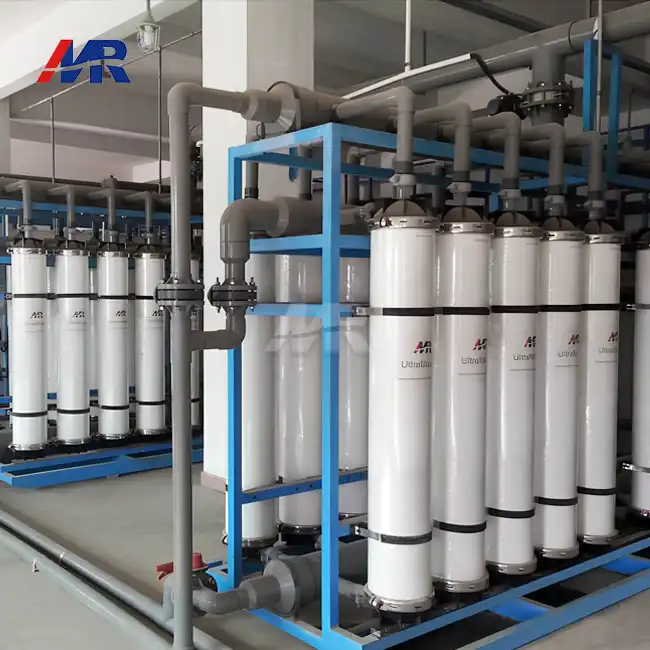
In membrane bioreactor technology, biological treatment and membrane filtering are done at the same time. MBR systems remove up to 99% of suspended solids, bacteria, and many dissolved pollutants, making the runoff quality better than with traditional sewage wastewater treatment. The small form takes up 40% less room than standard systems, which is helpful for places that don't have a lot of space. Morui's MBR systems have fully automated controls that adapt to changing influent conditions. This means that performance stays stable even when load changes. Our systems can handle anywhere from 50 to 10,000 m³/day, so they can be scaled up or down to meet the needs of different businesses and towns.
These benefits directly lead to business benefits that building managers value. Because membrane filtration gets rid of the need for secondary clarity chemicals, fewer of them are used. Better ventilation and less pumping are two ways to make energy use more efficient. With fewer mechanical parts and flexible membrane sections that can be quickly replaced, maintenance is easier to plan. A textile company in North Carolina moved to MBR technology and got effluent quality that was much better than the standards for discharge while also cutting their treatment impact by 35%.
Implementing Hybrid Aerobic and Anaerobic Systems
Using both aerobic and anaerobic treatment steps together makes the best of what each has to offer. With anaerobic pre-treatment, the amount of organic matter in the waste is reduced, and methane-rich biogas is made for energy recovery. After aerobic polishing, any leftover toxins are removed to meet release standards. This combined method takes care of expensive high-strength industrial refuse. Anaerobic treatment is especially useful for chemical and pharmaceutical plants because it can handle large amounts of biological waste that would be too much for systems that only use oxygen.
Stepwise Retrofitting for Existing Facilities
Completely replacing a system is often not possible because of limited funds and the need to keep operations running. Phased updating lets you update things slowly while keeping the business running. Priority updates focus on parts that have the biggest effect on efficiency, which are usually control systems, air systems, and membrane modules. A Nevada metallurgy plant did a three-phase retrofit over the course of eighteen months. In the first phase, they improved the aeration system. In the second phase, they installed new membrane filters, and in the third phase, they set up automatic controls. This method kept operations running smoothly and increased efficiency by more than 45% over time.
Verifying Results and Ensuring Continuous Improvement
Optimization efforts need to be carefully checked to make sure they deliver the expected benefits and help guide ongoing improvements.
Establishing Performance Monitoring Frameworks
Full tracking dashboards compare important data to the starting points set during the evaluation phase. Rates of pollutant removal, energy use per treated cubic meter, chemical dosage rates, and machine downtime are all measured and reported on a daily basis. Weekly trend reports show new patterns, and monthly recaps show how far we've come in reaching our improvement goals. A food processing plant used dashboard tracking to find that the types of waste changed with the seasons, which meant that treatment methods had to be changed. This discovery increased yearly performance by 12%.
Quantifying Return on Investment
Financial measures show how much investments in efficiency are worth to the business. Find the payback times by comparing the prices of the upgrades to the money you will save each month on things like chemicals, energy, maintenance, and following the rules. Many improvements to membrane filtration pay for themselves in 24 to 36 months just by saving money on operations. The better runoff quality and lower environmental risk add to the value. Write down these results to back up future calls for capital investments and get everyone in the company on board with making improvements all the time.
Building a Culture of Continuous Improvement
Upgrades to technology are most useful when they are backed up by a company mindset that encourages new ideas and fixing problems. Operators learn about the system's features and best practices through regular training. Cross-functional growth teams look at practical problems from different points of view. Employees who find ways to be more efficient or solve problems that won't go away are rewarded through programs that do this. This cultural base keeps performance gains going for a long time after the program was first put in place.
Partnering with Reliable Technology Providers
For long-term success, you need to have good ties with providers who can offer expert help, spare parts, and system upgrades as technology changes. Maintenance contracts set prices that can be predicted and make sure that experts will be there when they're needed. Partnering with suppliers gives you access to technical know-how that smaller sites can't keep on hand. Choosing suppliers with a history of success in your business lowers the risk of adoption and speeds up the time it takes to get value.
Conclusion
To make sewage wastewater treatment work better, it needs to be carefully studied, the right technologies chosen, and a dedication to always getting better. Using membrane bioreactors, mixed biological processes, and smart technology in modern treatment systems makes a huge difference in performance while lowering costs and harming the environment. The first step in optimizing is to understand how things are currently working, find specific problems, and put in place answers that are tailored to the needs of the building. Thorough tracking confirms results and helps with ongoing improvements, and strong relationships with suppliers ensure long-term organizational resilience. Facilities that follow these guidelines will be better able to meet stricter regulations while also making more money and being more environmentally friendly.
FAQ
1. What biological treatment method maximizes efficiency for industrial wastewater?
The best organic cleaning method for your waste will depend on its specifics. Anaerobic digestion works well with high-strength organic garbage because it lowers the load while producing energy. Activated sludge or MBBR systems usually work well with moderate organic loads. When room is limited, or strict quality standards must be met for the waste, membrane bioreactors are the best choice. By testing your real wastewater in jars, you can find out which microbial groups and treatment setups work best. A lot of places can benefit from mixed systems that use both anaerobic pre-treatment and aerobic cleaning.
2. How can facilities reduce energy costs during system upgrades?
One way to save energy is to replace old pumps and fans with high-efficiency models that have variable frequency drives that change speed based on demand. Use dissolved oxygen monitors and control algorithms that stop over-aeration to make aeration systems work better. Use heat recovery to get energy from process sources that are hot. Think about devices that make energy, like microturbines that turn biogas into power or anaerobic digestion. A lot of companies offer rebates for technology that uses less energy, which helps pay for the upgrades.
3. What criteria should guide the selection of sewage treatment equipment suppliers?
Give priority to providers who have worked with companies in your field and with facilities of a similar size. Look over case studies and ask for customer examples for uses that are similar. Check out the technical help options, such as how fast they can respond, whether extra parts are available, and whether they offer training programs for operators. Check for long-term survival by looking at the financial security. Check to see if the licenses and guidelines are being followed. Scalability is important; choose systems that can grow with your business without having to be replaced completely. Pricing that is clear and warranties that are clear will protect your investment.
Partner with Morui for Advanced Sewage Waste Water Treatment Solutions
Guangdong Morui Environmental Technology specializes in providing high-performance sewage wastewater treatment equipment that is designed to work in both commercial and local settings. We are a well-known company with over 500 workers and 20 specialized engineers. We have a lot of experience in the chemical, pharmaceutical, food processing, textile, and metalworking industries. Our integrated method includes both providing the equipment and fully installing and commissioning it. This makes sure that the rollout goes smoothly and that you get your money back quickly.
It is possible for our flexible systems to remove 99% of COD, BOD, and TSS while using 30% less energy than other options. Our solutions are fully automatic and can be monitored from afar. They can also be changed to meet your changing business needs. With 14 branches and our own plant for making membranes, we can provide solid service for as long as your system is in use. Get in touch with our expert team at benson@guangdongmorui.com to talk about how Morui's sewage wastewater treatment tools can help your business recycle more effectively.
References
1. Metcalf & Eddy, Inc. (2014). "Wastewater Engineering: Treatment and Resource Recovery," Fifth Edition. McGraw-Hill Education.
2. Water Environment Federation (2018). "Design of Municipal Wastewater Treatment Plants: MOP 8," Sixth Edition. WEF Press.
3. Judd, S. (2016). "The MBR Book: Principles and Applications of Membrane Bioreactors for Water and Wastewater Treatment," Second Edition. Butterworth-Heinemann.
4. US Environmental Protection Agency (2021). "Energy Efficiency in Water and Wastewater Facilities: A Guide to Developing and Implementing Greenhouse Gas Reduction Programs. "EPA Publication.
5. International Water Association (2020). "Benchmarking Water Services: Guiding Water Utilities to Excellence." IWA Publishing.
6. American Water Works Association (2019). "Membrane Filtration Guidance Manual," Third Edition. AWWA Publications.
 VIEW MOREMBR wastewater treatment plant
 VIEW MOREmembrane bioreactor
 VIEW MOREDTRO Elements
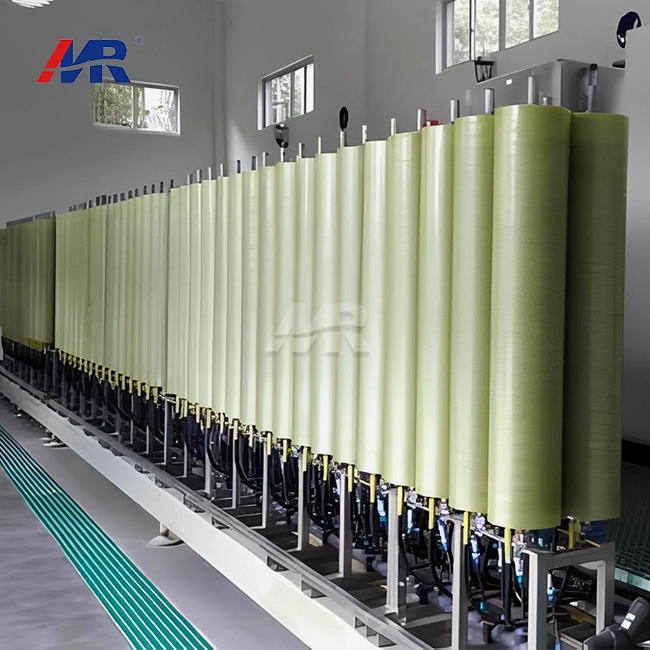 VIEW MORELeachate DTRO Treatment Equipment
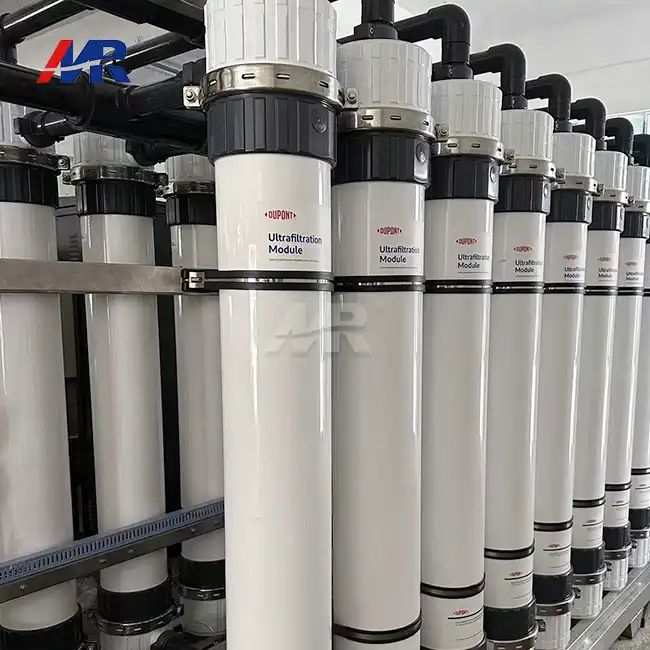 VIEW MORE100T/H ultrafiltration equipment
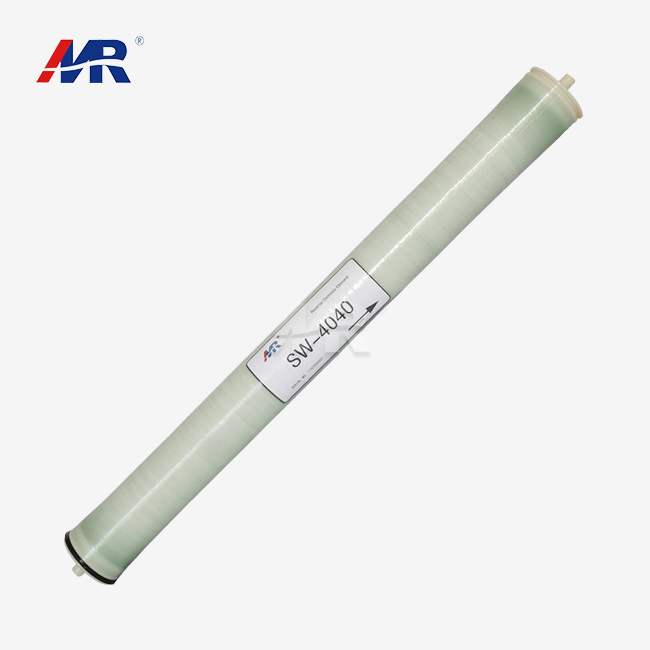 VIEW MORE4040 seawater reverse osmosis membrane
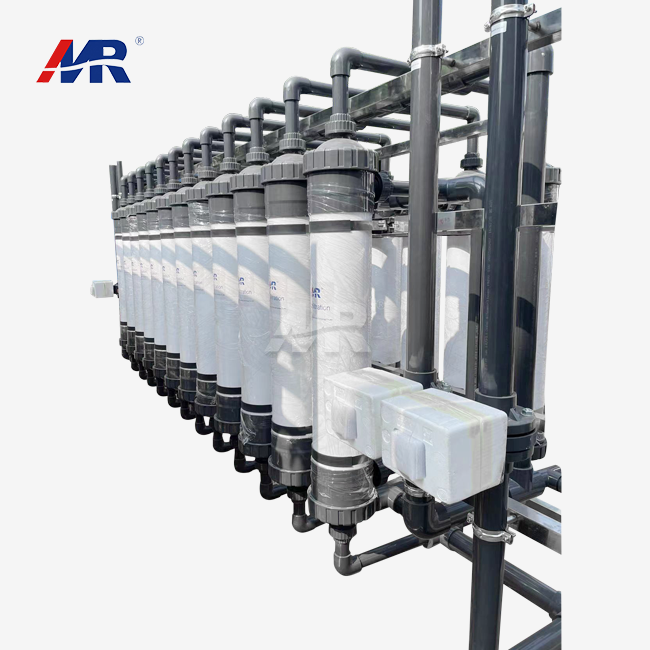 VIEW MOREindustrial ultrafiltration systems
 VIEW MORE200m3/hour ultrafiltration equipment
