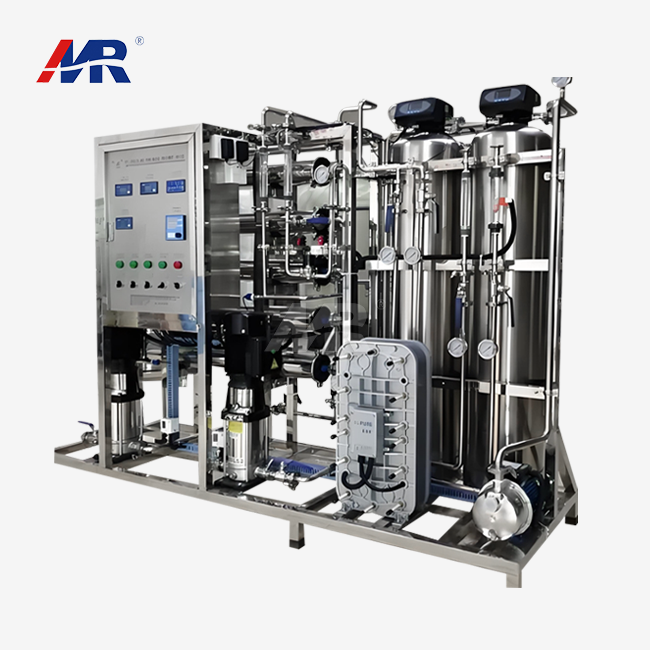
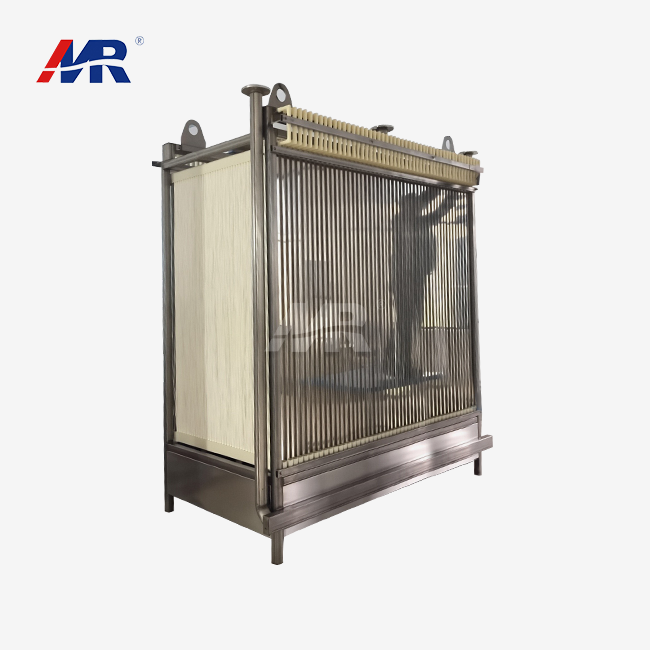
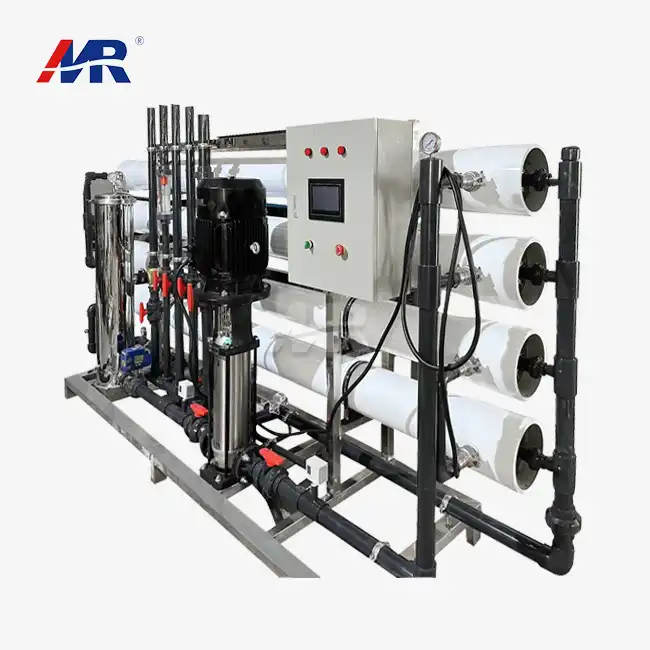
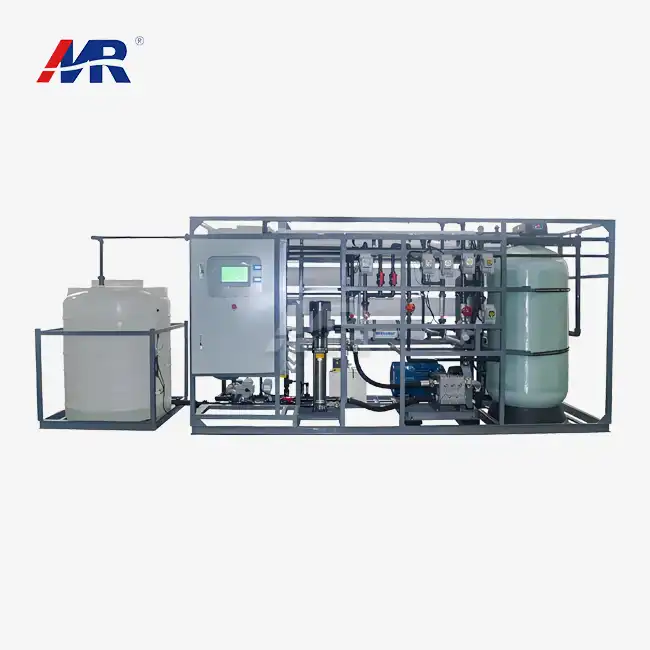
_1745823981883.webp)

What Causes industrial ro membrane Fouling and How to Prevent It?
Fouling is the single biggest threat to any membrane/8040-reverse-osmosis-membrane">industrial ro membrane system. When contaminants accumulate on the membrane surface — whether particulates, organic compounds, biofilms, or mineral scale — permeate flow drops, salt rejection deteriorates, and energy costs climb. According to the International Desalination Association, fouling-related issues account for roughly 70% of RO system operational failures globally. Understanding what triggers fouling and deploying targeted prevention strategies is not optional; it is the difference between a system that runs profitably for seven years and one that demands costly replacement within two.

What Is Industrial RO Membrane Fouling, and Why Does It Matter?
Defining the Problem Across Industries
A thin-film composite (TFC) polyamide industrial RO membrane is designed to remove dissolved salts, organics, bacteria, and sand from feed water at high working pressures. In tough places like power plant boiler feed systems, GMP-compliant pharmaceutical water loops, and chip-cleaning ultrapure water circuits, even small amounts of fouling can cause real production losses.
Fouling squeezes the pores of the membrane, making workers raise the feed pressure to keep output the same and speeding up permanent degradation. For instance, if pretreatment isn't done right, a pharmaceutical plant with a multi-stage RO system might see normalized permeate flow drop by 12% within weeks. This decrease causes cleaning processes to happen without planning, uses up chemical solutions, and cuts membrane service life from the normal three to seven years to less than eighteen months.
What Are the Root Causes of RO Membrane Fouling?
Feed Water Quality Is the Primary Driver
The main thing that determines how bad fouling is is the makeup of the feed water. Particulate loading on the membrane surface goes up when there are a lot of suspended solids. When concentration polarization happens near the membrane wall, high levels of total dissolved solids (TDS), especially calcium, magnesium, barium, and silica, make it possible for scale to form. Humic acids, surfactants, and leftover oils in petrochemical reinjection water are examples of organic matter that stick to the polyamide layer and make it harder for fluids to move. Microbes make things harder by making biofilm matrices that are notoriously hard to get rid of without strict cleaning-in-place (CIP) protocols.
Changes in temperature and pH make the chance higher. Warmer water speeds up the growth of living things; low pH causes carbonate scaling; high pH causes silica fouling. Industries that use water from different sources, like agricultural brackish wells, coastal seawater intakes, and municipal supply lines, have to deal with even more variation.
System Design Amplifies or Reduces Risk
The main practical cause of premature fouling is bad prep design. If a multimedia filter, antiscalant dose system, or UV sterilization unit is too small or not used at all, contaminants that the RO element wasn't made to handle get to the industrial RO membrane face. When the flux rate is higher than what is recommended (usually 14–20 L/m²h for brackish water systems), an artificially high concentration polarization layer is formed. When recovery rates are higher than the design limits of the system, dissolved solids tend to concentrate more quickly, going over the solubility thresholds and starting the process of scale nucleation.
How Can You Prevent and Control Membrane Fouling Effectively?
Build a Multi-Barrier Pretreatment Train
The best way for a buying manager or plant engineer to save money is to invest in pretreatment. A well-planned pretreatment train usually includes coagulation or flocculation to get rid of colloidal particles, multimedia or cartridge filtration to get the Silt Density Index (SDI) below 3, antiscalant chemical dosing to stop calcium carbonate and sulfate precipitation, and UV sterilization or sodium bisulfite dosing to kill any living things and chlorine that is still present. Chlorine breaks down the polyamide layer irreversibly and needs to be removed before the membrane element.
Before the feed water hits any membrane surface, these barriers work together to lower the fouling potential of the water. If you skip or don't fully describe any one protection, the whole system becomes vulnerable.
Operational Discipline and CIP Scheduling
Keeping the flux and net driving pressure within the ranges set by the maker protects the membrane's structure between cleaning rounds. As a general rule, a CIP cycle should be started when the normalized permeate flow drops by 10–15%, the normalized salt passage rises by 5–10%, or the differential pressure across the element rises by 15% above the baseline. Cleaning Products with an alkaline base get rid of organic and biological buildup, while acid-based formulas get rid of carbonate and metal oxide scale. By carefully matching each chemistry to the most common type of fouling, switching between them greatly increases the useful life of the membrane.
Inline conductivity sensors, pressure transducers, and flow meters are all part of real-time monitoring systems that allow for proactive maintenance instead of reactive crisis management. Automated data logging finds changes in trends before they become damaging events that can't be fixed.
How Do Different RO Membranes Compare in Fouling Resistance?
The choice of membrane has a direct effect on how fouling happens. A comparison of common industrial RO membrane types by how well they fight fouling and how well they fit different uses is shown below.
| Membrane Type | Fouling Resistance | Typical Application | Salt Rejection |
|---|---|---|---|
| TFC Polyamide (Brackish) | High | Industrial process water, food & beverage | ≥99.5% |
| Cellulose Acetate (CA) | Moderate | Lower-chlorine feed water systems | ~97–98% |
| Nanofiltration (NF) | Moderate–High | Softening, color removal | 60–90% (divalent) |
| Ultrafiltration (UF) | High (pretreatment role) | Pretreatment, pharmaceutical clarification | Particle/bacteria only |
| Seawater TFC | Moderate (high-pressure) | Desalination, offshore platforms | ≥99.7% |
TFC polyamide membranes are the best choice for most industrial situations because they reject salt the best and don't get clogged up easily. The Morui MR-BW-4040 brackish water element from Morui is a great example of this standard. It works at 1.55 MPa, has an active membrane area of 7.2 m², delivers 2,500 GPD of permeate flow, and rejects 99.5% of salt. Because of these specs, it can be used in systems that make water for food and drinks, medicinal purified water loops, electronics-grade process water, and preparation of boiler feed water.
How Should Procurement Teams Select RO Membranes to Minimize Fouling Risk?
Decisions about purchases have long-lasting effects on how things work. Price alone isn't enough to judge a membrane supplier; you also need to look at the true cost of ownership, which includes how often the membrane needs to be replaced, how much CIP chemical is used, how much time is lost due to downtime, and the extra energy used by high operating pressures.
Here are the main criteria for evaluation that help people make good decisions about buying things:
- Membrane material and construction: TFC polyamide elements with hydrophilic surface treatments have a significantly lower tendency to foul with organic matter. Check that the element has a polysulfone support layer to keep its structure stable during long-term high-pressure use.
- Feed water-matched specifications: Make sure that the working pressure, recovery rate, and flux design of the element are all in line with the TDS, temperature range, and SDI values from the site study. A wrong feature doesn't work well for any brand.
- Supplier technical support: A dependable industrial RO membrane supplier offers application engineering assistance, CIP protocol suggestions, and performance monitoring after installation. Morui has 20 engineers and 14 branch offices all over China, so they can quickly help international procurement partners with their needs.
- Warranty and delivery reliability: Make sure the warranty terms cover salt rejection, retention, and structural stability in writing. Check to see if the supplier has its own facility for making membranes. This is an important thing to know for controlling quality and lead times.
- Spare inventory planning: Keep spare parts in their original, sealed packaging with a 1% sodium metabisulfite preservation solution in a cool, dry place to keep flux from evaporating or microbes from growing on them.
These strict criteria, which are used to qualify suppliers, lower the chance of problems with fouling during the membrane's entire working life.
Conclusion
Fouling is the operational variable that hurts RO system performance the most quickly, and it almost never comes on suddenly. The quality of the feed water, the thoroughness of the pretreatment, the control of the working flux, and the choice of industrial RO membrane all affect how well a system works and whether it needs to be maintained reactively or at full capacity. Structured CIP scheduling, real-time monitoring, and informed procurement—putting membrane specifications that match the actual feed water conditions at the top of the list—are useful tools that keep industrial water treatment systems running as planned. Putting money into preventing fouling pays off in the form of longer membrane life, lower chemical costs, and steady production output.
FAQ
1. How often should RO membranes be chemically cleaned?
When the normalized permeate flow drops 10–15%, the normalized salt passage rises 5–10%, or the differential pressure rises 15% above baseline, the system is clean. If the feed water has a lot of organic matter or biologically active sources, it may need to go through a CIP cycle every month.
2. What is the difference between fouling and scaling?
Scaling happens when mineral salts like calcium carbonate, barium sulfate, and silica form crystals at the membrane surface because the content is too high for them to dissolve. Fouling is a broad term for the buildup of biological matter, colloidal particles, or bacteria. Both need different ways to clean with chemicals.
3. Can pretreatment fully eliminate fouling risk?
Fouling danger can be greatly reduced by doing things like keeping SDI below 3, getting rid of free chlorine, and adding antiscalant. However, it can't be completely eliminated. Operational discipline and the CIP schedule are still very important parts of each other.
4. Does the MR-BW-4040 work for high-TDS brackish water?
The MR-BW-4040 works at 1.55 MPa and can handle 2,500 GPD of flow. It rejects 99.5% of salt and is perfect for use with brackish water in manufacturing, food processing, and pharmaceutical water systems.
Partner with Morui for High-Performance Industrial RO Membrane Solutions
Morui develops and makes RO membrane elements, like the MR-BW-4040, in its own factories. It has 20 engineers and 14 branches around the world that serve commercial clients. As a reputable industrial RO membrane supplier, Morui offers custom water treatment solutions that include everything from providing the equipment to fully installing and starting it up. Visit benson@guangdongmorui.com to get specs, bulk prices, or a free application consultation from Our Team.
References
1. Elimelech, M., & Phillip, W. A. (2011). The Future of Seawater Desalination: Energy, Technology, and the Environment. Science, 333(6043), 712–717.
2. Crittenden, J. C., Trussell, R. R., Hand, D. W., Howe, K. J., & Tchobanoglous, G. (2012). MWH's Water Treatment: Principles and Design (3rd ed.). John Wiley & Sons.
3. Flemming, H. C., Schaule, G., Griebe, T., Schmitt, J., & Tamachkiarowa, A. (1997). Biofouling — the Achilles heel of membrane processes. Desalination, 113(2–3), 215–225.
4. Lee, S., Ang, W. S., & Elimelech, M. (2006). Fouling of reverse osmosis membranes with iron oxide colloids. Desalination, 196(1–3), 1–8.
5. Dow Water & Process Solutions. (2015). FILMTEC™ Reverse Osmosis Membranes: Technical Manual. The Dow Chemical Company.
6. Tran, T., Bolto, B., Gray, S., Hoang, M., & Ostarcevic, E. (2007). An autopsy study of a fouled reverse osmosis membrane element used in a brackish water treatment plant. Water Research, 41(17), 3915–3923.