_1745823981883.webp)

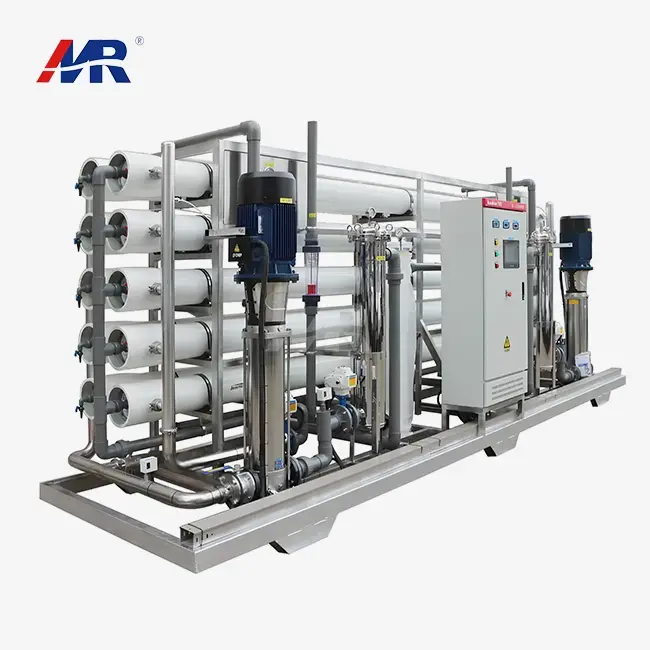
| Parameter | Standard Specification |
|---|---|
| Production capacity | 8 m³/hour (~192 m³/day) |
| Salt rejection rate | Greater than 99% |
| Recovery rate | Up to 75% |
| Power consumption | Less than 0.8 kWh/m³ |
| First pass configuration | Standard TFC membrane array |
| Second pass configuration | Low-pressure polishing membranes |
| Permeate conductivity | Typically below 1–2 µS/cm |
Recovery Rate Across Two Passes
The two passes together are the overall system recovery. Normally, the first pass recovers 75% of input water, and the second pass recovers 85-90% of that previously cleansed permeate, since it is treating cleaner water with much less fouling potential.
Power Consumption Compared to Single-Pass Alternatives
While running water through two membrane phases seems like it should quadruple energy usage, it doesn’t work that way in reality. Since the second pass of an 8m3/hour two-pass reverse osmosis system runs at significantly lower pressure, overall power consumption for this setup is still under 0.8 kWh per cubic metre, somewhat more than a similar single-pass device.
Dimensional and Footprint Considerations
Equipment footprint rises with a second membrane array over single-pass arrangements, but a modular skid structure ensures that the total installation remains small. For facilities with restricted floor space, expect around 30-40% greater footprint than a comparable single-pass unit of the same capacity.
How the Two-Pass Workflow Actually Functions?
Understanding the procedures involved allows buyers to know if a supplier’s design can fulfil genuine operational demands.
Pre-Treatment: Removing Large Particles and Chlorine
The untreated supply water is initially passed through multimedia and activated carbon filtration before entering the first membrane stage. This procedure prevents fouling and chemical damage to both membrane passes, especially from chlorine exposure that destroys thin-film composite membrane surfaces over time.
First Pass RO: Initial Purification
The first pass eliminates most of the dissolved salts, organic debris, and microbiological pollutants, usually attaining 97-98% rejection on its own. This part handles the hard lifting; it reduces the burden that the second pass has to deal with.
Second Pass RO: Polishing for Ultra-Pure Output
The second pass is designed to remove residual boron, trace ions, and low molecular weight materials and is exclusively applied to the first-pass permeate. In an 8m3/hour two-pass reverse osmosis system, this stage further improves water quality by treating already purified permeate rather than raw feed water. The danger of membrane fouling is greatly reduced since the feed water entering this stage is already clean, and the service intervals are extended compared to a single-pass system operating with raw feed water.
Post-Treatment: pH Adjustment and Remineralisation
Depending upon the use, the treated water may need remineralisation or pH adjustment. Some industrial operations need mineral addback to prevent pipe corrosion, although pharmaceutical applications frequently forgo remineralisation completely.
Storage and Distribution Considerations
The ultra-pure water attacks common storage materials and causes the leaching of pollutants. In facilities with two-pass systems, passivated stainless steel or specific polymer storage tanks are used to maintain the purity acquired by the treatment train and prevent recontamination between production and usage.
Two Pass vs Single Pass: A Direct Comparison
Deciding between configurations is really a matter of your specific water quality requirement and not just selecting the most advanced option as a matter of course.
| Factor | Single-Pass RO | Two-Pass RO |
|---|---|---|
| Typical salt rejection | 95%–98% | 99%+ |
| Boron removal | Limited | High efficiency |
| Permeate conductivity | 5–15 µS/cm | Under 1–2 µS/cm |
| Equipment footprint | Smaller | Larger, modular |
| Best suited for | Municipal, general industrial | Pharma, semiconductor, boiler feed |
When Single-Pass Is Actually the Better Choice?
Municipal drinking water treatment, general food and beverage industries, and agricultural irrigation seldom need two-pass purity. Adding a second pass here just adds to the capital expense with no discernible advantage since the single-pass output is already below regulated drinking water limits based on the World Health Organization (WHO, 2022).
When Two Pass Becomes Non-Negotiable?
The second stage is required for applications with severe conductivity limits, boron limitations, or pharmacopeia compliance criteria. An 8m3/hour two-pass reverse osmosis system is often selected for these demanding applications, as single-pass equipment used to achieve these criteria has often resulted in failed quality audits or uneven batch outcomes.
Hybrid Approaches Worth Considering
Some facilities construct a single-pass RO followed by a smaller specialized polishing loop solely on the percentage of water that requires ultra-pure quality rather than doing complete two-pass treatment on the whole flow. This hybrid solution may cut capital costs for companies where just a fraction of the water consumption requires pharmaceutical-grade purity.
Real-World Applications Across Industries
Several regulated and high-precision industries in Asia, South America, and Africa are demanding a two-pass reverse osmosis system of 8 m³/hour.
Pharmaceutical Manufacturing Facilities
This capacity for purified water systems is used by mid-sized pharmaceutical firms to feed tablet coating, cleaning, and formulation operations, following criteria established in pharmacopeia recommendations for conductivity and microbiological limitations.
Food and Beverage Production
Producers of luxury beverages, especially specialized or premium bottled water Products, employ two-pass processes to obtain very low mineral content for product uniformity and long shelf stability.
Semiconductor Component Manufacturing
Smaller semiconductor and electronics assembly factories will employ an 8m3/hour two-pass reverse osmosis system capacity for component cleaning lines, often combining the RO output with an electrodeionization unit downstream for final polishing to meet true ultrapure water criteria.
Chemical Processing Plants
Two-pass RO is used by specialty chemical makers of high-purity reagents to avoid trace contamination that might affect product quality. This is especially important in procedures where ionic interference is an issue.
Municipal Water Treatment for Sensitive Distribution Networks
Some municipal utilities provide two-pass treatment at the plant level for industrial parks that include a mix of commercial and precision manufacturing tenants, providing a consistent, high-purity feed that downstream tenants may utilize directly with no further polishing on-site.
Case Study: Meeting Pharmacopeia Standards for a Generic Drug Manufacturer in Brazil
A mid-sized generic pharmaceutical company in São Paulo contacted Guangdong Morui Environmental Technology in late 2023 after failing an internal water quality check.
The Problem
Their current single-pass RO system had an average permeate conductivity of 8-10 µS/cm, which was over the cutoff for their filtered water standard. Water quality-related batch rejections were estimated by the plant to be costing $12,000 a month in lost raw materials and labor for reprocessing.
The Solution
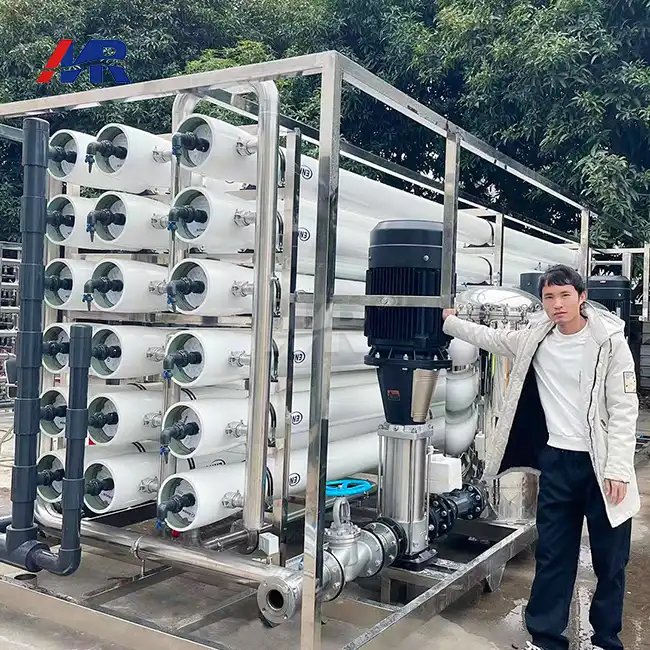
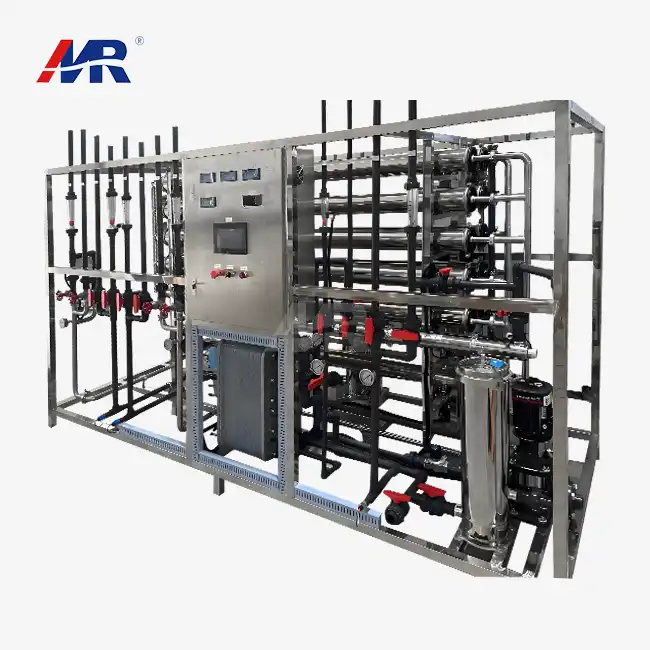
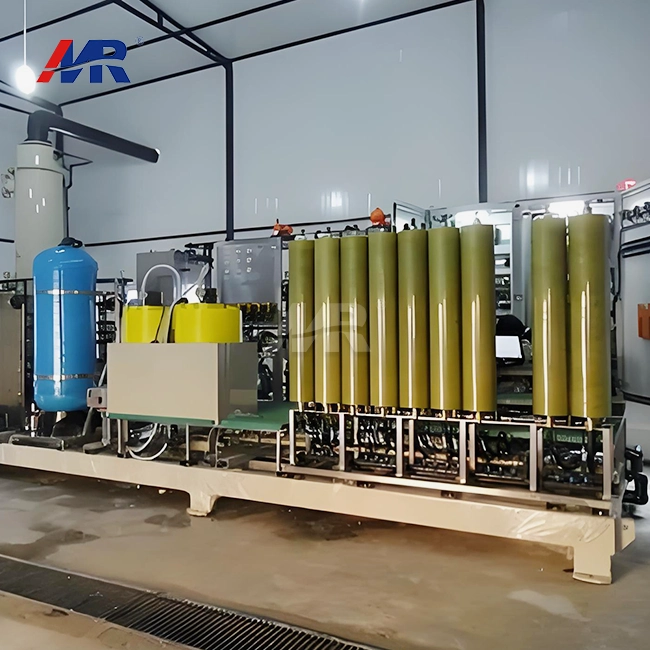
Our technical team has erected an 8m3/hour two-pass reverse osmosis system with a low-pressure polishing membrane array for the second stage. The system contained PLC automation with constant tracking of conductivity, and operators were promptly alerted if the output went outside of specification limits.
Measured Results
Permeate conductivity regularly stabilized below 1.2 µS/cm within six weeks of commissioning. Water quality-related batch rejections fell to nil in the next quarter. For the first time in eighteen months, the plant passed its next regulatory audit with zero water system findings.
| Metric | Before Installation | After Installation |
|---|---|---|
| Permeate conductivity | 8–10 µS/cm | Under 1.2 µS/cm |
| Monthly batch rejection cost | ~$12,000 | $0 |
| Regulatory audit findings | Recurring water system flags | Zero findings |
The facility's quality assurance manager described the shift directly: "We stopped explaining water system variance to auditors and started showing them clean data instead." That kind of documented, defensible water quality record is often the real return on investment for regulated manufacturers considering this upgrade.
What the Facility Learned About Sizing Decisions?
The plant's initial request specified a smaller 5 m³/hour unit based on current production volume alone. Our review of their expansion roadmap showed planned production growth over eighteen months that would exceed that capacity within the first year, leading to the larger 8 m³/hour specification with modular expansion capability built in from the start.
Membrane Selection: What Separates Reliable Two-Pass Systems?
Not every two-pass configuration performs equally. Membrane choice across both stages significantly affects long-term output consistency.
First Pass Membrane Requirements
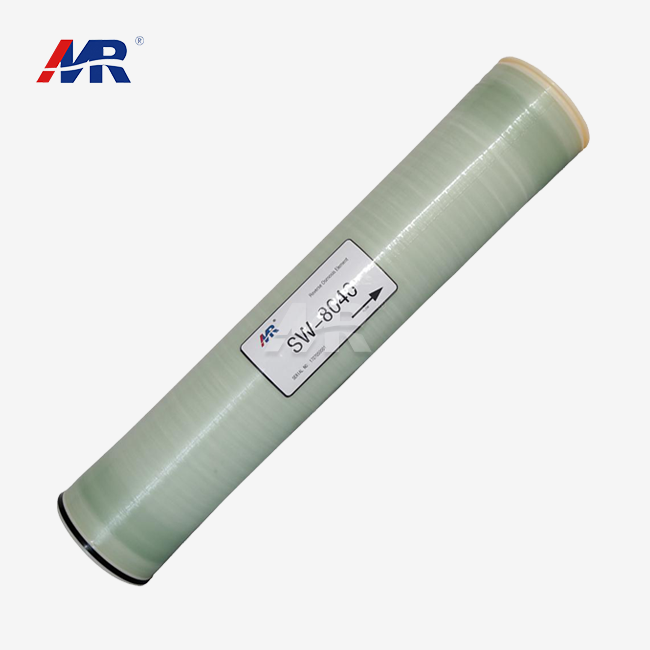
The first pass of a reverse osmosis system needs robust, fouling-resistant thin-film composite membranes capable of handling raw feed water variability, including suspended solids that survive pretreatment and organic loading from surface water sources.
Second Pass Membrane Requirements
Second-pass membranes can use lower-pressure, higher-flux elements since they're processing already-clean water. Some suppliers cut costs by using generic membranes here, which reduces long-term boron rejection performance and shortens service life under continuous operation.
Partial Second Pass Configurations
Some designs route only a portion of first-pass permeate through the second stage, blending it back with untreated first-pass water to hit a target specification at lower cost. This works for moderate purity requirements but won't meet the strictest pharmaceutical or semiconductor standards.
Membrane Warranty Terms Worth Verifying
Ask suppliers to specify warranty coverage separately for first-pass and second-pass membranes, since failure modes differ significantly between the two stages. A blanket warranty statement without this distinction often hides shorter actual coverage on the more failure-prone first-pass elements.
Automation and Monitoring for Consistent Output
Manual monitoring can't catch quality drift fast enough for regulated applications. A properly built 8m3/hour two-pass reverse osmosis system needs continuous automated tracking.
Real-Time Conductivity Monitoring
Inline conductivity sensors at both the first and second pass outlets of a reverse osmosis system let operators catch performance drift before it affects downstream production. This visibility is what separates a system that prevents batch failures from one that only reports them after the fact.
PLC-Based Automated Control
Touchscreen PLC panels manage pump sequencing, automated flushing, and safety interlocks across both membrane stages. For facilities running continuous production, this automation reduces the operator training burden while maintaining consistent output around the clock.
Remote Data Logging for Compliance
Pharmaceutical and food-grade applications often require historical water quality records for regulatory audits. PLC systems that log conductivity, pressure, and flow data over rolling periods give quality teams exportable reports without manual logbook entry.
Automated Reject Diversion During Startup
Advanced control systems automatically divert out-of-specification water to drain during startup and recovery periods, rather than allowing substandard permeate into storage tanks. This feature alone has prevented several documented contamination incidents in facilities we've supported over the past year.
Total Cost of Ownership: Is Two Pass Worth the Investment?
Two-pass systems cost more upfront than single-pass equivalents. Understanding the full cost picture helps justify or rule out the investment.
Upfront Capital Cost Difference
An 8m3/hour two-pass reverse osmosis system configuration typically costs 30–40% more than an equivalent single-pass system, driven by the additional membrane array, extra pump, and expanded piping requirements.
Operating Cost Over Five Years
Despite higher capital cost, facilities avoiding batch rejections or regulatory penalties often recover the price difference within 12-18 months. The Brazilian pharmaceutical case above recovered its investment in under four months purely through eliminated batch rejection costs.
Insurance and Compliance Cost Reductions
Facilities with consistent, well-documented water quality records sometimes see reduced regulatory scrutiny and faster audit turnaround, translating into indirect savings on compliance staff time and consulting fees that rarely appear in a simple equipment cost comparison.
Common Mistakes When Specifying a Two-Pass System
Reviewing installation requests across multiple markets reveals recurring specification errors worth avoiding.
Over-Specifying When Single-Pass Would Suffice
Some buyers request two-pass RO water purification systems for applications that don't actually need that purity level, adding unnecessary capital cost. A water quality requirement review before purchase prevents this overspending.
Under-Specifying Pretreatment for the First Pass
Because the second pass depends entirely on clean first-pass permeate, inadequate pretreatment upstream compromises the entire system's performance, not just the first stage.
Ignoring Local Power Grid Stability
Voltage fluctuations common across parts of Africa and South America can disrupt PLC-controlled dual-stage systems more severely than simpler single-pass units, given the additional automated sequencing involved.
Failing to Plan for Future Capacity Growth
Facilities that specify an RO water purification system tightly matched to current demand often face expensive full-system replacement within a few years of growth. Modular two-pass designs that allow incremental capacity addition avoid this trap without significantly inflating initial costs.
Conclusion
An 8m3/hour two-pass reverse osmosis system exists specifically for applications where single-pass purity isn't enough—pharmaceutical manufacturing, semiconductor cleaning, boiler feed water, and specialty food and beverage production. The second membrane stage removes boron, trace ions, and organics that survive standard treatment, delivering the consistency that regulated industries require. Buyers who match system configuration to actual water quality needs, rather than defaulting to the most advanced option, get better value and more reliable long-term performance.
FAQ
1. How much does an 8 m³/hour two-pass RO system cost?
Complete systems typically range from $35,000 to $70,000 USD depending on membrane grade, automation level, and pretreatment complexity required for your feed water.
2. Do I need two-pass RO for pharmaceutical water?
Most pharmacopeia-compliant purified water specifications require conductivity below 1.3 µS/cm, which typically demands two-pass treatment or an additional polishing step like electrodeionization.
3. How does two-pass RO remove boron specifically?
Boron rejection improves significantly at higher pH, and the second pass often operates with slight pH adjustment to maximize boron removal beyond what the first pass achieves alone.
4. Can an existing single-pass system be upgraded to two passes?
Yes, many single-pass systems can be retrofitted with a second membrane skid and additional pump, though piping and control system modifications are usually required.
Request a Technical Consultation for Your Water Purity Needs
Sourcing a reliable 8m3/hour two-pass reverse osmosis system manufacturer starts with confirming in-house membrane production and documented pharmaceutical or industrial installation history. Guangdong Morui Environmental Technology Co., Ltd. operates its own membrane factory and multiple equipment processing plants, backed by 14 branches, 500 employees, and 20 in-house engineers. We're the authorized agent for Shimge Water Pumps, Runxin Valves, and Createc Instruments, giving clients trusted components within one integrated quote. Email our engineering team at benson@guangdongmorui.com to discuss your water quality specification.
Every regulated facility has different conductivity targets, feed water conditions, and compliance requirements. Morui provides customized system design, complete installation and commissioning, operator training, and ongoing preventive maintenance programs across Asia, South America, and Africa. Whether you're comparing an 8m3/hour two-pass reverse osmosis system for sale from multiple vendors or upgrading an existing single-pass installation, request a documented performance guarantee and water quality test before finalizing your decision.
References
1. World Health Organization. "Guidelines for Drinking-water Quality," 2022. https://www.who.int/publications/i/item/9789241549950
2. U.S. Pharmacopeia. "USP Purified Water and Water for Injection Standards." https://www.usp.org/harmonization-standards/pdg/excipients/water
3. U.S. Environmental Protection Agency. "Membrane Filtration Guidance Manual." https://www.epa.gov/dwreginfo/long-term-2-enhanced-surface-water-treatment-rule-documents
4. Journal of Membrane Science. "Boron Rejection Mechanisms in Reverse Osmosis Membranes," 2023. https://www.sciencedirect.com/journal/journal-of-membrane-science
5. SEMI (Semiconductor Equipment and Materials International). "Ultrapure Water Standards for Semiconductor Manufacturing." https://www.semi.org/
6. International Desalination Association. "Desalination Yearbook 2024." https://idadesal.org/
Author: Shihai Su, Senior Water Treatment Process Engineer
Shihai Su has spent over 12 years designing industrial RO, UF, and ultrapure water systems across Southeast Asia, South America, and West Africa. He holds a degree in Chemical Engineering and has led commissioning projects for pharmaceutical, semiconductor, and power generation clients across three continents. Visit moruiwater.com to learn more about our professional engineering team.