_1745823981883.webp)

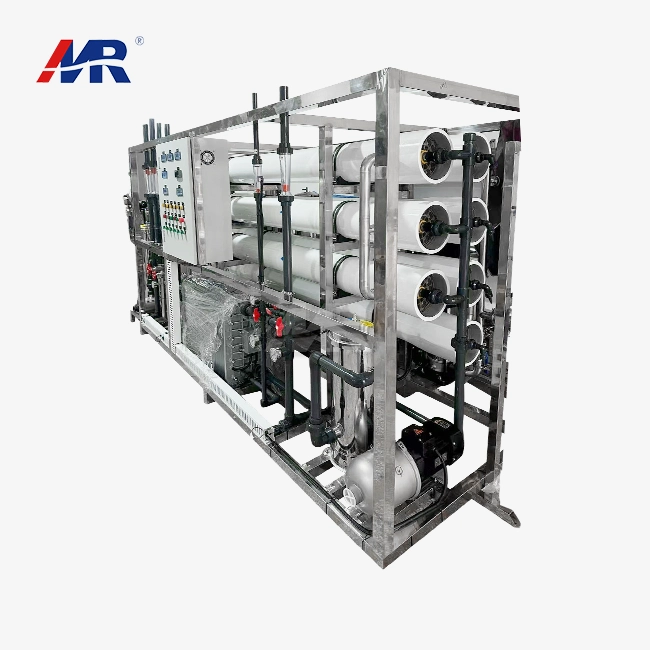
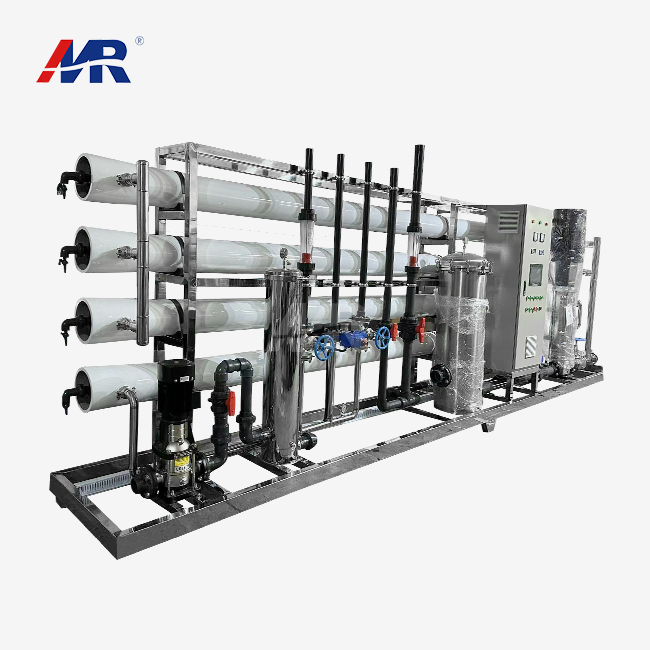
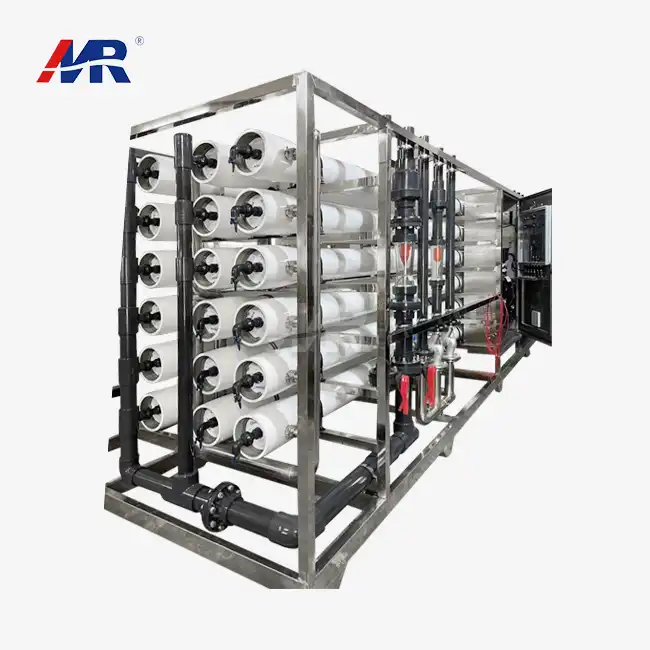
Before you acquire a 25m3/hour seawater desalination plant, you need to check feed water quality, pretreatment design, membrane specifications, corrosion-resistant materials, energy usage, and after-sales assistance provided by your provider. At this capacity, a unit generates around 600 cubic meters of fresh water per day, which means even modest design faults may be costly during a 10-year service life. Having spent years specifying and commissioning SWRO systems around the coasts of Asia, Africa, and South America has helped produce this guide that talks through every checkpoint I question customers about before I finalize a proposal.
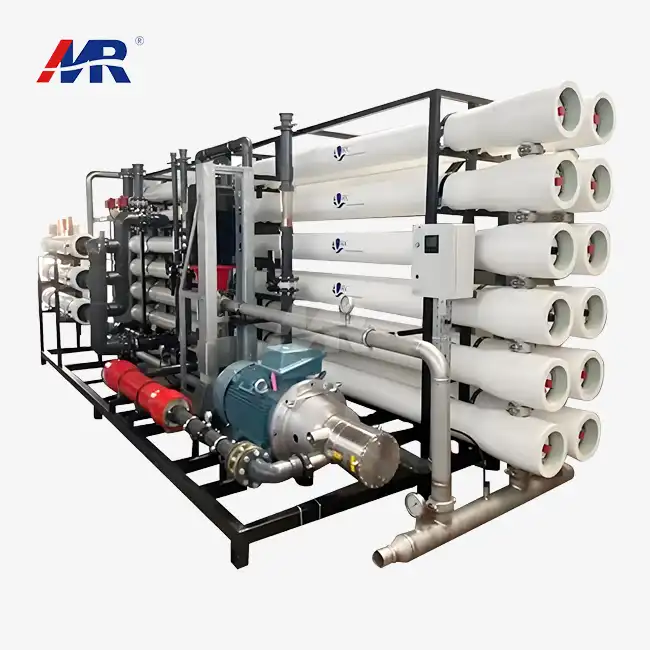
Is 25 m³/hour Capacity Suitable for Your Daily Water Demand?
A 25m3/hour seawater desalination plant generates 600 cubic meters a day when operated for around 20 to 22 hours to provide time for backwashing and membrane cleaning. The output is capable of serving 3,000 to 4,000 people at a municipal supply rate of 150 to 200 liters per person per day, or a mid-size hotel, food processing factory, or industrial site with modest process water demands.
Daily Output and Population Coverage
Buyers commonly size equipment against the yearly average demand, which is the incorrect figure to use. Water consumption peaks throughout the vacation season, irrigation cycles, and industrial production runs, often exceeding the annual average by 30 percent or more.
Matching Capacity to Peak vs. Average Demand
I always ask every customer for their peak demand number for the highest continuous three-month period before suggesting a 25m3/hour seawater desalination plant over a smaller or bigger unit. The investment is wasted on a plant designed for ordinary demand that falls short when the firm needs water most.
Buyers also have to consider the growth they have not yet achieved. If a resort is growing from 60 rooms to 90 rooms or a food processing business is introducing a new line of production in two years, then the equipment should be sized against that future demand, not just the numbers now. Modular skid designs allow a buyer to extend capacity at a later date, but the original civil work, pipe layout, and electrical service should already be designed to anticipate that eventual growth. Retrofitting a site after construction is completed almost always costs more than if it had been planned for upfront.
What Seawater Quality Data Should You Test Before Purchase?
Feed water testing determines just about everything regarding pretreatment design, membrane life, and long-term running cost. This is the most typical error I see purchasers make when buying a 25 m³/hour saltwater desalination plant, and it’s the stage they skip.
TDS, Temperature, and Seasonal Variation
TDS levels of open ocean feed are normally in the range of 30,000 to 45,000 ppm, although confined bays and estuaries may vary widely due to rainfall and tidal mixing. For purchasers evaluating a 25m3/hour seawater desalination plant, water temperature impacts membrane flow and permeate quality, and therefore purchasers should be seeking values spanning at least one complete season cycle rather than a single sample obtained on a quiet day.
Silt Density Index and Fouling Risk
The Silt Density Index is a measure of the rate of accumulation of suspended particles on the surface of a membrane. Most manufacturers need an SDI of less than 3 to 4 at the membrane input to prevent premature fouling. A facility that tests water just occasionally in calm circumstances likely misses the turbidity surges during the storm season that drive SDI well above the safe level.
If you are a buyer looking at a price for a 25m3/hour seawater desalination plant, ask for the SDI data gathered over at least two seasons, including the wettest and windiest times of the year. SDI spikes are common at coastal sites near river mouths, harbors, or significant shipping activity, and it is these spikes that trigger unanticipated membrane cleaning and early replacement once the plant is operational and are totally missed by a single dry season sample.
The following table shows the basic feedwater parameters that each buyer should ask for when evaluating a 25m3/hour seawater desalination plant before signing a purchase order.
| Parameter | Typical Seawater Range | Why It Matters |
|---|---|---|
| TDS | 30,000-45,000 ppm | Sets membrane pressure and energy requirements |
| SDI | Should stay below 3-4 | Predicts membrane fouling risk |
| Temperature | Varies by season and depth | Affects flux and permeate quality |
| Turbidity | Ideally under 1 NTU post-pretreatment | Confirms pretreatment effectiveness |
Which Pretreatment Configuration Is Required for Your Intake Water?
Pretreatment preserves the membranes, which are the most costly aspect of every 25 m³/hour saltwater desalination plant. Getting this step incorrect can reduce membrane life and increase the frequency of chemical cleaning practically immediately on start-up.
Multimedia Filtration vs. Ultrafiltration
Multimedia filters are appropriate for intake water with moderate and steady turbidity and reduced capital costs. Ultrafiltration is more expensive to install but manages changing water quality, algal blooms, and greater organic loads much more dependably, which is critical for open-ocean intakes exposed to seasonal plankton development.
Chemical Dosing and Antiscalant Systems
Coagulant dosage upstream of filtration eliminates fine particulate particles that filtration media alone cannot remove, which is particularly important in a 25m3/hour seawater desalination plant. Antiscalant is dosed prior to the membrane stage to minimize the formation of calcium carbonate and sulfate scales as the recovery rate rises and dissolved minerals become concentrated in the reject stream.
For a saltwater desalination plant of 25 m³/h, the size of the dosing pump is more important than purchasers normally think. An undersized dosing pump cannot keep up with feed flow under increased turbidity circumstances, exposing membranes to scaling conditions even if the chemical program seems proper on paper. That's precisely why ask vendors to size dosing equipment on peak feed flow, not average feed flow.
How Should You Evaluate SWRO Recovery Rate and Salt Rejection?
Your recovery rate and salt rejection affect your water production and the quality of your final water, yet vendors do not always present these figures in the same manner.
Recovery Rate Trade-offs
A 25m3/hour seawater desalination plant normally operates at a recovery of 35 to 45 percent on saltwater input. Better recovery results in better fresh water production per unit of input, but at the same time it raises mineral concentration in the reject brine, which increases the likelihood of scale development on the final membrane elements in each pressure vessel.
Salt Rejection and Membrane Brand Verification
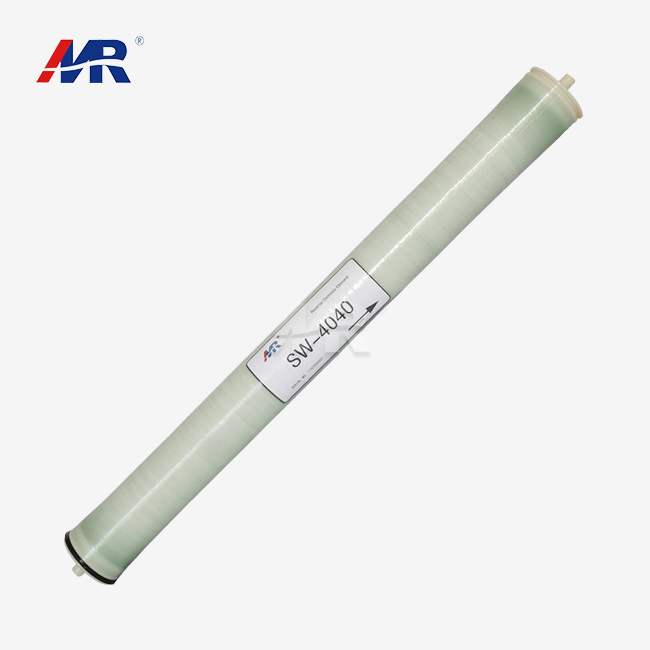
Ask your suppliers for the membrane brand they specify and find out what the salt rejection rate is under conventional test circumstances, which for a saltwater-grade element should be over 99.5 percent. Sometimes buyers accept generic or unbranded membranes without examining rejection data and then find permeate quality concerns after the facility is already operational.
Ask the membrane manufacturer for a test certificate specifically for the elements to be used in your 25 m³/hour saltwater desalination system, not a general brochure figure. The salt rejection performance might vary a little bit from batch to batch of production, and having a recorded certificate offers a buyer a legitimate baseline to evaluate against future performance tests over the plant’s working life.
What Materials Prevent Corrosion in Seawater Desalination Plants?
Seawater is one of the most corrosive fluids that a mechanical system can handle constantly, making material selection particularly important in applications such as a 25m3/hour seawater desalination plant, where material selection faults are costly to remedy after installation.
Pump and Valve Material Selection
High-pressure pumps should be made from Duplex or Super Duplex stainless steel or an equivalent corrosion-resistant alloy, since normal 316 stainless steel breaks down more quickly under continuous high-salinity, high-pressure service. Valves and fittings in direct seawater contact are subject to the same grade of material consideration.
Piping and Wetted Parts
Equally important are pump metallurgy and piping choices. The chloride ions in seawater will attack standard carbon steel and even some stainless grades within months of continuous exposure. That is why all corrosion-resistant, marine-grade components are found throughout every properly engineered 25m3/hour seawater desalination plant, from the intake screen to the final distribution header. The table below compares popular material choices and the optimal place to use each.
| Component | Recommended Material | Reason |
|---|---|---|
| High-pressure pump | Duplex / Super Duplex stainless steel | Resists pitting and crevice corrosion under high pressure |
| Low-pressure piping | UPVC or GRP | Cost-effective, corrosion-immune for lower-pressure runs |
| Pressure vessels | FRP | Lightweight, non-corroding under sustained high pressure |
| Valves and fittings | Marine-grade stainless or PVC | Direct seawater contact resistance |
How Much Energy Will a 25m3/hour SWRO Plant Consume?
Energy is generally the highest ongoing operational expense for any seawater reverse osmosis system, so knowing what to expect in terms of usage before you buy a 25m3/hour seawater desalination plant saves your long-term budget.
Baseline Energy Consumption Figures
A typical saltwater desalination plant of 25 cubic meters per hour without energy recovery requires between 3.5 and 4.0 kilowatt-hours per cubic meter of permeate, or about 90 to 100 kilowatt-hours per hour when operating at full capacity. For older or poorly built systems, which do not include energy recovery, the levels may be much higher, sometimes more than 5 kWh/m³.
Case Study: Energy Cost Comparison
In 2026, an Ecuadorian food processing customer received quotations from two vendors with the same rated capacity. The lower price offer did not include an energy recovery device and used 4.6 kWh/cubic meter, while our offer with a pressure exchanger ERD used 3.6 kWh/cubic meter. At the client’s local energy rate, that difference equalled an extra $14,600 per year in power cost for the cheaper system, enough to pay for the ERD’s price differential within the first 18 months of operation.
Later, the client’s plant manager informed our engineering team that while the two bids appeared almost similar on the cover page, the sticker price comparison would have made them choose the lower offer. It was only when both providers were requested to produce a complete three-year operating cost estimate that the actual difference became apparent. This is the kind of comparison that every buyer should be asking for before signing a contract for a 25 m³/hour seawater desalination plant.
Should You Choose an Energy Recovery Device for Your Plant?
Energy recovery devices collect pressure energy from the reject brine stream and utilize it to drive the incoming feed water under pressure, reducing the load on the main high-pressure pump.
How do ERDs reduce specific energy consumption
Published assessments of SWRO energy performance indicate that a pressure exchanger type ERD may reduce specific energy consumption by around 25 to 35 percent for a 25 m³/hour saltwater desalination plant with no energy recovery at all. That decline builds every day over years of constant operation.
Payback Period Considerations
For most purchasers, the additional cost of an ERD is recovered within 1 to 2 years of operation, depending on local power prices and hours of operation each day. Sites in areas with expensive diesel generator fuel tend to have an even quicker return, since each saved kWh has a higher effective price.
The payback should be recalculated for buyers using a seawater desalination plant for fewer hours each day, such as a construction site that may only run during daylight shifts, rather than assuming continuous operation. A plant that works 10 hours a day instead of 20 will take almost twice as long to recoup the ERD’s extra cost, which still normally makes sense over a multi-year project but affects the financial comparison between competing estimates.
Which Automation Features Improve SWRO Plant Reliability and Control?
Automation decreases the possibility of operator mistakes, one of the biggest reasons for premature membrane failure in small and mid-size desalination facilities.
Here are the automation features to look for before you sign a purchase agreement on any 25m3/hour seawater desalination plant: remote monitoring of pressure, flow, and conductivity data, which allows an off-site operator to identify a developing fouling trend before it damages membranes; automated low-pressure and high-pressure shutdown protection that prevents the high-pressure pump from running when feed pressure is low or membrane back-pressure becomes unexpectedly high; automated chemical dosing, which adjusts antiscalant and cleaning-in-place cycles based on measured water conditions rather than an arbitrary manual schedule; and data logging that maintains a complete performance history for warranty claims and maintenance planning. These characteristics help bridge the staffing gap that small and mid-size purchasers have when they cannot afford to keep a full-time, highly qualified plant operator on staff.
Remote Monitoring and Alarms
Remote monitoring means that a facilities manager who is responsible for many properties or locations may monitor plant status from a phone or laptop rather than having to drive out for a human inspection every day. The system is programmed with alarm thresholds for conductivity, differential pressure, and flow rate to provide early warning of membrane fouling days or weeks before the output quality begins to decline, allowing operators to arrange a cleaning cycle before performance is impacted.
Automated Chemical Dosing and Shutdown Protection
Automated dosing methods decrease the potential for human error in seawater desalination system antiscalant proportioning, which is a frequent root cause of preventable membrane scaling in small desalination facilities operated by non-specialist personnel.
How Can You Compare SWRO Suppliers Beyond Equipment Price?
The cheapest quotation may not always represent the real cost of operating a 25 m³/hour saltwater desalination plant for ten years, since cheaper equipment frequently has hidden expenses related to energy consumption, frequency of membrane replacement, and support response time.
Total Cost of Ownership
The total cost of ownership considers the equipment purchase, the energy consumption, the membrane and cartridge replacement, the chemical dosing, and the labor throughout the estimated service life. A supplier that simply offers the sticker price is not offering customers the figure that counts for a ten-year investment decision.
Manufacturing Capability and Track Record
Suppliers that design their own membrane elements and control systems rather than just assembling bought components tend to provide speedier technical assistance and more uniform construction quality across units. Request reference sites with comparable capacity that have been operational for a minimum of two years and contact those references personally; do not depend only on photographs or case studies supplied by the provider. A confident provider will have no problem introducing a serious buyer to an existing customer.
The size of the company also influences how a supplier responds to post-sale difficulties. A factory with more than a dozen branches and hundreds of engineering people can often get a tech out there quicker than a tiny workshop business doing every job out of one office, especially when supporting complex projects such as a seawater desalination system. This is not to say larger is always better, but it does indicate that buyers should inquire explicitly about how many technical workers a supplier has and where they are physically situated in relation to the buyer's project site.
This chart summarizes the questions that you should ask each provider throughout the assessment phase.
| Evaluation Criteria | Question to Ask Supplier |
|---|---|
| Manufacturing capability | Do you produce your own membranes or control panels in-house? |
| Track record | How many units of this capacity have you commissioned in the past two years? |
| Energy performance | What is the guaranteed specific energy consumption with your standard ERD? |
| After-sales support | What is your average response time for technical support requests? |
What Installation and After-Sales Support Should Suppliers Provide?
Installation quality and after-sales response time affect a plant's real-world uptime as much as the equipment specification itself.
Commissioning and Training
A supplier should provide on-site or remote commissioning support, plus operator training that covers routine maintenance, membrane cleaning procedures, and basic troubleshooting. Buyers who skip proper training often call for support on issues their own staff could resolve within minutes given the right instruction. A thorough commissioning process also includes baseline performance testing, recorded and shared with the buyer, that serves as the reference point for every future performance conversation with the supplier.
Spare Parts and Response Time
Confirm which spare parts the supplier stocks locally or regionally versus which parts ship from the factory, since a membrane or pump failure with a six-week shipping delay can shut down water supply to an entire property or site. Guangdong Morui Environmental Technology Co., Ltd. operates more than 14 branches and maintains its own membrane production factory alongside equipment processing facilities, which shortens the distance between a support request and a resolved problem for buyers across Asia, South America, and Africa.
Warranty terms deserve the same scrutiny as spare parts availability for an SWRO plant. Ask exactly what a standard warranty covers on pumps, membranes, and the control panel, and confirm whether the warranty period starts at shipment or at commissioning, since that difference can amount to several weeks of coverage depending on shipping and installation timelines. Buyers should also ask whether the supplier offers a service contract option that includes scheduled maintenance visits, since an SWRO plant running without any structured maintenance plan tends to accumulate small problems that eventually combine into a major failure.
Contract Terms Worth Reading Twice
Payment schedules, delivery timelines, and performance guarantees deserve careful review before signing any purchase agreement for a 25m3/hour seawater desalination plant. A guarantee tied to a vague phrase like "standard operating conditions" gives a buyer little recourse if output falls short after installation, so ask suppliers to define guaranteed output and energy consumption against the specific feed water data collected at your site.
Buyers should also clarify who bears responsibility for freight damage, customs clearance, and any local import duties, since these costs and responsibilities vary widely between suppliers and can add unexpected expenses late in a project. A contract that clearly assigns each of these responsibilities before shipment protects both sides from disputes once equipment is already in transit.
Conclusion
Buying a 25m3/hour seawater desalination plant comes down to six checkpoints: matching capacity to real peak demand, testing feed water thoroughly, specifying the right pretreatment, verifying recovery rate and membrane quality, choosing corrosion-resistant materials, and picking a supplier who supports the equipment after the sale. Skipping any one of these steps tends to show up later as higher energy bills, shortened membrane life, or unplanned downtime that costs far more than the due diligence would have.
FAQ
1. How much does a 25 m³/hour SWRO plant typically cost?
Pricing varies widely based on automation level, material grade, and whether an energy recovery device is included, so buyers should always compare quotes on a like-for-like specification rather than price alone.
2. What is the expected membrane replacement interval?
Membranes typically last three to five years under proper pretreatment and cleaning schedules, though poor feed water quality or inadequate pretreatment can shorten that considerably.
3. Can this capacity run on solar or hybrid power?
Yes, though the 90 to 100 kWh hourly draw at full output requires a properly sized solar-battery-generator hybrid system rather than solar panels alone for continuous operation.
4. Does the plant require a full-time operator?
Automated units with remote monitoring reduce staffing needs considerably, though most sites still benefit from a part-time trained operator for routine checks and cleaning cycles.
5. How long does installation typically take?
Most skid-mounted installations take two to five weeks from delivery to commissioning, depending on site readiness, power availability, and intake pipeline construction.
Choosing a Manufacturer That Stands Behind the Equipment
Guangdong Morui Environmental Technology Co., Ltd. designs, manufactures, and commissions the 25m3/hour seawater desalination plant for municipalities, hotels, industrial buyers, and agricultural operations across water-scarce coastal regions. As a seawater desalination plant manufacturer with our own membrane production factory, 20 in-house engineers, and 500 employees across 14 branches, we handle equipment supply, pretreatment design, installation, and after-sales support as one accountable package. Reach Our Team at benson@guangdongmorui.com for a site-specific feed water review and manufacturer quote.
References
1. World Health Organization, "Drinking-water" fact sheet (used for water scarcity and population access benchmarks): https://www.who.int/news-room/fact-sheets/detail/drinking-water
2. International Desalination and Reuse Association (IDRA), Desalination & Reuse Handbook 2023-2024, global capacity statistics (used for industry scale context): https://idrawater.org
3. Xylem, "The Importance of Silt Density Index in Seawater RO Applications" (used for SDI thresholds and pretreatment discussion): https://www.xylem.com/en-029/resources/articles/the-importance-of-silt-density-index-in-seawater-ro-applications/
4. Park, K., Kim, J., Yang, D.R., Hong, S., ""Towards a low-energy seawater reverse osmosis desalination plant: A review and theoretical analysis for future directions,"" Desalination, 2019 (used for salt rejection, ERD, and energy recovery figures): https://pure.korea.ac.kr/en/publications/towards-a-low-energy-seawater-reverse-osmosis-desalination-plant-/
5. "A comprehensive review of energy consumption of seawater reverse osmosis desalination plants," Applied Energy, Vol. 254, 2019 (used for specific energy consumption benchmarks): https://pure.korea.ac.kr/en/publications/a-comprehensive-review-of-energy-consumption-of-seawater-reverse-/
6. Ruiz-García, A., Nuez, I., "Simulation-based assessment of safe operating windows and optimization in full-scale seawater reverse osmosis systems,"" Desalination, 2022 (used for recovery rate and membrane operating window discussion): https://accedacris.ulpgc.es/handle/10553/114634?locale=en
About the author: Bin Liu is a senior water treatment project engineer at Guangdong Morui Environmental Technology Co., Ltd., where he manages feed water assessment, pretreatment design, and commissioning for seawater reverse osmosis projects across Asia, Africa, and South America. He has worked directly with clients in hospitality, food processing, and municipal water supply to specify SWRO equipment that matches actual site conditions, and he draws on Morui's in-house membrane manufacturing capability and engineering team to guide buyers through the technical evaluation process before purchase.