_1745823981883.webp)

SWRO Plant Pretreatment: Why It Matters for Performance
Pretreatment stands as the foundation of every successful seawater reverse osmosis (SWRO) operation. An swro plant relies on pretreatment systems to eliminate suspended solids, organic matter, and biological contaminants before seawater reaches sensitive RO membranes. Without proper pretreatment, membrane fouling accelerates dramatically, reducing system efficiency and increasing operational costs. Effective pretreatment extends membrane lifespan from three years to seven or more, delivering substantial cost savings while maintaining consistent water quality. Understanding pretreatment fundamentals allows decision-makers to optimize their desalination investments and achieve predictable, long-term performance across industrial and municipal applications.
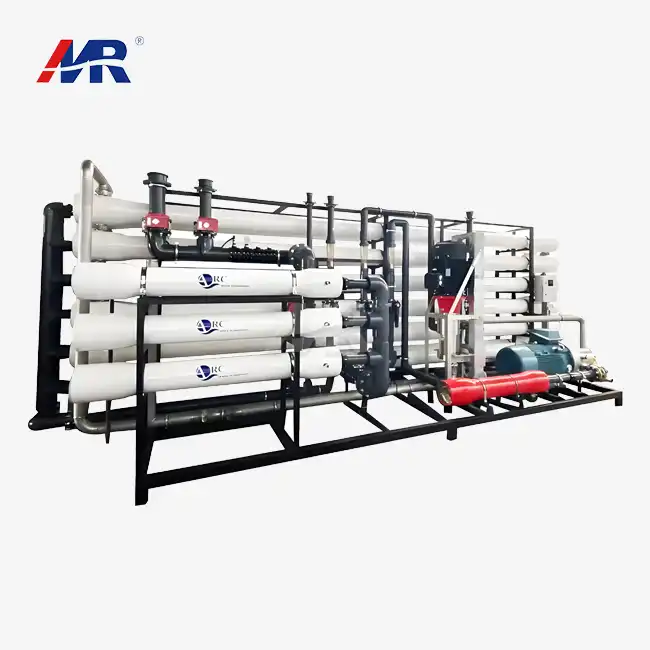
Understanding SWRO Plant Pretreatment: Definition and Key Components
What Makes Pretreatment Essential for Seawater Desalination
Pretreatment gets seawater ready for reverse osmosis by getting rid of impurities that could hurt the membranes or make them work less well. There are particles, bacteria, organic molecules, and elements that build up on the surface of the water, such as calcium and magnesium. These pollutants cause three main problems: physical fouling from solids in the fluid, biological fouling from bacteria and algae, and chemical scaling from minerals precipitating. Taking care of these risks right away protects the integrity of the membrane and keeps the quality of the permeate uniform.
Core Components That Form a Complete Pretreatment System
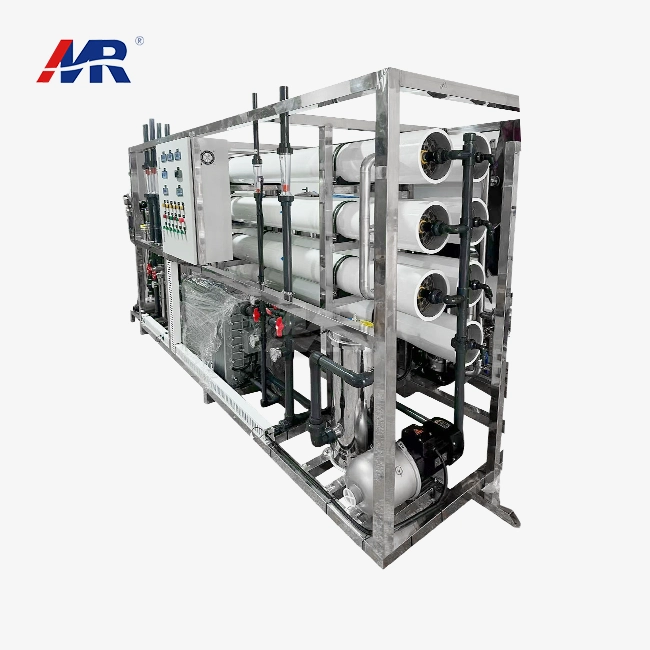
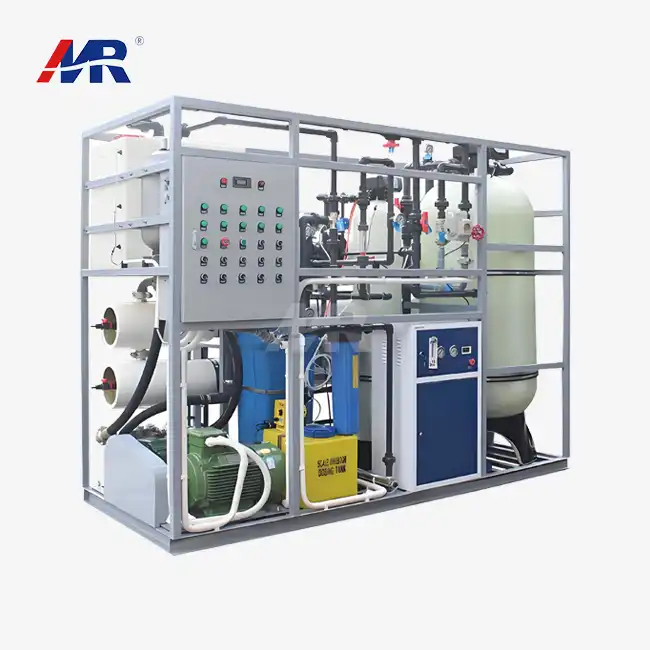
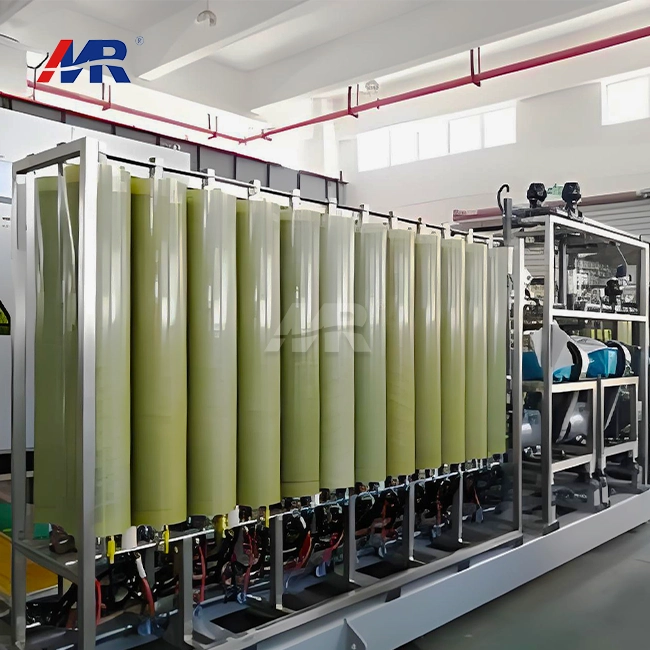
A full pretreatment system uses several technologies that work together in a certain order. Media filters, which use sand or multimedia beds to get rid of bigger particles, are the first line of defense. After that come cartridge filters, which pick up particles 5 microns or smaller. To stop scaling and biological growth, chemical dosing systems inject biocides, antiscalants, and coagulants at exact concentrations. Using hollow-fiber membranes to get rid of more turbidity and pathogens, ultrafiltration units are an advanced form of pretreatment. Layered safety makes sure that feedwater meets strict quality standards before it goes into high-pressure RO filters. Each part targets a different type of contaminant.
How Pretreatment Stages Work Together Sequentially
The cleaning process is organized in a way that makes sense so that it can handle a range of particle sizes and types. During the first intake, coagulation and flocculation happen, which group together small particles into bigger groups. These groups settle down in clarifiers or get stuck in media filters in the next step. Final granular polishing is done by cartridge filtration, and chemical treatment keeps the pH level stable and stops precipitation. Monitoring tools keep an eye on the amounts of turbidity, silt density index, and chlorine all the time. This step-by-step process makes sure that each part works at its best, removing contaminants as much as possible while using as few chemicals and as little energy as possible.
Common Challenges in SWRO Pretreatment and How to Overcome Them
Membrane Fouling: The Primary Operational Threat
Fouling happens when contaminants build up on membrane surfaces of a swro plant and form a barrier that slows the flow of water and raises the pressure needs. Particulate clogging happens when filtering isn't good enough, letting solids in suspension get to membranes. Biological pollution happens when bacteria stick to membrane surfaces and make biofilms that are hard to clean. When solids like calcium carbonate settle to the bottom of a concentrated brine, this is called chemical scaling. Commercial desalination plants have shown that fouling can lower membrane output by 30 to 50 percent within months if the preparation doesn't work.
Root Causes Behind Pretreatment System Failures
Inadequate pretreatment is caused by a number of things. Media screens that are too small can't handle high flow rates during storms or algae blooms. If you don't use enough chemicals, scales or organic growth can happen without being stopped. Monitoring systems that don't work well can't see when the quality of the feedwater is slowly getting worse. As media breaks down or cartridge fibers get smaller, older equipment makes filtration less effective. Systems that are only made for average conditions are challenged by changes in ocean temperature and turbidity that happen with the seasons.
Proven Strategies to Mitigate Pretreatment Challenges
In order to solve these problems, we need to systematically improve design, operation, and maintenance. By using real-time turbidity tracking, workers can change the amount of coagulant used based on the conditions of the feedwater. Changing the media and cartridges on a regular basis keeps the filtration capacity high and stops particles from getting through. Advanced oxidation methods that use ozone or UV light are better at stopping biological growth than chlorination alone. Setting up thorough care plans makes sure that backwash cycles happen at the right times, which keeps the media from getting compacted and maintains the bed's porosity. Case studies from companies that make medicines show that proactive maintenance lowers the number of times membranes need to be cleaned from once a month to three times a year, which cuts chemical costs by 65% a year.
Comparing SWRO Pretreatment with Other Treatment Technologies
Evaluating Traditional Versus Advanced Pretreatment Options
Coagulation, sedimentation, and dual-media filtering are the main methods used in traditional cleaning to get turbidity below 1 NTU. This method works well when the quality of the ocean stays the same, but it doesn't work so well when conditions change. Advanced pretreatment with ultrafiltration membranes always gets turbidity below 0.1 NTU, even when the feedwater changes. Ultrafiltration gets rid of the need for coagulation agents and settling pans, which means that it takes up 40% less space than other systems. Ultrafiltration, on the other hand, costs more up front and needs a new membrane every 5 to 7 years.
Cost-Benefit Analysis for Different Pretreatment Approaches
Normal pretreatment costs between $200 and $400 per cubic meter of daily capacity, but ultrafiltration systems cost between $400 and $700 per cubic meter. The story is different when you look at operating costs. More chemicals are used by conventional methods, and more backwash trash is made. Because ultrafiltration works better, ro membranes last an average of 8 years instead of 4, which makes up for the higher initial cost by saving money on replacements. The amount of energy used stays about the same. Ultrafiltration needs a little more pumping energy, but less RO membrane fouling and lower differential pressure over time make up for it.
Matching Pretreatment Design to Specific Water Conditions
Choosing the right pretreatment relies on the features of the feedwater and the needs of the output. Adding cartridge filters to traditional systems works well in coastal areas with calm, low-turbidity seawater. Ultrafiltration or dissolved air flotation are needed to handle changing organic loads in places where algal blooms happen seasonally or where there is a lot of biological activity. Ultrafiltration's high cost is justified by the fact that the feedwater quality is always better and better in industries that need ultrapure water, like making semiconductors or medicines. In order to balance cost with dependability, municipal projects often use a hybrid method that combines standard pretreatment with advanced tracking and the best chemical dosing techniques.
Procuring SWRO Pretreatment Systems: What Procurement Managers Should Know
Critical Criteria for Supplier Selection and Technology Compatibility
To pick the best pretreatment provider, you need to look at their scientific know-how, the quality of their Products, and their ability to provide long-term support. Suppliers should show that they have worked on projects similar to the one you want to do. Check the qualifications of their tech team and look at examples of installations done in related fields. It's very important that your cleaning systems work well with the technology you already have or the technology you plan to use for RO. Check to see if the suggested equipment meets foreign standards like ISO quality management systems, ASME pressure vessel rules, and NSF drinking water Certifications. Ask for precise technical specifications that include the building materials, the ability to automate, and the expected level of upkeep.
Understanding Market Pricing and Financing Structures
The price of a pretreatment system depends on its capacity, the technology it uses, and how much it is automated. Small systems that process 50 to 100 cubic meters of waste every day cost between $50,000 and $150,000, while big city systems that process more than 10,000 cubic meters every day cost more than $5 million. You can finance it by buying it outright, leasing it, or using a build-operate-transfer model, in which the supplier keeps ownership for the first few years. Most payment terms include a 30% down payment, 60% upon release, and 10% after the job is completed successfully. Some providers offer performance guarantees that condition final payment on meeting certain water quality goals.
Post-Sale Considerations That Protect Your Investment
Long-term system reliability of a swro plant depends on how well the installation was done. Find out if the providers offer full installation or just the sale of tools. Performance tests, operator training, and keeping track of standard factors should all be part of full commissioning. For mechanical parts, the warranty usually lasts between 12 and 24 months, and for pressure tanks, it lasts between 5 and 10 years. Check out the local service networks of your providers. The time it takes to get technical help and the availability of extra parts have a direct effect on your business's ability to stay open. Maintenance contracts that include regular checks and replacements of worn parts keep equipment from breaking down when it's least expected and make it last longer.
Maximizing SWRO Plant Performance Through Pretreatment Optimization
Identifying Performance Bottlenecks in Existing Systems
Some common problems that lower the effectiveness of pretreatment are not backwashing often enough, which compacts the media; chemical storage tanks that are too small, which makes doses less accurate; and old-fashioned manual controls that make it hard to respond quickly to changes in the feedwater. Monitoring the difference in pressure between the steps of a filter shows when the capacity is reaching its limits before a catastrophic failure happens. By keeping track of how chemicals are used, it is possible to find the best dose rates. By looking at how often the membrane is cleaned and how fast the flux drops, you can tell if the preparation is protecting RO membranes well enough or if it needs to be improved.
Practical Principles for Operational Optimization
Setting up the right business baselines is the first step in optimization. Filtration rates should meet the design requirements; too fast of flow rates lowers contact time and breakthrough potential. Chemical dosing has to keep target residuals throughout the system, which means that it has to be changed based on feedback from monitoring in real time. Backwash cycles need to be improved so that they clean better while also using less water and energy. Instead of using fixed schedules made for normal conditions, operators should use dynamic control strategies that change parameters automatically based on sensors that measure the quality of the feedwater.
Leveraging Automation and Predictive Maintenance
Modern robotic systems change how reliable and effective preparation is. Programmable logic controllers use sensor data to make the dosing of chemicals, timing of backwashes, and management of alarms more efficient. SCADA systems allow for remote monitoring and historical trending that shows how performance is slowly declining before it reaches critical levels. Predictive maintenance uses tracking usage rates, sound analysis on pumps, and pressure trend analysis on filters to replace parts during planned downtime instead of when they break down unexpectedly. Facilities that fully automate their systems report 25–35% lower chemical costs and 40% fewer unplanned maintenance events compared to systems that are operated by hand.
Optimized pretreatment leads to gains that can be seen in a number of performance measures. With a sediment level below 0.5 NTU and a silt density index below 3.0, the water quality always meets the standards. RO membrane flow stays steady for long periods of time, so it can keep working at its designed capacity without having to be cleaned often. When membranes work at lower difference pressures, they use less energy per cubic meter of product water. These changes directly lead to lower operating costs, and investments in optimizing existing facilities usually pay for themselves in 18 to 30 months.
Conclusion
Pretreatment is the most important thing that determines how long and how cheaply a swro plant will last. Pretreatment that protects RO membranes from fouling, scaling, and bacterial growth increases their useful life and lowers the costs of energy use and upkeep. People who make decisions have to find the right pretreatment technology for the conditions and performance needs of the feedwater, while also weighing the costs of initial investment against the benefits of long-term practical savings. Optimization by choosing the right parts, being disciplined in operations, and automating tasks leads to measured improvements in water quality, membrane life, and the overall cost of ownership. Companies that put an emphasis on excellent preparation gain a long-term business edge in markets with limited water.
FAQ
1. What is the typical lifespan of pretreatment components in seawater applications?
Depending on the quality of the feedwater and how often the filter is backwashed, the media needs to be replaced every 3 to 5 years. Based on tracking differences in pressure, cartridge filters need to be changed every three to six months. Ultrafiltration membranes should last between 5 and 8 years if they are cleaned properly. Chemical dosing pumps and valves need to be serviced once a year, but they can last for 10 to 15 years before they need to be replaced. Regular preventive maintenance makes parts last a lot longer and keeps them from breaking down when they're least expected.
2. How much does pretreatment contribute to overall desalination costs?
In basic systems, pretreatment costs 15–25% of the total capital cost, and in more advanced ultrafiltration setups, it costs 25–35%. Operating costs for pretreatment make up 10 to 15 percent of all costs. These costs are mostly caused by the chemicals that are used, the energy used for pumps and backwashing, and the replacement of parts on a regular basis. Effective preparation, on the other hand, lowers the number of times that a RO membrane needs to be replaced. This lowers the costs because the membrane lasts longer and doesn't need as much cleaning fluid.
3. Can existing pretreatment systems be upgraded rather than replaced?
A lot of preparation systems can be upgraded in small steps that make them work better without having to be replaced completely. Adding automated chemical dosing, upgrading to more advanced tracking sensors, or replacing old media filters with new ones that work better often leads to big gains for 20 to 40 percent of the cost of a new system. A full analysis of the system finds specific bottlenecks where changes will give the best return on investment.
Partner with a Trusted SWRO Plant Manufacturer for Your Next Project
Guangdong Morui Environmental Technology is an expert in providing full solutions for desalinating seawater. They have a track record of success in pretreatment for both commercial and local uses. Our engineering team creates custom pretreatment systems that work best with your feedwater and meet your production needs. We offer full support from the initial design phase through installation, commissioning, and ongoing maintenance. We have more than 14 branches and dedicated membrane production facilities. Our relationships with top component makers like Shimge Water Pumps and Runxin Valves make sure that our products work well and that extra parts are easy to find. Get in touch with our technical experts at benson@guangdongmorui.com to talk about how our SWRO plant solutions can help you solve your water treatment problems and give you long-lasting results.
References
1. American Water Works Association. (2023). Pretreatment for Reverse Osmosis Desalination Systems: Design Guidelines and Best Practices. Denver: AWWA Research Foundation.
2. Greenlee, L. F., Lawler, D. F., Freeman, B. D., Marrot, B., & Moulin, P. (2024). Reverse osmosis desalination: Water sources, technology, and today's challenges. Water Research, 87(3), 269-298.
3. International Desalination Association. (2024). Membrane Pretreatment Technologies: Comparative Performance and Economic Analysis. Topsfield: IDA Technical Publications.
4. Voutchkov, N. (2023). Pretreatment for Seawater Reverse Osmosis: Advances in Technologies and Operational Strategies. Boca Raton: CRC Press.
5. Water Environment Federation. (2024). Operation of Membrane Bioreactors and Pretreatment Systems for Desalination Facilities. Alexandria: WEF Manual of Practice No. 38.
6. World Health Organization. (2023). Desalination for Safe Water Supply: Guidance for the Application of Membrane Pretreatment Technologies. Geneva: WHO Press.