_1745823981883.webp)

Industrial reverse osmosis membrane Maintenance Best Practices
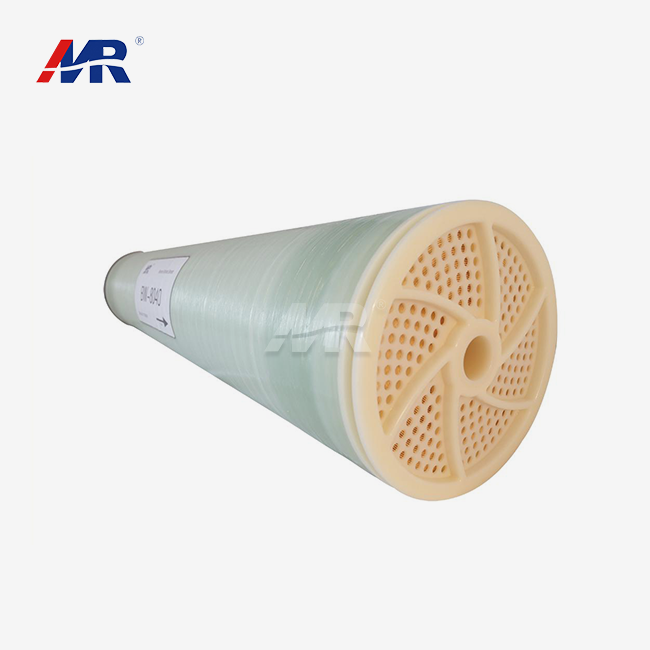
Consistent maintenance of an membrane/8040-reverse-osmosis-membrane">industrial reverse osmosis membrane directly determines how long your system performs at peak efficiency. Whether you operate a food and beverage facility, a pharmaceutical plant, or a municipal water treatment station, an unmaintained ro membrane accumulates fouling, loses flux, and drives up operating costs fast. This guide walks through the exact protocols that keep membranes like the Morui MR-BW-4040 — rated at 2,500 GPD, 99.5% salt rejection, and 1.55 MPa operating pressure — running reliably for years. Apply these practices, and you protect both your capital investment and your water quality output.

Why Does RO Membrane Maintenance Actually Matter?
The Real Cost of Neglect
It costs a lot to replace an industrial reverse osmosis membrane. Replacing a single 4040 part before the end of its useful life is a straight waste of cash. In addition to the cost of the hardware, unplanned downtime in pharmaceutical cleanrooms, semiconductor fabs, or bottling lines leads to huge output losses that are much higher than the cost of the membrane itself. Based on statistics from the industry, membranes that are properly prepared and cleaned on a regular basis last between three and seven years. Membranes that aren't taken care of fail within twelve to eighteen months in harsh wastewater reuse applications.
Maintenance is an essential cost that can't be skipped. It is a way of running the business that directly reduces the total cost of ownership.
What Are the Most Common RO Membrane Problems and Their Root Causes?
Figuring out how failures happen before they get worse saves a lot of time and money on chemicals. The three most common problems in industrial reverse osmosis membranes share unique signs that tell you how to fix them.
The main types of failure that every support team should know about are these:
- Scaling: When concentrations on the concentrate side are too high, mineral salts like calcium carbonate, barium sulfate, or silica form crystals on the membrane surface. A normalized differential pressure (NDP) that is going up and salt rejection that is staying pretty stable are the main signs. Most of the time, the problem is caused by not enough antiscalant or too fast a system healing rate.
- Organic fouling and biofouling: Biofilm, bacterial colonies, and natural organic matter build up on the feed gap and membrane leaf. This shows up as a normalized permeate flow going down and a rise in differential pressure. This failure mode happens much faster when the feed water has a high SDI (Silt Density Index above 3) or when there is not enough pesticide control.
- Colloidal fouling: Small particles like iron oxides, silica colloids, and clay get stuck in the feed path. This risk is most noticeable in systems that use surface water or sewage that has been cleaned twice.
For each type of failure, a different chemical intervention is needed. If you don't know what the foulant is, you use cleaning chemicals that either don't work or hurt the polyamide active layer. The only accurate diagnostic tool is a structured baseline log from when the device was first turned on. Without it, you're just guessing.
What Are the Best Practices for Cleaning and Maintaining RO Membranes?
Establishing Your Cleaning Trigger Thresholds
Do not just clean when you see it on the calendar. When normalized permeate flow drops by 10–15%, normalized salt passage rises by 5–10%, or differential pressure rises by 15% compared to the startup baseline, Clean-In-Place (CIP) must be done for the industrial reverse osmosis membrane. No matter how much time has passed, these limits still apply.
Matching Chemical Cleaning to Foulant Type
The right cleaning chemical for each type of fouling is shown in the table below. Using the wrong chemistry costs time and puts the membrane's health at risk.
| Fouling Type | Recommended Chemical | Target pH | Temperature |
|---|---|---|---|
| Calcium/carbonate scaling | Citric acid or HCl-based cleaner | 2.0–3.5 | 35°C max |
| Biofouling / organic | Alkaline surfactant (NaOH-based) | 11.5–12.0 | 35°C max |
| Silica scaling | High-pH alkaline cleaner | 11.5–12.0 | 35°C max |
| Iron fouling | Low-pH acid with chelating agent | 2.0–3.0 | 30°C max |
There should always be a flush with permeate water before and after each chemical step. Never put polyamide membranes in contact with free chlorine. Even at 0.1 ppm, oxidative breakdown starts, and the membranes' ability to reject salt breaks down permanently.
Pretreatment: The First Line of Defense
The best way to save money on upkeep is to use strong prep. Activated carbon dechlorination, 5-micron absolute cartridge filtering, and antiscalant doses upstream of the membrane all make cleaning much less often necessary. For systems using 4040 elements like the MR-BW-4040, it is necessary to keep the feed water SDI below 3.
Temperature should also be watched. For every 1°C drop in feed water temperature, permeate flow drops by about 3%. This is a big deal for sites in the northern U.S. during the winter.
If these technical controls are used regularly, they make the interval between CIP events longer and use fewer chemical cleaning agents each year.
How Should Procurement Teams Select RO Membranes With Maintenance in Mind?
Lifecycle costs go up when purchasing decisions don't take maintenance into account. The right industrial reverse osmosis membrane element lowers the amount and frequency of help that is needed.
When choosing a membrane, keep these things in mind:
- Fouling-resistant surface chemistry: Hydrophilic or neutral surface charge membranes keep organic matter away better than regular polyamide surfaces, which slows the growth of biofouling.
- Feed spacer thickness: A 34-mil feed spacer keeps channels from getting clogged more than a 28-mil one, which is very important when the feed water has a lot of suspended solids.
- Chemical tolerance range: Make sure the membrane element can handle the pH range needed by your CIP protocol. The MR-BW-4040 can clean within a wide pH range, so it can be used with both acidic and basic CIP processes.
- Validated salt rejection at rated conditions: The MR-BW-4040 rejects 99.5% of salt across its 7.2 m² active area under standard test conditions. This is a specification that should be wet-tested on samples from different production lots before it is fully deployed.
The skills of the supplier are equally important. Technical support, documentation for element traceability, and storage standards (elements should come vacuum-sealed in oxygen-barrier bags with a 1.0% sodium bisulfite solution) all have a direct effect on both the condition of the membrane when it is installed and its reliability over time.
What's Changing in RO Membrane Maintenance Technology?
Predictive models based on data are replacing traditional repair plans that are based on time. Pressure transmitters, conductivity sensors, and flow meters that are connected to the Internet of Things (IoT) now send real-time data to monitoring platforms that automatically figure out normalized performance parameters for an industrial reverse osmosis membrane. When a trend moves away from the baseline, the system sends out an alert before the CIP threshold for performance degradation is reached.
Diagnostic tools that use AI are starting to sort fouling types into groups based on performance curve signs. This makes choosing chemicals easier because it eliminates the need to guess. Several large-scale desalination companies along the U.S. coasts have tested these devices and found that unexpected cleaning events happen 20% to 30% less often.
New cleaning chemicals, like enzyme-based biofouling cleaners and biodegradable scale inhibitors, are also hitting the market. These are better for the environment than traditional acid/alkali programs because they are easier to get rid of.
Any industrial facility can get the most out of its membrane assets by training its employees on how to interpret normalized data and working with suppliers who offer custom maintenance programs.
Conclusion
It's not hard to keep an industrial reverse osmosis membrane in good shape, but you need to be consistent, choose the right chemicals, and keep good records of your data. Three things set facilities with three-year membrane lifespans apart from those with seven-year or longer: setting performance baselines at startup, setting CIP on normalized thresholds instead of calendar dates, and investing in strong pretreatment. The work of caring for membranes will get easier as predictive tracking technology improves, but the basics we've talked about here will always be important.
FAQ
1. How often should I clean my industrial reverse osmosis membrane?
Clean based on success benchmarks instead of set times. When standardized permeate flow drops 10–15%, salt passage rises 5–10%, or differential pressure rises by 15% from baseline, start CIP. This could happen every four to eight weeks in high-fouling situations like reusing wastewater.
2. What damages RO membranes most quickly?
Polyamide membranes break down irreversibly when they are exposed to chlorine. Before it gets to the membrane element, sodium bisulfite or activated carbon must be used to lower the chlorine level in the feed water to less than 0.1 ppm.
3. Does feed water pretreatment really reduce maintenance frequency?
In a big way. Systems that keep SDI below 3 and use the right amount of antiscalant report much longer gaps between CIP events. The best upkeep investment you can make is in pretreatment.
4. How long should a well-maintained membrane last?
If you treat the water properly before using the membrane and check it regularly, it should last between three and seven years in normal brackish water situations.
5. Can I use the same cleaning chemical for all fouling types?
No, cleaners with a low pH level are best for scaling. Cleaners with a high pH level are better for biofouling and organic deposits. When you use the wrong chemicals, you can't get the flux back and may even hurt the active layer.
Partner With Morui for Reliable Industrial RO Membrane Solutions
Morui makes industrial reverse osmosis membranes that are trusted by manufacturers, drug facilities, and city water operators in a number of different fields. With a flow rate of 2,500 GPD, a rejection rate of 99.5% for salt, and a working area of 7.2 m², our MR-BW-4040 is designed to handle tough situations. We are an experienced industrial reverse osmosis membrane supplier with our own facility for making membranes, 20 dedicated engineers, and global logistics support. We offer full procurement and commissioning services. Visit benson@guangdongmorui.com to get in touch with our technical team for a personalized consultation.
References
1. Hydranautics Technical Service Bulletin. Foulants and Cleaning Procedures for Composite Polyamide RO Membrane Elements. Hydranautics, 2019.
2. AWWA (American Water Works Association). Reverse Osmosis and Nanofiltration Manual of Water Supply Practices — M46. AWWA, 2020.
3. DOW Water & Process Solutions. FILMTEC™ Reverse Osmosis Membranes Technical Manual. The Dow Chemical Company, 2018.
4. Membrane Technology and Research, Inc. Journal of Membrane Science: Fouling Mechanisms in Industrial RO Systems. Elsevier, 2021.
5. U.S. Department of the Interior, Bureau of Reclamation. Desalination and Water Purification Research Program — RO Membrane Performance and Maintenance Guidelines. U.S. Bureau of Reclamation, 2020.
6. WaterWorld Magazine. Best Practices for Industrial Reverse Osmosis System Maintenance and Longevity. PennWell Corporation, 2022.