



DTRO Elements vs RO Membranes: What Is the Difference?
DTRO Elements differ from conventional RO membranes mainly in structure. A DTRO element stacks membrane discs inside a pressure tube, and feed water crosses them through open, turbulent channels. Spiral-wound ro membranes roll flat sheets around a center tube and use narrow spacers. The open path lets DTRO Elements handle high-COD, high-salinity liquids such as landfill leachate with less clogging. They still need pretreatment, chemical cleaning, and higher pressure. Spiral-wound RO suits cleaner, well-pretreated water. Below, I compare both designs and show where our MR-DTRO-40TD fits.
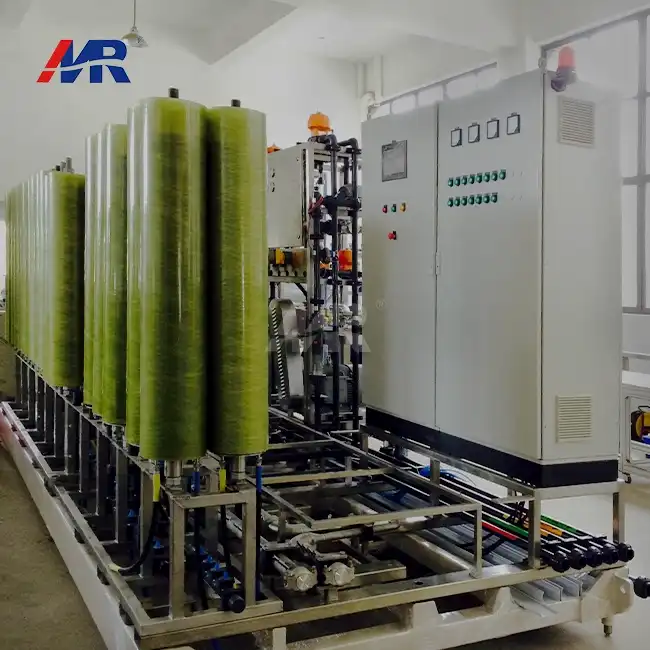
Understanding DTRO Elements and Conventional RO Membranes
How DTRO Elements Work
The principle of reverse osmosis is used by DTRO Elements. A semi-permeable barrier lets water pass through it, but salts, organics, and metals stay behind. On a central tension rod inside a DTRO module, membrane pads and hydraulic disks move back and forth on a stack that sits in a pressure-resistant tube. Water from the feed goes through each disk on a short, open path. At each disk, the water changes direction. This turbulence stops concentration polarization at the membrane surface and makes fouling take longer. Since the element is not a complete system, it can be replaced. This means that the membrane area, pressure number, and measurements must match those of the host equipment.
Key Differences from Conventional RO Membranes
A permeate tube is wrapped in spiral-wound membranes that feed spacers and flat sheets around it. Sticky solids and colloids can get stuck in the spacer channels because they are not very wide. This design works well for water from cities or factories that has been through a strong pretreatment process. Because DTRO's open channels can handle higher silt density index, COD, and salinity, it can handle landfill leachate and industrial brine. The trade-off makes sense. When DTRO is used, it often uses more energy and runs at higher pressures, but it doesn't foul up. Instead of just looking at membrane price, you should compare recovery, permeate quality, cleaning regularity, and lifetime cost.
DTRO vs STRO and Tubular Membranes
Standard spiral-wound RO can't handle some feeds, but STRO and tube versions can. Their flow paths are different, though. DTRO stacks disks with channels that create turbulence. In STRO patterns, disks or tubes are arranged in different ways that have different stress behaviors. Tubular membranes have large flow paths and can handle solids well, but they may need more floor space and pumping power. Names and construction are different for each manufacturer. Before deciding if something works or not, I suggest getting technical drawings, pressure ratings, connection information, and the test conditions used to get any published data.
Where DTRO Elements Perform Best
Wastewater Types and Applications
DTRO Elements work with three main types of businesses. The first is treating leachate from landfills, which gets rid of heavy metals, ammonia nitrogen, and hard organics to help meet release limits. The second is commercial zero liquid discharge in power, chemical, and drug plants that use coal. There, DTRO collects high-salinity brine before it evaporates or crystallizes. This cuts down on the amount of energy needed and the cost of running the plant. The third is desalination and mobile emergency water supply. In these Cases, a small, containerized layout and the ability to adapt to changes in the quality of the raw water are important. Both incinerator leachate and industrial park concentrate make sense in the same way.
MR-DTRO-40TD for Landfill Leachate Treatment
Our MR-DTRO-40TD is designed to treat leachate from landfills. Input COD must be less than 25,000, and it uses 32 kW/hour of power. The recovery rate is 50–70%. These numbers make it easy for plant owners to figure out how big to make the preparation and concentrate handling. How much leachate turns into permeate and how much stays as concentrate is controlled by recovery. When recovery is higher, concentrate volume goes down, but osmotic pressure goes up. The system is made up of pretreatment, a DTRO core, and concentrate handling. It can all fit into a container. Our ability to make membranes in-house and monitor them from afar ensures stable operation.
Combining DTRO with Other Processes
The best way to do many projects is to use more than one method. Normal RO can clean up streams that are pretty clean, and DTRO can handle the concentrate or the feed with a lot of dirt. It's possible for UF or NF to be upstream, and evaporation or crystallization to happen next when a place needs to stop releasing liquid. After that, each technology runs in the range where it works best. The final flow sheet should be based on pilot data from your own wastewater, since the composition of leachate changes based on the age of the landfill, the amount of rain, and the type of waste.
Selecting, Cleaning, and Buying DTRO Elements
Start with a Wastewater Profile
The items I need to know are temperature, TDS (or conductivity), flow, ammonia, dissolved solids, hardness, silica, oil, metals, pH, and temperature. Then, set the goal: compliance with discharge standards, reuse, decreased volume discharge, or no liquid discharge at all. We utilize that model to assess material, size, pressure restrictions, connection type, chemical compatibility, and how well the DTRO Elements fit into the pressure tank. Then look at the cost of electricity, chemicals, cleaning, downtime, frequency of replacement, freight, and disposal of concentrates.
Cleaning, Maintenance, and Replacement
Foulants may be solids in suspension, colloids, organics, scale, biofilm, oil, and too much recovery. Operators should monitor normalized permeate flow, salt rejection, feed pressure, concentrate pressure, differential pressure, and permeate conductivity. When these numbers change, it is time to clean. The manufacturer sets restrictions for the cleaning chemicals, temperature, circulation time, and rinsing, and these limits must not be exceeded. Rejection falls, pressure drop rises, or service life is ended, elements must be replaced if cleaning does not restore flux. Be sure it works before you buy it.
Common Buying Mistakes
The hardest option to make when you are simply looking at the unit pricing. Another error is the belief that all the DTRO membrane sections are interchangeable. They are not. The area, joints, and housing fit are not all the same. Buyers also consider data from testing conducted using various methods. Poor chemical control, improper handling of concentrates, and too many solids cannot be fixed by a membrane. Before ordering a project in the US, I would recommend collecting test results on the treated water, technical data, warranty conditions, lead time, and availability of replacement parts. It also helps to establish distinct service hours for all American time zones.
Conclusion
DTRO Elements and spiral-wound RO membranes both employ reverse osmosis, but the way water flows through them makes them accomplish something different. DTRO can handle feeds high in COD, high in salt, and prone to fouling, for example, landfill leachate, industrial brine, and zero liquid discharge concentration. This is feasible, since the disk channels are open and turbulent. The spiral-wrapped RO works with steady, properly processed water. There are various trade-offs between STRO and tubular Products, and the combination of methods usually saves the most money. These statistics from the MR-DTRO-40TD illustrate the effect of the recovery, energy utilization, and input COD on the leachate system size. Selection should be made on the basis of the overall wastewater profile, pilot data, cleaning records, and the cost of the system throughout its entire life instead of unit pricing.
FAQ
1. Do DTRO Elements still need pretreatment?
Yes. The open channels can handle more solids and organics than spiral-wound designs, but they still need to be screened, filtered, or controlled chemically. A good pretreatment increases the time between cleanings and protects the DTRO Elements' life.
2. Why does operating pressure vary?
The feed salinity, osmotic pressure, target recovery, and the design of the system all affect the pressure. The pump has to work harder to fight higher osmotic pressure because higher recovery makes the brine more concentrated.
3. How do I compare supplier quotations?
Compare prices when the feedwater and operating conditions are the same. Check the price, warranty, delivery time, Technical support, service life, energy demand, membrane area, and accessories, as well as the connections and sizes.
Contact Morui for DTRO Elements Selection Support
Our Team can be your DTRO Elements supplier for replacement, new-build, or OEM projects. Morui sells DTRO Elements and full leachate systems. With more than 14 branches, 500 workers, and 20 engineers, we run our own membrane plant. For more information, email benson@guangdongmorui.com with your wastewater data. We can talk about the size of the MR-DTRO-40TD, pilot testing, and concepts that are covered by an NDA.
References
1. Metcalf & Eddy/AECOM, Wastewater Engineering: Treatment and Resource Recovery, 2014
2. Baker, R. W., Membrane Technology and Applications, 2012
3. Renou et al., Landfill Leachate Treatment: Review and Opportunity, Journal of Hazardous Materials, 2008
4. Peters, T., Membrane Technology for Water Treatment, Chemical Engineering & Technology, 2010
5. Ahmed and Lan, Treatment of Landfill Leachate Using Membrane Bioreactors: A Review, Desalination, 2012
6. U.S. Environmental Protection Agency, Membrane Filtration Guidance Manual, 2005
 VIEW MOREunder counter reverse osmosis water system
 VIEW MORE2000 liters/hour EDI system
 VIEW MOREedi module water treatment
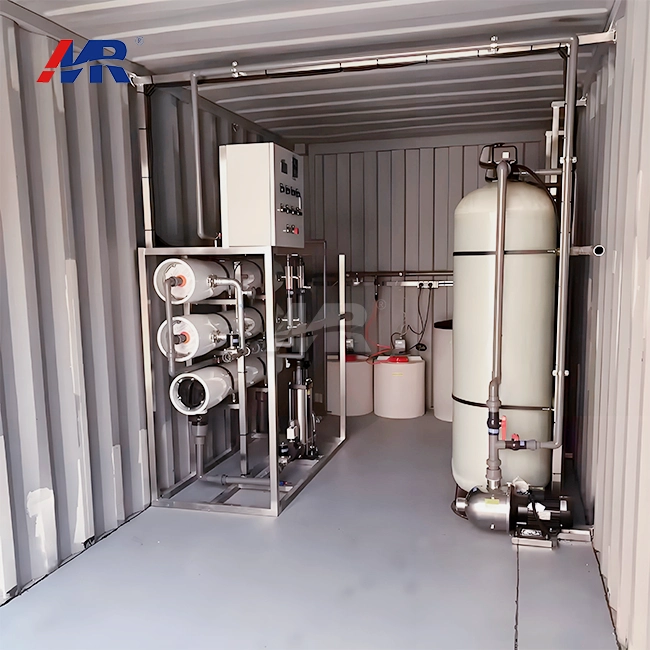 VIEW MOREcontainerized water treatment systems
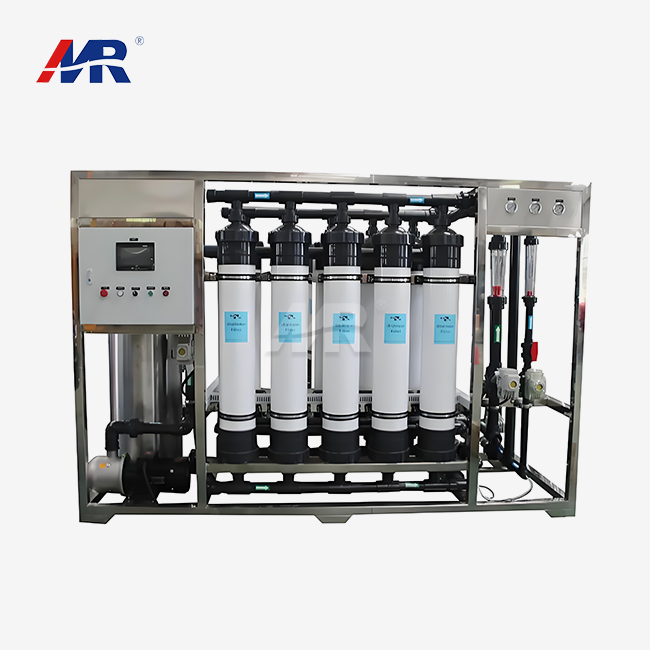 VIEW MOREultrafiltration skid
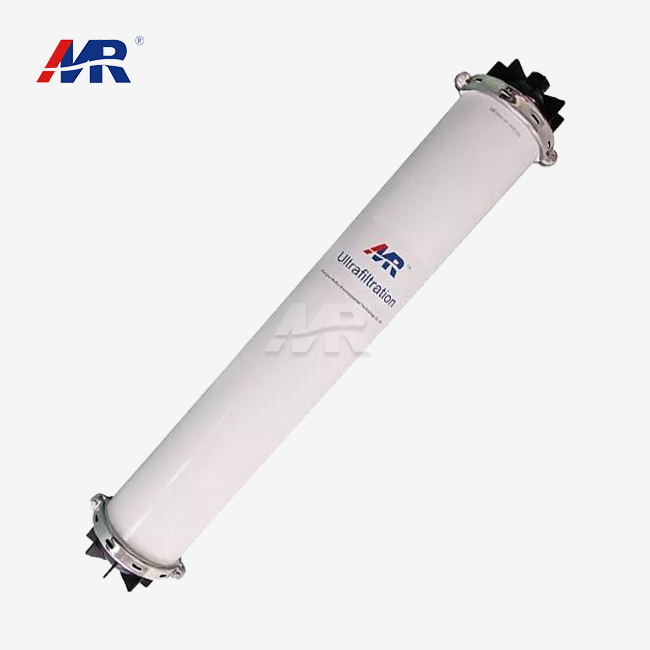 VIEW MOREultrafiltration membranes for water treatment
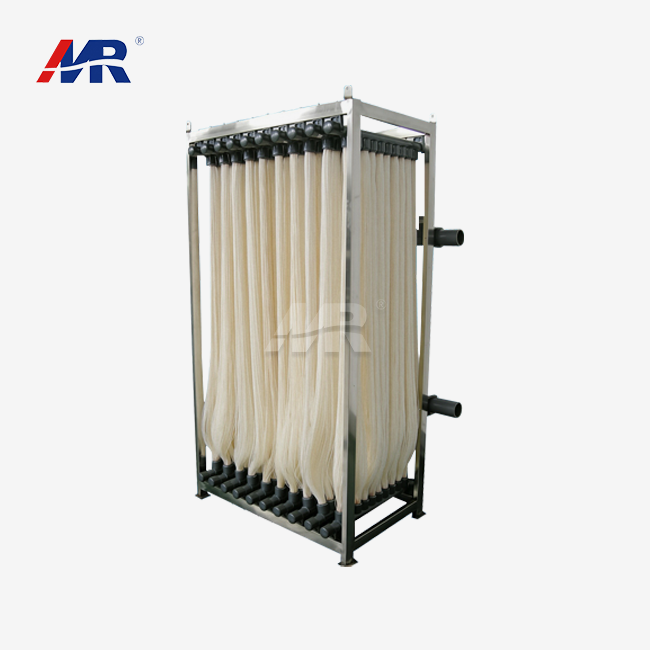 VIEW MOREbiological reactor wastewater treatment
 VIEW MOREwaste water treatment plant
