

_1745823981883.webp)

How to Choose the Right RO Water Filter Membrane for Industry
Selecting the best membrane/8040-reverse-osmosis-membrane">RO water filter membrane converts industrial water treatment from a regular cost to a strategic investment. The proper membrane maximizes operating efficiency, reduces long-term expenses, and complies with increasingly strict water quality laws. If you run a city desalination plant that serves coastal populations, make semiconductors that need ultrapure water for cleaning chips, or generate medicines that need GMP-compliant filtered water, the membrane you choose will have a direct influence on product quality and compliance. This guide provides technical decision-makers, plant managers, and CEOs with practical insights into membrane types, performance benchmarks, procurement strategies, and maintenance protocols to improve water treatment processes, stay compliant with regulations, and improve operational excellence.
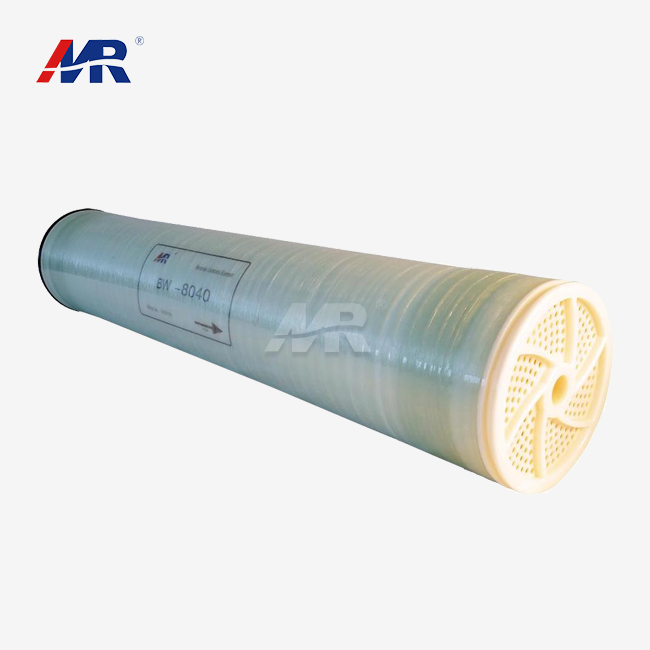
Understanding RO Water Filter Membranes and Their Industrial Role
The RO water filter membrane is the most important part of reverse osmosis systems. It separates contaminants from water at the molecular level. Most of the time, these membranes are made of cellulose acetate or thin-film composite (TFC) construction, and each has its own benefits. TFC membranes are great for high-purity uses because they reject more salt than any other type (often reaching 99.5%). Cellulose acetate membranes, on the other hand, can handle some chlorine exposure, which can be helpful in some public places.
How Reverse Osmosis Filtration Works
Hydraulic pressure is used in reverse osmosis to push water molecules through semi-permeable barriers that block dissolved salts, heavy metals, and organic chemicals. The active polyamide layer of the membrane has pores that are about 0.0001 microns wide. These pores are small enough to keep out ions like sodium, calcium, and magnesium while still letting water pass through. This molecular-level filtration cleans things at a level that can't be reached with regular filtration.
Primary Industrial Applications
The RO water filter membrane is used primarily in three different industries. Lead, fluoride, and arsenic can be removed from drinking water by filters installed under sinks or at the point of use in both home and business cleaning systems. Industrial process water treatment is very important in the manufacturing of drugs and microelectronics. Membranes are the first step in making ultra-pure water, and they can handle complex feed water with high amounts of silica or total organic carbon. Desalination and wastewater reclamation plants use membranes in high-pressure tanks to turn saltwater into drinkable water or to clean textile and dyeing wastewater for zero-liquid discharge systems. These membranes work very well in places with a lot of fouling.
Measurable Benefits for Industry
When industries use membranes that are properly specified, they see real benefits. By getting rid of taste and odor compounds, food and drink companies keep the quality of their Products stable. Power companies keep boilers from scaling, which extends the life of equipment and makes it more thermally efficient. Pharmaceutical companies don't have to pay for expensive extra treatment to meet USP and EP water quality guidelines. These benefits have been shown to increase return on investment (ROI) through less downtime, lower chemical use, and better compliance with regulations.
Key Criteria for Selecting the Right RO Membrane
To find the best membrane design, you need to carefully look at a lot of things that affect each other. A good selection strikes a balance between technical performance and cost-effectiveness over the whole lifecycle of the membrane.
Feed Water Quality Assessment
Correct filter selection is based on the comprehensive examination of the input water. The operating pressure depends on the total dissolved solids content (TDS). For example, brackish water with a TDS of between 1,000 and 10,000 ppm typically requires 150 to 250 psi, whereas saltwater desalination with a TDS over 35,000 ppm requires 800 to 1,200 psi. Scaling may occur based on the calcium and magnesium levels in the water. Water normally has to be treated first. When the hardness level rises beyond 200 ppm as CaCO 3. Scaling tendency is determined by the Langelier Saturation Index. Positive values indicate greater danger
The membrane material is selected depending on the poisons present. More than 0.1 ppm chlorine in the feed water may cause irreversible damage to the Polyamide TFC membranes, and a carbon filter or sodium bisulfite preparation is required. “Recovery rates must be carefully monitored when silica levels are greater than 30 ppm to avoid colloidal fouling,” he said.
Salt Rejection and Permeate Quality Requirements
The percentage of dissolved solids that are removed during filtration is called the rejection rate. Monovalent ions, such as sodium chloride, are rejected by standard commercial membranes 97 to 99% of the time. For uses that need higher purity, like pharmaceutical water systems that make water for injection (WFI) or semiconductor facilities that make ultrapure water, membranes with 99.5 to 99.7% rejection rates must be tested according to ASTM D4194 protocols using standard sodium chloride or magnesium sulfate solutions.
Flux Rate and System Capacity
How much water can be made is shown by membrane flux, which is measured in GFD or LMH, or liters per square meter per hour. At standard test conditions (77°F, 225 psi, 2,000 ppm NaCl feed, 15% recovery), most industrial membranes can deliver 15 to 25 GFD. As the temperature rises, water density drops, which causes flux to rise by about 3% per degree Celsius. However, higher temperatures also speed up cellular growth and membrane compaction. Buyers should make sure that the flux specs meet the operational temperature ranges and pressure limits of the equipment they already have.
Membrane Configuration and System Compatibility
Membranes are made with either spiral-wound or hollow fiber structures. In industrial settings, spiral-wound elements are most common. They come in standard sizes, with 8-inch diameter × 40-inch length elements being the most common for big systems and 4-inch diameter × 40-inch length elements being better for smaller ones. To make sure the membrane fits properly and stops flow, the housing, interconnection pipes, and pressure vessel specs must all match the membrane's dimensions.
Durability and Maintenance Requirements
In manufacturing situations with the right pretreatment, membranes usually last between three and five years, but this can vary a lot. Operating conditions have a big effect on longevity. Keeping the pH of the feed water within the range stated by the maker (usually 3–10), keeping the temperature stable, and using good pretreatment to get the silt density index below 3–5 all help the membrane last longer. Instead of just looking at the initial membrane cost, buyers should think about the Total Cost of Ownership, which includes how often the membrane needs to be replaced, how much it costs to clean, and how much time the system is down.
Comparing RO Membranes with Alternative Filtration Technologies
Even though reverse osmosis membranes get rid of all contaminants, other methods should also be considered based on your budget and water quality goals.
Ultrafiltration Membrane Systems
Ultrafiltration membranes have bigger pores (0.01-0.1 microns) than ro membranes, so they can get rid of germs, viruses, suspended solids, and proteins while still letting dissolved salts pass. UF systems use less energy than RO systems because they work at lower pressures (10–100 psi). Mariculture sites use UF to clean the water that flows through them, which stops the spread of disease without changing the pH. UF is often used before RO, protecting membranes further down the line from particulate fouling.
UV Disinfection Systems
Chemical-free disinfection is possible with ultraviolet devices, which kill microbes by damaging their DNA. UV light is great at killing microbes, but it doesn't get rid of heavy metals, dissolved solids, or organic substances. Many industrial systems use UV as the last step in the treatment process after RO to make sure that the evaporated water is safe from microorganisms. This is especially important in pharmaceutical uses where controlling bioburden is important.
Cost-Benefit Analysis
RO membranes cost more and use more energy than UF or UV systems, but they remove more dissolved solids, which is important for boiler feedwater, medicine production, and electronics manufacturing. A semiconductor factory looked at different ways to treat the water and found that RO membranes, even though they cost 40% more up front, cut the amount of deionization resin used by 85%, which paid for themselves in 18 months through practical savings.
How to Procure RO Water Filter Membranes for Industrial Use
To get membranes that work well for a long time, good procurement strategies combine quality assurance, cost optimization, and source dependability.
Supplier Qualification and Certification Verification
Membrane makers with a good reputation keep their ISO 9001 quality management certification and follow NSF/ANSI Standard 61 for drinking water system parts. For pharmaceutical uses, membranes must be made in sites that follow cGMP guidelines. Ask for copies of the certificates, do supplier audits for big projects, and check the paperwork that connects specific lots of membranes to test results for quality control.
Quality Control Standards
To guarantee that high-quality criteria are followed for the RO water filter membrane, standardized testing procedures such as ASTM D4194 are used. An essential aspect of the inspection process is tests for salt rejection using typical sodium chloride or magnesium sulfate solutions to ensure appropriate efficiency. Vacuum leak checks and air decay tests ensure the structural integrity of membrane departure and glue lines. Buyers are also looking at flux testing to confirm membranes perform at advertized capacity, temperature, and pressure. High end manufactures employ atomic force microscopy to analyze surface roughness, which is directly connected to anti-fouling potential. Scanning electron microscopy is used to search for surface defects. By requesting test Certifications, you may be guaranteed the quality before shipment, indicating these characteristics for particular manufacturing quantities.
Bulk Purchasing and Customization Options
Volume pricing is helpful for big projects, and discounts are often available for purchases of more than 100 elements. Custom membrane sizes can work with different system setups. Some suppliers let OEM partners or system developers use their own labels. For multi-year projects that need staged procurement, negotiate framework deals that set prices, delivery dates, and terms for expert help.
Evaluating Total Cost of Ownership
Lifecycle costs should be taken into account when buying membranes, not just the unit price. Find the total cost of ownership (TCO), which includes the initial purchase price, freight, installation work, energy use linked to operating pressure needs, cleaning chemical costs, and how often the item needs to be replaced. When you add up the cost of system downtime and work, a membrane that costs 15% less but needs to be replaced every three years instead of every four years ends up costing more.
Best Practices for RO Membrane Maintenance and Performance Optimization
Regular maintenance plans extend the life of membranes, make sure that the quality of the permeate stays the same, and stop system problems that mess up production schedules.
Routine Performance Monitoring
Every day, keep an eye on the normalized permeate flow, salt passage, and pressure drop across membranes. Normalization brings numbers back to normal levels of temperature and pressure, which lets you do correct trend analysis. Fouling or scaling that needs to be fixed is shown by permeate flow dropping 10-15% from baseline. If the salt flow goes above 15% of the original value, it means that the membrane is breaking down or the seal is failing. If the differential pressure goes above the design values, it means that particles are building up on the membrane surfaces.
Implementing Effective Cleaning Protocols
Develop cleaning schedules according to performance tracking, instead of choosing random periods. Two-step approaches are typically utilized for clean-in-place techniques. Alkaline cleansers (pH 11-12) with surfactants are used to remove film, biological growth, and particulate debris. Some mineral scales, such as calcium carbonate, calcium sulfate, and metal oxides, may be dissolved by acidic (pH 2-3) cleansers. The cleaning fluid temperature (95 to 104° F) and the time it is allowed to circulate (30 to 60 minutes per stage) are significant factors in its effectiveness. Perform a membrane autopsy of the utilized parts to enhance the cleaning procedures based on the major foulant types.
Troubleshooting Common Issues
Sudden decrease in flow rate is mostly due to mineral scaling or colloidal fouling. To overcome these difficulties, the system should be cleaned with particular acidic or alkaline cleansers depending on the foulant qualities. Over months of gradual loss of flow, the membrane has been compressed by too much pressure or fouling that can not be rectified. More salt going through suggests chlorine is doing reactive damage. The membrane is breaking down, or the glue lines are broken. The element has to be replaced. Timely attention to issues will minimize further damage and prolong the life of the system.
Conclusion
The optimum RO water filter membrane selection should be based on thorough consideration of the feed water characteristics, the purity standards required for the application, the system compatibility, and the total cost of ownership. Industrial purchasers benefit from providers with plenty of expertise and comprehensive technical assistance, high-quality documentation, and membranes that have been used successfully in many different scenarios. Maximum membrane life and constant water quality will be achieved by proper pretreatment, monitoring of operating parameters, and regular cleaning schedules. With tighter restrictions and sectors requiring greater purity levels, investing in the proper membrane technology and sound maintenance programs will pay off in improved product quality, regulatory compliance, and higher operational efficiencies.
FAQ
1. What causes sudden flux decline in reverse osmosis membranes?
Drops in permeate flow that happen quickly are usually caused by colloidal fouling or mineral scaling, most often calcium carbonate and calcium sulfate. Check the differential pressure to make sure there is fouling. Use acidic cleaners for scale and alkaline cleaners for organic waste in focused clean-in-place processes. Recurrence can be avoided by doing regular upkeep on the pretreatment and antiscalant doses.
2. Can polyamide RO membranes tolerate chlorine exposure?
Oxidizing agents, such as chlorine, damage polyamide thin-film composite membranes in a way that can't be fixed. This damage makes the active layer break down. There must be less than 0.1 mg of free chlorine in the feed water. Put in activated carbon filters or sodium bisulfite upstream to get rid of any chlorine that is still in the water before it hits the membranes. This will protect your investment and keep rejection rates high.
3. How often should industrial RO membranes be replaced?
In industrial systems that are properly run and have good preparation, membranes can last between three and five years. The actual time to change something rests on how well it works normally, not on how old it is in years. To keep the goal of permeate quality, membranes should be replaced when salt flow goes up 15% above the baseline or when they need to be cleaned more often than once a month. The Langelier Saturation Index of the feed water has a big effect on membrane life.
4. What differentiates dry and wet membrane storage?
Dry membranes have a longer shelf life and make shipping easier, making them perfect for keeping extra items on hand. Wet membranes are delivered in a 1% sodium metabisulfite solution that keeps them safe. They have already been tested and hydrated, so they can be used right away for high performance. When you need to replace something quickly, choose wet membranes instead of dry ones because they don't need to be soaked for 24 to 48 hours.
Partner With Morui for Industrial Water Treatment Excellence
Choosing a trusted RO water filter membrane supplier makes the difference between operational success and costly system failures. Guangdong Morui Environmental Technology specializes in complete water treatment solutions. They offer tools, installation, and testing services that are specifically designed for use in the pharmaceutical, food and beverage, semiconductor, and municipal industries. With 14 branches in different areas and a team of 20 expert engineers, we can help people in their own communities. Our membrane production facility and equipment processing plants back this up. We sell well-known names like Shimge Water Pumps, Runxin Valves, and Createc Instruments. Our combined system solutions make buying easier.
Our expert team looks at the features of your feed water, your purity needs, and the limitations of your system to suggest the best membrane configurations. We offer certified products with full quality documentation, whether you need standard 8-inch spiral-wound elements for a 100,000 GPD desalination plant or custom-sized membranes for specific pharmaceutical uses. Get in touch with us at benson@guangdongmorui.com to talk about your project needs and get reasonable prices from an RO water filter membrane manufacturer that cares about your long-term operating success.
References
1. American Society for Testing and Materials. (2020). ASTM D4194-20: Standard Test Methods for Operating Characteristics of Reverse Osmosis and Nanofiltration Devices. West Conshohocken, PA: ASTM International.
2. Greenlee, L.F., Lawler, D.F., Freeman, B.D., Marrot, B., & Moulin, P. (2009). Reverse osmosis desalination: Water sources, technology, and today's challenges. Water Research, 43(9), 2317-2348.
3. Membrane Technology and Research, Inc. (2021). Industrial Water Treatment Membrane Selection Guide. Newark, CA: MTR Publications.
4. National Sanitation Foundation International. (2019). NSF/ANSI Standard 61: Drinking Water System Components - Health Effects. Ann Arbor, MI: NSF International.
5. Wilf, M., & Bartels, C. (2018). The Guidebook to Membrane Desalination Technology: Reverse Osmosis, Nanofiltration and Hybrid Systems. Hopkinton, MA: Balaban Desalination Publications.
6. World Health Organization. (2017). Guidelines for Drinking-water Quality: Fourth Edition Incorporating the First Addendum. Geneva: WHO Press.
