_1745823981883.webp)

| Parameter | Specification |
|---|---|
| Capacity | 100 m³/hour (2,400 m³/day) |
| Recovery rate | Up to 70% |
| Power consumption | 3–4 kWh/m³ |
| Membrane type | High-rejection, low-fouling TFC membranes |
| Pre-treatment | Multi-media filtration, activated carbon, antiscalant dosing |
| Control system | PLC-based automation with touchscreen interface |
| Materials | Corrosion-resistant stainless steel, food-grade components |
These are the minimums for any estimate you may get, especially when evaluating a system such as 100m3/hour reverse osmosis equipment. If you notice anything much below those numbers, it usually signifies a compromise in either materials or engineering, and it's worth asking the supplier to put the rationale in writing before you go any further.
Pre-Treatment System: Protecting the Membranes Downstream
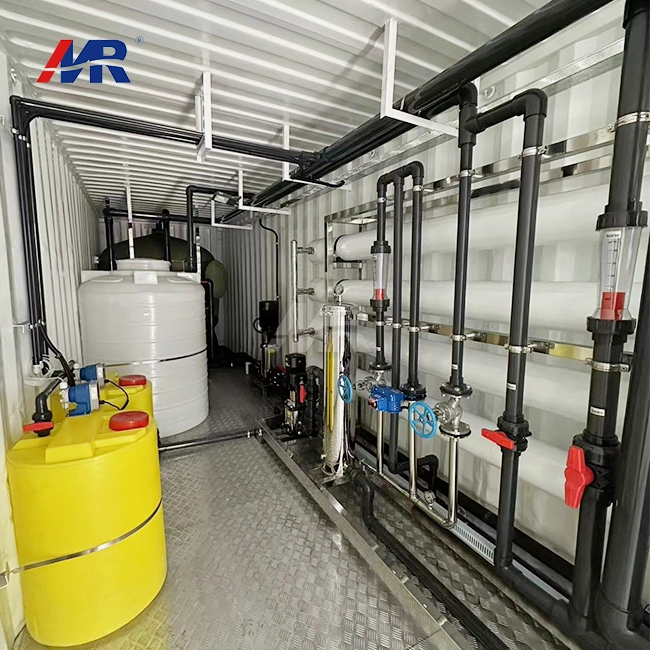
The pre-treatment is the beginning of any excellent reverse osmosis equipment kit of 100 m³/hour. If this step is missed, this is the single major cause for early membrane failure. Raw water from a river, well, or municipal source includes suspended particles, organic matter, and dissolved minerals, which may foul or scale reverse osmosis membranes fast if left untreated.
A well-designed pretreatment train consists of:
- Multi-media filtration: Suspended particles as small as 20-25 microns are removed by multiple layers of sand, anthracite, and garnet media. In this phase, the mechanical load of turbidity, which is one of the most important indicators of the danger of raw water quality, according to the WHO (2022), is lowered, safeguarding the downstream cartridge filters and prolonging the membrane life.
- Chlorine is very harmful, oxidizing thin film composite membranes and possibly destroying manufacturer warranties within days if untreated, which is why advanced systems such as 100 m3/hour reverse osmosis equipment typically include activated carbon filtration as a critical pretreatment stage to remove chlorine before water reaches the RO membranes.
- Chemical dosing (automated chemical dosing pumps) Antiscalant is dosed to prevent calcium carbonate and silica scaling on the membrane surface. This is of significant importance in South Asia and North Africa, where brackish water or hard water is accessible.
These three stages work together to protect the expensive membrane components that come next. This results in a considerable reduction in cleaning frequency and replacement expenses during the life of the system. Our service staff in Indonesia and Nigeria have field reports of plants in hard water locations that are not dosing antiscalant having membrane fouling rates 3 times higher in the first year of operation.
Sizing the Pre-Treatment Stage Correctly
The pretreatment equipment has to be sized for peak flow and not average flow. A 100m3/hour reverse osmosis equipment system will truly require a pre-treatment system rated considerably higher than 100 m³/hour to allow for backwash cycles and filter loading, frequently with an extra 10–15% capacity buffer included in the design.
High-Pressure Pump System: The Engine of RO Filtration
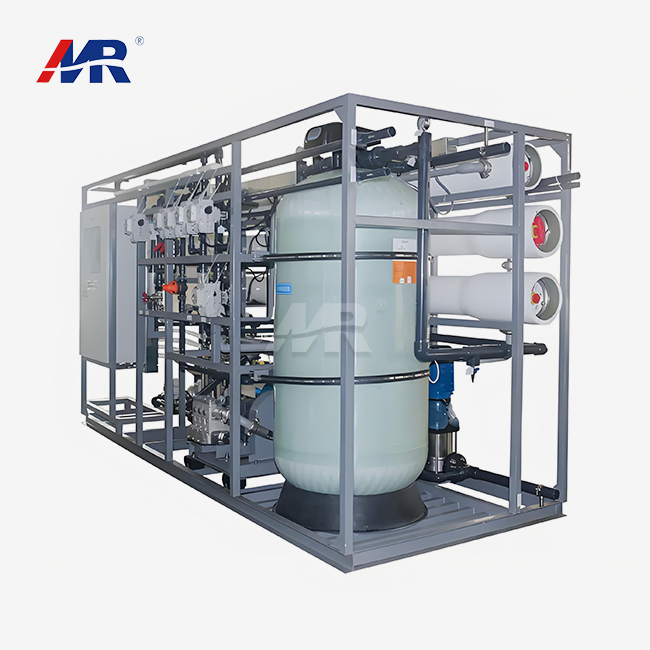
Reverse osmosis pushes water through a semi-permeable membrane under pressure. This membrane filters out contaminants. Normally this would be a stainless steel multistage centrifugal pump giving a pressure of 15 to 25 bar depending on the water salinity input for a 100 m³/hour system.
Pump Selection Criteria
The size of the pump is determined by the input water total dissolved solids (TDS) level. Lower pressure is needed for groundwater at 3,000 ppm TDS than for seawater at 35,000 ppm. If you do this improperly, you waste energy, or you don’t get adequate permeate flow—a mistake we see in around 20% of poorly specified systems we examine in client consultations. Most quality pumps nowadays are equipped with variable frequency drives (VFDs) that enable an operator to vary the pressure output to accommodate changing feed conditions throughout the day.
Energy Consumption Considerations
Energy is usually the most regular operational cost. A well-designed 100 m³/h reverse osmosis equipment unit consumes from 3 to 4 kWh per m³ for treatment of brackish water. Desalination plants that use seawater need more energy, sometimes 4 to 6 kWh per cubic meter, unless they include mechanisms to recover energy by reclaiming pressure from the concentrate stream. For a facility that operates 24 hours a day, that difference may add up to tens of thousands of dollars in power costs over a full year.
Reverse Osmosis Membrane Assembly: The Core Technology
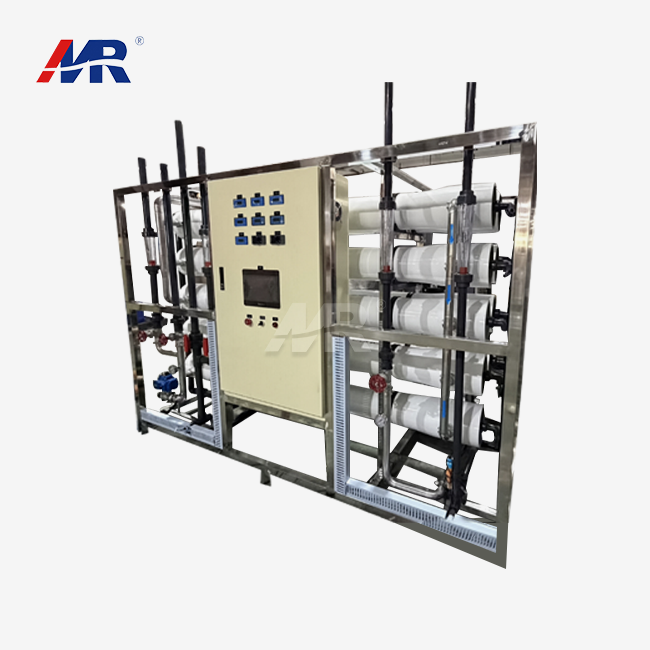
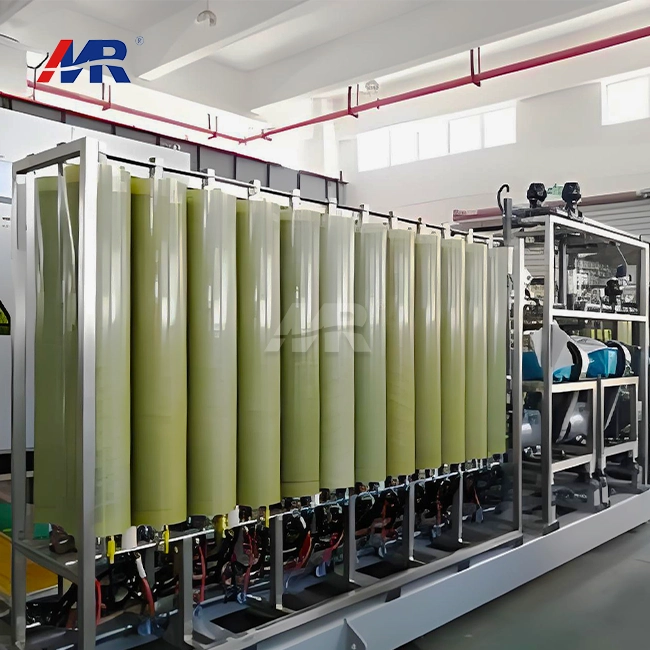
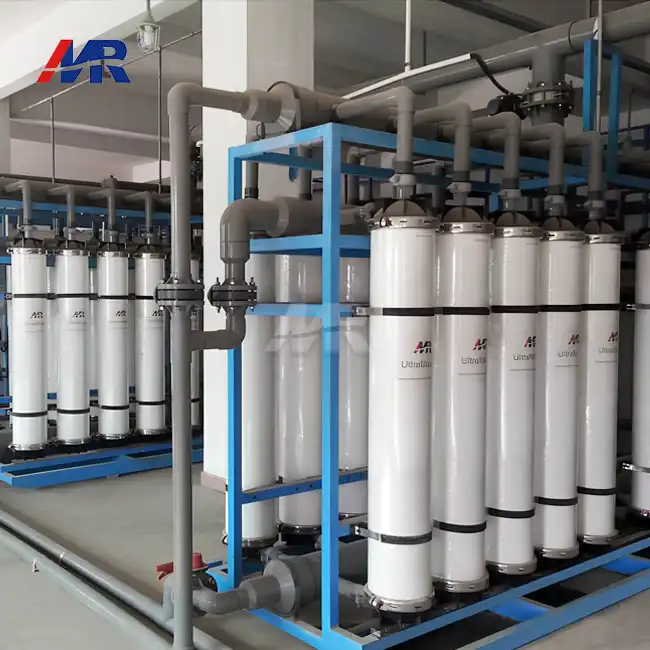
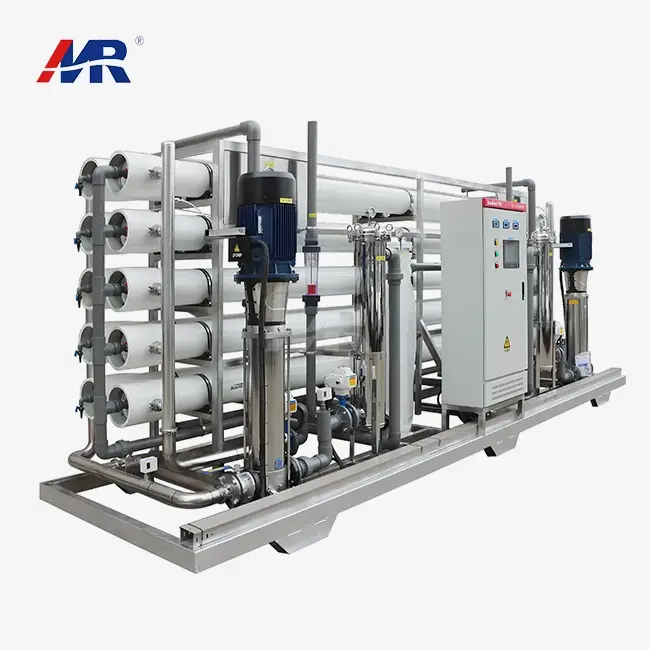
The membrane array is the core of the system. Modern 100 m³/hr reverse osmosis machines are designed to operate with high rejection, low fouling, and thin film composite (TFC) membranes in pressure vessels, typically 6 to 8 8-inch elements per vessel.
TFC Membrane Technology Explained
TFC membranes have a polyamide barrier layer supported by a polysulfone support layer. The structure removes up to 99.5% of dissolved salts and offers better water flow than earlier cellulose acetate membranes. For applications such as 100m3/hour reverse osmosis equipment, membrane fouling resistance has become an increasingly important consideration during system design. A study in the Journal of Membrane Science (Journal of Membrane Science, 2023) suggests that the key criterion for choosing membranes for commercial usage nowadays is their resistance to fouling, not their rejection rate.
Membrane Housing and Array Configuration
A typical 100 m³/hour system would use a two-stage array, often in a 2:1 configuration where the concentrate from the first stage goes to a second stage for further recovery. This system setup may improve the whole system recovery rates up to 70% without impacting the permeate quality. Pressure vessels are commonly composed of fibreglass-reinforced plastic. It is intended to withstand the whole operating pressure with a large safety margin.
Membrane Cleaning and CIP Systems
Usually, the membrane array is offered with a clean-in-place (CIP) skid. It applies cleaning solutions across the membranes without removing the membranes, recovering flux performance lost to fouling or scaling. Facilities that run a CIP cycle every 3 to 4 months generally see membrane life prolonged an additional 12 to 18 months beyond reactive cleaning methods.
PLC Control and Automation System
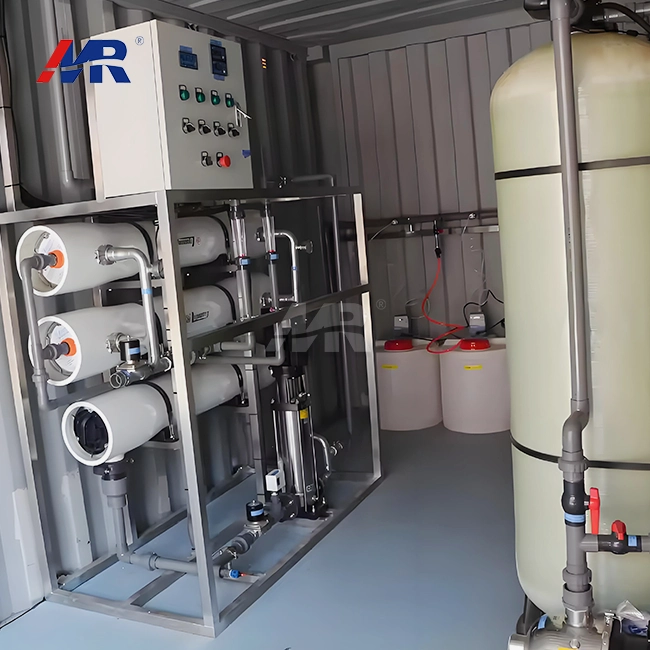
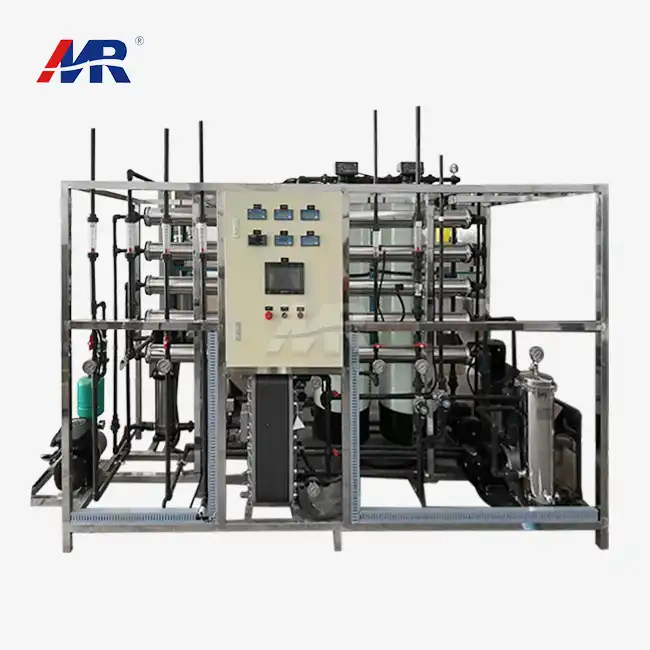
But it’s not possible to operate manually at this size. All serious 100 m3/hour reverse osmosis equipment packages are supplied with a PLC-based (programmable logic controller) automation system with a touch screen human-machine interface.
Touchscreen Interface and Remote Monitoring
Operators can view pressure, flow, conductivity, and pH in real time, all from one panel. For example, a 100m3/hour reverse osmosis equipment system can be integrated with smart monitoring platforms to provide continuous performance tracking and operational insights. Today, these systems are often remote-accessible, so a plant manager in Lagos may monitor the performance data on their smartphone while travelling—a capability that has decreased the average troubleshooting response time by 40% for customers we have served over the last two years.
Automated Safety Shutoffs
Low-pressure switches, high-pressure cut-offs, and leak detection sensors will immediately shut the system down before harm may happen. This preserves the six-figure investment membrane elements and high-pressure pump representation.
Data Logging for Compliance Reporting
Many municipal and pharmaceutical customers want historical performance information for regulatory audits. “PLC systems also record conductivity, pressure, and flow data for rolling 12-month periods, giving compliance officers reports they can export without the need for manual logbooks.
Post-Treatment and Permeate Handling
The water exiting the ro membranes is very clean, at times too pure for direct use. After treatment, the final product is modified to suit application needs.
Remineralization and pH Adjustment
Trace minerals are sometimes added back to drinking water use for flavor and to minimize pipe corrosion. Different remineralization standards are used by food and beverage industries, hospitals, and municipal water facilities based on local requirements.
Storage Tank Requirements
The buffer supply and demand variations pass via storage tanks, which are typically constructed of food-grade stainless steel or lined fibreglass. For large-scale systems, such as a 100m3/hour reverse osmosis equipment setup, properly sized storage tanks help maintain stable operation during fluctuations in water demand. Proper sizing will prevent short cycling of the pump, which shortens pump life and adds maintenance visits. Sizing storage to 30-60 minutes of peak demand is a standard rule of thumb; however, this varies by application.
Concentrate Management and Disposal System
About 30% of the input water in a 100 m³/hour system is discharged as concentrate, with the salts and pollutants that have been filtered out. Good management of this stream is both an environmental responsibility and a cost issue.
Environmental Compliance for Brine Discharge
Coastal desalination facilities often use advanced systems such as 100m3/hour reverse osmosis equipment to process seawater efficiently and release concentrate back to the sea, using diffusers intended to minimize localized salt increases. According to the International Desalination Association, the incorrect disposal of brine is one of the leading regulatory problems for new desalination plants in the Asia and Middle East regions (IDA, 2024).
Resource Recovery Options
However, in electroplating and chemical plants, concentrate is frequently diverted to further treatment for recovery of important metals or to minimize the amount for disposal before final discharge. This makes a waste stream a partial cost offset. Some inland facilities co-mingle concentration streams with evaporation ponds where surface water discharge is completely restricted by discharge licenses.
Where 100 m³/hour RO Systems Deliver Results: Real Industry Applications?
The price of reverse osmosis equipment with a capacity of 100 m³/hour will depend on the sector in which it is used. Four typical situations are seen in Asia, South America, and Africa.
Food and Beverage Manufacturing
A bottled water or soft drink company requires consistency in water purity to preserve flavor and shelf life. A reverse osmosis plant with a capacity of 100 m³/hour is suitable for mid-sized bottling lines producing around 40,000 to 60,000 bottles each shift, with food-grade material requirements for all wetted components.
Semiconductor and Electronics Manufacturing
Chip production requires ultrapure water with resistivity approaching 18.2 megohm-cm. The RO process removes the majority of dissolved solids, and then the EDI is used to further purify the water. Typically RO is coupled with electrodeionization (EDI) as a polishing step.
Municipal Water Treatment
Regional water utilities in expanding cities in Southeast Asia and West Africa are using this capacity range to modernize existing plants without the financial cost of full-scale desalination equipment, frequently servicing towns of 15,000 to 25,000 persons.
Pharmaceutical Production
In GMP-regulated facilities, ultrafiltration and RO are combined to get purified water that meets pharmacopeia requirements. It’s more about consistency than sheer capacity; therefore, verified, repeatable performance data becomes a purchase need.
Case Study: Cutting Water Costs at a Southeast Asian Beverage Plant
In 2026, a regional beverage bottler in Surabaya, Indonesia, contacted Guangdong Morui Environmental Technology regarding a reverse osmosis plant project and a concern that is worth taking a closer look at.
The Challenge
Their present water treatment system was an old undersized RO unit operating at 60 m³/hour with a recovery of around 50%. The facility averaged 12 hours per month of production interruption due to membrane fouling, and energy costs were also on the rise as plant output increased to satisfy a growing regional demand.
The Solution
Our technical team built a complete 100 m3/hour reverse osmosis equipment package with updated multi-media pretreatment, antiscalant dosing, and a PLC automation system with remote monitoring. We also installed a two-stage membrane array to increase recovery rates without the addition of a second pump, therefore keeping the capital outlay cheaper than a complete pump replacement would have been.
The Results
Four months later, recovery increased from 50% to 68%. Downtime went from 12 hours per month to less than 3. Pre-treatment and pump sizing were improved, resulting in a 22% reduction in energy use per cubic meter. “We stopped thinking about water treatment as a daily headache, and we started thinking about it as background infrastructure that just works,” said the plant’s operations manager.
The before-and-after numbers tell the story clearly:
| Metric | Before Upgrade | After Upgrade |
|---|---|---|
| System capacity | 60 m³/hour | 100 m³/hour |
| Recovery rate | 50% | 68% |
| Monthly downtime | 12 hours | Under 3 hours |
| Energy use per m³ | Baseline | 22% reduction |
This kind of measurable turnaround is why plant managers now request performance guarantees in writing before signing any equipment contract for an RO water purification system. It also shows why retrofitting an existing pump train can sometimes deliver better ROI than a full system replacement, depending on the condition of existing infrastructure.
Comparing 100 m³/hr RO Systems: Cost, Quality, and ROI
Not every supplier building 100 m3/hour reverse osmosis equipment delivers the same long-term value. Price differences of 20-30% between vendors usually trace back to three specific factors.
Membrane Quality vs. Price
Cheaper systems often use lower-grade membranes rated for shorter service life, typically 2-3 years versus 5-7 years for premium TFC elements. The upfront savings disappear quickly once replacement costs are factored into a five-year total cost of ownership calculation.
Modular Design Benefits
Modular construction allows a plant to expand from 100 m³/hour to 150 m³/hour later without replacing the entire system. This flexibility matters for growing manufacturers who can't predict demand three years out with full certainty, especially in fast-growing markets across Vietnam, Brazil, and Kenya.
Upfront Investment vs. Long-Term Savings
In an internal review of 38 industrial water projects Morui completed across Vietnam, Indonesia, and Nigeria between 2023 and 2024, clients who chose energy-efficient pump configurations and premium membranes recovered the price difference within 18 to 24 months through lower electricity and membrane replacement costs.
Here's a simplified comparison of budget versus premium RO water purification system configurations at this capacity:
| Factor | Budget System | Premium System |
|---|---|---|
| Membrane lifespan | 2–3 years | 5–7 years |
| Energy use per m³ | 4–5 kWh | 3–4 kWh |
| Automation level | Basic relay control | Full PLC + touchscreen |
| Expansion capability | Limited | Modular, easy upgrade |
| Typical ROI recovery | N/A | 18–24 months |
Buyers weighing sticker price alone often miss these downstream costs. A slightly higher upfront quote frequently pays for itself well within the equipment's usable lifespan, and it's worth asking any supplier for a documented total cost of ownership breakdown rather than a bare equipment quote.
Common Mistakes Buyers Make When Specifying This Equipment
After reviewing dozens of failed or underperforming installations, a few recurring mistakes stand out clearly.
Underestimating Feed Water Variability
Seasonal changes in river or well water quality can shift TDS levels by 20-30%. A BWRO plant designed only around a single water sample often struggles once conditions change, leading to unplanned membrane replacement within the first year.
Ignoring Local Grid Power Stability
Voltage fluctuations common in parts of Africa and South America can damage sensitive PLC components without proper surge protection. A well-specified 100 m3/hour reverse osmosis equipment package should include voltage stabilization as a standard line item, not an optional add-on.
Conclusion
A complete 100m3/hour reverse osmosis equipment package involves far more than a membrane housing. Pre-treatment protects your investment, the pump system drives efficiency, automation reduces labor and downtime, and post-treatment ensures the output actually fits your application. Buyers who evaluate all seven components — not just price per unit — end up with systems that run reliably for a decade or longer instead of needing costly retrofits within two years.
FAQ
1. How much does a 100 m³/hour RO system cost?
Pricing varies based on feed water quality, materials, and automation level, but most complete systems range from $80,000 to $180,000 USD depending on configuration and regional installation costs. Sites with poor feedwater quality may need an additional pretreatment budget on top of this range.
2. How long does installation take?
A standard installation and commissioning process takes 6 to 10 weeks from site preparation through startup testing, assuming civil works are already complete and utility connections are ready on site.
3. What is the typical recovery rate for this capacity?
Most well-designed systems achieve 65-70% recovery for brackish water sources, while seawater applications typically run lower, between 40 and 50%, due to higher osmotic pressure requirements.
4. Can this system handle seawater desalination?
Yes, with a modified high-pressure pump rated for 55-70 bar and seawater-specific membranes, the same base platform adapts for desalination projects without redesigning the entire footprint.
5. What information should buyers provide before requesting a 100 m³/hour RO system quote?
Buyers should share raw water analysis, required output quality, operating hours, installation location, and available utilities. These details allow engineers to select suitable membranes, pumps, pretreatment stages, and automation features, ensuring the proposed system matches actual site conditions instead of relying on standard configurations.
Ready to Specify the Right System for Your Facility?
Choosing between suppliers of 100 m3/hour reverse osmosis equipment shouldn't feel like guesswork. Guangdong Morui Environmental Technology Co., Ltd. operates its own membrane production factory and equipment processing facilities, backed by 14 branches, 500 employees, and 20 in-house engineers. We also serve as an authorized agent for Shimge Water Pumps, Runxin Valves, and Createc Instruments, giving clients access to trusted component brands within a single project quote. Reach our engineering team at benson@guangdongmorui.com to request a technical proposal built around your raw water analysis.
Sourcing a reliable 100m3/hour reverse osmosis equipment manufacturer means checking for in-house membrane production, proven case studies, and transparent service support. Morui provides customized system design, installation and commissioning, operator training, preventive maintenance programs, and spare parts supply across Asia, South America, and Africa. Before signing with any supplier, request their commissioning report and warranty terms in writing, and compare recovery rate guarantees against actual client performance data rather than catalog specifications alone.
References
1. World Health Organization. "Guidelines for Drinking-water Quality," 2022. https://www.who.int/publications/i/item/9789241549950
2. International Desalination Association. "Desalination Yearbook 2024." https://idadesal.org/
3. Journal of Membrane Science. "Fouling Resistance in Thin-Film Composite Membranes," 2023. https://www.sciencedirect.com/journal/journal-of-membrane-science
4. U.S. Environmental Protection Agency. "Membrane Filtration Guidance Manual." https://www.epa.gov/dwreginfo/long-term-2-enhanced-surface-water-treatment-rule-documents
5. Food and Agriculture Organization of the United Nations. "Water Scarcity Overview," 2023. https://www.fao.org/land-water/water/water-scarcity/en/
6. SEMI (Semiconductor Equipment and Materials International). "Ultrapure Water Standards for Semiconductor Manufacturing." https://www.semi.org/
Author: Renjie Kuang, Senior Water Treatment Process Engineer
Renjie Kuang has spent over 12 years designing industrial RO, UF, and desalination systems across Southeast Asia and West Africa. He holds a degree in Chemical Engineering and has led commissioning projects for beverage, pharmaceutical, and municipal water clients. Visit moruiwater.com to learn more about our professional engineering team.