


Desalination Machine Portable: How Capacity Affects System Selection
Choosing the best portable desalination machine is not simply a technical choice; it’s the difference between your business being hydrated or running dry. Capacity is sometimes stated in liters per hour (L/h) or cubic meters per day (m 3 /d) and indicates the volume of fresh water a system can dependably generate. Too tiny, and you have shortages. Too big, and you’re lugging about extra weight and energy expenditures. This tutorial takes you through the important aspects that link capacity and system selection for a desalination machine portable, helping procurement managers and engineers make the correct choice the first time.
Understanding Portable Desalination Machines and Their Capacity
What Is a Portable Desalination Machine?
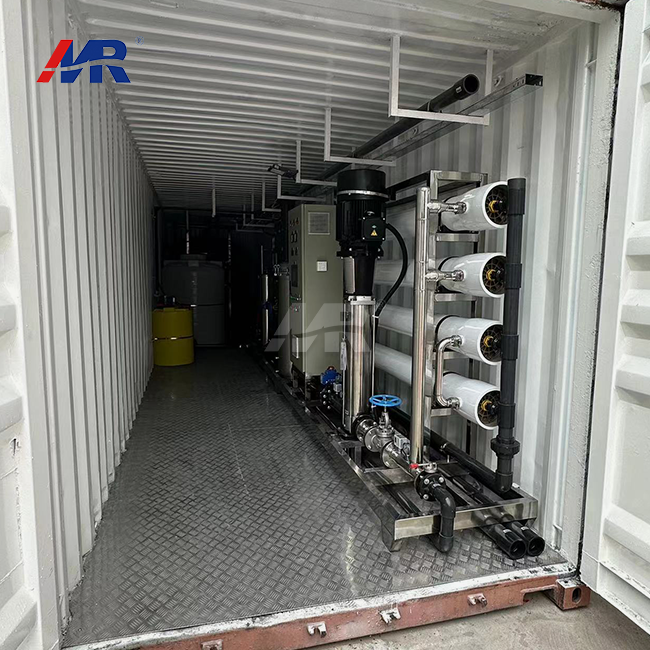
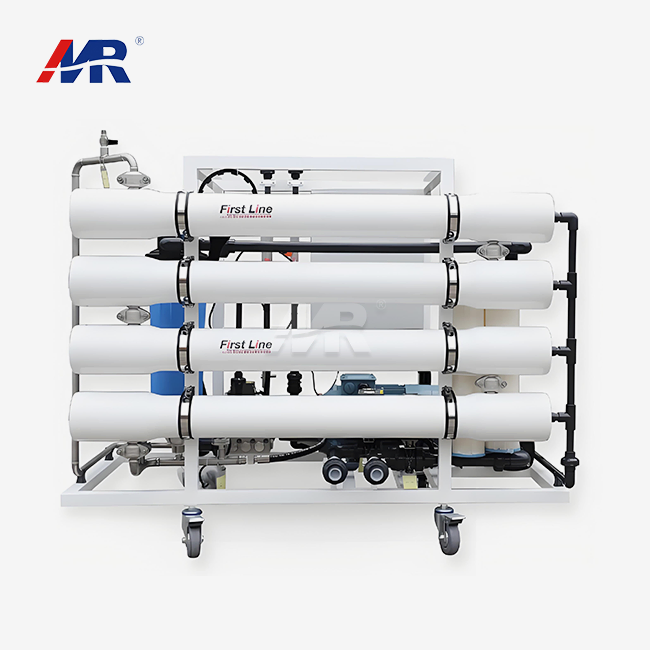
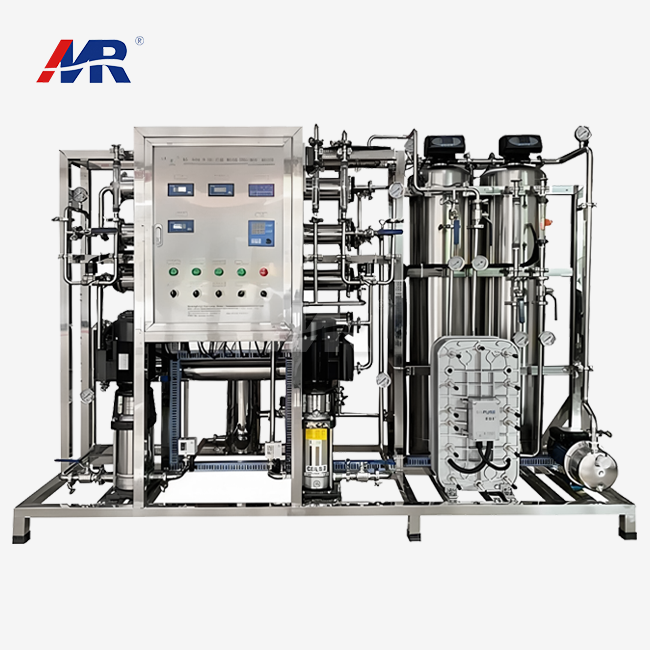
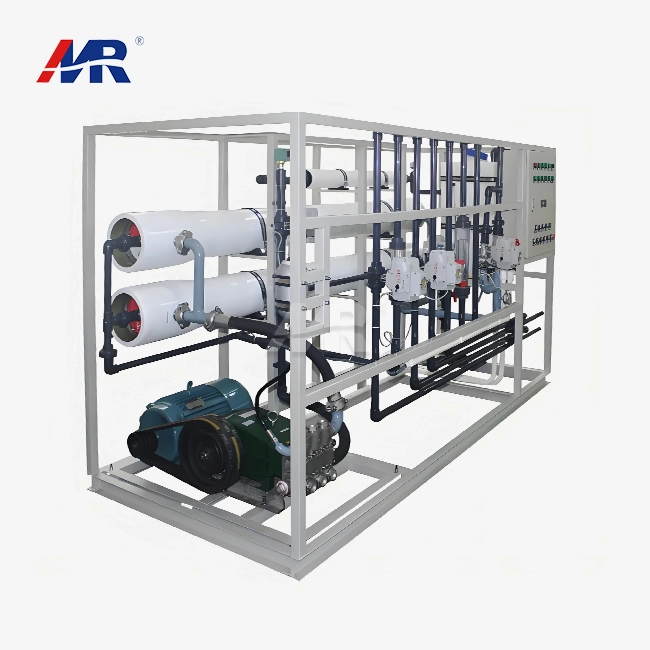
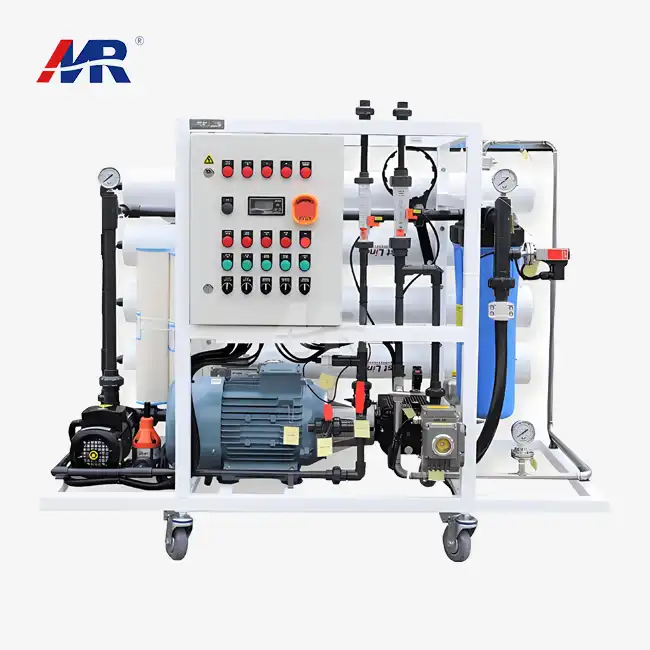
A portable desalination machine is a tiny, self-contained reverse osmosis (RO) device that can turn salty or saltwater into WHO-approved drinking water. In contrast, these units are portable, with high-pressure pumps, semi-permeable RO membranes, and pre-filtration integrated onto a frame that can be mounted on a skid, a containerized unit, or a package that fits in a bag. Shipping items by water may be difficult in isolated regions since it is very expensive, disaster zones lack the infrastructure, and marine vessels and ocean sites do not have fresh water.
How Capacity Is Measured
The size of a portable desalination unit is based on how much water it can extract in a given length of time. This is commonly stated in liters per hour or m3 per day. A modest unit on a boat might produce 60-200 L/h, and a mining camp container system could produce 50-500 m³/day. The normal saltwater salinity is around 35,000 ppm TDS with a feed temperature of about 25°C. These are needed to calculate the rated capacity. In real life, output depends on the input water quality, temperature, and membrane status. So before you purchase, always ask for statistics on how well the machine has operated in the past.
Technology for Portable Desalination
At present, seawater reverse osmosis (SWRO) is the most prevalent mobile process for water purification. The International Distillation Association (IDA) reports that RO has more than 65% of the world’s distillation capacity. Some field units can handle feed water with a lot of particles if it is first passed through an ultrafiltration (UF) unit. More and more medium to huge movable units are getting ERDs installed to them to assist them in consuming less energy (less than 3.5 kWh/m³). Also, solar-powered versions are growing popular for farming and aiding folks who don’t have access to the power grid.
How Capacity Influences System Selection: Key Factors and Considerations
Estimating Your Daily Water Demand
It is important to know how much water you will need every day before you choose a method. In general, everyone needs about 50 liters of water every day to drink and use the bathroom. That means a mining camp with 50 people needs at least 2,500 L/day. A resort with about 200 guests might need more than 30,000 L/day to clean the kitchen, do laundry, and make the pool look nice. Before a disaster, emergency aid groups usually plan for at least 15–20 L per person per day.
Capacity vs. Energy Consumption
More capacity does not always mean more energy efficiency. A better way to measure is by how much energy is used for every cubic meter of output. It takes 6–10 kWh/m³ for small units that move less than 1 m³/h because they don't recover energy. Systems that move 5–50 m³/h and use pressure exchanger-type ERDs can get 3–4 kWh/m³. Choosing a desalination machine portable unit that is energy efficient over one that has a lot of raw capacity can save you a lot of money each month if you use it all the time, like in an oilfield camp.
Maintenance Load Relative to Capacity
The membranes and pre-filters get clogged faster in bigger systems because they have to deal with more feed water. The membranes need to be cleaned more often in systems that deal with dirty water from the coast or water that is over 35°C. When you buy things for deployments far away, you should check to see if you can get extra membranes, cartridge filters, and cleaning supplies there. Not having parts for a system with a higher flow rate can cost more in downtime than not having parts for a smaller unit that is the right size and has good support.
Comparing Portable Desalination Systems by Capacity and Features
Different kinds of tasks are done with stationary and portable distillation equipment. Portable units give up some output power in exchange for being portable, being easy to set up, and costing less to do so. Stationary plants work best when there is stable equipment and a need for more than 500 m³/day. Business-to-business buyers need to know when portable units really do work better than fixed ones in order to make smart purchases.
Here is a list of the most common power levels and what they are used for:
- Micro units (under 500 L/day): Designed for individual vessels, small yachts, or personal field use. Lightweight and battery-compatible, but energy-intensive per liter produced. Best for low-frequency or standby use.
- Small units (500 L/day – 10 m³/day): Suitable for emergency response teams, small island communities, or vessel galleys. Compact enough for air freight. Typically skid-mounted with manual or semi-automatic controls.
- Mid-range units (10–100 m³/day): The most widely procured tier in B2B markets. Used by resorts, offshore platforms, remote camps, and NGOs. Often containerized for quick deployment and easy transport by standard truck or ship.
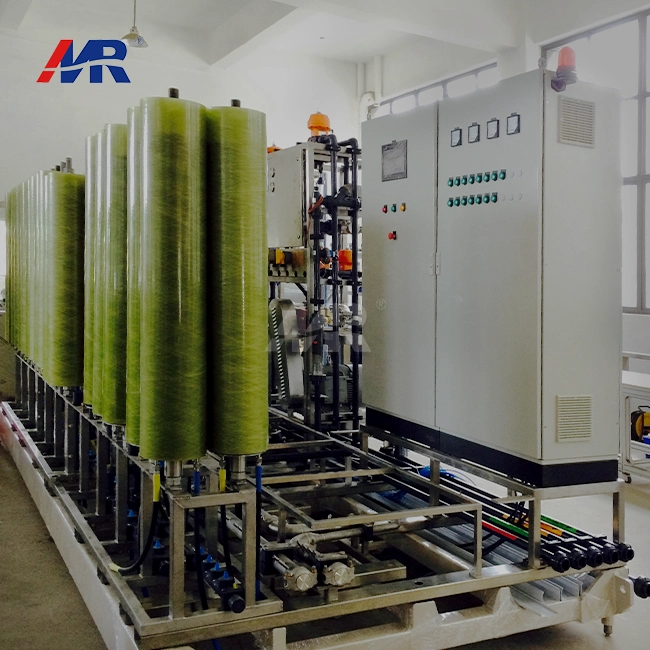
- Large portable/modular units (100–500 m³/day): Containerized SWRO systems with full pre-treatment and monitoring. Used for coastal municipal supply, naval operations, and large industrial camps. Require grid or generator power but include ERDs for cost control.
SWRO systems that come in containers and have full pre-treatment and tracking are large mobile or flexible units that can handle 100–500 m³/day. Water that was used to feed cities on the coast, the military, and large industrial camps. Need power from the grid or a generator, but to keep costs low, add ERDs.
Practical Guidance: Selecting the Right Capacity for Your Needs
Step 1 — Conduct a Technical Water Demand Assessment
You can use water for drinking, cleaning, cooling, process water, and watering. Make a map of all the ways that water will be used at your place. You should add 20–30% more than the peak demand to account for times when things break down and demand goes up. For services near the water or an island, you should also look at tourist seasons, when daily needs can grow by three times.
Step 2 — Evaluate Environmental and Energy Constraints
How much salt, how hot, and how dense the feed water is will directly affect the type of pre-treatment system you need, as well as how big it is and how much it costs. Seawater that is warmer than 30°C slows down the rate at which membranes get rid of water. You might need a bigger machine to get the same speed. For sites that aren't connected to the power grid, the largest pump capacity is limited by the amount of solar or hybrid power that is available. This also limits the system's throughput.
Step 3 — Calculate Total Cost of Ownership
It's not just prices that matter. Find out how much power each m³ uses in your area, how often the membrane and pre-filter need to be changed (usually every 3–5 years for SWro membranes), how much it costs to run, and how much it costs to ship extra parts. A system that costs a little more up front but uses less kWh/m³ and has a quick parts supply chain generally costs less in the long run.
Step 4 — Consider Modular Scaling and Custom Configuration
If you think your needs will grow, which they often do when mining operations or island towns spread, getting a flexible system that can add extra membrane stages or a second RO train will save you the money of having to buy a new system altogether. This modular design is used to make Morui's SWRO systems that are packed into containers and put on skids. Customers can make more when demand goes up without having to buy new core tools.
Case Studies and Industry Applications of Capacity-Based Selection
Emergency Response: Matching Capacity to Crisis Speed
When Typhoon Hainan hit the Philippines in 2013, rescue groups sent out small SWRO units that could produce 20–50 m³/day within 72 hours of getting there. When the units had to deal with cloudy, debris-filled saltwater, they used UF pre-treatment. The choice of capacity was based on the number of displaced people at each site, not on the infrastructure. This is one of the best examples of how a desalination machine portable can help after a disaster.
Remote Industrial Operations: Continuous High-Demand Supply
At an oil station in the South China Sea, the crew needs a steady flow of fresh water to cook with, drink, and make drilling fluids. The water is also used to cool down tools. A SWRO machine in a container can meet this need. It can handle 100–200 m³/day, recover energy, and be watched from away. It also has to be the right size and weight for the base. Morui has made marine-grade SWRO systems for just these kinds of situations. They are made of materials that don't rust and are approved for use in places with a lot of moisture in the air.
Solar-Powered Agricultural Irrigation
It is now possible to water crops all year in dry farming areas along the beaches of the Middle East and North Africa by using solar-powered mobile RO units to remove salt from salty rainwater. Systems that can handle 50 to 150 m³ per day can make irrigation water for about the same price as water trucks if they have solar panels and batteries to store the water. In this case, picking the right capacity depends on how much water the plants need and how much sun they get.
Conclusion
How a desalination machine portable system is chosen is based on how much water it can handle. To do this, you need to decide which membranes to use, how much energy to use, how to build the pre-treatment, and how to plan for maintenance. When you get it right, you match the real-world demand, the feed water conditions, and the energy that a system that is rated correctly can use. Structured demand analysis and openness from suppliers can help you choose whether you need a small mobile unit for an emergency or an SWRO plant in a container for a beach resort. That's what Morui's tech team is ready to do with site-specific data and tried-and-true tools.
FAQ
1. What is the most important factor when selecting portable desalination capacity?
Daily peak water demand is the primary driver. Calculate your total water needs across all uses, add a 20–30% buffer, then match that figure to a system's rated output under your specific feed water conditions. Never select capacity based on nominal ratings alone — request real-world test data.
2. How often does a portable desalination system need maintenance?
Pre-filters typically require replacement every 2–6 weeks depending on feed water turbidity. RO membranes generally last 3–5 years with proper pre-treatment and chemical cleaning every 3–6 months. Higher-capacity systems processing dirtier water may need more frequent service.
3. Do high-capacity portable units sacrifice true portability?
Mid-range containerized units (10–100 m³/day) remain mobile — they ship in standard 20-foot containers and deploy without permanent civil works. Only units above 200 m³/day begin to require semi-permanent installation. Portability in this range means rapid deployment and relocation, not handheld mobility.
4. What certifications should a desalination system have for the US market?
Look for NSF/ANSI 58 certification for RO systems, along with NSF-61 for water-contact components. CE marking is relevant for EU-bound systems. Always request treated water quality test reports alongside the equipment documentation.
Get a Capacity-Matched System From Morui — Request Your Quote Today
Morui is a trustworthy business that makes desalination machine portable tools that remove salt from water. It has its own factory for membranes and a number of companies for other things. It sells SWRO systems that come in containers or on skids. These systems can be small mobile units or large modular plants. Twenty engineers work for Morui, and they offer project help in a number of languages. Their service network goes all over the world. They can build systems that have been tried and tested and are the right size for your needs. Email Our Team at benson@guangdongmorui.com to get a technical datasheet, capacity assessment, or project quote.
References
1. International Desalination Association (IDA). IDA World Congress on Desalination and Water Reuse. 2023.
2. Elimelech, M., & Phillip, W. A. "The Future of Seawater Desalination: Energy, Technology, and the Environment." Science. 2011.
3. World Health Organization. Guidelines for Drinking-Water Quality, 4th Edition. WHO Press. 2017.
4. Fritzmann, C., et al. "State-of-the-Art Reverse Osmosis Desalination." Desalination. 2007.
5. Younos, T., & Tulou, K. E. "Overview of Desalination Techniques." Journal of Contemporary Water Research & Education. 2005.
6. U.S. Bureau of Reclamation. Desalination and Water Purification Research Program Report. U.S. Department of the Interior. 2020.