

_1745823981883.webp)

When to Choose a Sea Water Desalination Plant Over Brackish RO?
Picking the right water cleaning technology can make or break your budget and how well your business runs. A sea water desalination plant is the best option if your facility is near the coast and there isn't a lot of freshwater available, if the feedwater has a salinity level above 10,000 ppm TDS, or if you need a supply that won't change depending on the weather for important uses like pharmaceutical production, offshore platforms, or municipal water systems. Unlike reverse osmosis systems for brackish water, which deal with lower salinity levels, sea water desalination plant equipment handles the harsh marine environment and delivers consistent, high-purity water even when there is a lot of salt in the water. This makes it essential for industries where water reliability directly affects production continuity and compliance.
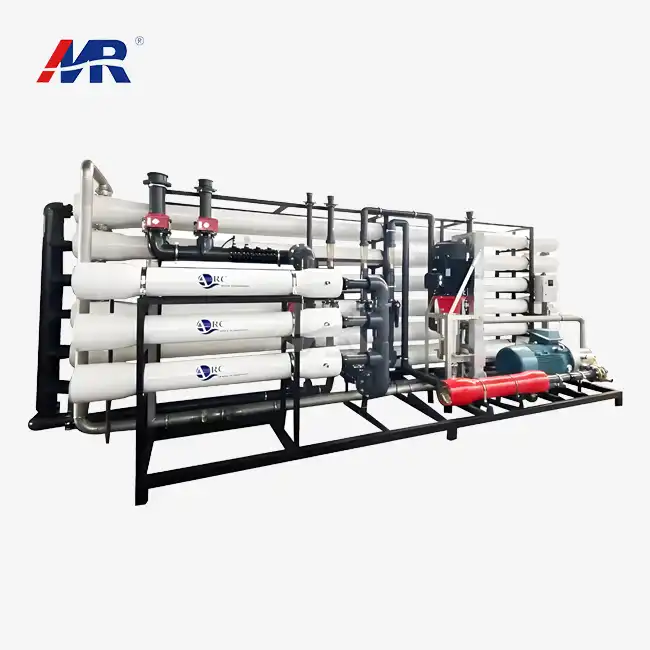
Understanding Core Differences Between Seawater and Brackish Water Treatment
The water source is the first thing that sets these two technologies apart. The amount of dissolved salts in seawater is usually between 35,000 and 45,000 ppm, while the amount in brackish water is between 1,000 and 10,000 ppm. This main difference affects every part of the system design, from choosing the membrane to how much energy is used.
Salinity Levels and Their Impact on Treatment Requirements
Because there is a lot of salt in seawater, it needs much higher operating pressures—usually 55 to 80 bar—than brackish water systems, which work at 15 to 25 bar. For these high pressures, you need strong high-pressure pumps, special membrane materials like thin-film composite polyamide, and parts made of Duplex 2205 or Super Duplex 2507 stainless steel that won't rust. The membranes must be able to handle being exposed to chlorides all the time and keep their salt rejection rates above 99.5%. However, brackish ro membranes work well enough with rejection rates of 97-98%. This level of technical difficulty directly affects the amount of money that needs to be spent and how things work, which procurement managers must carefully consider.
Energy Consumption and System Complexity
The most expensive part of the distillation process is the energy that is used. Modern SWRO (Seawater Reverse Osmosis) plants use around 3.5 to 4 kWh per cubic metre of product water. This is possible with Energy Recovery Devices (ERDs) like isobaric pressure exchangers, which can reuse up to 60% of the energy from the feed pressure. When they deal with lower-salinity feed, brackish systems usually only need 0.5 to 2.5 kWh per cubic metre. This difference in energy use is very important for facilities that process a lot of data every day. The 8m³/hour sea water desalination plant from Morui uses advanced membrane technology and an energy-efficient design to achieve the best balance. It aims for the lower end of the energy consumption spectrum while still removing salt very well.
In addition to energy, the complexity of a system affects how long it takes to build, how much training operators need, and how it should be maintained. Multimedia filtration, cartridge filtration, and chemical dosing for scale inhibition are all needed before sea water desalination plant systems can be used. This is to protect membranes from calcium sulphate, silica, and organic matter that are common in marine environments, which can foul and scale them.
Critical Factors Guiding Your Technology Selection
To make a smart choice, you need to look at a number of interconnected factors that affect both the short-term costs and the long-term ability to stay in business.
Feed Water Quality Analysis
You can identify your water by properly inspecting it. We need a brackish water or sea water desalination plant; however, salinity tests are not the only consideration. Temperature affects membrane permeability and rejection. Warmer water might reduce salt rejection but enhance flow. Turbidity and SDI indicate how strong a pretreatment is required to prevent barrier clogging. TOC levels suggest biological fouling, requiring greater biocide treatment. Hydrocarbons from industrial waste dumps or shipping channels may need pretreatment at nearby facilities. Knowing this about the membrane prevents it from breaking down, which is costly, and extends its lifespan to 5–7 years under ideal circumstances.
Operational Scale and Future Expansion Needs
Capacity planning anticipates demand changes beyond existing demand. Pharmaceutical companies increasing manufacturing lines, beach resorts adding rooms, and cities growing in population must consider scalability. Modular sea water desalination plants are important. Morui can increase tiny amounts of capacity without disrupting operations due to its design. Staged investment matches capital expenditures to revenue growth while maintaining treatment consistency. Brackish systems are cheaper initially, but they may fail if salinity increases with the seasons or groundwater runs out, and higher-salinity sources must be employed.
Regulatory Compliance and Environmental Considerations
Many localities have various brine release regulations. Marine release licenses govern how much salt, heat, and chemicals may be added to concentration streams at coastal facilities. At 40–45% recovery, sea water desalination plants transform 55–60% of input water into concentrated brine that must be discarded. Some sites require diffuser systems to rapidly dilute brine to minimize environmental harm, while others need brine processed to separate precious minerals before discharge. The US Clean Water Act Section 316(b) requires intake facilities to include screening mechanisms to prevent marine creatures from entering the water. Facilities in ecologically sensitive zones like coral reefs, marine protected areas, or important ecosystems are scrutinized further, which delays permit approval and affects business standards.
Strategic Advantages of Seawater Desalination in Specific Applications
In some operating situations, treating seawater is not only better, but it's also necessary, even though it costs more in terms of cash and energy.
Coastal Industrial Facilities and Offshore Operations
Oil and gas platforms, petrochemical complexes, and power plants that are in the ocean can't rely on infrastructure that is in freshwater on land. For boiler feed, cooling systems, and process uses, these buildings need reliable, high-volume water supplies. The operating freedom of sea water desalination plants gets rid of the risks that come with pipeline supply gaps or droughts that affect mainland sources. When it comes to offshore platforms, where every square metre is valuable, the small footprint of modern systems—Morui's equipment can be made to fit any space—is very important.
Here are the core advantages that these specialized environments demand:
- Corrosion Resistance: Marine-grade parts can handle the harsh, chloride-rich environment that breaks down regular materials quickly. This means that equipment will last longer, which makes the higher initial investment worthwhile.
- High Purity Output: Water that rejects more than 99.5% of the salt meets strict requirements for boiler feed (usually below 10 ppm TDS) and pharmaceutical-grade uses (USP Purified Water standards).
- Operational Reliability: Automated PLC-based SCADA systems keep an eye on important parameters like TDS, pH, differential pressure, and flow rates in real time. If any of these parameters are changed, alarms and protective shutdowns are set off to keep production going.
- Minimal Maintenance Downtime: When maintenance needs are low, specialised technicians don't have to come out as often. This is especially helpful for installations on remote islands or offshore platforms where sending people there costs a lot.
These technical skills lead to operational resilience, which protects production schedules and revenue streams in fields where water interruptions mean that work stops.
Emergency Response and Water-Scarce Regions
When disaster relief efforts are launched in response to hurricanes, earthquakes, or broken infrastructure, potable water supplies need to be set up quickly. Sea water desalination plant units that come in containers can be moved right away by truck, train, or cargo plane. Within hours of arriving, these systems are up and running, providing emergency drinking water that meets WHO standards for the people affected. Also, dry coastal areas that have trouble with water stress—places where it rains less than 400 mm a year on average and groundwater levels are dropping—benefit from permanent sea water desalination plant sites that add to or replace sources that can't last on land. Sea water desalination plants provide 42% of drinking water for countries like the United Arab Emirates, and over 90% of drinking water for Kuwait and Oman. This shows that the technology can ensure water security in situations where there isn't enough water.
Evaluating Total Cost of Ownership and Supplier Selection
When doing a financial analysis, it's important to look at more than just the purchase price. The full lifecycle expense profile is also taken into account, which shows how technology choices really affect the economy.
Capital Investment and Operating Expenses
The initial cost of capital for seawater desalination plants is usually between $1,000 and $2,500 per cubic metre of daily capacity. This depends on how complicated the system is, how automated it is, and what the building's needs are at the site. On the other hand, brackish systems cost $500 to $1,200 per cubic metre. But the story is more complicated when you look at operating costs. Energy costs are the main recurring costs, but replacing membranes, using chemicals (like antiscalants, biocides, and pH adjusters), and maintenance labour also play a big role. Morui's energy-efficient design keeps power use to 3.5–4.0 kWh/m³, which puts our equipment at the lower end of industry standards and saves you a lot of money over the system's useful life, which is usually 15–25 years with regular upkeep.
Calculating the levelized cost of water—the total lifecycle cost split by the total amount of water produced—provides the most accurate comparison metric. This calculation takes into account things like wear and tear, interest on capital, energy at expected rates, consumables, and maintenance, yielding a cost per cubic metre that can be directly compared between suppliers and technology options.
Manufacturer Credentials and After-Sales Support
To choose a reliable seawater desalination plant supplier, you need to check their technical skills and support systems. Every project that Guangdong Morui Environmental Technology Co., Ltd. works on has 14 branches, 500 employees, and 20 specialised engineers. Our vertical integration—running our own factory to make membranes and multiple factories to process equipment—ensures quality control throughout the entire manufacturing process and gets rid of the need to rely on outside suppliers that could lead to delays or inconsistent quality. Certifications showing that international standards are met (ISO 9001 for quality management, ISO 14001 for environmental management) guarantee that manufacturing processes are organised. Longer warranties—usually 12 to 24 months for mechanical parts and performance promises for membrane parts—move the risk from the buyer to the maker during the important first few months of use.
Turnkey project options should be given extra thought. These all-inclusive packages include system design, equipment supply, installation supervision, commissioning, operator training, and help with getting the system up and running. By putting all of the responsibility on one vendor, procurement managers get rid of the problems that come up when they have to coordinate work between various vendors. This cuts down on project timelines and makes it clear who is responsible for how well the system works. Morui offers full installation and commissioning services in one place, which speeds up the return on investment and makes projects easier to carry out.
Practical Decision-Making Framework for Technology Selection
Putting together the technical, operational, and financial factors we talked about above gives procurement professionals who have to make this technology choice useful advice.
When Seawater Desalination Becomes the Clear Choice
Location is by far the most obvious factor for selection. Facilities on coasts, islands, or offshore platforms that have direct access to seawater and few freshwater options on land see seawater desalination plant as a cost-effective way to meet their needs. Because there aren't any other sources, there's no need to compare them. Instead, the focus should be on how well the system works and how reliable it is. Another important factor is the quality of the water. Pharmaceutical, semiconductor, and beverage industries that need ultrapure water find that desalinating seawater and polishing it afterward (EDI, UV sterilisation, or ultrafiltration) reliably meets strict purity standards. Production volume is very important. Facilities that need more than 50 cubic meters of water per day benefit from economies of scale that lower the cost per unit of water, which makes the investment more appealing.
Risk Mitigation Through Technology Adaptability
Making investments that are future-proof guards against new water supply problems. Climate change affects groundwater along the coast by letting saltwater in, which makes brackish water saltier over time. If aquifers' TDS levels keep going up, they might eventually be too high for brackish RO treatment, which would mean a costly system replacement. This risk can be avoided by specifying tools that can work with sea water desalination plant from the start, even if the sources being treated are salty. Uncertainty about demand is dealt with by system scalability. Companies can match the amount of capital they use to real demand growth instead of oversizing their first installations with modular designs that allow for capacity additions through parallel train installation.
More operational freedom is gained by using more advanced tracking and control systems. Real-time data collection that keeps track of membrane performance, energy use, and the quality of the product water allows for predictive maintenance that plans repairs before they happen, which cuts down on unplanned downtime. Remote tracking lets you keep an eye on multiple sites from one place, so you don't have to send staff to work in faraway areas. It also lets you get expert help quickly when problems happen.
Conclusion
To choose between sea water desalination plant and a brackish RO, you need to carefully look at the features of the feedwater, your business needs, and your long-term strategy goals. When the salinity of the water goes above the brackish levels, when there are no land-based alternatives near the coast, or when a higher investment is needed for higher production volumes and purity standards, seawater desalination plant treatment becomes necessary. Morui's 8m³/hour sea water desalination plant equipment has been tested and shown to work well. It uses only 3.5–4.0 kWh/m³ of energy, rejects more than 99.5% of salt, and is made of marine-grade materials so it will last in harsh conditions. The flexible design allows for future growth while keeping operations going as usual. This addresses the scalability concerns that procurement managers have when making decisions about equipment that will require a lot of money.
FAQ
Q1: What salinity level requires seawater desalination instead of brackish RO?
Reverse osmosis works well on brackish water with a TDS level of 1,000 to 10,000 ppm. When the salinity level goes above 10,000 ppm, which is usually the case for seawater at 35,000 to 45,000 ppm, you need sea water desalination plant equipment because it needs higher operating pressures and special membranes to get rid of enough salt and get good recovery rates.
Q2: How long do seawater desalination membranes last?
RO membranes for sea water desalination plants usually last between 5 and 7 years before they need to be replaced. This is as long as they are used properly and are cleaned regularly. How long a membrane lasts depends a lot on the quality of the feed water, how it is used, and how it is maintained. Facilities that use thorough pretreatment and follow the cleaning schedules suggested by the manufacturer consistently reach the upper end of this range, getting the most out of their membrane investment.
Q3: Can seawater desalination systems operate during storms or rough seas?
Modern sea water desalination plant intake systems have storm protection features, such as automatic shut-off procedures that are set off when waves threaten to introduce too much air or solids in suspension. When it comes to steady feedwater quality, subsurface intake structures placed below the wave action zone are better than top intakes. If the conditions are stable, well-designed systems quickly go back to normal operation. However, during extreme weather events, offshore platforms may have short interruptions.
Partner with a Proven Seawater Desalination Plant Manufacturer
Guangdong Morui Environmental Technology Co., Ltd. is ready to help you with your sea water desalination plant needs by offering complete solutions backed by real manufacturing know-how. With 14 locations and an in-house membrane manufacturing plant, we have the technical depth and supply chain control to make sure that every project is a success, from the first consultation to decades of ongoing support. We do turnkey setups that include design, equipment supply, installation, commissioning, and training for operators. This takes away the problems that come with projects that involve more than one provider. No matter if you need sea water desalination plant for offshore platforms, coastal industrial facilities, municipal water systems, or emergency situations, our 8m³/hour system will meet your needs for dependability and efficiency. Get in touch with our technical team at benson@guangdongmorui.com to talk about your specific needs and find out how our experience working with clients in the manufacturing, pharmaceutical, food and beverage, electronics, and municipal sectors can help you solve your water problems.
References
1. Greenlee, L.F., Lawler, D.F., Freeman, B.D., Marrot, B., & Moulin, P. (2009). Reverse osmosis desalination: Water sources, technology, and today's challenges. Water Research, 43(9), 2317-2348.
2. Elimelech, M., & Phillip, W.A. (2011). The future of seawater desalination: Energy, technology, and the environment. Science, 333(6043), 712-717.
3. Voutchkov, N. (2018). Energy use for membrane seawater desalination – current status and trends. Desalination, 431, 2-14.
4. Lattemann, S., & Höpner, T. (2008). Environmental impact and impact assessment of seawater desalination. Desalination, 220(1-3), 1-15.
5. Ghaffour, N., Missimer, T.M., & Amy, G.L. (2013). Technical review and evaluation of the economics of water desalination: Current and future challenges for better water supply sustainability. Desalination, 309, 197-207.
6. Panagopoulos, A., Haralambous, K.J., & Loizidou, M. (2019). Desalination brine disposal methods and treatment technologies: A review. Science of The Total Environment, 693, 133545.
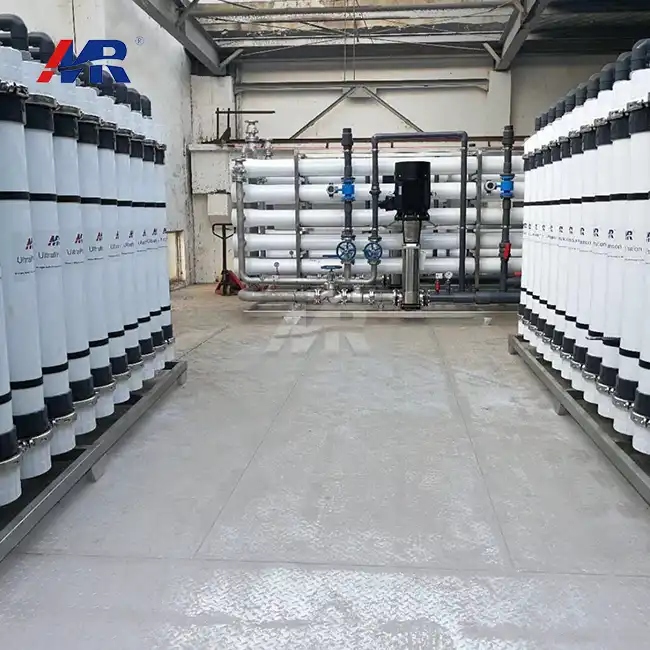 VIEW MORE2000m3/day ultrafiltration equipment
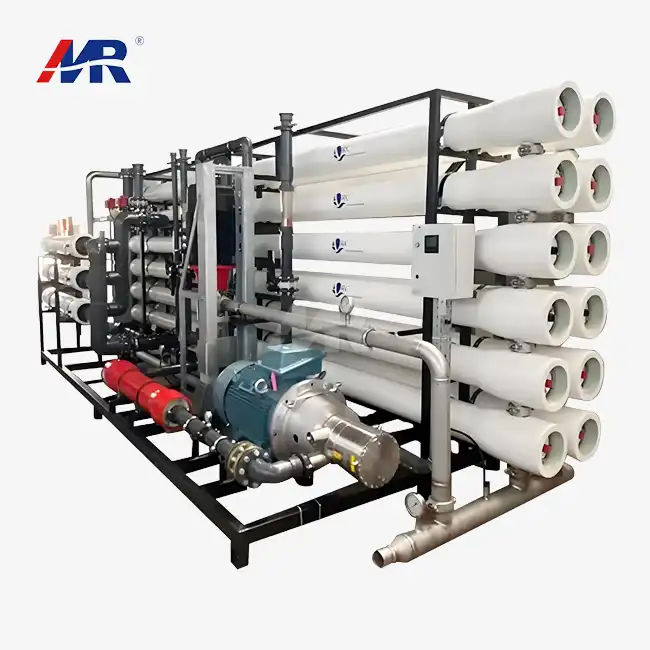 VIEW MORE45m3/hour seawater desalination system
 VIEW MOREmembrane bioreactor
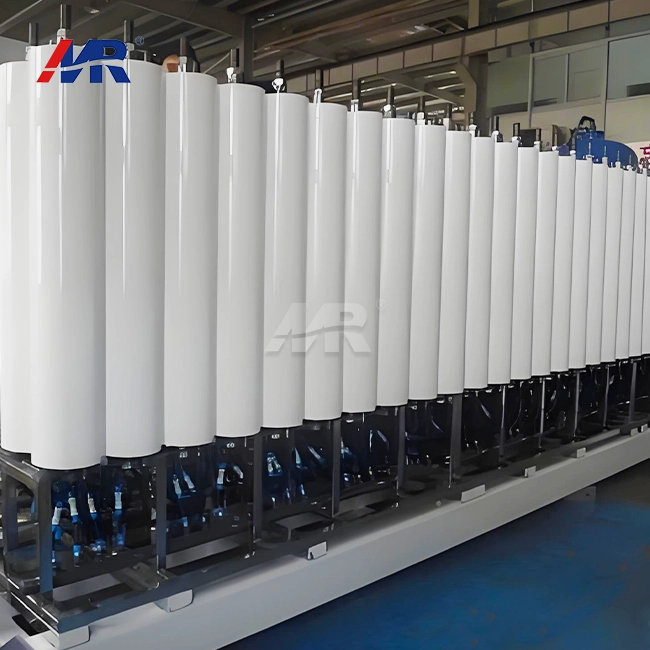 VIEW MORELandfill Leachate Treatment System
 VIEW MOREbioreactor wastewater treatment
 VIEW MOREcontainerized reverse osmosis system
 VIEW MOREseawater desalination equipment
 VIEW MOREcontainerized desalination plant
