

_1745823981883.webp)

Containerized RO Systems for Remote and Temporary Water Supply
Containerized RO systems provide the flexibility and dependability that standard infrastructure simply cannot match when operations extend into remote areas or emergency situations call for instant water access. These self-contained, mobile water purification plants come in standard shipping containers. They allow project managers, engineers, and procurement managers to put high-quality water treatment right where it's needed, without the delays and costs that come with building something permanent.
Understanding Containerized RO Systems and Their Working Principles
What Defines a Containerized Reverse Osmosis System?
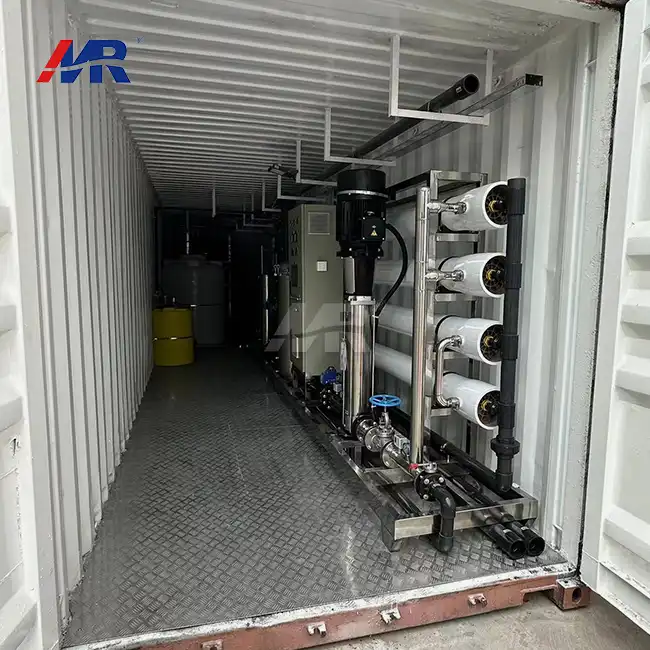
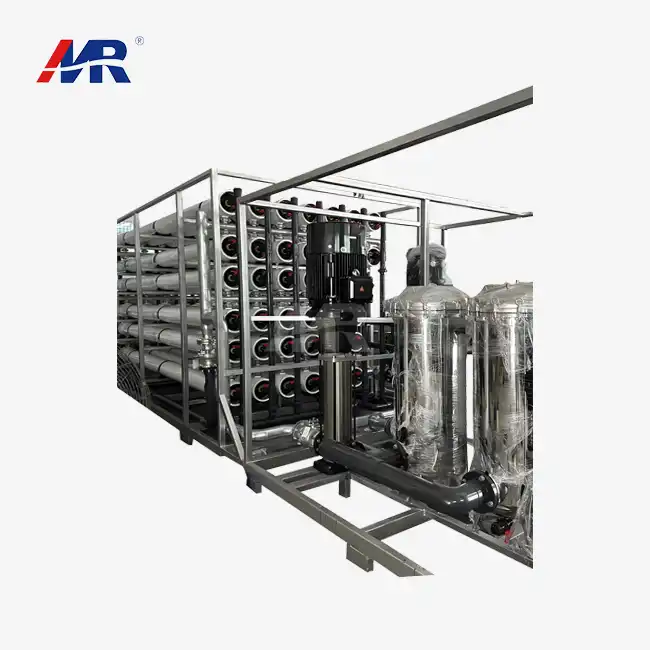
A containerized RO system puts all the important parts for treating water—pre-treatment filters, high-pressure pumps, RO membranes, control screens, and post-treatment units—into a normal ISO shipping container that is usually 20 or 40 feet long. With this flexible setup, complicated cleaning methods can be easily set up and used. Unlike regular plants that need a lot of groundwork, these units come ready to connect to a power and raw water source. This cuts the time it takes to put them from months to just days.
How the Reverse Osmosis Process Works Inside the Container
The process of cleaning starts when fresh water comes in through intake lines. It goes through multimedia filters that get rid of sediment and suspended solids. Chemical treatment devices change the pH levels and inject antiscalants to keep membranes further downstream from scaling. Activated carbon filters get rid of chlorine and other organic chemicals that could hurt ro membranes.
The pre-treated water is then pushed through semi-permeable membranes by high-pressure pumps that range in pressure from 150 to 1,000 psi, based on whether the water comes from brackish water or seawater. These membranes get rid of dissolved salts, heavy metals, and bacteria, making permeate that has a salt rejection rate of over 99.5%. The concentrated salt stream leaves on its own and is often sent to energy recovery devices that reuse hydraulic pressure to lower the cost of doing business.
Core Components That Drive System Performance
Modern containerized RO systems have PLC-based technology from companies like Siemens and Allen-Bradley that lets them be monitored from afar and have parameters changed in real time. Pipes made of stainless steel (usually 316L grade) can handle acidic feedwater and last longer. Integrated HVAC systems keep the inside of buildings between -20°C and +50°C, so they can work reliably in a wide range of conditions, from construction sites in the Arctic to mine camps in the desert.
Advantages of Containerized RO Systems for Remote and Temporary Water Supply
Rapid Deployment and Minimal Site Preparation
When a pharmaceutical factory needs process water right away, or a disaster area needs drinkable water within 48 hours, containerized RO systems are there to help. Because they don't take up much space, they don't need building supports or safe enclosures. When the unit is moved by truck, train, or ship, it is put right where raw water is available. Usually, connecting to water and power sources takes less than a week. This means that important activities can resume before most building projects start.
Scalability Through Modular Expansion
As projects change, so do the production needs. One 40-foot container can make up to a million gallons of water per day, and the capacity can be increased easily by lining up more than one unit next to each other. This modularity lets drug companies match the amount of GMP-grade water they use to the size of the batches they make, and it lets city water plants handle more water when demand goes up during certain times of the year without having to spend too much on permanent infrastructure.
Operational Efficiency and Smart Controls
Long-term profits are directly affected by how much energy is used. For saltwater sources, containerized plants get the best recovery rates between 60% and 85%, which balances the amount of permeate with the risk of membrane fouling. Automatic systems change the working pressure, flush the membranes on set times, and notify workers of any changes before they affect performance. These features lower energy bills and make membranes last longer, which lowers both CAPEX and OPEX compared to options that are handled by hand.
Maintenance Best Practices for Sustained Performance
During routine checkups, the pre-filter is replaced, the membrane is cleaned in place using allowed chemicals, and the pump seal is checked. Most cartridge filters need to be changed once a month, but RO membranes can last three to five years if they are taken care of properly. Accessing all the parts inside the container makes repair operations easier, which is very helpful when skilled techs need to go to offshore bases or faraway irrigation sites for crops.
How to Choose the Right Containerized RO System for Your Needs
Assessing Water Source Characteristics
The working pressure and membrane type are determined by the acidity of the feed water in containerized RO systems. There are 1,000 to 10,000 ppm of total dissolved solids in brackish water sources, which are widespread in industrial and farming settings. This means that standard polyamide membranes can recover more than 75% of the water. To get rid of the osmotic pressure from 35,000 ppm salt, seawater desalination, which is important for offshore bases and coastal power plants, needs special membranes and pressures higher than 800 psi. Engineers can find configurations that match efficiency with energy use by analyzing source water in a lab.
Matching Treatment Capacity to Operational Demands
Ultrapure water rinses used in electronics production use thousands of gallons of water every day, but building camps may only need a few hundred gallons for drinking and cleaning. Size issues involve more than just high flow rates. They also include storage needs, backups for repair downtime, and plans for future growth. If a beverage canning company expects production to go up, choosing container sizes that can fit more membrane banks without having to replace the whole unit can be helpful.
Evaluating Energy Efficiency and Sustainability Goals
Power supply affects how a system is built. Diesel engines provide steady power in places that aren't connected to the grid, but they cost more to run and leave bigger carbon footprints. Combining solar panels with battery storage makes hybrid designs that meet business sustainability goals and reduce fuel dependence. Up to 60% of the hydraulic energy in brine streams can be recovered by energy recovery devices. This is a good investment for businesses that process high-salinity feedwater around the clock.
Comparing Containerized Units to Traditional Fixed Installations
Permanent plants have lower costs per gallon when they are used for stable, high-volume tasks for decades. Containerized solutions work great for projects with unclear timelines, places that change, or limited budgets that don't allow for big investments up front. When a mining company looks for a new site, they don't have to spend money on equipment that it might have to move within three years. When sending emergency reaction teams to hurricane-affected areas, they value quick setup over long-term efficiency. This makes containerized units the obvious choice.
Customization Options for Specialized Applications
Advanced pre-treatment kits can handle difficult feedwater, like surface water with a lot of particles or biologically contaminated sources. To meet US Pharmacopeia standards, pharmaceutical customers ask for sanitary fittings and dual-pass RO setups. Performance data from remote tracking systems is sent via satellite to offices, which can then keep an eye on operations at multiple sites from a central dashboard. These features are built in during production by turnkey providers like Morui, so when the systems arrive, they are already tuned for specific uses.
Typical Applications and Case Studies of Containerized RO Systems
Supporting Industrial Operations in Remote Locations
Nevada and Wyoming mines use salty groundwater to keep the dust down, clean their tools, and build worker camps. High-TDS well water is treated in containerized RO plants that make drinkable water that meets EPA guidelines. Process water is recycled to reduce the need for freshwater. After adding a 40-foot unit, one copper extraction project cut water trucking costs by 80%. The investment was returned within 18 months because of the savings in shipping costs.
Enabling Temporary Construction and Infrastructure Projects
As workers move forward with building a pipeline that goes through oilfields in Texas, they need to be able to treat water on the go. Containerized RO systems move along with work sites and take care of worker safety, cleaning tools, and making concrete. When the project is finished, the owner moves the unit to the next job site instead of leaving it in one place. This keeps the asset's value across multiple contracts.
Delivering Emergency Water Relief in Disaster Zones
Damage from hurricanes in Florida and Puerto Rico messed up city water systems, so hospitals and shelters didn't have clean water to drink. Within 72 hours of impact, humanitarian groups flew 20-foot containerized desalination units to coastal areas to turn rainwater into drinkable water. These quick responses saved lives and helped with recovery until lasting repairs were made to the grid system.
Serving Agricultural and Aquaculture Needs
Almond farmers in California who were limited by the drought put in containerized RO systems to treat salty groundwater for drip watering. This kept the soil from becoming too salty, which hurts crops. Shrimp farms in Louisiana clean the recirculating aquaculture water with tanks that have ultrafiltration systems. This cuts down on disease attacks and boosts growth rates. Because these units are mobile, they can be moved between farm plots during different growing seasons to get the most use.
Enhancing Energy Sector Water Security
In the Southwest, thermal power plants need very clean water for their boiler feedwater because even small amounts of minerals can cause scaling, which makes heat transfer less effective. Containerized RO+edi systems make conductivity below 0.1 µS/cm, which meets strict requirements without taking up as much space as standard demineralization plants. When repair windows come up, backup containers are switched in to keep operations going nonstop, which keeps costly power outages from happening.
Procurement and Supplier Landscape for Containerized RO Systems
Leading Manufacturers and Their Capabilities
Large-scale municipal and industrial markets are dominated by well-known suppliers like DOW, Veolia, SUEZ, and Aquatech. These companies offer technical knowledge and global service networks. Specialists in each region focus on specific uses and offer custom setups at reasonable prices. Guangdong Morui Environmental Technology has 14 offices and more than 500 employees, including 20 engineers. They offer complete solutions, from making membranes to setting them up on-site. This kind of vertical integration makes sure that quality control and quick help are available throughout the span of a system.
Sourcing Strategies and Procurement Models
Direct purchase works best for companies that have their own expert teams that can choose the parts and oversee installation. Turnkey deals include planning, tools, commissioning, and training all in one price. This lowers the risk for buyers who don't know much about water treatment. Custom manufacturing meets specific needs, like offshore-rated electrical systems for oil platforms or clean designs for medicinal uses, making sure that the Products meet safety standards and can be used with other equipment.
Flexible Financing and Leasing Arrangements
Capital spending limits can be hard for companies and project-based businesses. Leasing programs keep cash flow stable by spreading payments out over the life of the equipment and giving customers the choice to buy at the end of the term. Flexible financing structures match payment plans with project income streams. This lets building companies match the costs of containerized RO systems with the billing cycles of their clients. These models make it easier for groups that need proven technology to get started without using up all of their cash.
Installation, Warranty, and After-Sales Support
Professional installation checks that the system works as it should and teaches workers how to do regular tasks, which cuts down on starting problems that slow down production. For two to five years, full guarantees cover membranes, pumps, and control systems to protect against problems with the way they were made. Service level agreements spell out how quickly technical help will be sent, when spare parts will be available, and when repair visits will happen. These are important guarantees when systems are located in remote areas where downtime is punished severely.
Conclusion
Containerized RO systems change how easy it is to treat water by mixing industrial-grade performance with unmatched portability and quick setup. These fixed solutions get rid of the problems that come with traditional infrastructure, whether they're helping out with remote mining camps, crisis aid, or short-term building projects. When purchasing managers look at their choices for tough settings, they can feel better knowing that flexible, scalable systems will give them reliable results while still letting them use their capital in different ways. Containerized technology is the best choice for organizations that need water security but don't have to worry about location or time constraints because it combines advanced automation, strong building, and easy upkeep.
FAQ
1. How quickly can a containerized RO system be installed and operational?
Once the unit gets to the spot, installation can take anywhere from three to seven days. Leveling the installation area, connecting power lines (single or three-phase, based on capacity), and routing inlet and exit pipes to water sources and discharge places are all parts of the preparation process. Pre-commissioned systems come with controls set and membranes that have been wet-tested. Before production starts, they only need to be validated in the field. With tools already in place, emergency missions can start working within 48 hours.
2. Can containerized systems handle varying feed water qualities?
Different sources can be used with modular pre-treatment setups. Multimedia filters, activated carbon, and softeners are used to deal with chlorine, hardness, and suspended solids in urban or salty water. Ultrafiltration steps keep membranes safe from sources of biologically active or cloudy water on the surface. Iron, manganese, and organic pollutants are hard to get rid of, but advanced oxidation and chemical treatment can. Suppliers plan treatment trains based on in-depth water analyses. This makes sure that membranes always get properly conditioned feedwater, even if the source changes.
3. What energy sources power containerized RO units in remote areas?
Generators that run on diesel or natural gas can provide stable power in places where there are no power lines. They come in different sizes to meet the needs of the system, usually between 50 and 500 kW. Solar photovoltaic panels and battery storage are green options that can help cut down on fuel costs and pollution in places with lots of sun. Generators and green energy sources are combined in hybrid designs to get the most out of fuel use during peak production hours. Offshore sites and ships can add units to their current power systems to use their own power production without having to buy extra fuel.
Partner with Morui for Your Containerized Water Treatment Needs
Your project will benefit from proven engineering, quick support, and affordable pricing if you choose the right containerized RO systems provider. Guangdong Morui Environmental Technology offers complete solutions, from the initial study of the water to the production, installation, and ongoing upkeep of equipment. Our membrane factory and agreements with top component names like Shimge Water Pumps, Runxin Valves, and Createc Instruments make sure that quality is maintained at all levels. Our experienced team can make systems that fit your needs and your budget, whether you need a single 20-foot unit for an emergency or a multi-container setup for business operations. Get in touch with us at benson@guangdongmorui.com to talk about your needs and get a thorough quote from a reliable maker of containerized RO systems dedicated to your business's growth.
References
1. Greenlee, L. F., Lawler, D. F., Freeman, B. D., Marrot, B., & Moulin, P. (2009). Reverse osmosis desalination: Water sources, technology, and today's challenges. Water Research, 43(9), 2317-2348.
2. Voutchkov, N. (2018). Desalination Engineering: Planning and Design (2nd ed.). McGraw-Hill Education.
3. Wilf, M., & Bartels, C. (2005). Optimization of seawater RO systems design. Desalination, 173(1), 1-12.
4. Fritzmann, C., Löwenberg, J., Wintgens, T., & Melin, T. (2007). State-of-the-art of reverse osmosis desalination. Desalination, 216(1-3), 1-76.
5. Ghaffour, N., Missimer, T. M., & Amy, G. L. (2013). Technical review and evaluation of the economics of water desalination: Current and future challenges for better water supply sustainability. Desalination, 309, 197-207.
6. Al-Karaghouli, A., & Kazmerski, L. L. (2013). Energy consumption and water production cost of conventional and renewable-energy-powered desalination processes. Renewable and Sustainable Energy Reviews, 24, 343-356.
 VIEW MOREwaste water treatment plant
 VIEW MOREseawater treatment system
 VIEW MOREsubmerged membrane bioreactor
 VIEW MORE1000LPH EDI equipment
 VIEW MOREultrafiltration drinking water system
 VIEW MOREDisc Tube Reverse Osmosis
 VIEW MOREhighest rated reverse osmosis system
 VIEW MORE150m3/hour reverse osmosis plant
